Curated recipes from 193 countries  •  New seasonal Mediterranean issue out now

Overview

Hungarian Goulash

Gulyásleves, Hungarian Goulash Soup

This hungarian goulash recipe is the true Hungarian gulyásleves: a paprika-red beef soup, not a thick stew. Beef simmers with sweet paprika, onion and caraway until tender, then potatoes, carrots and parsnip go in to finish in the broth, so the soup stays spoonable and every bowl has meat, vegetables and plenty of rich red liquid. One serving is about 500 g, with bread.

Goulash began as the food of Hungarian herdsmen — the word gulyás means herdsman, and the soup was cooked in a kettle over an open fire on the Great Plain, with beef, onion and paprika, the spice that arrived in Hungary in the 16th century and became the country's signature flavour. The herdsmen's kettle soup was dried in the sun for the trail and reboiled with water, and it only became a restaurant dish in the 19th century. The true Hungarian gulyás is always a soup, with potatoes and root vegetables simmered in the broth — the thick, dumpling-served stew most of the world knows as goulash is the Czech and Austrian cousin, not the Hungarian original.

Pairs well with: Crusty white bread, pickled peppers & a glass of Egri Bikavér

Provenance

Hungary flag Hungary

Hungarian Heritage

Nordic & European

Time Dedication

2h 15m

25m prep • 110m cook

Batch Yield

6 Servings

475 kcal per serving

1 serving ≈ 500 g

Technical Skill

Intermediate

Medium (One Pot Soup)

Meal Timing & Digestive Fit

Breakfast

Not Advised

Lunch

Hearty Midday Main

Dinner

Ideal Hearty Main

Snack & Tea

Inappropriate

Soups & BrothsHigh Protein Occasions: Winter dinners, family gatherings, cold-weather suppers, festival tables Cost: Low — about $3–4 per serving at home
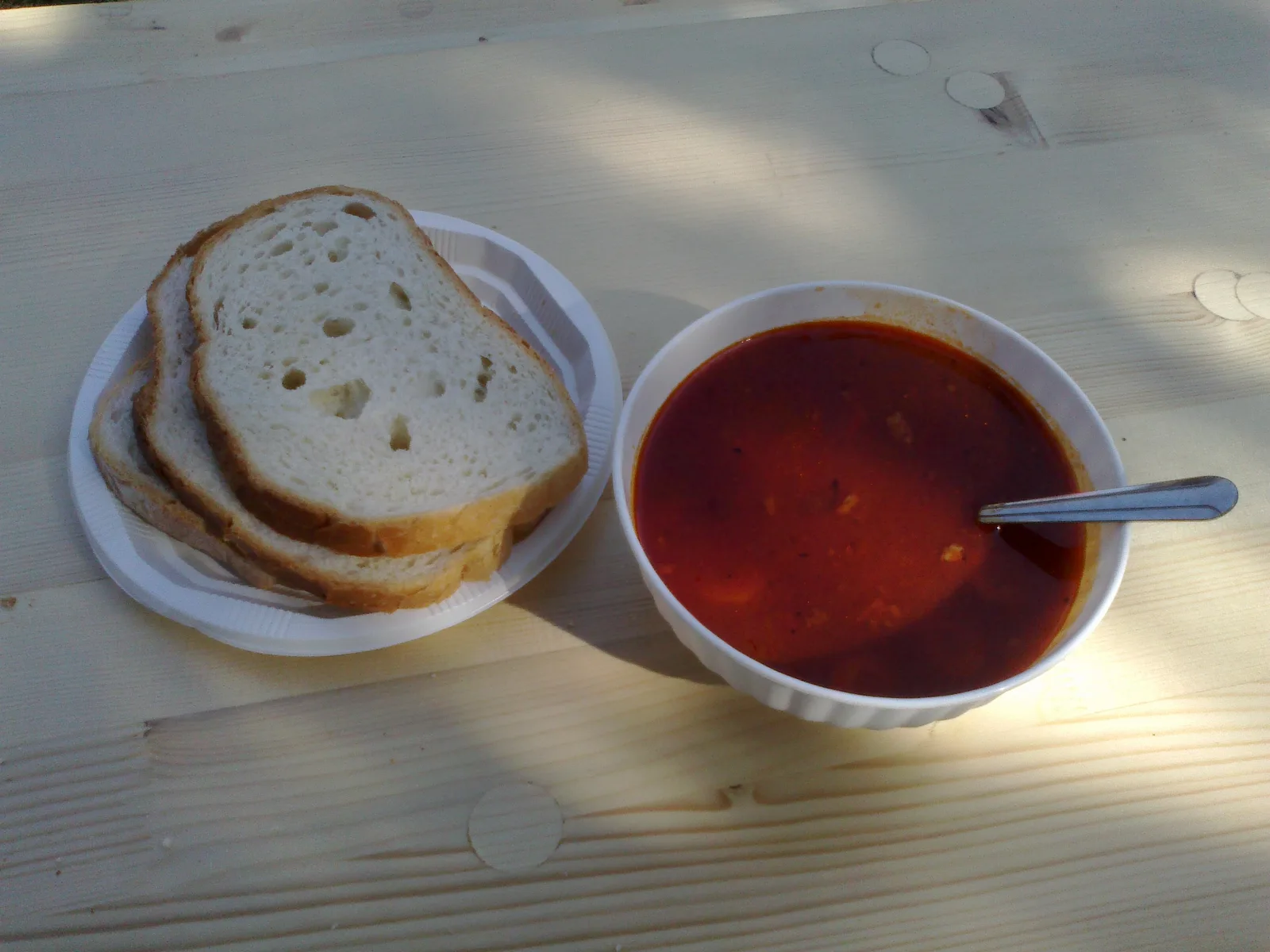
A bowl of red Hungarian goulash soup with bread on a wooden table

Hungarian Heritage

Photo: Christo, CC BY-SA 4.0, via Wikimedia Commons

The Heritage Formulary

Measured Ingredients

Estimated cost: Low — about $3–4 per serving at home (USD)

Cooked the true Hungarian way: a soupy paprika broth with tender beef and root vegetables — never thickened into a stew.

Execution Methodology & Culinary Technique

Step-by-Step Cooking Guide

Active 2h 15m
P

Prep Stage: Dice, Cube & Measure

25 Mins • Chopping

Dice the onions finely, cube the beef into even 3 cm pieces, and peel and slice the carrots and parsnip. Dice the tomato and pepper, crush the garlic, and measure the paprika into a small bowl by the stove — it goes in fast and must not burn. Keep the potatoes in cold water until they are needed.

Maestro Tip: Measure the paprika before you start frying — it must hit the pan and be stirred in within seconds, and there is no time to hunt for the jar.

  1. 1

    Fry the Onions Golden

    10 Mins Medium heat, ~175°C (350°F)

    Heat the oil in a large heavy pot over medium heat and fry the diced onions for 8 to 10 minutes, stirring often, until soft, sweet and golden at the edges. Take the pot off the heat.

    Take the pot off the heat before the paprika goes in — paprika burns in seconds over direct heat and turns bitter.

    Done when: Soft, golden onions that smell sweet and rich.

  2. 2

    Bloom the Paprika

    1 Min Off the heat, residual heat only

    Sprinkle the paprika and the crushed caraway over the hot onions off the heat and stir hard for 30 seconds until the onions turn deep red and the paprika smells warm and earthy. Pour in a ladle of the warm stock at once and stir — it should hiss and turn into a thick red paste.

    If the paprika smells sharp or acrid, it has burned — start the onions again, because bitter paprika cannot be fixed.

    Done when: A thick, glossy red paste that smells sweet and warmly spiced.

  3. 3

    Simmer the Beef

    70 Mins Gentle simmer, ~95°C (200°F)

    Add the beef cubes, diced tomato, tomato paste, bell pepper and garlic, then pour in the rest of the stock. Bring to a gentle simmer, skim off any foam, cover loosely and cook for about 70 minutes, until the beef is tender and the broth is deep red. The beef should be tender but the liquid must stay soupy — this is a soup, not a stew.

    Keep the liquid at a lazy bubble and do not reduce it hard — goulash soup should be spoonable, with plenty of broth in every bowl.

    Done when: Tender beef in a deep red, soupy broth with vegetables softening around it.

  4. 4

    Add the Root Vegetables

    25 Mins Gentle simmer, ~95°C (200°F)

    Add the potatoes, carrots and parsnip to the pot and simmer for 20 to 25 minutes more, until the potatoes are tender all the way through and the beef is meltingly soft. Check the centre of a piece of beef with a thermometer — it should read at least 63°C (145°F), well above the safe minimum for beef. Season with salt and pepper.

    Add the potatoes late, not at the start — they would fall apart in a two-hour simmer and turn the soup cloudy.

    Done when: Tender potatoes and carrots in a rich red broth, with the beef soft enough to cut with a spoon.

  5. 5

    Rest & Serve in Bowls

    5 Mins Serve hot, ~75°C (170°F)

    Take the pot off the heat and let the soup rest for 5 minutes so the flavours settle. Ladle into deep bowls, making sure each serving has beef, potatoes and plenty of broth, and scatter the chopped parsley over the top. Serve with crusty white bread for dipping.

    Resting for five minutes lets the paprika settle into the broth and the soup stops being hot enough to scald.

    Done when: Steaming bowls of red soup with visible beef, potatoes and carrots under a scatter of parsley.

Finishing Touches & Plating

Ladle the goulash soup into deep bowls with plenty of broth in every serving, scatter parsley over the top, and put crusty bread on the table for dipping.
Nutritional Physiology & Benefits

Nutrition

Energy

475

kcal / serving

Protein

28g

Complete AA

Carbs

34g

Complex

Fats

27g

Healthy

Per serving (6 servings · 1 serving ≈ 500 g)
Energy475 kcal
Protein28 g
Carbohydrates34 g
Fat27 g
Fibre7.6 g
Sugar7.8 g
Sodium1359 mg
Per 100g
Energy95 kcal
Protein5.6 g
Carbohydrates6.7 g
Fat5.4 g
Fibre1.5 g
Sugar1.6 g
Sodium272 mg

Nutrition values are estimated — calculated from USDA FoodData Central values for the listed ingredients.

Vitamins & minerals: Beef supplies iron, zinc and vitamin B12, carrots add vitamin A, and the peppers and parsley add vitamin C and folate. All nutrition values are estimated.

High-Protein Soup

One serving gives about 28.2 g of protein from the beef, so a bowl of this soup is a proper dinner, not just a starter.

Fibre from Root Vegetables

One serving gives about 7.6 g of fibre from the potatoes, carrots and parsnip, which supports normal digestion.

Vitamin A & Iron

Carrots add vitamin A, beef supplies iron and vitamin B12, and the peppers and parsley add vitamin C to the bowl.

Food Pairings

What to Eat With

To optimize nutrient absorption and elevate the sensory depth, pair with these authentic accompaniments:

Sides

Crusty White Bread

Crusty bread is essential — it soaks up the paprika broth, and a bowl of goulash soup is never served without something to dip.

Vegetables

Pickled Peppers

Sharp pickled peppers cut through the rich, paprika-heavy broth and add a cool, crunchy contrast in every spoonful.

Cucumber Salad

A cool cucumber salad with sour cream adds freshness next to the hot, rich soup, and it is ready in five minutes.

Drinks

Egri Bikavér (Bull's Blood)

A glass of Hungary's famous red has the body and spice to stand up to paprika beef, and it is the traditional partner for goulash.

Black Tea with Lemon

Hot black tea cleanses the palate after a rich, paprika-heavy soup, and lemon keeps the meal feeling bright.

Complete menu

Start with a cucumber salad, serve the goulash soup with crusty bread and pickled peppers, and finish with black tea and a slice of apple cake.

Digestive Guardrails

What NOT to Combine

To prevent digestive distress, sluggishness, or palate clash, avoid pairing the dish with these elements:

Thickening It into a Stew

Hungarian goulash is a soup — thickening it with flour or cooking it down until it stands on a plate turns it into a different dish, the Czech-style goulash. Keep it spoonable and let the bread do the work. This is general food information, not medical advice.

Very Salty Sides

One serving carries about 1359 mg sodium from the stock and salt, so pairing the soup with other very salty foods such as cured meats or salty cheese can push one meal far above a comfortable level. This is general food information, not medical advice.

General information only, not medical advice — consult a doctor for personal dietary decisions.

Who Should Eat It

Who Should Eat

  • General adultsA hearty, satisfying dinner — about 28.2 g protein per serving, best enjoyed in the stated portion with vegetables on the side.
  • ChildrenChildren usually love the mild, sweet paprika broth; serve a smaller bowl with extra potatoes and keep the hot paprika and pepper mild.
  • ElderlySoft beef and tender root vegetables in a warm broth are easy to chew and easy to digest — a gentle, warming dinner for older diners.
  • Pregnant womenFine as an occasional dinner; the beef is cooked right through and the soup is served hot. Keep the portion modest and the bowl steaming.
  • Breastfeeding womenA comforting, protein-rich soup; the beef and vegetables supply iron and B vitamins, and the broth helps with fluids — one bowl is enough.
  • AthletesGood post-training fuel — the beef supplies protein for recovery, the potatoes supply carbohydrate, and the salty broth replaces some of the salt lost in sweat.
  • Weight gainEnergy-dense at 475 kcal a serving, so it suits weight gain when eaten with the usual sides.
  • Weight lossRich and filling at 475 kcal a serving; keep to one stated serving, go easy on the gravy and sauce, and fill half the plate with vegetables.

Health Conditions — Adjust or Avoid

Conditions

  • DiabetesPotatoes are starchy, so keep the serving to the stated 500 g and go easy on the bread; the soup itself is low in sugar. Ask your clinician about portions.
  • High blood pressureOne serving carries about 1359 mg sodium from the stock and salt, so keep other salty foods out of the same meal and do not add salt at the table. Ask your clinician about portions.
  • Kidney diseaseBeef is high in protein and the soup is salty, so portions should stay modest on a kidney diet. Ask your clinician about portions.
  • GoutBeef is higher in purines than the vegetables, so the meat portion is the main thing to watch; keep to one modest bowl. Ask your clinician about portions.
  • Stomach issuesPaprika and a rich beef broth can be hard on a sensitive stomach; eat slowly, take a smaller bowl, and skip extra pepper if spice bothers you. Ask your clinician about portions.
  • Cardiovascular diseaseChuck is a fattier cut, so one modest bowl with a big plate of cucumber salad is a better balance than a second helping. Ask your clinician about portions.
  • Fatty liverThe soup is rich and energy-dense, so keep portions modest and avoid eating it late at night. Ask your clinician about portions.
  • Food allergiesContains no common allergens as written, but check the stock — some stock cubes contain celery, wheat or soy. People with those allergies should use a safe stock. Ask your clinician about safe alternatives.
  • Special therapeutic dietsNot suitable for a low-fat or low-sodium therapeutic diet as written; a version with a leaner cut and low-sodium stock changes the dish and should be discussed with a clinician. Ask your clinician about safe alternatives.

If you have a medical condition, consult your doctor before changing your diet.

Storage & Use

Storage & Use

How to store
Cool quickly and store in an airtight container.
In the fridge
Keeps 3 to 4 days in the fridge at 4°C (40°F) or below; the flavour improves overnight.
In the freezer
Up to 3 months; freeze in portions without the potatoes if you can — potatoes turn grainy when thawed.
How to reheat
Reheat gently in a pot until steaming hot throughout, to 74°C (165°F); add a splash of water if it has thickened.
Freezing recommended
Yes — goulash soup freezes well and often tastes better the next day.
Signs it has spoiled
Sour smell, slimy surface, or mould on the surface of the soup.

More recipes to explore

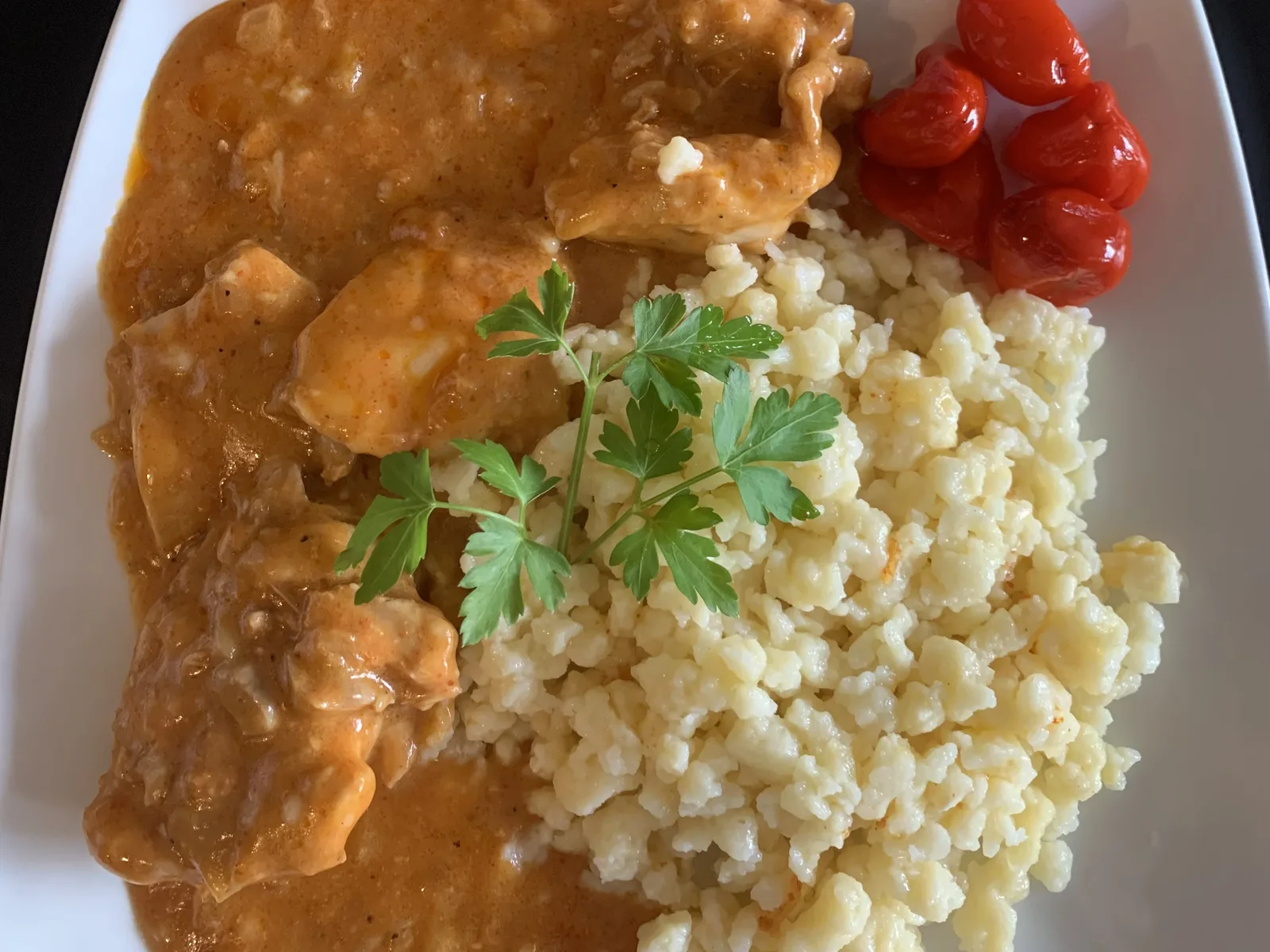
Chicken paprikash in a creamy paprika sauce with galuska dumplings, parsley and pickled peppers Hungary flag Hungary 1h 15m
Dinner •Hungarian Heritage

Chicken Paprikash

This chicken paprikash recipe browns chicken thighs, then braises them slowly in a sweet paprika sauce with onion, tomato and pepper until the meat falls off the bone. Sour cream goes in at the very end, off the heat, so the sauce turns silky and pale orange instead of splitting. It is served with galuska, the little egg dumplings that catch every drop of sauce. One serving is about 500 g.

Comfort & Warmth

Chicken braised in a sweet paprika sauce and finished with sour cream, served hot with little egg dumplings.

Pairs Well With
Galuska dumplings, pickled peppers & a glass of Egri Bikavér
High Protein
A golden fried lángos topped with sour cream and grated cheese on white paper Hungary flag Hungary 1h 40m
Snack & Tea •Hungarian Street-Food Heritage

Lángos

This langos recipe makes the Hungarian street-food classic: soft yeasted dough stretched thin by hand, fried in hot oil until it puffs and turns golden, then brushed with garlic butter and topped with sour cream and grated cheese. The outside is crisp and blistered, the inside stays soft and steamy, and it is eaten hot, straight from the paper, with your hands. One serving is about 286 g.

Comfort & Warmth

A golden fried flatbread brushed with garlic butter and topped with sour cream and grated cheese, eaten hot with your hands.

Pairs Well With
Sour cream, grated cheese & a cold Hungarian lager
Quick Prep (<30m)
Bœuf bourguignon — French beef braised in red wine France flag France 4h
Dinner •Burgundy Terroir

Bœuf Bourguignon

Beef braised gently in red wine until the connective tissue melts into a velvet, gelatin-rich sauce — the classic Burgundy Sunday dinner.

Cellular Repair

Beef braised in red wine until spoon-tender, with mushrooms and pearl onions.

Pairs Well With
Parsnip Purée & Steamed French Haricots Verts
High Protein
Vietnamese braised pork belly with golden eggs in caramel sauce Vietnam flag Vietnam 1h 45m
Dinner •One Pot

Vietnamese Braised Pork and Eggs

Pork belly slowly braised in coconut water and caramel until meltingly tender, with golden eggs that soak up the sweet-savoury sauce — the Vietnamese family dish that tastes better the next day.

Comfort & Sustained Energy

Slow-braised pork belly and eggs in coconut water and caramel.

Pairs Well With
Steamed rice & pickled mustard greens
High Protein

The Dinner Gazette

Never wonder what’s for dinner again

One email a week with easy dinner ideas from around the world — ingredients, steps and nutrition, tested in our kitchen first.

Delivered every Thursday morning. Unsubscribe anytime.