Curated recipes from 193 countries  •  New seasonal Mediterranean issue out now

Overview

Kasespatzle

Käsespätzle, Swabian Cheese Spätzle

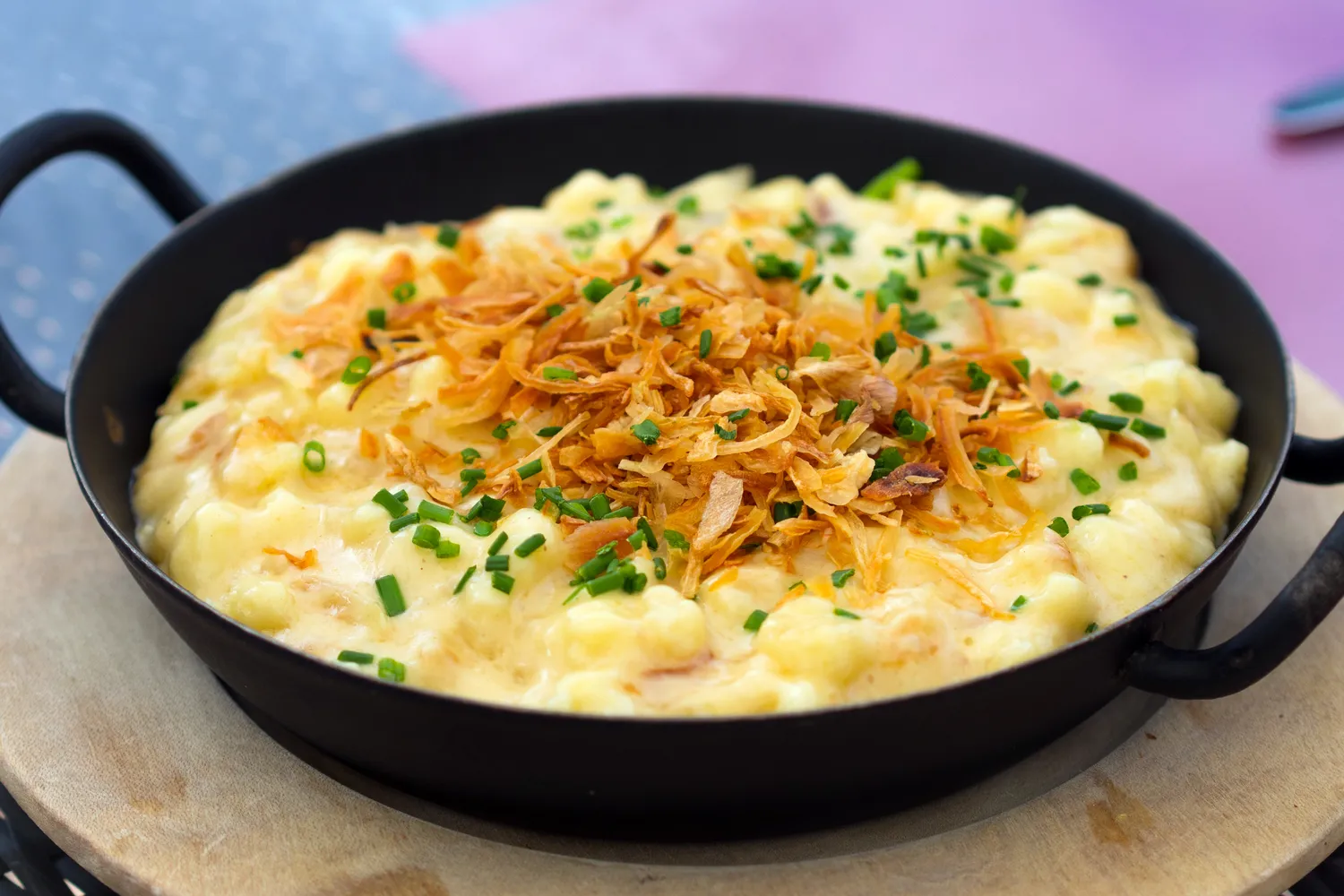
This kasespatzle recipe is Swabia's beloved comfort pasta: soft egg noodles made from scratch, layered while hot with grated Emmental so the cheese melts into every bite, and finished with sweet fried onions and fresh chives. It is rich, filling and deeply satisfying, and it comes together from a handful of everyday ingredients. One serving is about 340 g.

Spatzle come from Swabia in south-west Germany, where they have been a staple since at least the 1700s — small, soft egg dumplings scraped or pressed into boiling water, traditionally served as a side for roasts. The cheese version, kasespatzle, layers the hot noodles with grated mountain cheese so it melts through, and tops them with fried onions: a dish born in farmhouse kitchens that became the region's most loved comfort food, now served in inns across Baden-Wurttemberg and Bavaria.

Pairs well with: A green salad with a sharp vinaigrette and a cold German lager or a glass of apple juice.

Provenance

Germany flag Germany

Swabian Comfort Classic

Nordic & European

Time Dedication

55m

25m prep • 30m cook

Batch Yield

4 Servings

795 kcal per serving

1 serving ≈ 340 g

Technical Skill

Intermediate

Intermediate (Handmade Noodles)

Meal Timing & Digestive Fit

Breakfast

Not Advised

Lunch

Hearty Midday Main

Dinner

Ideal Hearty Main

Snack & Tea

Inappropriate

Pasta & Noodles Occasions: Cold evenings, family dinners, a hearty lunch after a walk, a vegetarian main for a crowd Cost: Low — about $2–3 per serving at home
A black pan of golden kasespatzle topped with crisp fried onions and chopped chives.

Swabian Comfort Classic

Photo: Takeaway, CC BY-SA 4.0, via Wikimedia Commons

The Heritage Formulary

Measured Ingredients

Estimated cost: Low — about $2–3 per serving at home (USD)

Made with a handmade egg-noodle dough, grated Emmental melted in layers, and onions fried until crisp and sweet.

Execution Methodology & Culinary Technique

Step-by-Step Cooking Guide

Active 55m
P

Prep Stage: Mix the Dough and Slice the Onions

15 Mins • Hands-On

Put the flour, salt and nutmeg in a large bowl, make a well, and add the eggs and milk. Beat with a wooden spoon until the dough is smooth, thick and stretchy — it should fall from the spoon in slow ribbons and show small bubbles. Cover and rest for 10 minutes while you peel and slice the onions into thin rings and grate the Emmental.

Maestro Tip: The dough should be thicker than pancake batter and thinner than bread dough. If it will not fall from the spoon, add milk a tablespoon at a time; if it runs off too fast, add a spoonful of flour.

  1. 1

    Fry the Onions Until Crisp and Sweet

    12 Mins • Cooking Medium heat, about 160°C (320°F)

    Melt the butter in a large frying pan over medium heat, add the onion rings with a pinch of salt, and fry for 10–12 minutes, stirring often, until they are deep golden, crisp at the edges and sweet. Lift them out onto kitchen paper and keep warm.

    Do not rush the onions on high heat — they will burn before they sweeten. Medium heat and patience is what makes them crisp and golden instead of bitter.

    Done when: Deep golden brown, crisp at the edges, sweet-smelling.

  2. 2

    Cook the Spatzle in Boiling Water

    8 Mins • Cooking Boiling water, 100°C (212°F)

    Bring a large pot of salted water to a rolling boil. Working in 3 batches, press the dough through a spatzle maker or scrape thin strips off a wet board into the water. The noodles sink, then float up after 1–2 minutes — lift them out with a slotted spoon as soon as they float and drain well.

    Keep the water at a full boil between batches and do not crowd the pot — too many noodles at once cool the water and they stick together.

    Done when: Noodles float to the surface, plump and tender with a slight bite.

  3. 3

    Layer the Noodles with Cheese

    5 Mins • Hands-On Low heat, about 120°C (250°F)

    Return the drained noodles to the warm, dry pot over low heat. Add a third of the noodles, scatter a third of the grated Emmental over them, and repeat twice more so you have three layers of each. Cover and leave on the lowest heat for 3–4 minutes so the cheese melts right through.

    Layer while the noodles are still steaming hot — cold noodles will not melt the cheese, and reheating the pan hard will make the cheese go greasy.

    Done when: Cheese melted into strings between the noodles; the pan steams gently.

  4. 4

    Finish in the Oven for a Golden Top

    8 Mins • Cooking Oven 180°C (350°F)

    Tip the cheesy noodles into a buttered oven dish, scatter the fried onions over the top, and bake at 180°C (350°F) for 6–8 minutes until the top is golden and the cheese is bubbling at the edges.

    If you like a browned top, finish under the grill for the last minute — but watch it constantly, as the onions go from golden to burnt in seconds.

    Done when: Golden, bubbling top with crisp onions; the centre is hot through.

  5. 5

    Rest Briefly and Serve with Chives

    2 Mins • Hands-On No heat

    Leave the dish to rest for 2 minutes so the cheese settles and the noodles hold together when served. Scatter the chopped chives over the top and serve straight from the dish.

    Serve on warm plates — the cheese firms up fast on a cold plate.

    Done when: Slices hold together, cheese still stringy, chives bright green.

Finishing Touches & Plating

Let the pan sit for 2 minutes so the cheese settles, then serve straight from the pan with extra chives on top. Eat it while it is hot and stringy — kasespatzle waits for no one.

Nutritional Physiology & Benefits

Nutrition

Energy

795

kcal / serving

Protein

36g

Complete AA

Carbs

85g

Complex

Fats

33g

Healthy

Per serving (4 servings · 1 serving ≈ 340 g)
Energy795 kcal
Protein36 g
Carbohydrates85 g
Fat33 g
Fibre4.2 g
Sugar5.2 g
Sodium825 mg
Per 100g
Energy234 kcal
Protein10.6 g
Carbohydrates25.1 g
Fat9.8 g
Fibre1.2 g
Sugar1.5 g
Sodium243 mg

Nutrition values are estimated — calculated from USDA FoodData Central values for the listed ingredients.

Vitamins & minerals: Provides calcium and phosphorus from the Emmental, B vitamins and choline from the eggs, and vitamin K from the chives.

Protein from Eggs and Cheese

One serving carries about 36.1 g of protein — the eggs in the noodles and the Emmental do the work, which is why this meat-free dish is so filling.

Calcium for Bones

The 250 g of Emmental in the dish makes it a strong source of calcium and phosphorus, nutrients that support normal bone health.

Simple, Honest Ingredients

Flour, eggs, milk, cheese, onions and butter — six everyday ingredients, no processed sauce or packet mix, and everything made from scratch.

Food Pairings

What to Eat With

To optimize nutrient absorption and elevate the sensory depth, pair with these authentic accompaniments:

Vegetables

Green Salad with Sharp Vinaigrette

A crisp green salad with a sharp vinegar dressing is the classic partner — its acidity cuts through the rich cheese and resets the palate between bites.

Sides

Crusty Bread

Bread is for the melted cheese left in the dish — nobody wants to leave that behind, and a crusty slice gets every last bit.

Pickled Cucumber Salad

Thinly sliced cucumber in a light vinegar dressing adds crunch and sourness, which keeps a rich cheese pasta from feeling heavy.

Drinks

Cold German Lager

A cold lager is the Swabian way with this dish: the bitterness and the bubbles balance the buttery cheese, and it is what the inns serve with it.

Complete menu

Serve kasespatzle as the main with a green salad and a cold lager, or as a side next to a roast — in Swabia it plays both roles, and the salad is what keeps it balanced.

Digestive Guardrails

What NOT to Combine

To prevent digestive distress, sluggishness, or palate clash, avoid pairing the dish with these elements:

Pre-Grated Cheese and High Heat

Pre-grated cheese is coated to stop it clumping, so it melts poorly and can turn grainy; and melting cheese on high heat makes it split and go greasy. Grate the cheese yourself and melt it gently. This is general cooking information, not medical advice.

Very Large Portions for People Watching Fat or Sodium

One serving carries about 33.2 g of fat and 825 mg of sodium — this is a rich dish by design. People watching saturated fat or blood pressure should keep the portion modest and load up on the salad. This is general food information, not medical advice.

General information only, not medical advice — consult a doctor for personal dietary decisions.

Who Should Eat It

Who Should Eat

  • General adultsA satisfying, filling vegetarian main for most adults — rich, so a modest portion with salad is the sweet spot.
  • ChildrenChildren usually love it — soft noodles, melted cheese, sweet onions. Cut the fried onions smaller for little ones and let it cool a little first.
  • ElderlySoft, easy to chew and high in protein and calcium — a good choice, though the portion should stay modest for smaller appetites.
  • Pregnant womenGenerally fine — the eggs are fully cooked in the boiling water and the cheese is melted through. Keep the portion moderate because it is rich.
  • Breastfeeding womenA filling, calcium-rich main that suits a hungry appetite; pair it with salad for balance.
  • AthletesAbout 36.1 g of protein and 85.4 g of carbohydrate per serving — a strong recovery meal after training, with plenty of energy.
  • Weight gainVery useful — about 795 kcal per serving with good protein, and easy to eat a full portion.
  • Weight lossTricky — rich and energy-dense, so take a smaller portion, go heavy on the salad, and skip second helpings.

Health Conditions — Adjust or Avoid

Conditions

  • DiabetesHigh in carbohydrate — about 85.4 g per serving — so the portion matters more than anything. Take a smaller serving with plenty of salad. Ask your clinician.
  • High blood pressureAbout 825 mg of sodium per serving, mostly from the cheese and salt. Use a little less salt in the dough and keep the portion modest. Ask your clinician.
  • Kidney diseaseHigh in protein and phosphorus from the cheese and eggs; keep portions small and ask your clinician.
  • GoutMeat-free and low in purines, which is helpful, but the cheese is rich in fat — keep the portion moderate and ask your clinician.
  • Stomach issuesRich and cheesy, so it can feel heavy on a sensitive stomach — eat a small portion slowly and skip the fried onions if they bother you.
  • Cardiovascular diseaseHigh in saturated fat from cheese and butter — an occasional treat rather than a regular meal. Ask your clinician.
  • Fatty liverEnergy-dense and rich in fat, so keep the portion small and pair it with salad. Ask your clinician.
  • Food allergiesContains wheat (gluten), egg and milk. People with coeliac disease, egg allergy or milk allergy must avoid it — ask your clinician.
  • Special therapeutic dietsNot suitable for gluten-free, egg-free or dairy-free diets as written — a gluten-free flour changes the noodle texture and needs testing, so check with your clinician.

If you have a medical condition, consult your doctor before changing your diet.

Storage & Use

Storage & Use

How to store
Cool within 2 hours and store in a sealed container in the fridge.
In the fridge
Up to 3 days in a sealed container.
In the freezer
Up to 2 months — freeze the noodles and cheese together, without the fried onions.
How to reheat
Reheat in a covered pan over low heat with a splash of milk until hot through, or in the oven at 160°C (320°F) for 15 minutes. Reheat to 74°C (165°F).
Freezing recommended
Yes — it freezes well, though the onions are best fried fresh.
Signs it has spoiled
Sour smell, slimy noodles, or mould on the cheese.

More recipes to explore

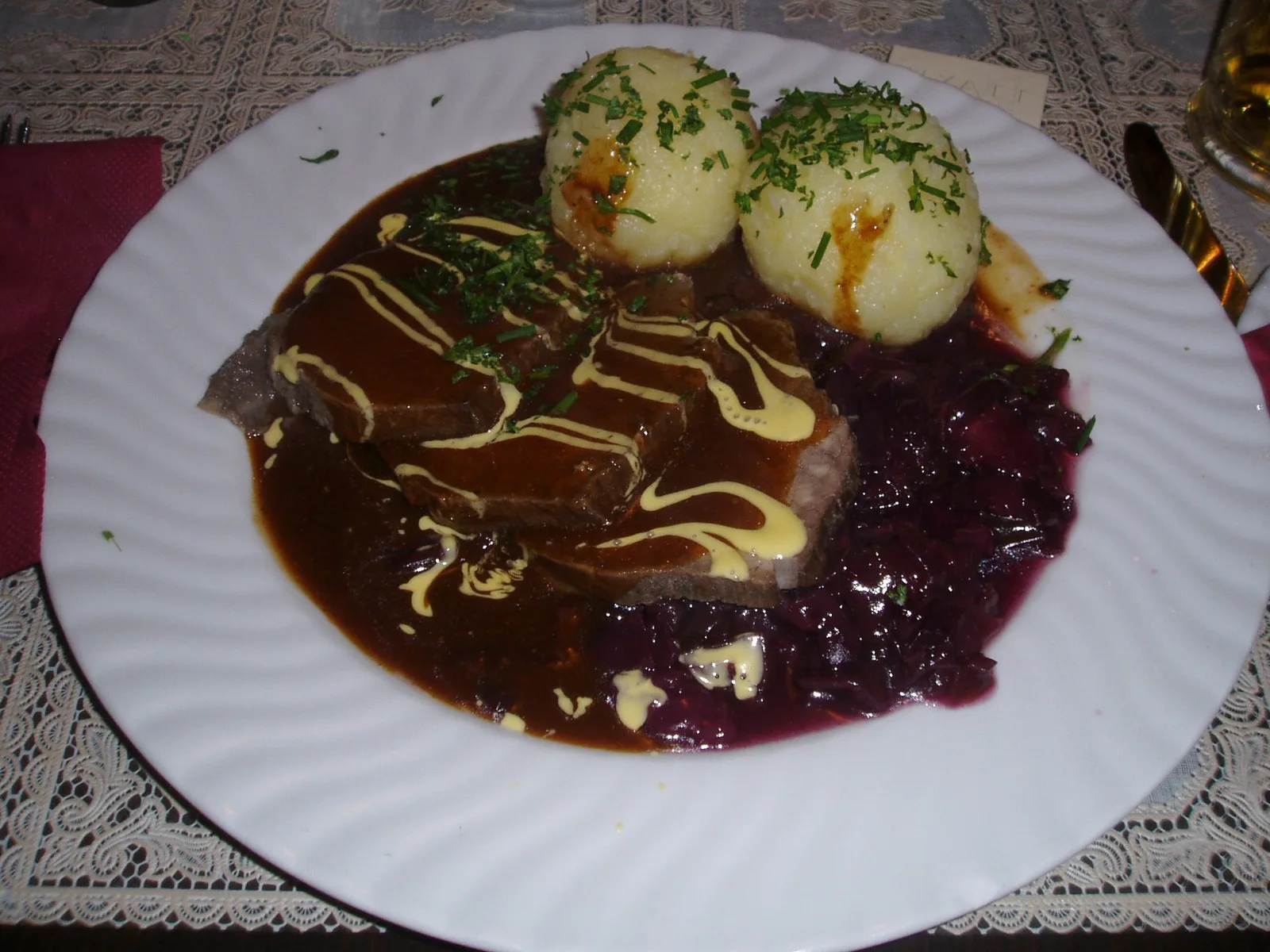
Sliced sauerbraten in dark sweet-sour gravy with potato dumplings and braised red cabbage on a white plate Germany flag Germany 3h 30m
Dinner •Rhineland Heritage

Sauerbraten

This sauerbraten recipe starts with a beef chuck roast steeped for three days in red wine vinegar, red wine and warm spices, then braised slowly until it slices like butter. The marinade becomes a dark, sweet-sour gravy thickened with crushed gingersnaps and studded with raisins, the Rhineland way. One serving is about 300 g, with gravy.

Comfort & Warmth

A slow-braised German pot roast in a sweet-sour vinegar gravy, sliced thick and served hot with potato dumplings and red cabbage.

Pairs Well With
Potato dumplings, braised red cabbage & a glass of Spätburgunder
High Protein
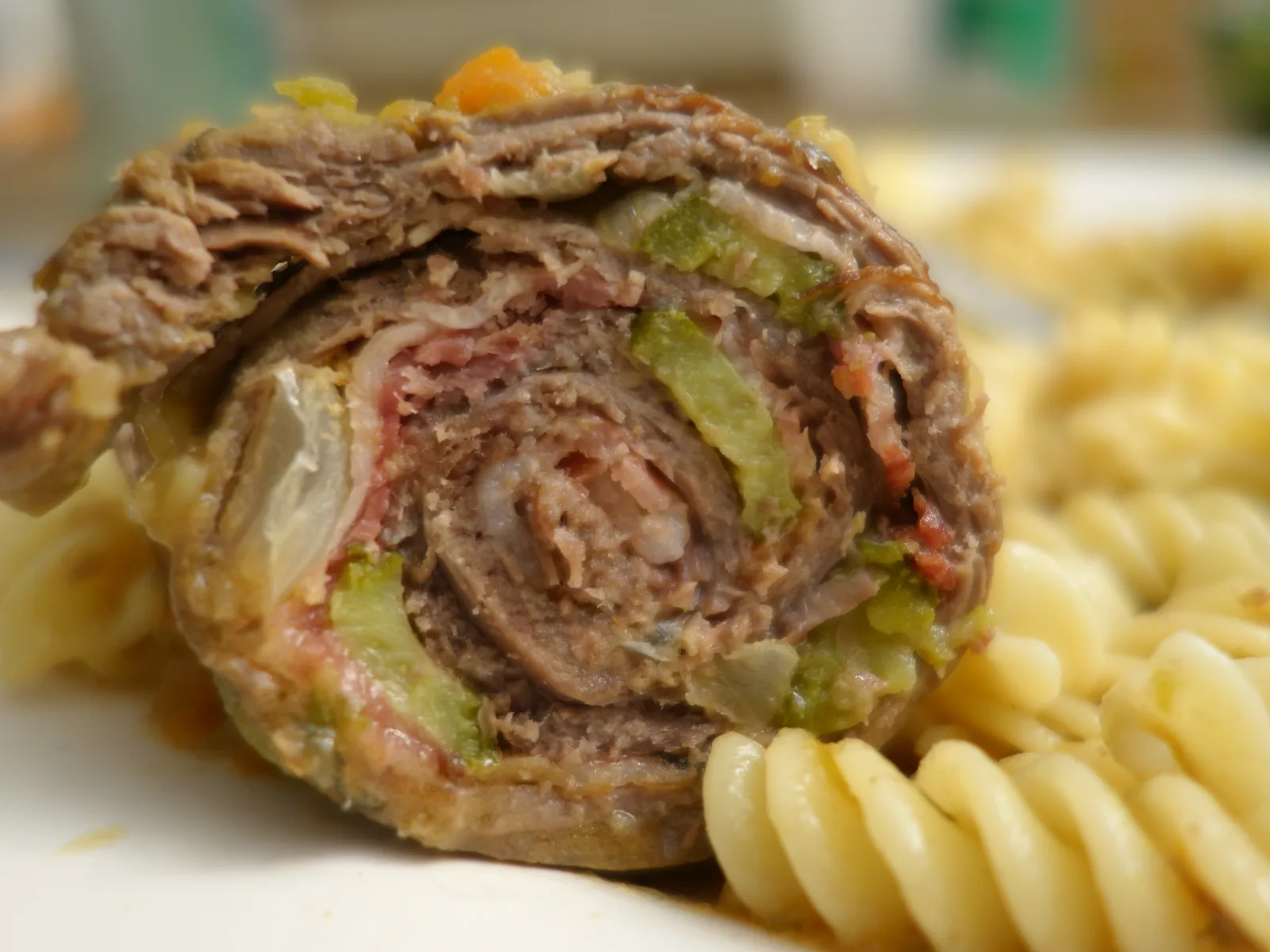
A sliced German beef roulade showing the spiral of beef, bacon and dill pickle, served with pasta Germany flag Germany 2h 10m
Dinner •German Sunday Heritage

Rouladen

This rouladen recipe spreads thin slices of top round with mustard, then rolls them around smoky bacon, dill pickles and onion into neat parcels. The rolls are browned, then braised slowly in red wine and beef stock until tender, and the braising liquid becomes a rich gravy. One serving is about 375 g — two rolls with gravy.

Comfort & Warmth

Thin beef rolls stuffed with bacon, dill pickle and onion, braised in red wine gravy and served hot with dumplings.

Pairs Well With
Potato dumplings, braised red cabbage & a German lager
High Protein
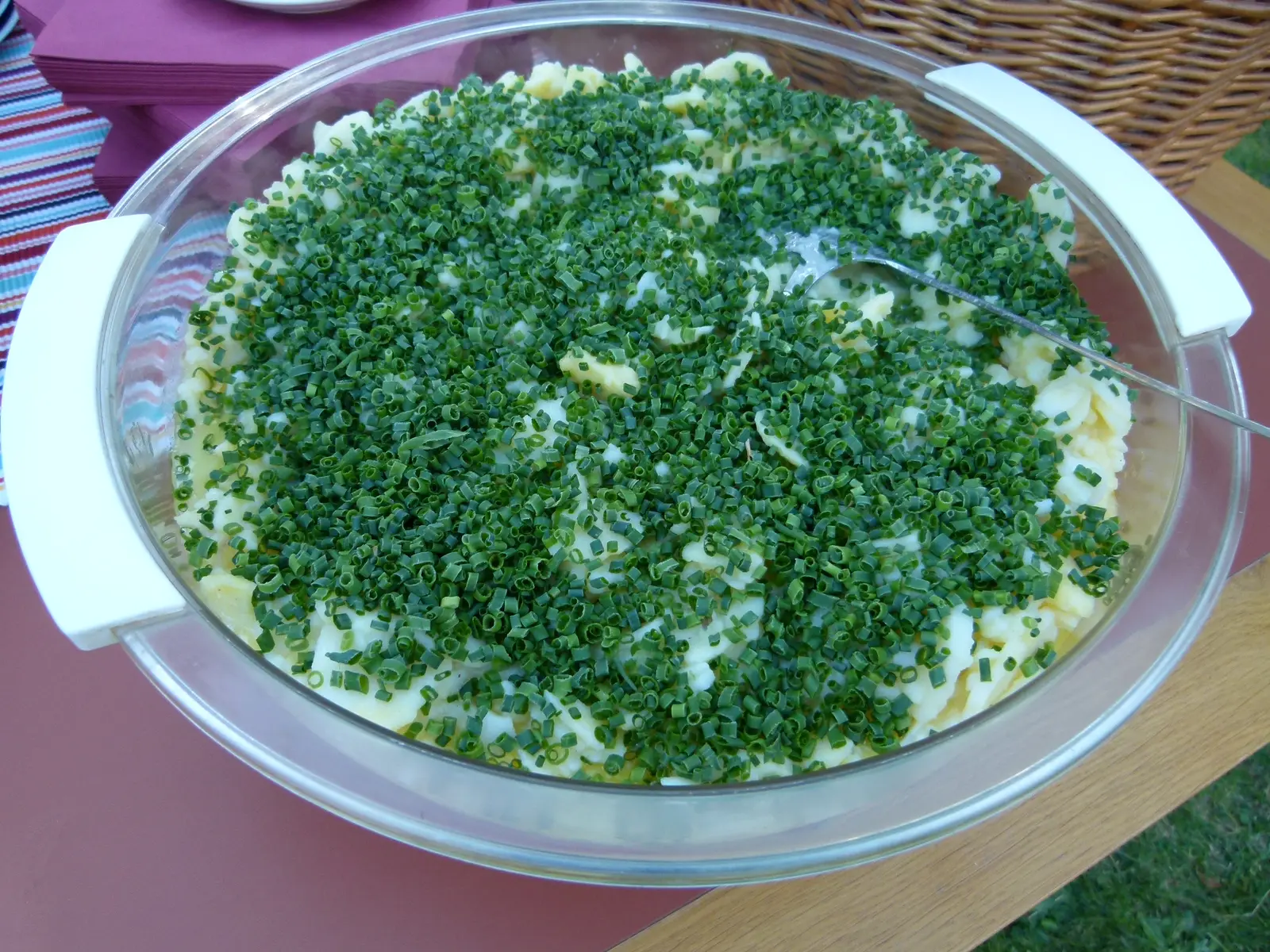
A glass bowl of warm Swabian potato salad topped with chopped chives Germany flag Germany 45m
Lunch •Swabian Heritage

German Potato Salad

This german potato salad recipe is the warm Swabian kind: waxy potatoes sliced while still hot, tossed with crisp bacon, soft onion and sliced egg, then dressed with hot beef stock, vinegar and mustard so every slice drinks up the tangy dressing. No mayonnaise anywhere — the potatoes stay light, glossy and warm. One serving is about 292 g.

Comfort & Warmth

Warm waxy potatoes in a bacon, mustard and vinegar dressing, served straight from the bowl while still steaming.

Pairs Well With
Grilled sausages, schnitzel & a cold German lager
Quick Prep (<30m)
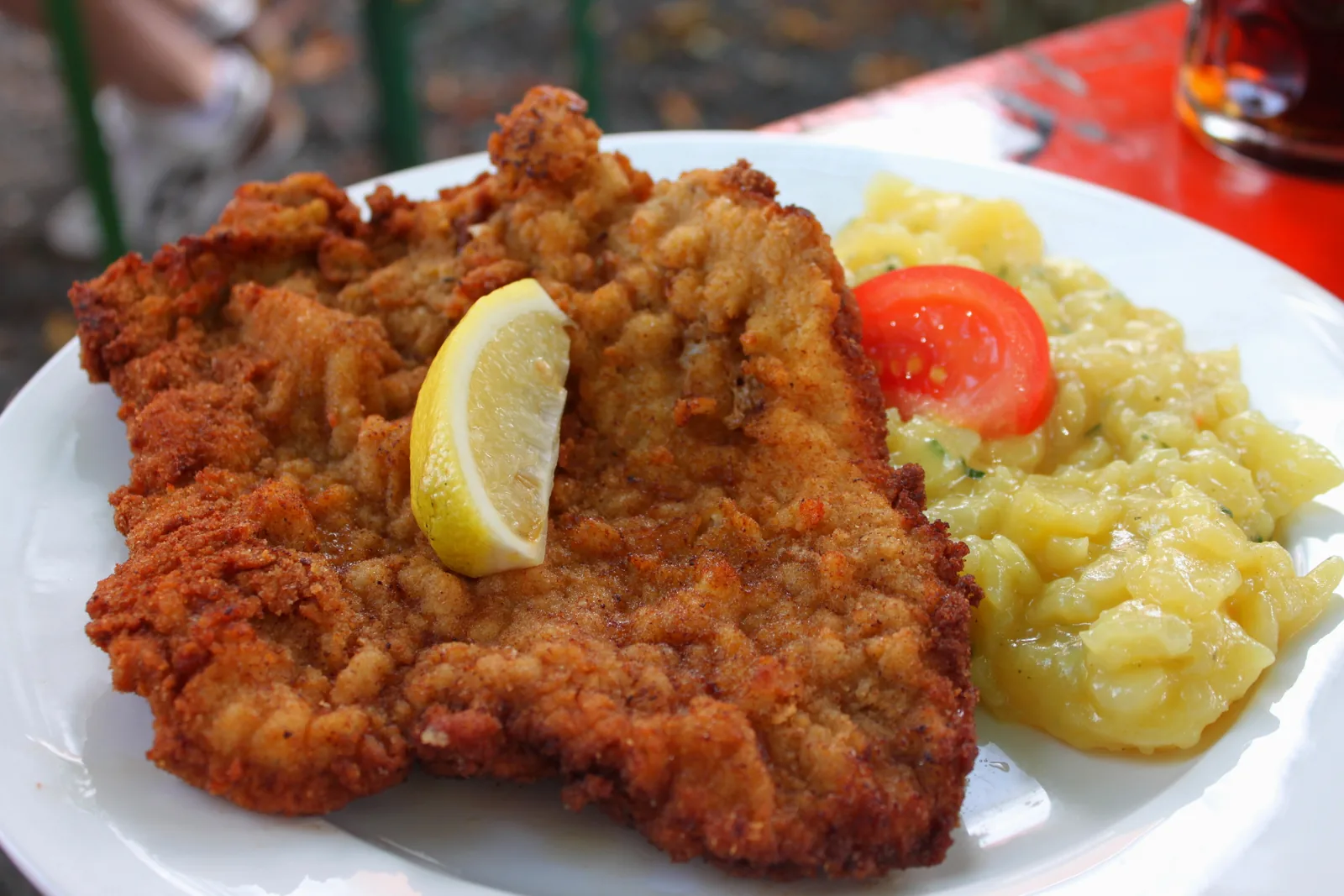
Golden breaded pork schnitzel with a lemon wedge and potato salad on a white plate Germany flag Germany 40m
Dinner •German Heritage

German Pork Schnitzel

German pork schnitzel is the everyday hero of German cooking: a pork cutlet pounded thin, coated in flour, egg and breadcrumbs, and fried in butter until it turns deep golden and crisp. This german schnitzel recipe follows the German way — real pork, a loose crumb, and a wedge of lemon on the side, with potato salad to mop up. One serving is about 200 g.

Classic Comfort

A golden, crisp pork cutlet with lemon and potato salad — a satisfying, protein-rich German dinner.

Pairs Well With
Warm potato salad, cucumber salad and a cold lager.
High Protein

The Dinner Gazette

Never wonder what’s for dinner again

One email a week with easy dinner ideas from around the world — ingredients, steps and nutrition, tested in our kitchen first.

Delivered every Thursday morning. Unsubscribe anytime.