
Curated recipes from 193 countries  •  New seasonal Mediterranean issue out now

Overview

Kugelis

Kugelis, Bulvių Plokštainis, Lithuanian Potato Pudding

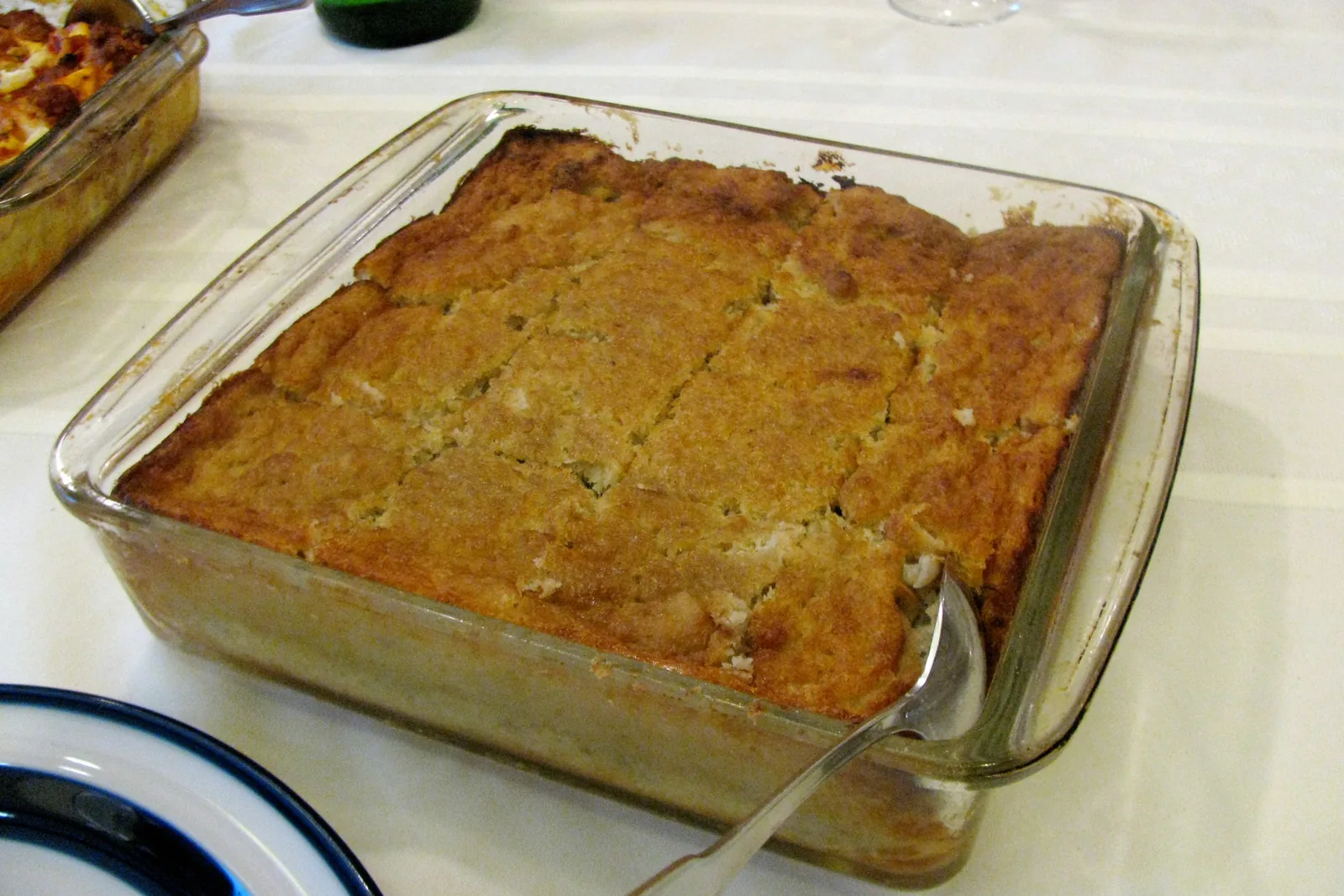
This kugelis recipe grates raw potatoes as fine as it can go, stirs them with softened onion, butter, eggs and warm milk, then bakes the mixture in a buttered dish until the top turns deep gold and the edges pull away. It is cut into thick slices at the table and served with a sauce of crisp bacon, soft onion and sour cream. One serving is about 358 g.

Kugelis, also called bulvių plokštainis — literally 'flat potato dish' — is one of Lithuania's oldest farmhouse foods. Potatoes, grated fine and mixed with onion, egg, milk and bacon, were packed into a dish and baked slowly in the village oven until the top turned deep gold, then sliced at the table like a cake and served with sour cream. It is still the dish Lithuanian families make for holidays and gatherings, and every family argues, gently, that theirs is the right version.

Pairs well with: Bacon-onion sour cream sauce, applesauce & pickles

Provenance

Lithuania flag Lithuania

Lithuanian Heritage

Nordic & European

Time Dedication

1h 30m

30m prep • 60m cook

Batch Yield

6 Servings

569 kcal per serving

1 serving ≈ 358 g

Technical Skill

Intermediate

Medium (Grating & Baking)

Meal Timing & Digestive Fit

Breakfast

Not Advised

Lunch

Hearty Midday Main

Dinner

Ideal Hearty Main

Snack & Tea

Inappropriate

Occasions: Family dinners, holiday tables, winter weekends, potlucks Cost: Low — about $2–3 per serving at home
A glass dish of golden-brown baked kugelis potato pudding on a table, cut into squares

Lithuanian Heritage

Photo: Eden, Janine and Jim, CC BY 2.0, via Wikimedia Commons

The Heritage Formulary

Measured Ingredients

Estimated cost: Low — about $2–3 per serving at home (USD)

Made the Lithuanian way: finely grated potato mixed with softened onion, butter, egg and warm milk, baked until deep golden and served with a bacon, onion and sour cream sauce.

Execution Methodology & Culinary Technique

Step-by-Step Cooking Guide

Active 1h 30m
P

Prep Stage: Grate, Soften & Mix

30 Mins • Grating & Frying

Grate the potatoes as fine as you can and stir in the lemon juice so they stay pale. Fry the bacon lardons until they start to crisp, then soften the sliced onions in the bacon fat for the sauce. Soften the finely chopped onion in 70 g of butter for the pudding, then mix everything — grated potato, buttery onion, eggs, warm milk and salt — into a loose, creamy batter.

Maestro Tip: Grate the potatoes last, right before mixing — grated potato greys fast, even with lemon juice, so work quickly once you start.

  1. 1

    Grate the Potatoes

    15 Mins Room temperature

    Finely grate the peeled potatoes into a large bowl, stirring in the lemon juice as you go so they do not grey. Do not squeeze them dry — kugelis keeps its moisture, unlike cepelinai dough.

    Use the finest grating disc or the small holes of a box grater; coarse shreds make a pudding that never sets properly.

    Done when: A bowl of fine, pale potato pulp.

  2. 2

    Fry the Bacon & Onions

    15 Mins Medium heat, ~175°C (350°F)

    Fry the bacon lardons in a large pan over medium heat until they start to crisp and the fat runs. Lift out half the bacon and set aside for the top, then add the 300 g of sliced onions to the pan and cook until soft and golden, about 10 minutes. Stir the sour cream in off the heat and keep the sauce warm.

    Fry the bacon first so its fat cooks the onion — the onion should go soft and sweet, not brown and bitter.

    Done when: Crisp bacon and soft golden onion in a creamy sauce.

  3. 3

    Mix the Pudding Batter

    10 Mins Room temperature

    Melt 70 g of butter in a small pan and soften the 150 g of finely chopped onion in it for 3 to 4 minutes. Pour the warm milk over the grated potato, add the buttery onion, the beaten eggs and the salt, and mix well until the batter is loose and creamy. Stir in the reserved half of the bacon.

    The batter should be loose enough to pour slowly — if it is stiff, add another splash of warm milk.

    Done when: A loose, creamy potato batter with bacon flecks through it.

  4. 4

    Bake Until Set

    40 Mins 190°C (375°F)

    Butter a deep baking dish generously and pour in the batter, smoothing the top. Bake at 190°C (375°F) for about 40 minutes, until the pudding is set and the top is starting to colour.

    Butter the dish well — the pudding sticks fast to a dry dish.

    Done when: A set pudding with a pale gold top.

  5. 5

    Crisp the Top

    20 Mins 220°C (425°F)

    Turn the oven up to 220°C (425°F) and bake for another 15 to 20 minutes, until the top is deep golden brown and the edges are just starting to pull away from the dish. The centre should be hot right through, to 74°C (165°F).

    The deep golden top is the sign it is done — a pale top means the middle is still soft and wet.

    Done when: A deep golden-brown top with the edges pulling away from the dish.

  6. 6

    Rest & Serve in Slices

    10 Mins Serve hot

    Leave the kugelis to rest for 10 minutes so it firms up enough to slice, then cut into thick squares. Serve hot with the warm bacon, onion and sour cream sauce spooned over each slice.

    Resting is what lets you cut clean slices — cut it straight from the oven and it falls apart on the plate.

    Done when: Thick golden slices with the bacon and sour cream sauce on top.

Finishing Touches & Plating

Serve the kugelis hot from the dish, cut into thick slices, with the bacon, onion and sour cream sauce spooned generously over each one — the crisp golden top against the soft, creamy middle is what makes this pudding so loved in Lithuania.

Nutritional Physiology & Benefits

Nutrition

Energy

569

kcal / serving

Protein

14g

Complete AA

Carbs

46g

Complex

Fats

37g

Healthy

Per serving (6 servings · 1 serving ≈ 358 g)
Energy569 kcal
Protein14 g
Carbohydrates46 g
Fat37 g
Fibre6.1 g
Sugar6.2 g
Sodium822 mg
Per 100g
Energy159 kcal
Protein4 g
Carbohydrates12.9 g
Fat10.2 g
Fibre1.7 g
Sugar1.7 g
Sodium229 mg

Nutrition values are estimated — calculated from USDA FoodData Central values for the listed ingredients.

Vitamins & minerals: Potatoes supply vitamin C, vitamin B6 and potassium, eggs add vitamin B12 and selenium, and the onion adds small amounts of folate. All nutrition values are estimated.

Steady Energy

One serving gives about 46 g of carbohydrate from potato, a slow-burning fuel that keeps you going through a long evening.

Fibre from Real Potato

About 6.1 g of fibre per serving comes from the grated potato and onion, which supports normal digestion.

Potassium & Vitamin C

Potatoes are a useful source of potassium and vitamin C, and the eggs add protein and vitamin B12 to the plate.

Food Pairings

What to Eat With

To optimize nutrient absorption and elevate the sensory depth, pair with these authentic accompaniments:

Sauces

Bacon-Onion Sour Cream Sauce

The classic sauce: smoky bacon, sweet soft onion and cool sour cream give the mild potato pudding its salt, tang and richness.

Sides

Applesauce

A spoonful of cool applesauce is a traditional Lithuanian partner — its sweet-tart fruitiness cuts through the rich, buttery pudding.

Vegetables

Pickled Cucumber

Crisp pickled cucumber adds crunch and acidity that lifts the soft, rich pudding and cleanses the palate.

Drinks

Black Tea

Hot black tea with lemon is the usual drink with kugelis, and its tannins cut through the bacon fat nicely.

Complete menu

Start with pickled cucumber and rye bread, serve the kugelis hot in slices with the bacon sauce, and finish with black tea.

Digestive Guardrails

What NOT to Combine

To prevent digestive distress, sluggishness, or palate clash, avoid pairing the dish with these elements:

Extra Butter on Top

The pudding already carries plenty of butter and bacon fat, so adding more butter on top pushes one serving far higher in saturated fat without adding flavour. This is general food information, not medical advice.

Very Salty Sides

One serving already carries about 822 mg sodium from the bacon and salt, so pairing it with other very salty foods such as cured meats can push one meal far above a comfortable sodium level. This is general food information, not medical advice.

General information only, not medical advice — consult a doctor for personal dietary decisions.

Who Should Eat It

Who Should Eat

  • General adultsA filling, satisfying dinner — about 569 kcal a serving, best eaten hot and in the stated portion.
  • ChildrenChildren usually love the soft potato and the golden top; cut slices into smaller pieces and let them dip in sour cream.
  • ElderlySoft inside and easy to chew once the crisp top is cut away, but the dish is rich — serve a modest slice and keep the sauce light.
  • Pregnant womenFine as an occasional dinner; the potato and egg are well tolerated, but keep the portion modest and make sure the bacon is cooked right through. Ask your clinician about portions.
  • Breastfeeding womenA comforting, energy-rich dinner; the potato and egg supply carbohydrate and protein, but the dish is heavy, so one serving is enough.
  • AthletesGood post-training fuel for the carbohydrate, with egg and bacon protein for recovery — pair with pickled vegetables rather than extra sour cream.
  • Weight gainEnergy-dense and easy to eat in large amounts, so it suits weight gain when served with the bacon sauce and sour cream.
  • Weight lossTasty but rich at 569 kcal a serving; keep to one slice, go light on the sauce, and fill half the plate with pickled vegetables.

Health Conditions — Adjust or Avoid

Conditions

  • DiabetesPotato is starchy, so keep to the stated 358 g serving and skip sweet toppings. Ask your clinician about portions.
  • High blood pressureOne serving carries about 822 mg sodium from the bacon and salt, so keep other salty foods out of the same meal. Ask your clinician about portions.
  • Kidney diseasePotato is high in potassium, which matters for some kidney diets; portions should stay modest. Ask your clinician about portions.
  • GoutBacon is higher in purines than potato or egg, so the bacon content is the main thing to watch; keep to one modest slice. Ask your clinician about portions.
  • Stomach issuesA rich, fatty pudding can be heavy on a sensitive stomach; eat slowly, take a smaller slice, and skip the sour cream if dairy bothers you. Ask your clinician about portions.
  • Cardiovascular diseaseThe bacon and butter make this a high-fat dish, so treat it as an occasional meal rather than an everyday one. Ask your clinician about portions.
  • Fatty liverRich and energy-dense, so keep the portion as stated and balance the plate with pickled vegetables. Ask your clinician about portions.
  • Food allergiesContains egg and milk (butter, sour cream). The potato pudding itself is gluten-free. Ask your clinician about substitutions.
  • Special therapeutic dietsNot suitable as written for low-sodium or low-fat therapeutic diets; a clinician or dietitian can advise on lighter versions. Ask your clinician about portions.

If you have a medical condition, consult your doctor before changing your diet.

Storage & Use

Storage & Use

How to store
Cool quickly and store slices in an airtight container in a single layer.
In the fridge
Keeps 3 days in the fridge at 4°C (40°F) or below.
In the freezer
Up to 2 months; wrap each slice tightly in foil, then bag.
How to reheat
Reheat in the oven at 180°C (350°F) for 15 to 20 minutes until crisp on top and steaming hot throughout, to 74°C (165°F); do not microwave or the crust goes soft.
Freezing recommended
Yes — slices freeze well and crisp up again in the oven.
Signs it has spoiled
Sour smell, slimy surface, or grey discolouration through the potato.

More recipes to explore

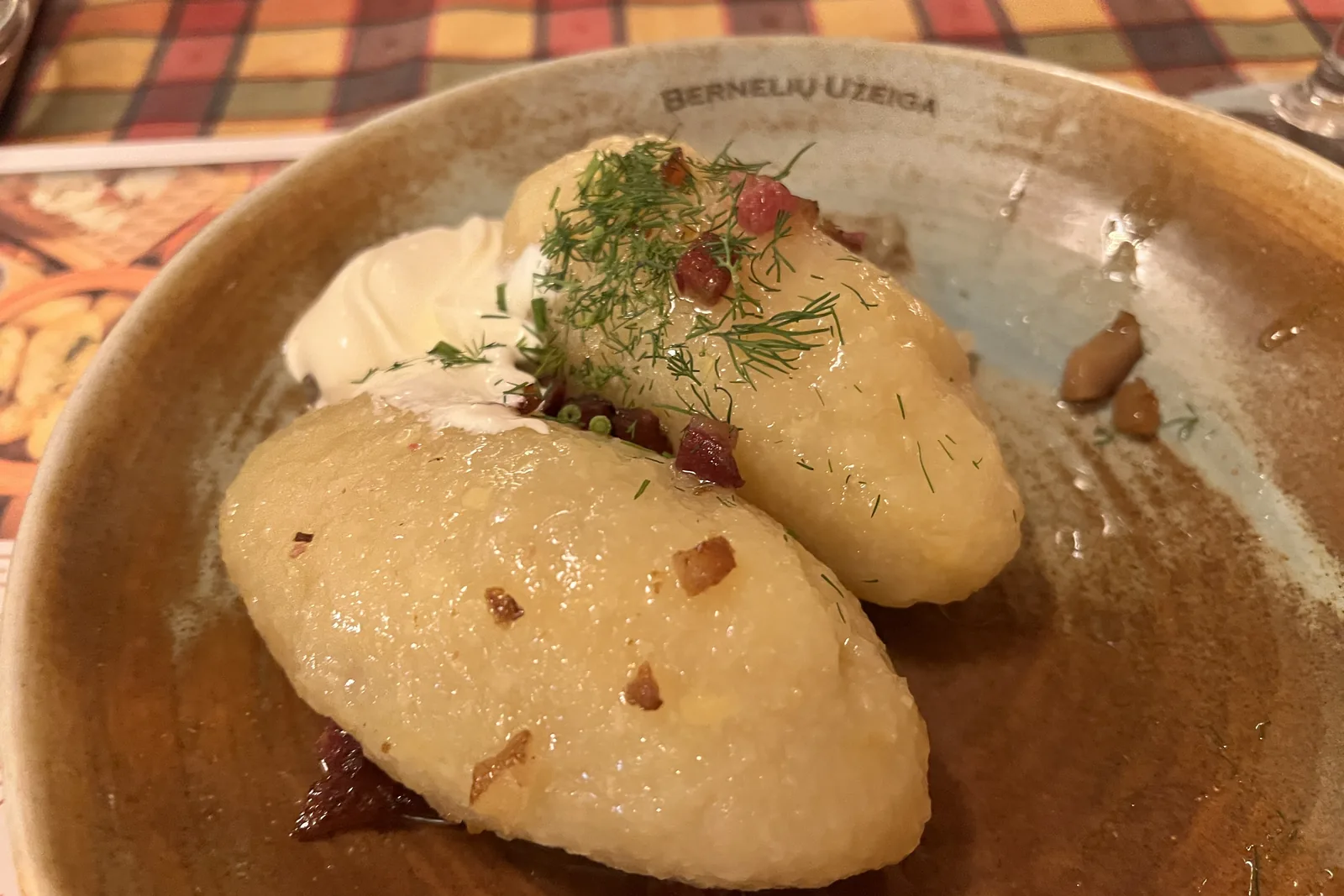
Two cepelinai potato dumplings with bacon bits, dill and sour cream on a plate in Kaunas Lithuania flag Lithuania 1h 30m
Dinner •Lithuanian Heritage

Cepelinai

This cepelinai recipe shapes finely grated raw potato and riced boiled potato into large, zeppelin-shaped dumplings around a juicy filling of seasoned ground pork, then boils them gently until tender. They arrive at the table under spirgai — crisp bacon and soft onion — with a generous spoonful of sour cream. One serving is about 750 g, two dumplings with sauce.

Comfort & Warmth

Large potato dumplings stuffed with seasoned pork, boiled until tender and served with bacon, onion and sour cream.

Pairs Well With
Sour cream, bacon-onion sauce & pickled cucumber
High Protein

Two golden half-moon kibinai pastries with braided edges on a white plate Lithuania flag Lithuania 1h 50m
Lunch •Trakai Heritage

Kibinai

Kibinai are crescent-shaped hand pies from Trakai, Lithuania: a soft, buttery yeasted dough folded over raw seasoned pork and onion, pinched shut with a braided edge, and baked until the crust turns deep gold and the filling cooks juicy inside its own steam. They come from the town's Karaim community, and the pork version is the one most Trakai cafes serve today. One serving (two pastries) is about 263 g.

Hearty & Satisfying

Golden yeasted pastry wrapped around juicy seasoned pork — the hand-held lunch Trakai is famous for.

Pairs Well With
Clear beef broth & sour cream
Bœuf bourguignon — French beef braised in red wine France flag France 4h
Dinner •Burgundy Terroir

Bœuf Bourguignon

Beef braised gently in red wine until the connective tissue melts into a velvet, gelatin-rich sauce — the classic Burgundy Sunday dinner.

Cellular Repair

Beef braised in red wine until spoon-tender, with mushrooms and pearl onions.

Pairs Well With
Parsnip Purée & Steamed French Haricots Verts
High Protein
Vietnamese braised pork belly with golden eggs in caramel sauce Vietnam flag Vietnam 1h 45m
Dinner •One Pot

Vietnamese Braised Pork and Eggs

Pork belly slowly braised in coconut water and caramel until meltingly tender, with golden eggs that soak up the sweet-savoury sauce — the Vietnamese family dish that tastes better the next day.

Comfort & Sustained Energy

Slow-braised pork belly and eggs in coconut water and caramel.

Pairs Well With
Steamed rice & pickled mustard greens
High Protein

The Dinner Gazette

Never wonder what’s for dinner again

One email a week with easy dinner ideas from around the world — ingredients, steps and nutrition, tested in our kitchen first.

Delivered every Thursday morning. Unsubscribe anytime.



