
Curated recipes from 193 countries  •  New seasonal Mediterranean issue out now

Overview

Kibinai

Kybyn (Karaim); Kibinas (singular); Trakai Karaim pastries

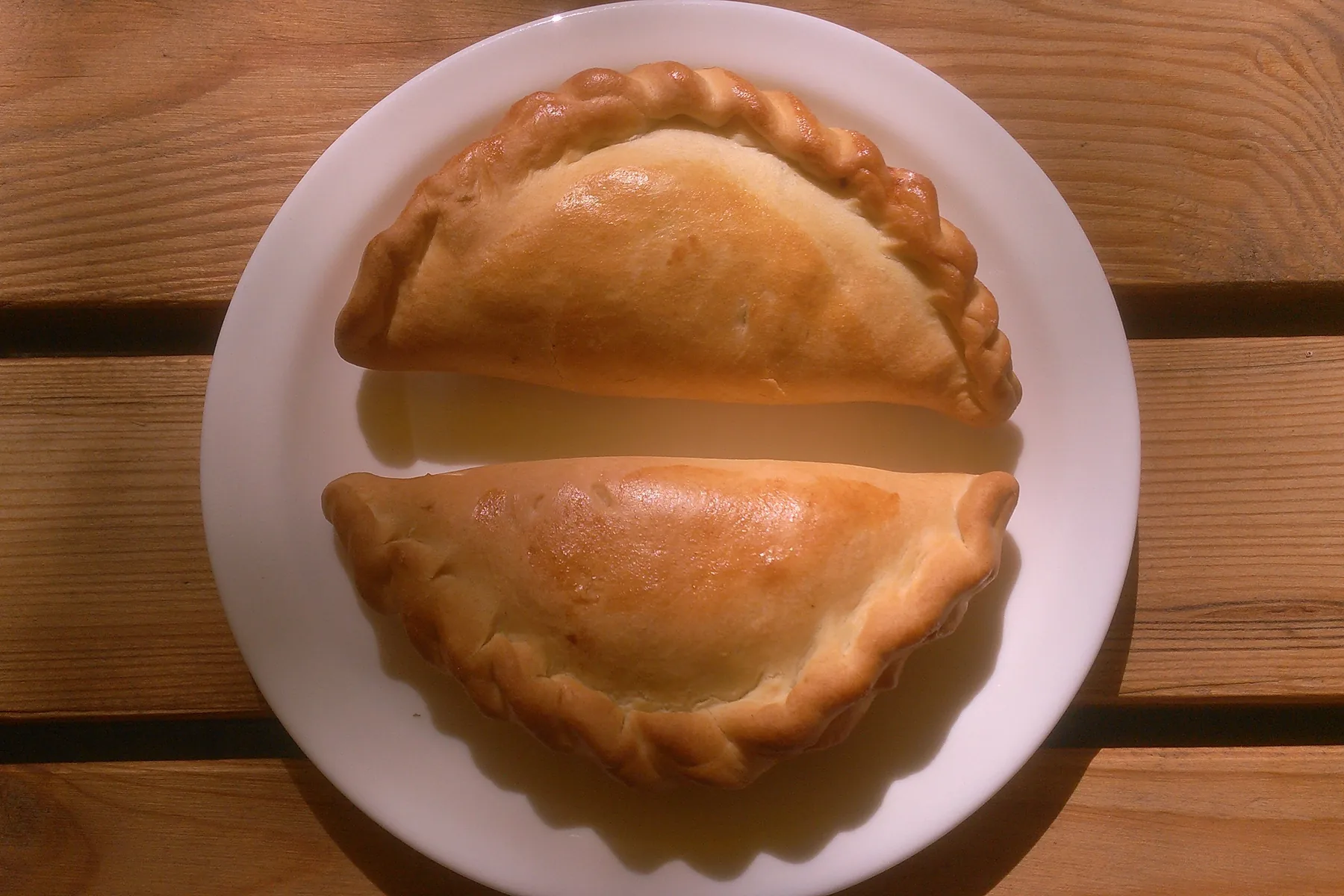
Kibinai are crescent-shaped hand pies from Trakai, Lithuania: a soft, buttery yeasted dough folded over raw seasoned pork and onion, pinched shut with a braided edge, and baked until the crust turns deep gold and the filling cooks juicy inside its own steam. They come from the town's Karaim community, and the pork version is the one most Trakai cafes serve today. One serving (two pastries) is about 263 g.

Kibinai belong to the Karaim, a small Turkic community that tradition says Grand Duke Vytautas brought from Crimea to Trakai in 1397–1398. The original filling was mutton with onion — the Karaim kept kosher meat — folded into a crescent of yeasted dough and baked golden. In 2010 kibinai were recognised as part of Lithuania's cultural heritage, and today Trakai's cafes fill them with pork, beef, chicken, mushrooms or cheese, but the half-moon shape and the braided edge have never changed.

Pairs well with: Clear beef broth & sour cream

Provenance

Lithuania flag Lithuania

Trakai Heritage

Nordic & European

Time Dedication

1h 50m

80m prep • 30m cook

Batch Yield

6 Servings

763 kcal per serving

1 serving ≈ 263 g

Technical Skill

Intermediate

Intermediate (Shaping & Sealing)

Meal Timing & Digestive Fit

Breakfast

Not Advised

Lunch

Prime Metabolic Fit

Dinner

Ideal Hearty Main

Snack & Tea

Inappropriate

Occasions: Weekday lunch, road trips and picnics, market days, family gatherings, cold-weather comfort food Cost: Low — about $2 per serving at home
Two golden half-moon kibinai pastries with braided edges on a white plate

Trakai Heritage

Photo: Ke an, CC BY-SA 4.0, via Wikimedia Commons

The Heritage Formulary

Measured Ingredients

Estimated cost: Low — about $2 per serving at home (USD)

A true kibinas is judged by its braid: a tight, even seal that holds the juices in, and a crust that is deep gold, not pale.

Execution Methodology & Culinary Technique

Step-by-Step Cooking Guide

Active 1h 50m
P

Prep Stage: Dough Rising, Filling Mixed Cold

80 Mins • Mixing, Rising, Shaping

Bloom the yeast in the warm milk with the sugar, then knead it with the flour, melted butter, one egg and 6 g of salt into a soft, smooth dough. Leave it covered in a warm place for 45 minutes until doubled — this is the step that makes kibinai soft instead of dense. While it rises, soften the onion in butter, cool it, and mix it into the cold ground pork with the remaining salt, pepper, marjoram and water. Keep the filling cold until the moment you shape the pastries; warm filling softens the dough and leaks.

Maestro Tip: If your kitchen is cool, rise the dough in the oven with just the light on — about 26°C (79°F) is ideal.

  1. 1

    Mix and Knead the Dough

    15 Mins • Mixing Bowl Milk at 37°C (98°F)

    Stir the yeast and sugar into the warm milk and leave 5 minutes until foamy. Tip in the flour and 6 g of salt, add the melted butter and one beaten egg, and mix to a shaggy dough. Knead on a lightly floured surface for 8–10 minutes until smooth, soft and slightly tacky — it should spring back when poked.

    Resist adding extra flour while kneading; a soft dough bakes into a soft kibinas, a stiff one bakes into a brick.

    Done when: Smooth dough that springs back when poked and leaves the bowl clean.

  2. 2

    Let the Dough Rise

    45 Mins • Warm Place About 26°C (79°F)

    Shape the dough into a ball, put it in a lightly oiled bowl, cover with a tea towel or cling film, and leave in a warm, draught-free spot until doubled in size, about 45 minutes.

    Mark the bowl's level with a rubber band so you can see at a glance when it has truly doubled.

    Done when: Doubled in volume; a fingertip pressed in leaves a dent that fills back only slowly.

  3. 3

    Make the Pork Filling

    10 Mins • Frying Pan Medium heat, about 160°C (320°F) in the pan

    Melt the remaining 15 g of butter and soften the diced onion for 4–5 minutes until translucent, not browned. Cool it completely, then mix into the cold ground pork with 4 g of salt, the pepper, marjoram and the cold water. Stir with a fork until evenly combined but not overworked.

    The filling goes in raw and cooks inside the pastry — that is why the water matters: it steams the meat juicy instead of letting it dry out.

    Done when: Evenly mixed, cold, and loose enough to spoon — not a stiff paste.

  4. 4

    Shape the Half-Moons

    10 Mins • Work Surface Room temperature

    Knock the dough back and divide it into 12 equal pieces, about 75 g each. Roll each into a circle about 14 cm (5.5 in) across. Spoon about 45 g of filling onto one half, leaving a 1 cm (0.5 in) border. Fold the dough over, press the edges firmly, then pinch and twist along the seam to make the traditional braided edge. Place seam-side up on a lined baking tray.

    If the edge will not stick, brush it with a little water first. A braid that is pinched tight is what stops the juices escaping in the oven.

    Done when: 12 neat half-moons, edges sealed all the way round, no filling peeking out.

  5. 5

    Glaze and Bake

    25 Mins • Oven 200°C (400°F)

    Heat the oven to 200°C (400°F). Brush each kibinas generously with the beaten egg and milk glaze. Bake for 22–25 minutes until deep golden brown and glossy, turning the tray once halfway through if your oven browns unevenly.

    Do not open the oven in the first 15 minutes — the dough is still rising and a blast of cool air can sink it.

    Done when: Deep golden, glossy crust; the filling inside has reached at least 71°C (160°F) — check one with a thermometer through the seam if unsure.

  6. 6

    Rest Before Eating

    5 Mins • Cooling Rack Room temperature

    Move the kibinai to a rack and rest for 5 minutes. The filling is steaming hot and needs a moment to settle, and the crust stays crisp while the juices redistribute.

    Eat them warm, within the first hour — that is when the crust crackles and the filling is at its juiciest.

    Done when: Cool enough to hold, still warm inside, crust crisp to the touch.

Finishing Touches & Plating

Serve two per person, warm from the oven, with a small bowl of sour cream or a cup of clear broth on the side. Break one open at the table — the steam and the smell of peppery pork are half the pleasure.

Nutritional Physiology & Benefits

Nutrition

Energy

763

kcal / serving

Protein

28g

Complete AA

Carbs

83g

Complex

Fats

35g

Healthy

Per serving (6 servings · 1 serving ≈ 263 g)
Energy763 kcal
Protein28 g
Carbohydrates83 g
Fat35 g
Fibre3.3 g
Sugar5.1 g
Sodium749 mg
Per 100g
Energy290 kcal
Protein10.7 g
Carbohydrates31.4 g
Fat13.1 g
Fibre1.2 g
Sugar1.9 g
Sodium284 mg

Nutrition values are estimated — calculated from USDA FoodData Central values for the listed ingredients.

Vitamins & minerals: Thiamin, niacin and vitamin B12 (pork), iron and zinc (pork), selenium (pork, egg, flour), vitamin B6 and folate (onion, flour).

Real Staying Power

With 28.2 g of protein and 82.7 g of carbohydrate per serving, two kibinai keep you full for hours — the reason they are Trakai's working lunch, not a snack.

B Vitamins from Pork

Pork is a strong source of thiamin, niacin and vitamin B12, which support normal energy metabolism and the nervous system as part of an ordinary varied diet.

Simple, Recognisable Ingredients

Flour, milk, butter, egg, pork and onion — nothing ultra-processed, no additives, and everything in the recipe is an ingredient you can buy and name.

Food Pairings

What to Eat With

To optimize nutrient absorption and elevate the sensory depth, pair with these authentic accompaniments:

Soups

Clear Beef or Chicken Broth

The traditional Trakai accompaniment: a small cup of hot, light broth to sip between bites. Its warmth and salt balance the rich pastry, and it replaces the moisture a sauce would add without making the crust soggy.

Sauces

Sour Cream

A spoonful of cool sour cream on the side gives a tangy contrast to the buttery crust and the peppery pork, and it cools each bite just enough to eat the pastries while they are still warm.

Vegetables

Pickled Cucumbers

Sharp, cold pickles cut straight through the pastry's richness. The acidity refreshes the palate, so the second kibinas tastes as good as the first.

Sides

Cabbage and Carrot Salad

A crunchy, lightly vinegared cabbage salad adds freshness and fibre to a rich, soft plate, and its crisp texture contrasts with the tender baked dough.

Drinks

Herbal Tea or Light Beer

Unsweetened herbal tea keeps the meal light, while a cold light lager is the pub-style match — its bitterness and bubbles cleanse the palate after each buttery bite. Alcohol is for adults only, of course.

Complete menu

Two warm kibinai with a cup of clear beef broth, pickled cucumbers and a cabbage-carrot salad — a complete Trakai lunch that needs nothing else.

Digestive Guardrails

What NOT to Combine

To prevent digestive distress, sluggishness, or palate clash, avoid pairing the dish with these elements:

Heavy Creamy Sauces Over the Pastry

Pouring a thick sauce over kibinai soaks the crust soft and piles saturated fat onto an already rich pastry. Keep sauces and sour cream on the side, where they belong. This is a cooking note, not medical advice.

Very Sugary Drinks with a Rich Pastry

A large sweetened soft drink with a pastry that already carries 82.7 g of carbohydrate per serving adds a fast sugar load on top of a heavy meal, which can leave you sluggish and is unhelpful for blood-sugar control. Water, tea or broth is the kinder match. This is general information, not medical advice.

Eating Them Undercooked

The filling goes in raw, so a pale, under-baked kibinas can hide pork that has not reached the safe temperature of 71°C (160°F). Always bake until deep golden and, if in doubt, check the centre with a thermometer. This is a food-safety note, not medical advice.

General information only, not medical advice — consult a doctor for personal dietary decisions.

Who Should Eat It

Who Should Eat

  • General adultsA satisfying, filling lunch — two pastries with broth and salad make a complete meal.
  • ChildrenUsually a hit: mild, hand-held and fun to eat. Cut one open to check it is not too hot inside, and one pastry is plenty for a small child.
  • ElderlySoft, easy to chew once the crust is broken, and protein-rich. Serve one pastry with broth if appetite is small, and watch the salt.
  • Pregnant womenFine when baked right through — the pork must reach 71°C (160°F) inside. Eat freshly baked and hot; skip any that have sat out for hours.
  • Breastfeeding womenA filling, energy-rich lunch that suits the extra calories of breastfeeding. Pair with salad and water rather than a second helping.
  • AthletesGood post-training food: 28.2 g of protein and plenty of carbohydrate for recovery. Add the cabbage salad for extra vegetables.
  • Weight gainAt 763 kcal a serving with a good protein content, kibinai are a genuinely useful way to add energy without forcing down large volumes of food.
  • Weight lossRich and filling, so portion matters: one pastry with a big salad and broth is a smarter plate than two pastries alone. Save the full two-pastry serving for an active day.

Health Conditions — Adjust or Avoid

Conditions

  • DiabetesOne serving carries 82.7 g of carbohydrate, mostly from the pastry, so it raises blood sugar substantially. One pastry with salad and broth is a more manageable portion. Ask your clinician about portion size.
  • High blood pressureAt 749 mg of sodium per serving, this is a salty meal. Skip extra salt, choose low-salt broth, and balance the day with lower-sodium foods. Ask your clinician about sodium limits.
  • Kidney diseaseHigh in protein (28.2 g) and sodium (749 mg) per serving, both of which many kidney diets limit. Portions and frequency matter — ask your clinician before making it a regular meal.
  • GoutPork and yeasted pastry both contribute purines, so a large serving can add to uric acid load. Keep portions modest and infrequent if gout flares are a problem. Ask your clinician for personal advice.
  • Stomach issuesRich, buttery pastry can feel heavy and may trigger reflux or indigestion, especially eaten fast or late at night. Eat slowly, in the daytime, and skip the beer. Ask your clinician if symptoms persist.
  • Cardiovascular diseaseWith 34.6 g of fat per serving, including saturated fat from butter and pork, this is an occasional treat rather than an everyday lunch for most heart-conscious diets. Ask your clinician about how often it fits your plan.
  • Fatty liverA rich pastry with refined flour and saturated fat is not a liver-friendly staple. Enjoy it occasionally, keep the portion to one pastry, and load the plate with salad. Ask your clinician for guidance.
  • Food allergiesContains gluten (wheat), egg and milk (butter, milk). The filling is pork. Anyone with a wheat, egg or milk allergy should not eat it, and cross-contact matters in shared kitchens — check with the cook.
  • Special therapeutic dietsNot suitable for gluten-free, dairy-free, vegetarian or low-sodium therapeutic diets as written. Any adaptation changes the dish, so ask your clinician or dietitian before substituting.

If you have a medical condition, consult your doctor before changing your diet.

Storage & Use

Storage & Use

How to store
Cool completely on a rack, uncovered, so the crust stays crisp, then store in a paper bag or a loosely covered container — never seal warm pastries in plastic.
In the fridge
3 days, in a covered container.
In the freezer
1 month, wrapped individually in foil then placed in a freezer bag; thaw overnight in the fridge.
How to reheat
Reheat in a 180°C (350°F) oven for 10–12 minutes until hot all the way through, to 74°C (165°F); the oven re-crisps the crust — the microwave makes it soft and soggy.
Freezing recommended
Yes — baked kibinai freeze well and re-crisp in the oven; for the very best result, freeze them unbaked and bake from frozen, adding 8–10 minutes.
Signs it has spoiled
Sour or off smell, slimy or sticky pastry, mould, or a filling that smells stale — discard, do not taste to check.

More recipes to explore

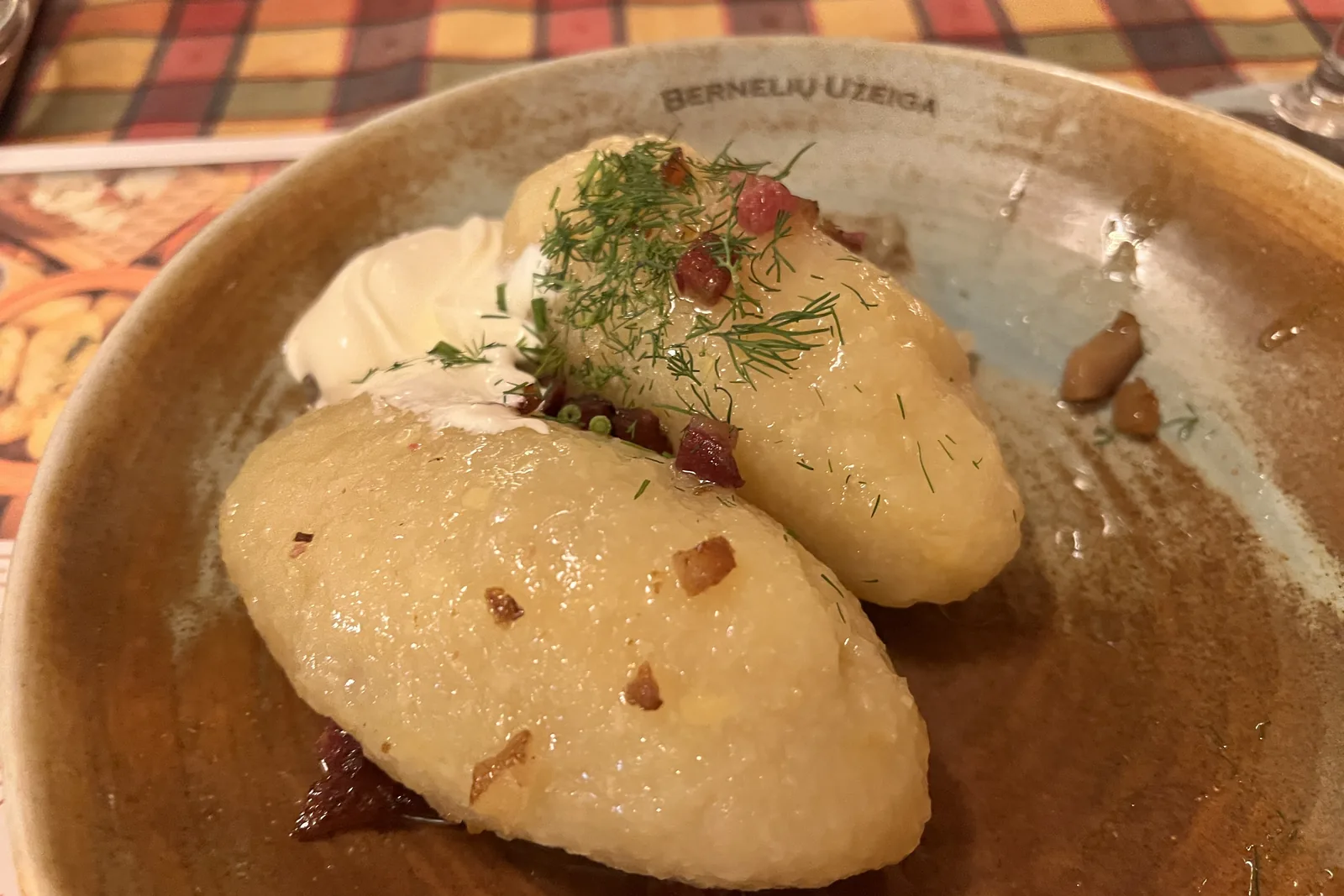
Two cepelinai potato dumplings with bacon bits, dill and sour cream on a plate in Kaunas Lithuania flag Lithuania 1h 30m
Dinner •Lithuanian Heritage

Cepelinai

This cepelinai recipe shapes finely grated raw potato and riced boiled potato into large, zeppelin-shaped dumplings around a juicy filling of seasoned ground pork, then boils them gently until tender. They arrive at the table under spirgai — crisp bacon and soft onion — with a generous spoonful of sour cream. One serving is about 750 g, two dumplings with sauce.

Comfort & Warmth

Large potato dumplings stuffed with seasoned pork, boiled until tender and served with bacon, onion and sour cream.

Pairs Well With
Sour cream, bacon-onion sauce & pickled cucumber
High Protein
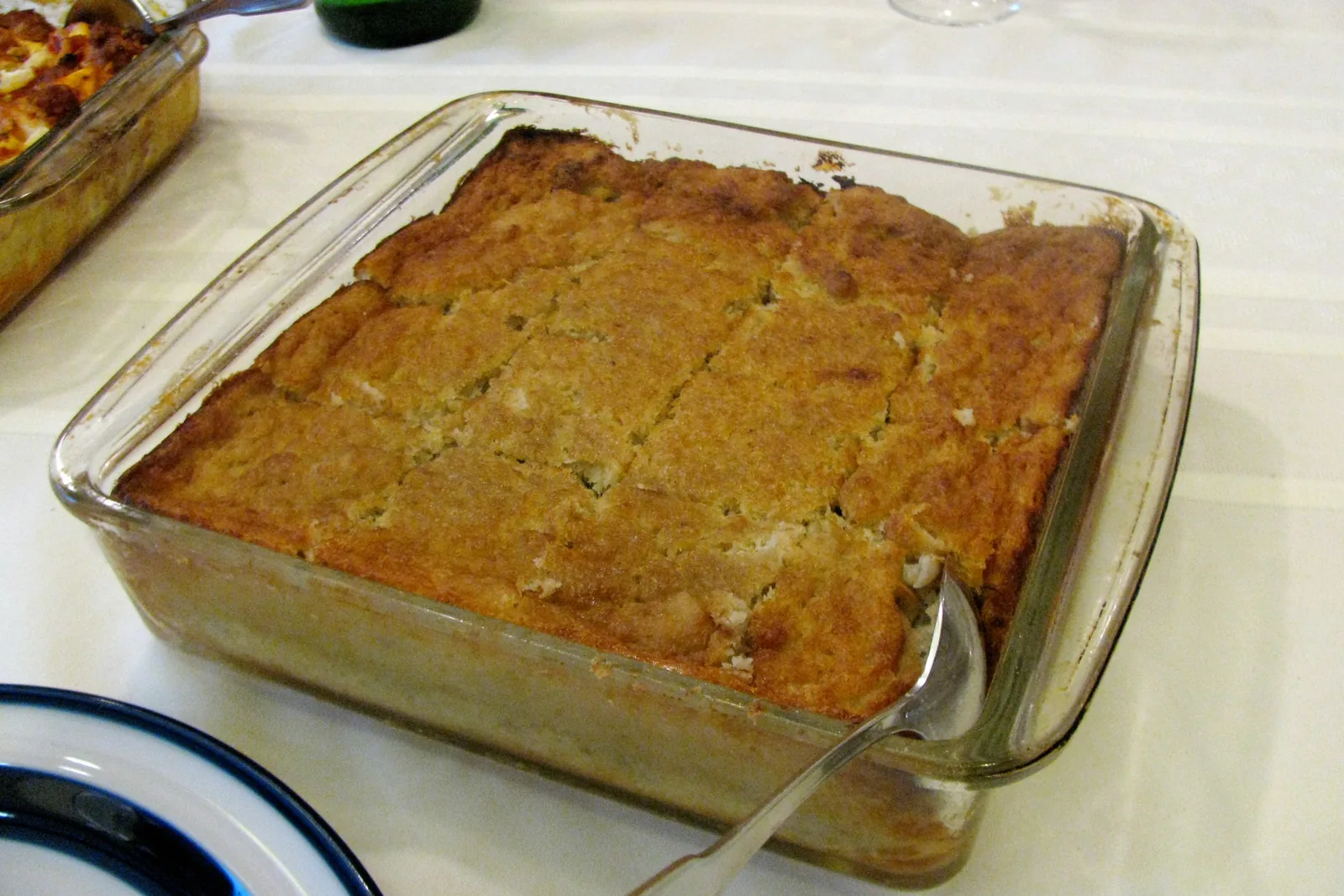
A glass dish of golden-brown baked kugelis potato pudding on a table, cut into squares Lithuania flag Lithuania 1h 30m
Dinner •Lithuanian Heritage

Kugelis

This kugelis recipe grates raw potatoes as fine as it can go, stirs them with softened onion, butter, eggs and warm milk, then bakes the mixture in a buttered dish until the top turns deep gold and the edges pull away. It is cut into thick slices at the table and served with a sauce of crisp bacon, soft onion and sour cream. One serving is about 358 g.

Comfort & Warmth

Grated potato baked with milk, egg and butter into a golden pudding, served hot with a bacon, onion and sour cream sauce.

Pairs Well With
Bacon-onion sour cream sauce, applesauce & pickles
Tagliatelle al ragù Bolognese in a bowl with Parmigiano-Reggiano Italy flag Italy 4h 25m
Lunch •Emilia-Romagna

Tagliatelle al Ragù Bolognese

Slow-braised soffritto and coarse ground heritage meats layered over handmade egg yolk dough for mid-day stamina.

Lean Protein

Slow-simmered beef ragù tossed through fresh egg tagliatelle.

Pairs Well With
Bitter Radicchio & Aged Balsamico di Modena
Pasta & Noodles • High Protein
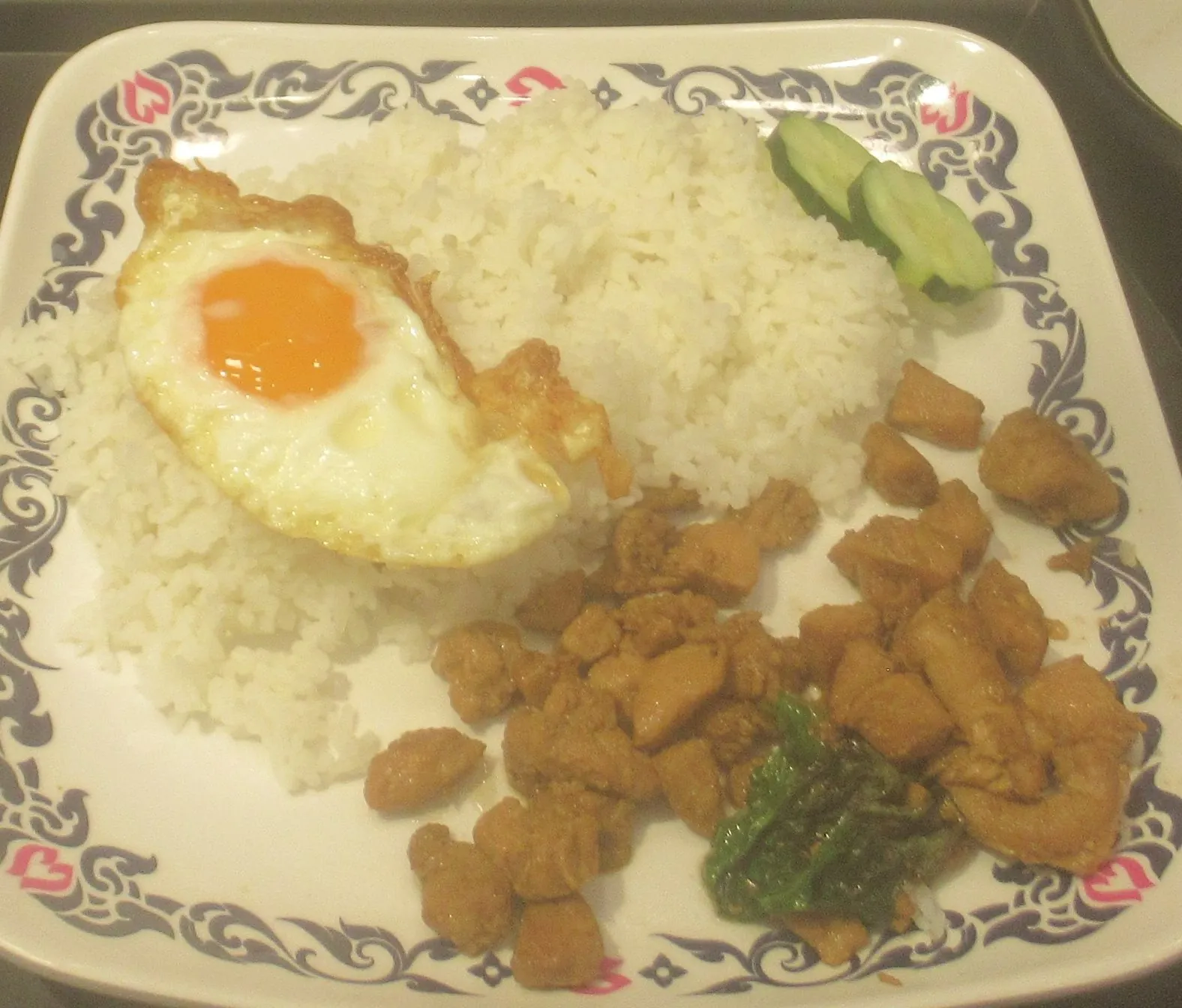
Pad kra pao gai — Thai holy basil chicken with fried egg and rice Thailand flag Thailand 30m
Lunch •Bangkok Street Flame

Pad Kra Pao Gai

High-heat wok flash of holy basil and crushed chillies over minced chicken, served over jasmine rice with a crispy-edged fried egg.

High Energy

Capsaicin brings the heat; holy basil adds a peppery, clove-like aroma.

Pairs Well With
Chilled Cucumber Salad & Fish Sauce Lime Dip
High Protein • Quick Prep (<30m)

The Dinner Gazette

Never wonder what’s for dinner again

One email a week with easy dinner ideas from around the world — ingredients, steps and nutrition, tested in our kitchen first.

Delivered every Thursday morning. Unsubscribe anytime.