Curated recipes from 193 countries  •  New seasonal Mediterranean issue out now

Overview

Kyrgyz Beshbarmak

Beshbarmak, Five Fingers, Kyrgyz Boiled Meat and Noodles

This kyrgyz beshbarmak recipe simmers lamb shoulder and beef chuck until they fall apart, then serves the sliced meat over wide, hand-torn noodles with a bowl of hot onion broth, called chyk, poured over the top. One serving is about 580 g.

Beshbarmak means 'five fingers' — it was traditionally eaten by hand, and it is the national dish of Kyrgyzstan as well as a shared feast dish across the Central Asian steppe. The Kyrgyz version is built on lamb and beef simmered in a single pot, with the meat sliced over hand-torn noodles and the cooking broth served alongside as chyk, a bowl of hot onion broth each guest spoons over their own portion.

Pairs well with: Hot chyk onion broth, fresh tomato and spring onion, green tea

Provenance

Kyrgyzstan flag Kyrgyzstan

Kyrgyz National Dish

East & South Asia

Time Dedication

3h 15m

45m prep • 150m cook

Batch Yield

4 Servings

986 kcal per serving

1 serving ≈ 580 g

Technical Skill

Advanced

Advanced (Long Simmer)

Meal Timing & Digestive Fit

Breakfast

Not Advised

Lunch

Hearty Midday Main

Dinner

Ideal Hearty Main

Snack & Tea

Inappropriate

Pasta & NoodlesHigh Protein Occasions: Family feasts, celebrations, weekend cooking project, guest dinners Cost: Medium — about $5–6 per serving at home
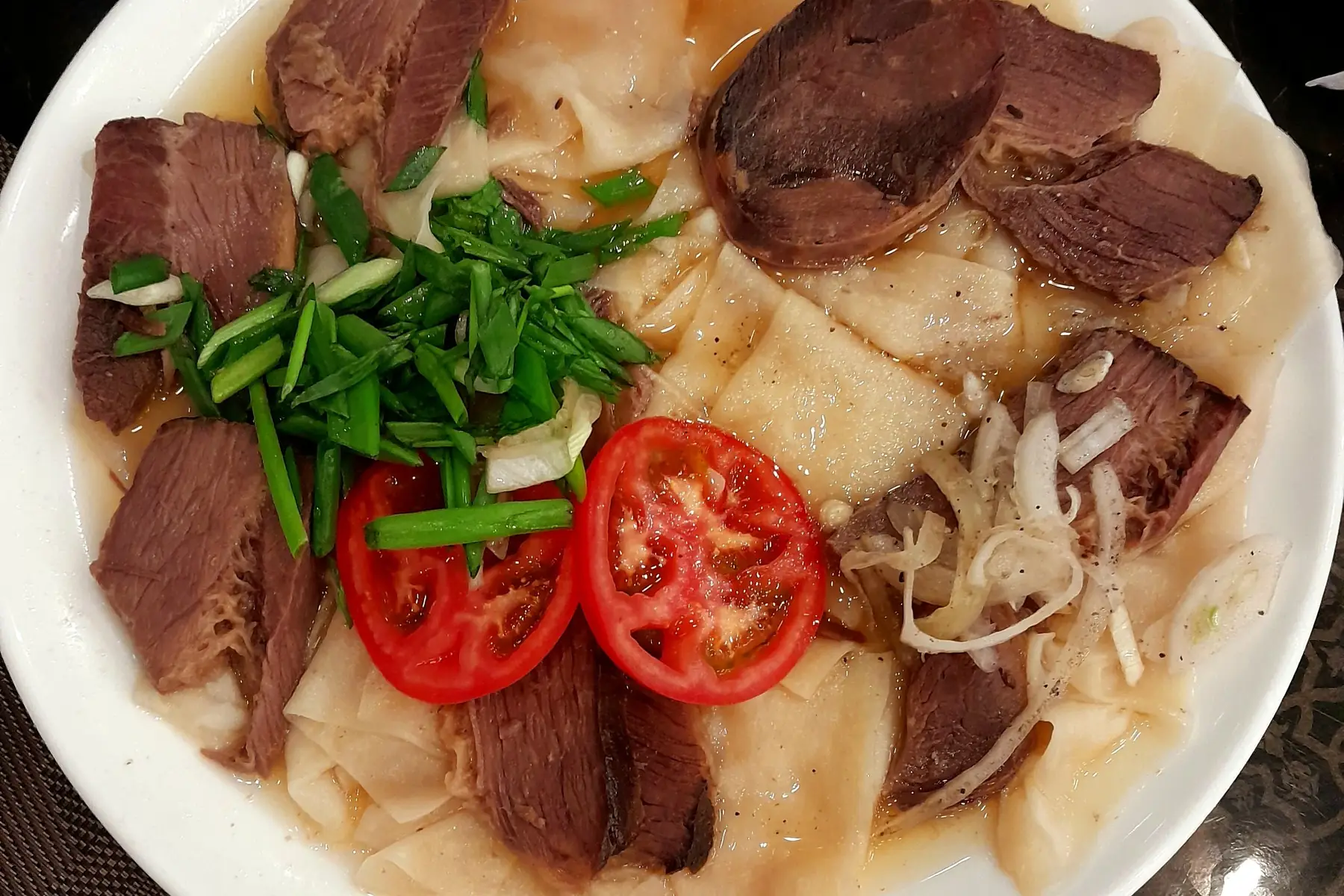
Beshbarmak — sliced boiled lamb and beef over flat hand-torn noodles with tomato and spring onion

Kyrgyz National Dish

Photo: Miss Kamola, CC BY-SA 4.0, via Wikimedia Commons

The Heritage Formulary

Measured Ingredients

Estimated cost: Medium — about $5–6 per serving at home (USD)

Good beshbarmak has fall-apart meat, silky hand-torn noodles, and a clear, rich broth served hot as chyk.

Execution Methodology & Culinary Technique

Step-by-Step Cooking Guide

Active 3h 15m
P

Prep Stage: Meat, Broth and Noodle Dough

45 Mins • Simmering & Kneading

Rinse the lamb and beef and set them in a large pot with the halved onions, carrot rounds and bay leaves, covered with cold water. While the pot comes up to a simmer, knead the flour, egg, salt and water into a firm dough and let it rest under a cloth.

Maestro Tip: Start the meat first — the dough rests happily while the broth does its slow work.

  1. 1

    Simmer the Meat Low and Slow

    150 Mins Gentle simmer, about 90°C (194°F)

    Put the lamb, beef, 200g halved onions, carrot and bay leaves in a large pot with 2.5 L cold water. Bring slowly to a simmer, skim off the grey foam for the first 15 minutes, then lid ajar and simmer gently for about 2.5 hours until the meat is completely tender.

    Never let it boil hard — a rolling boil clouds the broth and toughens the meat. Small bubbles breaking the surface is exactly right.

    Done when: A fork slides into the thickest part of the lamb with no resistance, and the meat pulls from the bone easily.

  2. 2

    Knead and Rest the Noodle Dough

    40 Mins Room temperature, about 22°C (72°F)

    Mix the flour with 5g of the salt, add the beaten egg and about 150 ml lukewarm water, and knead for 8–10 minutes until the dough is smooth, firm and no longer sticky. Cover with a damp cloth and rest for 30 minutes.

    A firm dough is the whole secret — soft dough tears when you stretch it and goes gummy in the broth.

    Done when: The dough is smooth, springs back when pressed, and holds a fingerprint for a second before slowly filling in.

  3. 3

    Roll and Tear the Flat Noodles

    15 Mins Room temperature, about 22°C (72°F)

    Roll the rested dough out on a floured board to about 2 mm thick, then cut it into rough 6–8 cm squares and diamonds. Kyrgyz noodles are torn and cut by hand, so uneven edges are correct — they catch the broth better than perfect shapes.

    Dust the cut pieces lightly with flour and keep them in a single layer so they do not stick together before cooking.

    Done when: The sheets are thin enough to see the board faintly through them.

  4. 4

    Make the Chyk Onion Broth

    10 Mins Hot broth, about 95°C (203°F)

    Ladle about 600 ml of the hot meat broth into a bowl. Stir in the 100g thinly sliced raw onion rings, the butter, the remaining 3g salt and the cracked pepper. Cover and leave for 5 minutes — the onion softens in the heat but stays bright and a little sharp.

    The chyk is served in small bowls alongside the platter, and each person spoons it over their own noodles. Taste it: it should be salty, oniony and rich.

    Done when: The onion rings have wilted and turned translucent, and the butter has melted into the broth.

  5. 5

    Cook the Noodles in the Broth

    8 Mins Boiling broth, 100°C (212°F)

    Lift the meat out of the pot and keep it warm under foil. Bring the broth to a full boil, shake the flour off the noodle pieces, and cook them in the broth for 5–8 minutes until tender and silky. Lift them out with a slotted spoon and spread them over a large warm platter.

    Cook the noodles in two batches if the pot is crowded — they need room to swim or they clump.

    Done when: A noodle tastes tender with a slight chew, never chalky in the middle.

  6. 6

    Slice the Meat and Build the Platter

    10 Mins Serving temperature, above 63°C (145°F)

    Slice the lamb and beef across the grain into broad, flat slices about 5 mm thick. Lay the meat over the noodles, scatter the spring onion and tomato slices on top, and grind a little extra black pepper over everything. Serve at once with the bowls of hot chyk.

    Slice across the grain and keep the slices generous — thin shreds dry out in seconds on the hot noodles.

    Done when: The meat is steaming, juicy, and cuts cleanly without crumbling.

Finishing Touches & Plating

Pour a ladle of chyk over your own portion at the table, eat with your hands or a fork, and keep the broth bowls coming — the noodles are meant to be moist, never dry.
Nutritional Physiology & Benefits

Nutrition

Energy

986

kcal / serving

Protein

62g

Complete AA

Carbs

88g

Complex

Fats

41g

Healthy

Per serving (4 servings · 1 serving ≈ 580 g)
Energy986 kcal
Protein62 g
Carbohydrates88 g
Fat41 g
Fibre5.5 g
Sugar5.4 g
Sodium982 mg
Per 100g
Energy170 kcal
Protein10.6 g
Carbohydrates15.2 g
Fat7.1 g
Fibre0.9 g
Sugar0.9 g
Sodium169 mg

Nutrition values are estimated — calculated from USDA FoodData Central values for the listed ingredients.

Vitamins & minerals: Iron and zinc (lamb and beef), vitamin B12 (meat), vitamin C (tomato and spring onion), potassium (onion and potato-free broth).

Seriously High in Protein

Lamb and beef together give more than 60 g of protein a serving — this is a meal built for hard work in cold mountain air.

A Whole-Pot Meal

Meat, noodles and broth all come from one pot, so nothing is wasted and the broth carries the flavour of everything in it.

Fresh Onion and Tomato on Top

Raw onion, spring onion and tomato cut through the rich meat and add crunch, colour and vitamin C to every bite.

Food Pairings

What to Eat With

To optimize nutrient absorption and elevate the sensory depth, pair with these authentic accompaniments:

Drinks

Hot Green Tea

Tea is the Kyrgyz table drink after a rich meat meal — it cleanses the palate between bites and is served all through the meal.

Vegetables

Cucumber and Tomato Salad

A simple sharp salad of cucumber, tomato and onion lightens the platter and gives a cool crunch against the hot noodles.

Sides

Fresh Flatbread

Torn flatbread is for mopping up the chyk left in the bowl — the broth is too good to leave behind.

Full Menus

As the Centre of a Feast

Beshbarmak is the guest dish in Kyrgyzstan — serve it after a small starter of bread and salad, and let it carry the whole table.

Complete menu

Serve the beshbarmak with a cucumber and tomato salad, fresh flatbread, and hot green tea to finish.

Digestive Guardrails

What NOT to Combine

To prevent digestive distress, sluggishness, or palate clash, avoid pairing the dish with these elements:

A Heavy Creamy Sauce

The dish already carries plenty of fat from the lamb and the broth; a creamy sauce would sit heavily and bury the clean meat flavour. Keep it to chyk. This is general guidance, not medical advice.

Letting the Noodles Sit in the Broth

Noodles left in the pot keep absorbing liquid and turn to mush — lift them out as soon as they are tender and plate them straight away.

General information only, not medical advice — consult a doctor for personal dietary decisions.

Who Should Eat It

Who Should Eat

  • General adultsA complete, very filling dinner — one generous serving is a whole meal.
  • ChildrenCut the meat small and skip the cracked pepper; the noodles and mild broth suit children well.
  • ElderlyChoose the tenderest slices and plenty of broth; the meat is soft after the long simmer, but the portion is large.
  • Pregnant womenFine when the meat is cooked right through and served hot; keep the portion moderate because it is rich.
  • Breastfeeding womenA nourishing, high-protein meal; drink plenty of water or tea with it.
  • AthletesExcellent after training — high protein plus a big serving of carbohydrate from the noodles.
  • Weight gainAn easy way to add calories: the combination of meat, noodles and broth is energy-dense.
  • Weight lossKeep the portion to about half a serving, load up on the salad, and take the leanest beef slices with less broth fat.

Health Conditions — Adjust or Avoid

Conditions

  • DiabetesThe noodles are the main carbohydrate — keep them to about a cup and fill the rest of the plate with meat and salad; ask your clinician about portion size.
  • High blood pressureThe broth is salty, so use less salt in the pot and take the chyk sparingly; ask your clinician if you are on a sodium limit.
  • Kidney diseaseThis dish is high in protein and sodium, so it is not a regular choice on a restricted diet — ask your clinician first.
  • GoutRed meat and rich broth are high in purines; eat it only occasionally and in a small portion, and ask your clinician.
  • Stomach issuesThe long-simmered meat is gentle, but raw onion in the chyk can irritate a sensitive stomach — take the broth without the raw onion if needed, and ask your clinician.
  • Cardiovascular diseaseLamb fat and salt are the concerns here; choose lean beef slices, skim the broth, and keep portions moderate — ask your clinician.
  • Fatty liverA rich, fatty meal, so keep it occasional and modest in size; ask your clinician about frequency.
  • Food allergiesContains wheat (gluten) and egg in the noodles, and milk (butter). No nuts, soy or seafood.
  • Special therapeutic dietsNot suitable for low-protein, low-sodium or gluten-free diets without major changes — ask your clinician or dietitian before adapting it.

If you have a medical condition, consult your doctor before changing your diet.

Storage & Use

Storage & Use

How to store
Cool quickly; store meat, noodles and broth in separate airtight containers.
In the fridge
Meat and broth 3 days; cooked noodles 2 days.
In the freezer
Meat and broth 2 months; noodles do not freeze well.
How to reheat
Warm the broth to a boil, add the meat to heat through, and warm the noodles in the broth for 2 minutes; reheat to 74°C (165°F).
Freezing recommended
Yes — freeze the meat and broth together; cook fresh noodles when you serve it.
Signs it has spoiled
Sour smell in the broth, slimy noodles, or grey, dry meat.

More recipes to explore

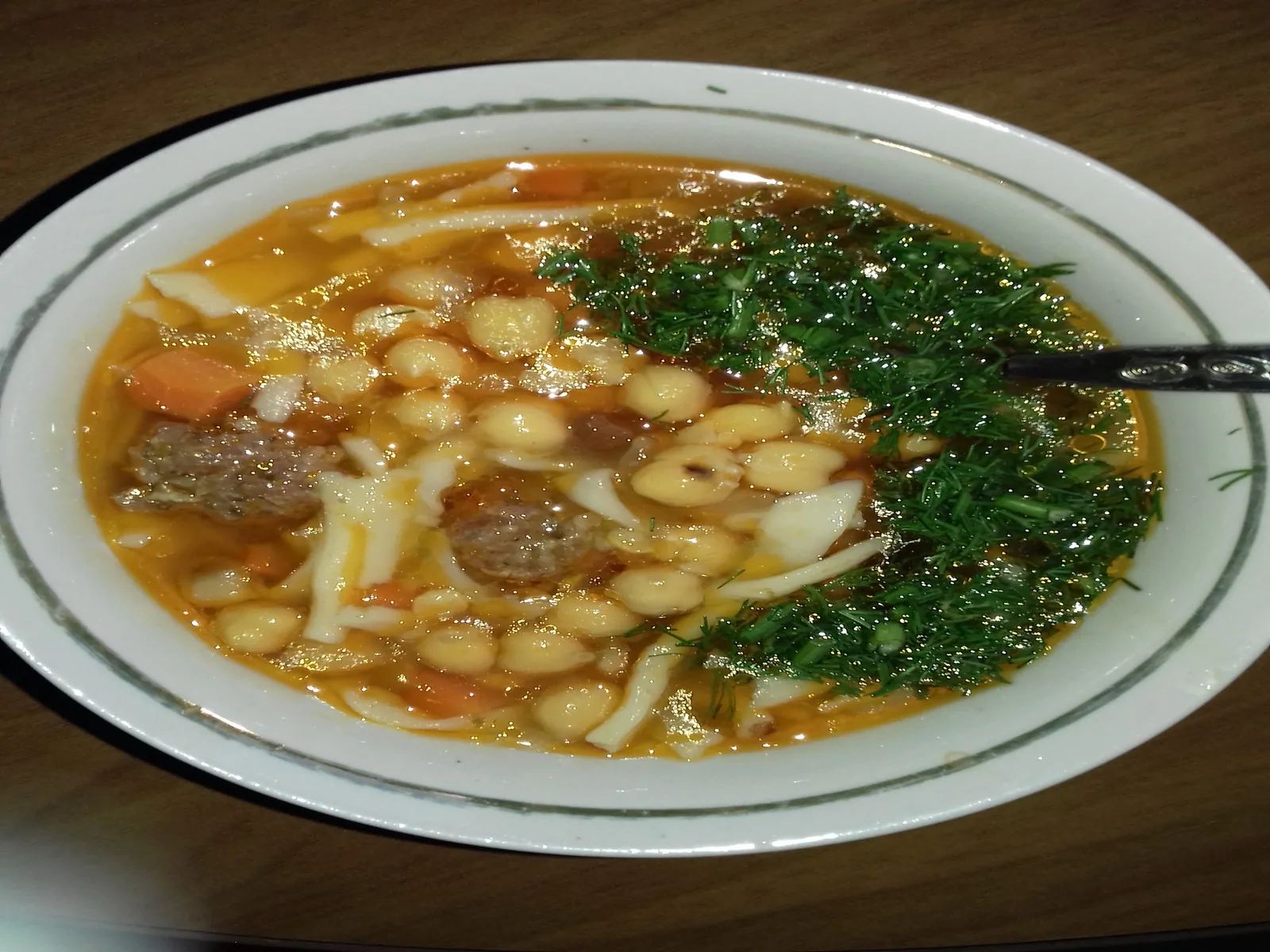
Lagman — hand-pulled noodles in a spicy broth with chickpeas, beef, carrot and fresh dill Kyrgyzstan flag Kyrgyzstan 2h
Dinner •Dungan Table in Bishkek

Kyrgyz Lagman

This kyrgyz lagman recipe pulls soft dough into long hand-stretched noodles and simmers them in a spicy beef, pepper and tomato broth with chickpeas, carrot and celery, finished with dill and vinegar. One serving is about 620 g.

Comfort & Warmth

Spicy hand-pulled noodles in a beef, pepper and tomato broth with chickpeas and fresh dill.

Pairs Well With
Tomato and onion salad, warm flatbread, hot green tea
Pasta & Noodles
Manty — large steamed beef dumplings on a patterned plate Kyrgyzstan flag Kyrgyzstan 1h 40m
Dinner •Kyrgyz Family Favourite

Kyrgyz Manty

This kyrgyz manty recipe wraps a juicy filling of beef, onion and pumpkin in thin dough, steams the big dumplings in a tall multi-tier steamer, and serves them hot with sour cream, vinegar and dill. One serving is about 360 g.

Comfort & Warmth

Big steamed dumplings filled with beef, onion and pumpkin, served with sour cream and vinegar.

Pairs Well With
Cucumber and tomato salad, warm flatbread, hot green tea
High Protein
Bœuf bourguignon — French beef braised in red wine France flag France 4h
Dinner •Burgundy Terroir

Bœuf Bourguignon

Beef braised gently in red wine until the connective tissue melts into a velvet, gelatin-rich sauce — the classic Burgundy Sunday dinner.

Cellular Repair

Beef braised in red wine until spoon-tender, with mushrooms and pearl onions.

Pairs Well With
Parsnip Purée & Steamed French Haricots Verts
High Protein
Vietnamese braised pork belly with golden eggs in caramel sauce Vietnam flag Vietnam 1h 45m
Dinner •One Pot

Vietnamese Braised Pork and Eggs

Pork belly slowly braised in coconut water and caramel until meltingly tender, with golden eggs that soak up the sweet-savoury sauce — the Vietnamese family dish that tastes better the next day.

Comfort & Sustained Energy

Slow-braised pork belly and eggs in coconut water and caramel.

Pairs Well With
Steamed rice & pickled mustard greens
High Protein

The Dinner Gazette

Never wonder what’s for dinner again

One email a week with easy dinner ideas from around the world — ingredients, steps and nutrition, tested in our kitchen first.

Delivered every Thursday morning. Unsubscribe anytime.