Curated recipes from 193 countries  •  New seasonal Mediterranean issue out now

Overview

Latvian Rye Bread

Rupjmaize, Salinātā Rudzu Rupjmaize, Latvian Dark Rye

This latvian rye bread recipe follows the traditional salinātā method: part of the rye flour is scalded with hot water, then fermented overnight with a rye starter, caraway and malt, and baked into a long dark loaf. One serving is about 69 g, one thick slice.

Rupjmaize is the bread at the centre of Latvian identity — rye has been grown in Latvia for more than a thousand years, and the bread is part of the Latvian Cultural Canon. The salinātā method, with its scalded flour and natural ferment, is now registered as a Traditional Speciality Guaranteed in the European Union: no baker’s yeast, coarse rye flour, caraway, sugar and malt, shaped into a long loaf with a dark, glossy crust. It is the bread of every Latvian meal, from breakfast to the Christmas table.

Pairs well with: Butter, cheese & smoked fish

Provenance

Latvia flag Latvia

Latvian Heritage

Nordic & European

Time Dedication

1h 45m

40m prep • 65m cook

Batch Yield

16 Servings

161 kcal per serving

1 serving ≈ 69 g

Technical Skill

Advanced

Advanced (Sourdough & Scald)

Meal Timing & Digestive Fit

Breakfast

Prime Morning Fit

Lunch

Inappropriate

Dinner

Inappropriate

Snack & Tea

Inappropriate

Occasions: Breakfasts, festive tables, Christmas, everyday meals, picnic tables Cost: Low — about $0.40 per slice at home
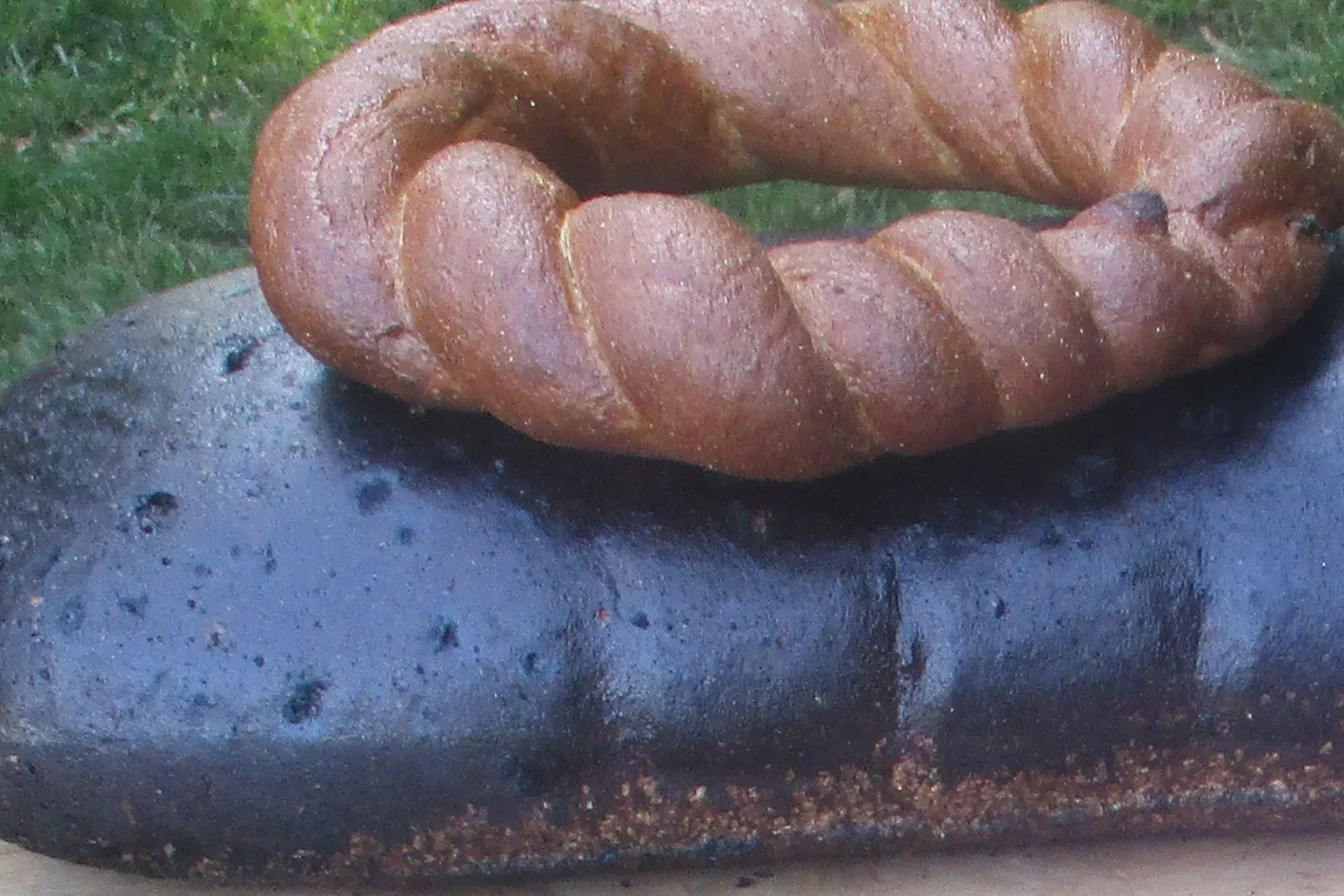
A dark, glossy Latvian rye bread loaf with a braided bread ring on top, at an outdoor market

Latvian Heritage

Photo: Turaids, CC BY-SA 4.0, via Wikimedia Commons (cropped)

The Heritage Formulary

Measured Ingredients

Estimated cost: Low — about $0.40 per slice at home (USD)

Baked the traditional salinātā way: flour scalded overnight, fermented with a rye starter, shaped long and baked until the crust is dark and glossy.

Execution Methodology & Culinary Technique

Step-by-Step Cooking Guide

Active 1h 45m
P

Prep Stage: Scald, Ferment & Shape

40 Mins • Scalding & Shaping (plus overnight ferment)

The evening before, pour 150 ml boiling water over 150 g of the rye flour, stir into a thick paste, and leave covered overnight — the scald is what gives salinātā rye its sweetness and moist crumb. In the morning, mix the scald with the starter, the remaining flour, lukewarm water, sugar, malt, caraway and salt into a sticky dough. Shape into a long loaf, at least twice as long as it is wide, and leave to rise for 2 to 3 hours until puffed.

Maestro Tip: Rye dough is sticky and will not behave like wheat dough — wet your hands to shape it, and do not add extra flour, or the loaf turns dry.

  1. 1

    Scald the Flour

    10 Mins Boiling water, 100°C (212°F)

    The evening before baking, put 150 g of the rye flour in a bowl and pour over 150 ml of boiling water, stirring hard into a thick, smooth paste. Cover and leave at room temperature overnight, about 12 hours.

    The scald must cool completely before it meets the starter — hot scald kills the yeast.

    Done when: A thick, sweet-smelling paste, cooled to room temperature.

  2. 2

    Mix the Dough

    15 Mins No heat

    In the morning, mix the scald with the rye starter, the remaining 450 g of rye flour, 200 ml of lukewarm water, the sugar, malt, caraway and salt. Stir with a wooden spoon until a thick, sticky dough forms — no kneading, rye dough is mixed, not kneaded.

    The dough should be wetter than a wheat dough and very sticky; that is correct.

    Done when: A uniform dark dough with no dry flour.

  3. 3

    Shape & Rise

    15 Mins active, 2–3 hours rising Warm place, ~25°C (77°F)

    Oil a loaf tin or a baking tray. With wet hands, shape the dough into a long loaf, at least twice as long as it is wide, with rounded ends, and place it in the tin. Cover and leave in a warm place for 2 to 3 hours until visibly puffed and the surface shows small cracks.

    Rye rises slowly and will not double like wheat — a gentle puff and a few cracks mean it is ready.

    Done when: Puffed loaf with a cracked surface, about a third larger than when shaped.

  4. 4

    Bake Until Dark & Glossy

    65 Mins 220°C (425°F) then 180°C (350°F)

    Heat the oven to 220°C (425°F). Brush the top of the loaf with water and bake for 15 minutes, then turn down to 180°C (350°F) and bake for 45 to 50 minutes more, until the crust is dark, smooth and glossy and the loaf sounds hollow when tapped on the base. The centre should read at least 96°C (205°F) on a thermometer. Brush the hot crust with a little water for extra shine.

    The high first heat sets the crust; the lower heat bakes the dense crumb through without burning it.

    Done when: Dark, glossy crust; the base sounds hollow when tapped.

  5. 5

    Cool & Slice

    20 Mins Cool at room temperature

    Lift the loaf out of the tin and cool on a wire rack for at least 20 minutes — and ideally overnight — before slicing. A hot rye loaf crushes under the knife and the crumb is still setting. Slice thick, with a sharp serrated knife.

    Rupjmaize is better the next day: the crumb firms, the flavour deepens, and it slices cleanly.

    Done when: Clean, thick slices with a dark, moist, slightly sweet crumb.

Finishing Touches & Plating

Serve thick slices with good butter, and keep the loaf wrapped in a clean cloth — it stays moist for a week and is the bread of every Latvian meal.
Nutritional Physiology & Benefits

Nutrition

Energy

161

kcal / serving

Protein

5g

Complete AA

Carbs

34g

Complex

Fats

1g

Healthy

Per serving (16 servings · 1 serving ≈ 69 g)
Energy161 kcal
Protein5 g
Carbohydrates34 g
Fat1 g
Fibre8.2 g
Sugar4.2 g
Sodium244 mg
Per 100g
Energy234 kcal
Protein7 g
Carbohydrates49.3 g
Fat1.9 g
Fibre12 g
Sugar6 g
Sodium355 mg

Nutrition values are estimated — calculated from USDA FoodData Central values for the listed ingredients.

Vitamins & minerals: Dark rye flour supplies B vitamins, magnesium and iron, the starter adds B vitamins from fermentation, and caraway adds small amounts of calcium and iron. All nutrition values are estimated.

Fibre-Rich Rye

One slice gives about 8.2 g of fibre from dark rye flour — one of the highest-fibre breads, supporting normal digestion.

Slow, Steady Energy

About 33.9 g of carbohydrate per slice comes mostly from whole rye, a slow-burning fuel that keeps you full for hours.

Magnesium & Iron

Dark rye flour is a useful source of magnesium and iron, and the long ferment makes the bread easier to digest.

Food Pairings

What to Eat With

To optimize nutrient absorption and elevate the sensory depth, pair with these authentic accompaniments:

Sides

Butter & Cheese

Cold butter and a slice of mature cheese on dark, sweet rye is the Latvian breakfast — the bread’s malt sweetness balances the salty cheese.

Smoked Fish

Smoked sprats or salmon on buttered rupjmaize is the classic Latvian open sandwich — the dark bread stands up to the strong, smoky fish.

Pickled Cucumber

Sharp pickled cucumber cuts through the dense, sweet crumb and refreshes the palate.

Drinks

Strong Coffee

A strong black coffee stands up to the dark, malty flavour of the bread and is how Latvians take it at breakfast.

Full Menus

Grey Peas with Bacon

Rupjmaize is the bread of the Latvian table — it belongs beside grey peas and bacon at every festive meal.

Complete menu

Serve thick slices with butter and cheese for breakfast, or beside grey peas with bacon and pickles at the festive table, with strong coffee.

Digestive Guardrails

What NOT to Combine

To prevent digestive distress, sluggishness, or palate clash, avoid pairing the dish with these elements:

Very Sweet Spreads

The bread is already sweet from the scalded flour and sugar, so piling on jam or chocolate spread makes one slice very high in sugar. This is general food information, not medical advice.

Slicing It Hot

A hot rye loaf crushes under the knife and the crumb turns gummy; cutting too soon wastes the long ferment. Wait until it is cool, ideally overnight. This is general food information, not medical advice.

General information only, not medical advice — consult a doctor for personal dietary decisions.

Who Should Eat It

Who Should Eat

  • General adultsA filling, fibre-rich breakfast bread — about 161 kcal and 8.2 g fibre per slice, best in one or two thick slices.
  • ChildrenChildren usually like the mild sweetness; cut slices into fingers and serve with butter and cheese for breakfast.
  • ElderlySoft, moist and easy to chew, but dense — one slice with butter and egg is a gentle, filling breakfast.
  • Pregnant womenFine as an everyday breakfast bread; the rye and starter are well tolerated, but keep portions modest as it is quite sweet.
  • Breastfeeding womenA comforting, energy-rich breakfast; the rye supplies steady fuel, but one or two slices is enough.
  • AthletesGood pre-training fuel for the slow carbohydrate, with butter and egg for protein — eat 2 hours before training, not right before.
  • Weight gainDense and easy to eat with butter, cheese and fish, so it suits weight gain when served generously.
  • Weight lossVery filling from the fibre at 161 kcal a slice; keep to one slice and skip the jam.

Health Conditions — Adjust or Avoid

Conditions

  • DiabetesThe scalded flour and sugar make this bread fairly sweet, so keep to one 69 g slice and skip jam or honey on top. Ask your clinician about portions.
  • High blood pressureOne slice carries about 244 mg sodium, which is modest for a bread, but keep other salty foods out of the same meal. Ask your clinician about portions.
  • Kidney diseaseRye is high in potassium, which matters for some kidney diets; portions should stay modest. Ask your clinician about portions.
  • GoutRye bread is low in purines, so the bread itself is not a concern; watch the toppings instead. Ask your clinician about portions.
  • Stomach issuesDense rye bread can be heavy on a sensitive stomach, though the long ferment helps; eat slowly, take a smaller slice, and toast it lightly. Ask your clinician about portions.
  • Cardiovascular diseaseThe bread itself is low in fat; keep the butter light and choose fish or egg toppings over cheese. Ask your clinician about portions.
  • Fatty liverThe bread is sweet from the scald and sugar, so keep to one slice and avoid eating it late at night. Ask your clinician about portions.
  • Food allergiesContains rye (gluten). People with wheat or rye allergy should not eat it unless a safe substitute is used. Ask your clinician about safe alternatives.
  • Special therapeutic dietsNot suitable for a gluten-free therapeutic diet as written; a gluten-free version changes the bread entirely and should be discussed with a clinician.

If you have a medical condition, consult your doctor before changing your diet.

Storage & Use

Storage & Use

How to store
Cool completely, then wrap in a clean cloth or beeswax wrap, then a bag.
In the fridge
Keeps 7 days in the fridge at 4°C (40°F) or below, wrapped.
In the freezer
Up to 3 months; slice before freezing so you can take out what you need.
How to reheat
Toast slices until warm and crisp at the edges; reheat a whole loaf in the oven at 160°C (320°F) for 10 minutes.
Freezing recommended
Yes — slices freeze well and toast straight from frozen.
Signs it has spoiled
Sour smell, mould spots, or a slimy surface.

More recipes to explore

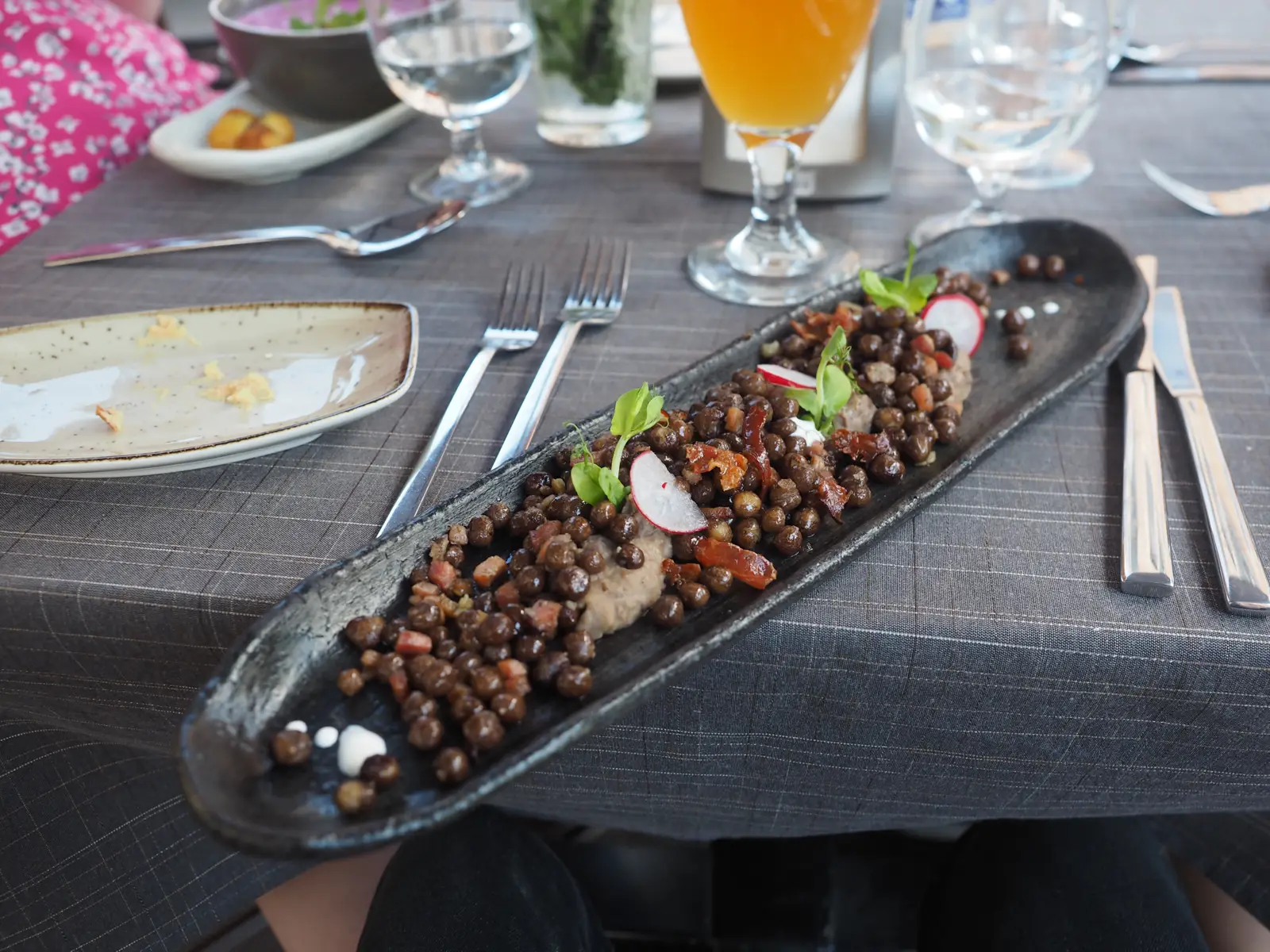
Grey peas with bacon served on a long dark plate with radish and green shoots, on a restaurant table in Riga Latvia flag Latvia 1h 45m
Dinner •Latvian Heritage

Grey Peas with Bacon

This grey peas with bacon recipe soaks dried grey peas overnight, simmers them until tender, and tosses them with crisp smoked bacon, fried onion and butter. One serving is about 360 g, served hot with sour cream.

Comfort & Warmth

Latvia’s national dish: big grey peas simmered until tender, tossed with crisp smoked bacon and onion, and finished with sour cream.

Pairs Well With
Sour cream, rye bread & pickles
High Protein
Golden Latvian bacon buns cooling on a wire rack, glossy from an egg wash Latvia flag Latvia 2h 30m
Snack & Tea •Latvian Heritage

Speķa Pīrāgi

This speka piragi recipe bakes a soft milk dough around a filling of smoked bacon and onion, shaped into small crescents and brushed with egg until golden. One serving is about 200 g, two warm buns.

Comfort & Warmth

Small golden crescents of soft yeast dough wrapped around smoky bacon and onion — the buns Latvia bakes for every celebration.

Pairs Well With
Buttermilk, pickles & mustard
A bowl of Vietnamese phở bò with rare beef, rice noodles and fresh herbs Vietnam flag Vietnam 3h 30m
Breakfast •Hanoi Heritage

Phở Bò Tái Nạm

Slow-simmered star anise and cinnamon bone broth with hand-cut rice noodles, supplying clean restorative warmth and collagen. One serving is about 775 g.

Immunity & Warming

Slow-simmered bone broth with rice noodles, rare beef and fresh herbs.

Pairs Well With
Crispy quẩy, fresh lime & sawtooth coriander
Soups & Broths • High Protein
Golden butter croissants on a wooden board France flag France 20m
Breakfast •Parisian Boulangerie

Croissant au Beurre & Café

Laminated cultured butter pastry paired with washed Arabica, for a slow, pleasurable Parisian morning — best with a little protein alongside. One serving is about 390 g.

Sustained Focus

Flaky all-butter croissant with café au lait, Comté and green apple.

Pairs Well With
Comté cheese wedge & Green apple slices
Quick Prep (<30m)

The Dinner Gazette

Never wonder what’s for dinner again

One email a week with easy dinner ideas from around the world — ingredients, steps and nutrition, tested in our kitchen first.

Delivered every Thursday morning. Unsubscribe anytime.