Curated recipes from 193 countries  •  New seasonal Mediterranean issue out now

Overview

Lechazo Asado

Roast Suckling Lamb, Lechazo de Castilla y León, Cordero Lechal Asado

This lechazo asado recipe roasts milk-fed suckling lamb the Castilian way — salted, with a little water and lard, in a shallow clay dish until the meat is tender and the skin turns golden and crisp. Lechazo is lamb that has fed only on its mother's milk, no more than 35 days old, and its meat is pale, tender and mild, quite different from older lamb. It is not the same dish as cochinillo asado, the roast suckling pig of Segovia — same ovens, same clay dishes, but lamb, not pork. One serving is about 400 g, lamb with roast potatoes.

Lechazo asado is the signature dish of Castile and León, in central Spain, where milk-fed lambs are roasted in wood-fired ovens in shallow clay dishes. The lambs must have fed only on their mothers' milk and be no more than 35 days old, weighing 9 to 12 kilograms — the meat is pale, tender and mild, closer to veal than to older lamb. Aranda de Duero, in the Ribera del Duero wine country, is known as the heart of the dish, and its asadores roast lechazo in wood-fired ovens that have been burning for generations. The protected Lechazo de Castilla y León indication was authorised in 1997.

Pairs well with: Roast potatoes, a simple lettuce and onion salad and a glass of Ribera del Duero red.

Provenance

Spain flag Spain

Castilian Heritage

Mediterranean & Italy

Time Dedication

2h 50m

20m prep • 150m cook

Batch Yield

6 Servings

765 kcal per serving

1 serving ≈ 400 g

Technical Skill

Advanced

Hard (Whole Lamb Roast)

Meal Timing & Digestive Fit

Breakfast

Not Advised

Lunch

Hearty Midday Main

Dinner

Ideal Hearty Main

Snack & Tea

Inappropriate

High Protein Occasions: Celebration dinner, Christmas or Easter feast, a Spanish feast for a crowd Cost: High — about $9–11 per serving at home

A golden roast suckling lamb leg with crisp skin on a white plate, served with roast potatoes and salad

Castilian Heritage

Photo: Francesc Fort, CC BY-SA 4.0, via Wikimedia Commons

The Heritage Formulary

Measured Ingredients

Estimated cost: High — about $9–11 per serving at home (USD)
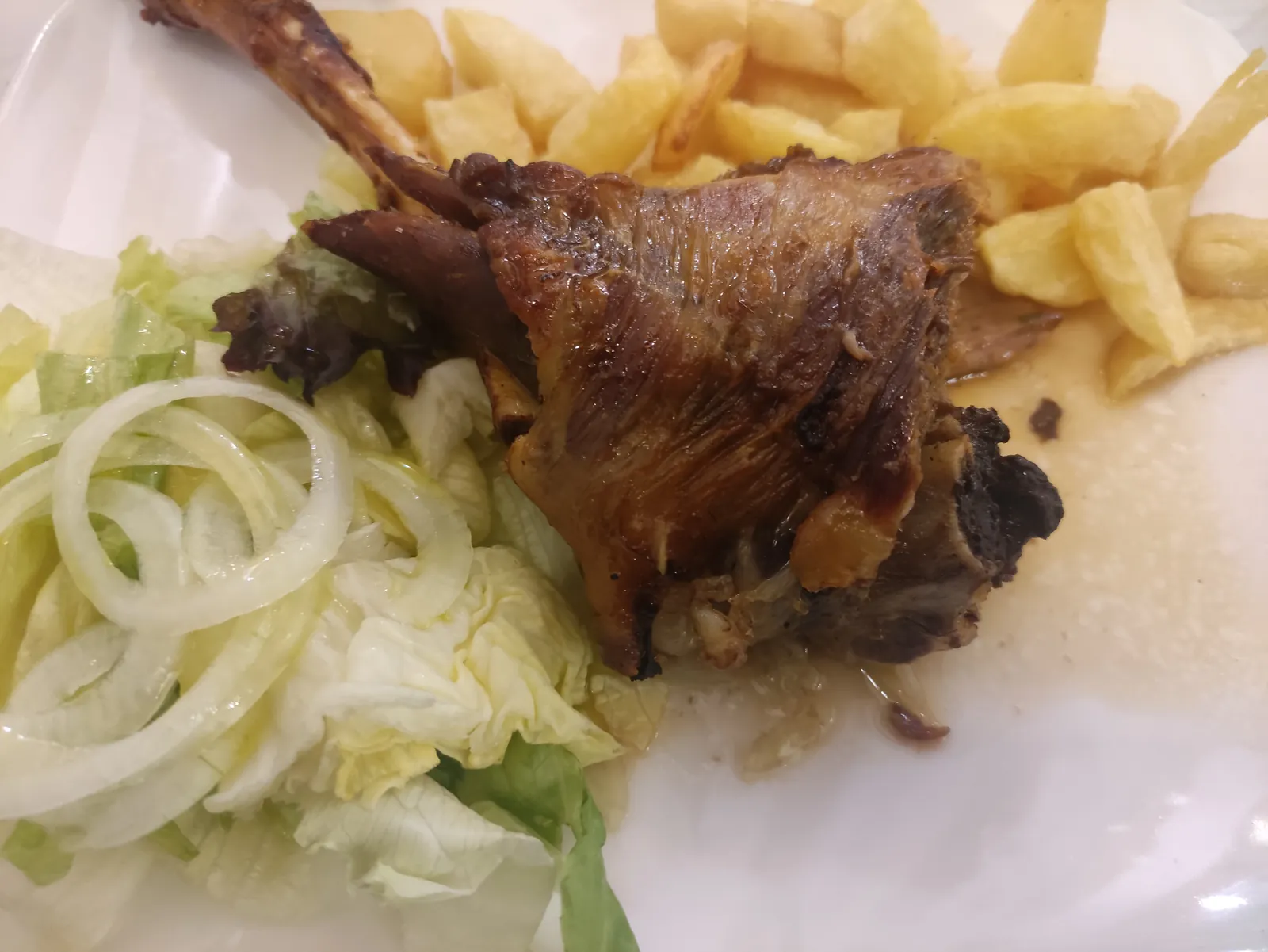
Good lechazo is judged by the skin: golden and crisp outside, with pale, juicy meat underneath.

Execution Methodology & Culinary Technique

Step-by-Step Cooking Guide

Active 2h 50m
P

Prep Stage: Salt, Dry & Prepare the Lamb

20 Mins • Salting & Drying

Pat the lamb quarters completely dry inside and out — dry skin is what turns crisp. Rub the salt all over the skin and into the meat, tuck the crushed garlic and the herb sprigs underneath, and set the quarters skin-side up in a large clay or metal roasting dish. Leave uncovered in the fridge for a few hours, or overnight, so the skin dries out. This is a lamb roast, not the roast suckling pig of Segovia: the meat is milk-fed lamb, pale and mild, cooked in the same Castilian way — salt, water and a clay dish, with almost nothing else.

Maestro Tip: Order the lamb well ahead and check it fits your oven and your largest roasting dish before the day — a quarter is about 40 cm long.

  1. 1

    Prepare the Lamb

    20 Mins Room temperature, ~20°C (68°F)

    Take the lamb out of the fridge an hour before roasting so it comes to room temperature. Pat the skin dry once more and rub it with half of the melted lard. Pour the water into the roasting dish, around — not over — the lamb, and scatter the potato wedges around the meat with the olive oil.

    A dry skin roasts crisp; a damp skin steams and stays soft.

    Done when: Skin dry and lightly greased, lamb sitting in a shallow pool of water with potatoes around it.

  2. 2

    Roast Low & Slow

    90 Mins Oven, 180°C (350°F)

    Heat the oven to 180°C (350°F). Roast the lamb for about 90 minutes, basting every 30 minutes with the juices in the dish. The water keeps the meat moist while the skin slowly renders and the potatoes cook in the drippings.

    If the bones darken too fast, cover the ends loosely with small pieces of foil.

    Done when: Skin golden and starting to firm, meat shrinking slightly from the bones.

  3. 3

    Turn & Baste

    30 Mins Oven, 180°C (350°F)

    Turn the quarters over carefully with long tongs and roast for 30 minutes more, basting with the juices and the remaining lard. Check the thickest part of the leg with a thermometer — it should be climbing towards 74°C (165°F). Turn the potatoes so they brown evenly.

    Lift with help if needed: a hot, slippery quarter is heavy and awkward to turn alone.

    Done when: Both sides evenly golden, fat well rendered, potatoes browning.

  4. 4

    Crisp the Skin

    30 Mins Oven, 220°C (425°F)

    Turn the lamb skin-side up again and raise the oven to 220°C (425°F). Roast for 25–30 minutes more, until the skin is deep golden, blistered and crisp all over. Watch it closely in the last 5 minutes — crisp skin can go from perfect to burnt quickly.

    Brush the skin with a little of the hot fat halfway through for an even, glossy finish.

    Done when: Skin puffed, blistered and crisp; thickest part at 74°C (165°F) or above.

  5. 5

    Rest the Lamb

    15 Mins Resting, ~70°C (158°F)

    Rest the lamb for 15 minutes before carving, so the juices settle back into the meat. Leave it in the warm roasting dish, uncovered, so the skin stays crisp.

    Do not cover the lamb while it rests — trapped steam softens the skin.

    Done when: Meat relaxed, juices settled, skin still crisp.

  6. 6

    Carve & Serve

    10 Mins Serve hot, ~70°C (158°F)

    Carve the lamb at the table into generous portions, with crisp skin on every serving, and spoon the roast potatoes and roasting juices alongside. In the asadores of Aranda de Duero the roast is sometimes cut with the edge of a plate to prove how tender it is.

    Use a long, sharp knife and saw gently — pressing down crushes the crisp skin.

    Done when: Thick portions of juicy, pale meat with a shard of golden skin on top.

Finishing Touches & Plating

Serve the lechazo hot from the roasting dish, with the crisp skin on top of every portion, the roast potatoes and the roasting juices spooned over.

Nutritional Physiology & Benefits

Nutrition

Energy

765

kcal / serving

Protein

49g

Complete AA

Carbs

22g

Complex

Fats

54g

Healthy

Per serving (6 servings · 1 serving ≈ 400 g)
Energy765 kcal
Protein49 g
Carbohydrates22 g
Fat54 g
Fibre2.6 g
Sugar1.0 g
Sodium979 mg
Per 100g
Energy191 kcal
Protein12.2 g
Carbohydrates5.4 g
Fat13.5 g
Fibre0.7 g
Sugar0.2 g
Sodium245 mg

Nutrition values are estimated — calculated from USDA FoodData Central values for the listed ingredients.

Vitamins & minerals: Lamb supplies vitamin B12, niacin, zinc and selenium, and the potatoes add potassium and vitamin C.

Very High in Protein

One serving carries about 48.7 g of protein from the lamb, which makes this roast a genuinely filling feast dish.

Simple Seasoning

Salt, garlic and a little lard are all the seasoning milk-fed lamb needs — the flavour comes from the meat and the slow roast.

B12, Zinc & Selenium

Lamb is a good source of vitamin B12, niacin, zinc and selenium.

Food Pairings

What to Eat With

To optimize nutrient absorption and elevate the sensory depth, pair with these authentic accompaniments:

Sides

Roast Potatoes

Potatoes roasted in the lamb's drippings turn golden and savoury, and they stretch the roast to feed a crowd.

Crusty Bread

Crusty bread is made for the roasting juices — it soaks them up while the skin stays crisp.

Vegetables

Lettuce & Onion Salad

A sharp salad of lettuce and onion with a vinegar dressing cuts through the richness of the lamb and cleans the palate.

Drinks

A Ribera del Duero Red

A glass of red wine from Ribera del Duero, the region where this lamb is raised, suits the roast without fighting it.

Complete menu

Serve with roast potatoes and a lettuce and onion salad, then fresh fruit — a proper Castilian feast.

Digestive Guardrails

What NOT to Combine

To prevent digestive distress, sluggishness, or palate clash, avoid pairing the dish with these elements:

Do Not Serve Undercooked Lamb

Check the thickest part of the leg with a thermometer: lamb should reach at least 63°C (145°F), and this roast is best cooked to 74°C (165°F). This is general guidance, not medical advice.

Do Not Skip the Rest

Carving straight from the oven lets the juices run out and leaves dry meat — 15 minutes of resting keeps the portions juicy. This is general guidance, not medical advice.

General information only, not medical advice — consult a doctor for personal dietary decisions.

Who Should Eat It

Who Should Eat

  • General adultsA rich, celebratory roast — one generous portion with potatoes and salad is a full dinner.
  • ChildrenSuitable from age 5+ in a small portion; serve the tender meat without the hard crisp skin for younger children.
  • ElderlySuitable in a modest portion — the meat is tender, but the dish is very rich and salty.
  • Pregnant womenGenerally suitable if the lamb is cooked right through to at least 74°C (165°F); keep the portion modest.
  • Breastfeeding womenGenerally suitable; the protein and iron support recovery — keep the portion modest because of the fat.
  • AthletesA strong meal after a heavy training day: about 48.7 g of protein per serving.
  • Weight gainA good choice — the roast is energy-dense, and roast potatoes add more.
  • Weight lossNot the best choice — keep it to an occasional treat, one modest portion with a big salad.

Health Conditions — Adjust or Avoid

Conditions

  • DiabetesAlmost no carbs as written — watch the potatoes served with it. Ask your clinician about portion size.
  • High blood pressureAbout 979 mg of sodium per serving; keep the portion modest and skip extra salt. Ask your clinician about portion size.
  • Kidney diseaseVery high in protein — limit the portion. Ask your clinician about portion size.
  • GoutLamb is moderately high in purines; eat occasionally and in a smaller portion. Ask your clinician about portion size.
  • Stomach issuesUsually gentle, but the high fat can be heavy for a sensitive stomach — keep the portion small. Ask your clinician about portion size.
  • Cardiovascular diseaseHigh in saturated fat; keep it to an occasional treat in a small portion. Ask your clinician about portion size.
  • Fatty liverKeep the portion modest and favour the salad over potatoes cooked in the drippings. Ask your clinician about portion size.
  • Food allergiesContains no common allergens. Check bread and sides for gluten if serving guests. Ask your clinician about portion size.
  • Special therapeutic dietsIf you follow a prescribed low-sodium or low-fat plan, this roast is hard to fit — check with your clinician.

If you have a medical condition, consult your doctor before changing your diet.

Storage & Use

Storage & Use

How to store
Cool quickly, carve, and store the meat in a covered container; keep the crisp skin separate so it stays crisp.
In the fridge
3–4 days in the fridge at 4°C (40°F) or below.
In the freezer
Up to 3 months, carved, wrapped tightly (without the crisp skin).
How to reheat
Reheat portions in a 200°C (400°F) oven until steaming hot, to 74°C (165°F); crisp the skin under the grill for 2 minutes.
Freezing recommended
Yes — the meat freezes well; the crisp skin does not.
Signs it has spoiled
Sour or rancid smell, slimy surface, or grey discolouration.

More recipes to explore

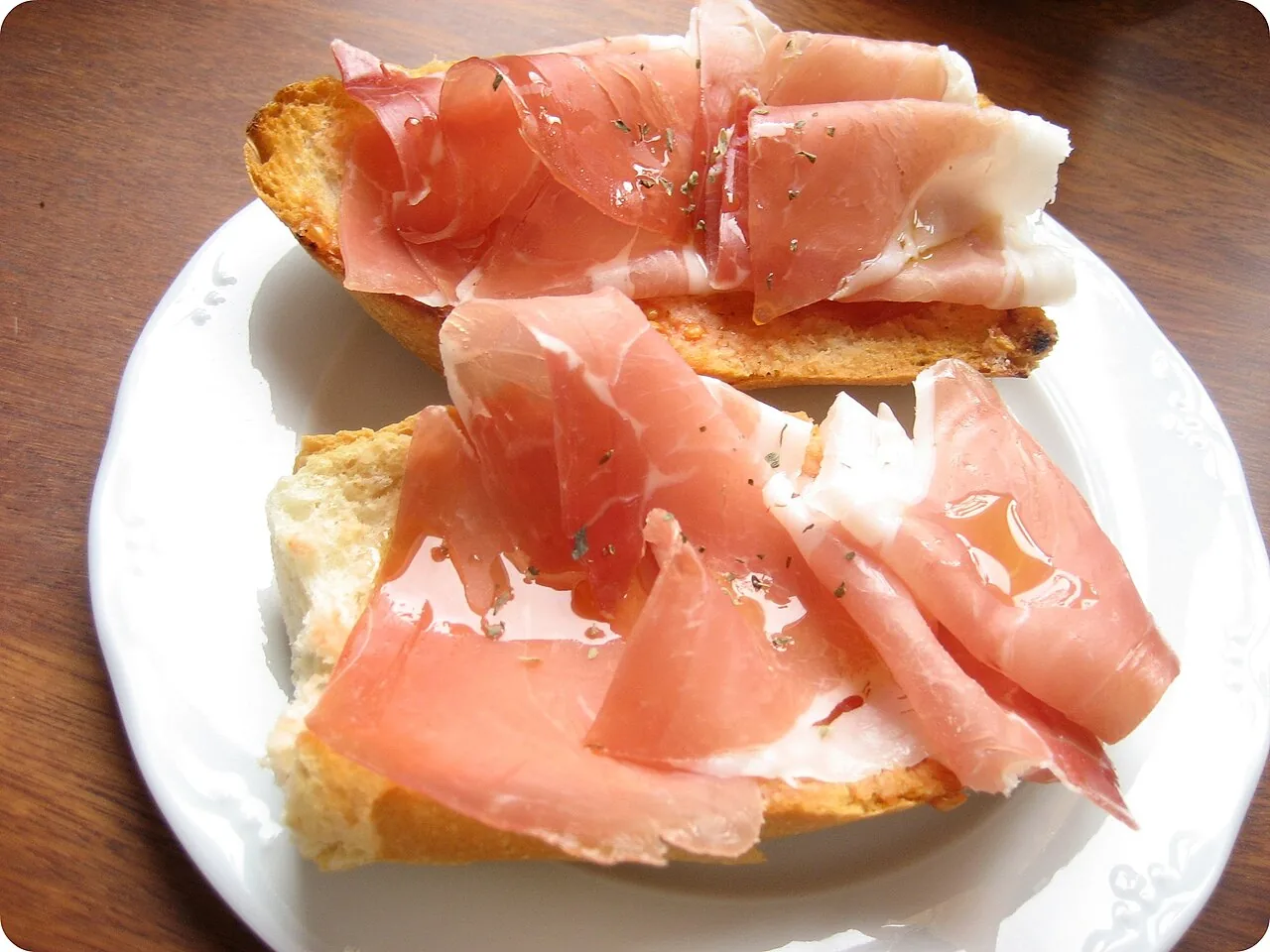
Pan con tomate with jamón ibérico on toasted bread Spain flag Spain 15m
Snack & Tea •Catalan Aperitivo

Pan con Tomate & Jamón Ibérico

Country bread rubbed with ripe Ramallet tomato, drizzled with cold-pressed Arbequina olive oil and topped with jamón ibérico.

Vascular Health

Toasted tomato bread with jamón ibérico, olive oil and olives.

Pairs Well With
Castelvetrano Olives & Sparkling Mineral Water
Quick Prep (<30m)
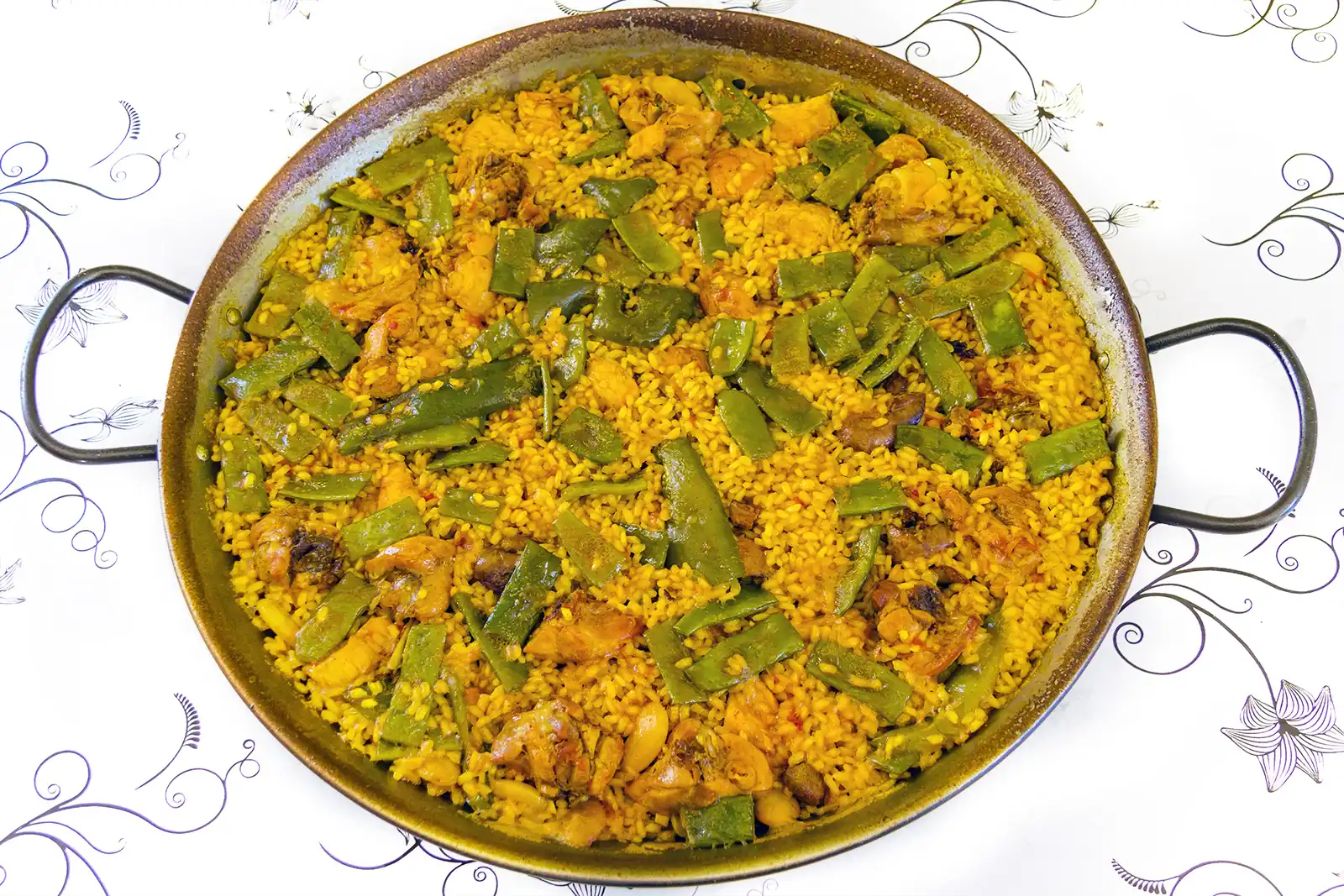
A wide paella pan of paella valenciana with saffron rice, green beans and chicken Spain flag Spain 1h 10m
Dinner •Valencia Rice Fields

Paella Valenciana

This paella valenciana recipe cooks Bomba rice in a wide, shallow pan with chicken, rabbit, green beans and garrofó beans, scented with saffron and rosemary. One serving is about 470 g.

Comfort & Warmth

Saffron rice cooked in a wide pan with chicken, rabbit and green beans.

Pairs Well With
A green salad and a glass of white wine
High Protein
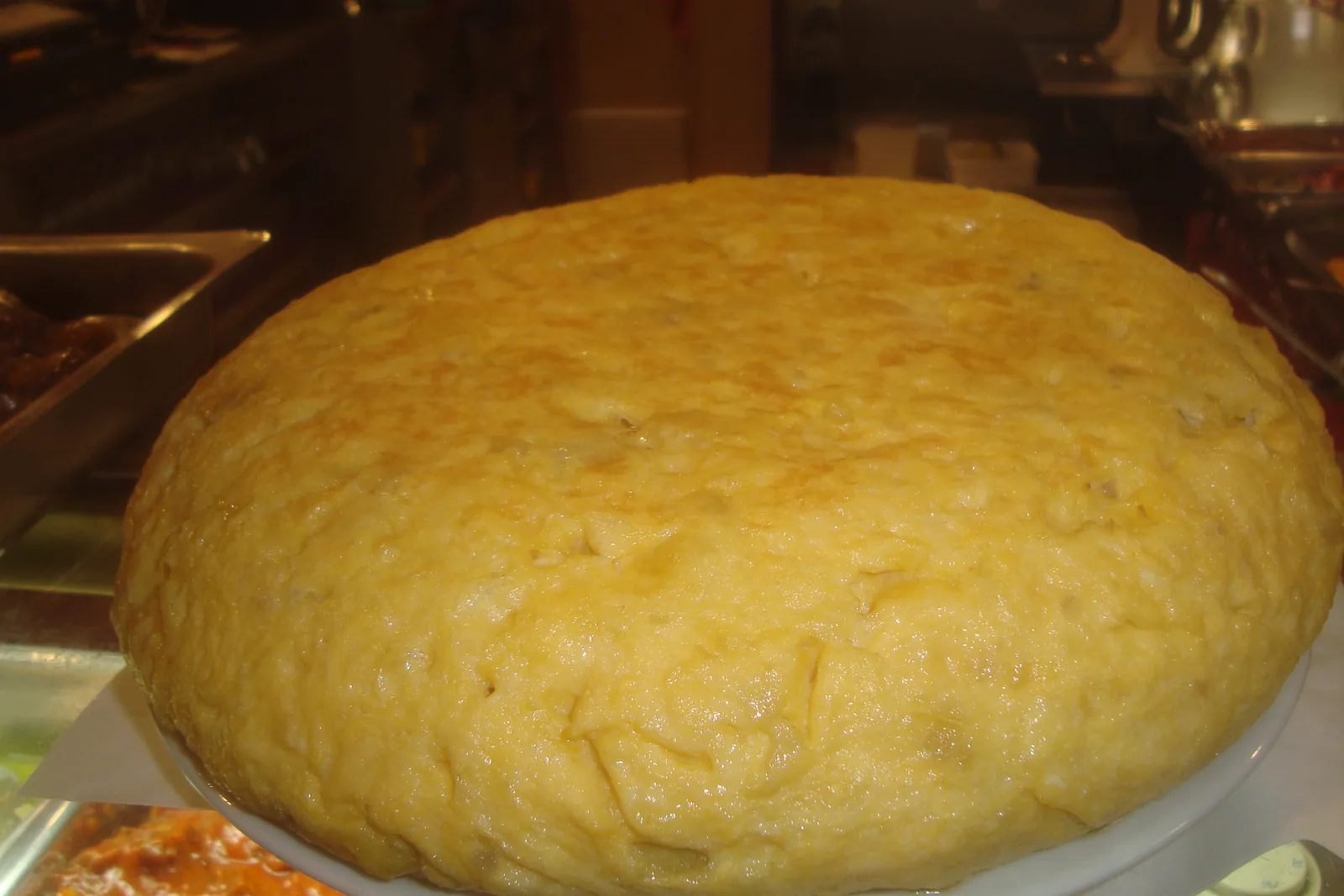
A whole golden tortilla española, a thick Spanish potato omelette, on a plate Spain flag Spain 55m
Snack & Tea •Navarre Bar Classic

Tortilla Española

This spanish tortilla recipe slowly cooks potatoes and onion in olive oil, folds them into beaten eggs, and turns out a thick, golden cake that is soft in the middle. One serving is about 220 g.

Comfort & Warmth

A thick, golden omelette of slow-cooked potatoes, onion and egg.

Pairs Well With
Pan con tomate and a glass of red wine
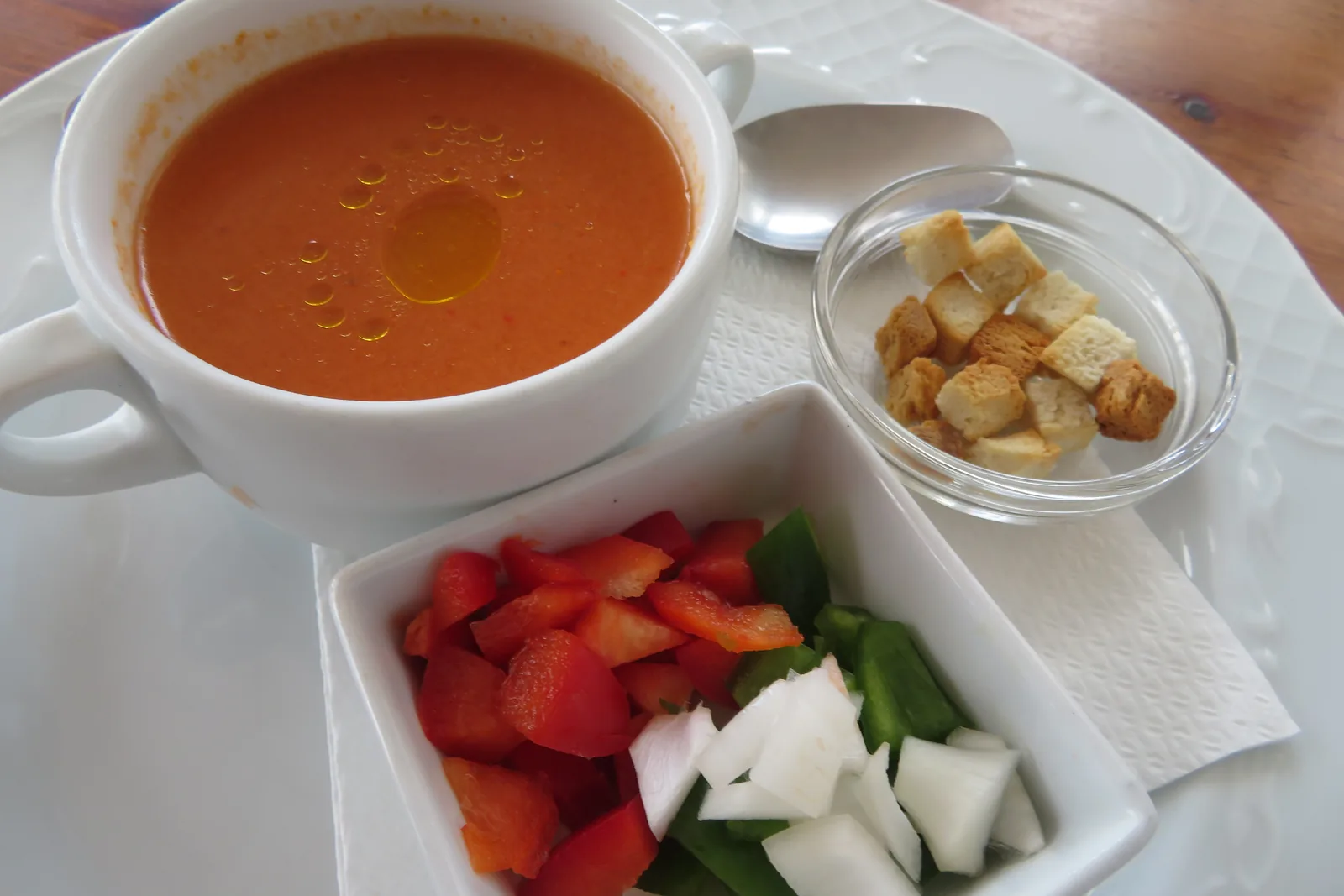
A cup of chilled orange-red gazpacho with olive oil, served with diced peppers and onion and a bowl of croutons Spain flag Spain 20m
Lunch •Andalusian Classic

Gazpacho

This gazpacho recipe is the Andalusian classic: ripe tomatoes, cucumber, green pepper, onion and garlic blended raw with bread, sherry vinegar and olive oil, then chilled until ice cold. One serving is about 395 g. It takes 20 minutes plus chilling, and there is no cooking at all.

Light & Refreshing

Chilled raw tomato soup blended with cucumber, pepper and olive oil, served cold with diced vegetables and croutons.

Pairs Well With
Croutons, diced vegetables & crusty bread
Soups & Broths • Quick Prep (<30m)

The Dinner Gazette

Never wonder what’s for dinner again

One email a week with easy dinner ideas from around the world — ingredients, steps and nutrition, tested in our kitchen first.

Delivered every Thursday morning. Unsubscribe anytime.