
Curated recipes from 193 countries  •  New seasonal Mediterranean issue out now

Overview

Mămăligă

Mamaliga, Moldovan Mamaliga, Mamaliga with Branza and Egg

This mamaliga recipe cooks yellow cornmeal slowly in water and milk until it turns soft, creamy and spoonable — never stiff — then serves it warm with crumbled sheep cheese, a spoonful of sour cream, a fried egg and crisp pork cracklings. One serving is about 550 g.

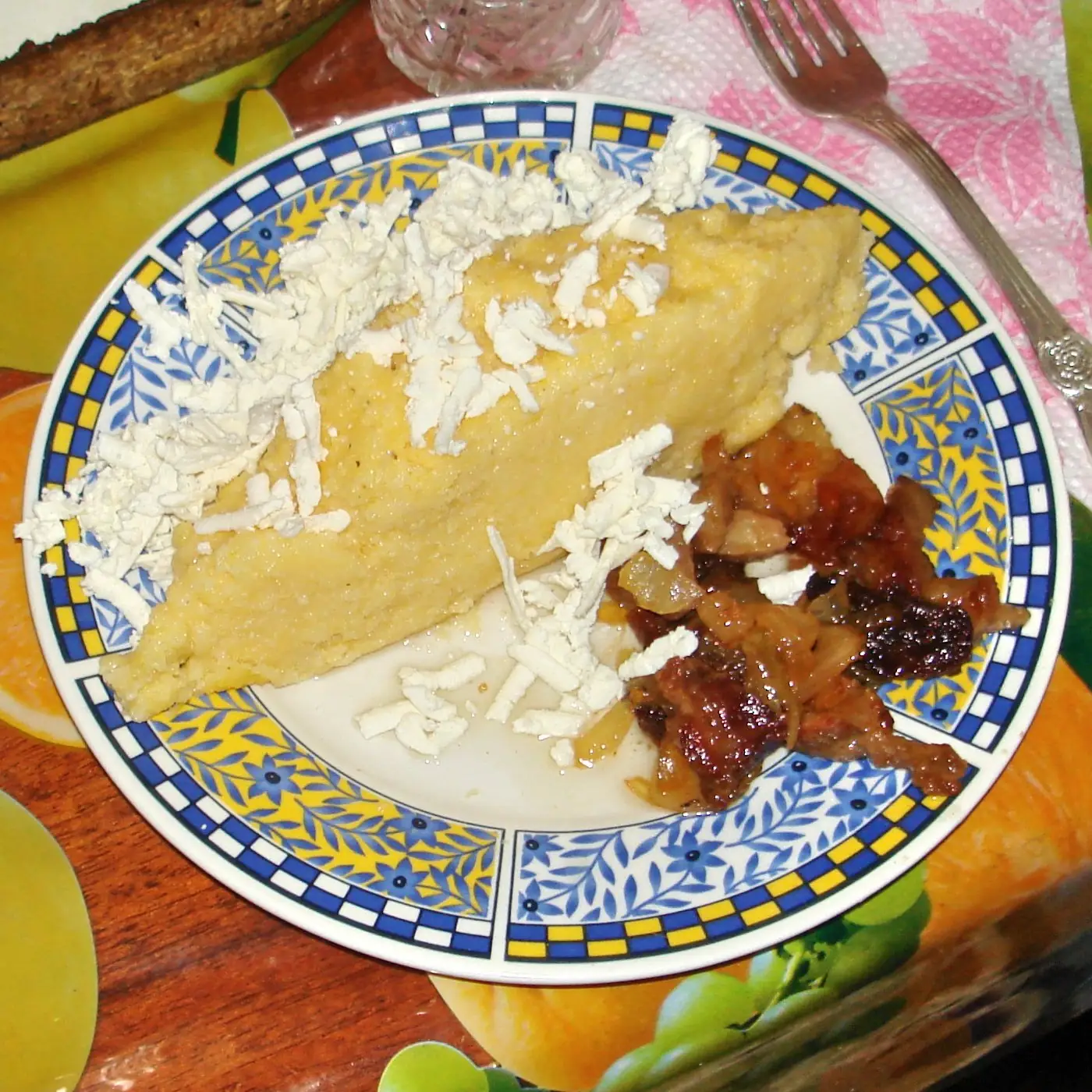
Mamaliga is the daily bread of Moldova and Romania in porridge form. Maize reached south-eastern Europe in the 1600s, and cornmeal porridge soon replaced bread on farming tables because it was cheap, filling and needed no oven. In Moldova it is still served as a soft, spoonable mound with branza, sour cream and a fried egg — the plate in the photograph, with cheese and cracklings, is the classic way to eat it.

Pairs well with: Sheep cheese, sour cream, fried egg & cracklings

Provenance

Moldova flag Moldova

Moldovan Heritage

Nordic & European

Time Dedication

50m

10m prep • 40m cook

Batch Yield

4 Servings

619 kcal per serving

1 serving ≈ 554 g

Technical Skill

Easy

Easy (One Pot)

Meal Timing & Digestive Fit

Breakfast

Not Advised

Lunch

Hearty Midday Main

Dinner

Ideal Hearty Main

Snack & Tea

Inappropriate

Occasions: Family dinners, winter evenings, harvest meals, everyday Moldovan tables Cost: Low — about $3–4 per serving at home
A wedge of mamaliga with crumbled white sheep cheese and pork cracklings on a plate

Moldovan Heritage

Photo: Zserghei, Public domain, via Wikimedia Commons

The Heritage Formulary

Measured Ingredients

Estimated cost: Low — about $3–4 per serving at home (USD)

Made the Moldovan way: fine cornmeal cooked low and slow in water and milk until soft and spoonable, served with branza, sour cream and a fried egg.

Execution Methodology & Culinary Technique

Step-by-Step Cooking Guide

Active 50m
P

Prep Stage: Measure & Crumble

10 Mins • Measuring

Measure the cornmeal, water and milk, crumble the sheep cheese into a bowl, and set out the sour cream and cracklings. The porridge needs steady stirring once it starts, so have everything ready before the pot goes on.

Maestro Tip: Fine cornmeal is the key to a soft, creamy mamaliga — coarse meal turns out gritty and stiff.

  1. 1

    Boil the Water & Milk

    5 Mins Boiling, 100°C (212°F)

    Put the water, milk and salt in a heavy pot and bring to a rolling boil.

    A heavy pot stops the porridge catching on the bottom while it thickens.

    Done when: A full rolling boil.

  2. 2

    Rain in the Cornmeal

    2 Mins Boiling, 100°C (212°F)

    Reduce the heat to medium and pour the cornmeal in a thin, steady stream, whisking all the time so no lumps form.

    Pour slowly and whisk constantly — dumping the meal in at once makes lumps that never come out.

    Done when: A smooth, lump-free porridge starting to thicken.

  3. 3

    Cook Low & Slow

    30 Mins Low heat, 85°C (185°F)

    Turn the heat to low, cover partly and cook for about 30 minutes, stirring with a wooden spoon every few minutes, until the porridge is soft, creamy and pulls away from the sides of the pot in a slow ribbon.

    Stirring often keeps it creamy; a porridge left alone goes stiff and lumpy.

    Done when: A soft porridge that falls from the spoon in a slow, creamy ribbon.

  4. 4

    Stir in the Butter

    3 Mins Low heat, 85°C (185°F)

    Take the pot off the heat and stir in the butter until it melts through and the porridge turns glossy.

    Butter at the end adds shine and richness without making the porridge greasy.

    Done when: Glossy, soft porridge that holds a spoon mark for a second.

  5. 5

    Fry the Eggs

    5 Mins Medium heat, 160°C (320°F)

    While the porridge rests, fry the eggs in a little oil until the whites are set and the yolks are still runny.

    A runny yolk is the sauce here — it melts into the hot porridge.

    Done when: Set whites, golden runny yolks.

  6. 6

    Serve the Plate

    5 Mins Hot

    Spoon the soft mamaliga onto warm plates, scatter with crumbled sheep cheese and cracklings, add a spoonful of sour cream and lay a fried egg on top.

    Serve it soft and spoonable — if it holds a stiff shape, it cooked too long.

    Done when: A soft golden mound with melting cheese, sour cream and a fried egg.

Finishing Touches & Plating

Serve the mamaliga the moment it is plated, while the porridge is still soft and the cheese is just starting to melt — break the yolk over the top and let it run through the cornmeal.

Nutritional Physiology & Benefits

Nutrition

Energy

619

kcal / serving

Protein

24g

Complete AA

Carbs

55g

Complex

Fats

35g

Healthy

Per serving (4 servings · 1 serving ≈ 554 g)
Energy619 kcal
Protein24 g
Carbohydrates55 g
Fat35 g
Fibre4.5 g
Sugar5.8 g
Sodium1242 mg
Per 100g
Energy112 kcal
Protein4.4 g
Carbohydrates9.9 g
Fat6.4 g
Fibre0.8 g
Sugar1.1 g
Sodium224 mg

Nutrition values are estimated — calculated from USDA FoodData Central values for the listed ingredients.

Vitamins & minerals: Cornmeal supplies fibre and small amounts of iron and magnesium, the egg adds protein and vitamin B12, and the cheese adds calcium and protein. All nutrition values are estimated.

Gentle, Filling Energy

About 619 kcal a serving with 54.7 g of carbohydrate from cornmeal makes a filling dinner that is easy on the stomach.

Protein & Calcium

The egg, sheep cheese and sour cream together give about 24.1 g of protein and a good dose of calcium per serving.

Fibre from Cornmeal

Yellow cornmeal adds fibre and small amounts of iron and magnesium to the plate.

Food Pairings

What to Eat With

To optimize nutrient absorption and elevate the sensory depth, pair with these authentic accompaniments:

Sides

Sheep Cheese (Branza)

Salty, crumbly sheep cheese melts into the hot porridge and gives every spoonful a savoury edge.

Fried Egg

A fried egg on top adds richness, and the runny yolk becomes a sauce for the porridge.

Sauces

Sour Cream

Cool sour cream softens the salt of the cheese and adds a gentle tang to the sweet cornmeal.

Vegetables

Pickled Cucumber or Tomato Salad

Something sharp and fresh cuts through the rich, buttery porridge.

Complete menu

Serve the mamaliga hot with branza, sour cream and a fried egg, a pickled cucumber salad on the side, and herbal tea to finish.

Digestive Guardrails

What NOT to Combine

To prevent digestive distress, sluggishness, or palate clash, avoid pairing the dish with these elements:

Cooking It Stiff

Mamaliga served as a stiff, sliceable block is a different dish — this plate is meant to be soft and spoonable, so do not cook it down until it sets. This is general food information, not medical advice.

Extra Salt on Top

One serving already carries about 1,240 mg of sodium from the cheese and cracklings, so do not add more salt at the table. This is general food information, not medical advice.

General information only, not medical advice — consult a doctor for personal dietary decisions.

Who Should Eat It

Who Should Eat

  • General adultsA comforting dinner — about 619 kcal a serving, best eaten hot and slowly.
  • ChildrenMild, soft and easy to eat; children usually love the runny egg yolk mixed into the porridge.
  • ElderlySoft, warm and very easy to chew and swallow; serve a smaller portion of cheese if salt is a concern.
  • Pregnant womenFine as a dinner; make sure the fried egg is cooked until the white is fully set. Ask your clinician about portions.
  • Breastfeeding womenA filling, energy-rich dinner; the cornmeal, egg and cheese supply carbohydrate, protein and calcium.
  • AthletesA good carbohydrate-rich dinner — about 54.4 g of carbohydrate per serving; add an extra egg for more protein.
  • Weight gainA good choice for adding energy: the full plate with butter, cheese and egg is filling and calorie-dense.
  • Weight lossKeep to a smaller mound of porridge with extra sour cream and one egg, and skip the cracklings.

Health Conditions — Adjust or Avoid

Conditions

  • DiabetesCornmeal is starchy, so keep the mound modest and load the plate with cheese and egg rather than more porridge. Ask your clinician about portions.
  • High blood pressureThe cheese and cracklings make this plate salty — eat it occasionally and in a modest portion. Ask your clinician.
  • Kidney diseaseHigh in sodium and protein from the cheese; ask your clinician before eating it.
  • GoutEgg and cornmeal are low in purines, but the cracklings are not — skip them if gout is a concern. Ask your clinician.
  • Stomach issuesSoft and gentle on the stomach; the porridge itself is usually well tolerated. Ask your clinician.
  • Cardiovascular diseaseButter, cheese and cracklings add saturated fat and sodium — a modest portion now and then is wiser. Ask your clinician.
  • Fatty liverThe plate is rich; keep the portion modest and go easy on the butter and cracklings. Ask your clinician.
  • Food allergiesContains milk (butter, cheese, sour cream) and egg. Naturally free of gluten and pork if the cracklings are left out.
  • Special therapeutic dietsNaturally gluten-free; for a dairy-free version, use oil instead of butter and skip the cheese and sour cream.

If you have a medical condition, consult your doctor before changing your diet.

Storage & Use

Storage & Use

How to store
Cool quickly and store the porridge in an airtight container; keep cheese, sour cream and eggs separate.
In the fridge
Keeps 2 days in the fridge at 4°C (40°F) or below; the porridge firms up when cold.
In the freezer
Up to 1 month; freeze the porridge only, in portions.
How to reheat
Reheat in a pan with a splash of milk or water, stirring, until steaming hot throughout, to 74°C (165°F); fry a fresh egg to serve.
Freezing recommended
Yes for the porridge — it softens again with milk and stirring.
Signs it has spoiled
Sour smell, mould on the surface, or a sharp off taste.

More recipes to explore

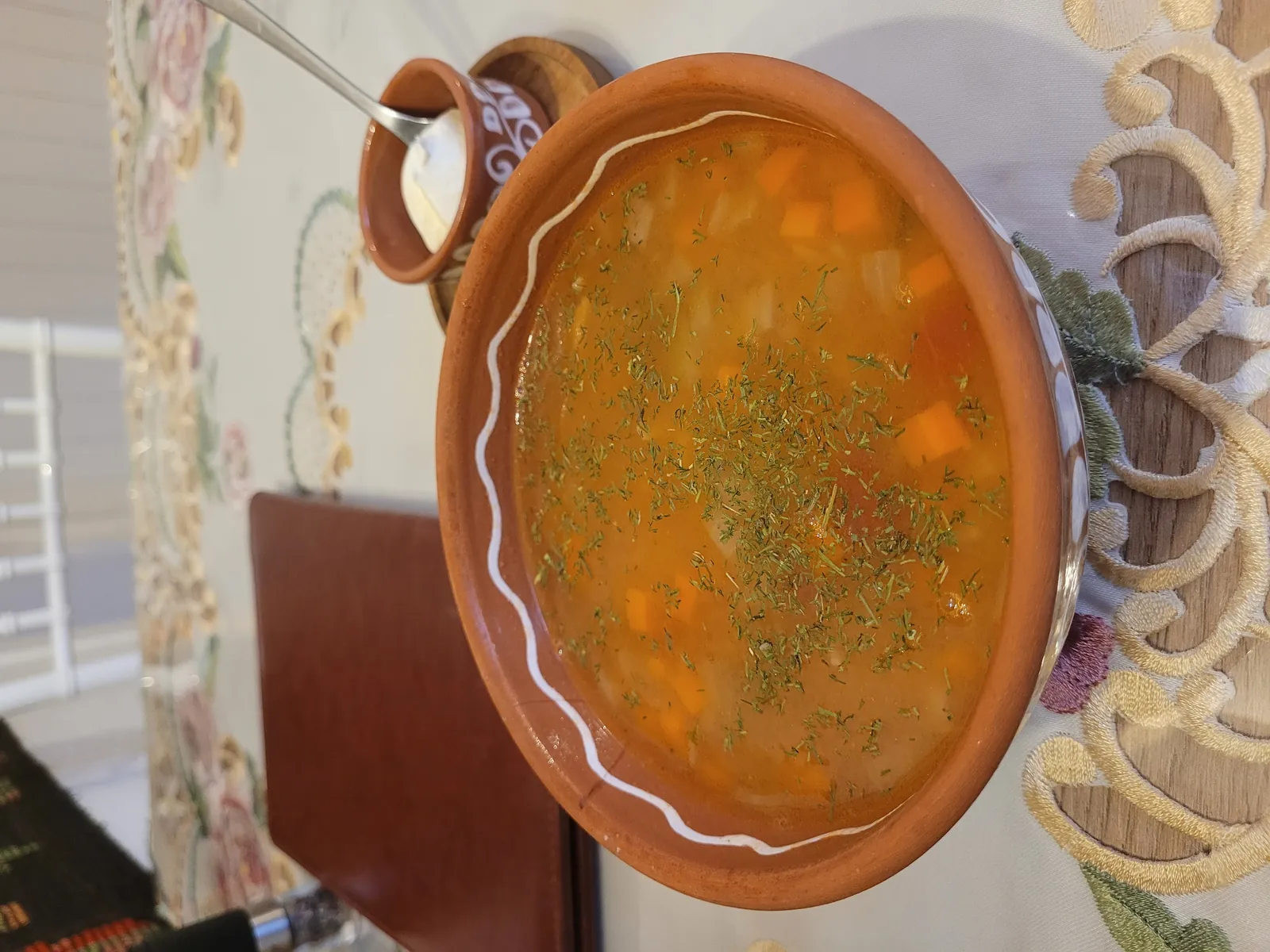
A clay bowl of golden zeama chicken soup with carrot and dill, with sour cream beside it Moldova flag Moldova 1h 35m
Lunch •Moldovan Heritage

Zeamă

This zeama recipe simmers chicken gently with carrot, onion and celery into a clear, golden broth, then adds thin homemade noodles and sours the whole pot with bors — a fermented wheat-bran liquid that gives the soup its signature gentle tang. Dill and a spoonful of sour cream finish each bowl. One serving is about 490 g.

Comfort & Warmth

A clear Moldovan chicken soup with homemade noodles, vegetables and dill, soured with bors.

Pairs Well With
Sour cream, dill & crusty bread
Soups & Broths

A golden round placinte flatbread cut into wedges on patterned paper Moldova flag Moldova 1h 5m
Snack & Tea •Moldovan Heritage

Plăcinte

This placinte recipe rolls soft yeast dough into thin rounds, fills them with salty sheep cheese, wilted spinach, spring onion and dill, folds them into flat parcels and bakes them until golden and puffed. They are eaten warm, torn open at the table. One serving is about 325 g, two pastries.

Comfort & Warmth

Golden baked flatbreads stuffed with salty sheep cheese, spinach and spring onion.

Pairs Well With
Sour cream, pickled cucumber & herbal tea
Bœuf bourguignon — French beef braised in red wine France flag France 4h
Dinner •Burgundy Terroir

Bœuf Bourguignon

Beef braised gently in red wine until the connective tissue melts into a velvet, gelatin-rich sauce — the classic Burgundy Sunday dinner.

Cellular Repair

Beef braised in red wine until spoon-tender, with mushrooms and pearl onions.

Pairs Well With
Parsnip Purée & Steamed French Haricots Verts
High Protein
Vietnamese braised pork belly with golden eggs in caramel sauce Vietnam flag Vietnam 1h 45m
Dinner •One Pot

Vietnamese Braised Pork and Eggs

Pork belly slowly braised in coconut water and caramel until meltingly tender, with golden eggs that soak up the sweet-savoury sauce — the Vietnamese family dish that tastes better the next day.

Comfort & Sustained Energy

Slow-braised pork belly and eggs in coconut water and caramel.

Pairs Well With
Steamed rice & pickled mustard greens
High Protein

The Dinner Gazette

Never wonder what’s for dinner again

One email a week with easy dinner ideas from around the world — ingredients, steps and nutrition, tested in our kitchen first.

Delivered every Thursday morning. Unsubscribe anytime.



