Curated recipes from 193 countries  •  New seasonal Mediterranean issue out now

Overview

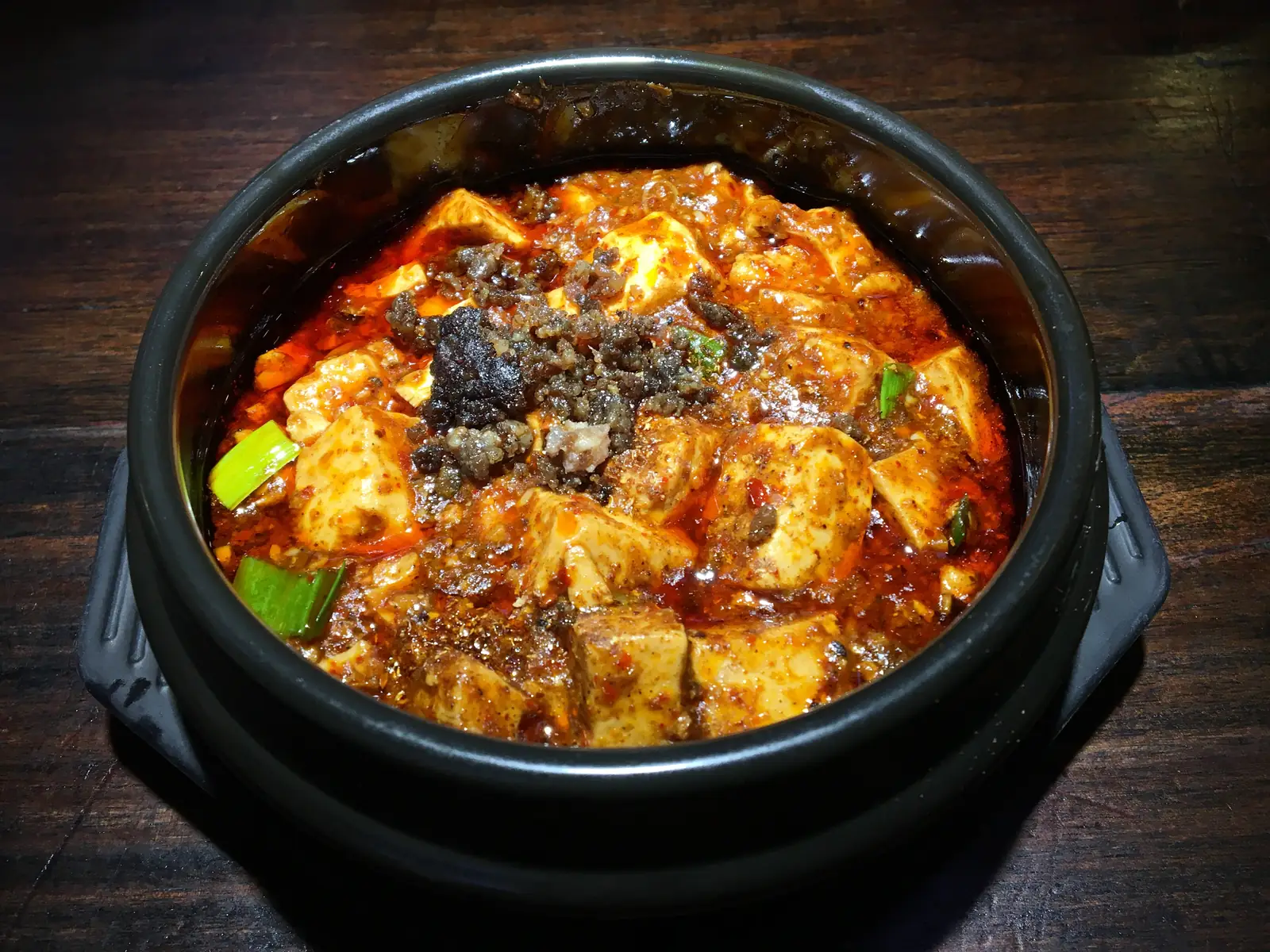
Mapo Tofu

Mapo Doufu, Mápó Dòufu, Pockmarked Old Woman's Tofu

This mapo tofu recipe is the Chengdu classic: cubes of silken tofu simmered in a bright red mala sauce of doubanjiang, fermented black beans and Sichuan peppercorns, with crisp minced beef scattered through it. The sauce is numbing, hot, salty and fragrant all at once — and it is the sauce, not the tofu, that makes the dish. One serving is about 220 g, served with rice.

Mapo tofu traces back to a small Chengdu eatery called Chen Xingsheng, opened near Wanfu Bridge in the 1860s — the restaurant's own account dates it to 1862 — by a couple named Chen. The wife, whose face was marked by smallpox, was nicknamed Mapo, meaning pockmarked old woman, and her tofu cooked with chilli, pork and Sichuan pepper became the dish that took her name. In the 1920s the restaurant's chef Xue Xiangshun perfected the recipe, switching to beef and adding fermented black beans. The first published recipe appeared in a 1950s Chinese cookbook, and the dish has since become one of the best-known Sichuan dishes in the world.

Pairs well with: Steamed jasmine rice and a cool cucumber salad to balance the mala heat.

Provenance

China flag China

Chengdu Heritage

East & South Asia

Time Dedication

35m

15m prep • 20m cook

Batch Yield

4 Servings

246 kcal per serving

1 serving ≈ 220 g

Technical Skill

Intermediate

Medium (Sichuan Simmer)

Meal Timing & Digestive Fit

Breakfast

Not Advised

Lunch

Hearty Midday Main

Dinner

Ideal Hearty Main

Snack & Tea

Inappropriate

Occasions: Weeknight dinners, cold evenings, Sichuan food nights, family meals Cost: Low — about $2–3 per serving at home
Tags: Tofu Spicy Savory
Mapo tofu in a black pot: silken tofu cubes in a bright red mala sauce with minced beef and scallions

Chengdu Heritage

Photo: ZhengZhou, CC BY-SA 4.0, via Wikimedia Commons

The Heritage Formulary

Measured Ingredients

Estimated cost: Low — about $2–3 per serving at home (USD)

Made the Chengdu way: doubanjiang fried in oil until the red oil separates, tofu simmered gently and never stirred hard, finished with ground Sichuan pepper.

Execution Methodology & Culinary Technique

Step-by-Step Cooking Guide

Active 35m
P

Prep Stage: Cube the Tofu & Line Up the Sauce

15 Mins • Cubing & Mincing

Cut the tofu into 2 cm cubes and set aside on a plate. Mince the garlic and ginger, slice the scallions (whites and greens in separate piles), rinse and chop the fermented black beans, and stir the cornstarch into 2 tablespoons of cold water. Keep the doubanjiang, soy sauce, sugar and stock within reach of the stove.

Maestro Tip: Cut the tofu gently with a sharp knife and lift the cubes with a wide spoon — silken tofu bruises easily, and broken cubes turn the sauce cloudy.

  1. 1

    Fry the Beef Crisp

    5 Mins Medium-high heat, ~190°C (375°F)

    Heat the oil in a wok or deep pan over medium-high heat. Add the ground beef and Shaoxing wine and fry, breaking the meat into small crumbs, for about 5 minutes until it is browned and crisp at the edges and cooked through to 71°C (160°F). Lift the beef out and set aside.

    Let the beef sit undisturbed for the first minute so it browns instead of steaming — crisp beef is what the classic dish is judged by.

    Done when: Beef browned, dry and crumbly, with no pink remaining.

  2. 2

    Bloom the Doubanjiang

    2 Mins Medium heat, ~175°C (350°F)

    In the same oil, add the doubanjiang, fermented black beans, dried chillies, garlic, ginger and scallion whites. Fry for 2 minutes, stirring, until the paste darkens slightly and a layer of red oil separates around the edges.

    This is the step that makes the sauce: frying the paste in oil until the red oil appears is what gives mapo tofu its colour and depth. Do not rush it or skip it.

    Done when: A fragrant red oil glistening around the darkened paste.

  3. 3

    Simmer the Tofu in the Sauce

    5 Mins Simmering, ~95°C (200°F)

    Pour in the stock, soy sauce and sugar, and bring to a gentle simmer. Slide the tofu cubes in carefully, return the beef to the pan, and simmer gently for 5 minutes, shaking the pan instead of stirring, so the tofu absorbs the sauce without breaking.

    Never stir mapo tofu with a spoon once the cubes are in — shake the pan or push the sauce around the edges with the back of a spoon, and the cubes stay whole.

    Done when: Tofu hot through, sauce bubbling gently around the cubes.

  4. 4

    Thicken the Sauce

    2 Mins Simmering, ~95°C (200°F)

    Stir the cornstarch slurry once more and drizzle it around the edges of the pan. Simmer for 1–2 minutes, shaking the pan, until the sauce thickens enough to coat the tofu in a glossy layer.

    Add the slurry in two halves — you can always thicken more, but a sauce that is too thick hides the tofu and turns gluey.

    Done when: A shiny sauce that clings to the tofu instead of running off.

  5. 5

    Finish with Sichuan Pepper

    1 Min No heat

    Take the pan off the heat. Dust the ground Sichuan peppercorns evenly over the surface, scatter the scallion greens on top, and serve immediately in a warm bowl with steamed rice.

    The ground pepper goes on last and off the heat, so its numbing, citrusy aroma stays alive instead of cooking away.

    Done when: A bright red, glossy surface with visible peppercorn dust and green scallions.

  6. 6

    Serve at Once

    5 Mins No heat

    Spoon the mapo tofu over or beside steamed rice and eat while it is steaming hot, so the sauce stays loose and the tofu stays tender.

    Mapo tofu waits for no one — the sauce thickens as it cools, so serve it the moment it leaves the pan.

    Done when: Tofu cubes whole, sauce glossy and hot, rice ready beside the bowl.

Finishing Touches & Plating

Ladle the mapo tofu into a warm bowl, dust with ground Sichuan pepper, scatter the scallion greens over the top and serve at once with steamed rice.
Nutritional Physiology & Benefits

Nutrition

Energy

246

kcal / serving

Protein

15g

Complete AA

Carbs

11g

Complex

Fats

15g

Healthy

Per serving (4 servings · 1 serving ≈ 220 g)
Energy246 kcal
Protein15 g
Carbohydrates11 g
Fat15 g
Fibre1.5 g
Sugar3.0 g
Sodium973 mg
Per 100g
Energy112 kcal
Protein6.9 g
Carbohydrates4.8 g
Fat7 g
Fibre0.7 g
Sugar1.4 g
Sodium442 mg

Nutrition values are estimated — calculated from USDA FoodData Central values for the listed ingredients.

Vitamins & minerals: Tofu supplies calcium, iron and magnesium, beef adds vitamin B12 and zinc, and the scallions contribute vitamin K and vitamin C. All nutrition values are estimated.

Light but Satisfying Tofu

Silken tofu is low in calories for its weight and supplies plant protein, calcium and iron, which is why this rich-tasting dish stays light at about 246 kcal a serving.

Protein from Beef & Tofu

The minced beef and tofu together give about 15.2 g of protein per serving, enough to make a bowl of mapo tofu a real dinner.

Flavour without Extra Fat

The mala sauce is built on chilli and Sichuan pepper, and the ginger and garlic add flavour without extra fat or sugar.

Food Pairings

What to Eat With

To optimize nutrient absorption and elevate the sensory depth, pair with these authentic accompaniments:

Sides

Steamed Jasmine Rice

Rice is not optional with mapo tofu — the loose, oily mala sauce needs something plain to soak it up, and a spoonful of rice with a cube of tofu is the perfect bite.

Vegetables

Cucumber Salad

Cold cucumber dressed with vinegar cuts through the chilli oil and gives a crisp contrast to the soft tofu.

Soups

Egg-Drop Soup

A mild, clear soup eaten alongside gives the palate a rest between spoonfuls of the fiery sauce.

Drinks

Jasmine Tea

Hot jasmine tea is the everyday Sichuan table drink, and it washes down chilli heat better than cold water.

Complete menu

Serve mapo tofu over steamed jasmine rice with a light cucumber salad and a simple egg-drop soup, and finish with jasmine tea.

Digestive Guardrails

What NOT to Combine

To prevent digestive distress, sluggishness, or palate clash, avoid pairing the dish with these elements:

Extra Salty Sauces

The sauce is already salty from doubanjiang, soy sauce and fermented black beans, so salty sides or extra soy sauce at the table push one meal too far. This is general food information, not medical advice.

Rough Stirring & Hidden Allergens

Mapo tofu is made with silken tofu that falls apart if stirred roughly or boiled hard — and the dish contains soy and wheat, so anyone with a soy or wheat allergy should not eat it unless safe substitutes are used. This is general food information, not medical advice.

General information only, not medical advice — consult a doctor for personal dietary decisions.

Who Should Eat It

Who Should Eat

  • General adultsA warming, satisfying dinner at about 246 kcal per serving — best with a bowl of rice and a light vegetable.
  • ChildrenToo hot for most young children; make a small mild batch without chillies and peppercorns if children are eating.
  • ElderlySoft tofu is easy to eat, but keep the chilli level low and the portion modest.
  • Pregnant womenFine when the beef is cooked right through to 71°C (160°F); keep the spice at a comfortable level. Ask your clinician about portions.
  • Breastfeeding womenA comforting, protein-containing meal; one serving with rice is enough. Ask your clinician about portions.
  • AthletesA lighter dinner at about 15.2 g protein per serving — pair it with rice and an extra protein if you need a bigger recovery meal.
  • Weight gainNot very energy-dense on its own, so serve it with a full portion of rice and extra oil if weight gain is the aim.
  • Weight lossAt about 246 kcal per serving it fits a weight-loss plan well — keep the rice portion moderate and skip extra oil.

Health Conditions — Adjust or Avoid

Conditions

  • DiabetesThe tofu itself is very low in carbohydrate; the rice is the main source, so keep the rice portion moderate. Ask your clinician about portions.
  • High blood pressureOne serving carries about 973 mg sodium from the bean paste and soy sauce, so keep other salty foods out of the same meal. Ask your clinician about portions.
  • Kidney diseasePortions should stay modest, and the salt and protein content matter for some kidney diets. Ask your clinician about portions.
  • GoutBeef is the main purine source here, so keep to one modest serving and drink water with the meal. Ask your clinician about portions.
  • Stomach issuesChillies, Sichuan peppercorns and fermented bean paste can irritate a sensitive stomach; eat a smaller portion and reduce the chilli if it bothers you. Ask your clinician about portions.
  • Cardiovascular diseaseThe dish is moderately high in fat from the oil and beef, so one serving with plenty of vegetables is a better balance than a second helping. Ask your clinician about portions.
  • Fatty liverThe dish is moderate in energy, so keep portions modest and avoid eating it late at night. Ask your clinician about portions.
  • Food allergiesContains soy (tofu, soy sauce, doubanjiang) and wheat if regular soy sauce or doubanjiang is used. People with soy or wheat allergy should not eat it unless safe substitutes are used. Ask your clinician about safe alternatives.
  • Special therapeutic dietsNot suitable for a low-sodium therapeutic diet as written; a lighter version changes the dish and should be discussed with a clinician.

If you have a medical condition, consult your doctor before changing your diet.

Storage & Use

Storage & Use

How to store
Cool quickly and store in a covered container in the fridge.
In the fridge
Keeps 2 days in the fridge at 4°C (40°F) or below.
In the freezer
Up to 1 month; the tofu texture changes after freezing, so it is best eaten fresh.
How to reheat
Reheat gently on the hob, shaking the pan, until steaming hot throughout, to 74°C (165°F); do not boil or stir hard.
Freezing recommended
No — the tofu turns spongy when frozen.
Signs it has spoiled
Sour or off smell, slimy surface, or mould.

More recipes to explore

Kung pao chicken in a white dish: diced chicken, roasted peanuts, dried red chillies and scallions in a glossy sauce China flag China 35m
Dinner •Sichuan Heritage

Kung Pao Chicken

This kung pao chicken recipe is the Sichuan original: bite-sized chicken wok-fried with dried red chillies, tingling Sichuan peppercorns, scallions and crisp roasted peanuts, all glossed with a sweet-sour soy and black vinegar sauce. It is hot, numbing, a little sweet and deeply savoury — the mala flavour that defines Sichuan cooking. One serving is about 200 g, served with rice.

Bold & Satisfying

A fast wok stir-fry of chicken, peanuts and dried chillies with Sichuan peppercorns, ready in about 35 minutes.

Pairs Well With
Steamed jasmine rice and a cool cucumber salad to balance the heat.
High Protein • Quick Prep (<30m)
A whole lacquered Peking duck being carved at the table by a chef, with sliced crisp skin on a plate China flag China 2h 20m
Dinner •Beijing Heritage

Peking Duck

This peking duck recipe is the Beijing classic: a whole duck blanched, glazed with maltose and honey, air-dried until the skin is taut, then roasted until the skin turns deep mahogany and shatters like glass. It is carved at the table and eaten wrapped in thin pancakes with hoisin, scallion and cucumber. One serving is about 395 g, duck, pancakes and condiments together.

Celebration & Feast

A whole duck glazed, air-dried and roasted until the skin is lacquered and crisp, carved at the table with pancakes.

Pairs Well With
Thin pancakes, hoisin, scallion and cucumber — the classic wrap.
High Protein
Bœuf bourguignon — French beef braised in red wine France flag France 4h
Dinner •Burgundy Terroir

Bœuf Bourguignon

Beef braised gently in red wine until the connective tissue melts into a velvet, gelatin-rich sauce — the classic Burgundy Sunday dinner.

Cellular Repair

Beef braised in red wine until spoon-tender, with mushrooms and pearl onions.

Pairs Well With
Parsnip Purée & Steamed French Haricots Verts
High Protein
Vietnamese braised pork belly with golden eggs in caramel sauce Vietnam flag Vietnam 1h 45m
Dinner •One Pot

Vietnamese Braised Pork and Eggs

Pork belly slowly braised in coconut water and caramel until meltingly tender, with golden eggs that soak up the sweet-savoury sauce — the Vietnamese family dish that tastes better the next day.

Comfort & Sustained Energy

Slow-braised pork belly and eggs in coconut water and caramel.

Pairs Well With
Steamed rice & pickled mustard greens
High Protein

The Dinner Gazette

Never wonder what’s for dinner again

One email a week with easy dinner ideas from around the world — ingredients, steps and nutrition, tested in our kitchen first.

Delivered every Thursday morning. Unsubscribe anytime.