-
1
Blanch & Glaze the Duck
15 Mins
Boiling water, 100°C (212°F)
Bring a kettle of water to a rolling boil. Set the duck on a rack over a tray and pour the boiling water slowly over the skin, turning the bird so all of it is scalded — the skin will tighten and go pale. Pat it dry, then brush the maltose, honey, Shaoxing wine and rice vinegar glaze all over the skin in a thin, even coat.
Pour the water slowly and let it run off — a quick splash does not tighten the skin, and the glaze only sticks to a dry bird.
Done when: Skin taut, pale and dry to the touch, with a thin sticky glaze.
-
2
Air-Dry Overnight
12 Hours (passive)
Fridge, 4°C (40°F)
Hang the duck by its neck or set it on a rack in the fridge, uncovered, for 12 hours or overnight. The skin must feel dry and papery before it goes into the oven — this is passive time and is not counted in the recipe's active total.
Do not cover the duck — plastic wrap traps moisture and the skin will never dry. A small fan pointed at the bird in the fridge helps on humid days.
Done when: Skin completely dry and papery, like parchment.
-
3
Roast until Lacquered
65 Mins
200°C (400°F), then 180°C (350°F)
Heat the oven to 200°C (400°F). Set the duck on a rack in a roasting tin, breast up, and roast for 30 minutes until the skin starts to colour. Turn the oven down to 180°C (350°F) and roast for 35 minutes more, until the skin is deep mahogany and lacquered, and the thickest part of the thigh reads 74°C (165°F) on a thermometer.
If one side colours faster, turn the tin halfway through. If the skin darkens too fast, tent the bird loosely with foil and keep roasting.
Done when: Deep mahogany skin that crackles when tapped; thigh at 74°C (165°F).
-
4
Rest the Duck
15 Mins
Room temperature
Lift the duck out and rest it on the rack for 15 minutes before carving. The juices settle back into the meat and the skin stays crisp while it rests.
Never rest the duck on a flat plate — the skin underneath steams and softens. Keep it on the rack so air circulates.
Done when: Meat relaxed, juices no longer running when the skin is cut.
-
5
Carve at the Table
10 Mins
No heat
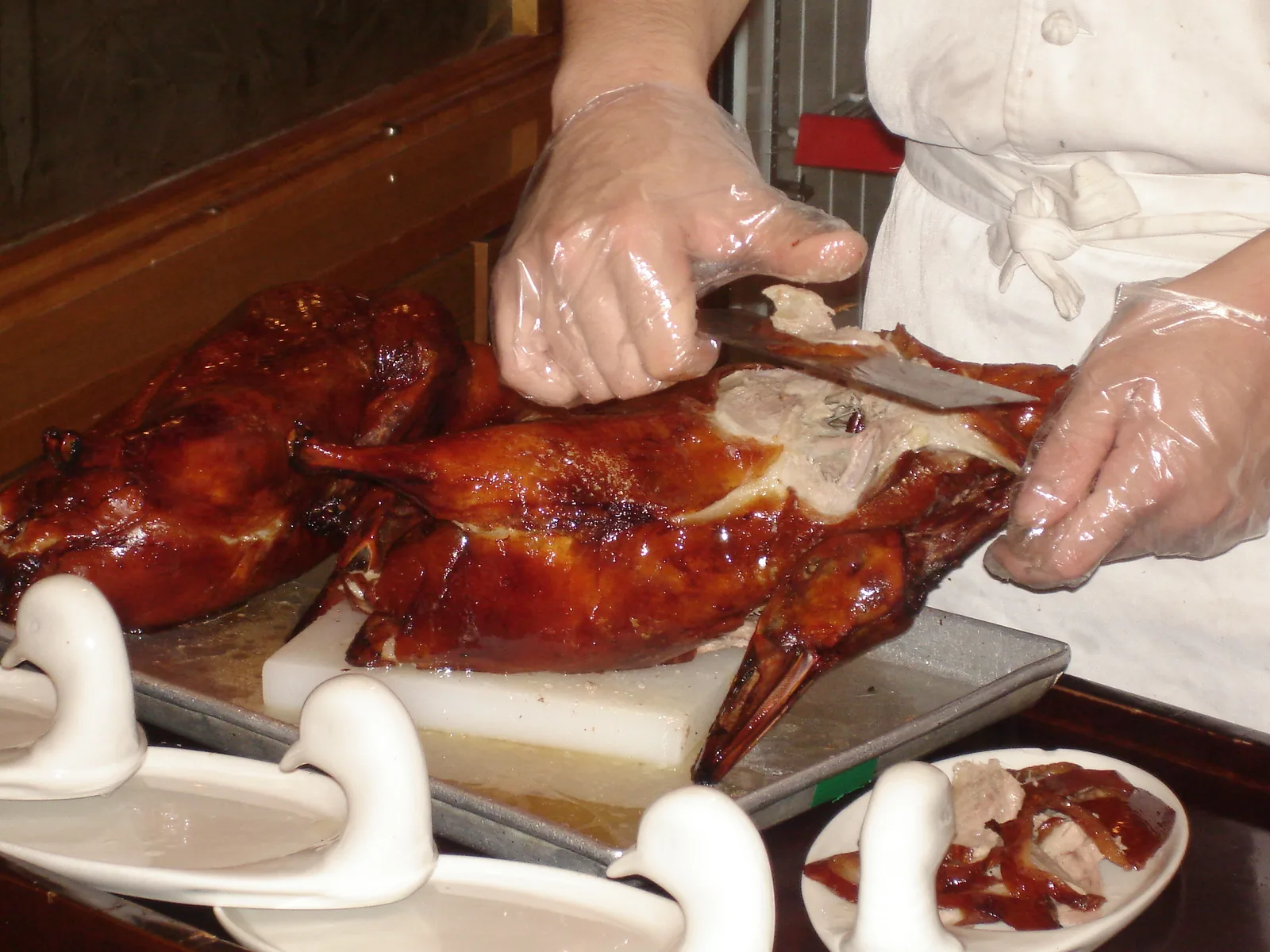
Bring the duck to the table on a board. With a sharp knife, carve thin slices of skin first, then slices of meat, laying them in neat overlapping rows on a warm plate — the crisp skin is served first, as tradition demands.
Cut skin-side down and slice in one smooth stroke — sawing tears the skin and the crisp shards fall apart.
Done when: Thin, even slices with a strip of crisp skin on each piece.
-
6
Warm the Pancakes & Roll
5 Mins
Steaming, ~100°C (212°F)
Steam the pancakes for 3 minutes. To eat, spread a thin smear of hoisin on a pancake, add a slice of skin and a slice of meat, top with scallion shreds and cucumber, roll it up and eat at once.
Less hoisin than you think — a thin smear lets the duck lead, and too much makes the wrap soggy and over-sweet.
Done when: Pancakes soft and warm, wraps rolled and eaten hot.
auto_awesome Finishing Touches & Plating
Bring the whole duck to the table on a board, carve thin slices of crisp skin and meat in front of your guests, and let everyone roll their own pancakes with hoisin, scallion and cucumber.
 China
35m

 France

 Vietnam