Curated recipes from 193 countries  •  New seasonal Mediterranean issue out now

Overview

Merluza en Salsa Verde

Hake in Green Sauce, Merluza a la Vasca, Basque Hake in Green Sauce

This merluza en salsa verde recipe poaches hake fillets in a green sauce of parsley, garlic, olive oil and white wine, with clams, peas, white asparagus and hard-boiled egg alongside. The sauce thickens lightly with flour and turns pale green as the parsley cooks in. One serving is about 360 g, with about 38.2 g protein.

Merluza en salsa verde is the classic dish of the Basque Country, and its home is the fishing port of San Sebastian, where hake has been the prized catch for centuries. The green sauce — salsa verde — is parsley, garlic, olive oil and white wine, thickened with a little flour, and the dish is traditionally finished with clams, peas, asparagus and hard-boiled egg, the garnishes of a Basque feast. It is said the sauce was invented to use up the parsley that grew wild around the port, and it is still the first dish visitors are offered in the old town's taverns.

Pairs well with: Crusty bread to mop up the sauce, with a glass of txakoli or dry white wine.

Provenance

Spain flag Spain

Basque Classic

Mediterranean & Italy

Time Dedication

45m

20m prep • 25m cook

Batch Yield

4 Servings

368 kcal per serving

1 serving ≈ 360 g

Technical Skill

Intermediate

Medium (Poached Fish)

Meal Timing & Digestive Fit

Breakfast

Not Advised

Lunch

Hearty Midday Main

Dinner

Ideal Hearty Main

Snack & Tea

Inappropriate

High Protein Occasions: Family dinners, feast days, seaside meals, spring and summer evenings Cost: Medium — about $6–8 per serving at home

Tags: Fish Savory Herby
Merluza en salsa verde, hake in green parsley sauce with clams, mussels, egg and asparagus in a clay dish

Basque Classic

Photo: Avicentegil, CC BY-SA 4.0, via Wikimedia Commons

The Heritage Formulary

Measured Ingredients

Estimated cost: Medium — about $6–8 per serving at home (USD)
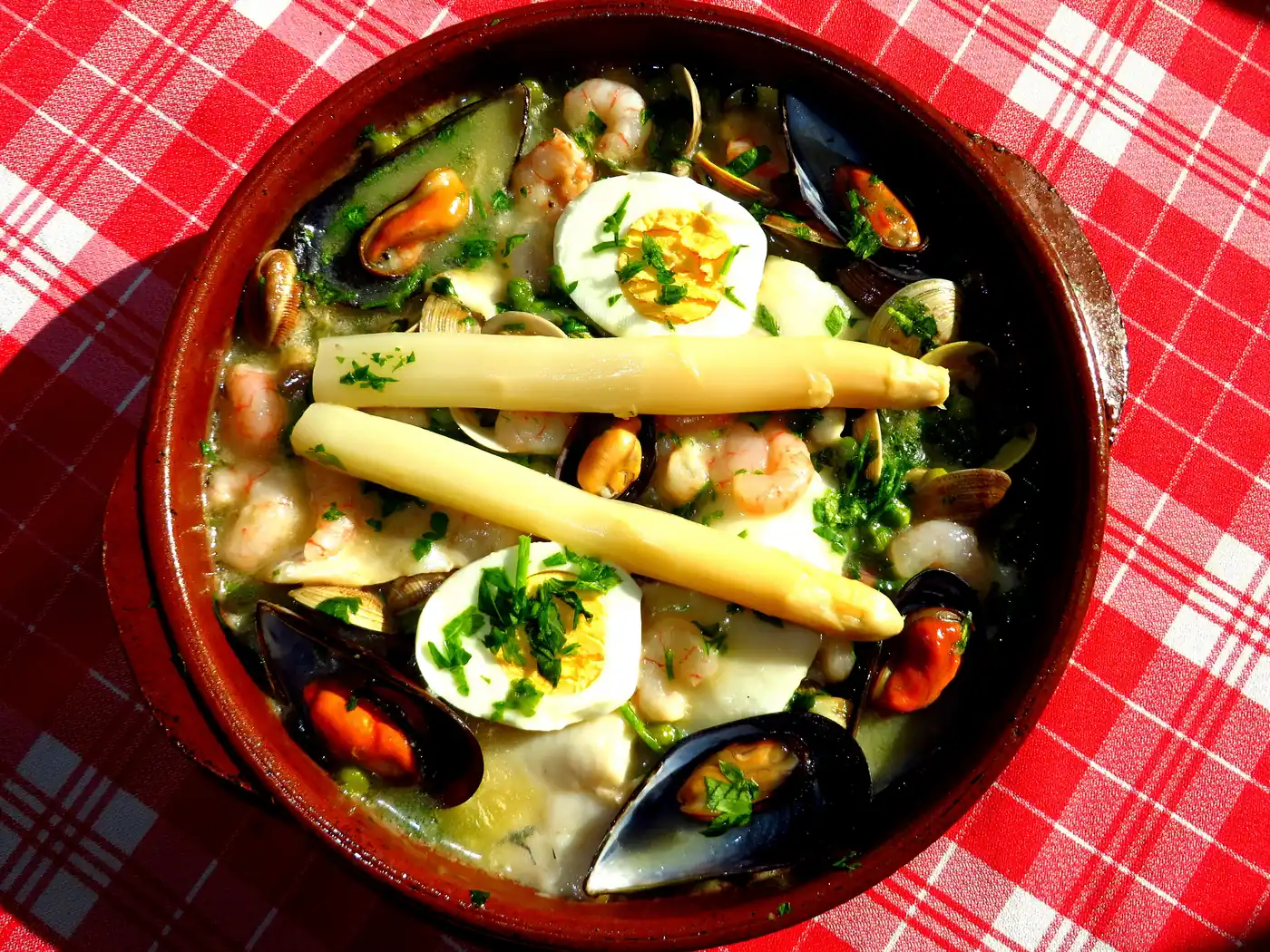
Made the traditional way: hake poached gently in a parsley and white wine sauce, finished with clams, peas, asparagus and egg.

Execution Methodology & Culinary Technique

Step-by-Step Cooking Guide

Active 45m
P

Prep Stage: Fish, Clams & Green Sauce Base

20 Mins • Cleaning & Chopping

Pat the hake dry and season it lightly. Scrub the clams and discard any that stay open. Chop the garlic and the parsley finely — the parsley is the green in the sauce, so chop it well. Boil the eggs for 9 minutes, cool and halve them, and drain the asparagus. Measure out the wine, stock and flour so the sauce comes together without stopping.

Maestro Tip: Chop the parsley at the last moment — parsley cut too early loses its bright green colour in the sauce.

  1. 1

    Soften the Garlic

    3 Mins Medium heat, ~175°C (350°F)

    Warm the olive oil in a wide, shallow pan and cook the garlic gently for about 2 minutes until it smells fragrant but has not coloured. Stir in the flour and cook for 1 minute more, stirring all the time.

    If the garlic browns, start again — brown garlic turns the sauce bitter.

    Done when: Pale garlic in oil, with a thick paste forming.

  2. 2

    Build the Green Sauce

    5 Mins Medium heat, ~175°C (350°F)

    Pour in the white wine and let it bubble for 1 minute, then add the fish stock and bring it to a gentle simmer. Stir in most of the chopped parsley and season with salt — the sauce should be pale green and lightly thickened.

    Keep the simmer gentle; a hard boil makes the sauce cloudy.

    Done when: A smooth, pale green sauce that coats the back of a spoon.

  3. 3

    Poach the Hake

    10 Mins Gentle simmer, ~95°C (200°F)

    Lay the hake fillets in the sauce, spoon a little sauce over them, and cover the pan. Poach gently for about 8 minutes, until the fish flakes easily and the centre reaches 63°C (145°F). Do not let the sauce boil hard.

    Spoon sauce over the fish as it cooks so the top stays moist.

    Done when: White, opaque fillets that flake at the touch of a fork.

  4. 4

    Add the Clams, Peas & Asparagus

    7 Mins Gentle simmer, ~95°C (200°F)

    Scatter the clams, peas and asparagus around the fish, cover again, and cook for about 5 minutes until the clams open. Discard any clam that stays shut. Spoon the sauce over everything and sprinkle with the rest of the parsley.

    A clam that stays shut after cooking is not safe to eat — throw it away.

    Done when: Open clams, bright green peas, and fish bathed in green sauce.

  5. 5

    Serve with the Egg

    2 Mins No heat

    Lift the fish and its garnishes into a warm serving dish or clay cazuela, pour the green sauce over, and set the halved eggs on top. Serve at once, with bread on the table.

    Warm the serving dish first — the sauce cools fast on a cold plate.

    Done when: A clay dish of white fish in green sauce, dotted with clams, peas and egg.

Finishing Touches & Plating

Finish with a final handful of chopped parsley and a drizzle of good olive oil, and bring the dish to the table in its pan so everyone can spoon up the sauce.

Nutritional Physiology & Benefits

Nutrition

Energy

368

kcal / serving

Protein

38g

Complete AA

Carbs

12g

Complex

Fats

16g

Healthy

Per serving (4 servings · 1 serving ≈ 360 g)
Energy368 kcal
Protein38 g
Carbohydrates12 g
Fat16 g
Fibre2.3 g
Sugar2.8 g
Sodium818 mg
Per 100g
Energy102 kcal
Protein10.6 g
Carbohydrates3.2 g
Fat4.4 g
Fibre0.6 g
Sugar0.8 g
Sodium227 mg

Nutrition values are estimated — calculated from USDA FoodData Central values for the listed ingredients.

Vitamins & minerals: Hake supplies vitamin B12 and selenium, parsley adds vitamin C and vitamin K, and the egg adds vitamin D.

High in Protein

One serving carries about 38.2 g protein from the hake, clams and egg, which makes this a genuinely filling dinner.

Lean Fish, Light Sauce

Hake is a lean white fish, and the sauce is mostly olive oil, wine and parsley, so the meal stays light at about 368 kcal.

Vitamin B12 & Selenium

Hake supplies vitamin B12 and selenium, and the parsley adds vitamin C and vitamin K to the plate.

Food Pairings

What to Eat With

To optimize nutrient absorption and elevate the sensory depth, pair with these authentic accompaniments:

Sides

Crusty Bread

Bread is not optional here — the green sauce is the best part of the dish, and only crusty bread mops it up properly.

Boiled Potatoes

Plain boiled potatoes soak up the sauce and make the meal more filling without adding another strong flavour.

Drinks

Txakoli

Txakoli, the light, slightly sparkling white wine of the Basque Country, is the local partner for this dish and matches the sauce's acidity.

Vegetables

Green Salad

A simple lettuce salad with a light dressing adds crunch and freshness next to the soft fish and warm sauce.

Complete menu

Serve merluza en salsa verde with crusty bread and a green salad for dinner, with txakoli to drink, and finish with fresh fruit.

Digestive Guardrails

What NOT to Combine

To prevent digestive distress, sluggishness, or palate clash, avoid pairing the dish with these elements:

Overcooking the Hake

Hake goes dry and tough in minutes once it passes 63°C (145°F), so take it off the heat as soon as it flakes. This is general food information, not medical advice.

Closed Clams

A clam that stays shut after cooking should be thrown away, not forced open — it may not be safe to eat. This is general food information, not medical advice.

General information only, not medical advice — consult a doctor for personal dietary decisions.

Who Should Eat It

Who Should Eat

  • General adultsA satisfying dinner — about 368 kcal and 38.2 g protein per serving, best eaten hot with bread.
  • ChildrenChildren can eat the fish and peas; pick out the clams for small children and check for bones.
  • ElderlySoft fish and a light sauce make this an easy, comfortable dinner for older eaters.
  • Pregnant womenFine as a dinner when the fish is cooked right through; the clams should be fresh and the eggs fully set. Ask your clinician about portions.
  • Breastfeeding womenA light, protein-rich dinner; the fish, clams and egg add protein and B12, and one serving is filling.
  • AthletesExcellent recovery food, with about 38.2 g protein and light carbohydrate per serving — add bread or potatoes for more fuel.
  • Weight gainLean and protein-rich, so it suits weight gain when served with bread and potatoes.
  • Weight lossLight at about 368 kcal per serving with high protein; keep the bread modest and load up on the fish and vegetables.

Health Conditions — Adjust or Avoid

Conditions

  • DiabetesThe dish is low in carbohydrate, about 11.5 g per serving, so it fits well in a modest portion. Ask your clinician about portions.
  • High blood pressureOne serving carries about 818 mg sodium, so keep other salty foods out of the same meal. Ask your clinician about portions.
  • Kidney diseasePortions should stay modest, and the salt and protein content matter for some kidney diets. Ask your clinician about portions.
  • GoutFish and shellfish are moderate in purines, so keep to one serving and drink water with the meal. Ask your clinician about portions.
  • Stomach issuesA light, gentle dish; eat slowly and take a smaller portion if the garlic or wine bothers you. Ask your clinician about portions.
  • Cardiovascular diseaseThe dish is light in fat and rich in protein, so one serving with vegetables is a good balance. Ask your clinician about portions.
  • Fatty liverThe dish is light and protein-rich, so it fits well in a modest portion. Ask your clinician about portions.
  • Food allergiesContains fish (hake), shellfish (clams), egg and wheat (flour in the sauce). People with fish, shellfish, egg or wheat allergy should not eat it unless safe substitutes are used. Ask your clinician about safe alternatives.
  • Special therapeutic dietsSuitable for many lighter therapeutic diets as written; any change should be discussed with a clinician.

If you have a medical condition, consult your doctor before changing your diet.

Storage & Use

Storage & Use

How to store
Cool quickly and store the fish and sauce together in a covered container.
In the fridge
Up to 2 days in the fridge at 4°C (40°F) or below.
In the freezer
Up to 1 month, but the sauce thins and the fish dries — best eaten fresh.
How to reheat
Reheat gently in a covered pan until steaming hot, to 74°C (165°F); do not boil.
Freezing recommended
No — best eaten fresh.
Signs it has spoiled
Fishy or sour smell, slimy fish, or clams that smell off.

More recipes to explore

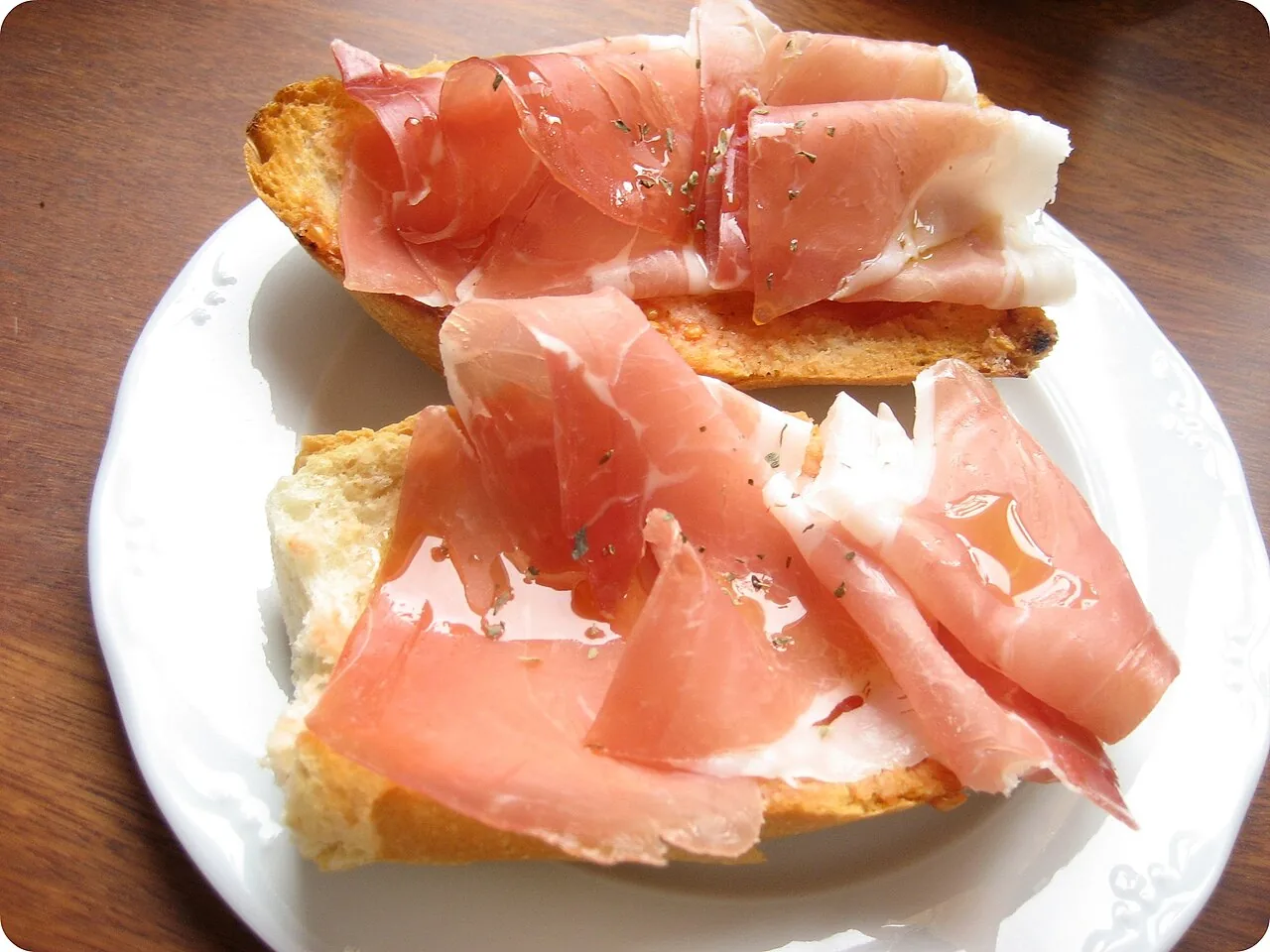
Pan con tomate with jamón ibérico on toasted bread Spain flag Spain 15m
Snack & Tea •Catalan Aperitivo

Pan con Tomate & Jamón Ibérico

Country bread rubbed with ripe Ramallet tomato, drizzled with cold-pressed Arbequina olive oil and topped with jamón ibérico.

Vascular Health

Toasted tomato bread with jamón ibérico, olive oil and olives.

Pairs Well With
Castelvetrano Olives & Sparkling Mineral Water
Quick Prep (<30m)
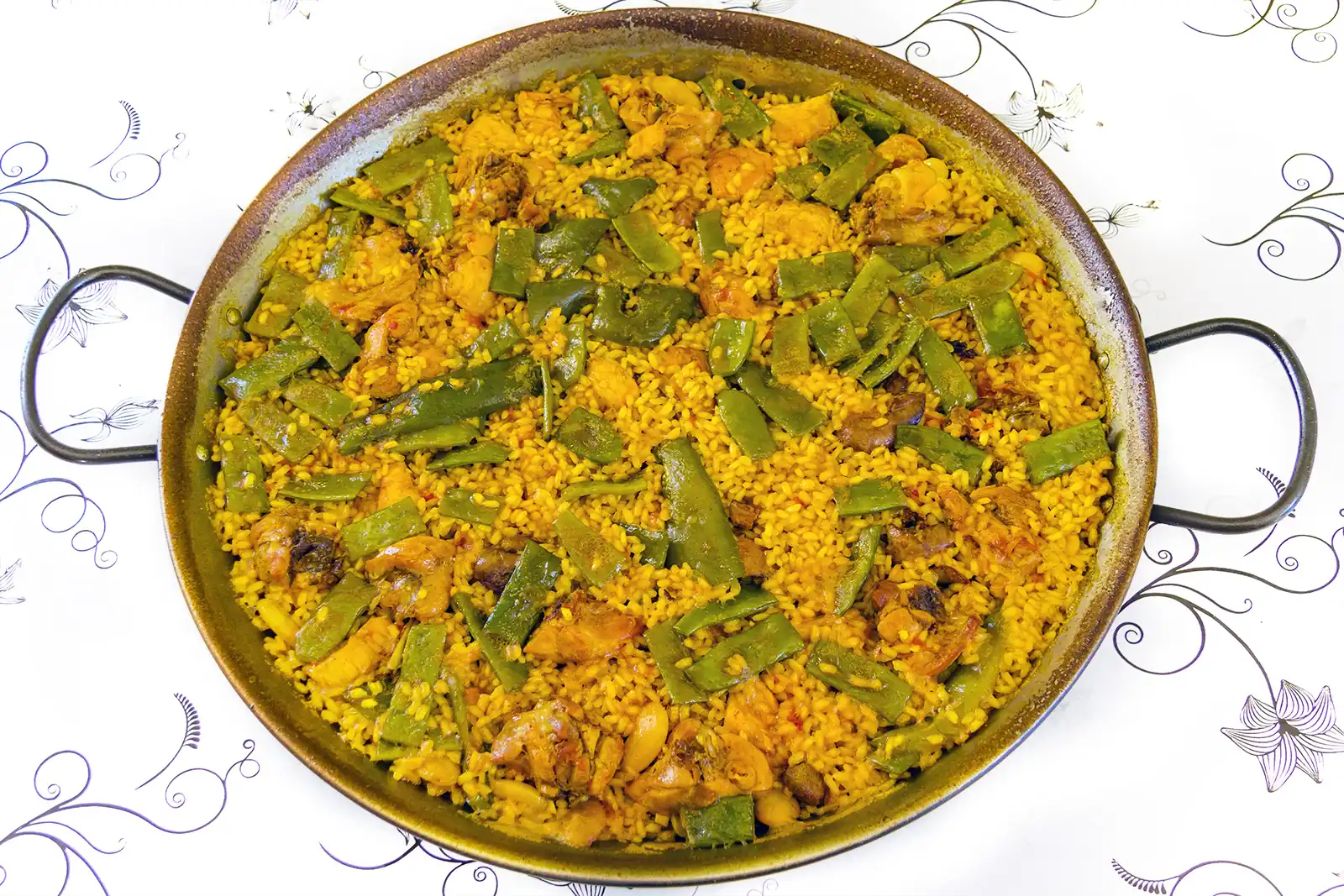
A wide paella pan of paella valenciana with saffron rice, green beans and chicken Spain flag Spain 1h 10m
Dinner •Valencia Rice Fields

Paella Valenciana

This paella valenciana recipe cooks Bomba rice in a wide, shallow pan with chicken, rabbit, green beans and garrofó beans, scented with saffron and rosemary. One serving is about 470 g.

Comfort & Warmth

Saffron rice cooked in a wide pan with chicken, rabbit and green beans.

Pairs Well With
A green salad and a glass of white wine
High Protein
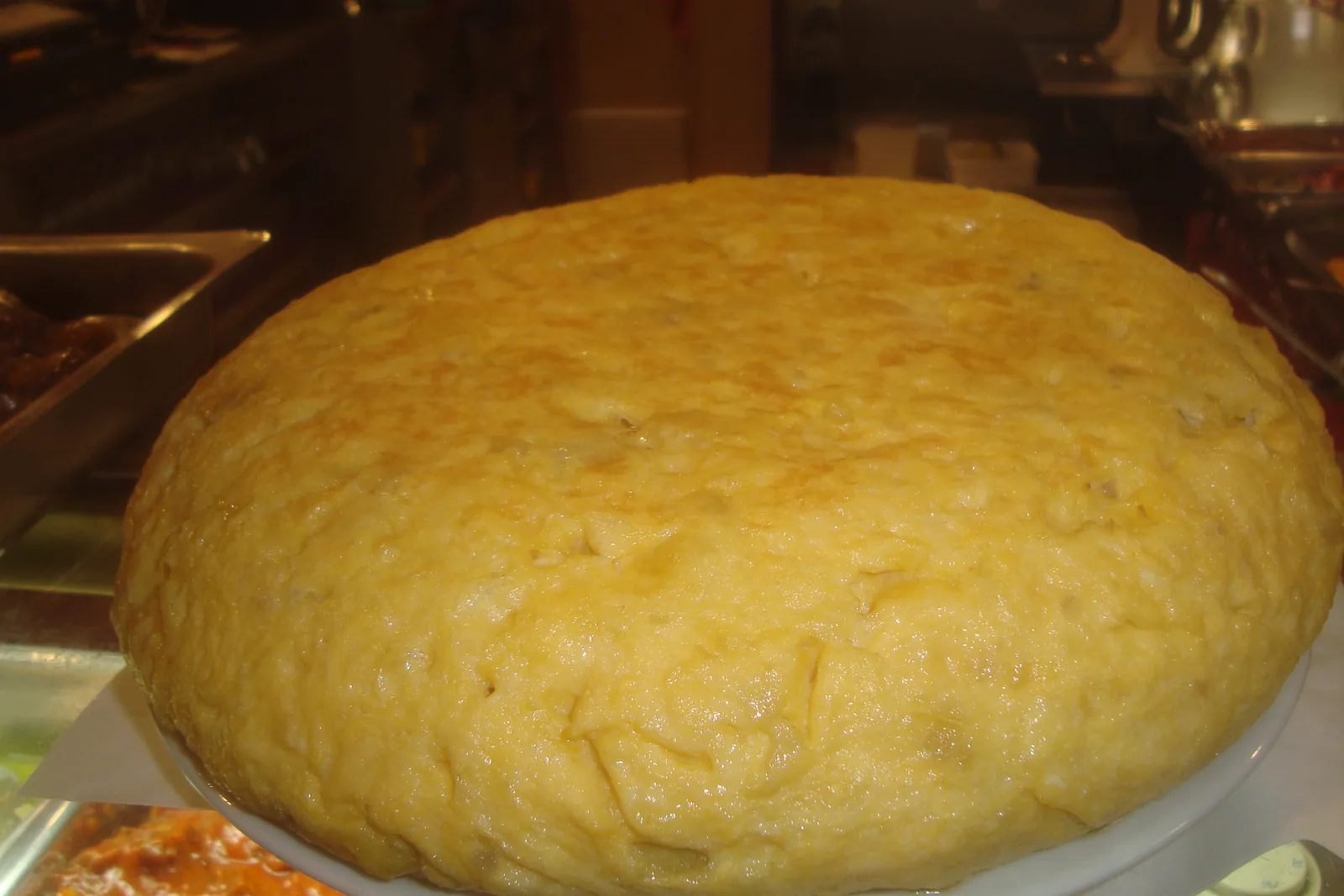
A whole golden tortilla española, a thick Spanish potato omelette, on a plate Spain flag Spain 55m
Snack & Tea •Navarre Bar Classic

Tortilla Española

This spanish tortilla recipe slowly cooks potatoes and onion in olive oil, folds them into beaten eggs, and turns out a thick, golden cake that is soft in the middle. One serving is about 220 g.

Comfort & Warmth

A thick, golden omelette of slow-cooked potatoes, onion and egg.

Pairs Well With
Pan con tomate and a glass of red wine
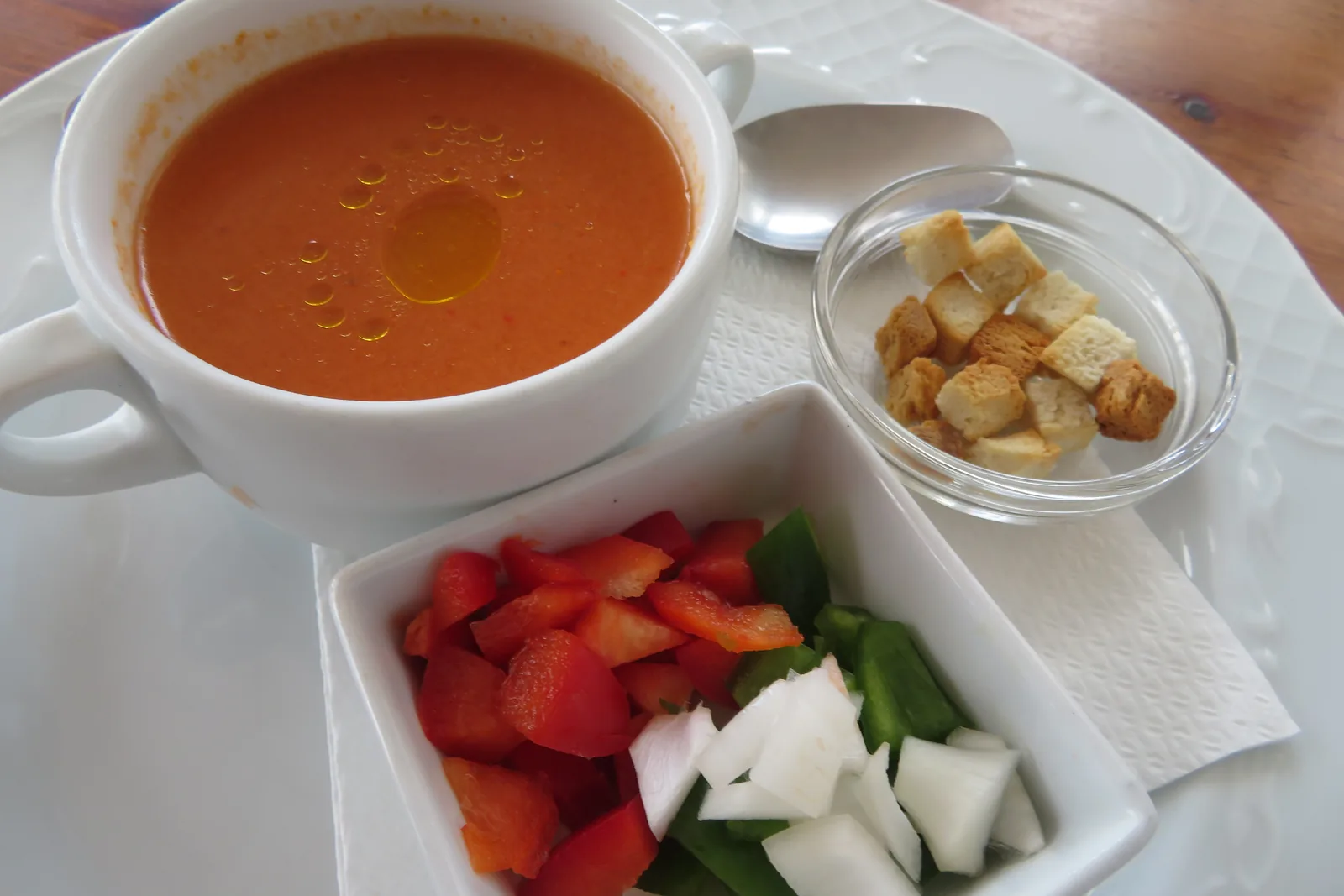
A cup of chilled orange-red gazpacho with olive oil, served with diced peppers and onion and a bowl of croutons Spain flag Spain 20m
Lunch •Andalusian Classic

Gazpacho

This gazpacho recipe is the Andalusian classic: ripe tomatoes, cucumber, green pepper, onion and garlic blended raw with bread, sherry vinegar and olive oil, then chilled until ice cold. One serving is about 395 g. It takes 20 minutes plus chilling, and there is no cooking at all.

Light & Refreshing

Chilled raw tomato soup blended with cucumber, pepper and olive oil, served cold with diced vegetables and croutons.

Pairs Well With
Croutons, diced vegetables & crusty bread
Soups & Broths • Quick Prep (<30m)

The Dinner Gazette

Never wonder what’s for dinner again

One email a week with easy dinner ideas from around the world — ingredients, steps and nutrition, tested in our kitchen first.

Delivered every Thursday morning. Unsubscribe anytime.