

Curated recipes from 193 countries  •  New seasonal Mediterranean issue out now

Overview

Midin

Paku Midin, Lemidin — Stir-Fried Sarawak Fern

This midin recipe shows how to stir-fry Sarawak's wild fern fiddleheads the classic way — with garlic, ginger, red chilli and belacan (shrimp paste) in a blazing wok, so the curled fronds stay crisp and glossy. One serving is about 125 g, a bright green plate that belongs beside steamed rice.

Midin (Stenochlaena palustris) is a wild fern of the lowland swamps and secondary forests of Sarawak, and it is counted among the three dishes most closely linked to the state, alongside Sarawak laksa and kolo mee. The young fronds are foraged and sold in bunches at morning markets, and they must be cooked and eaten the same day, while the curled fiddleheads are still crisp. The classic way to cook them is a fast fry with garlic, dried shrimps or belacan, a preparation recorded in Sarawak agricultural writing and still served from longhouses to Kuching restaurants.

Pairs well with: Steamed white rice, Sarawak laksa or grilled fish, and a cold drink

Provenance

Malaysia flag Malaysia

Sarawak Home Cooking

East & South Asia

Time Dedication

25m

15m prep • 10m cook

Batch Yield

4 Servings

130 kcal per serving

1 serving ≈ 125 g

Technical Skill

Easy

Easy (One Wok)

Meal Timing & Digestive Fit

Breakfast

Not Advised

Lunch

Prime Metabolic Fit

Dinner

Ideal Hearty Main

Snack & Tea

Inappropriate

Quick Prep (<30m) Occasions: Weekday lunch, Sarawak dinner, rice-table side, quick vegetable dish Cost: Low — about $2–3 per serving at home
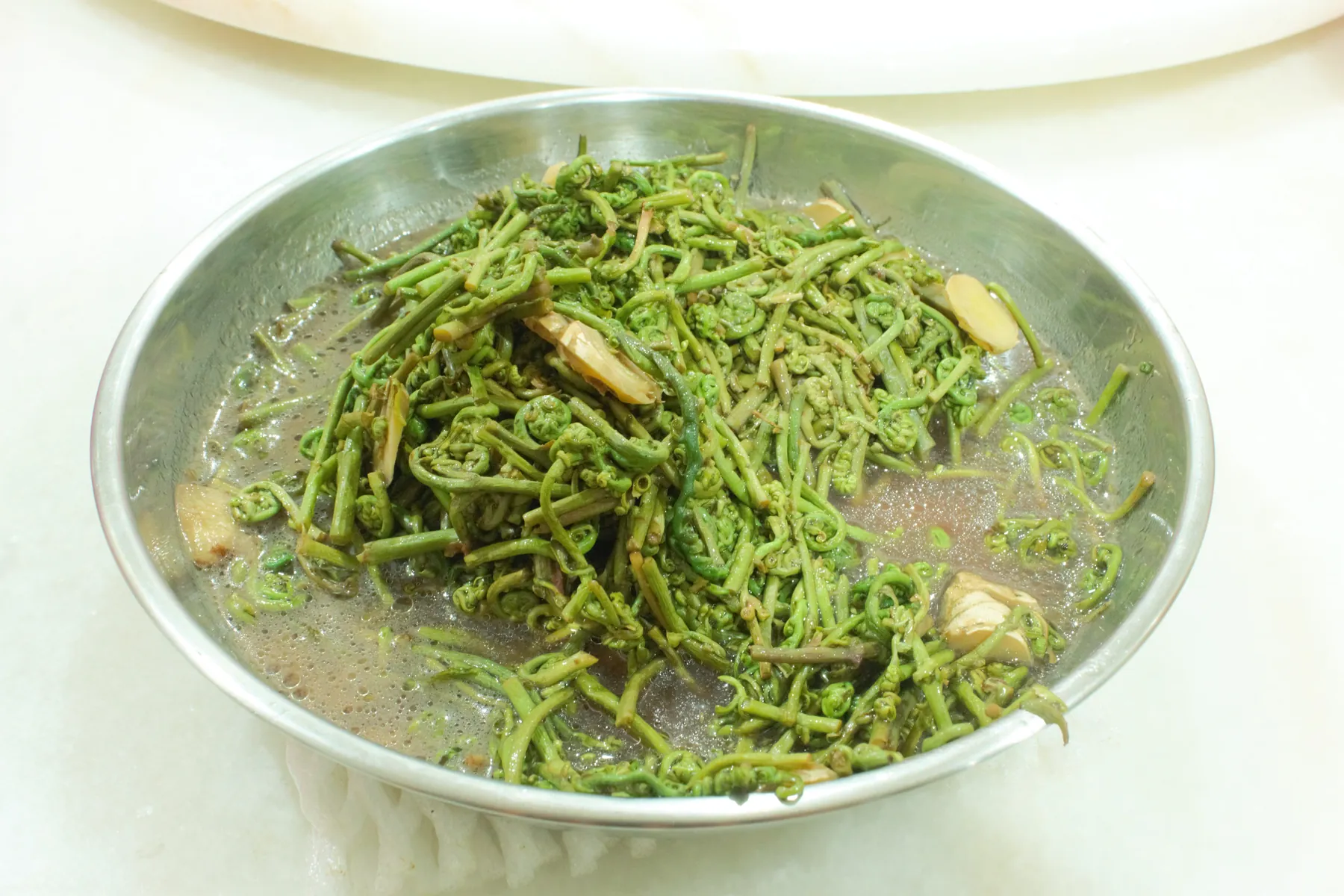
Stir-fried midin fern fiddleheads with garlic and ginger slices in a steel bowl — bright green curled fronds glistening with oil

Sarawak Home Cooking

Photo: Cerevisae, CC BY-SA 4.0, via Wikimedia Commons

The Heritage Formulary

Measured Ingredients

Estimated cost: Low — about $2–3 per serving at home (USD)

Cooked the day it is picked and fried fast over high heat, so the fiddleheads stay crunchy and bright green.

Execution Methodology & Culinary Technique

Step-by-Step Cooking Guide

Active 25m
P

Prep Stage: Trim the Fern and Mash the Belacan

15 Mins • Knife Work

Wash the midin, snap off the tough stems and cut the fronds into 8 cm lengths, then slice the garlic, ginger, shallots and chillies. Mash the belacan with the soy sauce, sugar and water in a small bowl until it loosens into a paste. Everything must be ready before the wok gets hot — this dish cooks in a few minutes.

Maestro Tip: Mash the belacan first: a whole lump of shrimp paste will not dissolve evenly in a hot wok.

  1. 1

    Trim the Midin and Mix the Seasonings

    15 Mins Room temperature, 20°C (68°F)

    Wash the midin in several changes of cold water. Snap off the tough lower stems where they break naturally and cut the fronds into 8 cm lengths. Slice the garlic, ginger, shallots and chillies. Crumble the belacan into a small bowl, add the soy sauce, sugar and water, and mash with a spoon until it loosens into a paste.

    Buy midin the day you cook it — the fiddleheads lose their crunch fast, and the best fronds have tight, bright green curls.

    Done when: Fronds are trimmed and cut; aromatics are sliced; the belacan paste is mixed and by the stove.

  2. 2

    Blanch the Fiddleheads

    3 Mins Boiling water, 100°C (212°F)

    Bring a large pot of water to a rolling boil and drop in the midin. Blanch for 2 minutes, stirring once, then drain well in a colander and shake off the water. This cooks the fern through before it meets the wok.

    Never eat fiddlehead ferns raw or undercooked — they must be cooked through, and blanching first makes the quick stir-fry safe as well as crisp.

    Done when: Fronds are vivid green, tender-crisp and fully drained.

  3. 3

    Fry the Aromatics and Belacan

    2 Mins High heat, about 200°C (392°F)

    Put the wok over the highest heat, add the oil and swirl it around until it just begins to smoke. Add the garlic, ginger, shallots and chillies and stir for about 30 seconds until fragrant. Add the belacan paste and fry for another 30 seconds, stirring so it coats the aromatics.

    If the belacan catches and darkens, the heat is too high — lift the wok off the burner for a few seconds rather than letting it burn.

    Done when: The wok smells deeply savoury and the paste has darkened slightly and coated the aromatics.

  4. 4

    Stir-Fry the Midin

    4 Mins High heat, about 200°C (392°F)

    Tip in all the blanched midin at once and toss constantly for 3–4 minutes, lifting from the bottom of the wok so every frond meets the heat. The fronds should turn glossy and bright green and pick up the belacan paste as they cook.

    Keep everything moving — the fronds at the bottom of the wok cook fastest, so toss from the bottom up.

    Done when: Fronds are bright green, glossy with paste and still crisp when you bite one.

  5. 5

    Season and Serve at Once

    1 Min Hot, about 70°C (158°F)

    Taste a frond and adjust only if needed — the belacan and soy sauce are usually salty enough. Tip the midin onto a serving plate the moment it is done, scraping all the sauce over the top, and serve immediately with steamed rice.

    Serve straight from the wok to the table; the fronds soften if the dish sits.

    Done when: The plate is glossy with sauce and the fronds are still vivid green.

Finishing Touches & Plating

Tip the midin onto a plate the moment the fronds turn bright green and glossy — a minute too long and the crunch is gone.

Nutritional Physiology & Benefits

Nutrition

Energy

130

kcal / serving

Protein

6g

Complete AA

Carbs

12g

Complex

Fats

8g

Healthy

Per serving (4 servings · 1 serving ≈ 125 g)
Energy130 kcal
Protein6 g
Carbohydrates12 g
Fat8 g
Fibre0.6 g
Sugar2.4 g
Sodium404 mg
Per 100g
Energy104 kcal
Protein5 g
Carbohydrates9.3 g
Fat6.1 g
Fibre0.5 g
Sugar1.9 g
Sodium323 mg

Nutrition values are estimated — calculated from USDA FoodData Central values for the listed ingredients.

Vitamins & minerals: Vitamin A and vitamin C (fiddlehead ferns, chilli), iron, calcium and potassium (fiddlehead ferns, belacan).

Green and Light

Midin is mostly water and leafy green, so a whole plate of this midin recipe is light — about 130 kcal a serving — yet genuinely filling beside rice.

Quick Energy, No Heaviness

A fast wok fry with two spoons of oil keeps the dish light, so it works as a bright side that never weighs the meal down.

Vitamins from the Fern

Fiddlehead ferns bring vitamin A, vitamin C, iron and potassium, and the brief cooking keeps more of them in the fronds than a long simmer would.

Food Pairings

What to Eat With

To optimize nutrient absorption and elevate the sensory depth, pair with these authentic accompaniments:

Sides

Steamed White Rice

The midin is salty and savoury from the belacan, so plain steamed rice is the perfect foil — it soaks up the sauce and balances the salt.

Grilled Fish

Smoky grilled fish next to the garlicky fern gives the meal the protein it lacks and turns a side into a full Sarawak lunch.

Drinks

Iced Tea or Coconut Water

Something cold and unsweetened cools the chilli heat without fighting the garlic and belacan flavours.

Full Menus

With Sarawak Laksa

A bowl of rich, spicy Sarawak laksa before the midin makes a classic Kuching pairing — hot soup, then crisp stir-fried fern with rice.

Complete menu

Serve the midin with steamed white rice and grilled fish or Sarawak laksa, and finish with fresh tropical fruit.

Digestive Guardrails

What NOT to Combine

To prevent digestive distress, sluggishness, or palate clash, avoid pairing the dish with these elements:

Eating Ferns Raw or Undercooked

Fiddlehead ferns must always be cooked through — raw or undercooked ferns can cause stomach upset, so blanch the midin first and never serve it half-cooked. This is general guidance, not medical advice.

Too Much Belacan or Soy Sauce

Belacan and soy sauce are both very salty, so adding extra pushes the sodium up fast and drowns the fern's own flavour — keep to the stated amounts and taste before adding more.

Overcooking the Fronds

Midin fronds go limp and dull green if they cook more than a few minutes, and the dish loses the crunch that defines it — pull the wok off the heat while the fronds still bite. This is general guidance, not medical advice.

General information only, not medical advice — consult a doctor for personal dietary decisions.

Who Should Eat It

Who Should Eat

  • General adultsA light, quick lunch — fern, garlic and belacan with rice make a balanced plate.
  • ChildrenA good choice if the chilli is left out — the fronds are mild and easy to eat once cut short.
  • ElderlyA good choice — soft, well-cooked fronds are easy to chew; cut the stems short and go easy on the chilli.
  • Pregnant womenA good choice once the fern is cooked through — keep the chilli mild and the belacan to the stated amount.
  • Breastfeeding womenA good choice — the cooked fern and garlic are fine while breastfeeding; keep the chilli to a comfortable level.
  • AthletesA good light side before training, but pair it with rice and a protein — the fern alone is too light for a training meal.
  • Weight gainPair it with rice and grilled fish or an egg to raise the energy — the fern alone is very light.
  • Weight lossA good choice — the plate is filling for about 130 kcal; keep the rice modest and load up on the fern.

Health Conditions — Adjust or Avoid

Conditions

  • DiabetesLow in carbohydrate and sugar, so it fits easily — the teaspoon of sugar is small; ask your clinician about portion size.
  • High blood pressureBelacan and soy sauce are very salty — keep both to the stated amounts and skip extra salt. Ask your clinician about a suitable portion.
  • Kidney diseaseLimit the belacan and soy sauce (sodium); ask your clinician about portion size.
  • GoutA mostly vegetable dish, but belacan is a shrimp product, so keep the portion modest; ask your clinician if you are unsure.
  • Stomach issuesThe chilli, garlic and belacan can irritate a sensitive stomach — use one chilli or none if it bothers you, and always cook the fern through.
  • Cardiovascular diseaseA good choice — leafy fern, garlic and just two spoons of oil make a light plate; watch the salty seasonings.
  • Fatty liverA good choice — low in fat and energy; keep the oil to two spoons.
  • Food allergiesContains shellfish (belacan shrimp paste) and soy (soy sauce, which may also contain wheat). Do not serve to anyone with a shrimp or soy allergy.
  • Special therapeutic dietsIf you follow a prescribed low-sodium diet, halve the belacan and soy sauce and add a squeeze of lime instead, and check with your clinician.

If you have a medical condition, consult your doctor before changing your diet.

Storage & Use

Storage & Use

How to store
Eat the same day, straight from the wok. If you must keep it, cool quickly and refrigerate in a sealed container.
In the fridge
Up to 2 days, but the fronds soften — reheat briefly in a hot wok.
In the freezer
Not recommended — the fronds turn limp and watery when thawed.
How to reheat
Reheat in a hot wok for 1–2 minutes until steaming, 74°C (165°F), or in the microwave until piping hot.
Freezing recommended
No — stir-fried fern does not freeze well.
Signs it has spoiled
Sour smell, slimy fronds or a dull grey colour. When in doubt, throw it out.

More recipes to explore

Nasi lemak — coconut rice with crispy fried chicken, red sambal, omelette, peanuts and cucumber in a takeaway box Malaysia flag Malaysia 1h 10m
Breakfast •Malaysian Heritage

Nasi Lemak

This nasi lemak recipe brings Malaysia's national breakfast to your own table: rice steamed in coconut milk with pandan, a dark, sweet-hot sambal, golden turmeric fried chicken, and the classic little pile of crispy anchovies, roasted peanuts, boiled egg and cool cucumber. One serving is about 465 g.

Hearty & Satisfying

A full Malaysian breakfast plate — fragrant coconut rice with sambal, crispy chicken, egg, anchovies, peanuts and cucumber.

Pairs Well With
A spoonful of hot sambal and cool cucumber slices, with teh tarik or iced lime tea.
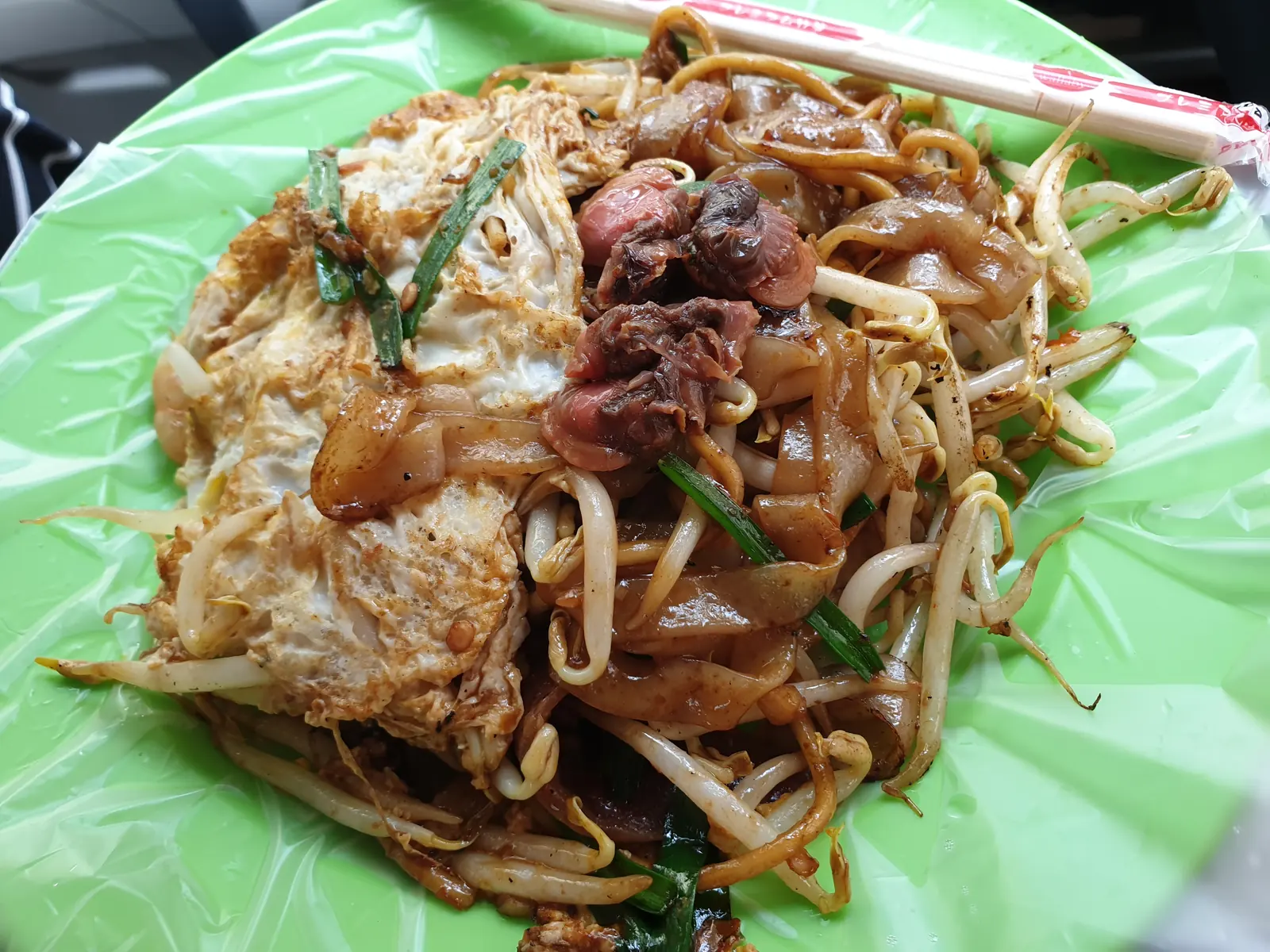
Char kway teow on a green plate — glossy flat rice noodles with fried egg, cockles, bean sprouts and garlic chives Malaysia flag Malaysia 25m
Dinner •Penang Street-Food Icon

Char Kway Teow

This char kway teow recipe tosses wide flat rice noodles in a blazing-hot wok with garlic, soy sauce, chilli paste, prawns, cockles, Chinese sausage, egg, bean sprouts and garlic chives, so the noodles pick up the smoky char called wok hei. Cook one plate at a time, exactly like a hawker stall, and eat it straight from the wok. One serving is about 475 g.

Smoky & Satisfying

Flat rice noodles seared over fierce heat with prawns, cockles, egg and bean sprouts — a fast, smoky Malaysian hawker dinner.

Pairs Well With
Pickled green chillies, cucumber slices, and iced lime tea or teh o ais
Pasta & Noodles • Quick Prep (<30m)
A white bowl of curry laksa in orange coconut curry broth with tofu puffs, fish balls, spring onions and fried shallots Malaysia flag Malaysia 50m
Lunch •Malaysian Hawker Classic

Curry Laksa

This curry laksa recipe simmers a spiced rempah paste with coconut milk and chicken stock into a rich orange broth, then pours it over rice vermicelli and egg noodles with shredded chicken, tofu puffs and crisp bean sprouts. One serving is about 703 g.

Comfort & Warmth

A rich, spiced coconut curry noodle soup with chicken, tofu puffs and bean sprouts.

Pairs Well With
Cool cucumber salad and a glass of iced lime tea
Soups & Broths • Pasta & Noodles
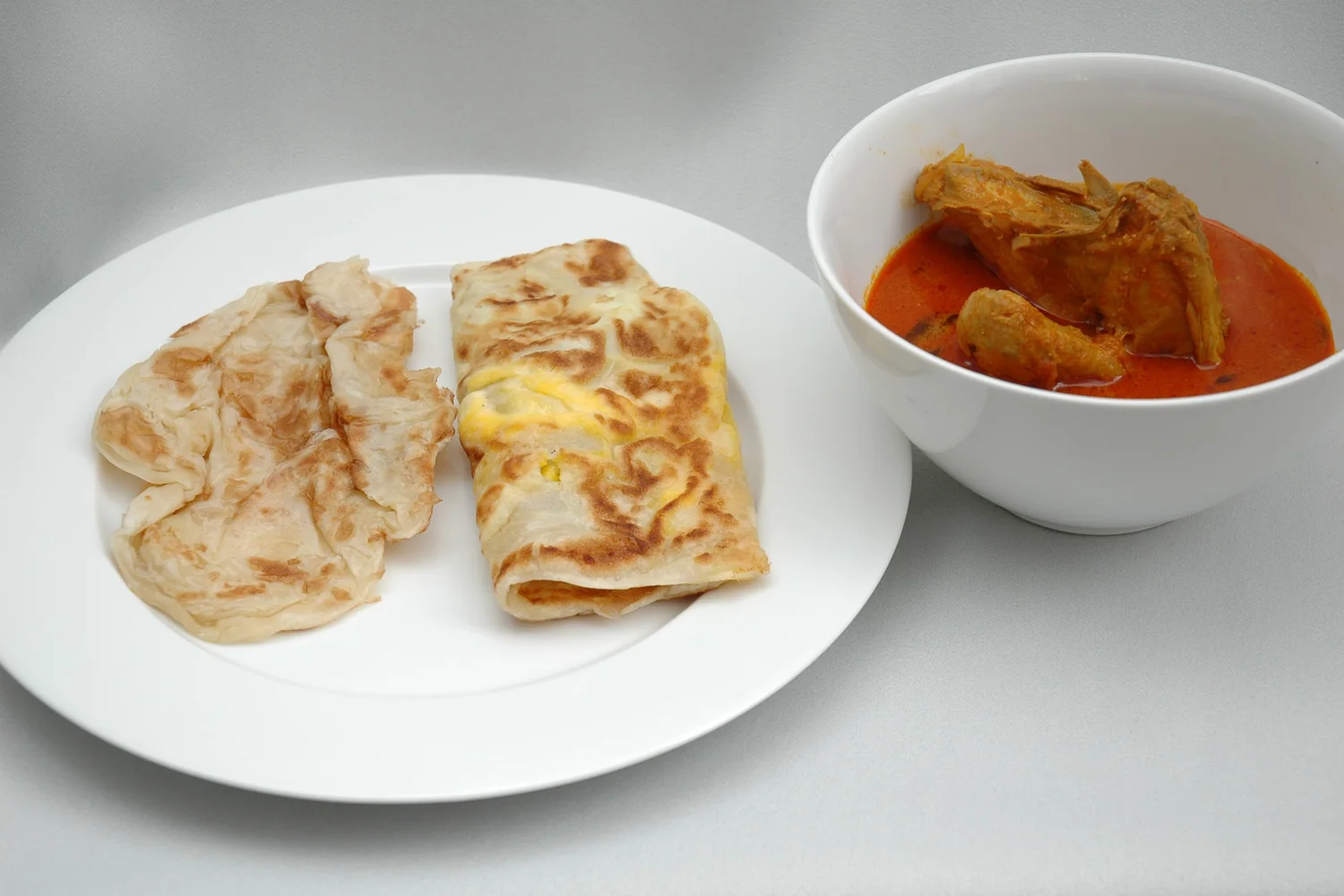
Roti prata and egg roti on a white plate with a bowl of chicken curry Malaysia flag Malaysia 1h 30m
Breakfast •Mamak Stall Heritage

Roti Canai

This roti canai recipe makes the flaky mamak flatbread the slow way: a soft dough rested until it stretches paper-thin, laminated with ghee, folded into squares and fried until the outside crisps and the inside stays soft and layered. It is served torn into pieces for dipping into a warm dhal curry with coconut milk, the way every mamak stall in Malaysia serves it for breakfast. One serving is about 374 g.

Comfort & Warmth

Flaky, laminated flatbread stretched paper-thin, folded and fried in ghee until crisp at the edges, torn and dipped into warm dhal curry.

Pairs Well With
Dhal curry & teh tarik

The Dinner Gazette

Never wonder what’s for dinner again

One email a week with easy dinner ideas from around the world — ingredients, steps and nutrition, tested in our kitchen first.

Delivered every Thursday morning. Unsubscribe anytime.