Curated recipes from 193 countries  •  New seasonal Mediterranean issue out now

Overview

Nasi Kerabu

Nasik Kabu, Kelantan Blue Rice, Malaysian Herb Rice

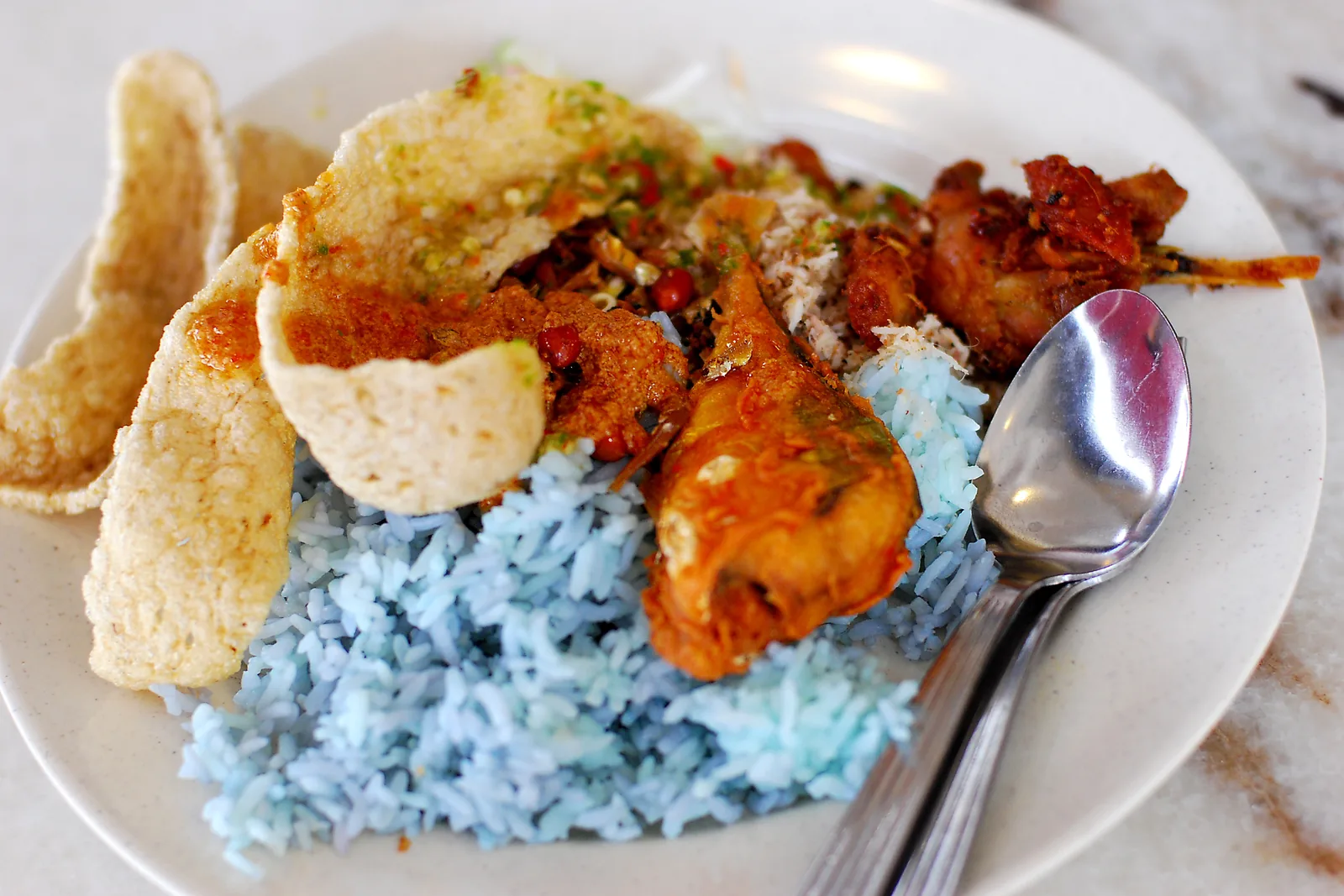
Nasi kerabu is the blue rice of Kelantan, on Malaysia's east coast: jasmine rice cooked in butterfly-pea flower water until it turns a vivid indigo, served with a crunchy salad of raw herbs and vegetables, fried fish, toasted coconut and a fiery sambal. Everything is mixed together on the plate before eating. One serving is about 434 g.

Nasi kerabu is the rice of Kelantan and Terengganu, on the north-east coast of Peninsular Malaysia, where it grew out of the Malay habit of eating rice with ulam, a salad of raw herbs and vegetables. The blue colour comes from butterfly pea flowers, bunga telang, steeped in the cooking water, a natural dye used in Kelantanese cooking for generations. The dish spread across Malaysia from the beginning of the 21st century, and it is now one of the country's most recognisable plates, with Thai khao yam as its close cousin across the border.

Pairs well with: Fried fish, keropok crackers, sambal, and iced tea

Provenance

Malaysia flag Malaysia

Kelantan Heritage

East & South Asia

Time Dedication

1h

30m prep • 30m cook

Batch Yield

4 Servings

614 kcal per serving

1 serving ≈ 434 g

Technical Skill

Intermediate

Intermediate (Many Parts)

Meal Timing & Digestive Fit

Breakfast

Not Advised

Lunch

Prime Metabolic Fit

Dinner

Ideal Hearty Main

Snack & Tea

Inappropriate

Occasions: Weekend lunches, festive meals, family gatherings, Malaysian restaurant menus Cost: Low — about $3–4 per serving at home
A plate of nasi kerabu with blue rice, fried fish, crackers and sambal, with a spoon

Kelantan Heritage

Photo: amrufm, CC BY 2.0, via Wikimedia Commons

The Heritage Formulary

Measured Ingredients

Estimated cost: Low — about $3–4 per serving at home (USD)

A good nasi kerabu is vivid blue, the salad crisp and fragrant, the fish golden and the sambal hot enough to make you reach for the iced tea.

Execution Methodology & Culinary Technique

Step-by-Step Cooking Guide

Active 1h
P

Prep Stage: Blue Water, Herbs & Sambal

30 Mins • Steeping & Chopping

Steep the butterfly pea flowers in hot water for 10 minutes and strain it blue. Rinse the rice. Wash and shred all the salad vegetables and herbs, toast the coconut, and chop the sambal ingredients. Clean and season the fish.

Maestro Tip: Dry the herbs and vegetables well after washing: wet leaves make the salad soggy and dull the crunch that defines the dish.

  1. 1

    Make the Blue Rice

    30 Mins Boiling, 100°C (212°F), then low simmer

    Steep the butterfly pea flowers in 450 ml of hot water for 10 minutes until the water is a deep indigo, then strain out the flowers. Put the rinsed rice, the blue water, the coconut milk and the bruised lemongrass in a pot, bring to a boil, then cover, turn the heat to low and cook for 20 minutes. Rest for 10 minutes, then fluff with a fork and remove the lemongrass.

    Do not lift the lid while the rice cooks: the trapped steam is what cooks the grains evenly.

    Done when: Fluffy, evenly blue rice, grains separate and lightly fragrant.

  2. 2

    Fry the Fish

    15 Mins Hot oil, about 180°C (355°F); fish to 63°C (145°F)

    Heat oil in a pan over medium-high heat. Season the mackerel with a pinch of salt and fry for 4 to 5 minutes per side until the skin is crisp and golden and the flesh flakes easily, reaching 63°C (145°F) at the thickest part. Drain on paper towel.

    The oil must be properly hot before the fish goes in, or it will soak up oil and turn greasy.

    Done when: Crisp golden skin, flesh flaking easily, cooked through to 63°C (145°F).

  3. 3

    Blend the Sambal

    10 Mins Medium heat, about 160°C (320°F)

    Toast the shrimp paste in a dry pan for 1 minute until fragrant. Blend the chillies, shallots, garlic and toasted shrimp paste into a coarse paste, then cook it in a little oil for 5 minutes until darkened and fragrant. Stir in the lime juice, sugar and a pinch of salt.

    Cooking the sambal takes the raw edge off the chillies and deepens its colour; a raw sambal tastes harsh.

    Done when: Thick, dark red sambal, fragrant and balanced between hot, sour and sweet.

  4. 4

    Toss the Herb Salad

    10 Mins Room temperature

    Mix the bean sprouts, long beans, cabbage, cucumber and shredded herbs in a large bowl with the toasted coconut. Toss lightly so everything is evenly mixed but still crisp.

    Toss the salad at the last minute: it wilts fast once it sits.

    Done when: Bright, crisp salad, evenly mixed, coconut flecked through it.

  5. 5

    Fry the Crackers

    5 Mins Hot oil, about 190°C (375°F)

    Fry the fish crackers in the hot oil for a few seconds until they puff up and turn crisp, then lift them out and drain on paper towel.

    They puff in seconds, so do not walk away from the pan.

    Done when: Puffed, crisp crackers, pale gold and dry to the touch.

  6. 6

    Plate and Serve

    5 Mins Serve warm, rice above 63°C (145°F)

    Spoon a mound of blue rice onto each plate, pile the herb salad beside it, and lay the fried fish, a spoonful of sambal and the crackers around the rice. Serve at once, and tell everyone to mix everything together on the plate before eating.

    The mixing is the point: the blue rice, herbs, fish and sambal only become nasi kerabu when they are tossed together.

    Done when: Vivid blue rice, crisp green salad, golden fish and red sambal on every plate.

Finishing Touches & Plating

Serve the nasi kerabu at once, the rice still warm and the salad still crisp, and mix everything together on the plate so the blue rice picks up the herbs, coconut and sambal.

Nutritional Physiology & Benefits

Nutrition

Energy

614

kcal / serving

Protein

25g

Complete AA

Carbs

74g

Complex

Fats

25g

Healthy

Per serving (4 servings · 1 serving ≈ 434 g)
Energy614 kcal
Protein25 g
Carbohydrates74 g
Fat25 g
Fibre5.1 g
Sugar6.6 g
Sodium758 mg
Per 100g
Energy141 kcal
Protein5.7 g
Carbohydrates17.1 g
Fat5.6 g
Fibre1.2 g
Sugar1.5 g
Sodium175 mg

Nutrition values are estimated — calculated from USDA FoodData Central values for the listed ingredients.

Vitamins & minerals: The herb salad brings vitamin C, vitamin A and folate, while the fish adds vitamin B12, vitamin D and selenium. All nutrition values are estimated.

A Plate Full of Fresh Herbs

The kerabu salad is raw herbs and vegetables, so the plate brings vitamin C, vitamin A, folate and fiber with almost no cooking at all.

Fish for Protein and Omega-3

About 25 g of protein per serving, with the mackerel adding omega-3 fats, vitamin B12 and selenium.

Naturally Colourful, No Artificial Dye

The blue comes only from butterfly pea flowers steeped in water, so the colour is natural and the rice tastes exactly like rice.

Food Pairings

What to Eat With

To optimize nutrient absorption and elevate the sensory depth, pair with these authentic accompaniments:

Drinks

Iced Tea

A tall glass of iced tea cools the sambal's heat and refreshes the palate between bites of the rich, herby plate.

Sides

Salted Egg

A salted duck egg, halved, adds a creamy, salty richness that balances the fresh, sharp salad.

Solok Lada

A chilli stuffed with fish paste is the classic Kelantanese extra: it doubles the fish flavour and adds another layer of heat.

Sauces

Budu Dipping Sauce

A spoonful of budu, the pungent Kelantanese anchovy sauce, is the traditional salty-sour drizzle over the mixed rice.

Full Menus

Full Menu: Kerabu, Then Kuih

Start with nasi kerabu and iced tea, and finish with kuih akok, a Kelantanese egg and palm-sugar cake, for a full east-coast meal.

Complete menu

A plate of nasi kerabu with blue rice, herb salad, fried fish, sambal and keropok, a salted egg on the side, and iced tea to drink — a full Kelantanese lunch.

Digestive Guardrails

What NOT to Combine

To prevent digestive distress, sluggishness, or palate clash, avoid pairing the dish with these elements:

Lifting the Lid on the Rice

Opening the pot while the rice steams lets the heat out and leaves the top grains hard and the bottom grains wet. Leave the lid on until the rest is done. This is general food information, not medical advice.

Tossing the Salad Too Early

The herb salad wilts and weeps within minutes of being mixed, so toss it at the last moment or it will be limp on the plate. This is general food information, not medical advice.

Frying the Fish in Lukewarm Oil

Fish dropped into oil that is not hot enough soaks up oil and turns greasy instead of crisp. Wait until the oil shimmers before the fish goes in. This is general food information, not medical advice.

General information only, not medical advice — consult a doctor for personal dietary decisions.

Who Should Eat It

Who Should Eat

  • General adultsA colourful, balanced lunch for most adults; one plate with fish and salad is a complete meal.
  • ChildrenKids usually love the blue rice; use only 1 chilli in the sambal for theirs and keep the fish free of small bones.
  • ElderlySoft rice and flaked fish are easy to eat; the salad is raw and crunchy, so chop it finer for older diners.
  • Pregnant womenThe fish is fried through to 63°C (145°F) and the rice is served hot; eat it freshly made. Ask your clinician if unsure.
  • Breastfeeding womenA filling, nutrient-rich lunch for nursing mothers; the herbs and fish add variety to the diet.
  • AthletesAbout 74 g of carbohydrate with 25 g of protein makes it a solid recovery lunch after training.
  • Weight gainAn energy-rich plate at 614 calories; a second helping of rice and fish raises it further.
  • Weight lossOne plate is a full lunch on its own; load up on the herb salad and go easy on the crackers and coconut.

Health Conditions — Adjust or Avoid

Conditions

  • DiabetesAbout 74 g of carbohydrate per serving, mostly from the rice; keep the rice portion as stated and fill up on the salad. Ask your clinician about portions.
  • High blood pressureSodium is about 758 mg per serving, mostly from the shrimp paste and salted fish; use less shrimp paste if you need to. Ask your clinician about portions.
  • Kidney diseaseFish, shrimp paste and coconut milk are all high in potassium and phosphorus; keep the portion small and infrequent. Ask your clinician.
  • GoutMackerel and shrimp paste are high in purines; a smaller portion now and then is usually better than a full plate. Ask your clinician.
  • Stomach issuesRaw vegetables, chilli and shrimp paste can irritate a sensitive stomach; eat a small portion and go easy on the sambal. Ask your clinician if unsure.
  • Cardiovascular diseaseThe fish brings useful omega-3 fats, but the fried fish, coconut and crackers add saturated fat, so this is a sometimes lunch. Ask your clinician about portions.
  • Fatty liverFried fish and coconut milk make this a rich plate; grilling the fish instead of frying lightens it. Ask your clinician about portions.
  • Food allergiesContains fish, shellfish (shrimp paste) and gluten (fish crackers may contain wheat — check the label). Do not serve it to anyone with a shellfish allergy.
  • Special therapeutic dietsNot vegetarian, gluten-free or low-sodium as written. A version with fried tofu instead of fish and no shrimp paste works, but it is a different dish; ask your clinician.

If you have a medical condition, consult your doctor before changing your diet.

Storage & Use

Storage & Use

How to store
Store the rice, salad, fish, sambal and crackers in separate sealed containers in the fridge.
In the fridge
Up to 2 days at 4°C (40°F) or below; the salad is best eaten fresh and wilts overnight.
In the freezer
Freeze the blue rice and the fried fish for up to 1 month at -18°C (0°F); do not freeze the salad or the crackers.
How to reheat
Reheat the rice and fish in a pan or microwave until steaming and 74°C (165°F) throughout; make the salad fresh.
Freezing recommended
Partly — freeze the rice and fish only; make the salad and crackers fresh.
Signs it has spoiled
Sour or off smell, slimy fish, or wilted, brown salad — throw it away.

More recipes to explore

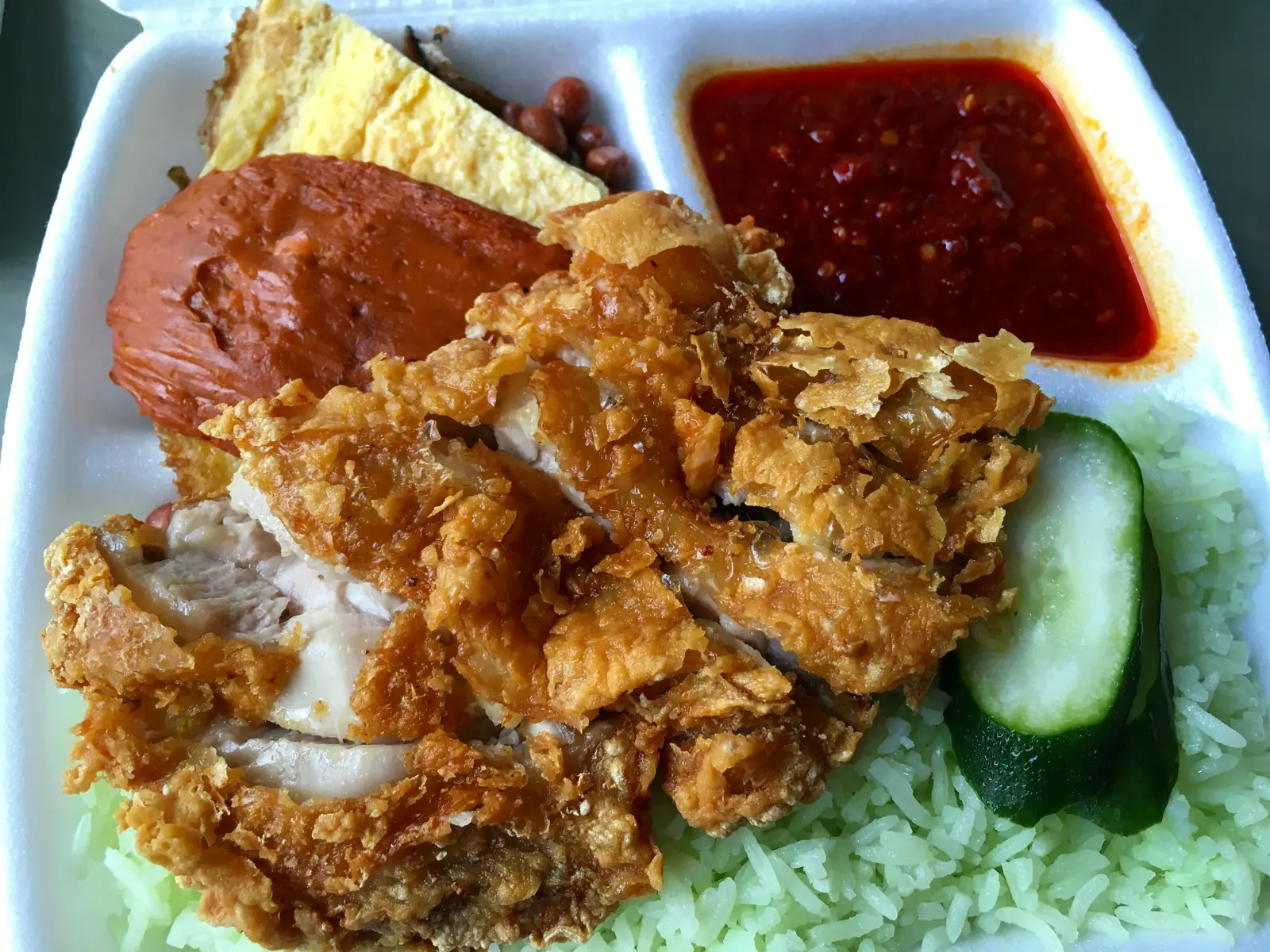
Nasi lemak — coconut rice with crispy fried chicken, red sambal, omelette, peanuts and cucumber in a takeaway box Malaysia flag Malaysia 1h 10m
Breakfast •Malaysian Heritage

Nasi Lemak

This nasi lemak recipe brings Malaysia's national breakfast to your own table: rice steamed in coconut milk with pandan, a dark, sweet-hot sambal, golden turmeric fried chicken, and the classic little pile of crispy anchovies, roasted peanuts, boiled egg and cool cucumber. One serving is about 465 g.

Hearty & Satisfying

A full Malaysian breakfast plate — fragrant coconut rice with sambal, crispy chicken, egg, anchovies, peanuts and cucumber.

Pairs Well With
A spoonful of hot sambal and cool cucumber slices, with teh tarik or iced lime tea.
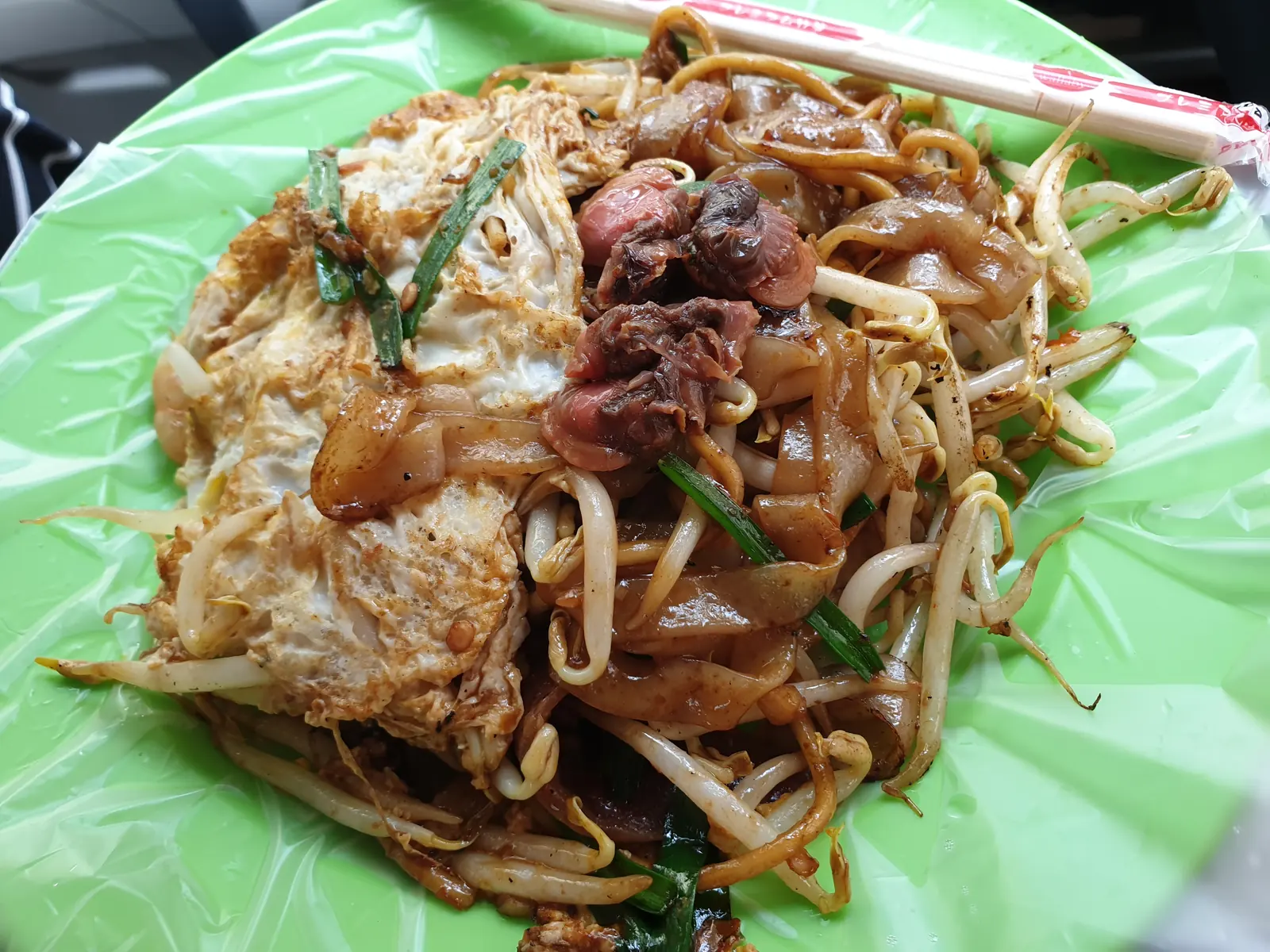
Char kway teow on a green plate — glossy flat rice noodles with fried egg, cockles, bean sprouts and garlic chives Malaysia flag Malaysia 25m
Dinner •Penang Street-Food Icon

Char Kway Teow

This char kway teow recipe tosses wide flat rice noodles in a blazing-hot wok with garlic, soy sauce, chilli paste, prawns, cockles, Chinese sausage, egg, bean sprouts and garlic chives, so the noodles pick up the smoky char called wok hei. Cook one plate at a time, exactly like a hawker stall, and eat it straight from the wok. One serving is about 475 g.

Smoky & Satisfying

Flat rice noodles seared over fierce heat with prawns, cockles, egg and bean sprouts — a fast, smoky Malaysian hawker dinner.

Pairs Well With
Pickled green chillies, cucumber slices, and iced lime tea or teh o ais
Pasta & Noodles • Quick Prep (<30m)
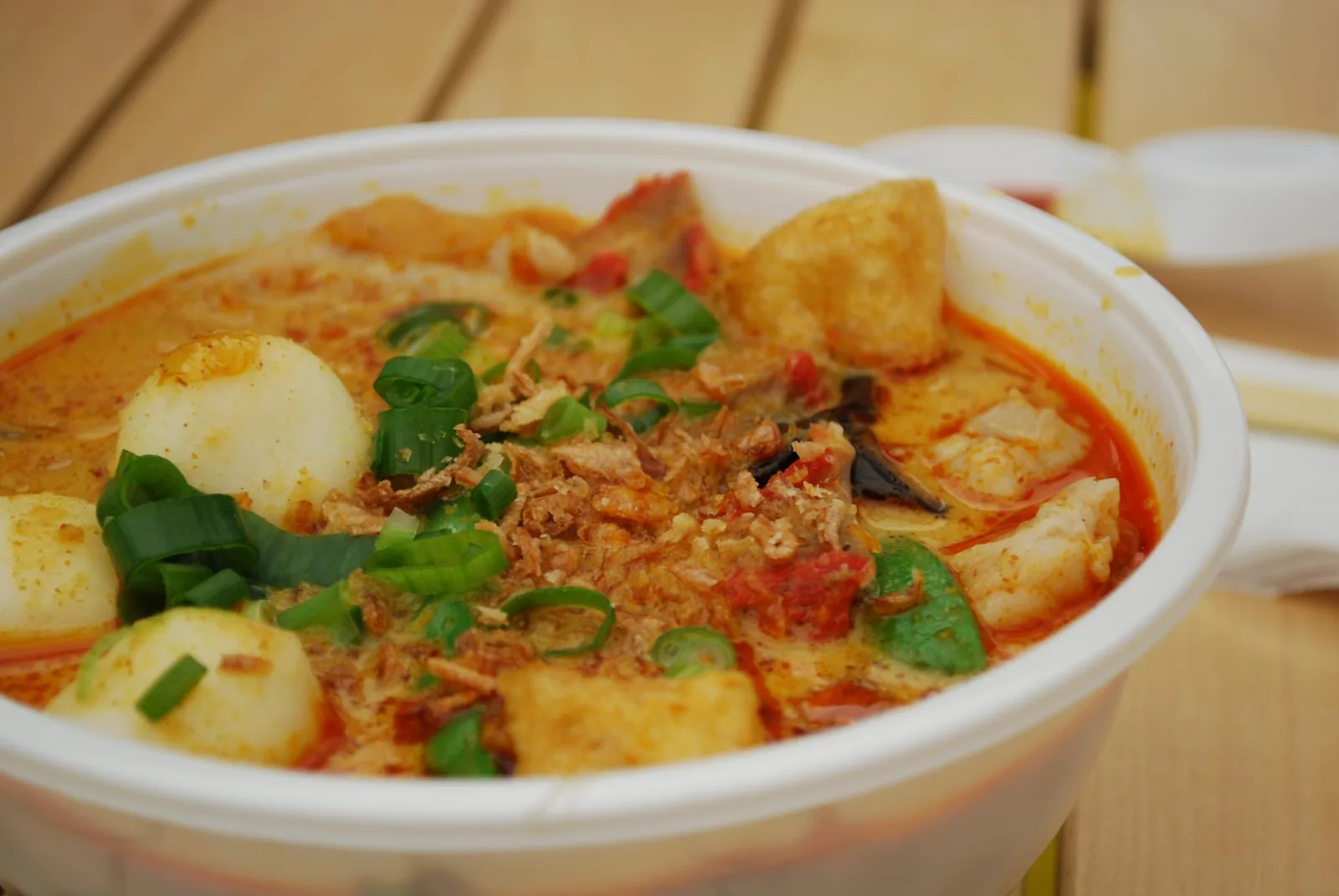
A white bowl of curry laksa in orange coconut curry broth with tofu puffs, fish balls, spring onions and fried shallots Malaysia flag Malaysia 50m
Lunch •Malaysian Hawker Classic

Curry Laksa

This curry laksa recipe simmers a spiced rempah paste with coconut milk and chicken stock into a rich orange broth, then pours it over rice vermicelli and egg noodles with shredded chicken, tofu puffs and crisp bean sprouts. One serving is about 703 g.

Comfort & Warmth

A rich, spiced coconut curry noodle soup with chicken, tofu puffs and bean sprouts.

Pairs Well With
Cool cucumber salad and a glass of iced lime tea
Soups & Broths • Pasta & Noodles
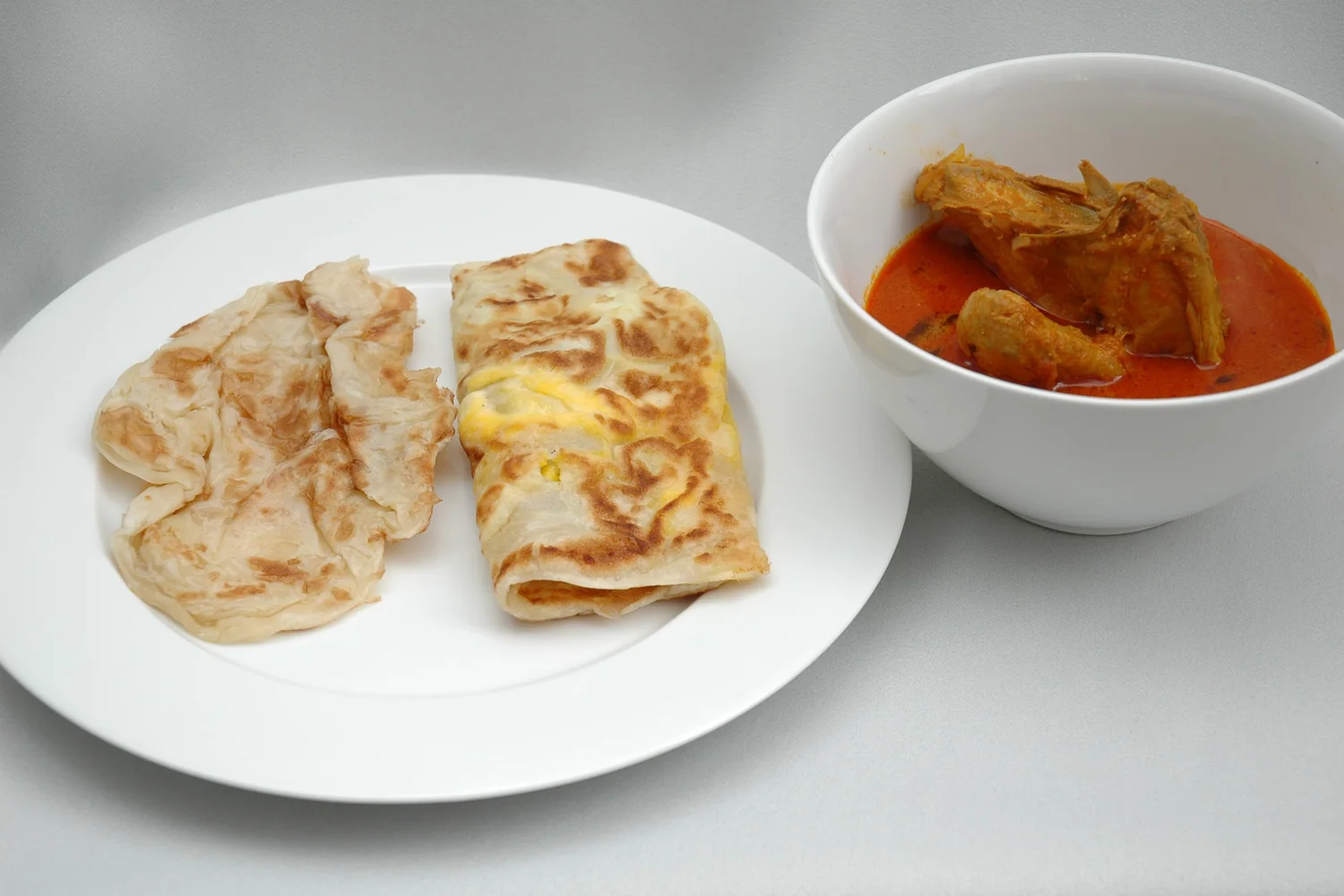
Roti prata and egg roti on a white plate with a bowl of chicken curry Malaysia flag Malaysia 1h 30m
Breakfast •Mamak Stall Heritage

Roti Canai

This roti canai recipe makes the flaky mamak flatbread the slow way: a soft dough rested until it stretches paper-thin, laminated with ghee, folded into squares and fried until the outside crisps and the inside stays soft and layered. It is served torn into pieces for dipping into a warm dhal curry with coconut milk, the way every mamak stall in Malaysia serves it for breakfast. One serving is about 374 g.

Comfort & Warmth

Flaky, laminated flatbread stretched paper-thin, folded and fried in ghee until crisp at the edges, torn and dipped into warm dhal curry.

Pairs Well With
Dhal curry & teh tarik

The Dinner Gazette

Never wonder what’s for dinner again

One email a week with easy dinner ideas from around the world — ingredients, steps and nutrition, tested in our kitchen first.

Delivered every Thursday morning. Unsubscribe anytime.