
Curated recipes from 193 countries  •  New seasonal Mediterranean issue out now

Overview

Norwegian Salmon

Norwegian Salmon, Baked Norwegian Salmon, Norwegian Salmon with Dill Cream

This Norwegian salmon recipe bakes salmon fillets with garlic, lemon and fresh herbs until they flake, then serves them with a warm dill cream sauce, crushed potatoes and buttered peas. The fish stays moist, the sauce is light, and the whole plate comes together in under an hour. One serving is about 455 g.

Norway’s salmon is famous around the world, and for good reason: the cold, clean fjords and the North Atlantic give the fish its rich colour and flavour. Salmon farming began in Norway in the 1960s and grew into one of the country’s biggest industries, but baked salmon with dill and potatoes is an older home-cooking tradition — the fish simply roasted with herbs and served with what the garden gave.

Pairs well with: Dill cream sauce, crushed potatoes & buttered peas

Provenance

Norway flag Norway

Norwegian Heritage

Nordic & European

Time Dedication

45m

15m prep • 30m cook

Batch Yield

4 Servings

835 kcal per serving

1 serving ≈ 454 g

Technical Skill

Easy

Easy (One Tray)

Meal Timing & Digestive Fit

Breakfast

Not Advised

Lunch

Hearty Midday Main

Dinner

Ideal Hearty Main

Snack & Tea

Inappropriate

High Protein Occasions: Family dinners, Friday fish suppers, celebrations, summer evenings Cost: Medium — about $7–8 per serving at home
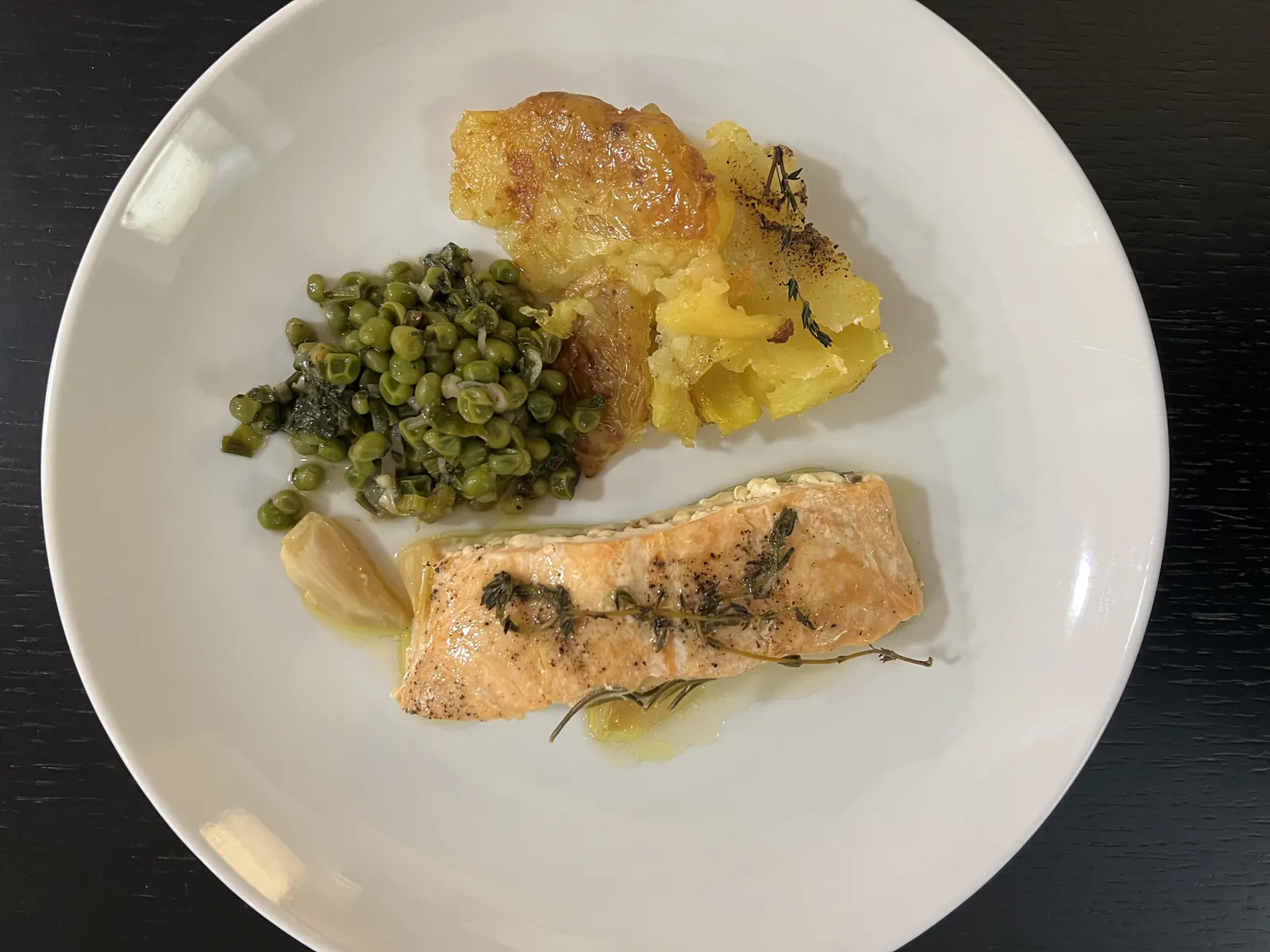
A baked salmon fillet with herbs, crushed potatoes and peas on a white plate

Norwegian Heritage

Photo: HaJunkiyada, CC BY-SA 4.0, via Wikimedia Commons

The Heritage Formulary

Measured Ingredients

Estimated cost: Medium — about $7–8 per serving at home (USD)

Made the Norwegian way: salmon baked until it just flakes at 63°C (145°F), with a warm dill cream sauce, crushed potatoes and buttered peas.

Execution Methodology & Culinary Technique

Step-by-Step Cooking Guide

Active 45m
P

Prep Stage: Dry, Chop & Boil

15 Mins • Chopping

Pat the salmon dry and check for pin bones, chop the dill and garlic, and get the potatoes into a pot of salted water. The fish bakes in about 15 minutes, so everything else should be ready before it goes into the oven.

Maestro Tip: Dry salmon browns and flakes beautifully; wet salmon steams and turns pale.

  1. 1

    Boil the Potatoes

    20 Mins Boiling water, 100°C (212°F)

    Boil the potatoes in salted water for about 20 minutes until tender, then drain and crush roughly with the butter.

    Crush, do not mash smooth — the potatoes should keep some texture.

    Done when: Roughly crushed potatoes with butter melting through.

  2. 2

    Season the Salmon

    5 Mins Room temperature

    Season the fillets with salt, squeeze the lemon over them and scatter with half the garlic and a little dill.

    Season just before baking so the salt does not draw out moisture.

    Done when: Seasoned fillets, ready for the oven.

  3. 3

    Bake the Salmon

    15 Mins 200°C (400°F)

    Place the fillets on an oiled tray and bake for about 15 minutes until the fish flakes easily and reaches 63°C (145°F) in the thickest part.

    Do not overbake — salmon goes from perfect to dry in two minutes.

    Done when: Fillets that flake easily with a fork.

  4. 4

    Make the Dill Cream

    5 Mins Low heat, 80°C (175°F)

    While the fish bakes, warm the cream gently with the remaining garlic and half the dill, stirring, until it just starts to thicken. Do not boil it.

    Gentle heat keeps the cream smooth; boiling makes it split.

    Done when: A warm, fragrant cream sauce.

  5. 5

    Cook the Peas

    5 Mins Boiling water, 100°C (212°F)

    Cook the peas for 3 minutes, drain and toss with a little butter.

    Peas need only a few minutes — overcooked peas turn grey and dull.

    Done when: Bright green, glossy peas.

  6. 6

    Serve

    3 Mins Hot

    Serve a salmon fillet on each warm plate with crushed potatoes and peas, and spoon the dill cream over the fish.

    Warm plates keep the fish hot while you serve.

    Done when: A plate of baked salmon with dill cream, potatoes and peas.

Finishing Touches & Plating

Serve the Norwegian salmon the moment it leaves the oven, with the dill cream spooned over the top — the fish should flake at a touch, the sauce should be warm and fragrant, and the potatoes should still be steaming.

Nutritional Physiology & Benefits

Nutrition

Energy

835

kcal / serving

Protein

57g

Complete AA

Carbs

41g

Complex

Fats

48g

Healthy

Per serving (4 servings · 1 serving ≈ 454 g)
Energy835 kcal
Protein57 g
Carbohydrates41 g
Fat48 g
Fibre5.7 g
Sugar5.9 g
Sodium543 mg
Per 100g
Energy184 kcal
Protein12.7 g
Carbohydrates9 g
Fat10.6 g
Fibre1.3 g
Sugar1.3 g
Sodium120 mg

Nutrition values are estimated — calculated from USDA FoodData Central values for the listed ingredients.

Vitamins & minerals: Salmon supplies omega-3 fats, protein, vitamin D and vitamin B12, potatoes add potassium and vitamin C, and peas add fibre and folate. All nutrition values are estimated.

Omega-3 & Protein

About 57.4 g of protein per serving, and salmon is a natural source of omega-3 fats, which support heart health.

Vitamin D & B12

Salmon is one of the best food sources of vitamin D and vitamin B12.

Potassium & Fibre

Potatoes and peas add potassium, vitamin C and fibre to the plate.

Food Pairings

What to Eat With

To optimize nutrient absorption and elevate the sensory depth, pair with these authentic accompaniments:

Sauces

Dill Cream Sauce

Warm dill cream is the classic Norwegian sauce for salmon — its freshness cuts the richness of the fish.

Sides

Crushed Potatoes

Roughly crushed potatoes soak up the dill cream and are gentler than a smooth mash.

Vegetables

Buttered Peas

Sweet peas add colour and freshness next to the rich fish.

Drinks

White Wine or Aquavit

A dry white wine or a small glass of aquavit suits baked salmon.

Complete menu

Serve the Norwegian salmon hot with dill cream, crushed potatoes and peas, and a dry white wine.

Digestive Guardrails

What NOT to Combine

To prevent digestive distress, sluggishness, or palate clash, avoid pairing the dish with these elements:

Overbaking the Salmon

Salmon baked past 63°C (145°F) turns dry and chalky — take it out when it just flakes. This is general food information, not medical advice.

Heavy, Spicy Sauces

A hot chilli sauce fights the delicate flavour of the salmon; keep the dill cream light. This is general food information, not medical advice.

General information only, not medical advice — consult a doctor for personal dietary decisions.

Who Should Eat It

Who Should Eat

  • General adultsA rich but balanced dinner — about 835 kcal a serving, best eaten hot.
  • ChildrenMild and soft; children usually like the salmon with the creamy sauce and peas.
  • ElderlySoft, flaky and easy to chew; the fish is gentle and the sauce is mild.
  • Pregnant womenSalmon is a good choice in pregnancy, but make sure it is cooked right through to 63°C (145°F) and keep to the stated portion. Ask your clinician about portions.
  • Breastfeeding womenAn excellent dinner — salmon supplies omega-3 fats, protein and vitamin D.
  • AthletesA strong recovery meal — about 57.4 g of protein and healthy fats per serving.
  • Weight gainA good choice for adding energy: the full portion with cream sauce and potatoes is calorie-dense.
  • Weight lossKeep the salmon and peas, halve the potatoes and use half the cream sauce.

Health Conditions — Adjust or Avoid

Conditions

  • DiabetesLow in carbohydrate; keep the potatoes to the stated amount. Ask your clinician about portions.
  • High blood pressureModerate in sodium as written; skip added salt. Ask your clinician.
  • Kidney diseaseHigh in protein from the salmon; ask your clinician about portions.
  • GoutSalmon is moderate in purines; keep to the stated portion. Ask your clinician.
  • Stomach issuesBaked salmon is usually gentle; the cream sauce can be heavy, so use a small amount if your stomach is sensitive. Ask your clinician.
  • Cardiovascular diseaseSalmon is a good choice for its omega-3 fats; keep the cream sauce modest. Ask your clinician.
  • Fatty liverThe fish itself is a good choice; keep the cream sauce and butter modest. Ask your clinician.
  • Food allergiesContains fish (salmon) and milk (cream, butter). Naturally free of gluten, egg and pork.
  • Special therapeutic dietsSuitable for gluten-free and low-carbohydrate diets; for dairy-free, use olive oil instead of cream and butter.

If you have a medical condition, consult your doctor before changing your diet.

Storage & Use

Storage & Use

How to store
Cool quickly and store the salmon, sauce and potatoes in separate airtight containers.
In the fridge
Keeps 2 days in the fridge at 4°C (40°F) or below.
In the freezer
Up to 2 months; freeze the salmon only, without the sauce.
How to reheat
Reheat gently in a covered pan or low oven at 150°C (300°F) until steaming hot throughout, to 74°C (165°F); do not overheat or the fish dries out.
Freezing recommended
Yes for the salmon — the sauce does not freeze well.
Signs it has spoiled
Strong fishy smell, slimy surface, or a sour taste in the sauce.

More recipes to explore

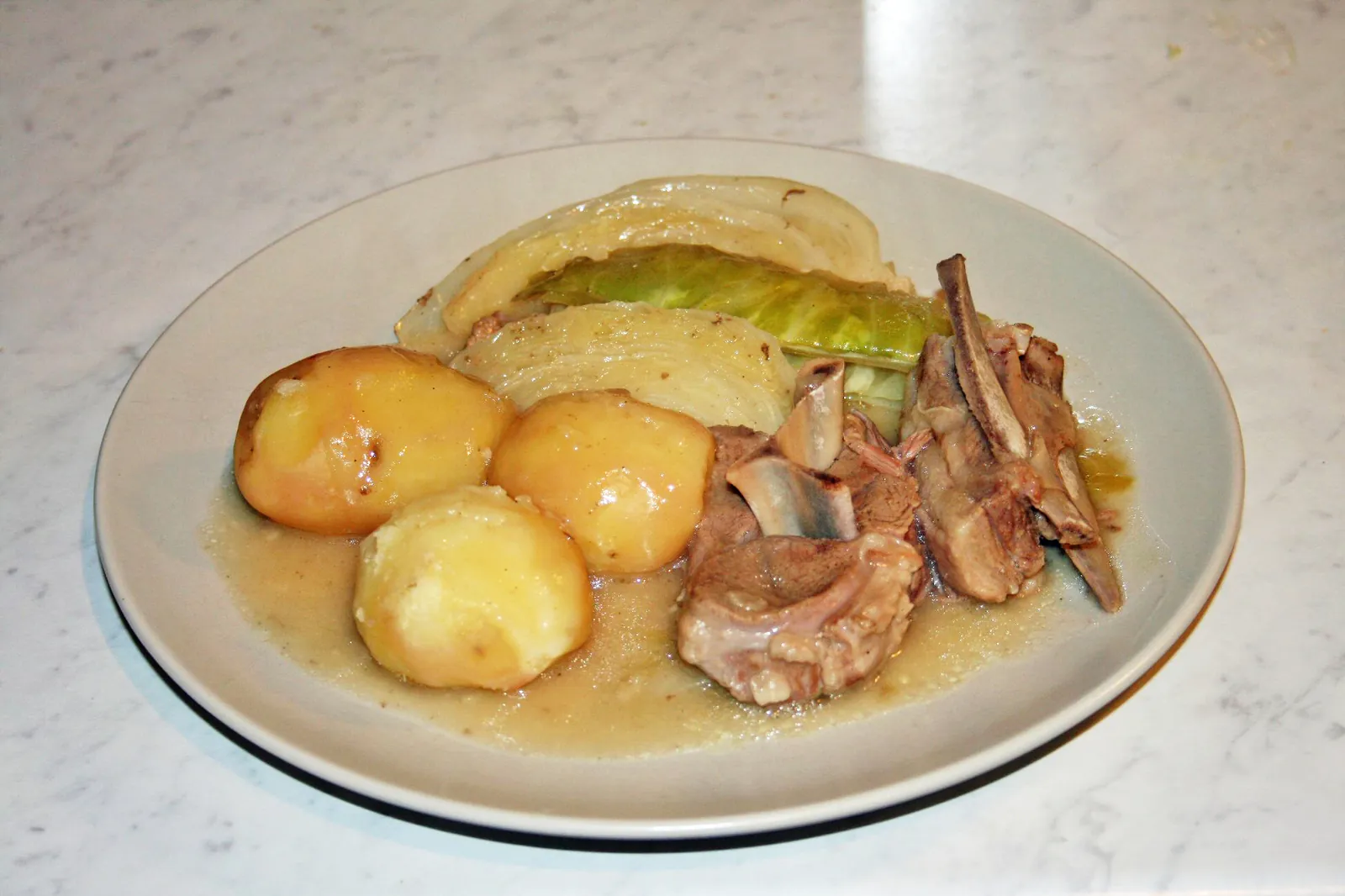
A plate of farikal with lamb, cabbage and boiled potatoes in broth Norway flag Norway 2h 20m
Dinner •Norwegian Heritage

Fårikål

This fårikål recipe layers bone-in lamb and cabbage in a pot with whole black peppercorns, adds just enough water, and braises it slowly until the meat falls from the bone and the cabbage turns sweet and silky. Boiled potatoes and the cooking broth finish the plate. One serving is about 665 g.

Comfort & Warmth

Lamb and cabbage layered in a pot with whole peppercorns, braised until tender.

Pairs Well With
Boiled potatoes, flatbread & lingonberry jam
High Protein
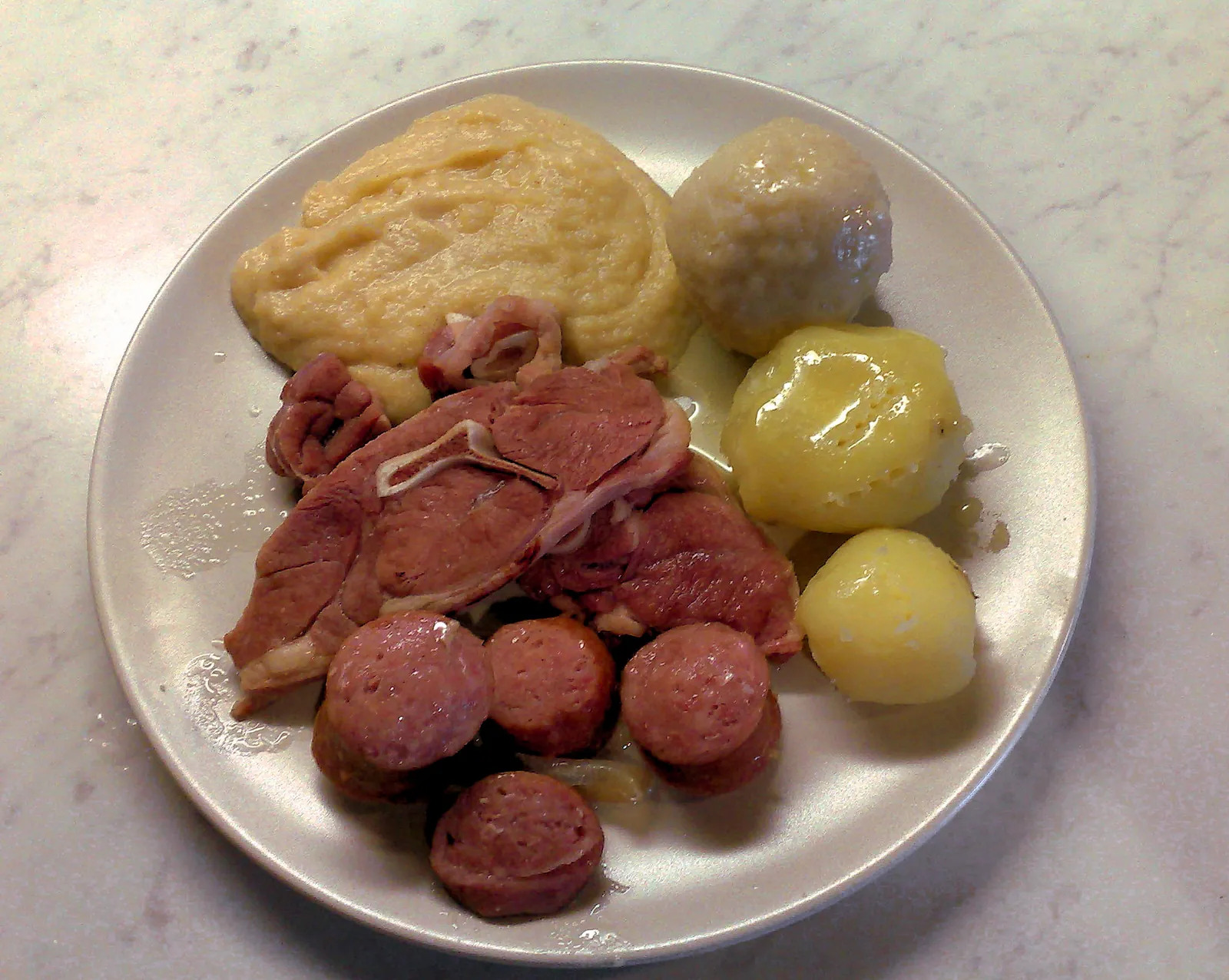
A plate of raspeballer with mashed rutabaga, bacon, sausage and potatoes Norway flag Norway 1h 20m
Dinner •Norwegian Heritage

Raspeballer

This raspeballer recipe grates raw potato, squeezes it dry and mixes it with cooked potato and barley flour into plain, unfilled dumplings, then boils them gently until tender. They are served with mashed rutabaga, crisp bacon and melted butter poured over the top. One serving is about 530 g.

Comfort & Warmth

Plain potato dumplings boiled and served with mashed rutabaga, bacon and melted butter.

Pairs Well With
Mashed rutabaga, bacon & melted butter
Bœuf bourguignon — French beef braised in red wine France flag France 4h
Dinner •Burgundy Terroir

Bœuf Bourguignon

Beef braised gently in red wine until the connective tissue melts into a velvet, gelatin-rich sauce — the classic Burgundy Sunday dinner.

Cellular Repair

Beef braised in red wine until spoon-tender, with mushrooms and pearl onions.

Pairs Well With
Parsnip Purée & Steamed French Haricots Verts
High Protein
Vietnamese braised pork belly with golden eggs in caramel sauce Vietnam flag Vietnam 1h 45m
Dinner •One Pot

Vietnamese Braised Pork and Eggs

Pork belly slowly braised in coconut water and caramel until meltingly tender, with golden eggs that soak up the sweet-savoury sauce — the Vietnamese family dish that tastes better the next day.

Comfort & Sustained Energy

Slow-braised pork belly and eggs in coconut water and caramel.

Pairs Well With
Steamed rice & pickled mustard greens
High Protein

The Dinner Gazette

Never wonder what’s for dinner again

One email a week with easy dinner ideas from around the world — ingredients, steps and nutrition, tested in our kitchen first.

Delivered every Thursday morning. Unsubscribe anytime.



