Curated recipes from 193 countries  •  New seasonal Mediterranean issue out now

Overview

Obatzda

Obatzter, Obazda, Bavarian Beer Cheese Spread

Obatzda is Bavaria's beloved beer-garden cheese spread: ripe Camembert mashed with butter and cream cheese, seasoned with sweet paprika, caraway and onion, and loosened with a splash of wheat beer. This obatzda recipe keeps the classic balance — rich, tangy and just sharp enough from the onion. One serving is about 148 g.

Obatzda, or Obatzter, is Bavarian dialect for something mixed together. The spread is credited to Katharina Eisenreich, who ran the Bräustüberl tavern at the Weihenstephan brewery in Freising from 1920 to 1958, and it became a fixture of Bavarian beer gardens, where it is still served with pretzels, radishes and a cold wheat beer. The rust-orange colour comes from paprika, and the caraway is the quiet signature of the Bavarian version.

Pairs well with: Soft pretzels, radishes & cold wheat beer

Provenance

Germany flag Germany

Bavarian Beer-Garden Classic

Nordic & European

Time Dedication

50m

50m prep • 0m cook

Batch Yield

4 Servings

405 kcal per serving

1 serving ≈ 148 g

Technical Skill

Easy

Easy (No Cooking)

Meal Timing & Digestive Fit

Breakfast

Not Advised

Lunch

Inappropriate

Dinner

Inappropriate

Snack & Tea

Ideal Light Bite

Occasions: Beer gardens, Oktoberfest, Brotzeit boards, game nights, picnics Cost: Low — about $3–4 per serving at home
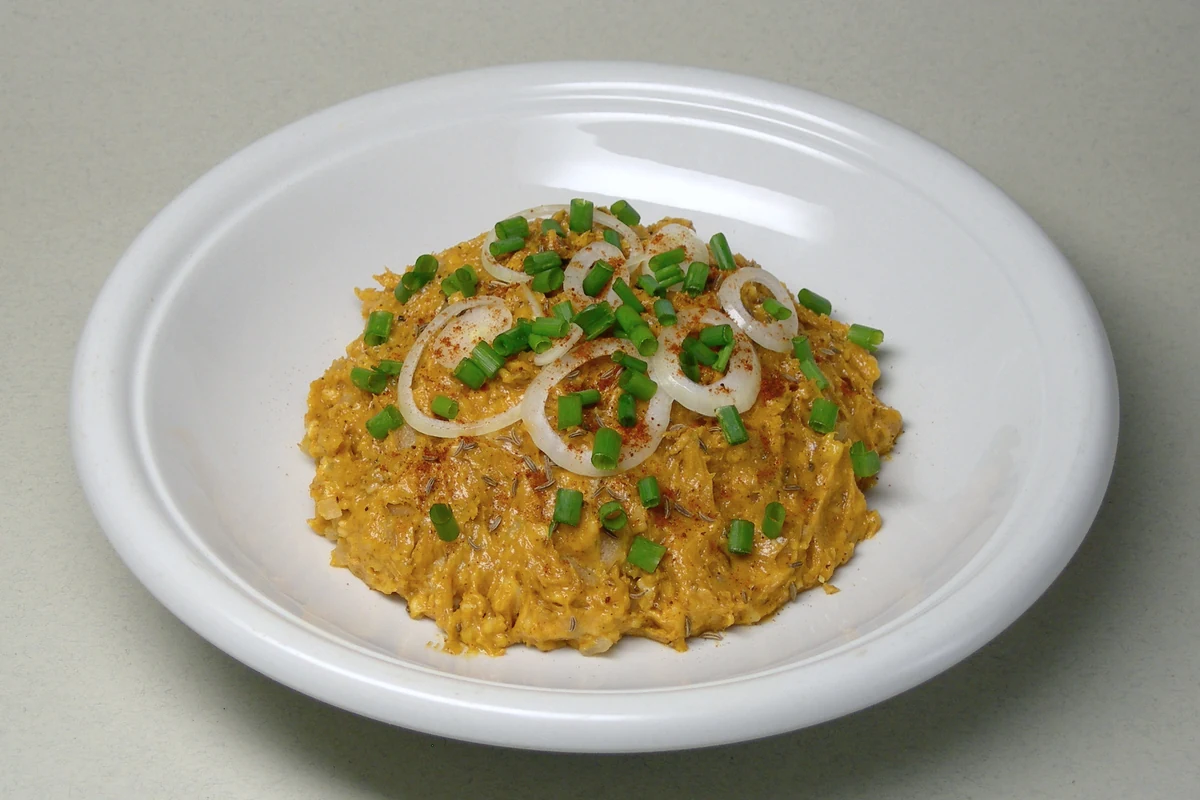
A mound of orange paprika Obatzda cheese spread topped with onion rings, chives and caraway in a white bowl

Bavarian Beer-Garden Classic

Photo: Rainer Zenz, CC BY-SA 3.0, via Wikimedia Commons

The Heritage Formulary

Measured Ingredients

Estimated cost: Low — about $3–4 per serving at home (USD)

A good obatzda is rust-orange from paprika, spreadable but not runny, with the onion still giving a little crunch.

Execution Methodology & Culinary Technique

Step-by-Step Cooking Guide

Active 50m
P

Prep Stage: Cheese, Onion, Spices

15 Mins • Mash and Mix

Take the Camembert, cream cheese and butter out of the fridge 30 minutes ahead so they mash smoothly. While they warm up, finely dice 60 g of the onion, slice the rest into rings, snip the chives, and measure the paprika, caraway, salt and pepper into a small bowl. Have a serving bowl and cling film ready, because the spread goes straight into the fridge to firm up once mixed.

Maestro Tip: Room-temperature cheese is the whole trick — cold Camembert mashes into lumps, while warm cheese turns into a smooth, spreadable paste.

  1. 1

    Mash the Camembert

    10 Mins Room temperature, about 20°C (68°F)

    Put the 250 g of Camembert, rind and all, into a large bowl and mash it thoroughly with a fork until it is soft and mostly smooth — a few small lumps are fine and traditional. Add the 60 g of softened butter and the 100 g of cream cheese and keep mashing and stirring until the mixture is creamy and spreadable.

    Mash by hand, never in a food processor — the processor makes it gluey, while a fork keeps the spread light and a little rustic.

    Done when: A thick, creamy orange-cream paste with no hard lumps of cheese.

  2. 2

    Dice the Onion and Snip the Chives

    5 Mins No heat — room temperature, about 20°C (68°F)

    Finely dice 60 g of the onion and set it aside, then slice the remaining 40 g into thin rings for the garnish. Snip the chives into short pieces and keep them in a small bowl.

    Dice the onion as finely as you can — big pieces make the spread hard to spread and too sharp in a single bite.

    Done when: Fine onion dice, neat thin rings, and a small pile of snipped chives.

  3. 3

    Mix in the Onion, Spices and Beer

    5 Mins Room temperature, about 20°C (68°F)

    Stir the 60 g of diced onion into the cheese with the 4 g of sweet paprika, the 2 g of ground caraway, the 2 g of salt and the 1 g of black pepper. Pour in the 60 ml of wheat beer a little at a time, stirring until the spread is soft and easy to scoop — you may not need all of the beer. Taste and add a pinch more salt or paprika if it needs it.

    Add the beer slowly: too much at once makes the spread runny, and you cannot take it back.

    Done when: Rust-orange, soft and scoopable, with the onion and spices evenly mixed through.

  4. 4

    Chill to Firm Up

    30 Mins Chill Chilled, about 4°C (40°F)

    Scrape the spread into a serving bowl, smooth the top, cover with cling film and chill in the fridge for 30 minutes. The flavours meld as it rests and the spread firms up to a proper scoopable texture.

    Do not skip the chill — warm obatzda is soft and the onion tastes raw and sharp; chilled, it is mellow and holds its shape.

    Done when: Firm enough to hold a spoon mark, with a matte, even orange surface.

  5. 5

    Garnish and Serve

    5 Mins Serve cool, about 15°C (59°F)

    Take the bowl out of the fridge 10 minutes before serving so the spread softens slightly. Scatter the onion rings and snipped chives over the top, dust with a pinch of paprika, and set the bowl in the middle of the table with warm pretzels and radishes.

    Serve the onion rings on top, not mixed in — they stay crisp and look like a beer garden, and guests can take as much or as little as they like.

    Done when: A neat mound topped with onion rings, green chives and a dusting of paprika.

Finishing Touches & Plating

Serve the obatzda cool, not fridge-cold, with warm soft pretzels, dark rye bread, radishes and spring onions on the side, and a cold wheat beer for everyone at the table. A generous spoonful per person is about 148 g.

Nutritional Physiology & Benefits

Nutrition

Energy

405

kcal / serving

Protein

15g

Complete AA

Carbs

6g

Complex

Fats

36g

Healthy

Per serving (4 servings · 1 serving ≈ 148 g)
Energy405 kcal
Protein15 g
Carbohydrates6 g
Fat36 g
Fibre1.1 g
Sugar2.5 g
Sodium802 mg
Per 100g
Energy274 kcal
Protein10 g
Carbohydrates3.9 g
Fat24.5 g
Fibre0.7 g
Sugar1.7 g
Sodium542 mg

Nutrition values are estimated — calculated from USDA FoodData Central values for the listed ingredients.

Vitamins & minerals: Vitamin A and calcium (Camembert, cream cheese, butter), vitamin B12 (cheese), vitamin C and folate (onion, chives).

Real Cheese, Real Calcium

Camembert, cream cheese and butter bring calcium and protein in a small, satisfying portion — a little goes a long way.

Slow, Satisfying Energy

The fat and protein in the cheese keep you full for hours, which is why a modest spread on a pretzel works as a proper snack.

Made for Sharing

One bowl, a board of bread and a few radishes — obatzda turns a snack into a slow, sociable table.

Food Pairings

What to Eat With

To optimize nutrient absorption and elevate the sensory depth, pair with these authentic accompaniments:

Sides

Soft Pretzels

Warm, salty soft pretzels are the classic partner — their chew and salt balance the rich, tangy spread.

Vegetables

Radishes and Spring Onions

Crisp, peppery radishes and mild spring onions cut through the richness and add crunch between bites.

Drinks

Cold Wheat Beer

A cold wheat beer is the traditional drink with obatzda — its gentle sweetness and fizz lift the rich cheese.

Full Menus

Brotzeit Board

Serve it as the centre of a Brotzeit board with rye bread, cured meats and pickles for a full Bavarian snack table.

Complete menu

Start with obatzda and warm pretzels, radishes and spring onions, then follow with Weisswurst and sweet mustard for a Munich-style snack table.

Digestive Guardrails

What NOT to Combine

To prevent digestive distress, sluggishness, or palate clash, avoid pairing the dish with these elements:

Keeping It for Days with Raw Onion Inside

Raw onion turns sharp and bitter in the spread after a day, and the cheese can pick up fridge smells; eat obatzda the day you make it, or within 2 days at most. This is general information, not medical advice.

Serving It Straight from the Fridge

Fridge-cold obatzda is stiff and the flavours are muted; let the bowl sit out for 10–20 minutes so it softens and the paprika and caraway come through. This is general information, not medical advice.

General information only, not medical advice — consult a doctor for personal dietary decisions.

Who Should Eat It

Who Should Eat

  • General adultsA rich, satisfying snack: one serving of about 148 g with a pretzel is plenty.
  • ChildrenSuitable for children over 2 years in small amounts; the onion and caraway are strong flavours, so offer a little first and keep the beer out of their portion.
  • ElderlySoft, easy to eat and full of flavour; keep the portion modest because it is rich and salty.
  • Pregnant womenCamembert is a soft cheese, so use a pasteurised Camembert and keep the portion modest; the beer is only a splash but the alcohol is not fully cooked off, so ask your clinician if unsure.
  • Breastfeeding womenGenerally suitable in a normal portion; the spread is rich and salty, so balance it with bread and vegetables.
  • AthletesUseful as a high-energy snack after training: about 15 g of protein and 405 kcal per serving, with bread for carbohydrate.
  • Weight gainAdd a second helping with extra pretzels and rye bread.
  • Weight lossKeep to one serving, load the plate with radishes and cucumber, and skip the second pretzel.

Health Conditions — Adjust or Avoid

Conditions

  • DiabetesOne serving has only about 6 g of carbohydrate, but the pretzel alongside it adds plenty, so count the bread, not the spread; ask your clinician if unsure.
  • High blood pressureSodium is high at about 802 mg per serving, mostly from the cheese, so keep the portion as written and skip extra salty pretzels; ask your clinician about your target.
  • Kidney diseaseCheese is a source of potassium and phosphorus and the spread is salty; keep portions small if you follow a limit, and ask your clinician.
  • GoutCheese is low in purines, but the beer adds purines and the spread is rich; keep the portion modest and the beer to a small glass, and ask your clinician if unsure.
  • Stomach issuesRich, fatty cheese and raw onion can be hard on a sensitive stomach; eat a small portion slowly with bread, and ask your clinician if unsure.
  • Cardiovascular diseaseButter and full-fat cheese make this a rich, high-saturated-fat snack; enjoy it as an occasional treat in a small portion, and ask your clinician about your overall diet.
  • Fatty liverKeep the portion small and the bread wholegrain; the saturated fat and calories add up quickly, and ask your clinician if you follow a prescribed diet.
  • Food allergiesContains milk (Camembert, cream cheese, butter) and wheat (beer, pretzels served alongside). Use a dairy-free spread base and a gluten-free beer if you need to avoid milk or wheat; ask your clinician about safe substitutes if unsure.
  • Special therapeutic dietsFits a vegetarian diet; it is not suitable for a low-sodium or low-fat plan as written, so check with your clinician.

If you have a medical condition, consult your doctor before changing your diet.

Storage & Use

Storage & Use

How to store
Cover tightly with cling film and keep in the fridge; keep the onion rings and chives off until serving.
In the fridge
Keeps 2 days in the fridge at 4°C (40°F) or below; best eaten the day it is made.
In the freezer
Do not freeze — the cheese turns grainy and weeps when thawed.
How to reheat
Serve cool at room temperature; do not heat the spread.
Freezing recommended
No — freezing ruins the texture.
Signs it has spoiled
Sour or ammonia smell, darkened onion, slimy surface, or mould.

More recipes to explore

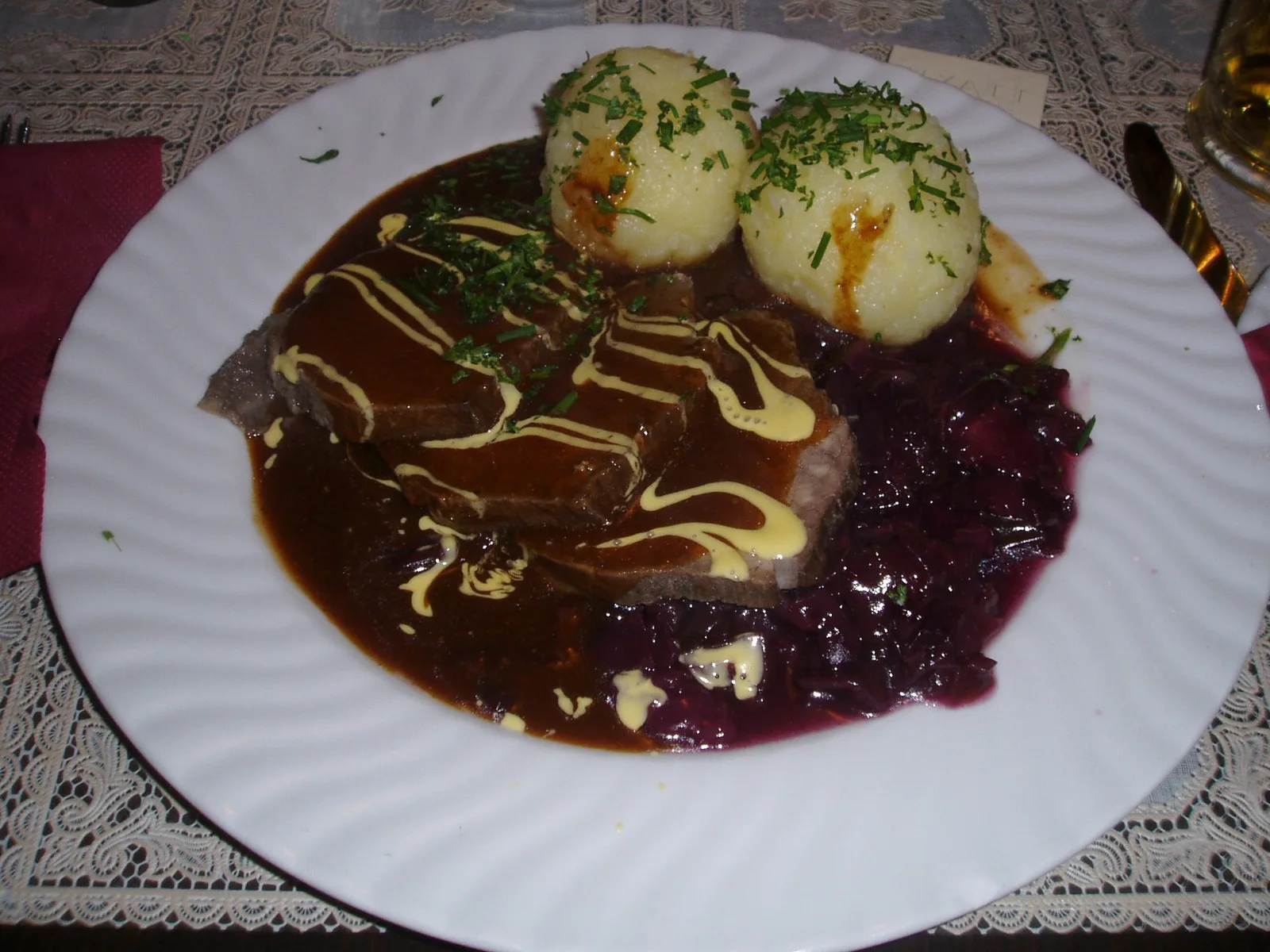
Sliced sauerbraten in dark sweet-sour gravy with potato dumplings and braised red cabbage on a white plate Germany flag Germany 3h 30m
Dinner •Rhineland Heritage

Sauerbraten

This sauerbraten recipe starts with a beef chuck roast steeped for three days in red wine vinegar, red wine and warm spices, then braised slowly until it slices like butter. The marinade becomes a dark, sweet-sour gravy thickened with crushed gingersnaps and studded with raisins, the Rhineland way. One serving is about 300 g, with gravy.

Comfort & Warmth

A slow-braised German pot roast in a sweet-sour vinegar gravy, sliced thick and served hot with potato dumplings and red cabbage.

Pairs Well With
Potato dumplings, braised red cabbage & a glass of Spätburgunder
High Protein
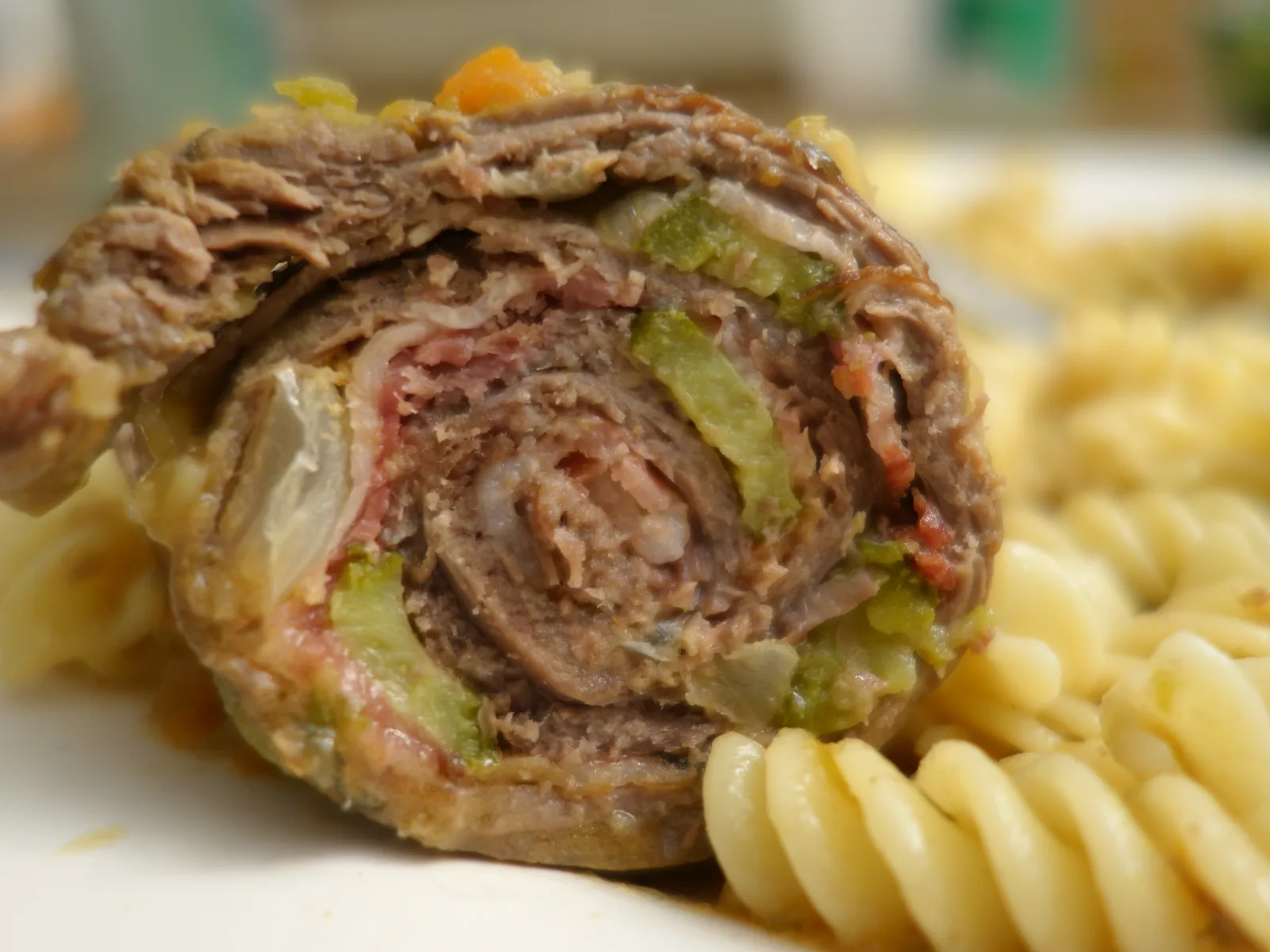
A sliced German beef roulade showing the spiral of beef, bacon and dill pickle, served with pasta Germany flag Germany 2h 10m
Dinner •German Sunday Heritage

Rouladen

This rouladen recipe spreads thin slices of top round with mustard, then rolls them around smoky bacon, dill pickles and onion into neat parcels. The rolls are browned, then braised slowly in red wine and beef stock until tender, and the braising liquid becomes a rich gravy. One serving is about 375 g — two rolls with gravy.

Comfort & Warmth

Thin beef rolls stuffed with bacon, dill pickle and onion, braised in red wine gravy and served hot with dumplings.

Pairs Well With
Potato dumplings, braised red cabbage & a German lager
High Protein
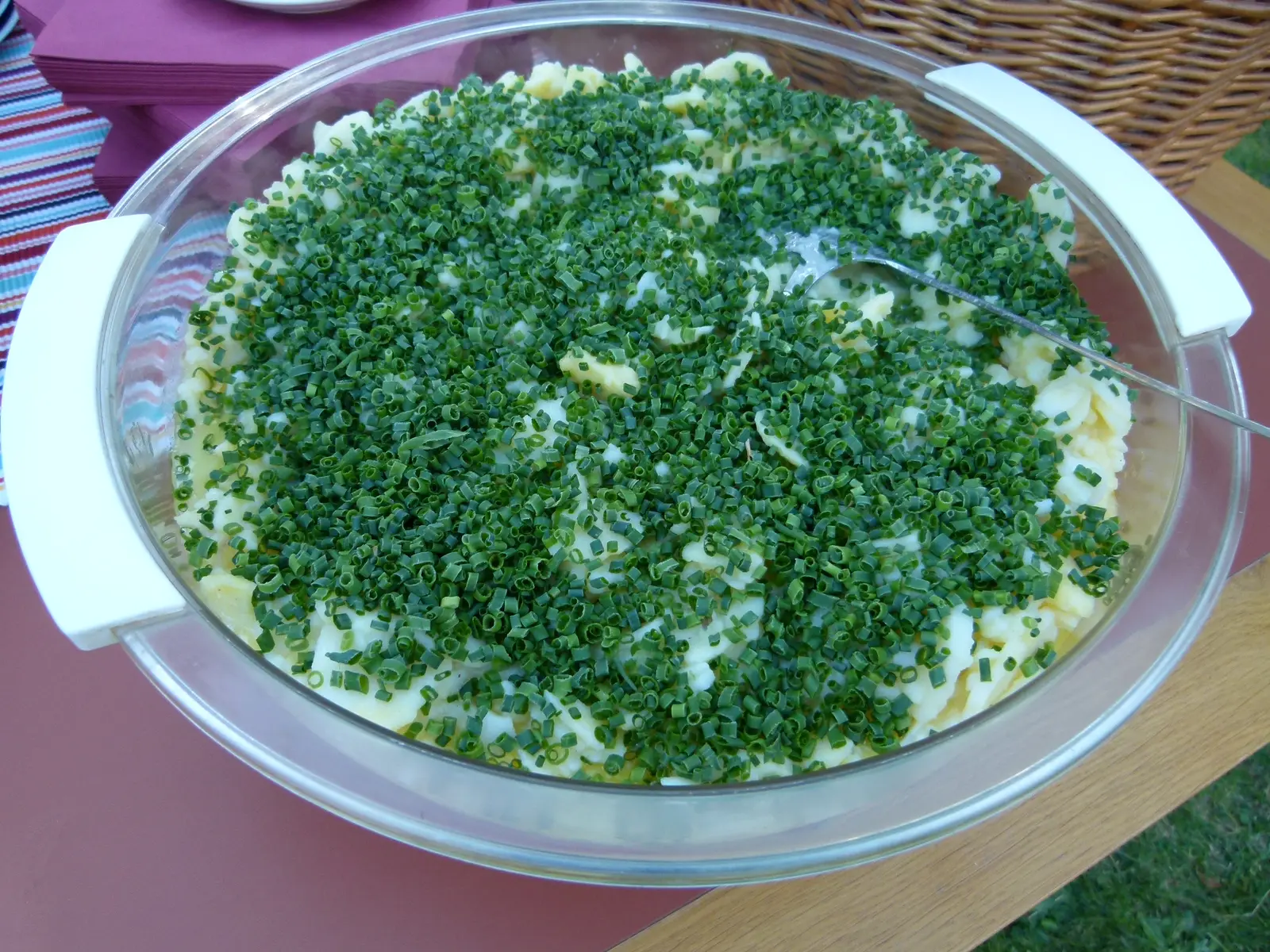
A glass bowl of warm Swabian potato salad topped with chopped chives Germany flag Germany 45m
Lunch •Swabian Heritage

German Potato Salad

This german potato salad recipe is the warm Swabian kind: waxy potatoes sliced while still hot, tossed with crisp bacon, soft onion and sliced egg, then dressed with hot beef stock, vinegar and mustard so every slice drinks up the tangy dressing. No mayonnaise anywhere — the potatoes stay light, glossy and warm. One serving is about 292 g.

Comfort & Warmth

Warm waxy potatoes in a bacon, mustard and vinegar dressing, served straight from the bowl while still steaming.

Pairs Well With
Grilled sausages, schnitzel & a cold German lager
Quick Prep (<30m)
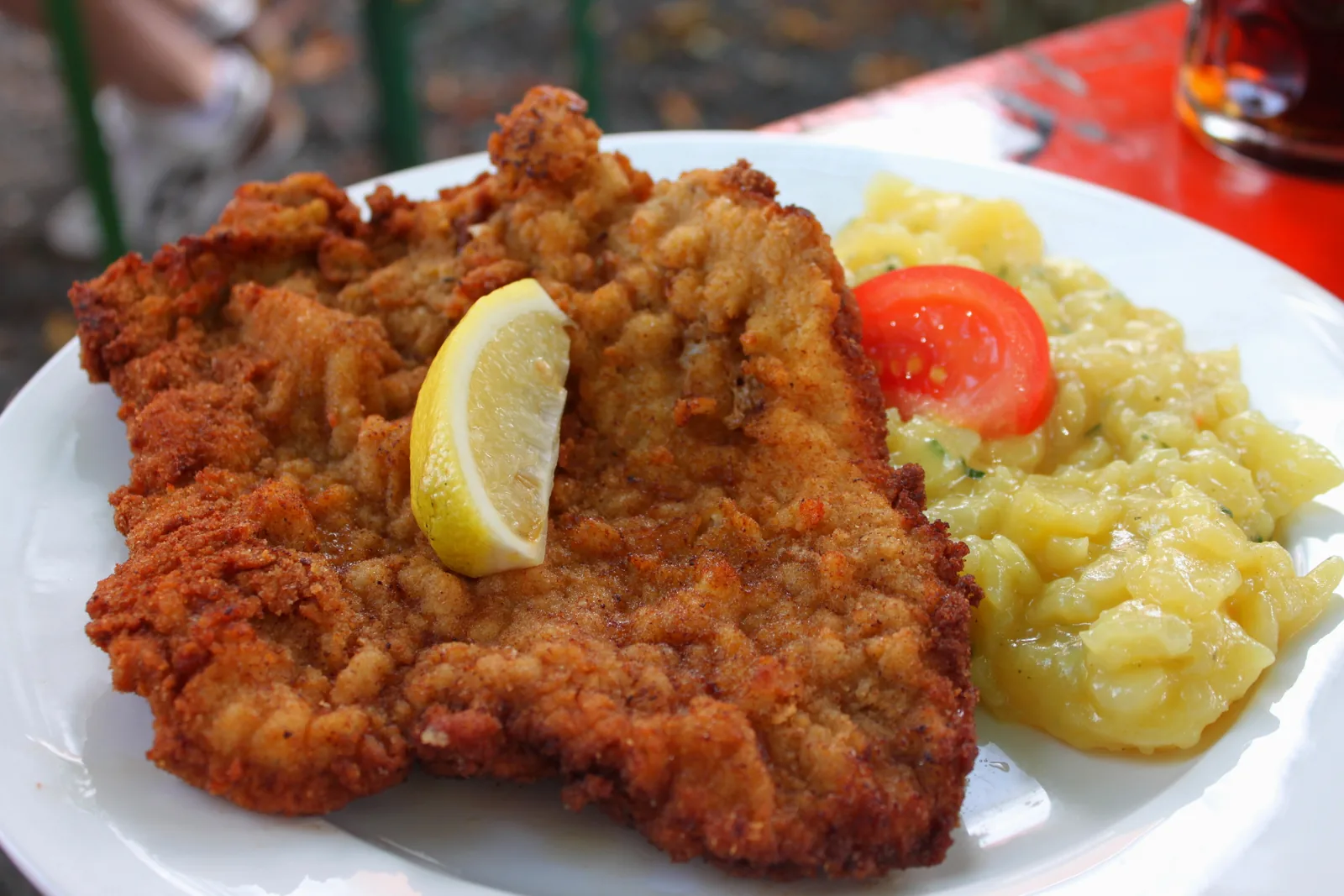
Golden breaded pork schnitzel with a lemon wedge and potato salad on a white plate Germany flag Germany 40m
Dinner •German Heritage

German Pork Schnitzel

German pork schnitzel is the everyday hero of German cooking: a pork cutlet pounded thin, coated in flour, egg and breadcrumbs, and fried in butter until it turns deep golden and crisp. This german schnitzel recipe follows the German way — real pork, a loose crumb, and a wedge of lemon on the side, with potato salad to mop up. One serving is about 200 g.

Classic Comfort

A golden, crisp pork cutlet with lemon and potato salad — a satisfying, protein-rich German dinner.

Pairs Well With
Warm potato salad, cucumber salad and a cold lager.
High Protein

The Dinner Gazette

Never wonder what’s for dinner again

One email a week with easy dinner ideas from around the world — ingredients, steps and nutrition, tested in our kitchen first.

Delivered every Thursday morning. Unsubscribe anytime.