Curated recipes from 193 countries  •  New seasonal Mediterranean issue out now

Overview

Omani Halwa

Halwa, Halwa Omani, Omani Saffron Halwa

This omani halwa recipe makes Oman's famous celebration sweet: sugar and starch stirred slowly into a glossy, amber gel, enriched with ghee and perfumed with saffron, cardamom and rosewater, then studded with almonds, cashews and pistachios. It is cut into small diamonds and served in tiny portions with unsweetened Omani coffee. One serving is about 65 g.

Halwa is Oman's most famous sweet, made in great copper pots — the mirjan — over wood fires, where the stirring barely stops for the whole cook. Its ingredients tell the story of Oman's place on the spice routes: saffron from Iran, cardamom from the Malabar Coast, rosewater from the mountain distilleries of Jebel Akhdar, and sugar from Indian Ocean trade. It is served at weddings, Eid and to honoured guests, always in small pieces with unsweetened Omani coffee.

Pairs well with: Omani coffee, dates & fresh fruit

Provenance

Oman flag Oman

Omani Heritage

Middle Eastern

Time Dedication

1h 10m

15m prep • 55m cook

Batch Yield

12 Servings

261 kcal per serving

1 serving ≈ 65 g

Technical Skill

Intermediate

Medium (Constant Stirring)

Meal Timing & Digestive Fit

Breakfast

Not Advised

Lunch

Inappropriate

Dinner

Inappropriate

Snack & Tea

Ideal Light Bite

Occasions: Eid, Wedding, Celebration, Coffee time, Gift Cost: Low — about $1–2 per serving at home
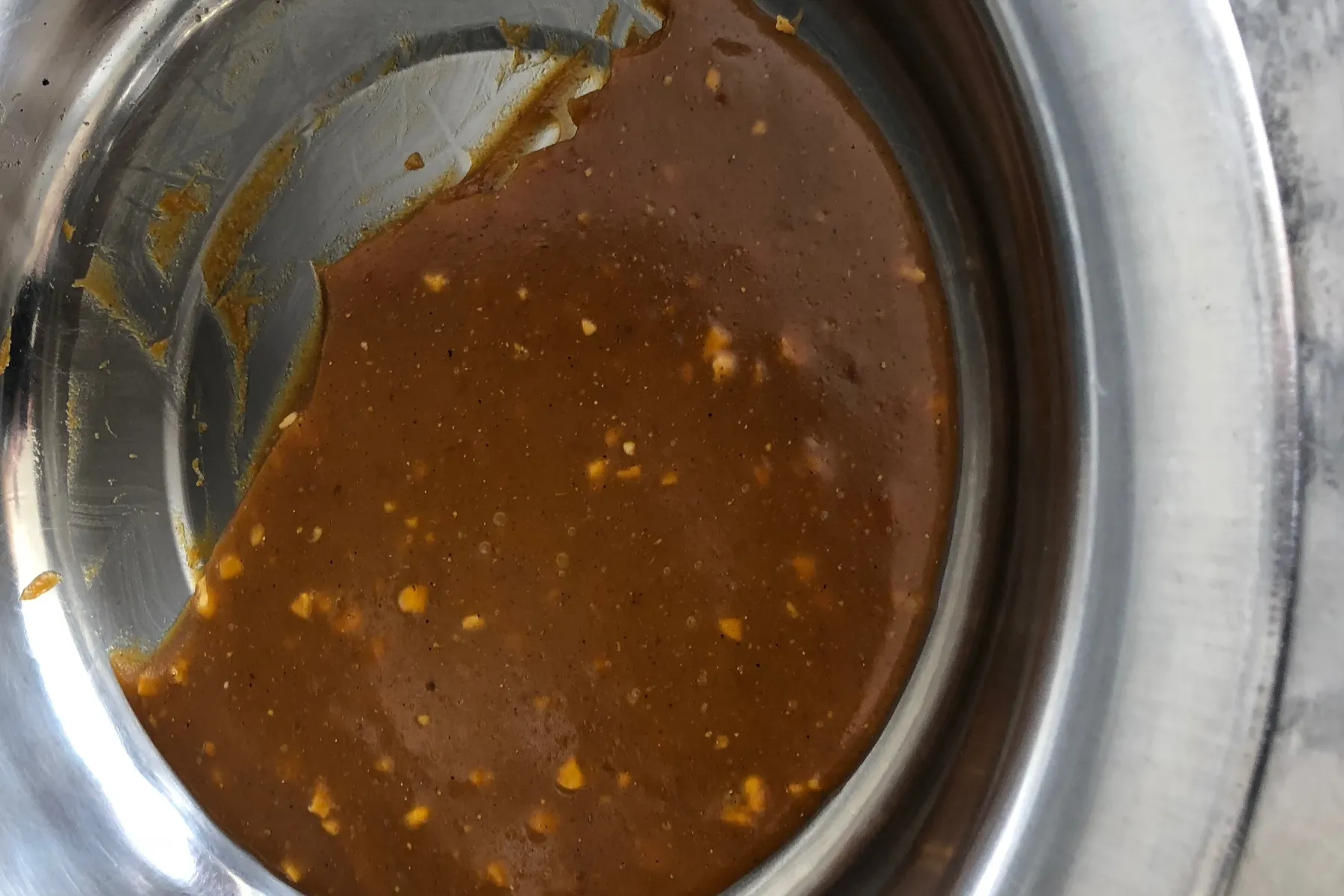
Omani halwa — glossy amber saffron sweet studded with chopped nuts in a steel serving bowl

Omani Heritage

Photo: Slywire, CC BY-SA 4.0, via Wikimedia Commons

The Heritage Formulary

Measured Ingredients

Estimated cost: Low — about $1–2 per serving at home (USD)

Made with cornstarch, sugar and ghee stirred slowly to a glossy amber set, with saffron, cardamom, rosewater and toasted nuts.

Execution Methodology & Culinary Technique

Step-by-Step Cooking Guide

Active 1h 10m
P

Prep Stage: Bloom the Saffron & Toast the Nuts

15 Mins • Blooming & Toasting

Crush the saffron into the rosewater and leave it to bloom for 10 minutes. Toast the almonds, cashews, pistachios and sesame seeds in a dry pan until lightly golden, then chop the nuts roughly. Whisk the cornstarch into 250 ml of cold water until completely smooth, and lightly oil a shallow dish for setting the halwa.

Maestro Tip: Whisk the starch slurry until there is not a single lump — any lump in the bowl becomes a lump in the finished halwa.

  1. 1

    Toast the Nuts

    10 Mins Medium heat, ~175°C (350°F)

    Toast the almonds, cashews, pistachios and sesame seeds in a dry pan over medium heat, shaking the pan often, until lightly golden and fragrant, about 5 minutes. Tip them onto a plate to stop the cooking, then chop the nuts roughly and keep the sesame seeds separate for garnish.

    Nuts go from golden to burnt in under a minute, so take them off the heat while they still look a shade pale.

    Done when: The nuts are lightly golden and smell warm and nutty.

  2. 2

    Make the Sugar Syrup

    10 Mins Medium heat, ~175°C (350°F)

    Put the 400 g of sugar and 500 ml of water in a large, heavy pot over medium heat. Stir until the sugar dissolves completely, then bring to a gentle boil and add the pinch of salt. Keep the heat steady — the syrup should bubble gently, not boil hard.

    Use the biggest heavy pot you own; the halwa bubbles and spits as it thickens, and a small pot will overflow.

    Done when: The sugar is fully dissolved and the syrup is clear and gently bubbling.

  3. 3

    Whisk in the Starch Slurry

    5 Mins Low heat, ~120°C (250°F)

    Turn the heat to low. Give the cornstarch slurry a final whisk, then pour it into the syrup in a thin stream, whisking constantly so it blends in smoothly. Keep whisking as the mixture turns from cloudy to clear and starts to thicken.

    Pour slowly and whisk the whole time — dumping the slurry in at once is what makes lumps.

    Done when: The mixture is smooth, clear and starting to coat the spoon.

  4. 4

    Stir Until Thick & Glossy

    20 Mins Low heat, ~120°C (250°F)

    Keep stirring over low heat for about 20 minutes, scraping the bottom and sides of the pot so nothing sticks or scorches. The halwa will slowly turn from a pale paste into a thick, translucent amber gel that pulls away from the sides of the pot in a single mass when you drag the spoon through it.

    Do not stop stirring — this is the step that gives halwa its glossy, jelly-like set, and the pot scorches fast if the spoon rests.

    Done when: The halwa is thick and glossy, and it pulls cleanly away from the sides of the pot.

  5. 5

    Work in the Ghee, Saffron & Nuts

    10 Mins Low heat, ~120°C (250°F)

    Add the ghee a spoonful at a time, stirring each spoonful in fully before adding the next, until the halwa turns shiny and the ghee is absorbed. Stir in the bloomed saffron and rosewater, the cardamom and nutmeg, then fold in the chopped almonds and cashews. Cook for 2 minutes more.

    Adding the ghee in stages is what makes the halwa glossy instead of greasy — patience here pays off on the plate.

    Done when: The halwa is glossy and amber, the ghee is absorbed, and the nuts are folded through evenly.

  6. 6

    Set, Cut & Serve

    10 Mins Room temperature, ~20°C (68°F)

    Scrape the halwa into the lightly oiled dish and smooth the top with a wet spatula. Scatter the chopped pistachios and toasted sesame seeds over the top and press them in gently. Leave to cool and set for at least 30 minutes, then cut into small diamonds and serve at room temperature with Omani coffee.

    Cut small pieces — halwa is very sweet and rich, and a small diamond with coffee is the traditional portion.

    Done when: The halwa is firm enough to cut cleanly and holds its diamond shape.

Finishing Touches & Plating

Cut the set halwa into small diamonds, scatter with pistachios and sesame seeds, and serve at room temperature with small cups of unsweetened Omani coffee.
Nutritional Physiology & Benefits

Nutrition

Energy

261

kcal / serving

Protein

2g

Complete AA

Carbs

40g

Complex

Fats

11g

Healthy

Per serving (12 servings · 1 serving ≈ 65 g)
Energy261 kcal
Protein2 g
Carbohydrates40 g
Fat11 g
Fibre1.0 g
Sugar33.8 g
Sodium34 mg
Per 100g
Energy402 kcal
Protein2.9 g
Carbohydrates62.2 g
Fat16.9 g
Fibre1.5 g
Sugar52 g
Sodium52 mg

Nutrition values are estimated — calculated from USDA FoodData Central values for the listed ingredients.

Vitamins & minerals: Vitamin E and magnesium (almonds and pistachios), copper and iron (cashews), calcium and zinc (sesame seeds). Nutrition values are estimated.

Nuts Add Fibre and Minerals

Almonds, cashews, pistachios and sesame seeds add a little fibre, vitamin E, magnesium and zinc to an otherwise simple sweet.

Quick Energy in a Small Portion

A 65 g piece carries about 256 kcal, so a small diamond is a compact source of energy alongside coffee.

No Gluten, No Egg

Made with cornstarch rather than flour, this halwa is naturally gluten-free and egg-free, which suits more guests at a gathering.

Food Pairings

What to Eat With

To optimize nutrient absorption and elevate the sensory depth, pair with these authentic accompaniments:

Drinks

Omani Coffee (Qahwa)

Unsweetened, lightly spiced Omani coffee is halwa's true partner: its bitterness balances the sweet, and the two are always served together in Oman.

More Pairings

Fresh Dates

Dates are the other classic Omani sweet on the coffee tray, and their soft, caramel flavour sits happily next to the halwa's saffron notes.

Fresh Fruit

Sliced orange, pomegranate or melon after the halwa gives a fresh, juicy contrast that cleanses the palate.

A Small Sweet Tray

Serve the halwa diamonds on a tray with nuts and dried fruit, so guests can take one small piece at a time with their coffee.

Complete menu

Serve small halwa diamonds with Omani coffee and fresh dates after a light meal, or set out a sweet tray with nuts and dried fruit.

Digestive Guardrails

What NOT to Combine

To prevent digestive distress, sluggishness, or palate clash, avoid pairing the dish with these elements:

Large Portions, Especially for Children

Halwa is very high in sugar — about 34 g per small piece — so keep portions small, particularly for children, and serve it with unsweetened coffee rather than a sweet drink. This is general information, not medical advice.

Another Very Sweet Dessert at the Same Time

Serving halwa alongside cake, biscuits or sweetened drinks stacks sugar on sugar; fresh fruit or plain tea is the lighter partner. This is general information, not medical advice.

General information only, not medical advice — consult a doctor for personal dietary decisions.

Who Should Eat It

Who Should Eat

  • General adultsOman's famous saffron sweet — a small, glossy diamond with coffee, rich and very sweet.
  • ChildrenVery sweet, so one small piece is enough for children, and not every day.
  • ElderlySoft and easy to eat; keep the piece small, as the sugar is high.
  • Pregnant womenVery high in sugar, so a small piece only, and only if it fits your diet; ask your clinician.
  • Breastfeeding womenA small sweet treat with coffee is fine in moderation; keep the portion to one piece.
  • AthletesA compact source of quick energy, but low in protein, so it is a treat, not a recovery food.
  • Weight gainEnergy-dense in a small piece, so it is easy to eat more than planned — cut small diamonds.
  • Weight lossVery high in sugar and energy-dense, so take one small piece at most, or skip it.

Health Conditions — Adjust or Avoid

Conditions

  • DiabetesVery high in sugar (about 34 g per piece), so this sweet is best avoided or kept to a very small piece; ask your clinician.
  • High blood pressureSodium is low at about 34 mg per serving, but the sugar load is high; keep the piece small.
  • Kidney diseaseLow in protein and potassium, but very high in sugar; a small piece is usually the sensible limit — ask your clinician.
  • GoutNuts and sugar are the main concerns; keep the portion small and ask your clinician.
  • Stomach issuesRich, sweet and fatty, which can feel heavy on a sensitive stomach; take a small piece and eat it slowly.
  • Cardiovascular diseaseHigh in sugar and saturated fat from the ghee, so keep it to an occasional small piece; ask your clinician.
  • Fatty liverVery high in sugar and energy-dense, so an occasional small piece at most; ask your clinician.
  • Food allergiesContains tree nuts (almonds, cashews, pistachios), sesame seeds and milk (ghee); omit the nuts if allergic and use oil instead of ghee.
  • Special therapeutic dietsHalal by ingredients and gluten-free; not suitable for low-sugar or diabetic diets without adjustment, so ask your clinician.

If you have a medical condition, consult your doctor before changing your diet.

Storage & Use

Storage & Use

How to store
Cool completely, then store in an airtight container at room temperature with baking paper between layers.
In the fridge
Up to 2 weeks in an airtight container; bring back to room temperature before serving.
In the freezer
Up to 2 months, wrapped tightly.
How to reheat
Not reheated — serve at room temperature; if chilled, leave out for 30 minutes before serving.
Freezing recommended
Yes, up to 2 months; thaw at room temperature.
Signs it has spoiled
Sour smell, sticky weeping surface, or mould.

More recipes to explore

Omani shuwa — dark spice-crusted slow-roasted lamb pieces served over golden saffron rice on a shared platter Oman flag Oman 7h 35m
Dinner •Muscat Heritage

Omani Shuwa

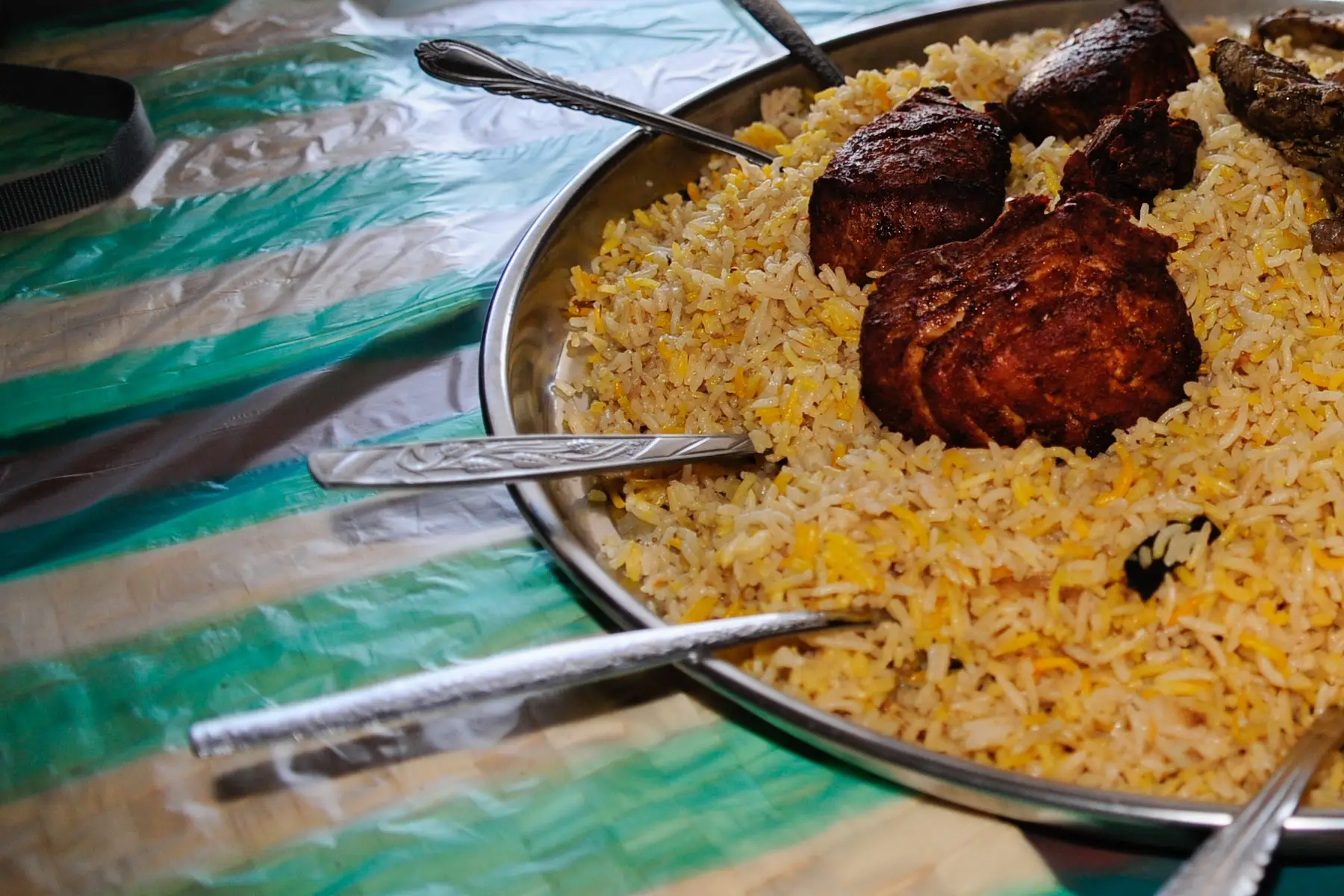
This shuwa recipe is Oman's great celebration roast: a bone-in leg of lamb rubbed with a dark, fragrant paste of garlic, ginger, vinegar and warm spices, wrapped in banana leaves and slow-roasted for hours until the meat shreds at a touch. It is served the Omani way, in generous slices over saffron basmati rice scattered with fried onions, almonds and raisins. One serving is about 430 g.

Celebration Roast & Family Feast

A whole spiced lamb leg slow-roasted until it falls apart, served over saffron basmati rice with fried onions, almonds and raisins.

Pairs Well With
Saffron rice, salata, dates & Omani coffee
High Protein
Omani saloona — a bowl of tomato and dried-lime lamb stew with a ladle, served beside a platter of white rice spooned with stew Oman flag Oman 2h 10m
Dinner •Muscat Heritage

Omani Saloona

This omani saloona recipe is the everyday stew of Omani home cooking: bone-in lamb simmered low and slow in a tomato broth with dried lime and warm spices, then finished with big chunks of potato, zucchini, eggplant, carrot and bell pepper. The stew is ladled straight from the pot over plain white rice, so every spoonful is part meat, part vegetable, part broth. One serving is about 650 g.

Everyday Family Stew & Comfort Food

Bone-in lamb simmered with big pieces of potato, zucchini, eggplant and carrot in a tomato and dried-lime broth, ladled over plain white rice.

Pairs Well With
White basmati rice, salata & pickled lime
Pan con tomate with jamón ibérico on toasted bread Spain flag Spain 15m
Snack & Tea •Catalan Aperitivo

Pan con Tomate & Jamón Ibérico

Country bread rubbed with ripe Ramallet tomato, drizzled with cold-pressed Arbequina olive oil and topped with jamón ibérico.

Vascular Health

Toasted tomato bread with jamón ibérico, olive oil and olives.

Pairs Well With
Castelvetrano Olives & Sparkling Mineral Water
Quick Prep (<30m)
Gỏi cuốn — Vietnamese fresh spring rolls with prawn and pork Vietnam flag Vietnam 1h 5m
Snack & Tea •Saigon Refresh

Gỏi Cuốn Tôm Thịt

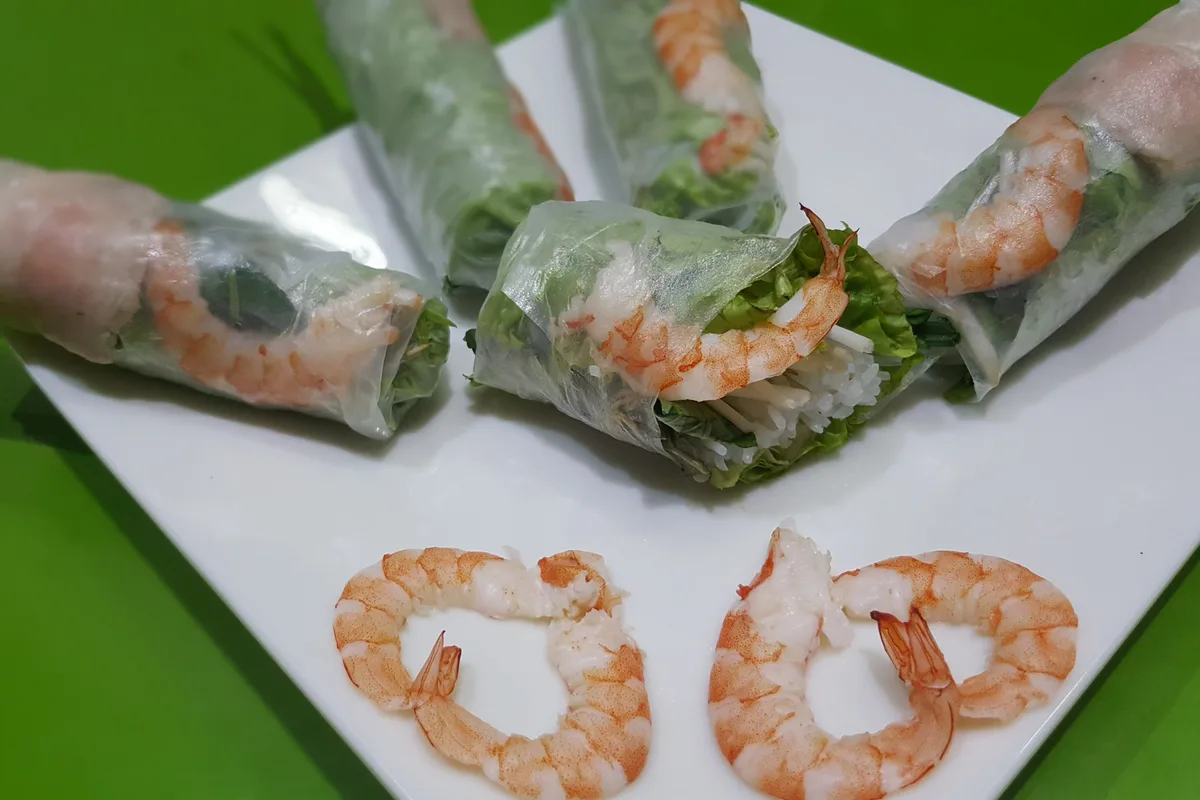
Fresh rice paper rolls filled with poached prawns, tender pork, rice vermicelli, lettuce, herbs and carrot, served with a peanut dipping sauce.

Light Digestion

Nothing is fried, so the rolls stay light and fresh — a cool, herb-filled snack for hot days.

Pairs Well With
Artisanal Peanut Dip & Fresh Lotus Root Water
High Protein

The Dinner Gazette

Never wonder what’s for dinner again

One email a week with easy dinner ideas from around the world — ingredients, steps and nutrition, tested in our kitchen first.

Delivered every Thursday morning. Unsubscribe anytime.