
Curated recipes from 193 countries  •  New seasonal Mediterranean issue out now

Overview

Pan Cubano

Cuban Bread — Lard Loaf of Havana and Tampa

This cuban bread recipe makes two long pan cubano loaves from bread flour, water, yeast, sugar, salt and lard — the small amount of lard is what keeps the crumb soft and the crust thin and crackly. Each loaf is scored down the centre, baked until golden, and slices into a light, airy crumb. One serving is about 50 g.

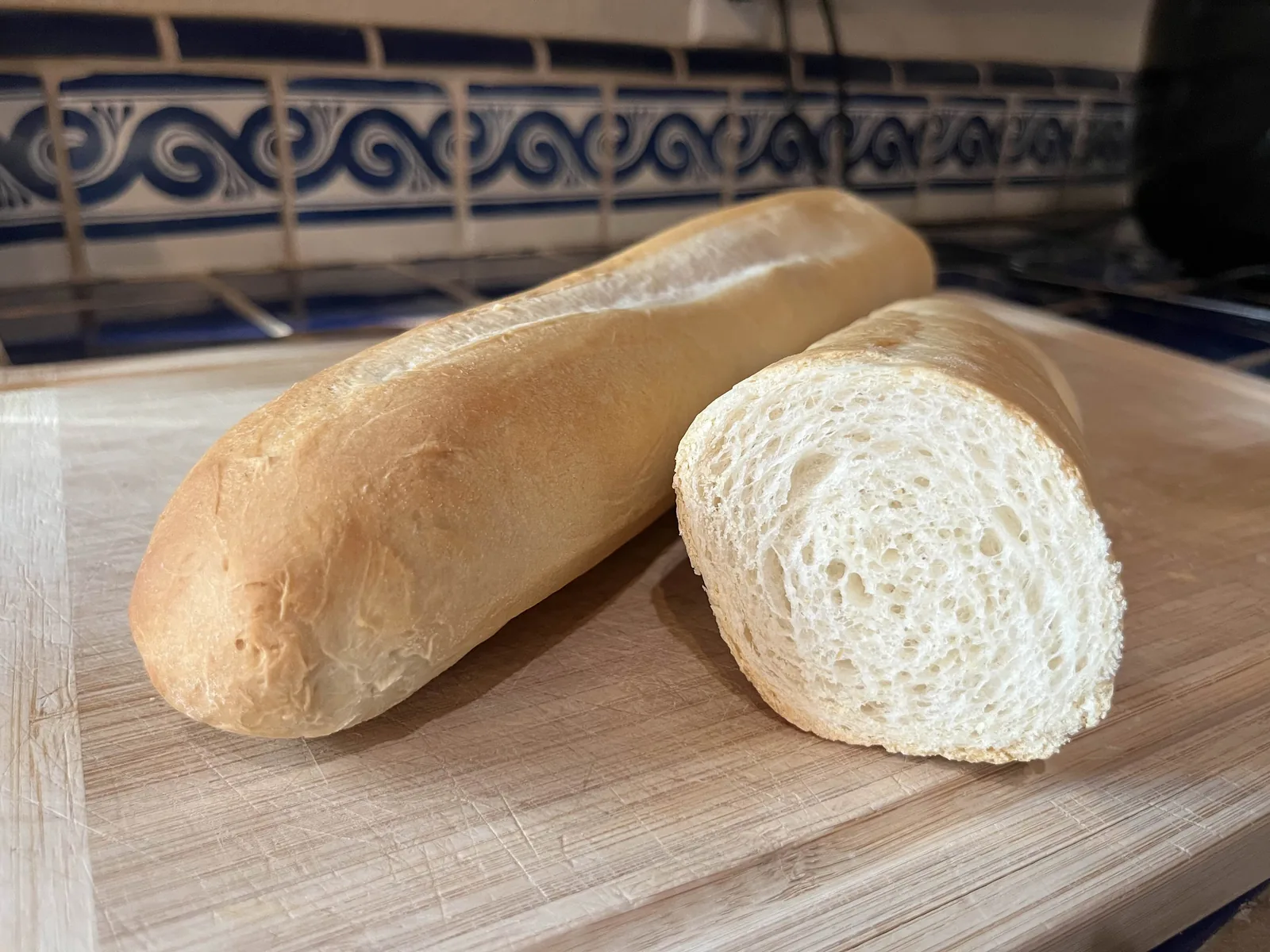
Pan cubano grew out of the Cuban bakeries of Florida: Cuban immigrants brought their bread traditions to Key West and Tampa in the 1800s, and the first commercial bakery known for the loaf, La Joven Francesca in Ybor City, Tampa, opened in 1896, selling loaves for 3 to 5 cents and delivering them daily. Bakers pressed a palmetto frond along the top of each loaf before baking, which left the long centre split that still marks the bread today. The loaves in the photograph are a sourdough pan cubano; the recipe here is the standard yeasted loaf made with lard, which bakes up the same long, golden shape.

Pairs well with: Thick slices with Cuban black beans, or split and pressed into a Cuban sandwich

Provenance

Cuba flag Cuba

Cuban-American Heritage

Latin America & Caribbean

Time Dedication

3h 5m

160m prep • 25m cook

Batch Yield

16 Servings

141 kcal per serving

1 serving ≈ 50 g

Technical Skill

Intermediate

Medium (Yeast Bread)

Meal Timing & Digestive Fit

Breakfast

Not Advised

Lunch

Prime Metabolic Fit

Dinner

Ideal Hearty Main

Snack & Tea

Inappropriate

Occasions: Sandwiches, breakfast, picnics, everyday meals Cost: Low — about $0.50 per serving at home
Tags: Savory Mild Baked
Two golden pan cubano loaves on a wooden board, one cut open to show a soft, airy white crumb, with a pale score along the top

Cuban-American Heritage

Photo: 2venkal, CC BY-SA 4.0, via Wikimedia Commons

The Heritage Formulary

Measured Ingredients

Estimated cost: Low — about $0.50 per serving at home (USD)

A good pan cubano is golden with a thin, crackly crust, a long centre score, and a soft, open crumb inside.

Execution Methodology & Culinary Technique

Step-by-Step Cooking Guide

Active 3h 5m
P

Prep Stage: A Soft Dough, Two Slow Rises

160 Mins • Mixing, Kneading & Rising

Pan cubano is a simple dough with a long, patient rise: the yeast does most of the work while you wait. The lard goes in melted, and the dough should end up soft and slightly tacky — not stiff. Give the loaves their full two rises; a rushed loaf bakes up dense instead of airy.

Maestro Tip: Weigh the flour rather than scooping it from the bag: too much flour is the most common reason a loaf turns out heavy.

  1. 1

    Mix and Knead

    15 Mins Room temperature

    Stir the yeast and sugar into the warm water and leave for 5 minutes until foamy. Add the melted lard and half the flour, then the salt and the rest of the flour, and mix to a shaggy dough. Knead on a lightly floured surface for 8–10 minutes until the dough is smooth, soft and slightly tacky — it should spring back slowly when poked.

    Resist adding extra flour while kneading; a soft, tacky dough bakes into a soft, airy crumb.

    Done when: Smooth dough that springs back slowly when poked.

  2. 2

    First Rise

    90 Mins Warm place, ~26°C (79°F)

    Shape the dough into a ball, put it in a lightly oiled bowl, cover, and leave in a warm place for about 90 minutes, until it has roughly doubled in size.

    A turned-off oven with the light on is a good warm spot for rising dough.

    Done when: The dough has doubled and holds a dent when poked gently.

  3. 3

    Shape the Loaves

    10 Mins Room temperature

    Turn the dough out, press out the air gently, and divide it in two. Roll each piece into a long torpedo shape about 35 cm long with rounded ends, using the flour set aside to dust the surface. Set the loaves seam-side down on a lined baking tray, well apart.

    Roll from the centre outward with even pressure so the loaf is the same thickness all along — thin middles bake unevenly.

    Done when: Two even, long torpedo loaves with smooth tops.

  4. 4

    Second Rise

    45 Mins Warm place, ~26°C (79°F)

    Cover the loaves loosely and leave them to rise again for about 45 minutes, until puffy and about half as big again. Meanwhile, heat the oven to 220°C (425°F).

    Do not let the second rise go too far — over-proofed loaves collapse in the oven instead of springing up.

    Done when: The loaves are puffy and spring back slowly when poked.

  5. 5

    Score and Bake

    25 Mins 220°C (425°F)

    Slash each loaf once down the centre, about 1 cm deep — traditionally a palmetto frond was pressed along the top to make this split. Bake at 220°C (425°F) for 20–25 minutes, until the crust is golden and the loaves sound hollow when tapped underneath. Cool on a rack for at least 20 minutes before slicing.

    For an extra-crackly crust, mist the oven walls with water just before the loaves go in.

    Done when: Deep golden crust, hollow tap underneath, and an internal temperature of about 93°C (200°F).

Finishing Touches & Plating

Let the loaves cool for at least 20 minutes — slicing hot bread crushes the airy crumb. Cut thick slices for the table, or split a loaf lengthways and press it into a Cuban sandwich while it is still fresh.

Nutritional Physiology & Benefits

Nutrition

Energy

141

kcal / serving

Protein

3g

Complete AA

Carbs

25g

Complex

Fats

3g

Healthy

Per serving (16 servings · 1 serving ≈ 50 g)
Energy141 kcal
Protein3 g
Carbohydrates25 g
Fat3 g
Fibre1.0 g
Sugar1.0 g
Sodium243 mg
Per 100g
Energy283 kcal
Protein6.8 g
Carbohydrates49.9 g
Fat5.7 g
Fibre1.9 g
Sugar2 g
Sodium486 mg

Nutrition values are estimated — calculated from USDA FoodData Central values for the listed ingredients.

Vitamins & minerals: B vitamins and iron (enriched flour and yeast), with small amounts of calcium and potassium.

Steady Energy From Bread Flour

A slice of pan cubano is mostly slow-digesting carbohydrate, so it fills you up and keeps you going between meals.

A Little Protein in Every Slice

Bread flour gives each slice a few grams of protein — not a protein food on its own, but part of a balanced plate with beans or meat.

Simple Ingredients, Nothing Hidden

Flour, water, yeast, sugar, salt and lard — six everyday ingredients, no preservatives and nothing you cannot pronounce.

Food Pairings

What to Eat With

To optimize nutrient absorption and elevate the sensory depth, pair with these authentic accompaniments:

Sides

Cuban Black Beans

Thick slices of pan cubano are made for scooping up Cuban black beans: the soft crumb soaks up the broth and the crust holds its shape.

Full Menus

The Cuban Sandwich

This is the bread the Cuban sandwich was built on — split it, layer roast pork, ham, Swiss cheese, pickles and mustard, and press it flat.

Drinks

Café Cubano

A slice of warm pan cubano dunked in sweet, strong café cubano is the classic Cuban breakfast — the bread softens and the coffee sweetens the bite.

Vegetables

Tomato and Avocado Salad

A bright tomato and avocado salad with a little lime balances the rich lard crumb and turns the bread into a light lunch.

Complete menu

Serve thick slices of pan cubano with Cuban black beans and a tomato and avocado salad, and save a loaf to press into Cuban sandwiches with café cubano to drink.

Digestive Guardrails

What NOT to Combine

To prevent digestive distress, sluggishness, or palate clash, avoid pairing the dish with these elements:

Slicing While Still Hot

Bread cut straight from the oven crushes its own crumb because the starch has not set — the slices come out gummy and dense. Wait at least 20 minutes. This is general guidance, not medical advice.

Storing It in the Fridge

Refrigeration speeds up staling: the starch firms up faster in the cold, so the loaf goes dry and hard within a day. Keep it at room temperature in a paper bag, or freeze it.

General information only, not medical advice — consult a doctor for personal dietary decisions.

Who Should Eat It

Who Should Eat

  • General adultsA satisfying everyday bread — two or three slices with beans or soup make a light lunch.
  • ChildrenChildren usually love it: soft, mild and easy to chew. Serve slices warm, not hot, with butter or beans.
  • ElderlyVery suitable — soft, warm and easy to chew; serve a modest slice with soup or beans.
  • Pregnant womenGenerally suitable; make sure the loaf is baked right through and stored properly.
  • Breastfeeding womenGenerally suitable; the steady carbohydrate helps recovery — take a full serving with beans.
  • AthletesA handy refuelling food: pair slices with black beans or eggs after training for a fuller meal.
  • Weight gainA good choice — take generous slices with beans, meat or avocado.
  • Weight lossKeep it to one or two slices and load the plate with salad or beans; white bread is energy-dense.

Health Conditions — Adjust or Avoid

Conditions

  • DiabetesWhite bread is the main source of carbs — keep it to one or two slices and ask your clinician about a suitable serving.
  • High blood pressureMost of the sodium comes from the added salt; keep the portion modest and ask your clinician about portion size.
  • Kidney diseaseLimit the portion — bread is high in carbohydrate and the loaf is salted; ask your clinician about portion size.
  • GoutEat occasionally and in smaller portions — bread is low in purines, but large portions add up; ask your clinician if you are unsure.
  • Stomach issuesUsually gentle on the stomach, but fresh bread can feel heavy — eat a modest slice and avoid eating it very hot.
  • Cardiovascular diseaseKeep the portion modest — the loaf is made with lard, a saturated fat; balance it with salad or beans.
  • Fatty liverKeep the portion modest and favour beans and salad over extra slices; white bread is energy-dense.
  • Food allergiesContains wheat (gluten). Made with lard (pork fat), so it is not suitable for vegetarians, vegans or halal diets.
  • Special therapeutic dietsIf you follow a prescribed low-sodium diet, use less salt and a smaller portion, and check with your clinician.

If you have a medical condition, consult your doctor before changing your diet.

Storage & Use

Storage & Use

How to store
Cool completely, then keep in a paper bag at room temperature.
In the fridge
Not recommended — the fridge makes bread stale faster; keep at room temperature for 2 days.
In the freezer
3 months, sliced and wrapped in portions; thaw at room temperature.
How to reheat
Warm slices in the oven at 180°C (350°F) for 5 minutes until the centre reaches 74°C (165°F); the crust crisps up again.
Freezing recommended
Yes, sliced — it thaws quickly and toasts well.
Signs it has spoiled
Mould on the crust or crumb, a sour smell, or a hard, dry texture.

More recipes to explore

A plate of ropa vieja, shredded beef in tomato sauce, with yellow rice, black beans and fried plantains Cuba flag Cuba 3h
Dinner •Cuba's National Dish

Ropa Vieja

This ropa vieja recipe braises flank steak low and slow until it falls into long shreds, then simmers it in a tomato, pepper and olive sauce. One serving is about 310 g. Serve it over white rice with black beans and fried plantains, the way Cuban families do.

Comfort & Warmth

Slow-braised shredded beef in a tomato and pepper sauce, served with rice and black beans.

Pairs Well With
White rice, black beans and fried plantains
High Protein
A pressed Cuban sandwich cut in half, with melted Swiss cheese and layers of ham and pork, served with pickle spears Cuba flag Cuba 25m
Lunch •Havana Classic

Cuban Sandwich

This cuban sandwich recipe layers mojo roast pork, ham, Swiss cheese, pickles and mustard on Cuban bread, then presses it flat until the crust crackles and the cheese melts. One serving is about 345 g. It is a great use for leftover roast pork and comes together in 25 minutes.

Comfort & Warmth

A pressed sandwich of roast pork, ham, Swiss cheese, pickles and mustard on Cuban bread.

Pairs Well With
Plantain chips and a cold lager or lime soda
A plate of dark moros y cristianos rice cooked with black beans, served with slices of roast pork and golden fried plantains Cuba flag Cuba 1h 30m
Lunch •Cuban Heritage

Moros y Cristianos

This moros y cristianos recipe cooks Cuban black beans and rice together in one pot: dried black beans simmered until tender, then long-grain rice cooked in the dark bean liquid with a sofrito of onion, green pepper and garlic, cumin, oregano and bay leaf. The grains come out dark, fragrant and fluffy, never pale or plain. One serving is about 272 g.

Comfort & Warmth

Cuban black beans and white rice cooked together in one pot with sofrito, cumin, oregano and bay leaf, until the grains turn dark.

Pairs Well With
Roast pork or ropa vieja with fried sweet plantains and a crisp cabbage salad, the classic Cuban plate.
A plate of Cuban lechon asado with shredded mojo pork, onions and lime, yellow rice with black beans and fried plantains Cuba flag Cuba 5h 30m
Dinner •Havana Heritage

Cuban Lechon Asado

This cuban lechon asado recipe marinates a pork shoulder overnight in mojo — sour orange juice, a whole head of garlic, oregano and cumin — then roasts it low and slow until the meat is so tender it pulls apart with a fork. It is the centrepiece of Nochebuena, the Cuban Christmas Eve feast, and it is nothing like Filipino lechon: there is no whole crispy-skinned pig here, just a mojo-soaked shoulder roast. One serving is about 250 g.

Celebration & Sharing

A whole pork shoulder marinated overnight in sour-orange mojo, then roasted low and slow until it pulls apart — the centrepiece of Nochebuena.

Pairs Well With
Shredded mojo pork with black beans, yellow rice and fried plantains
High Protein

The Dinner Gazette

Never wonder what’s for dinner again

One email a week with easy dinner ideas from around the world — ingredients, steps and nutrition, tested in our kitchen first.

Delivered every Thursday morning. Unsubscribe anytime.