Curated recipes from 193 countries  •  New seasonal Mediterranean issue out now

Overview

Pan Mee

Ban Mian, Mee Hoon Kueh

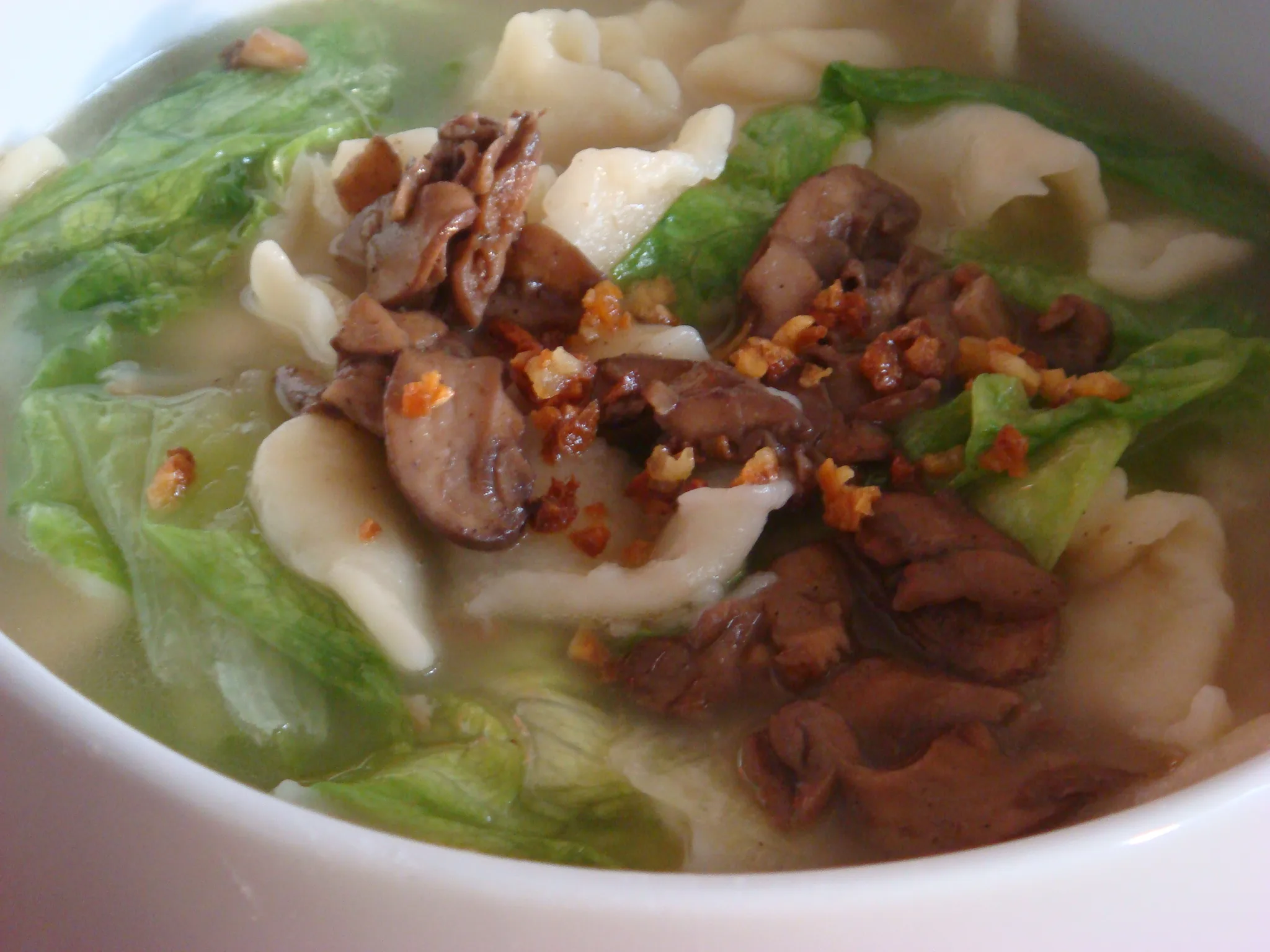
This pan mee recipe is the classic Malaysian soup version: a plain flour-and-egg dough kneaded by hand, rested, then torn into ragged flat pieces and dropped straight into a clear anchovy (ikan bilis) broth. The bowl is finished with seasoned minced pork, braised shiitake mushrooms, sweet potato leaves, a poached egg, crisp fried anchovies and fried shallots, with sambal on the side. It is a different dish from the dry chilli pan mee of Kuala Lumpur — this one is all about the clear, savoury broth. One serving is about 620 g.

Pan mee, also called ban mian, travelled to Malaysia with Hakka and Hokkien communities from southern China. The name comes from the Hakka method of cutting noodle dough into straight strands using a wooden board as a ruler, while Hokkien cooks rolled the dough flat and tore it by hand into bite-sized pieces — the mee hoon kueh style used here. The soup version settled into Malaysian hawker stalls with a clear anchovy stock, minced pork, mushrooms and sweet potato leaves, and the dry chilli version, claimed by Restoran Kin Kin in Chow Kit, Kuala Lumpur, came later in the mid-1980s.

Pairs well with: Serve with sambal belacan and cut red chilli on the side, and a cold glass of iced lemon tea or barley water.

Provenance

Malaysia flag Malaysia

Malaysian Chinese Hawker Heritage

East & South Asia

Time Dedication

1h 5m

20m prep • 45m cook

Batch Yield

4 Servings

698 kcal per serving

1 serving ≈ 620 g

Technical Skill

Intermediate

Medium (Handmade Noodles)

Meal Timing & Digestive Fit

Breakfast

Not Advised

Lunch

Prime Metabolic Fit

Dinner

Ideal Hearty Main

Snack & Tea

Inappropriate

Pasta & Noodles Occasions: Weekday lunch, comfort food, family lunch, rainy-day soup Cost: Low — about $3–4 per serving at home
A bowl of pan mee — hand-torn flat wheat noodles in clear anchovy broth with braised mushrooms, leafy greens and fried garlic

Malaysian Chinese Hawker Heritage

Photo: Grantye, Public Domain, via Wikimedia Commons

The Heritage Formulary

Measured Ingredients

Estimated cost: Low — about $3–4 per serving at home (USD)

The dough is torn by hand into ragged pieces and cooked in a clear, strained anchovy broth — never a thick gravy, never machine-cut noodles.

Execution Methodology & Culinary Technique

Step-by-Step Cooking Guide

Active 1h 5m
P

Knead the dough and set up the broth

20 minutes

Mix the flour, one egg, the salt and 120 ml of water into a firm dough, knead 5 minutes until smooth, then cover and rest it for 20 minutes while you clean the anchovies, slice the mushrooms and shallots, season the pork and wash the greens. The broth simmers while the dough rests, so the two jobs run side by side.

Maestro Tip: A rested dough tears cleanly instead of springing back — do not skip the 20 minutes.

  1. 1

    Knead the dough and let it rest

    25 minutes Room temperature, about 22°C (72°F)

    Tip the flour into a bowl, make a well, add one egg, the salt and 120 ml of water, and mix to a shaggy dough. Knead on a floured board for 5 minutes until smooth and firm, then cover with a damp cloth and rest for 20 minutes.

    The dough should feel like a firm earlobe — add water a teaspoon at a time if it is crumbly.

    Done when: The dough is smooth, holds its shape and springs back slowly when pressed.

  2. 2

    Simmer the anchovy broth

    25 minutes Gentle simmer at 95°C (203°F)

    Put 1.2 litres of water and the 50 g of cleaned stock anchovies in a large pot. Bring to a boil, skim off any foam, then lower the heat and simmer gently for 20–25 minutes while the dough rests. Strain the broth through a fine sieve, discard the spent anchovies and return the clear broth to the pot; keep it at a gentle simmer.

    Do not boil the broth hard — a rolling boil clouds it and turns the anchovy flavour bitter.

    Done when: The broth is clear, pale gold and tastes cleanly savoury of anchovy.

  3. 3

    Fry the anchovies, shallots and garlic crisp

    6 minutes Oil at 170°C (340°F)

    Heat the oil in a small frying pan over medium-high heat. Fry the remaining 30 g of anchovies for 2 minutes until crisp and golden, lift out and drain. In the same oil, fry the shallot rings for 2 minutes, then the sliced garlic for 30 seconds, until golden — lift each out the moment it colours.

    Garlic goes from golden to burnt in seconds, so stand over the pan and have a plate ready.

    Done when: The anchovies snap when bent, and the shallots and garlic are crisp and golden, not brown.

  4. 4

    Braise the mushrooms and cook the minced pork

    8 minutes Pan at 180°C (350°F); pork to 71°C (160°F)

    In the same pan, add the sliced shiitake with a ladle of broth and braise for 3 minutes until dark and tender. Push the mushrooms aside, add the seasoned ground pork and the chopped garlic, and stir-fry for 4–5 minutes, breaking the mince into small crumbles, until it is browned and cooked through.

    Let the pork sit untouched for a minute before stirring — that is how it browns instead of steaming grey.

    Done when: The pork is browned in small crumbles and reads at least 71°C (160°F); the mushrooms are dark and glossy.

  5. 5

    Tear in the noodles and poach the eggs

    8 minutes Boiling broth at 100°C (212°F)

    Bring the strained broth back to a rolling boil. Pinch off pieces of the rested dough about 5 cm across, flatten each one between your fingers and tear it into the broth — the ragged, uneven pieces are the point of pan mee. Simmer the torn noodles for 3–4 minutes, then drop in the sweet potato leaves for 30 seconds until just wilted. Meanwhile, crack each of the remaining four eggs into a small cup and slide them gently into the simmering broth; poach for 3 minutes until the whites are set and the yolks are still soft.

    Tear the pieces thin at the edges and thicker in the middle — that is what gives mee hoon kueh its chewy bite.

    Done when: The noodles float, look puffed and taste chewy-tender; the egg whites are fully set and the yolks jiggle.

  6. 6

    Assemble the bowls

    3 minutes Serve steaming hot, above 74°C (165°F)

    Divide the noodles, greens and broth between four deep bowls. Top each bowl with a spoonful of the braised mushrooms and minced pork, one poached egg, a scatter of fried anchovies, shallots and garlic, and the spring onions. Put the sambal on the table, not in the bowls.

    Ladle the broth over the toppings last so the fried anchovies stay crisp for the first spoonfuls.

    Done when: Each bowl has noodles, greens, pork, mushrooms, one egg and a crisp topping, swimming in clear broth.

Finishing Touches & Plating

Serve the bowls the moment they are assembled, steaming hot, with the sambal on the side — the noodles are at their chewiest, the egg yolk is still runny, and the fried anchovies are still crisp in the first minutes.

Nutritional Physiology & Benefits

Nutrition

Energy

698

kcal / serving

Protein

42g

Complete AA

Carbs

72g

Complex

Fats

26g

Healthy

Per serving (4 servings · 1 serving ≈ 620 g)
Energy698 kcal
Protein42 g
Carbohydrates72 g
Fat26 g
Fibre4.9 g
Sugar4.7 g
Sodium1454 mg
Per 100g
Energy113 kcal
Protein6.7 g
Carbohydrates11.7 g
Fat4.2 g
Fibre0.8 g
Sugar0.8 g
Sodium235 mg

Nutrition values are estimated — calculated from USDA FoodData Central values for the listed ingredients.

Vitamins & minerals: Provides vitamin B12, iron and zinc from the anchovies, pork and egg, vitamin D and B vitamins from the mushrooms and egg, and vitamin A, folate and vitamin C from the sweet potato leaves.

High in protein

About 41.7 g of protein per serving from the pork, egg and anchovies, which supports muscle maintenance as part of a balanced diet.

Iron, zinc and B12

Anchovies, pork and egg are natural sources of vitamin B12, iron and zinc, and the mushrooms add B vitamins.

Leafy greens in every bowl

Sweet potato leaves add fibre, folate, vitamin A and vitamin C to a bowl that is mostly noodles and broth.

Food Pairings

What to Eat With

To optimize nutrient absorption and elevate the sensory depth, pair with these authentic accompaniments:

Sauces

Sambal belacan and cut chilli

Fiery sambal and sharp fresh chilli cut through the mild, savoury broth and wake the whole bowl up — the soup is deliberately gentle so the chilli can do the talking.

Vegetables

Blanched bean sprouts and cucumber

Cool, crisp bean sprouts and cucumber add crunch and freshness against the soft torn noodles and the hot broth, and they balance the salt of the anchovy stock.

Drinks

Iced lemon tea or barley water

A cold, lightly sour or nutty drink cools the palate between spoonfuls of hot, salty broth, as it does at the hawker stalls.

Full Menus

Hawker lunch menu

Pan mee is a one-bowl lunch: follow it with a small plate of fried chicken wings or a fruit platter of papaya and watermelon for a full hawker spread.

Complete menu

Serve pan mee with blanched bean sprouts and cucumber, sambal on the side and iced lemon tea to drink, followed by a fruit platter of papaya and watermelon — a full Malaysian hawker lunch.

Digestive Guardrails

What NOT to Combine

To prevent digestive distress, sluggishness, or palate clash, avoid pairing the dish with these elements:

Do not cook the noodles in the serving broth from the start

Flour dust from the torn dough clouds the broth and dulls the clean anchovy flavour. The broth in this recipe is strained and the noodles are torn straight into it at the end, when there is no time for the water to turn starchy and grey. This is general information, not medical advice.

Do not swap in instant or dried cut noodles

Instant noodles cook to a uniform soft strand and cannot give the thick-in-the-middle, ragged-edged bite that defines hand-torn pan mee — the dough is the dish. This is general information, not medical advice.

General information only, not medical advice — consult a doctor for personal dietary decisions.

Who Should Eat It

Who Should Eat

  • General adultsA satisfying, warming lunch; a standard bowl with sambal on the side suits most adults.
  • ChildrenChildren usually enjoy the mild broth and soft noodles, but keep the sambal and cut chilli off their bowls and check for fish, egg and gluten allergies first.
  • ElderlyThe noodles are soft and easy to chew and the broth is gentle, but the sodium is high — a smaller bowl suits most older adults.
  • Pregnant womenThe pork and eggs are fully cooked and the anchovies are a source of calcium, but the dish is high in sodium; keep portions moderate and ask your clinician in pregnancy.
  • Breastfeeding womenFully cooked pork, egg and fish in moderate portions are generally suitable; keep portions moderate and ask your clinician if you are unsure.
  • AthletesAbout 41.7 g of protein and 72.2 g of carbohydrate per serving make it a strong post-training lunch.
  • Weight gainEnergy-dense from noodles, pork and egg at 698 kcal a bowl — a full portion with extra noodles helps anyone trying to gain weight.
  • Weight lossA full bowl is energy-dense; keep to one bowl, go easy on the fried toppings, and load up on the greens and bean sprouts.

Health Conditions — Adjust or Avoid

Conditions

  • DiabetesAbout 72.2 g of carbohydrate per serving from the wheat noodles; a smaller portion of noodles with extra greens helps — ask your clinician.
  • High blood pressureAbout 1,454 mg of sodium per serving from the anchovy stock, soy sauce and salt; keep portions small and drink less of the broth — ask your clinician.
  • Kidney diseaseHigh in protein and sodium, which can strain the kidneys; keep portions small and ask your clinician before eating it regularly.
  • GoutAnchovies are high in purines and the pork adds more; people prone to gout should eat this rarely and ask your clinician.
  • Stomach issuesThe clear broth is usually gentle, but the sambal and fried toppings can trouble sensitive stomachs; skip the chilli and keep the portion small — ask your clinician.
  • Cardiovascular diseaseHigh in sodium from the anchovy stock, with fried toppings adding fat; a smaller bowl with fewer fried toppings is the safer way to enjoy it — ask your clinician.
  • Fatty liverEnergy-dense at 698 kcal a bowl with a fair amount of carbohydrate; a smaller portion with plenty of greens is the safer way to enjoy it — ask your clinician.
  • Food allergiesContains fish (anchovy), gluten (wheat flour), egg, soy and shrimp (in sambal belacan). Do not serve to anyone with a fish, egg or gluten allergy — ask your clinician.
  • Special therapeutic dietsHigh in sodium and carbohydrate with fish and gluten throughout; adapt portions only with guidance — ask your clinician.

If you have a medical condition, consult your doctor before changing your diet.

Storage & Use

Storage & Use

How to store
Cool quickly and store the broth, noodles and toppings in separate sealed containers in the fridge; keep the fried toppings in a dry container at room temperature.
In the fridge
Broth and toppings up to 2 days at 4°C (40°F) or below; cooked noodles up to 1 day.
In the freezer
Broth alone freezes up to 1 month; cooked noodles and the assembled bowls do not freeze well.
How to reheat
Reheat the broth to a rolling boil and the toppings until steaming hot all the way through, to at least 74°C (165°F); cook a fresh batch of torn noodles in the reheated broth.
Freezing recommended
No
Signs it has spoiled
Sour or off smell in the broth, slimy noodles or a sharp fishy odour from the toppings — discard if any of these appear.

More recipes to explore

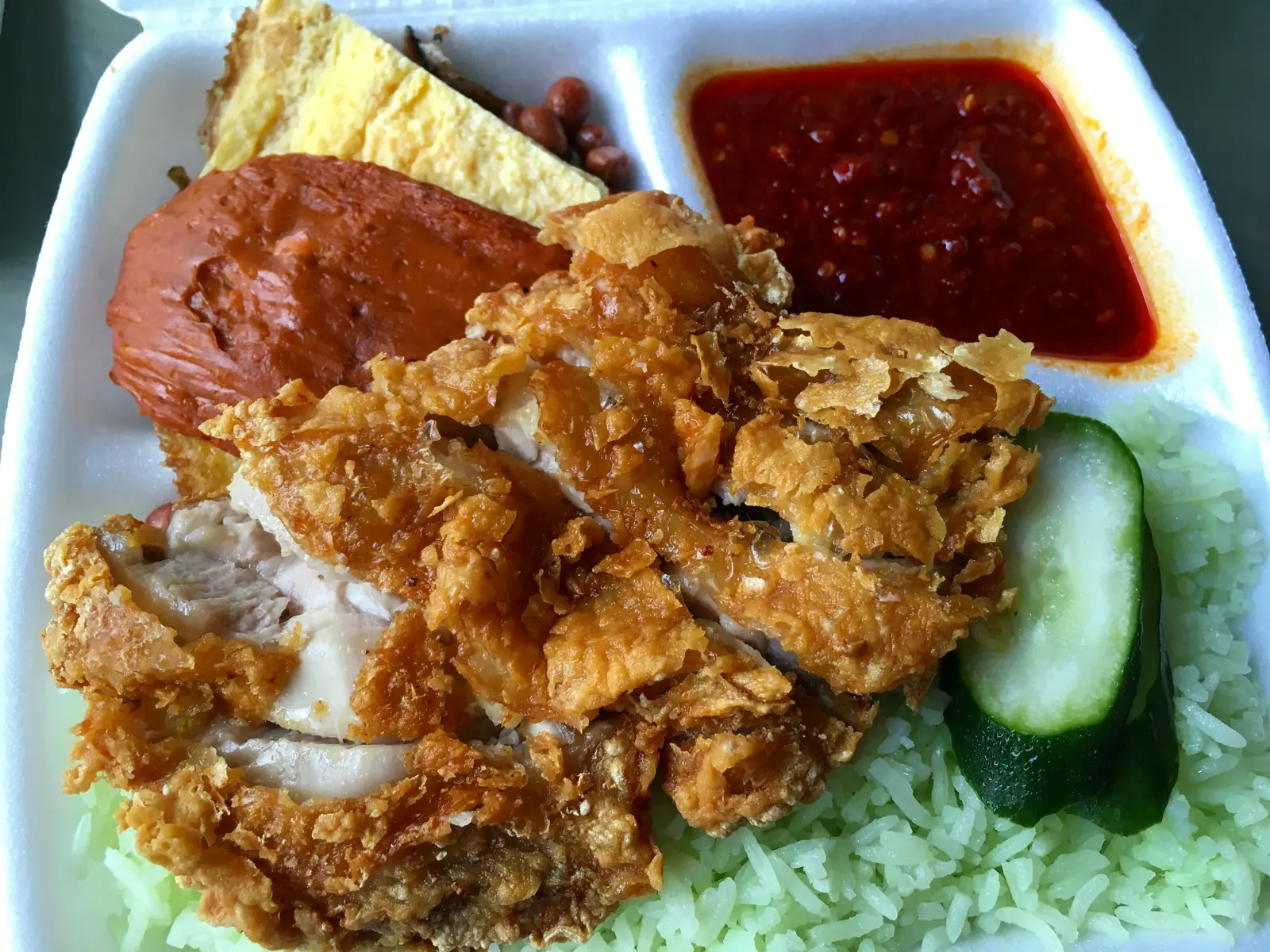
Nasi lemak — coconut rice with crispy fried chicken, red sambal, omelette, peanuts and cucumber in a takeaway box Malaysia flag Malaysia 1h 10m
Breakfast •Malaysian Heritage

Nasi Lemak

This nasi lemak recipe brings Malaysia's national breakfast to your own table: rice steamed in coconut milk with pandan, a dark, sweet-hot sambal, golden turmeric fried chicken, and the classic little pile of crispy anchovies, roasted peanuts, boiled egg and cool cucumber. One serving is about 465 g.

Hearty & Satisfying

A full Malaysian breakfast plate — fragrant coconut rice with sambal, crispy chicken, egg, anchovies, peanuts and cucumber.

Pairs Well With
A spoonful of hot sambal and cool cucumber slices, with teh tarik or iced lime tea.
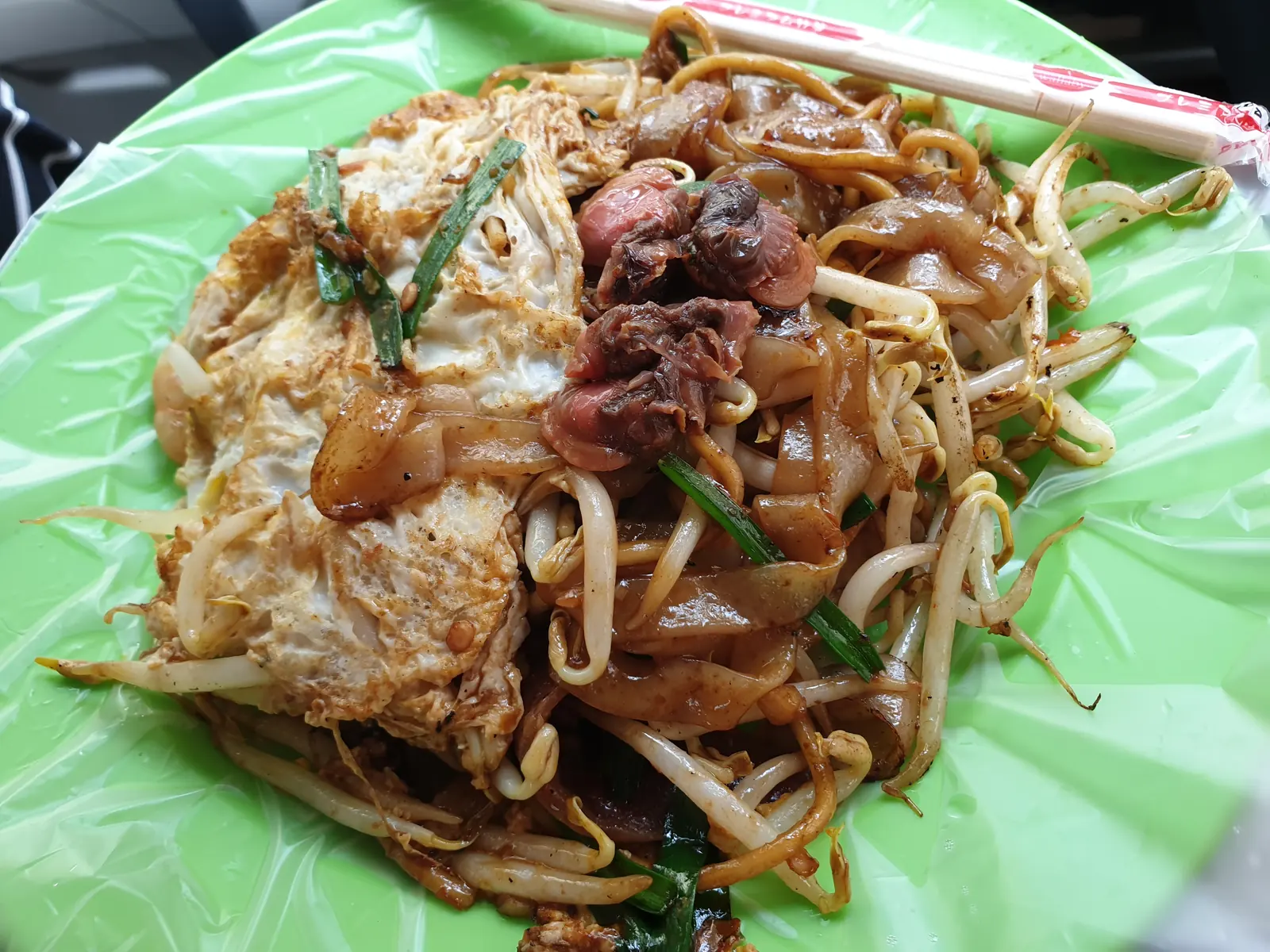
Char kway teow on a green plate — glossy flat rice noodles with fried egg, cockles, bean sprouts and garlic chives Malaysia flag Malaysia 25m
Dinner •Penang Street-Food Icon

Char Kway Teow

This char kway teow recipe tosses wide flat rice noodles in a blazing-hot wok with garlic, soy sauce, chilli paste, prawns, cockles, Chinese sausage, egg, bean sprouts and garlic chives, so the noodles pick up the smoky char called wok hei. Cook one plate at a time, exactly like a hawker stall, and eat it straight from the wok. One serving is about 475 g.

Smoky & Satisfying

Flat rice noodles seared over fierce heat with prawns, cockles, egg and bean sprouts — a fast, smoky Malaysian hawker dinner.

Pairs Well With
Pickled green chillies, cucumber slices, and iced lime tea or teh o ais
Pasta & Noodles • Quick Prep (<30m)
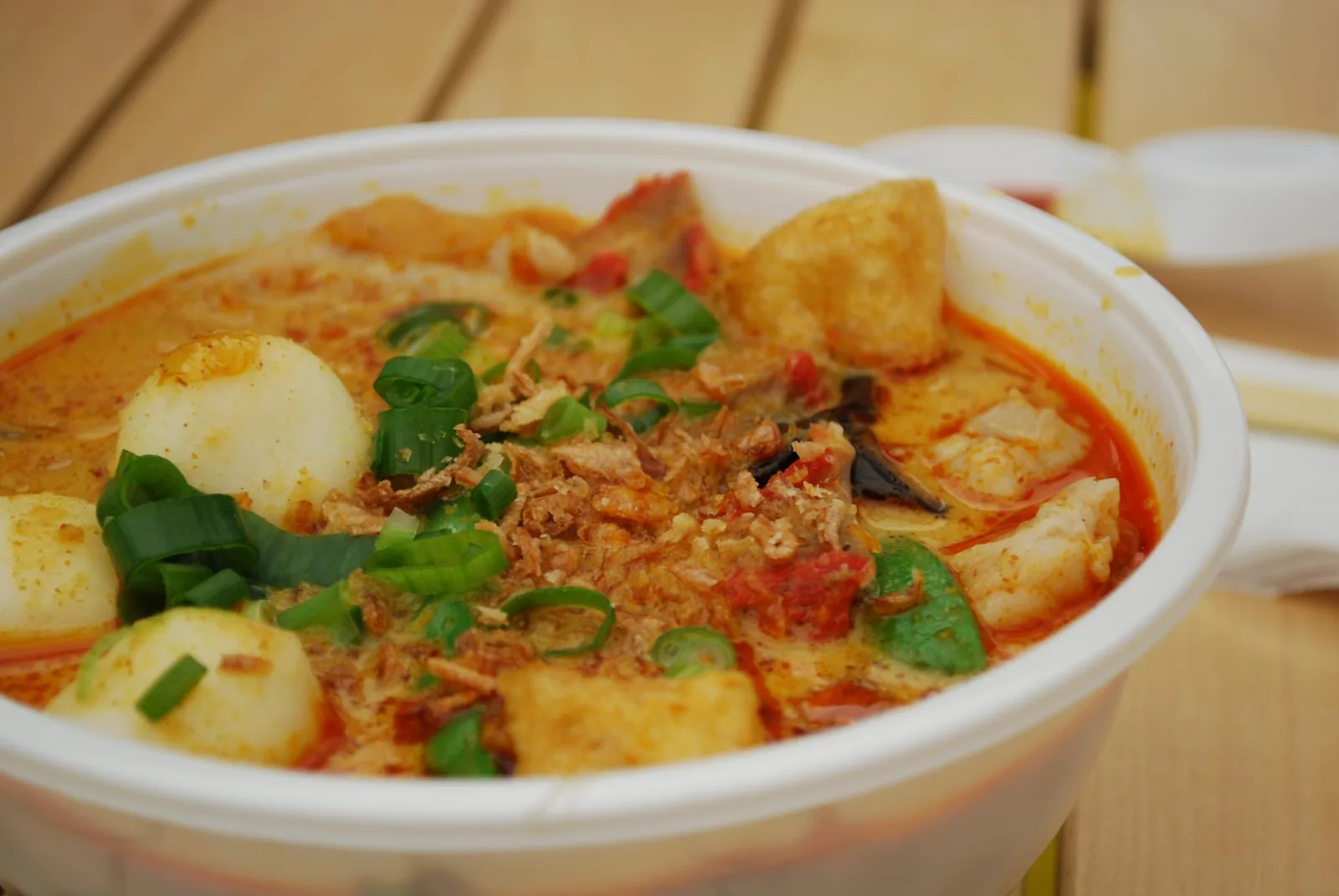
A white bowl of curry laksa in orange coconut curry broth with tofu puffs, fish balls, spring onions and fried shallots Malaysia flag Malaysia 50m
Lunch •Malaysian Hawker Classic

Curry Laksa

This curry laksa recipe simmers a spiced rempah paste with coconut milk and chicken stock into a rich orange broth, then pours it over rice vermicelli and egg noodles with shredded chicken, tofu puffs and crisp bean sprouts. One serving is about 703 g.

Comfort & Warmth

A rich, spiced coconut curry noodle soup with chicken, tofu puffs and bean sprouts.

Pairs Well With
Cool cucumber salad and a glass of iced lime tea
Soups & Broths • Pasta & Noodles
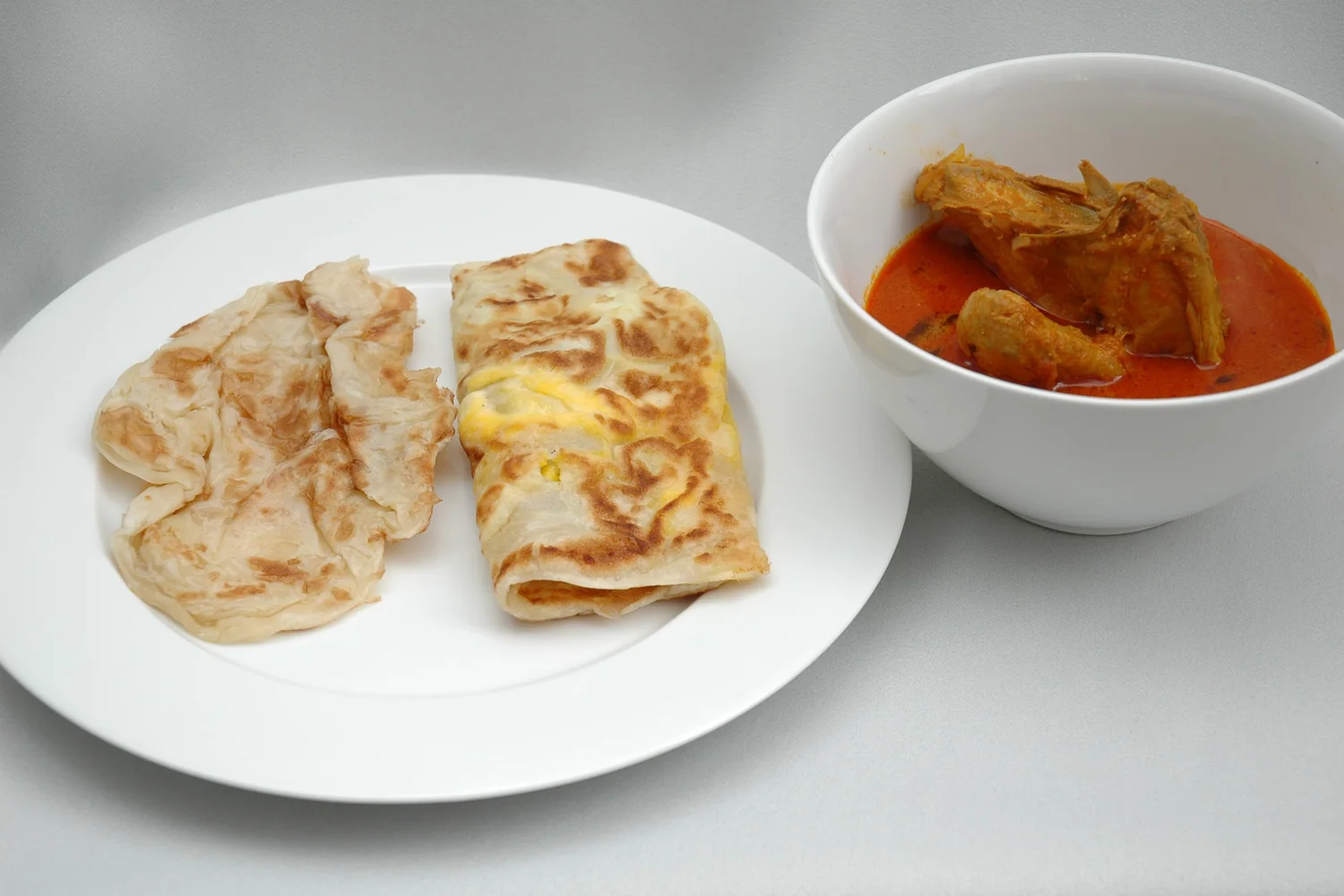
Roti prata and egg roti on a white plate with a bowl of chicken curry Malaysia flag Malaysia 1h 30m
Breakfast •Mamak Stall Heritage

Roti Canai

This roti canai recipe makes the flaky mamak flatbread the slow way: a soft dough rested until it stretches paper-thin, laminated with ghee, folded into squares and fried until the outside crisps and the inside stays soft and layered. It is served torn into pieces for dipping into a warm dhal curry with coconut milk, the way every mamak stall in Malaysia serves it for breakfast. One serving is about 374 g.

Comfort & Warmth

Flaky, laminated flatbread stretched paper-thin, folded and fried in ghee until crisp at the edges, torn and dipped into warm dhal curry.

Pairs Well With
Dhal curry & teh tarik

The Dinner Gazette

Never wonder what’s for dinner again

One email a week with easy dinner ideas from around the world — ingredients, steps and nutrition, tested in our kitchen first.

Delivered every Thursday morning. Unsubscribe anytime.