
Curated recipes from 193 countries  •  New seasonal Mediterranean issue out now

Overview

Pastel de Nata

Pastéis de Belém, Portuguese Custard Tarts

Pastel de nata recipe: shatteringly crisp puff pastry shells filled with warm, vanilla-cinnamon egg custard, baked until blistered on top. One serving is about 187 g (2 tarts).

Pastel de nata was created before the 18th century by Catholic monks at the Jerónimos Monastery in Belém, Lisbon, who used leftover egg yolks from starching clothes and clarifying wine to make custard tarts. When the monastery closed in 1834, the recipe was sold to the nearby Fábrica de Pastéis de Belém, which opened in 1837 and still bakes the tarts today under the name pastéis de Belém, keeping the original recipe secret. The tarts spread across Portugal and then the world, becoming the country's most famous pastry.

Pairs well with: A small strong coffee (bica) and a dusting of cinnamon

Provenance

Portugal flag Portugal

Belém Monastery Tart

Mediterranean & Italy

Time Dedication

50m

30m prep • 20m cook

Batch Yield

6 Servings

539 kcal per serving

1 serving ≈ 187 g

Technical Skill

Advanced

Advanced (Hot Oven)

Meal Timing & Digestive Fit

Breakfast

Not Advised

Lunch

Inappropriate

Dinner

Inappropriate

Snack & Tea

Ideal Light Bite

Occasions: Afternoon coffee, café snacks, celebrations, Lisbon-themed gatherings Cost: Low — about $1–2 per serving at home
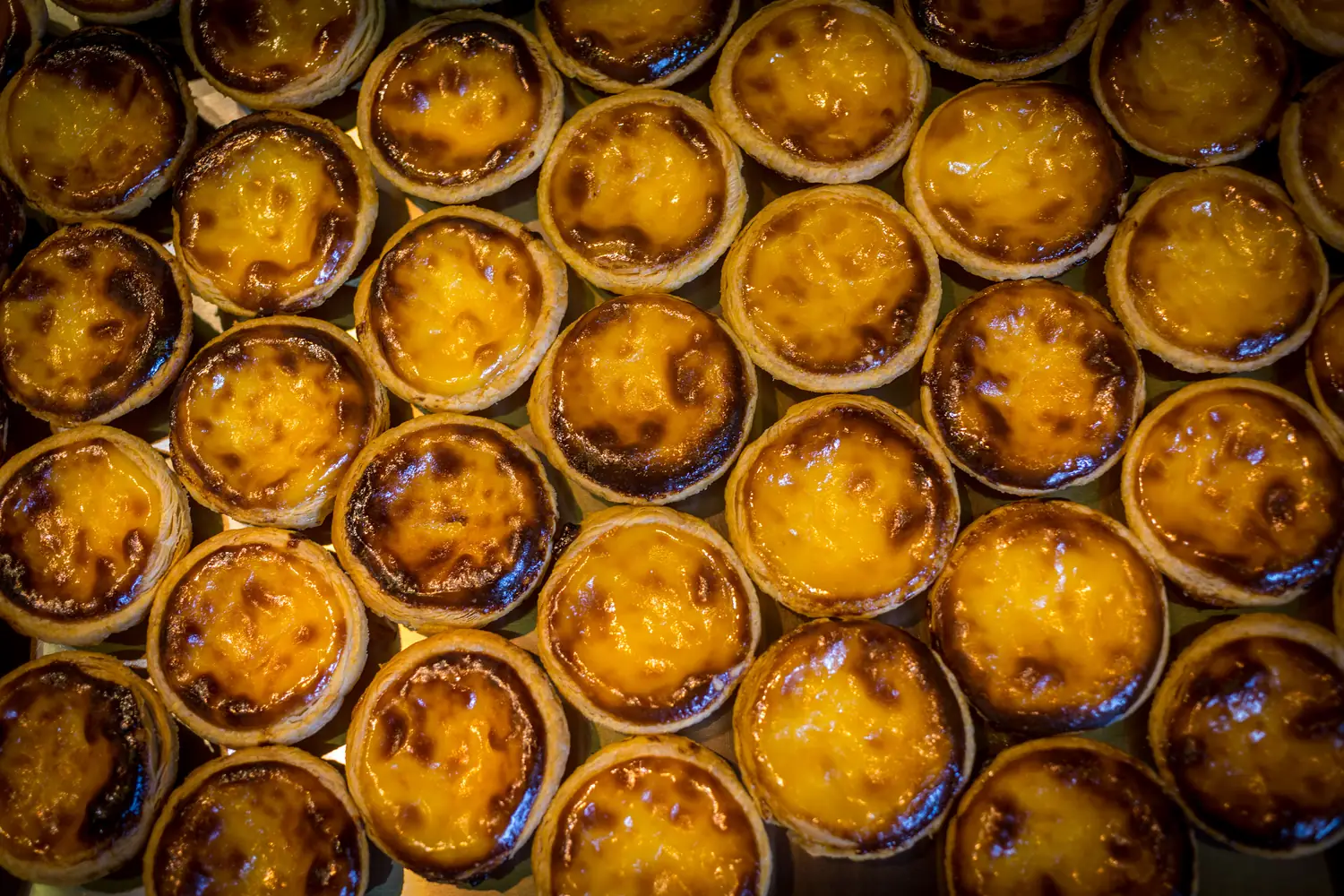
A tray of pastel de nata — golden custard tarts with blistered, caramelised tops in flaky pastry

Belém Monastery Tart

Photo: Claude TRUONG-NGOC, CC BY-SA 3.0, via Wikimedia Commons

The Heritage Formulary

Measured Ingredients

Estimated cost: Low — about $1–2 per serving at home (USD)

A true pastel de nata has a shatteringly crisp, flaky shell and a custard top blistered dark brown in a very hot oven.

Execution Methodology & Culinary Technique

Step-by-Step Cooking Guide

Active 50m
P

Prep Stage: Custard Base & Pastry Cups

30 Mins • Stove & Rolling Pin

Dissolve the cornstarch in 60 ml of cold milk. Heat the remaining milk with the sugar, lemon peel and cinnamon stick until the sugar dissolves and the milk is just steaming. Meanwhile, unroll the puff pastry, cut it into squares, and press each square into a greased muffin tin, pushing the pastry thin at the bottom and a little higher than the rim.

Maestro Tip: Keep the pastry cold while you work — warm pastry shrinks in the oven and loses its layers.

  1. 1

    Make the Custard

    10 Mins Milk heated to ~85°C (185°F), then cooled to ~70°C (158°F)

    Heat 440 ml of milk with the sugar, lemon peel and cinnamon stick over medium heat, stirring, until the sugar dissolves and the milk reaches about 85°C (185°F) — steaming but not boiling. Take off the heat, remove the peel and cinnamon, and stir in the cornstarch-milk mixture. Let it cool for 2 minutes, then whisk a ladleful into the egg yolks, pour the yolks back into the pan, and stir over low heat for 1–2 minutes until the custard thickly coats a spoon. Stir in the vanilla.

    Temper the yolks with hot milk first — pouring hot milk straight onto yolks scrambles them. The custard should coat a spoon, not set like a pudding.

    Done when: Custard is thick, glossy, and coats the back of a spoon; it holds a line when you draw a finger through it.

  2. 2

    Line the Tins

    10 Mins Room temperature, ~20°C (68°F)

    Heat the oven to 250°C (482°F) with a rack in the lowest position. Cut each pastry sheet into 6 squares. Press each square into a greased muffin cup, easing the pastry into the corners and pressing it thin at the base, with the edges standing a little above the rim. Chill the lined tin for 10 minutes while the oven heats.

    Thin at the bottom, generous at the rim — a thick base stays soggy, while a thin one crisps under the custard.

    Done when: Pastry sits neatly in every cup, thin at the base, edges just above the rim.

  3. 3

    Fill and Bake

    15 Mins Oven at 250°C (482°F)

    Strain the custard into a jug and fill each pastry cup about three-quarters full. Bake on the lowest rack for 12–15 minutes until the pastry is deep golden and the custard tops are blistered with dark brown spots — those blisters are the hallmark of a real pastel de nata. The custard will puff up dramatically and then settle as it cools.

    Do not open the oven door for the first 10 minutes, and do not be afraid of the dark spots — pale, unblistered tops mean the oven was not hot enough.

    Done when: Pastry is crisp and golden; custard tops are speckled with dark brown blisters and the custard is just set, still trembling slightly.

  4. 4

    Cool, Dust and Serve

    5 Mins Cooling to ~40°C (104°F)

    Rest the tarts in the tin for 5 minutes, then lift them out onto a wire rack. Serve warm, dusted with ground cinnamon and a little icing sugar if you like, with a small strong coffee.

    Eat them warm — the contrast of shattering pastry and warm, wobbly custard is the whole point, and it fades as they cool.

    Done when: Tarts hold their shape out of the tin, pastry is crisp, and the custard is warm and just set.

Finishing Touches & Plating

Serve warm from the oven, dusted with cinnamon and icing sugar, with a bica (small strong coffee). In Lisbon they are eaten standing at the counter, still warm from the tray.

Nutritional Physiology & Benefits

Nutrition

Energy

539

kcal / serving

Protein

9g

Complete AA

Carbs

68g

Complex

Fats

25g

Healthy

Per serving (6 servings · 1 serving ≈ 187 g)
Energy539 kcal
Protein9 g
Carbohydrates68 g
Fat25 g
Fibre0.8 g
Sugar38.3 g
Sodium280 mg
Per 100g
Energy289 kcal
Protein4.7 g
Carbohydrates36.6 g
Fat13.2 g
Fibre0.4 g
Sugar20.5 g
Sodium150 mg

Nutrition values are estimated — calculated from USDA FoodData Central values for the listed ingredients.

Vitamins & minerals: Vitamin A and choline (egg yolk), calcium and vitamin B12 (milk), vitamin B2 (pastry and milk).

Comfort in Small Portions

One tart is a modest, satisfying treat — portion control is built in, so a single tart with coffee is a lighter way to enjoy something sweet.

Quick Energy

Milk, sugar and egg give fast, available energy, which is why the tarts are traditionally eaten as a mid-morning or afternoon pick-me-up with coffee.

Calcium and Protein

Each serving supplies calcium from the milk and about 8.8 g of protein from egg yolk and milk — more than most pastries offer.

Food Pairings

What to Eat With

To optimize nutrient absorption and elevate the sensory depth, pair with these authentic accompaniments:

Drinks

Bica (Espresso)

The bitter, intense coffee balances the sweet custard perfectly — this is the classic Lisbon pairing, and the reason the tarts are sold in every café.

More Pairings

Cinnamon and Icing Sugar

A dusting of cinnamon adds warm spice that complements the vanilla custard, while icing sugar adds a delicate sweet finish without extra bulk.

Full Menus

Afternoon Tea Menu

Serve two warm tarts with coffee and a few fresh berries — the berries' acidity cuts the richness of the custard and makes a complete afternoon break.

Sides

Fresh Berries

Raspberries or strawberries add tartness and freshness that balance the sweet, buttery pastry.

Complete menu

Serve two warm pastéis de nata with a bica (small espresso) and fresh berries for an afternoon break, or as the sweet finish to a Portuguese dinner.

Digestive Guardrails

What NOT to Combine

To prevent digestive distress, sluggishness, or palate clash, avoid pairing the dish with these elements:

Eating Many at Once on an Empty Stomach

The tarts are rich in sugar and fat, so several at once can feel heavy and spike blood sugar; one or two with coffee is the traditional way. This is general information, not medical advice.

Storing in a Sealed Box While Warm

Warm tarts in a closed container steam themselves soft and lose their crisp shell — cool them on a rack first. This is general information, not medical advice.

General information only, not medical advice — consult a doctor for personal dietary decisions.

Who Should Eat It

Who Should Eat

  • General adultsA classic treat — enjoy one or two warm with coffee as an afternoon snack.
  • ChildrenSuitable as an occasional treat from age 3+; one tart is plenty, and watch the hot custard.
  • ElderlySoft and easy to eat; enjoy warm, but keep to one tart if watching sugar.
  • Pregnant womenGenerally suitable — the custard is fully cooked; keep to one or two due to sugar.
  • Breastfeeding womenGenerally suitable as an occasional treat; the milk and egg add a little protein and calcium.
  • AthletesA useful quick-energy snack after training, with carbs and a little protein — pair with fruit.
  • Weight gainA good choice — two tarts with coffee add about 539 kcal in a small, enjoyable portion.
  • Weight lossEnjoy one tart, slowly, with black coffee — and skip the icing sugar.

Health Conditions — Adjust or Avoid

Conditions

  • DiabetesHigh in sugar (about 38 g per 2-tart serving); have one tart only, with unsweetened coffee, and check with your clinician.
  • High blood pressureSodium is moderate (about 280 mg per serving); one tart is fine, but avoid adding salty snacks alongside. Ask your clinician about portion size.
  • Kidney diseaseContains egg and milk (phosphorus and potassium); keep to an occasional single tart and ask your clinician first.
  • GoutEgg and milk are low in purines, so an occasional tart is usually fine; the sugar is the bigger concern. Ask your clinician about frequency.
  • Stomach issuesRich and buttery, so it may feel heavy on a sensitive stomach — eat one tart slowly, warm, and avoid eating on an empty stomach.
  • Cardiovascular diseaseHigh in saturated fat from butter pastry; an occasional single tart is the sensible limit. Ask your clinician about portion size.
  • Fatty liverHigh in sugar and saturated fat; keep to an occasional single tart and avoid making it a daily habit. Ask your clinician about portion size.
  • Food allergiesContains gluten (wheat pastry), egg and milk. Not suitable for coeliac disease unless made with certified gluten-free pastry.
  • Special therapeutic dietsIf you follow a prescribed low-sugar or low-fat diet, this is a treat to have rarely and in a single-tart portion; check with your clinician.

If you have a medical condition, consult your doctor before changing your diet.

Storage & Use

Storage & Use

How to store
Cool completely on a wire rack, then store in a single layer in a loosely covered container.
In the fridge
2 days in the fridge; the pastry softens.
In the freezer
1 month, well wrapped; thaw at room temperature.
How to reheat
Warm in a 180°C (350°F) oven for 5 minutes until crisp again and the custard is hot, 74°C (165°F) in the centre.
Freezing recommended
Yes — freeze baked tarts up to 1 month and re-crisp in the oven.
Signs it has spoiled
Sour smell, mould on the custard, or a slimy pastry base.

More recipes to explore

A plate of bacalhau à brás — shredded salt cod with egg and matchstick potatoes, black olives and parsley Portugal flag Portugal 50m
Dinner •Lisbon Tavern Classic

Bacalhau à Brás

Bacalhau à brás recipe: desalted shredded cod, golden matchstick potatoes and softly scrambled egg, finished with black olives and parsley. One serving is about 350 g.

Comfort & Protein

Shredded salt cod folded with egg and crisp matchstick potatoes — a filling, protein-rich Lisbon supper.

Pairs Well With
A simple green salad and a glass of vinho verde
High Protein
A terracotta bowl of caldo verde — pale potato soup with shredded green kale and a spoon Portugal flag Portugal 50m
Dinner •Minho National Soup

Caldo Verde

Caldo verde recipe: creamy potato soup blended smooth, with ribbons of kale and slices of chouriço, finished with a thread of olive oil. One serving is about 590 g.

Comfort & Warmth

Silky potato soup with finely shredded kale and smoky chouriço — Portugal's best-loved bowl.

Pairs Well With
Crusty broa bread and a glass of vinho verde
Soups & Broths
Pan con tomate with jamón ibérico on toasted bread Spain flag Spain 15m
Snack & Tea •Catalan Aperitivo

Pan con Tomate & Jamón Ibérico

Country bread rubbed with ripe Ramallet tomato, drizzled with cold-pressed Arbequina olive oil and topped with jamón ibérico.

Vascular Health

Toasted tomato bread with jamón ibérico, olive oil and olives.

Pairs Well With
Castelvetrano Olives & Sparkling Mineral Water
Quick Prep (<30m)
Gỏi cuốn — Vietnamese fresh spring rolls with prawn and pork Vietnam flag Vietnam 1h 5m
Snack & Tea •Saigon Refresh

Gỏi Cuốn Tôm Thịt

Fresh rice paper rolls filled with poached prawns, tender pork, rice vermicelli, lettuce, herbs and carrot, served with a peanut dipping sauce.

Light Digestion

Nothing is fried, so the rolls stay light and fresh — a cool, herb-filled snack for hot days.

Pairs Well With
Artisanal Peanut Dip & Fresh Lotus Root Water
High Protein

The Dinner Gazette

Never wonder what’s for dinner again

One email a week with easy dinner ideas from around the world — ingredients, steps and nutrition, tested in our kitchen first.

Delivered every Thursday morning. Unsubscribe anytime.