
Curated recipes from 193 countries  •  New seasonal Mediterranean issue out now

Overview

Pichelsteiner Eintopf

Pichelsteiner Fleisch, Buechelsteiner Eintopf, Bavarian one-pot stew

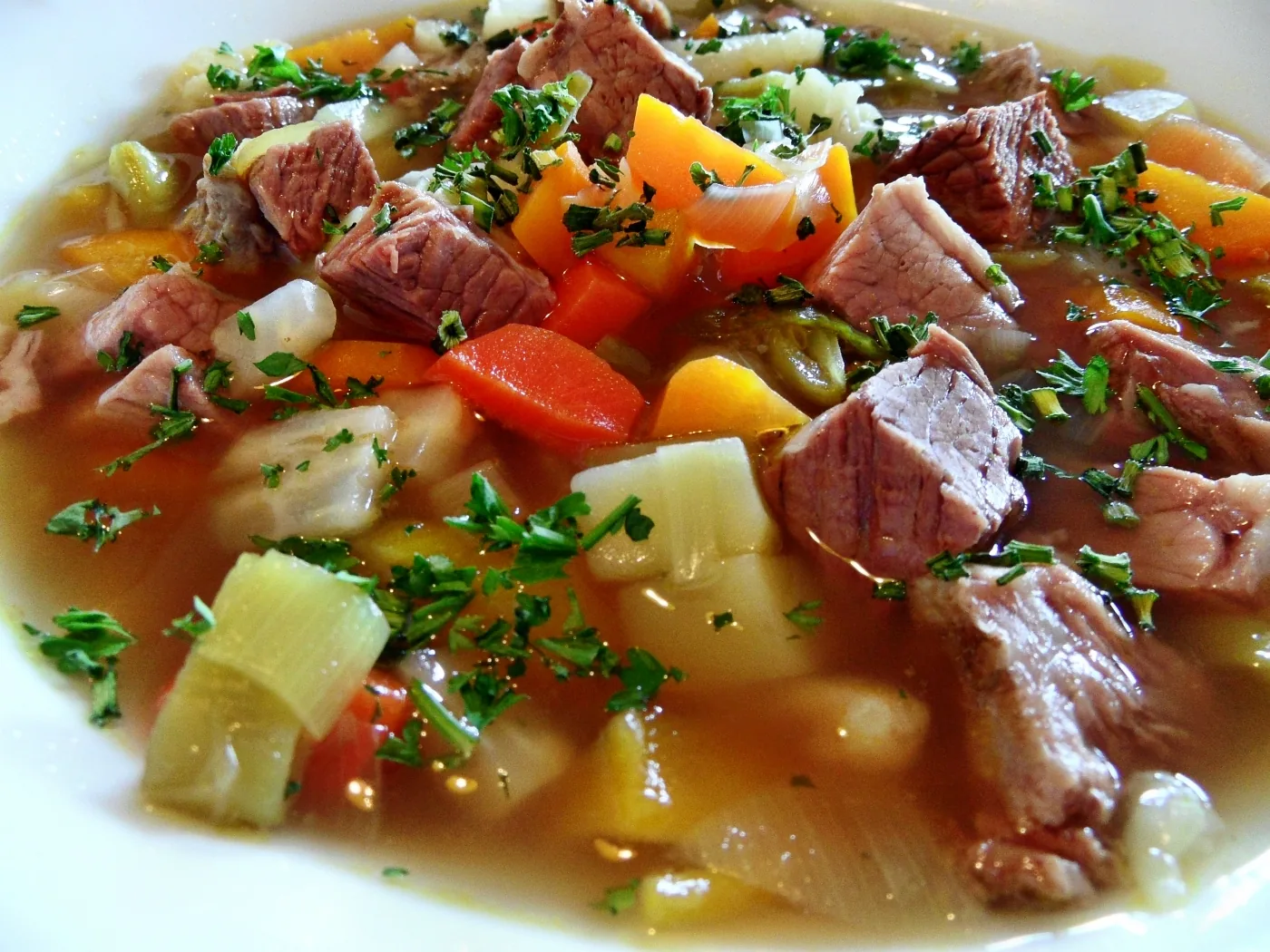
This pichelsteiner eintopf recipe layers seared beef and pork with potatoes, carrots, celeriac, cabbage and leeks, then simmers everything together in beef broth until the meat is tender and the vegetables have soaked up the flavour. One serving is about 517 g, served in a deep bowl with rye bread.

Pichelsteiner is traced to Auguste Winkler, an innkeeper from Kirchberg im Wald who ran an inn in Grattersdorf in the Bavarian Forest. The name is thought to come from the nearby Büchelstein mountain, where the Büchelsteiner Fest has been celebrated since 1839, and the town of Regen has gathered every year since 1874 on Kirchweih Monday to eat Pichelsteiner together. The dish was first mentioned in a cookbook in 1894, and its simple one-pot method, layering seared meat with root vegetables in broth, is why it is still a staple of Bavarian inns and canteen kitchens today.

Pairs well with: Dark rye bread and a cold German lager or sparkling water.

Provenance

Germany flag Germany

Bavarian Forest Heritage

Nordic & European

Time Dedication

2h 10m

30m prep • 100m cook

Batch Yield

6 Servings

481 kcal per serving

1 serving ≈ 517 g

Technical Skill

Intermediate

Intermediate (One Pot)

Meal Timing & Digestive Fit

Breakfast

Not Advised

Lunch

Hearty Midday Main

Dinner

Ideal Hearty Main

Snack & Tea

Inappropriate

High Protein Occasions: Cold-weather comfort food, Family dinner, Bavarian-themed dinner, Sunday dinner Cost: Low — about $3-4 per serving at home
A bowl of Pichelsteiner Eintopf: chunks of beef and pork, carrots, leeks and potatoes in a clear golden broth, sprinkled with chopped parsley.

Bavarian Forest Heritage

Photo: Josef Türk Jun., CC BY-SA 2.0, via Wikimedia Commons

The Heritage Formulary

Measured Ingredients

Estimated cost: Low — about $3-4 per serving at home (USD)

A Bavarian Forest one-pot stew: seared beef and pork layered with potatoes, carrots, celeriac, cabbage and leeks, simmered in beef broth.

Execution Methodology & Culinary Technique

Step-by-Step Cooking Guide

Active 2h 10m
P

Cube the meat, peel and chop the vegetables

30 minutes

Cut the beef and pork into even 3 cm cubes and pat them dry. Peel and chunk the potatoes, carrots and celeriac, strip the cabbage, slice and rinse the leek, dice the onion and slice the garlic. Measure the stock and oil, crush the caraway seeds, and chop the parsley last so it stays fresh.

Maestro Tip: Cutting everything to an even size before the pot gets hot is what keeps the meat tender and the vegetables cooked through at the same time.

  1. 1

    Sear the beef and pork in batches

    12 minutes 200°C (400°F)

    Heat the oil in a large heavy pot or Dutch oven over medium-high heat until it shimmers. Brown the beef and pork cubes in two or three batches, turning them until browned on all sides, then lift them out onto a plate. Work in batches so the meat sears instead of steaming in its own juices.

    Do not crowd the pot: a single crowded layer will boil grey instead of browning, and the browned edges are where the flavour comes from.

    Done when: Meat is deeply browned on the outside and still pink inside; the pot bottom is coated with brown sticky bits.

  2. 2

    Soften the onion, garlic and leek

    5 minutes 160°C (320°F)

    Lower the heat to medium and add the diced onion and sliced leek to the same pot, scraping up the browned bits as they soften. After 3 minutes add the sliced garlic and cook for 2 minutes more until fragrant.

    Scraping the browned bits off the pot bottom now dissolves them into the broth later.

    Done when: Onion and leek are soft and translucent; garlic smells fragrant, not burnt.

  3. 3

    Layer in the root vegetables and cabbage

    3 minutes 160°C (320°F)

    Return the seared meat to the pot with any juices from the plate. Add the potatoes, carrots and celeriac, then lay the cabbage strips on top. Sprinkle over the crushed caraway seeds, the bay leaf, half the salt and the pepper. Do not stir: the layers cook in order, with the cabbage steaming gently on top.

    Keeping the layers undisturbed is the traditional way; stirring breaks the potatoes and clouds the broth.

    Done when: Pot is layered with meat at the bottom, roots in the middle and cabbage on top.

  4. 4

    Add the broth and simmer low and slow

    70 minutes 90°C (194°F)

    Pour in the beef stock until it just covers the vegetables. Bring to a gentle simmer, then reduce the heat to low, cover with the lid slightly ajar, and simmer for about 70 minutes. Check once halfway through and add a splash of hot water only if the liquid drops below the vegetables.

    A bare simmer, with only the odd bubble breaking the surface, keeps the meat tender; a hard boil makes it tough and dry.

    Done when: Meat yields easily to a fork, potatoes are tender all the way through, and the broth tastes rich and savoury.

  5. 5

    Rest, season and serve

    10 minutes 90°C (194°F)

    Take the pot off the heat, lift out the bay leaf, and let the stew rest for 10 minutes with the lid on. Taste and add the remaining salt as needed, then ladle into deep bowls, making sure each serving gets meat, vegetables and plenty of broth.

    Resting lets the potatoes drink up a little broth and the flavours settle before serving.

    Done when: Stew is steaming hot throughout and the meat is tender; pork has cooked well past 63°C (145°F).

Finishing Touches & Plating

Ladle into deep bowls, spooning broth over each portion, and scatter the chopped parsley over the top just before serving so it stays bright green.

Nutritional Physiology & Benefits

Nutrition

Energy

481

kcal / serving

Protein

33g

Complete AA

Carbs

37g

Complex

Fats

22g

Healthy

Per serving (6 servings · 1 serving ≈ 517 g)
Energy481 kcal
Protein33 g
Carbohydrates37 g
Fat22 g
Fibre7.1 g
Sugar7.7 g
Sodium634 mg
Per 100g
Energy93 kcal
Protein6.3 g
Carbohydrates7.2 g
Fat4.3 g
Fibre1.4 g
Sugar1.5 g
Sodium123 mg

Nutrition values are estimated — calculated from USDA FoodData Central values for the listed ingredients.

Vitamins & minerals: Nutrition is estimated. Provides vitamin B12 and iron from the beef and pork, vitamin A from the carrots, vitamin C and potassium from the potatoes and cabbage, and vitamin K from the parsley.

High in protein

About 32.7 g of protein per serving from the beef and pork, which helps keep you full after dinner.

Root vegetables and fibre

Potatoes, carrots, celeriac, cabbage and leeks add about 7.0 g of fibre per serving, plus potassium and vitamin C.

Iron and vitamin B12

Beef and pork are natural sources of iron and vitamin B12, nutrients that support normal red blood cell formation.

Food Pairings

What to Eat With

To optimize nutrient absorption and elevate the sensory depth, pair with these authentic accompaniments:

Sides

Dark rye bread

A thick slice of rye bread soaks up the broth and its sour tang suits the rich meat.

Vegetables

Crisp pickled cucumber

A sharp, cold pickle cuts through the richness of the stew and refreshes the palate between spoonfuls.

Drinks

Cold German lager or sparkling water

A cold, crisp drink cuts through the fat of the meat and refreshes the palate between bites.

Full Menus

A simple green salad

A lightly dressed salad adds fresh crunch and lightness to a meal that is otherwise soft, hot and rich.

Complete menu

Start with a small green salad, serve the stew hot in deep bowls with dark rye bread and a cold lager, and finish with stewed apples to balance the rich main course.

Digestive Guardrails

What NOT to Combine

To prevent digestive distress, sluggishness, or palate clash, avoid pairing the dish with these elements:

Very salty extras

The stew already has about 634 mg of sodium per serving from the stock and salt, so avoid adding salty sauces, extra salt or salty snacks in the same meal. This is general information, not medical advice.

Undercooked meat

Serve the stew only after it is simmering-hot all the way through; pork should reach at least 63°C (145°F) with a 3-minute rest, and this long simmer goes well past that. This is general information, not medical advice.

Heavy creamy sauces

Cream or mayonnaise-based sauces add more fat to an already rich stew and dull the clean broth flavours that make the dish. This is general information, not medical advice.

General information only, not medical advice — consult a doctor for personal dietary decisions.

Who Should Eat It

Who Should Eat

  • General adultsA satisfying dinner as written; the sodium level means it works best as an occasional meal rather than an everyday one.
  • ChildrenSuitable in a smaller portion with the meat cut small; the cabbage and celeriac may be new flavours, so let them try a spoonful of broth and potatoes first.
  • ElderlySoft, easy to chew and rich in protein, but the salt level is high, so a smaller portion with extra vegetables and less added salt is a kinder choice.
  • Pregnant womenFine in moderation if the meat is cooked all the way through, which this long simmer ensures; the high salt content argues for a modest portion. Ask your clinician if unsure.
  • Breastfeeding womenThe protein and iron are helpful, but keep the portion modest because of the salt; drink water with the meal. Ask your clinician if unsure.
  • AthletesA good post-training dinner: about 32.7 g of protein plus potatoes for energy, and the broth helps replace fluids.
  • Weight gainA useful choice: energy-dense, high in protein, and easy to eat a full portion of with bread on the side.
  • Weight lossEat a smaller portion with more vegetables and cabbage and less potato, and skip the bread, to keep the calories down.

Health Conditions — Adjust or Avoid

Conditions

  • DiabetesThe potatoes raise blood sugar, so watch the portion of potato and balance the bowl with extra cabbage and leek; the broth itself is low in carbohydrate. Ask your clinician or dietitian for personal advice.
  • High blood pressureThis dish has about 634 mg of sodium per serving, so it is best eaten occasionally and in a modest portion, with no extra salt and a low-sodium stock. Ask your clinician for personal advice.
  • Kidney diseaseHigh in potassium from the potatoes and vegetables, and high in protein, so it is usually unsuitable without a tailored plan. Ask your clinician or dietitian before eating it.
  • GoutBeef and pork are rich in purines, which can raise uric acid, so people prone to gout should eat this stew rarely and in a small portion. Ask your clinician for personal advice.
  • Stomach issuesCabbage, leek and onion can cause gas and bloating for sensitive stomachs; a small portion with well-cooked vegetables is usually gentler. Ask your clinician for personal advice.
  • Cardiovascular diseaseThe stew is fairly high in saturated fat from the beef and pork, so enjoy it occasionally and in a modest portion, with plenty of vegetables on the plate. Ask your clinician for personal advice.
  • Fatty liverRich in fat and energy, so a small portion with extra vegetables and no bread is the kinder choice, and it should not be an everyday meal. Ask your clinician for personal advice.
  • Food allergiesContains no gluten, egg, dairy, nuts or seafood as written. Celery-family vegetables (celeriac) can trigger allergy in people sensitive to celery, so check before serving. Ask your clinician for personal advice.
  • Special therapeutic dietsNot suitable for vegetarian, vegan or low-protein therapeutic diets because of the beef and pork. Ask your clinician or dietitian before eating it.

If you have a medical condition, consult your doctor before changing your diet.

Storage & Use

Storage & Use

How to store
Cool the stew quickly and store it in a covered container in the fridge; keep the chopped parsley separate.
In the fridge
Keeps 3-4 days in the fridge at or below 4°C (40°F).
In the freezer
Freezes for up to 3 months in a sealed container.
How to reheat
Reheat in a pot over medium heat, or in the microwave, until steaming hot throughout at 74°C (165°F); add a splash of stock or water if it has thickened.
Freezing recommended
Yes, the stew freezes well; the potatoes soften slightly after thawing but the flavour holds up.
Signs it has spoiled
Sour or off smell, slimy texture, mould, or a grey colour in the meat mean the stew should be thrown away.

More recipes to explore

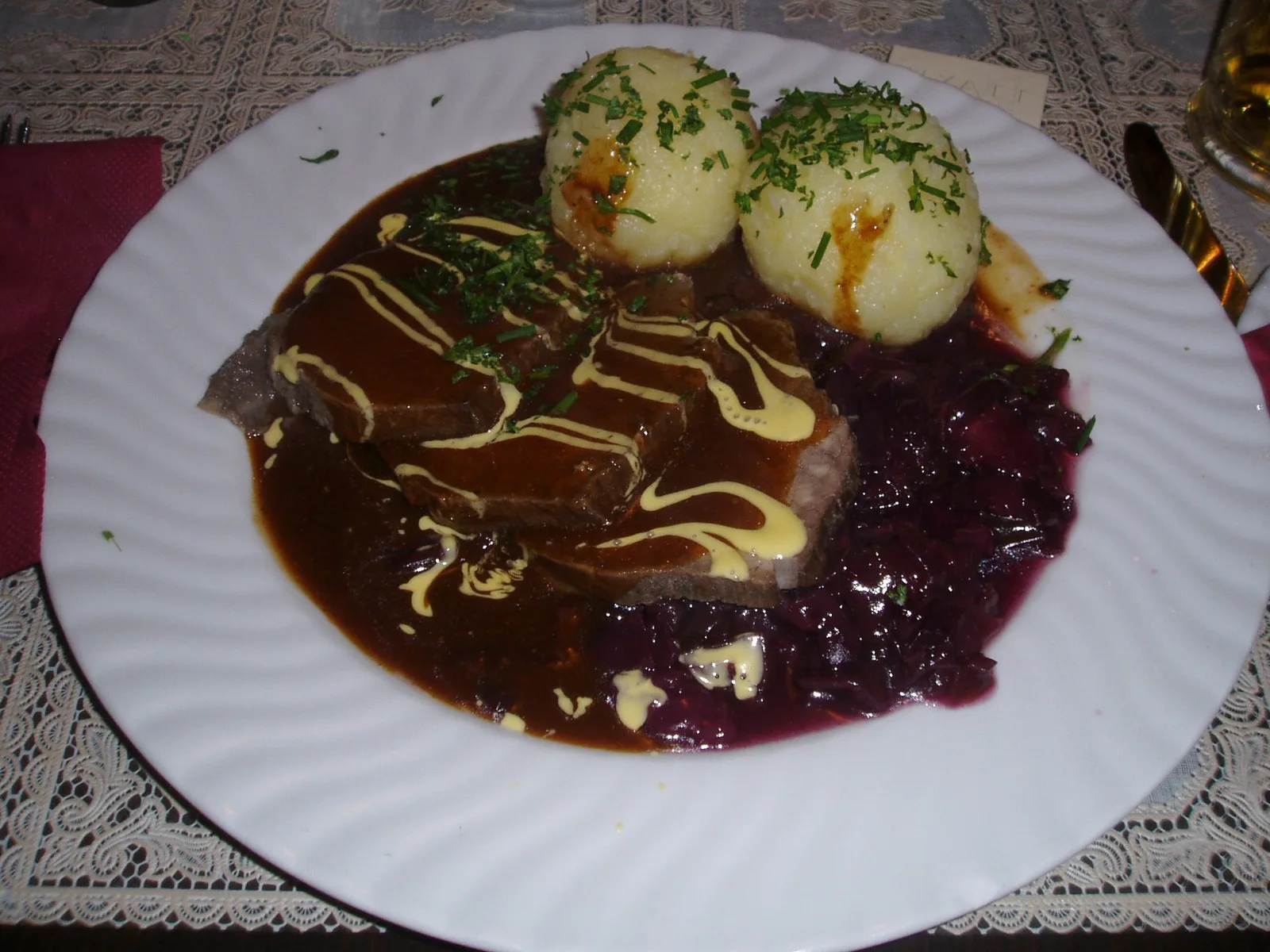
Sliced sauerbraten in dark sweet-sour gravy with potato dumplings and braised red cabbage on a white plate Germany flag Germany 3h 30m
Dinner •Rhineland Heritage

Sauerbraten

This sauerbraten recipe starts with a beef chuck roast steeped for three days in red wine vinegar, red wine and warm spices, then braised slowly until it slices like butter. The marinade becomes a dark, sweet-sour gravy thickened with crushed gingersnaps and studded with raisins, the Rhineland way. One serving is about 300 g, with gravy.

Comfort & Warmth

A slow-braised German pot roast in a sweet-sour vinegar gravy, sliced thick and served hot with potato dumplings and red cabbage.

Pairs Well With
Potato dumplings, braised red cabbage & a glass of Spätburgunder
High Protein
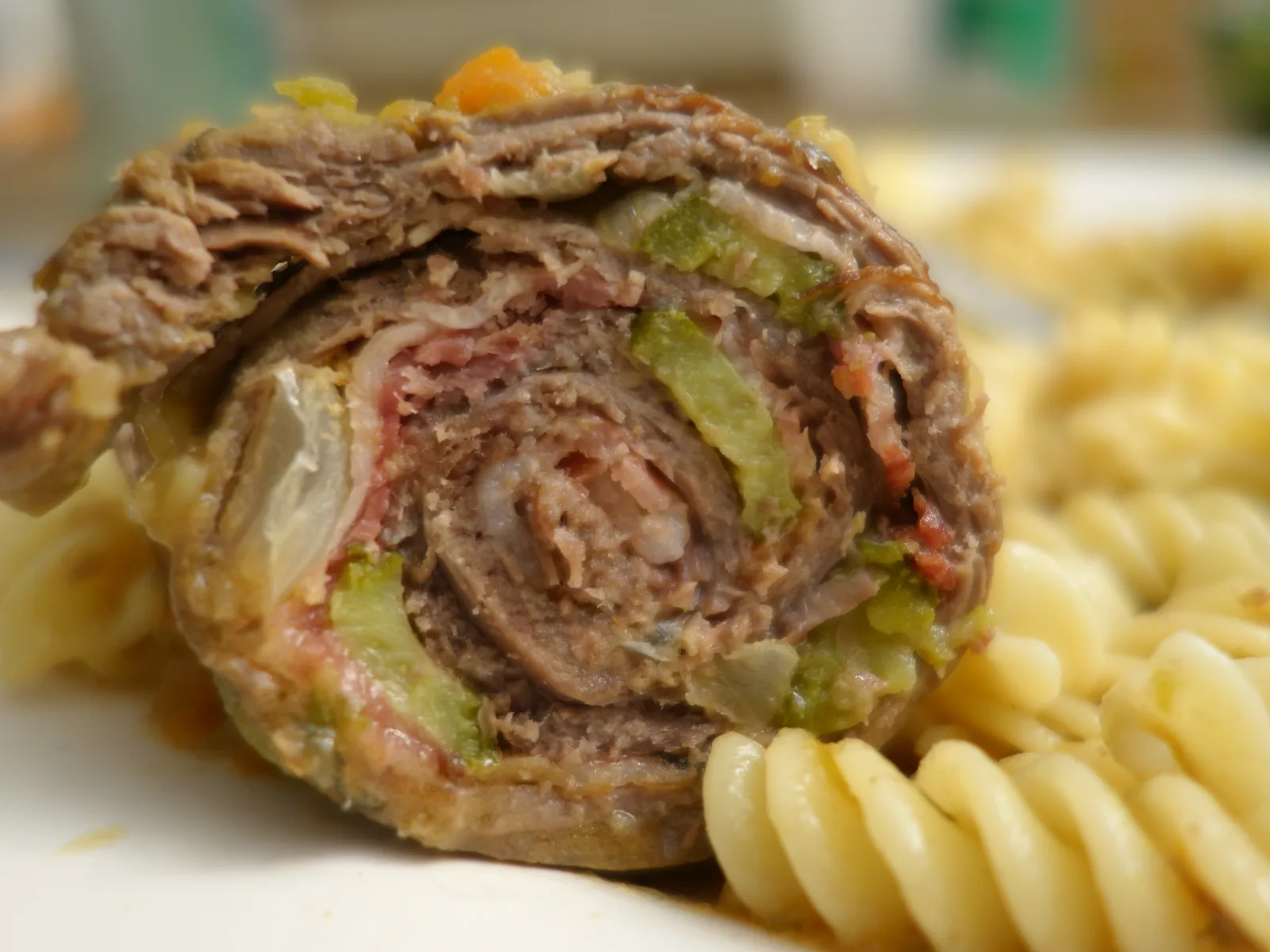
A sliced German beef roulade showing the spiral of beef, bacon and dill pickle, served with pasta Germany flag Germany 2h 10m
Dinner •German Sunday Heritage

Rouladen

This rouladen recipe spreads thin slices of top round with mustard, then rolls them around smoky bacon, dill pickles and onion into neat parcels. The rolls are browned, then braised slowly in red wine and beef stock until tender, and the braising liquid becomes a rich gravy. One serving is about 375 g — two rolls with gravy.

Comfort & Warmth

Thin beef rolls stuffed with bacon, dill pickle and onion, braised in red wine gravy and served hot with dumplings.

Pairs Well With
Potato dumplings, braised red cabbage & a German lager
High Protein
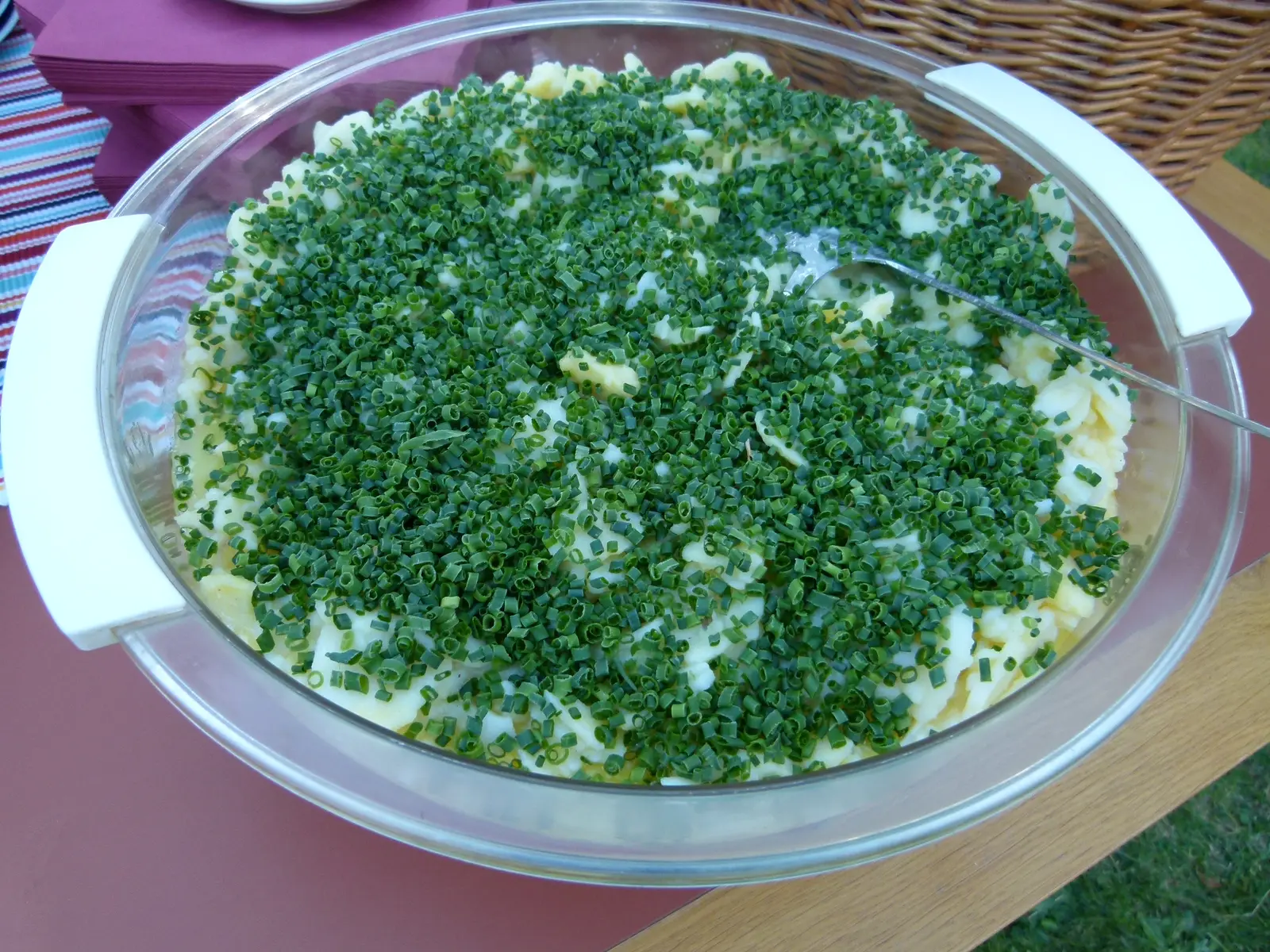
A glass bowl of warm Swabian potato salad topped with chopped chives Germany flag Germany 45m
Lunch •Swabian Heritage

German Potato Salad

This german potato salad recipe is the warm Swabian kind: waxy potatoes sliced while still hot, tossed with crisp bacon, soft onion and sliced egg, then dressed with hot beef stock, vinegar and mustard so every slice drinks up the tangy dressing. No mayonnaise anywhere — the potatoes stay light, glossy and warm. One serving is about 292 g.

Comfort & Warmth

Warm waxy potatoes in a bacon, mustard and vinegar dressing, served straight from the bowl while still steaming.

Pairs Well With
Grilled sausages, schnitzel & a cold German lager
Quick Prep (<30m)
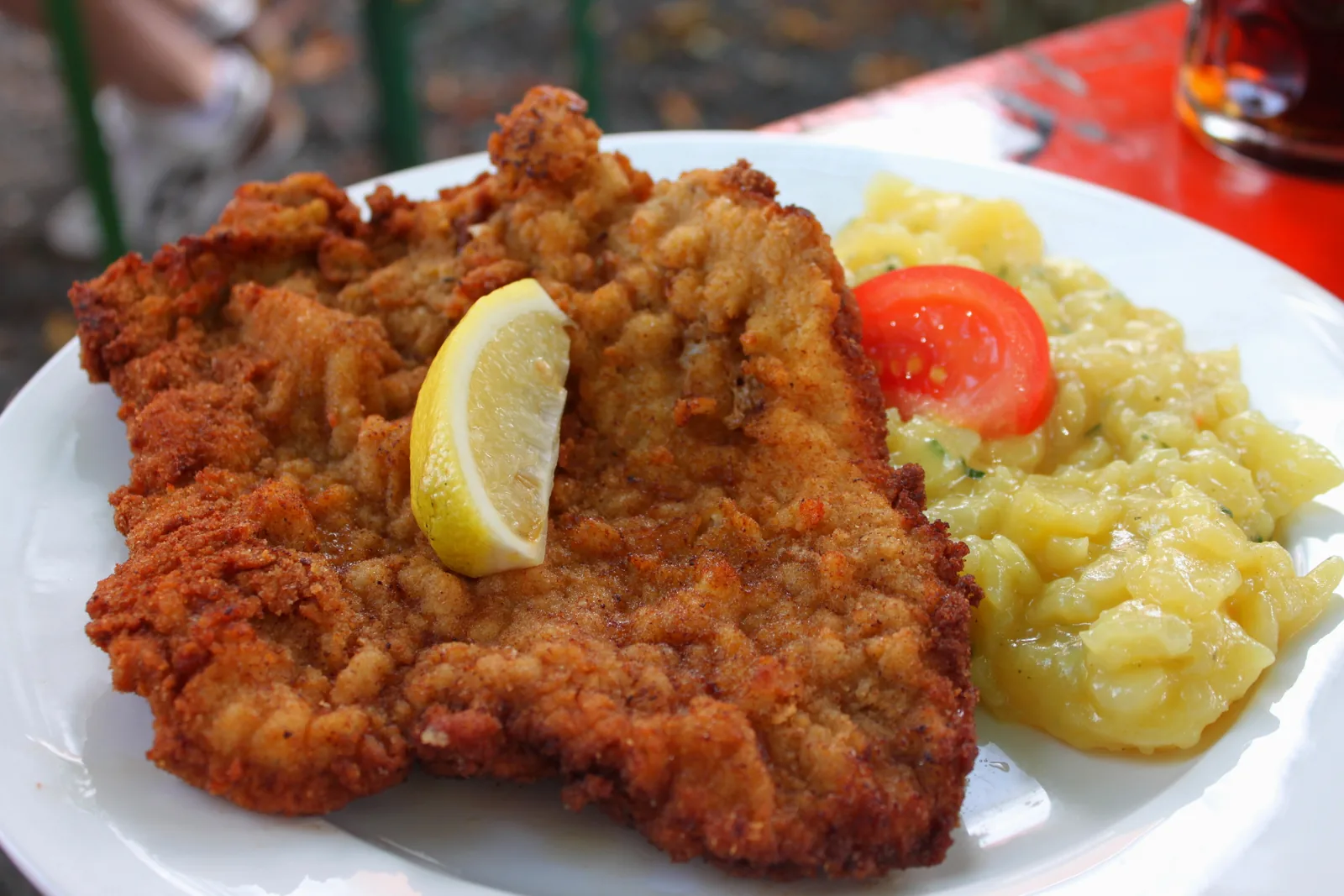
Golden breaded pork schnitzel with a lemon wedge and potato salad on a white plate Germany flag Germany 40m
Dinner •German Heritage

German Pork Schnitzel

German pork schnitzel is the everyday hero of German cooking: a pork cutlet pounded thin, coated in flour, egg and breadcrumbs, and fried in butter until it turns deep golden and crisp. This german schnitzel recipe follows the German way — real pork, a loose crumb, and a wedge of lemon on the side, with potato salad to mop up. One serving is about 200 g.

Classic Comfort

A golden, crisp pork cutlet with lemon and potato salad — a satisfying, protein-rich German dinner.

Pairs Well With
Warm potato salad, cucumber salad and a cold lager.
High Protein

The Dinner Gazette

Never wonder what’s for dinner again

One email a week with easy dinner ideas from around the world — ingredients, steps and nutrition, tested in our kitchen first.

Delivered every Thursday morning. Unsubscribe anytime.