
Curated recipes from 193 countries  •  New seasonal Mediterranean issue out now

Overview

Pimientos de Padron

Pimientos de Padrón, Padron Peppers

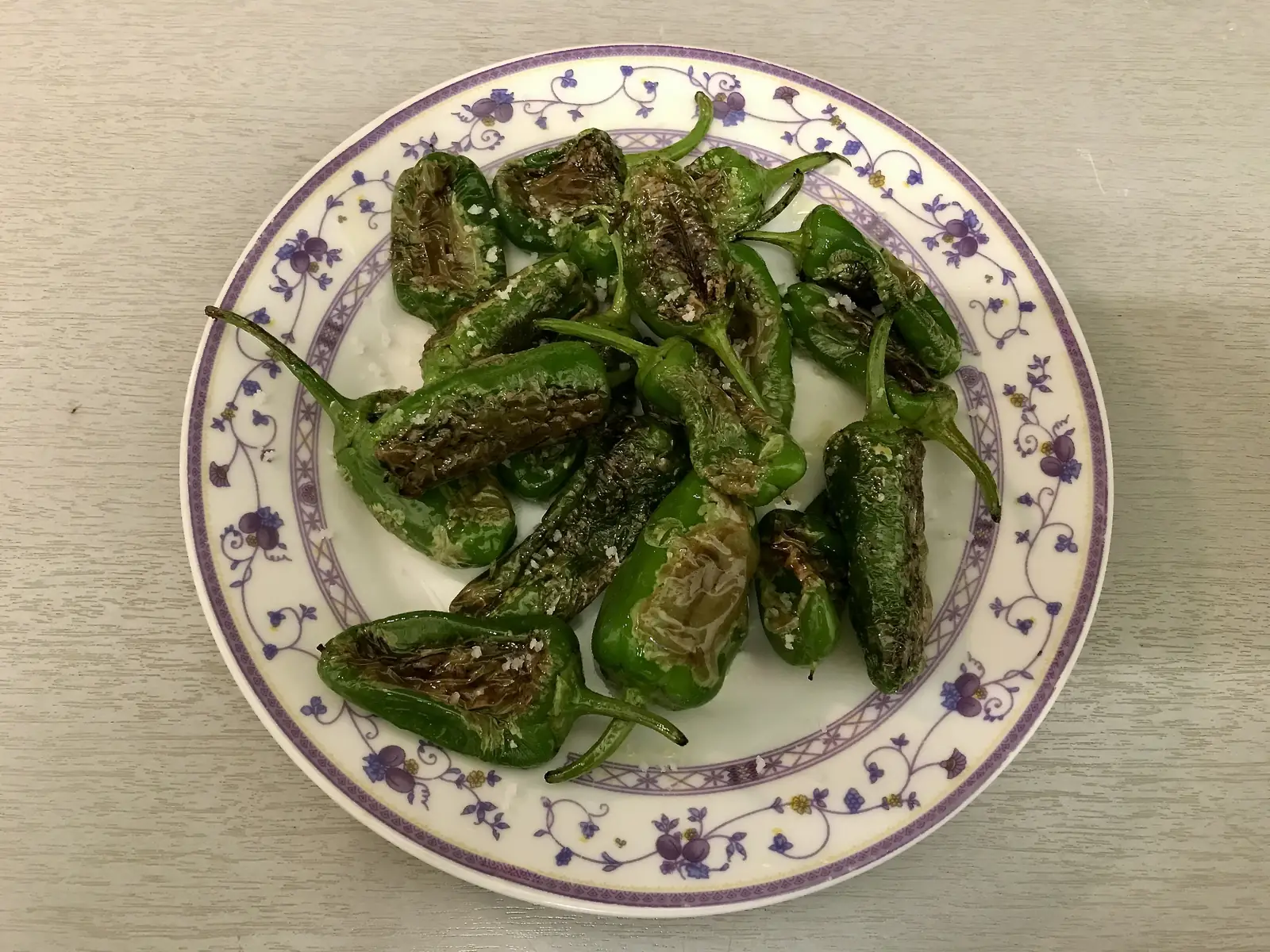
This pimientos de padron recipe fries small green peppers in hot olive oil until their skins blister and char in patches, then showers them with flaky sea salt. One serving is about 100 g — a small plate to share.

Pimientos de Padron come from the town of Padron in Galicia, in the green north-west of Spain, where the peppers were first grown from seeds brought from the Americas in the 1500s. The Galician saying about them — unos pican e outros non, some are hot and others are not — is the heart of the dish: most Padron peppers are mild and sweet, but about one in ten carries real heat, and nobody can tell which until they bite. Fried in olive oil and salted, they are one of Spain's most loved tapas.

Pairs well with: Crusty bread, olives and a cold beer

Provenance

Spain flag Spain

Galician Tapa Classic

Mediterranean & Italy

Time Dedication

15m

5m prep • 10m cook

Batch Yield

4 Servings

75 kcal per serving

1 serving ≈ 100 g

Technical Skill

Easy

Easy (One Pan)

Meal Timing & Digestive Fit

Breakfast

Not Advised

Lunch

Inappropriate

Dinner

Inappropriate

Snack & Tea

Ideal Light Bite

Quick Prep (<30m) Occasions: Tapas nights, drinks with friends, summer snacks Cost: Low — about $2 per serving at home
Blistered green Pimientos de Padron sprinkled with flaky salt on a patterned plate

Galician Tapa Classic

Photo: Cook And Drink, CC BY-SA 4.0, via Wikimedia Commons

The Heritage Formulary

Measured Ingredients

Estimated cost: Low — about $2 per serving at home (USD)

Good pimientos de padron are blistered and collapsed, never raw and never burnt — hot oil, a single layer, salt at the end.

Execution Methodology & Culinary Technique

Step-by-Step Cooking Guide

Active 15m
P

Prep Stage: Dry the Peppers

5 Mins • Quick Rinse

Rinse the peppers and pat them completely dry with a clean towel — every drop of water left on the skin will spit in the hot oil. Leave the stems on: they are the handles you eat the peppers by.

Maestro Tip: Bone-dry peppers are the difference between a clean blister and a spitting pan.

  1. 1

    Heat the Oil

    2 Mins High heat, about 200°C (400°F)

    Pour the olive oil into a wide, heavy pan and heat over high heat until it shimmers and a drop of water sizzles — about 2 minutes. The pan must be properly hot before the peppers go in.

    If the oil is not hot enough, the peppers steam and go limp instead of blistering.

    Done when: The oil shimmers and moves freely across the pan.

  2. 2

    Blister the First Batch

    3 Mins High heat, about 200°C (400°F)

    Lay half the peppers in the pan in a single layer and fry for about 3 minutes, turning once, until the skins blister and char in dark patches. Lift them out with tongs.

    Do not crowd the pan — a single layer blisters, a pile steams.

    Done when: The skins are blistered and dark in patches, the peppers soft and collapsed.

  3. 3

    Blister the Second Batch

    3 Mins High heat, about 200°C (400°F)

    Fry the rest of the peppers the same way, about 3 minutes, turning once, until blistered and soft. Add a little more oil only if the pan looks dry.

    The second batch cooks faster — the pan is at full heat by now, so watch it closely.

    Done when: The skins are blistered and dark in patches, the peppers soft and collapsed.

  4. 4

    Salt and Serve

    2 Mins Off the heat

    Pile all the peppers onto a warm plate, shower them with the flaky sea salt while they are still hot and glistening, and serve at once.

    Salt them hot — the flakes stick to the oil and season every bite.

    Done when: The peppers are hot, glossy and flecked with white salt.

Finishing Touches & Plating

Serve the peppers at once, piled on a plate with the salt still glistening. Eat them by the stem, one by one — most are mild and sweet, and every so often one is hot, which is the whole game of the dish.

Nutritional Physiology & Benefits

Nutrition

Energy

75

kcal / serving

Protein

1g

Complete AA

Carbs

5g

Complex

Fats

7g

Healthy

Per serving (4 servings · 1 serving ≈ 100 g)
Energy75 kcal
Protein1 g
Carbohydrates5 g
Fat7 g
Fibre1.7 g
Sugar2.4 g
Sodium294 mg
Per 100g
Energy75 kcal
Protein0.9 g
Carbohydrates4.6 g
Fat6.5 g
Fibre1.7 g
Sugar2.4 g
Sodium294 mg

Nutrition values are estimated — calculated from USDA FoodData Central values for the listed ingredients.

Vitamins & minerals: Vitamin C (green peppers), vitamin A (peppers), vitamin E (olive oil).

Light by Nature

Peppers are mostly water and fibre, so a whole plate of pimientos is a light, fresh snack, not a heavy one.

Vitamin C in Every Bite

Green peppers are rich in vitamin C, and the quick fry keeps most of it in the pepper.

Olive Oil Energy

A little good olive oil gives the peppers their gloss and carries the fat-soluble vitamins with it.

Food Pairings

What to Eat With

To optimize nutrient absorption and elevate the sensory depth, pair with these authentic accompaniments:

Sides

Crusty Bread

Crusty bread is for mopping the peppery oil left on the plate — the oil is too good to leave behind.

Vegetables

Marinated Olives

Olives and peppers are the classic tapas pair — salty, briny olives against sweet, blistered peppers.

Drinks

A Cold Beer

A cold lager is the traditional partner — it cools the palate and handles the one hot pepper in ten.

Full Menus

As Part of a Tapas Spread

Serve the peppers with tortilla, jamon and pan con tomate — they are a tapa, made to be shared among many small plates.

Complete menu

Serve the peppers as part of a tapas spread with crusty bread, marinated olives and a cold beer, alongside tortilla and pan con tomate.

Digestive Guardrails

What NOT to Combine

To prevent digestive distress, sluggishness, or palate clash, avoid pairing the dish with these elements:

Wet Peppers in Hot Oil

Water on the pepper skins spits violently in hot oil and can burn — pat the peppers completely dry first. This is general guidance, not medical advice.

Salting Too Early

Salt drawn into the peppers while they fry pulls out water and stops them blistering — salt only at the very end, off the heat.

General information only, not medical advice — consult a doctor for personal dietary decisions.

Who Should Eat It

Who Should Eat

  • General adultsA light, salty snack — one of the simplest tapas there is.
  • ChildrenSuitable from age 6+; warn children that about one pepper in ten is hot, and let them skip it if unsure.
  • ElderlyEasy to eat and light; keep the salt light.
  • Pregnant womenGenerally suitable; the peppers are mild and the oil is light.
  • Breastfeeding womenGenerally suitable; a light snack between meals.
  • AthletesA light snack, not a meal — pair it with something more substantial after training.
  • Weight gainA light choice — pair with bread, olives and other tapas for a fuller plate.
  • Weight lossA good choice — peppers are low in calories; keep the salt light and skip the bread.

Health Conditions — Adjust or Avoid

Conditions

  • DiabetesThe peppers themselves are very low in carbs — the bread alongside them is the carb to watch. Ask your clinician about portion size.
  • High blood pressureThe flaky salt is the sodium here — use a light hand. Ask your clinician about a suitable portion.
  • Kidney diseaseKeep the salt light; ask your clinician about portion size.
  • GoutAn occasional food — the peppers are low in purines, but keep the salt light.
  • Stomach issuesThe peppers are usually gentle, but the occasional hot one and the oil can bother a sensitive stomach.
  • Cardiovascular diseaseA light, occasional food — the oil is the main fat; balance the rest of the day.
  • Fatty liverA good choice — peppers are low in calories; keep the salt light.
  • Food allergiesContains no major allergens. The peppers are from the nightshade family — avoid if you have a known pepper allergy.
  • Special therapeutic dietsIf you follow a prescribed low-sodium diet, use less salt, and check with your clinician.

If you have a medical condition, consult your doctor before changing your diet.

Storage & Use

Storage & Use

How to store
Best eaten at once. If needed, cool quickly and store in an airtight container.
In the fridge
1 day; the skins soften and the peppers lose their blister.
In the freezer
Not recommended — the peppers go limp on thawing.
How to reheat
Warm briefly in a hot, dry pan until hot through; reheat to 74°C (165°F). They will not re-crisp.
Freezing recommended
No — blistered peppers do not freeze well.
Signs it has spoiled
Sour smell, slimy skin, or mould.

More recipes to explore

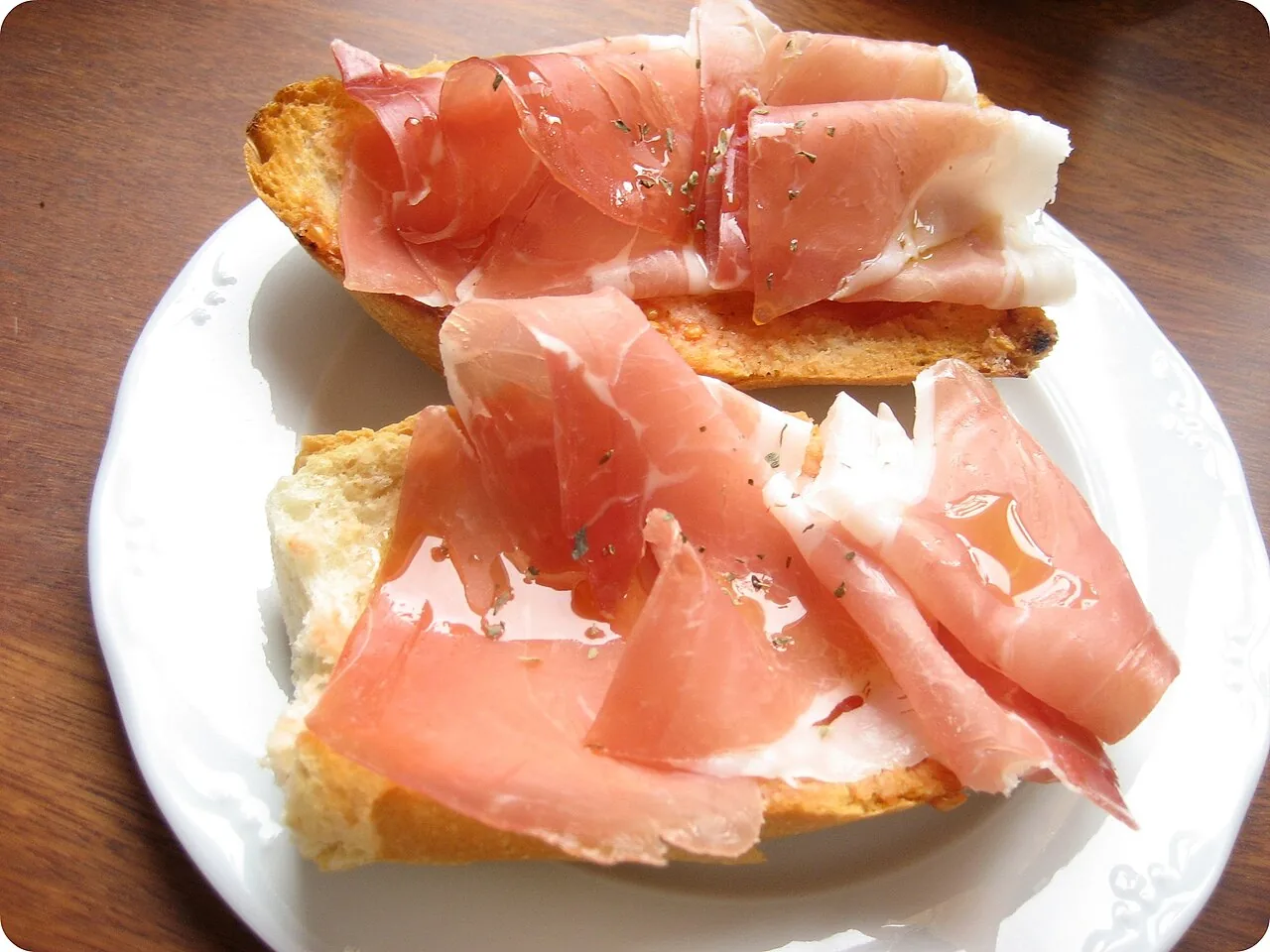
Pan con tomate with jamón ibérico on toasted bread Spain flag Spain 15m
Snack & Tea •Catalan Aperitivo

Pan con Tomate & Jamón Ibérico

Country bread rubbed with ripe Ramallet tomato, drizzled with cold-pressed Arbequina olive oil and topped with jamón ibérico.

Vascular Health

Toasted tomato bread with jamón ibérico, olive oil and olives.

Pairs Well With
Castelvetrano Olives & Sparkling Mineral Water
Quick Prep (<30m)
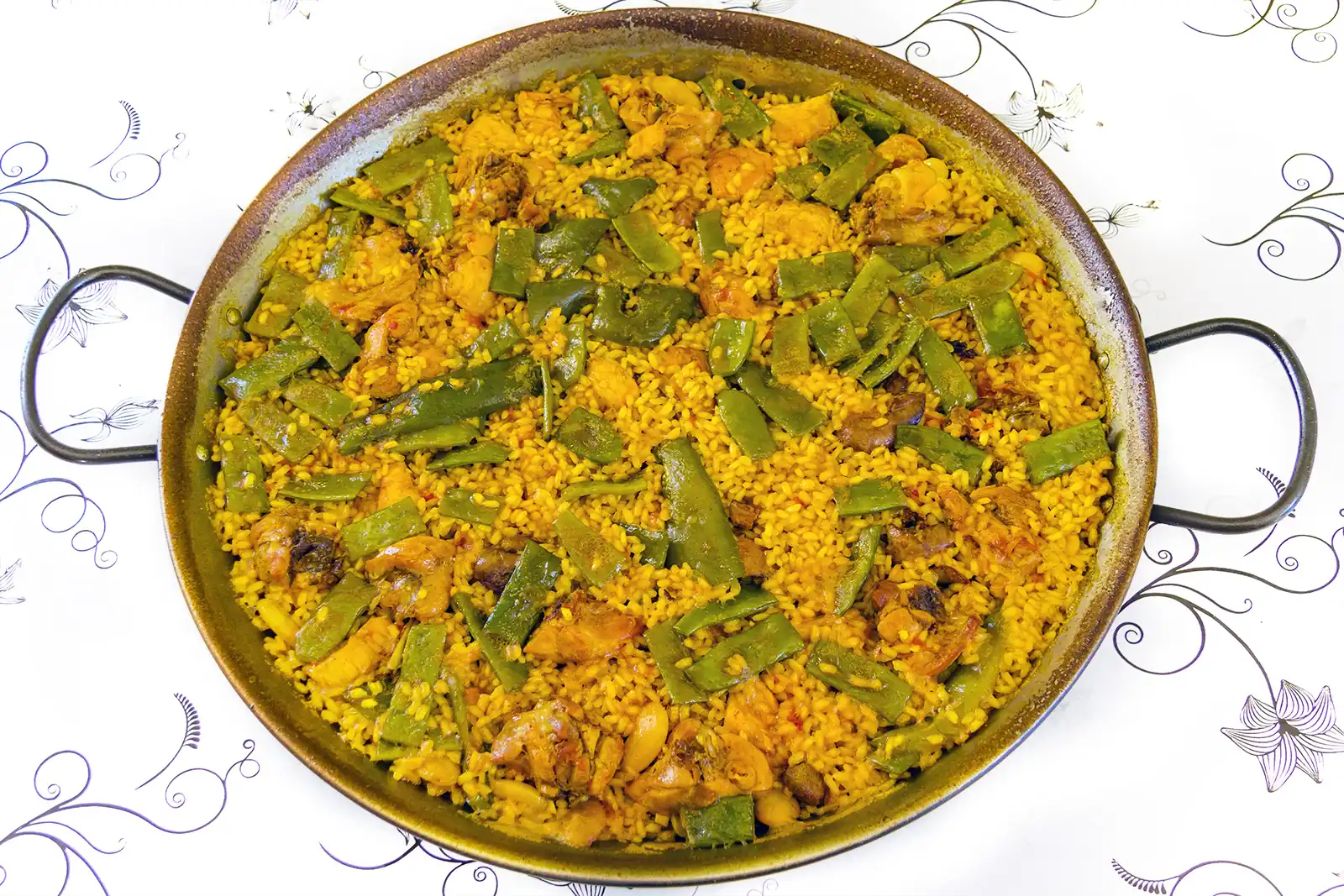
A wide paella pan of paella valenciana with saffron rice, green beans and chicken Spain flag Spain 1h 10m
Dinner •Valencia Rice Fields

Paella Valenciana

This paella valenciana recipe cooks Bomba rice in a wide, shallow pan with chicken, rabbit, green beans and garrofó beans, scented with saffron and rosemary. One serving is about 470 g.

Comfort & Warmth

Saffron rice cooked in a wide pan with chicken, rabbit and green beans.

Pairs Well With
A green salad and a glass of white wine
High Protein
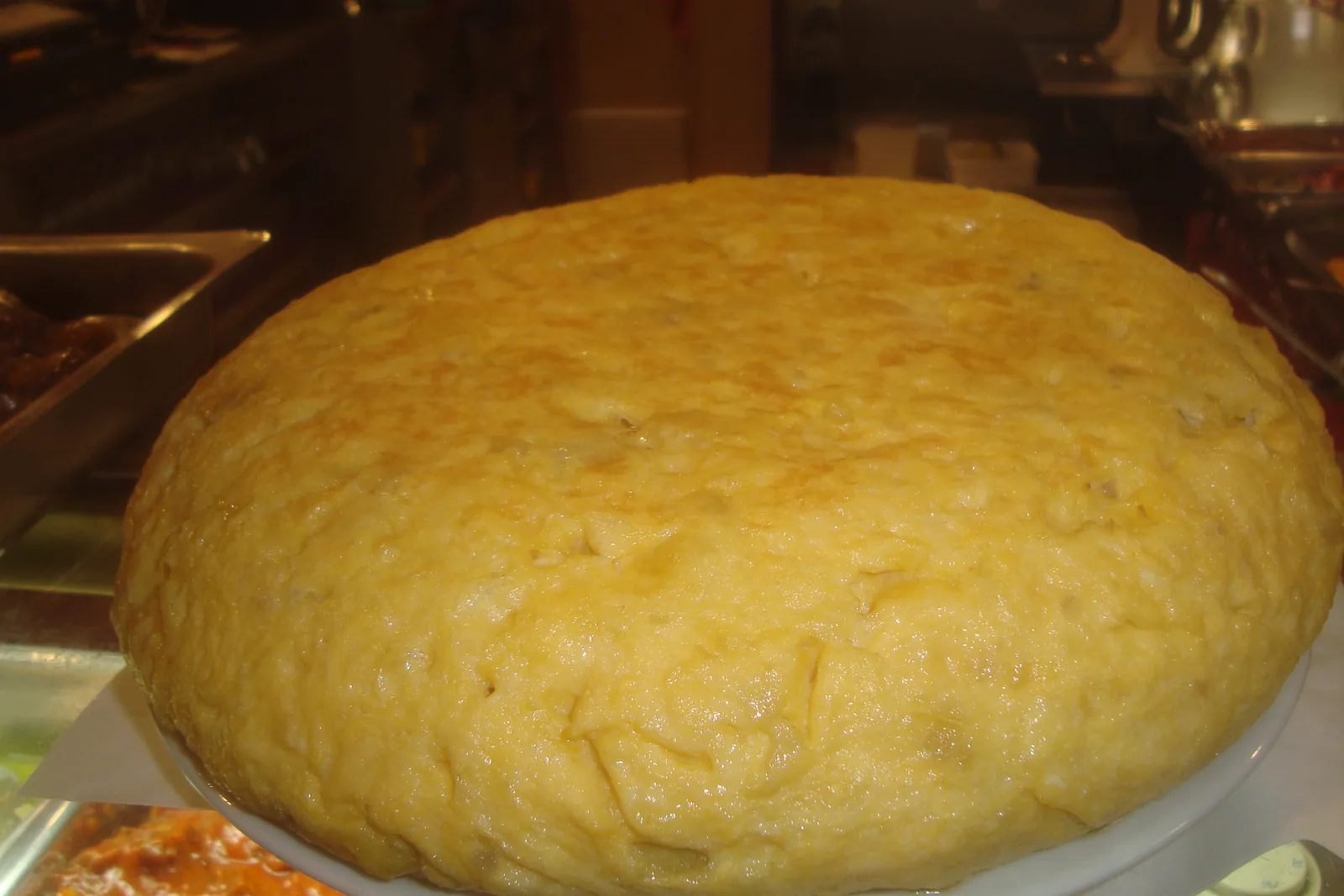
A whole golden tortilla española, a thick Spanish potato omelette, on a plate Spain flag Spain 55m
Snack & Tea •Navarre Bar Classic

Tortilla Española

This spanish tortilla recipe slowly cooks potatoes and onion in olive oil, folds them into beaten eggs, and turns out a thick, golden cake that is soft in the middle. One serving is about 220 g.

Comfort & Warmth

A thick, golden omelette of slow-cooked potatoes, onion and egg.

Pairs Well With
Pan con tomate and a glass of red wine
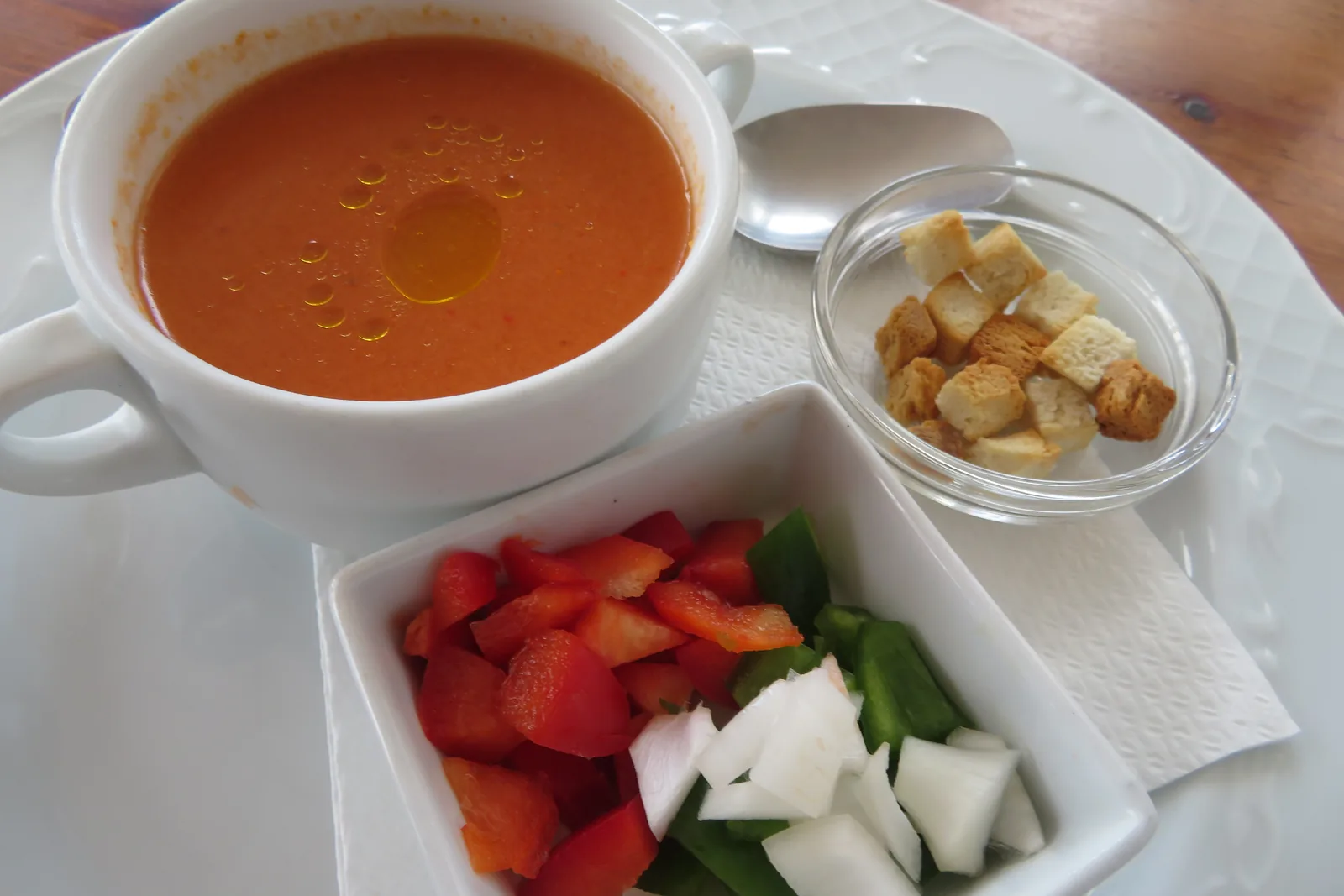
A cup of chilled orange-red gazpacho with olive oil, served with diced peppers and onion and a bowl of croutons Spain flag Spain 20m
Lunch •Andalusian Classic

Gazpacho

This gazpacho recipe is the Andalusian classic: ripe tomatoes, cucumber, green pepper, onion and garlic blended raw with bread, sherry vinegar and olive oil, then chilled until ice cold. One serving is about 395 g. It takes 20 minutes plus chilling, and there is no cooking at all.

Light & Refreshing

Chilled raw tomato soup blended with cucumber, pepper and olive oil, served cold with diced vegetables and croutons.

Pairs Well With
Croutons, diced vegetables & crusty bread
Soups & Broths • Quick Prep (<30m)

The Dinner Gazette

Never wonder what’s for dinner again

One email a week with easy dinner ideas from around the world — ingredients, steps and nutrition, tested in our kitchen first.

Delivered every Thursday morning. Unsubscribe anytime.