Curated recipes from 193 countries  •  New seasonal Mediterranean issue out now

Overview

Pisto Manchego

Pisto de La Mancha; Spanish Vegetable Stew

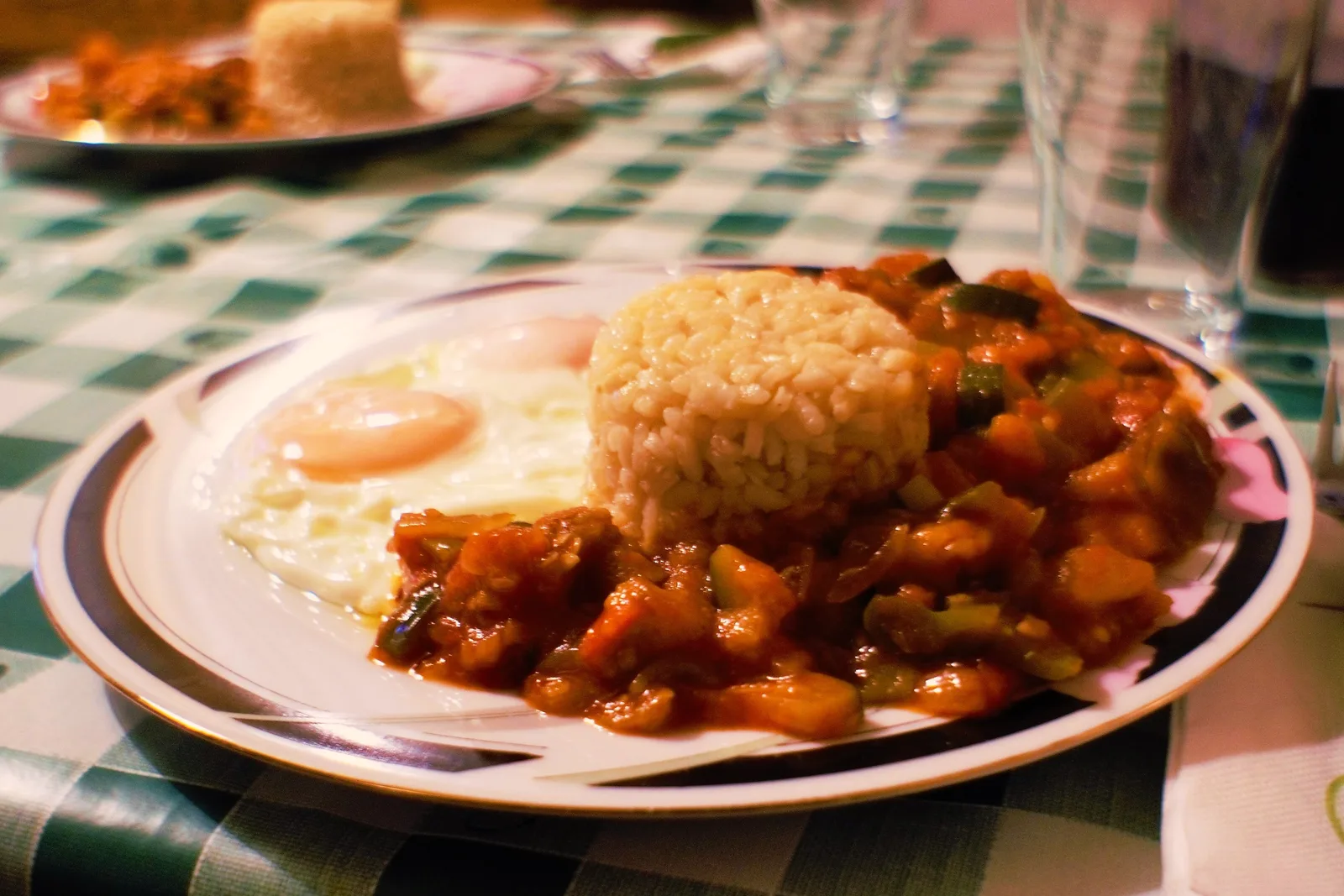
Pisto manchego is the vegetable stew of La Mancha: onion, green and red peppers, zucchini and ripe tomatoes cooked slowly in olive oil until they collapse into a sweet, jammy tangle, then served with a fried egg on top. It is sunny, garlicky and deeply savoury — Spain's answer to ratatouille, with its own cut, its own rhythm and its own egg. One serving is about 300 g.

Pisto comes from La Mancha, the high plain of central Spain that Don Quixote rode across, where the summer garden gives tomatoes, peppers and zucchini all at once and olive oil is the cooking fat of every kitchen. It belongs to the same family as ratatouille, but the two are easy to tell apart: ratatouille is built around aubergine, cooked in separate batches, while pisto is built around peppers and zucchini, cooked in one pan in stages, and almost always finished with a fried egg. In La Mancha it is a working lunch, eaten with bread and sometimes rice, and every family has its own order for the vegetables.

Pairs well with: Crusty bread, jamón & Manchego cheese

Provenance

Spain flag Spain

Spanish Classic

Mediterranean & Italy

Time Dedication

1h

20m prep • 40m cook

Batch Yield

6 Servings

215 kcal per serving

1 serving ≈ 300 g

Technical Skill

Intermediate

Medium (Slow-Fried Vegetables)

Meal Timing & Digestive Fit

Breakfast

Not Advised

Lunch

Prime Metabolic Fit

Dinner

Ideal Hearty Main

Snack & Tea

Inappropriate

Occasions: Summer lunches, family meals, tapas spreads, harvest suppers Cost: Low — about $1.60 per serving at home

A plate of pisto manchego with a fried egg and a moulded serving of rice

Spanish Classic

Photo: Coralma*, CC BY-SA 4.0, via Wikimedia Commons

The Heritage Formulary

Measured Ingredients

Estimated cost: Low — about $1.60 per serving at home (USD)
A good pisto is judged by the tomatoes: they must collapse into a thick, jammy sauce that coats the vegetables, never a watery pool at the bottom of the pan.

Execution Methodology & Culinary Technique

Step-by-Step Cooking Guide

Active 1h
P

Prep Stage: Dice the Vegetables, Peel the Tomatoes

20 Mins • Prep

Dice the onion, peppers and zucchini into even 2 cm pieces, peel and chop the tomatoes, and crack the eggs into cups ready for frying. Pisto is cooked in stages, with each vegetable going into the pan in turn, so having everything cut and within reach before the oil heats is what keeps the rhythm — and the vegetables — from burning.

Maestro Tip: Keep the dice even: if the zucchini is twice the size of the pepper, the pepper will be mush before the zucchini is cooked.

  1. 1

    Fry the onion and peppers

    10 minutes Medium heat, about 160°C (320°F)

    Warm 40 ml of the olive oil in a large, deep frying pan over medium heat. Add the onion and both peppers with a pinch of salt and fry gently, stirring often, for about 10 minutes until the onion is soft and the peppers have lost their raw crunch but still hold their shape.

    Do not rush this stage with high heat: peppers fried too hot turn bitter, while peppers fried gently turn sweet.

    Done when: Onion is soft and translucent; peppers are tender but not floppy.

  2. 2

    Add the zucchini

    8 minutes Medium heat, about 160°C (320°F)

    Add the zucchini and fry for about 8 minutes, stirring now and then, until it is just tender and starting to take a little colour at the edges. Add the garlic and cook for 1 minute more, until fragrant.

    The zucchini should still have bite at this point — it finishes cooking with the tomatoes.

    Done when: Zucchini is tender with golden edges; the pan smells of garlic.

  3. 3

    Add the tomatoes and simmer

    20 minutes Low simmer, about 95°C (200°F)

    Stir in the chopped tomatoes with all their juice, lower the heat and simmer gently for about 20 minutes, stirring occasionally, until the tomatoes have collapsed into a thick, jammy sauce that coats the vegetables. The pisto is done when the oil starts to separate at the edges and a spoon dragged through leaves a trail.

    If the tomatoes are sharp, a tiny pinch of sugar — no more than a pinch — rounds them out; it is not a sweet dish.

    Done when: The vegetables are bound in a thick tomato sauce; the pan looks glossy, not watery.

  4. 4

    Fry the eggs

    5 minutes Medium heat, about 160°C (320°F)

    Warm the remaining 20 ml of olive oil in a second pan over medium heat. Slide the eggs in one at a time and fry until the whites are completely set and the edges are crisp, about 3 minutes, leaving the yolks runny. Season each egg with a little salt.

    Fry the eggs last, so they reach the table hot with the yolk still runny enough to mix into the vegetables.

    Done when: Whites are fully set and crisp at the edges; yolks are still soft and runny.

  5. 5

    Serve with the egg on top

    2 minutes No heat — off the stove

    Taste the pisto and adjust the salt. Spoon it into wide bowls or onto plates and lay a fried egg on each portion. The yolk is the sauce: break it at the table and let it run through the vegetables.

    Serve it straight from the pan while it is still steaming — pisto waits for no one.

    Done when: Each portion is a mound of glossy vegetables crowned with a fried egg.

Finishing Touches & Plating

Serve the pisto manchego hot, straight from the pan, with a fried egg on each portion and crusty bread for mopping up the sauce. The egg yolk, broken at the table, is the final seasoning — do not skip it.

Nutritional Physiology & Benefits

Nutrition

Energy

215

kcal / serving

Protein

9g

Complete AA

Carbs

12g

Complex

Fats

15g

Healthy

Per serving (6 servings · 1 serving ≈ 300 g)
Energy215 kcal
Protein9 g
Carbohydrates12 g
Fat15 g
Fibre3.4 g
Sugar7.7 g
Sodium334 mg
Per 100g
Energy72 kcal
Protein3 g
Carbohydrates4 g
Fat5.1 g
Fibre1.1 g
Sugar2.6 g
Sodium111 mg

Nutrition values are estimated — calculated from USDA FoodData Central values for the listed ingredients.

Vitamins & minerals: Provides vitamin C from peppers and tomato, vitamin A from tomato and peppers, potassium, and choline from the egg. All nutrition values are estimated.

Vegetables, Slow-Fried Sweet

Slow frying in olive oil draws the natural sweetness out of peppers and tomatoes, so the dish needs no added sugar.

Protein from the Egg

The fried egg on top adds about 6.5 g of protein per serving and turns a vegetable stew into a complete meal.

Olive Oil, Not Butter

The fat in pisto comes from olive oil, rich in monounsaturated fat, rather than butter or animal fat.

Food Pairings

What to Eat With

To optimize nutrient absorption and elevate the sensory depth, pair with these authentic accompaniments:

Sides

Crusty Bread

Bread is the tool for this dish: it mops up the tomato sauce and the broken egg yolk, and no spoon does the job as well.

Jamón Serrano

A few thin slices of cured ham add salt and savoury depth that balance the sweetness of the slow-fried vegetables.

Full Menus

White Rice

A mound of plain white rice turns the pisto into a full lunch and soaks up the sauce, as it is often served in La Mancha homes.

Drinks

Red Wine from La Mancha

A young, fruity red from the same region stands up to the tomato and pepper without overpowering the egg.

Complete menu

Serve the pisto in a wide dish with a fried egg on each portion, crusty bread for mopping, a few slices of jamón and a glass of red wine; a simple white rice on the side turns it into a full lunch.

Digestive Guardrails

What NOT to Combine

To prevent digestive distress, sluggishness, or palate clash, avoid pairing the dish with these elements:

Undercooked Eggs for Vulnerable People

Runny yolks carry a small risk of salmonella, so children, pregnant women, elderly people and anyone with a weak immune system should have their eggs cooked until the yolk is firm. This is general information, not medical advice.

Reheating Fried Eggs

Fried eggs do not reheat well and can dry out or harbour bacteria if left standing; fry the eggs fresh and reheat only the vegetable stew, to 74°C (165°F). This is general information, not medical advice.

General information only, not medical advice — consult a doctor for personal dietary decisions.

Who Should Eat It

Who Should Eat

  • General adultsA sunny vegetable stew with a fried egg — a complete, satisfying lunch on its own.
  • ChildrenSuitable for children if the egg yolk is cooked firm; the vegetables are soft and sweet.
  • ElderlySoft vegetables and a familiar egg make this easy to eat; cook the yolk firm for safety.
  • Pregnant womenFine in normal servings, but have the egg cooked until the yolk is firm rather than runny.
  • Breastfeeding womenA nourishing lunch with vegetables, egg protein and olive oil; keep the egg well cooked.
  • AthletesGood after training with bread or rice for energy; the egg adds protein for recovery.
  • Weight gainWith bread or rice it adds plenty of energy, so it works well for anyone trying to gain weight.
  • Weight lossThe stew itself is light, but watch the bread and rice portions if you are counting energy.

Health Conditions — Adjust or Avoid

Conditions

  • DiabetesTomatoes and peppers are low in sugar, but keep the bread and rice portions moderate; ask your clinician about your meal plan.
  • High blood pressureKeep the salt at the level in the recipe and do not add more at the table; ask your clinician about your daily sodium target.
  • Kidney diseaseTomatoes and peppers are high in potassium, so keep servings moderate and ask your clinician about your potassium limit.
  • GoutThe stew itself is low in purines; the ham you serve it with matters more, so ask your clinician about your overall meal.
  • Stomach issuesCooked vegetables and egg are usually gentle on the stomach; eat slowly and ask your clinician if symptoms persist.
  • Cardiovascular diseaseRich in vegetables and olive oil with little saturated fat; keep the salt modest and ask your clinician about your overall diet.
  • Fatty liverLow in calories with no added sugar, so it fits well; ask your clinician about your overall diet.
  • Food allergiesContains egg; the stew itself is gluten-free, so serve it with gluten-free bread if you need it.
  • Special therapeutic dietsNaturally vegetarian and gluten-free without the bread; if you follow a prescribed diet, check the egg and salt with your clinician.

If you have a medical condition, consult your doctor before changing your diet.

Storage & Use

Storage & Use

How to store
Store the vegetable stew and the fried eggs separately, in covered containers.
In the fridge
The stew keeps 3 days in the fridge at 4°C (40°F) or below; fry the eggs fresh each time.
In the freezer
The stew (without egg) freezes for up to 3 months; thaw overnight in the fridge.
How to reheat
Reheat the stew gently on the stove to 74°C (165°F); fry a fresh egg to serve.
Freezing recommended
Yes for the vegetable stew; no for the fried egg.
Signs it has spoiled
Sour smell, mould on the surface, or a slimy texture.

More recipes to explore

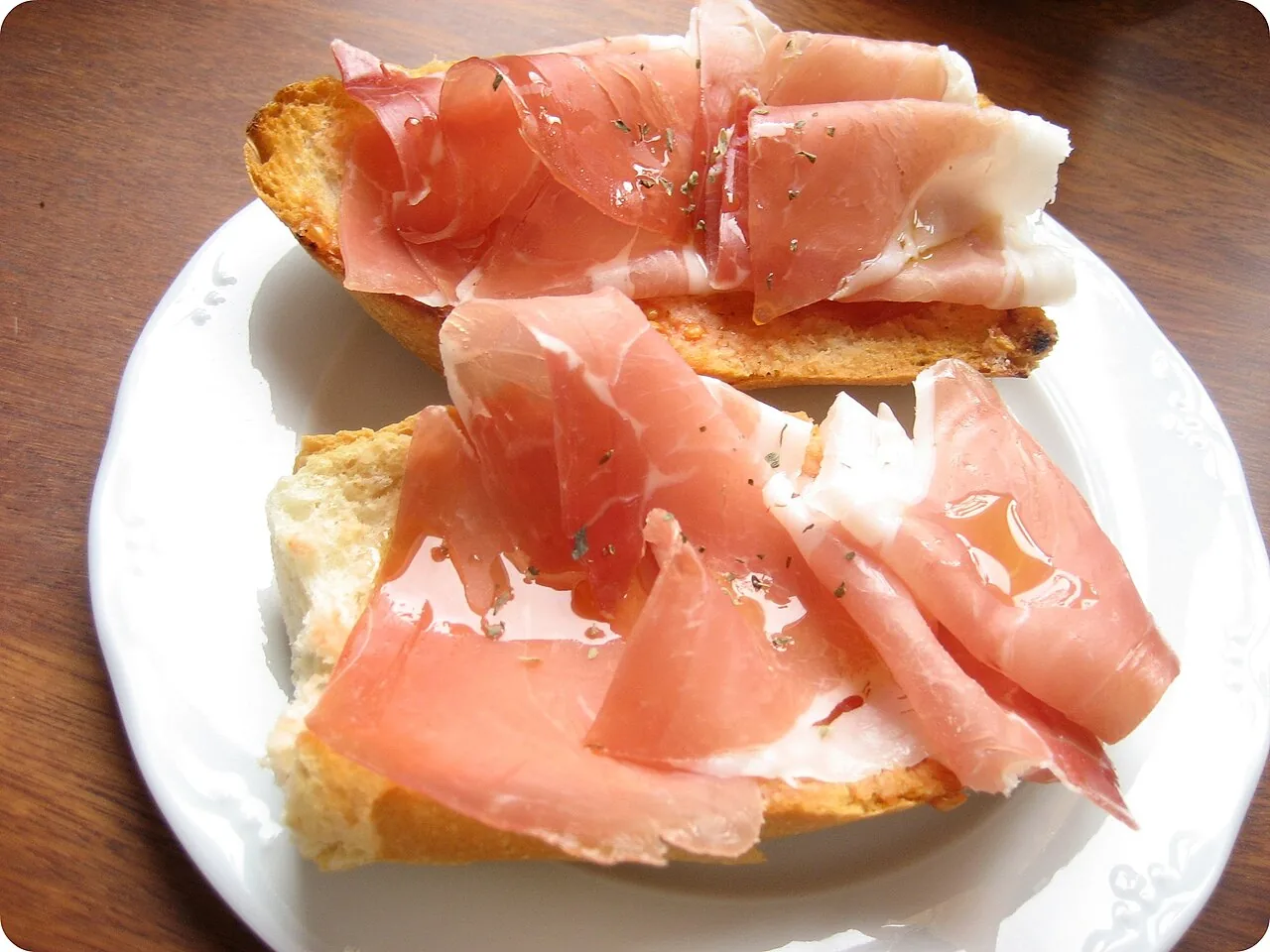
Pan con tomate with jamón ibérico on toasted bread Spain flag Spain 15m
Snack & Tea •Catalan Aperitivo

Pan con Tomate & Jamón Ibérico

Country bread rubbed with ripe Ramallet tomato, drizzled with cold-pressed Arbequina olive oil and topped with jamón ibérico.

Vascular Health

Toasted tomato bread with jamón ibérico, olive oil and olives.

Pairs Well With
Castelvetrano Olives & Sparkling Mineral Water
Quick Prep (<30m)
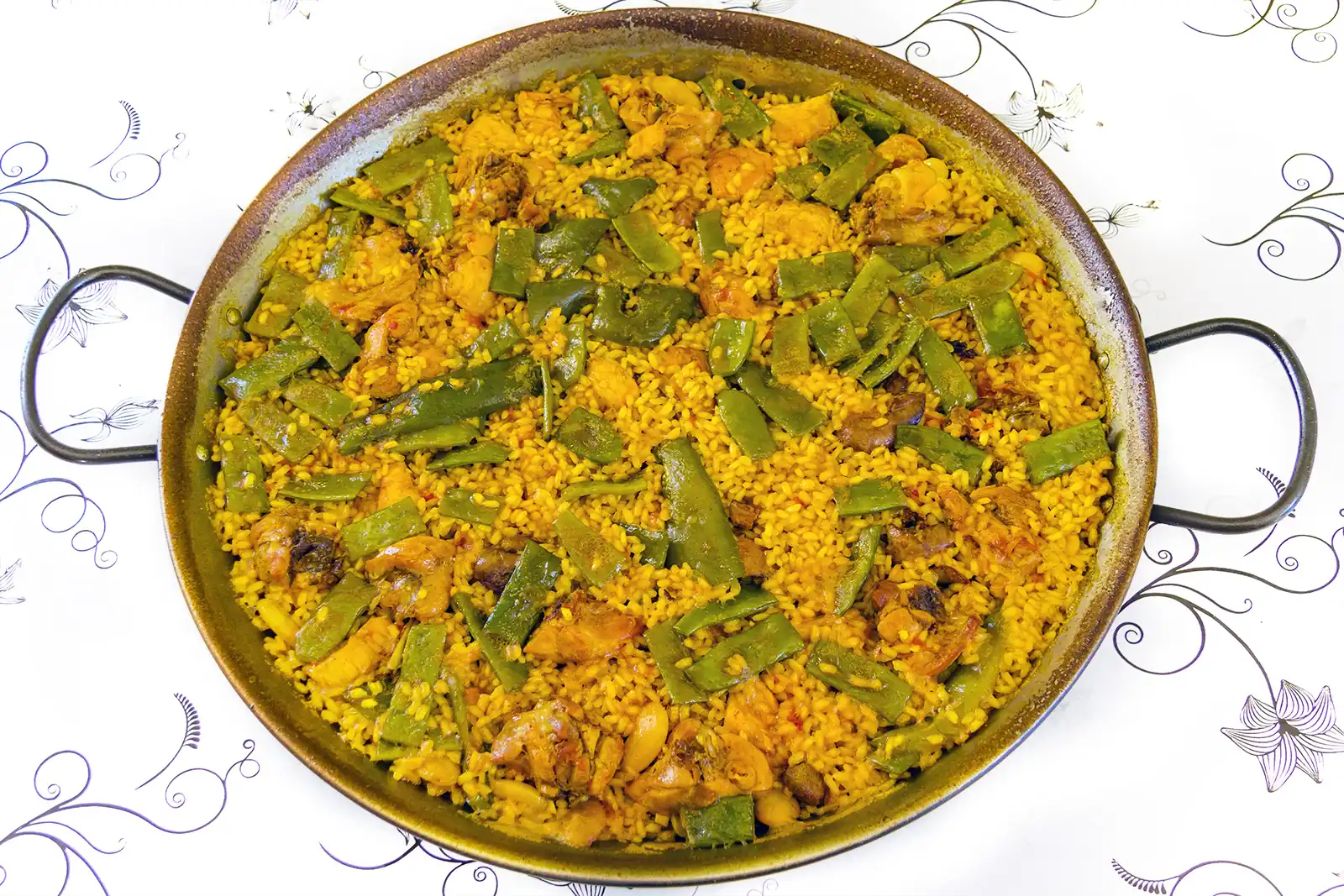
A wide paella pan of paella valenciana with saffron rice, green beans and chicken Spain flag Spain 1h 10m
Dinner •Valencia Rice Fields

Paella Valenciana

This paella valenciana recipe cooks Bomba rice in a wide, shallow pan with chicken, rabbit, green beans and garrofó beans, scented with saffron and rosemary. One serving is about 470 g.

Comfort & Warmth

Saffron rice cooked in a wide pan with chicken, rabbit and green beans.

Pairs Well With
A green salad and a glass of white wine
High Protein
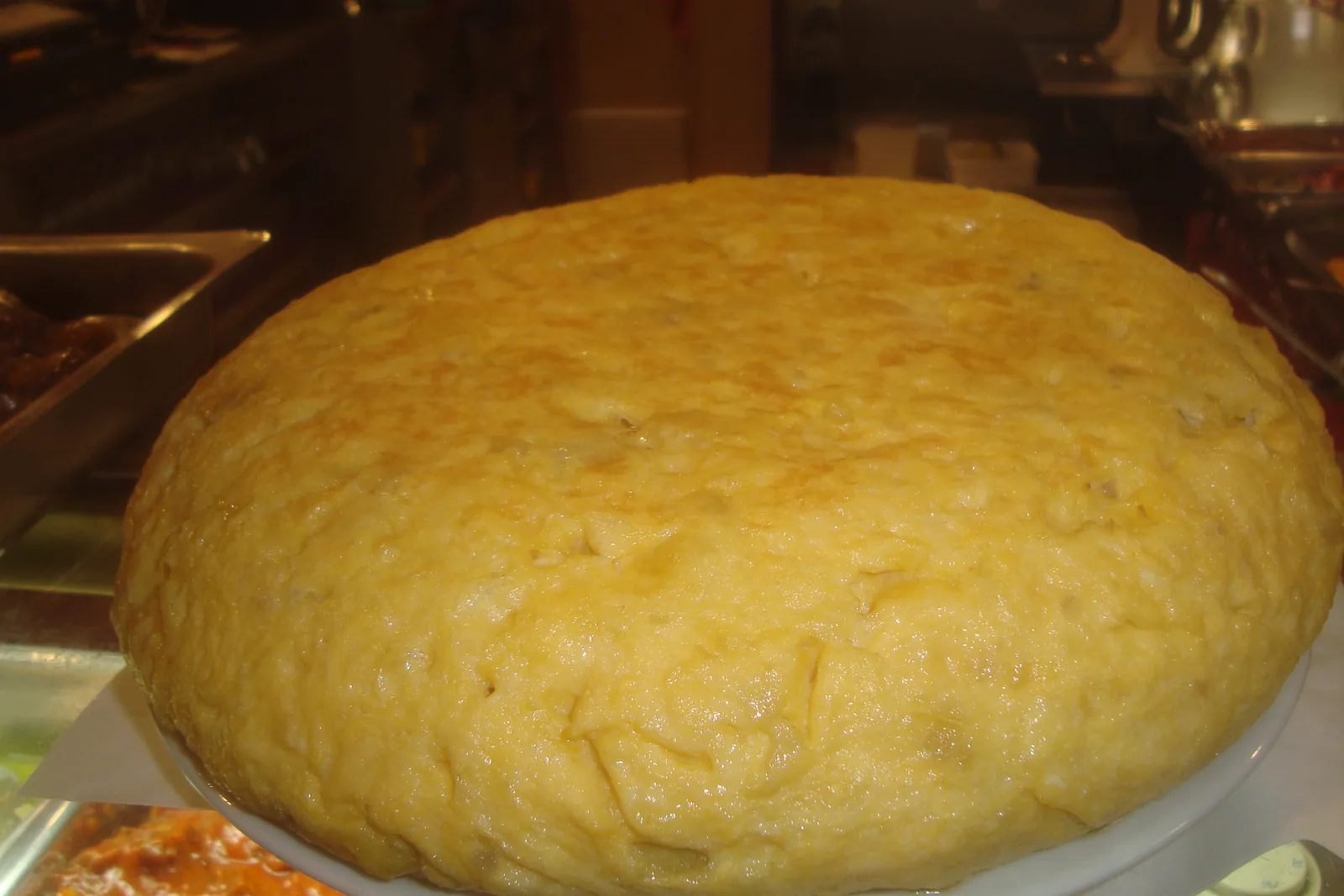
A whole golden tortilla española, a thick Spanish potato omelette, on a plate Spain flag Spain 55m
Snack & Tea •Navarre Bar Classic

Tortilla Española

This spanish tortilla recipe slowly cooks potatoes and onion in olive oil, folds them into beaten eggs, and turns out a thick, golden cake that is soft in the middle. One serving is about 220 g.

Comfort & Warmth

A thick, golden omelette of slow-cooked potatoes, onion and egg.

Pairs Well With
Pan con tomate and a glass of red wine
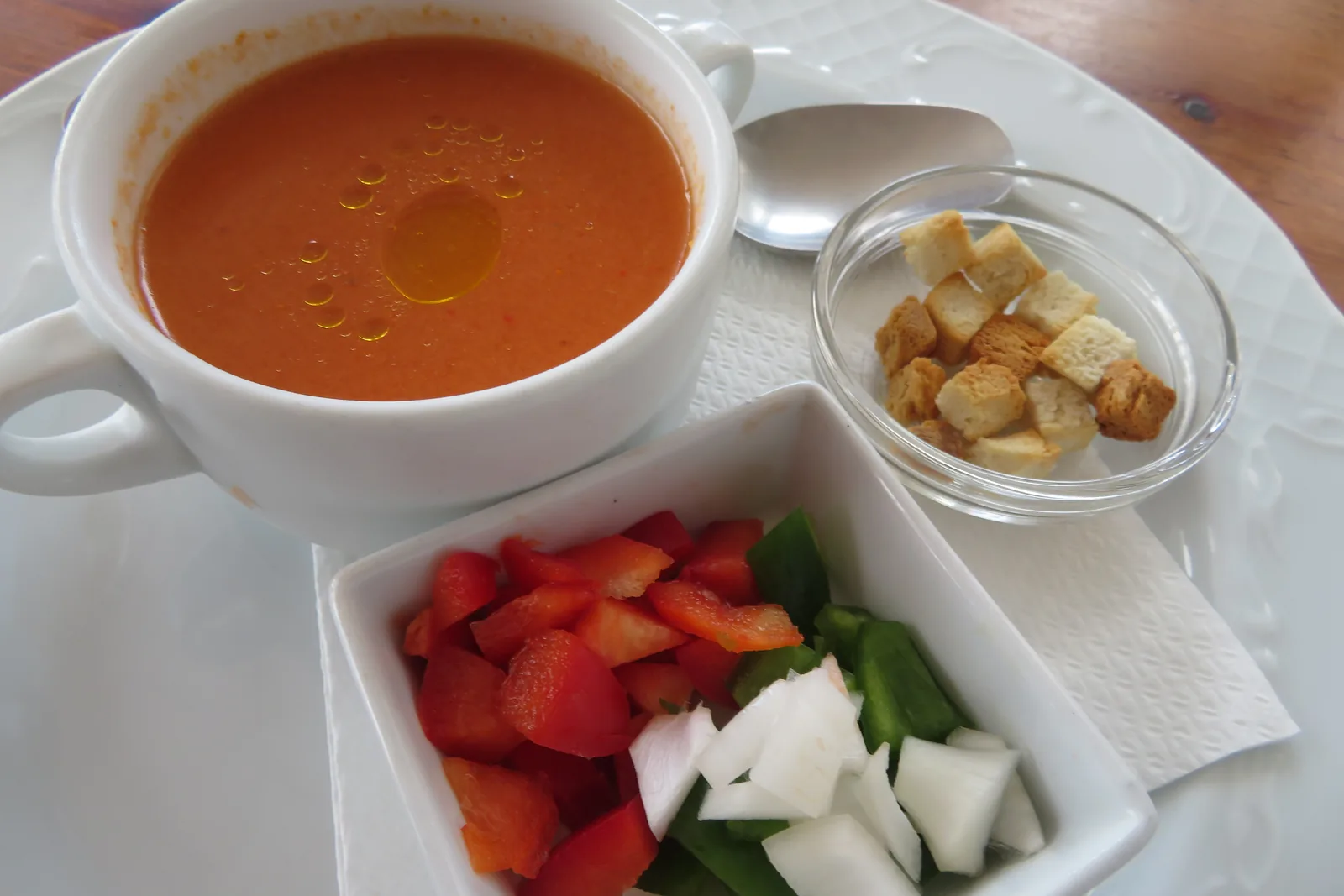
A cup of chilled orange-red gazpacho with olive oil, served with diced peppers and onion and a bowl of croutons Spain flag Spain 20m
Lunch •Andalusian Classic

Gazpacho

This gazpacho recipe is the Andalusian classic: ripe tomatoes, cucumber, green pepper, onion and garlic blended raw with bread, sherry vinegar and olive oil, then chilled until ice cold. One serving is about 395 g. It takes 20 minutes plus chilling, and there is no cooking at all.

Light & Refreshing

Chilled raw tomato soup blended with cucumber, pepper and olive oil, served cold with diced vegetables and croutons.

Pairs Well With
Croutons, diced vegetables & crusty bread
Soups & Broths • Quick Prep (<30m)

The Dinner Gazette

Never wonder what’s for dinner again

One email a week with easy dinner ideas from around the world — ingredients, steps and nutrition, tested in our kitchen first.

Delivered every Thursday morning. Unsubscribe anytime.