Curated recipes from 193 countries  •  New seasonal Mediterranean issue out now

Overview

Pollo a la Brasa

Peruvian Rotisserie Chicken; Blackened Chicken

This pollo a la brasa recipe marinates a whole chicken overnight in soy sauce, beer, lime, garlic, cumin and paprika, then roasts it slowly until the skin turns dark and crisp and the meat stays juicy. It is served the way every polleria in Lima serves it: a quarter chicken with thick-cut fries, a fresh salad and the two essential sauces, green aji verde and yellow aji amarillo. One serving is about 514 g.

Pollo a la brasa was created in Lima in 1950 by Roger Schuler, a Swiss immigrant who ran the Granja Azul restaurant in Chaclacayo with his business partner Franz Ulrich, a metalworker who built the first rotisserie oven, the rotombo, to cook chickens over charcoal. The first birds were seasoned only with salt and eaten with large fries by hand; over time soy sauce, beer, cumin and aji joined the marinade, and the creamy aji sauces became part of the plate. Today Peruvians eat it about three times a month on average, and pollerias make up a large share of the country's fast-food trade.

Pairs well with: Aji verde, fries & salad

Provenance

Peru flag Peru

Lima Polleria Heritage

Latin America & Caribbean

Time Dedication

1h 40m

25m prep • 75m cook

Batch Yield

4 Servings

1148 kcal per serving

1 serving ≈ 514 g

Technical Skill

Intermediate

Medium (Roast & Sauces)

Meal Timing & Digestive Fit

Breakfast

Not Advised

Lunch

Hearty Midday Main

Dinner

Ideal Hearty Main

Snack & Tea

Inappropriate

High Protein Occasions: Sunday family lunch, weekend dinner, birthday gathering, polleria night at home, football match meal Cost: Low — about $4–5 per serving at home
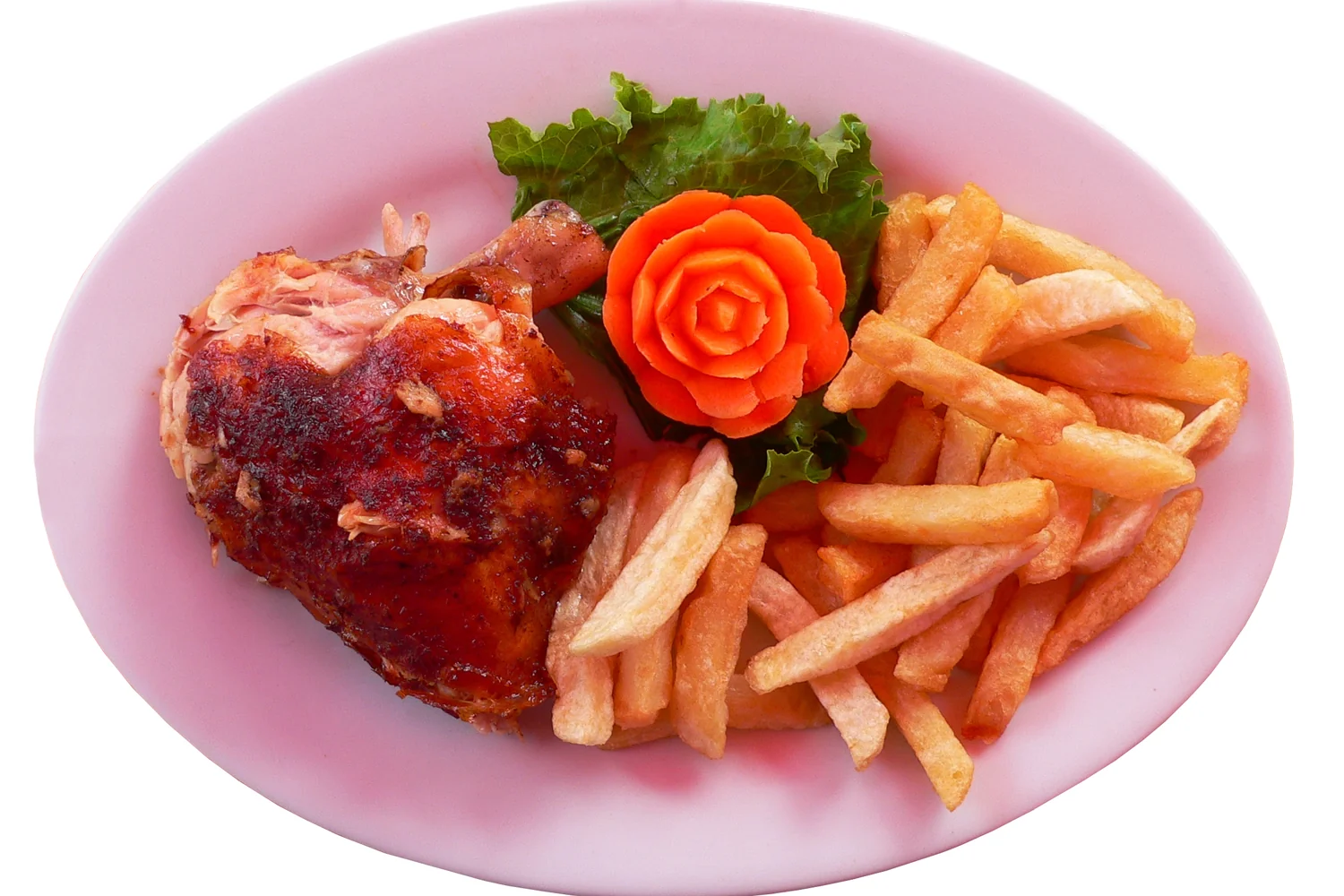
A glossy roasted chicken leg quarter with golden fries, lettuce and a carved carrot rose on a pink plate

Lima Polleria Heritage

Photo: Manuel González Olaechea, CC BY-SA 3.0, via Wikimedia Commons

The Heritage Formulary

Measured Ingredients

Estimated cost: Low — about $4–5 per serving at home (USD)

Whole chicken marinated overnight in soy, beer and aji spices, roasted to 74°C (165°F) and served with fries, salad and two aji sauces.

Execution Methodology & Culinary Technique

Step-by-Step Cooking Guide

Active 1h 40m
P

Prep Stage: Marinade, Sauces and Chips

25 Mins • Marinade, Sauces, Chips

Whisk 30 ml soy sauce, 120 ml beer, 12 g garlic, 30 ml lime juice, 15 g mustard, 3 g cumin, 4 g paprika, 2 g oregano, 3 g rosemary, 2 g black pepper, 4 g salt and 15 ml olive oil, rub it all over the 1.6 kg chicken (inside the cavity too), and leave it in the fridge overnight, or for at least 4 hours (passive time). While the chicken roasts, blend the aji verde (45 g mayonnaise, 30 g aji amarillo chillies, 15 g coriander, 6 g garlic, 15 ml lime juice, 10 ml olive oil, 1 g salt) and the yellow aji sauce (40 g mayonnaise, 30 g aji amarillo paste, 10 g mustard, 10 ml olive oil, 10 ml lime juice), cut the 700 g potatoes into thick chips, and build the salad from 80 g lettuce, 120 g tomato, 50 g onion, 80 g cucumber and 50 g carrot with 15 ml olive oil and 15 ml lime juice.

Maestro Tip: Marinate overnight if you can — the soy and beer need hours to season the meat right through to the bone.

  1. 1

    Marinate the chicken

    10 mins + overnight marinating Fridge, about 4°C (39°F)

    Whisk the soy sauce, beer, garlic, lime juice, mustard, cumin, paprika, oregano, rosemary, black pepper, 4 g salt and 15 ml olive oil in a bowl. Rub the marinade all over the 1.6 kg chicken and inside the cavity, then put the bird in a large bag or covered dish and refrigerate overnight, or for at least 4 hours. This marinating time is passive and is not counted in the 100-minute active time.

    Turn the chicken once halfway through marinating so both sides soak evenly.

    Done when: Chicken fully coated in a dark, fragrant marinade.

  2. 2

    Roast the chicken

    60 mins Oven 200°C (400°F), then 180°C (350°F)

    Heat the oven to 200°C (400°F). Lift the chicken out of the marinade, letting the excess drip off, and set it breast-up on a rack over a roasting tin. Roast for 20 minutes at 200°C (400°F) to set the skin, then lower the heat to 180°C (350°F) and roast for 40 more minutes, basting once with the pan juices, until the skin is dark and crisp and the thickest part of the thigh reads 74°C (165°F) on a thermometer.

    A rack keeps the chicken out of its own juices, so the skin crisps instead of steaming.

    Done when: Dark, crisp skin; thigh at least 74°C (165°F); juices running clear.

  3. 3

    Fry the chips

    20 mins Oil 180°C (350°F)

    While the chicken roasts, heat 500 ml sunflower oil in a deep pan to 180°C (350°F). Fry the 700 g of thick-cut chips in two batches for 6–7 minutes each until golden and crisp, then drain on paper and sprinkle with 2 g salt. Keep them warm in a low oven while the chicken finishes.

    Fry in batches — a crowded pan drops the oil temperature and the chips go soggy.

    Done when: Golden, crisp chips, salted and hot.

  4. 4

    Make the two aji sauces and the salad

    10 mins Room temperature, about 20–22°C (68–72°F)

    For the aji verde, blend 45 g mayonnaise, 30 g seeded aji amarillo chillies, 15 g coriander, 6 g garlic, 15 ml lime juice, 15 ml olive oil and 1 g salt until smooth and bright green. For the yellow sauce, whisk 40 g mayonnaise, 30 g aji amarillo paste, 10 g mustard, 10 ml olive oil and 10 ml lime juice until smooth. Toss 80 g lettuce, 120 g tomato, 50 g onion, 80 g cucumber and 50 g carrot with 15 ml olive oil and 15 ml lime juice.

    Taste the aji verde before serving — it should be creamy, garlicky and warmly hot, not just spicy.

    Done when: Two smooth sauces, one green and one yellow; a bright, dressed salad.

  5. 5

    Rest, quarter and serve

    10 mins Resting at room temperature, about 20–22°C (68–72°F); serve hot

    Rest the chicken for 10 minutes — the juices redistribute and the temperature rises a few degrees. Cut it into quarters: two legs and two breasts. Serve each quarter with a pile of chips, salad and a spoonful of each aji sauce on the side.

    Cut through the joints, not through bone — the knife should find the joint with almost no resistance.

    Done when: Juicy quarter chicken, rested 10 minutes, thigh at least 74°C (165°F).

Finishing Touches & Plating

Serve each quarter on its own plate with chips, salad and both aji sauces, the way a Lima polleria does — and put extra sauce on the table, because everyone always wants more.

Nutritional Physiology & Benefits

Nutrition

Energy

1148

kcal / serving

Protein

60g

Complete AA

Carbs

44g

Complex

Fats

81g

Healthy

Per serving (4 servings · 1 serving ≈ 514 g)
Energy1148 kcal
Protein60 g
Carbohydrates44 g
Fat81 g
Fibre6.7 g
Sugar5.5 g
Sodium1616 mg
Per 100g
Energy223 kcal
Protein11.7 g
Carbohydrates8.5 g
Fat15.7 g
Fibre1.3 g
Sugar1.1 g
Sodium314 mg

Nutrition values are estimated — calculated from USDA FoodData Central values for the listed ingredients.

Vitamins & minerals: Vitamin B6 and niacin (chicken), vitamin C (lime, tomato, aji chillies), vitamin A (carrot, aji amarillo).

Serious Protein

With about 60 g of protein per serving, this is a genuinely high-protein dinner that supports muscle maintenance as part of an ordinary varied diet.

Fresh Salad on the Side

Lettuce, tomato, cucumber and carrot add crunch, fibre and vitamin C for very few calories, and they balance the rich chicken and chips.

Aji Chillies, Not Just Heat

Aji amarillo chillies bring vitamin A and vitamin C to the sauces, and their fruity warmth is the flavour that makes the dish Peruvian.

Food Pairings

What to Eat With

To optimize nutrient absorption and elevate the sensory depth, pair with these authentic accompaniments:

Sides

Thick-cut fries

Thick chips are the non-negotiable polleria side — their fluffy inside soaks up the chicken juices and both aji sauces.

Vegetables

Fresh salad

Crisp lettuce, tomato and cucumber with lime dressing cut through the richness of the roast chicken and fries.

Drinks

Inca Kola

Peru's golden soda is the classic polleria drink — its sweetness balances the salty, spicy chicken.

Chicha morada

The purple corn drink is the traditional non-alcoholic pairing, fruity and lightly spiced, and it suits the aji sauces.

Full Menus

Full menu: ceviche, pollo, suspiro

Start with a small ceviche, follow with the pollo a la brasa, fries and salad, and finish with suspiro a la limena.

Complete menu

Start with a small ceviche, serve the pollo a la brasa with fries, salad and both aji sauces, and finish with suspiro a la limena.

Digestive Guardrails

What NOT to Combine

To prevent digestive distress, sluggishness, or palate clash, avoid pairing the dish with these elements:

Roasting a cold chicken straight from the fridge

A fridge-cold bird roasts unevenly — the legs finish before the breast cooks through. Let it sit at room temperature for 30 minutes first. This is general information, not medical advice.

Serving chicken below 74°C (165°F)

Undercooked chicken can carry harmful bacteria, and colour alone does not prove it is done; always check the thigh with a thermometer. This is general information, not medical advice.

General information only, not medical advice — consult a doctor for personal dietary decisions.

Who Should Eat It

Who Should Eat

  • General adultsA generous, high-protein dinner for most adults; one quarter with fries and salad is a complete meal.
  • ChildrenChildren can eat it when the chicken is cooked through; give them the milder yellow sauce and go easy on the green aji.
  • ElderlyRoast chicken is tender and easy to chew; serve the breast meat and keep the sauces mild.
  • Pregnant womenFine when the chicken reaches 74°C (165°F) throughout; choose well-cooked pieces and fresh sauces.
  • Breastfeeding womenA protein-rich meal that fits well; the aji sauces are fine in normal amounts.
  • AthletesExcellent after training for its protein and carbohydrate; the fries refuel glycogen and the chicken rebuilds muscle.
  • Weight gainEnergy- and protein-dense, which helps when you need to gain weight; add extra fries and sauce.
  • Weight lossRich from the skin, fries and mayonnaise sauces, so a skinless breast portion with extra salad and a lighter hand on the sauce is the lighter option.

Health Conditions — Adjust or Avoid

Conditions

  • DiabetesOne serving carries about 44 g of carbohydrate, mostly from the fries, so count them in your meal plan and ask your clinician about fitting pollo a la brasa into your day.
  • High blood pressureOne serving carries about 1616 mg of sodium from the soy sauce, salt and sauces, so keep the sauces modest, skip extra salt, and ask your clinician if you are on a low-sodium plan.
  • Kidney diseaseThe meal is high in protein and sodium, so a smaller portion occasionally is the safer approach, and ask your clinician for personal advice.
  • GoutChicken is moderate in purines; keep the portion moderate and drink water with the meal, and ask your clinician for personal advice.
  • Stomach issuesChilli sauces and fried food can irritate a sensitive stomach; eat slowly, keep the aji light, and ask your clinician if symptoms persist.
  • Cardiovascular diseaseChicken skin, fries and mayonnaise sauces are high in fat, so enjoy it as an occasional meal, remove the skin, and ask your clinician about your overall pattern.
  • Fatty liverHigh in calories from the skin, fries and sauces, so keep the portion moderate, favour skinless meat and salad, and ask your clinician for personal guidance.
  • Food allergiesContains egg (mayonnaise) and soy (soy sauce); the sauces contain no nuts. Anyone with an allergy to any ingredient should check the list carefully.
  • Special therapeutic dietsNot suitable for egg-free or soy-free diets as written; yogurt-based sauces and a soy-free marinade make it workable. For therapeutic diets, ask your clinician for personal advice.

If you have a medical condition, consult your doctor before changing your diet.

Storage & Use

Storage & Use

How to store
Store the chicken, chips, salad and sauces separately in covered containers; keep the sauces chilled.
In the fridge
Cooked chicken 3–4 days; aji sauces 3 days in sealed jars; salad 1 day.
In the freezer
Cooked chicken up to 2 months, in portions; the sauces and chips do not freeze well.
How to reheat
Warm the chicken in a 180°C (350°F) oven until hot through, to 74°C (165°F); re-crisp the chips in a hot oven for 5 minutes.
Freezing recommended
Yes for the cooked chicken; no for the sauces, salad and chips.
Signs it has spoiled
Sour or off smell, slimy chicken, mould on the sauces or a separated, sour-smelling aji — discard, do not taste to check.

More recipes to explore

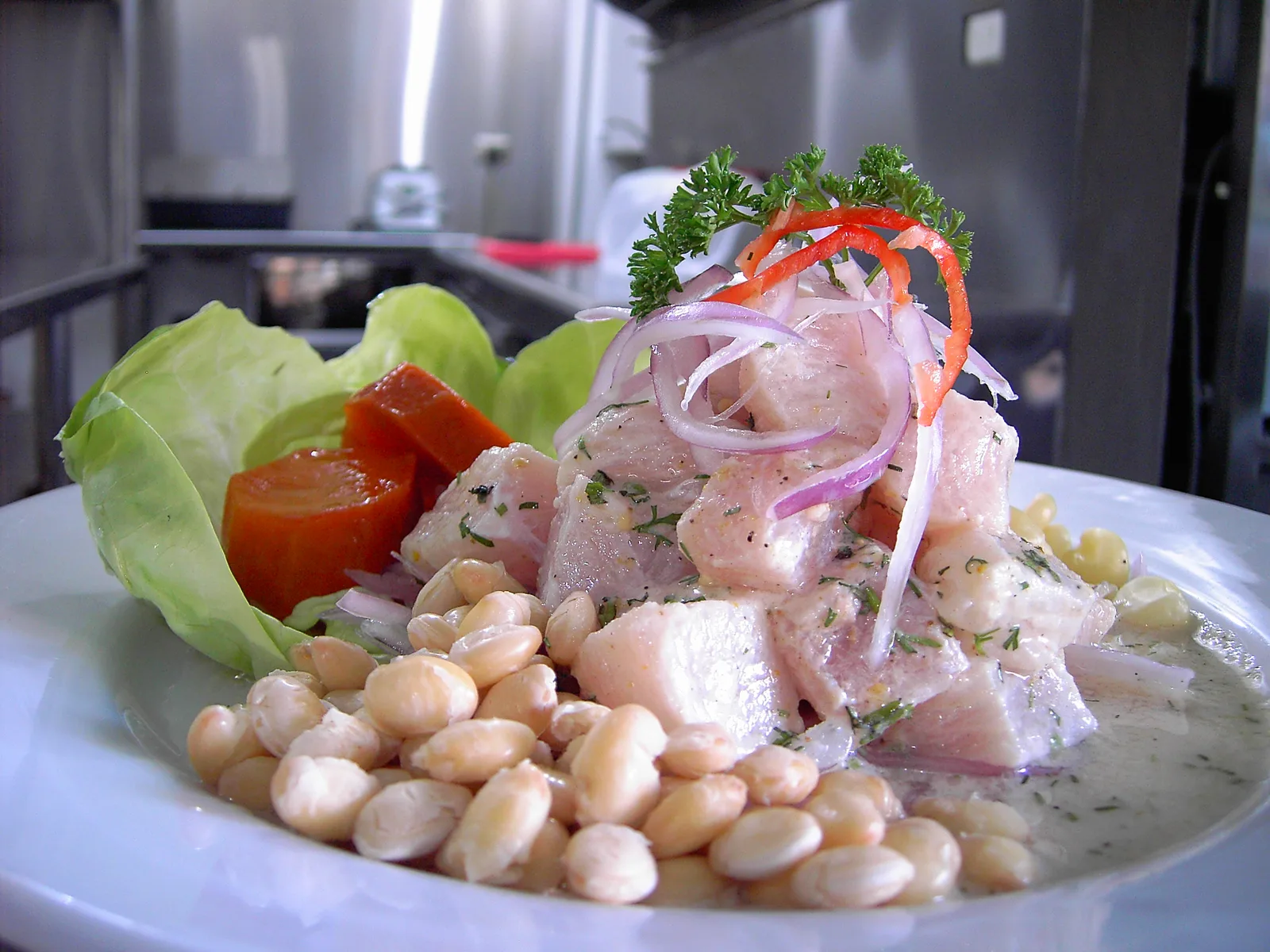
A plate of cebiche de corvina with lime-cured white fish cubes, red onion, ají strips, lettuce, sweet potato and choclo corn Peru flag Peru 35m
Lunch •Coastal Peru

Peruvian Ceviche

Peruvian ceviche is the national dish of Peru: cubes of very fresh sea bass cured in lime juice with red onion, ají limo and cilantro, with the milky, spicy marinade it leaves behind — leche de tigre — spooned over the top. It arrives with boiled sweet potato and big-kernel choclo corn, the sweet and starchy balance to all that citrus and heat. One serving is about 371 g.

Light & Fresh

Fresh sea bass cured in lime juice with red onion, ají limo and leche de tigre, served with sweet potato and choclo.

Pairs Well With
Boiled sweet potato, choclo corn and cancha
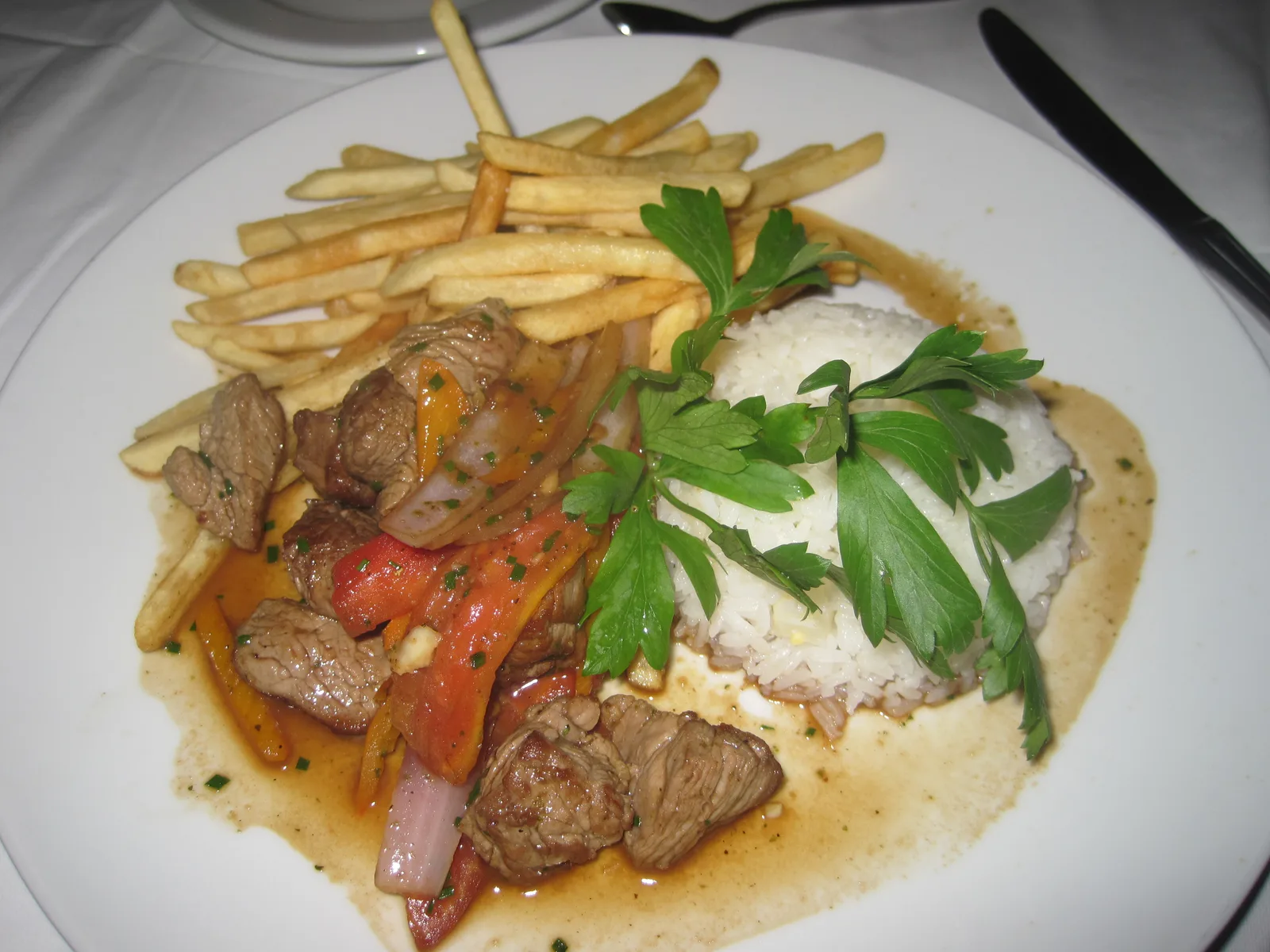
A plate of lomo saltado with seared beef strips, tomato and onion, French fries and a mound of white rice Peru flag Peru 40m
Dinner •Lima Heritage

Lomo Saltado

Lomo saltado is Peru's beloved Chifa stir-fry: strips of sirloin seared at screaming heat in a wok, tossed with red onion, tomato, soy sauce and red wine vinegar, then folded with crisp French fries and served beside white rice. It is the meeting of Cantonese wok cooking and Peruvian ingredients on one plate — smoky, salty, tangy and completely moreish. One serving is about 579 g.

Comfort & Energy

Sirloin seared at high heat with onion, tomato, soy and vinegar, tossed with fries and served with rice.

Pairs Well With
French fries, white rice and salsa criolla
Quick Prep (<30m)
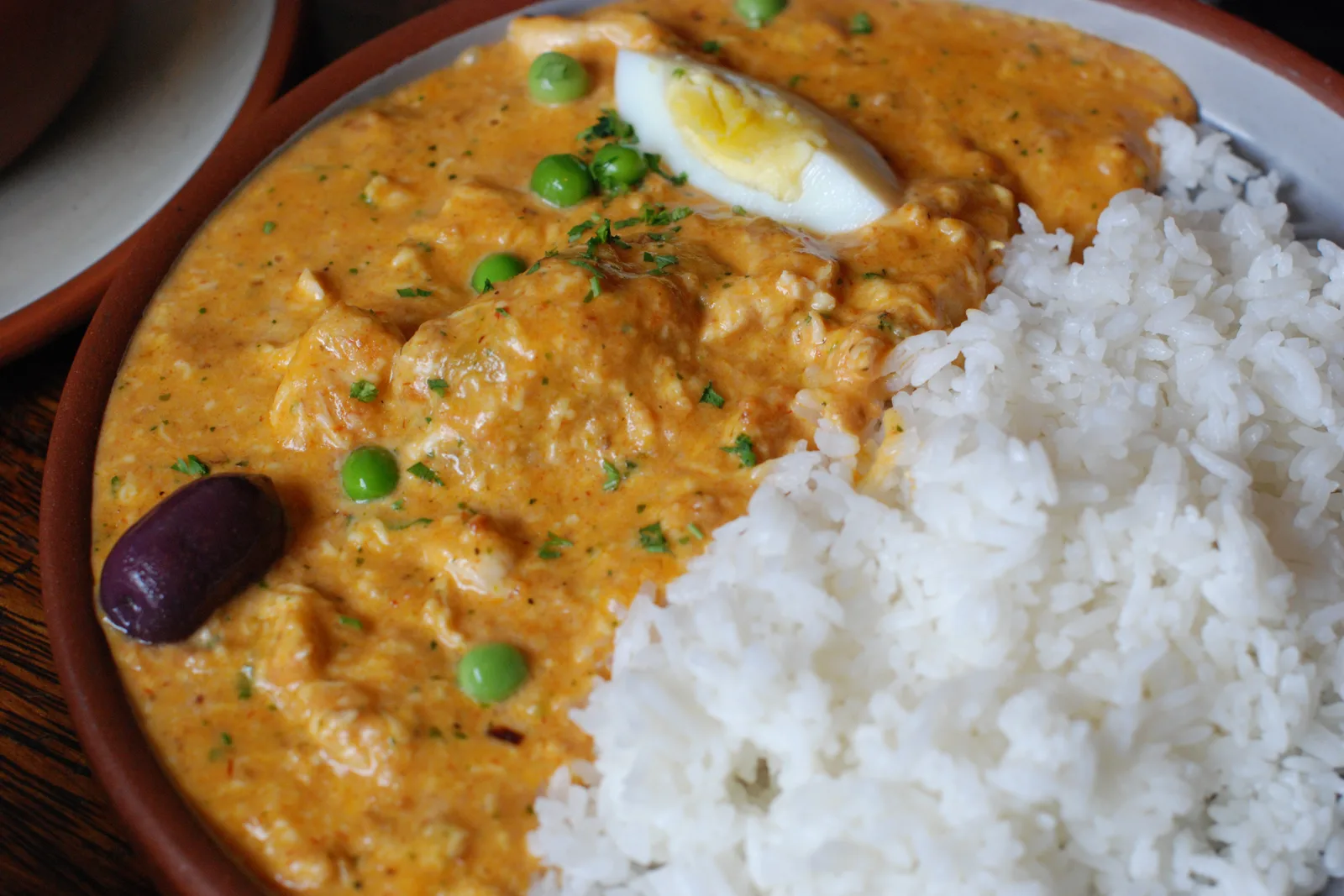
A bowl of ají de gallina with creamy golden chicken sauce, white rice, a boiled egg, peas and a black olive Peru flag Peru 1h
Dinner •Lima Heritage

Ají de Gallina

Ají de gallina is Lima's great comfort stew: poached chicken shredded into a velvety golden sauce of ají amarillo, bread soaked in evaporated milk, ground walnuts and Parmesan, served over white rice with a boiled egg, black olives and boiled potato. It is creamy, nutty, gently spicy and deeply filling — the dish Peruvians ask for when they come home. One serving is about 574 g.

Comfort & Warmth

Poached chicken in a creamy ají amarillo sauce thickened with bread, evaporated milk, walnuts and Parmesan.

Pairs Well With
White rice, boiled potato, boiled egg and black olives
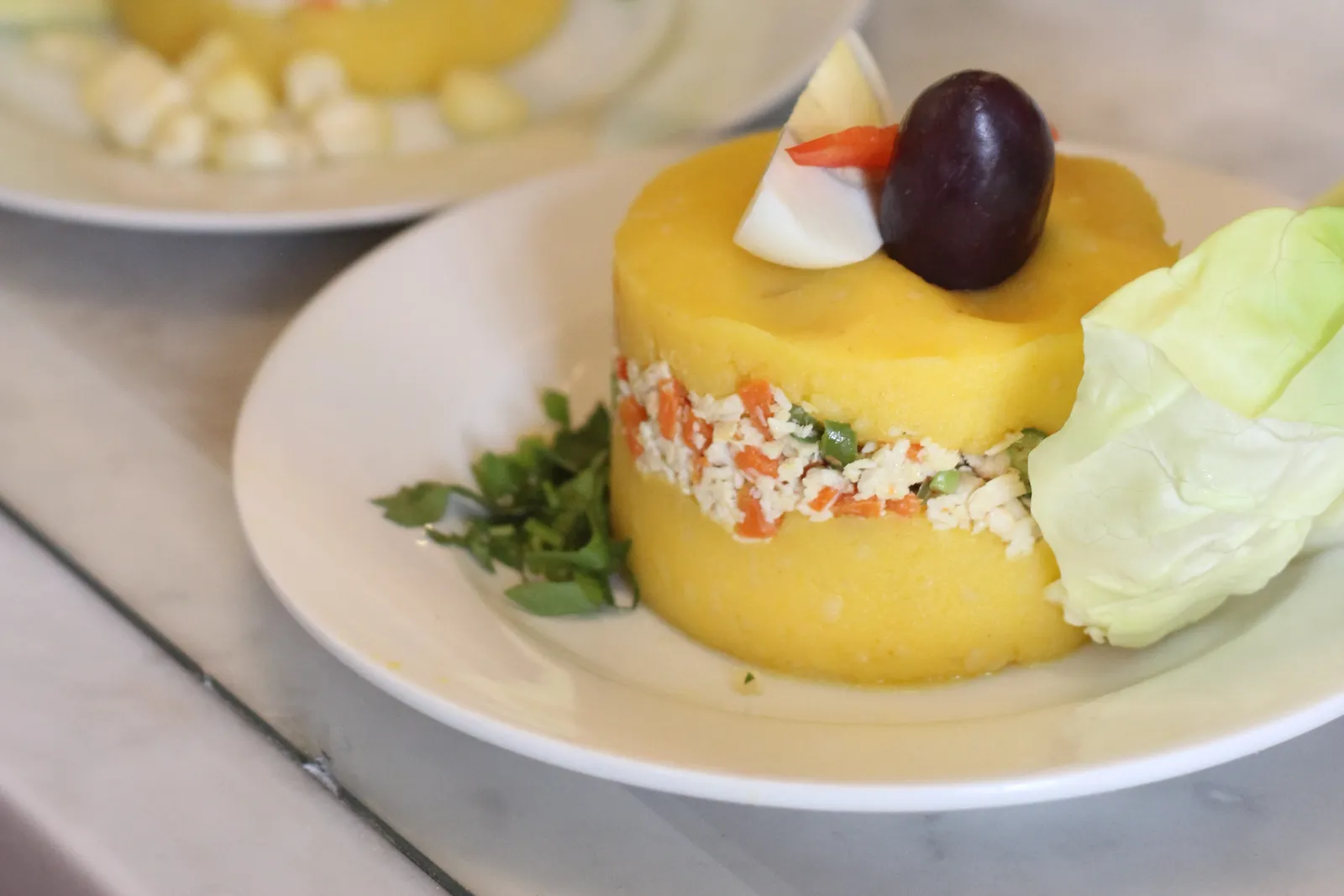
Individual causa limeña terrines of layered yellow potato with an egg and vegetable filling, topped with a boiled egg wedge and a black olive Peru flag Peru 1h
Lunch •Peruvian Heritage

Causa Limeña

This causa limena recipe makes Lima's iconic cold starter: yellow potato mashed with lime juice, olive oil and aji amarillo chilli, pressed into layers around a creamy filling of egg, avocado and mayonnaise. It is served cold, sliced like a cake, and garnished with egg and olives. One serving is about 400 g.

Comfort & Warmth

A cold, layered potato terrine from Lima, bright with lime and aji amarillo, filled with egg and avocado.

Pairs Well With
A crisp green salad and a glass of white wine or chicha morada.

The Dinner Gazette

Never wonder what’s for dinner again

One email a week with easy dinner ideas from around the world — ingredients, steps and nutrition, tested in our kitchen first.

Delivered every Thursday morning. Unsubscribe anytime.