
Curated recipes from 193 countries  •  New seasonal Mediterranean issue out now

Overview

Pulpo a la Gallega

Pulpo a Feira, Galician Octopus

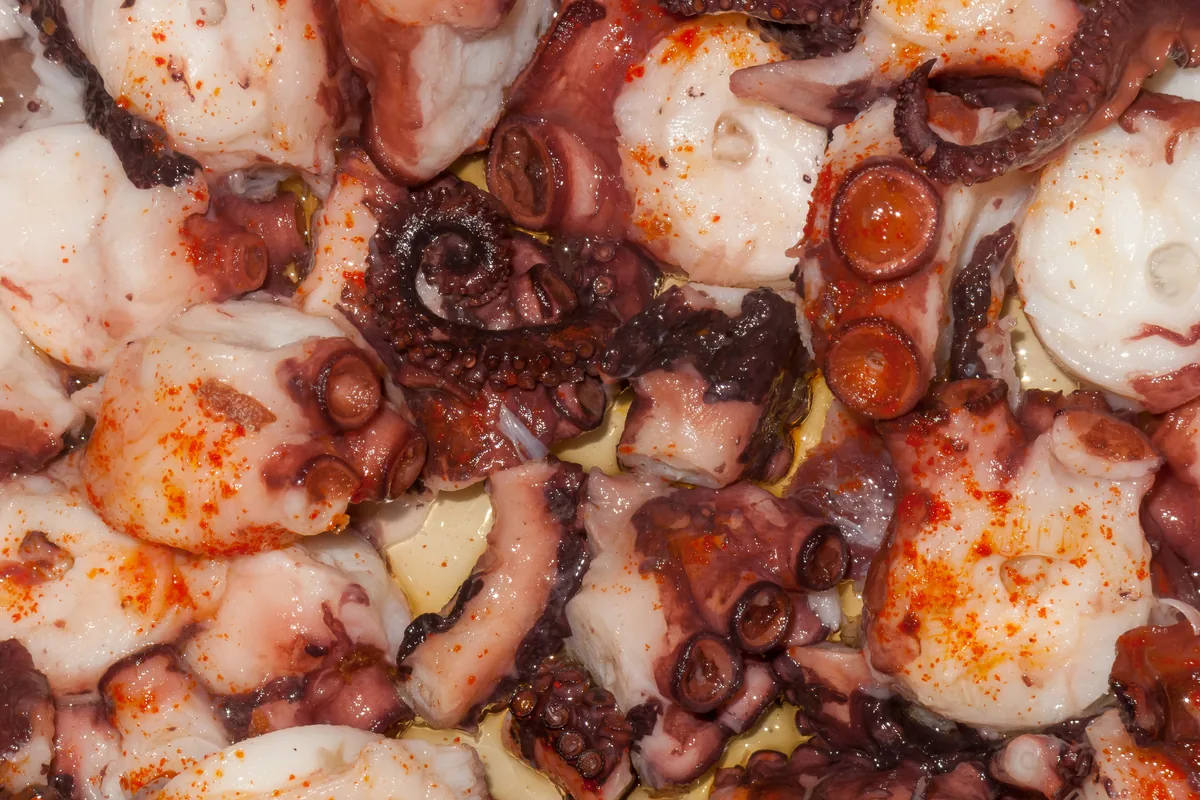
This pulpo a la gallega recipe is Galicia's famous octopus: a whole octopus boiled until tender, sliced over boiled potatoes, and dressed with good olive oil, sweet paprika and coarse salt. There is almost nothing to it, which is the point — with four ingredients the quality of the octopus and the oil does all the work. One serving is about 370 g.

Pulpo a la gallega, also called pulpo a feira, is the octopus of Galicia in north-west Spain, where it was traditionally sold at fairs and festivals — hence the name, 'fair-style octopus'. The dish travelled inland from the coast with dried octopus, which kept without refrigeration, and the wooden plate, olive oil and paprika became its signature. It is still served on wooden boards at festivals across Galicia today.

Pairs well with: Crusty bread, a green salad and a glass of Albariño

Provenance

Spain flag Spain

Galician Classic

Mediterranean & Italy

Time Dedication

1h 15m

15m prep • 60m cook

Batch Yield

4 Servings

549 kcal per serving

1 serving ≈ 370 g

Technical Skill

Intermediate

Medium (Boil & Slice)

Meal Timing & Digestive Fit

Breakfast

Not Advised

Lunch

Hearty Midday Main

Dinner

Ideal Hearty Main

Snack & Tea

Inappropriate

High Protein Occasions: Seafood dinner, festival food, dinner party starter or main Cost: Moderate — about $6–8 per serving at home (octopus is the main cost)
Sliced boiled octopus dusted with paprika and drizzled with olive oil

Galician Classic

Photo: Luis Miguel Bugallo Sánchez (Lmbuga), CC BY-SA 4.0, via Wikimedia Commons

The Heritage Formulary

Measured Ingredients

Estimated cost: Moderate — about $6–8 per serving at home (octopus is the main cost) (USD)

Made with whole octopus, waxy potatoes, extra-virgin olive oil and sweet paprika; nutrition is estimated from USDA values.

Execution Methodology & Culinary Technique

Step-by-Step Cooking Guide

Active 1h 15m
P

Prep Stage: Octopus Ready, Pot Boiling

15 Mins • Cleaning & Slicing

Thaw the octopus fully if frozen, rinse it, and remove the beak from the centre of the tentacles. Peel the potatoes and slice them thickly. Fill a large pot with water, add the bay leaf and 6 g of the salt, and bring it to a rolling boil. Set out a wooden board and a sharp knife for slicing.

Maestro Tip: Use the biggest pot you have — the octopus needs room to move in the boiling water, and a cramped pot cooks it unevenly.

  1. 1

    Dip the Octopus Three Times

    5 Mins Boiling water, 100°C (212°F)

    Hold the octopus by the head and dip the tentacles into the rolling boil for 5 seconds, then lift it out. Repeat three times. Each dip makes the tentacles curl and sets the skin so it does not slip off during cooking.

    This is the Galician trick — the repeated dipping firms the skin and helps the octopus cook evenly.

    Done when: The tentacles are curled and the skin is set and clinging to the flesh.

  2. 2

    Boil the Octopus

    40 Mins Gentle boil, about 100°C (212°F)

    Lower the octopus fully into the pot, reduce the heat to a steady gentle boil, and cook for about 40 minutes. Test by piercing the thickest part of a tentacle with a knife — it should slide in with only a little resistance. Lift the octopus out and rest it for 5 minutes.

    Do not boil hard the whole time — a rolling boil toughens the flesh, while a gentle boil keeps it tender.

    Done when: A knife slides into the thickest tentacle with slight resistance, and the flesh is tender, not rubbery.

  3. 3

    Boil the Potatoes

    15 Mins Boiling water, 100°C (212°F)

    While the octopus rests, add the potato slices to the same cooking water and boil for about 15 minutes until just tender — a knife should slide in easily but the slices should still hold their shape. Lift them out with a slotted spoon.

    Cooking the potatoes in the octopus water gives them a gentle sea flavour that plain water never does.

    Done when: The potatoes are tender through but still holding their shape as slices.

  4. 4

    Slice the Octopus

    5 Mins No heat — slicing

    Cut the tentacles into slices about 1 cm (1/2 in) thick, on a slight diagonal, and cut the head into similar pieces. Work while the octopus is still warm so it slices cleanly.

    A sharp knife and a steady hand matter here — sawing tears the flesh, while one clean cut keeps the slices neat.

    Done when: The slices are even, neat rounds with the skin still attached.

  5. 5

    Dress and Serve

    5 Mins No heat — serve warm

    Arrange the potato slices on a warm wooden board or flat plate, lay the octopus slices over them, drizzle generously with the olive oil, dust evenly with the paprika, and finish with the remaining coarse salt. Serve at once, while warm.

    Dress at the table if you can — the oil and paprika look their best for the first few minutes.

    Done when: The plate is glossy with oil, red with paprika, and the octopus is warm and tender.

Finishing Touches & Plating

Lay the warm octopus over its potatoes, drizzle with good olive oil, dust with paprika, and finish with flaky salt — then serve at once, with bread to mop up the oil.

Nutritional Physiology & Benefits

Nutrition

Energy

549

kcal / serving

Protein

59g

Complete AA

Carbs

36g

Complex

Fats

18g

Healthy

Per serving (4 servings · 1 serving ≈ 370 g)
Energy549 kcal
Protein59 g
Carbohydrates36 g
Fat18 g
Fibre3.6 g
Sugar1.4 g
Sodium1648 mg
Per 100g
Energy148 kcal
Protein16 g
Carbohydrates9.7 g
Fat4.8 g
Fibre1 g
Sugar0.4 g
Sodium445 mg

Nutrition values are estimated — calculated from USDA FoodData Central values for the listed ingredients.

Vitamins & minerals: Provides vitamin B12, iron, selenium and copper from the octopus, plus potassium and vitamin C from the potatoes. Nutrition is estimated.

Very High in Protein

One serving gives about 59.2 g of protein with only about 549 kcal — lean, filling, and rich in minerals.

Simple and Unprocessed

Octopus, potatoes, oil, paprika and salt — five ingredients, no sauces, no frying, nothing hidden.

Rich in B12 and Iron

Octopus is one of the best natural sources of vitamin B12 and iron, with selenium and copper alongside.

Food Pairings

What to Eat With

To optimize nutrient absorption and elevate the sensory depth, pair with these authentic accompaniments:

Sides

Crusty Bread

Bread is essential for mopping up the paprika-stained olive oil left on the plate — in Galicia, leaving it is a waste.

Vegetables

Simple Green Salad

A lightly dressed salad adds freshness and crunch against the soft octopus and potatoes.

Drinks

Albariño White Wine

A cold glass of Albariño, the white wine of Galicia, matches the sea flavour of the octopus and the fruitiness of the oil.

Sparkling Water with Lemon

Cold sparkling water with lemon cleanses the palate between rich, oily mouthfuls without competing with the wine.

Complete menu

Serve the pulpo a la gallega on a wooden board with crusty bread, a simple green salad, and a cold glass of Albariño.

Digestive Guardrails

What NOT to Combine

To prevent digestive distress, sluggishness, or palate clash, avoid pairing the dish with these elements:

High in Sodium

The cooking water and finishing salt make this dish salty, so keep the portion to one serving and skip extra salty sides. This is general food information, not medical advice.

Cook Octopus Fresh and Eat Promptly

Octopus spoils quickly, so buy it fresh or fully thawed, cook it the same day, and refrigerate leftovers at once. Reheat gently until hot through, 74°C (165°F). This is general food information, not medical advice.

General information only, not medical advice — consult a doctor for personal dietary decisions.

Who Should Eat It

Who Should Eat

  • General adultsA lean, protein-rich dinner — one serving with bread and salad is a balanced plate.
  • ChildrenChildren often enjoy the mild, tender slices; cut them small and go easy on the paprika for younger ones.
  • ElderlySoft and easy to chew when cooked properly; watch the salt and serve with soft bread.
  • Pregnant womenFine when freshly cooked and served hot; make sure the octopus is cooked right through and served the same day.
  • Breastfeeding womenA filling, iron- and B12-rich meal; a smaller portion with extra potatoes works well if the richness feels heavy.
  • AthletesAbout 59.2 g of protein per serving makes it an excellent post-training meal; the potatoes give the carbs.
  • Weight gainLean and easy to eat, but not very energy-dense — add bread and a second helping of potatoes for more calories.
  • Weight lossLean protein with modest fat, so keep to one serving, go easy on the oil, and fill half the plate with salad.

Health Conditions — Adjust or Avoid

Conditions

  • DiabetesAbout 35.8 g of carbs per serving, mostly from potatoes. Keep the potato portion modest. Ask your clinician about portion size.
  • High blood pressureAbout 1648 mg of sodium per serving. Use less salt in the pot and at the table. Ask your clinician about sodium limits.
  • Kidney diseaseHigh in protein and sodium, and octopus is rich in minerals. Keep the portion small. Ask your clinician before eating it regularly.
  • GoutOctopus is moderately high in purines. Keep the portion small and avoid it during a flare. Ask your clinician for guidance.
  • Stomach issuesPlain boiled octopus is gentle on most stomachs; the oil and paprika can bother reflux in some people. Eat a modest portion. Ask your clinician if symptoms flare.
  • Cardiovascular diseaseLow in saturated fat as written; the olive oil is mostly unsaturated. Keep the oil modest. Ask your clinician about saturated fat intake.
  • Fatty liverLean and modest in calories; the potatoes are the main energy source. Keep the portion to one serving. Ask your clinician about a suitable portion.
  • Food allergiesContains mollusc (octopus). Shellfish allergy can cross-react with octopus — check before serving to anyone with a shellfish allergy. Ask your clinician if you have a food allergy.
  • Special therapeutic dietsNot suitable for low-sodium or shellfish-free diets as written. Ask your clinician or dietitian for guidance.

If you have a medical condition, consult your doctor before changing your diet.

Storage & Use

Storage & Use

How to store
Cool leftovers quickly and store the octopus and potatoes separately in airtight containers.
In the fridge
1–2 days; eat as soon as possible.
In the freezer
Not recommended — thawed octopus turns rubbery.
How to reheat
Warm gently in a covered pan with a splash of water over low heat, about 70°C (160°F), until hot through — do not boil it again or it will toughen.
Freezing recommended
No — the texture does not survive freezing.
Signs it has spoiled
Sour or ammonia smell, slimy surface, or grey discolouration.

More recipes to explore

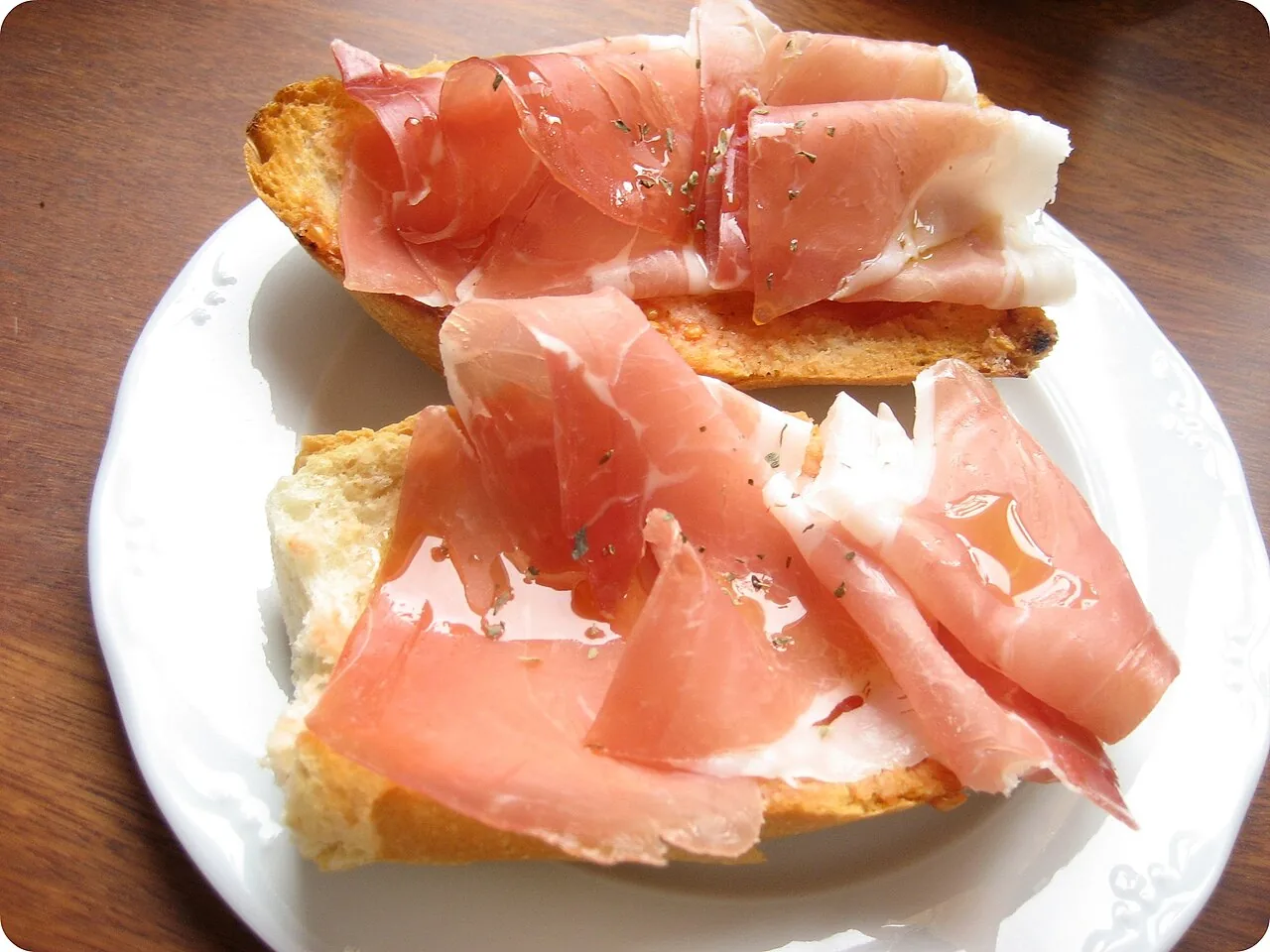
Pan con tomate with jamón ibérico on toasted bread Spain flag Spain 15m
Snack & Tea •Catalan Aperitivo

Pan con Tomate & Jamón Ibérico

Country bread rubbed with ripe Ramallet tomato, drizzled with cold-pressed Arbequina olive oil and topped with jamón ibérico.

Vascular Health

Toasted tomato bread with jamón ibérico, olive oil and olives.

Pairs Well With
Castelvetrano Olives & Sparkling Mineral Water
Quick Prep (<30m)
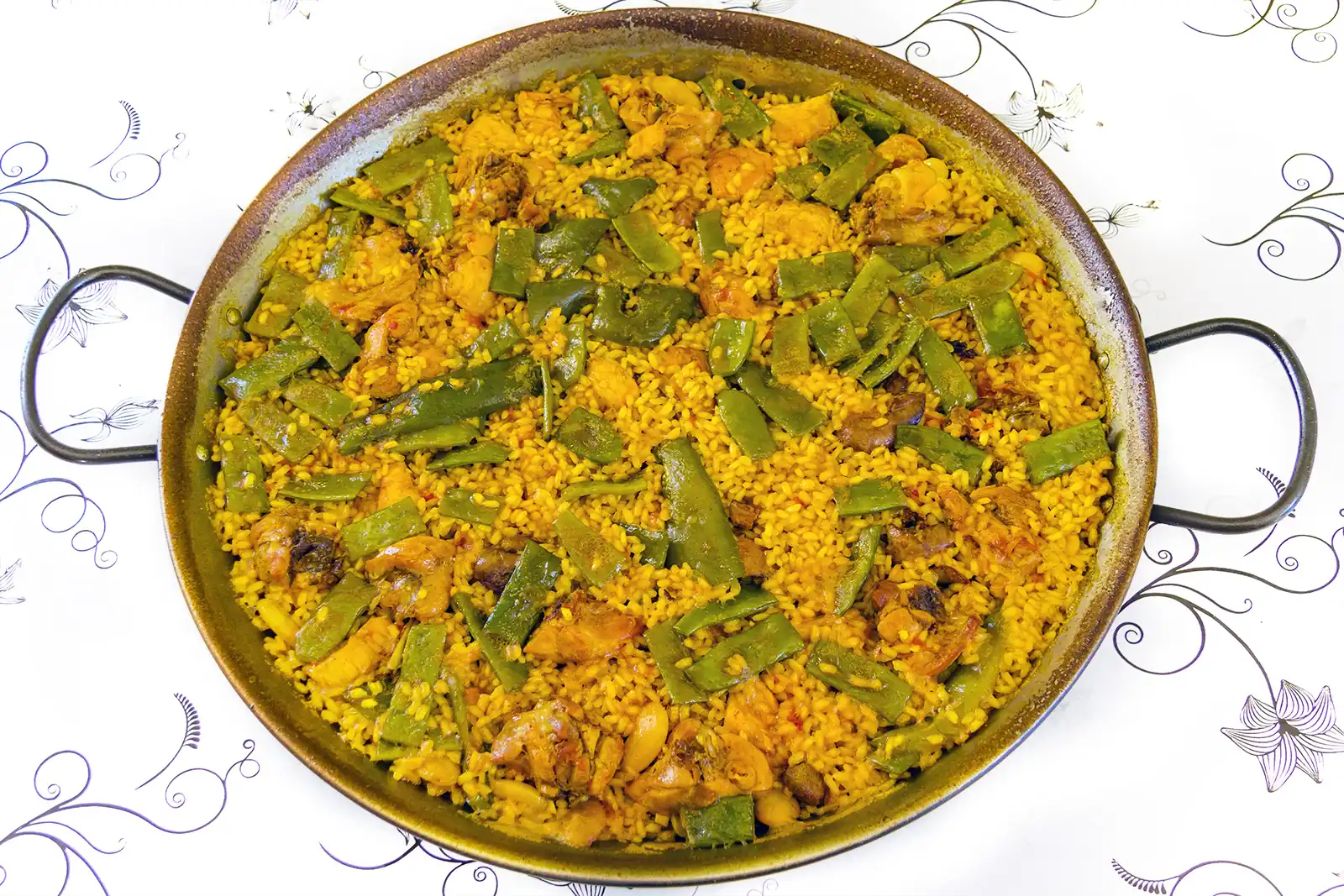
A wide paella pan of paella valenciana with saffron rice, green beans and chicken Spain flag Spain 1h 10m
Dinner •Valencia Rice Fields

Paella Valenciana

This paella valenciana recipe cooks Bomba rice in a wide, shallow pan with chicken, rabbit, green beans and garrofó beans, scented with saffron and rosemary. One serving is about 470 g.

Comfort & Warmth

Saffron rice cooked in a wide pan with chicken, rabbit and green beans.

Pairs Well With
A green salad and a glass of white wine
High Protein
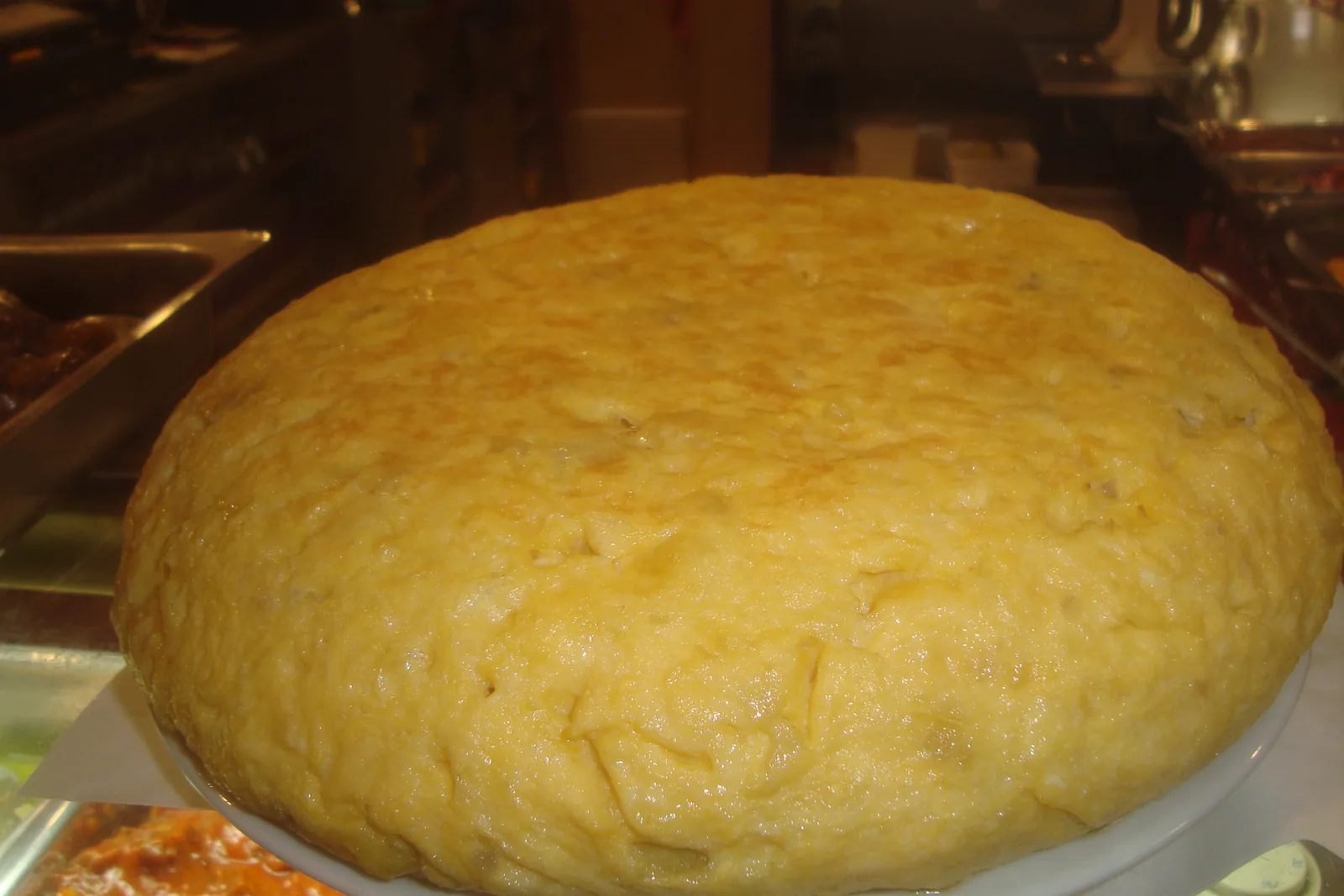
A whole golden tortilla española, a thick Spanish potato omelette, on a plate Spain flag Spain 55m
Snack & Tea •Navarre Bar Classic

Tortilla Española

This spanish tortilla recipe slowly cooks potatoes and onion in olive oil, folds them into beaten eggs, and turns out a thick, golden cake that is soft in the middle. One serving is about 220 g.

Comfort & Warmth

A thick, golden omelette of slow-cooked potatoes, onion and egg.

Pairs Well With
Pan con tomate and a glass of red wine
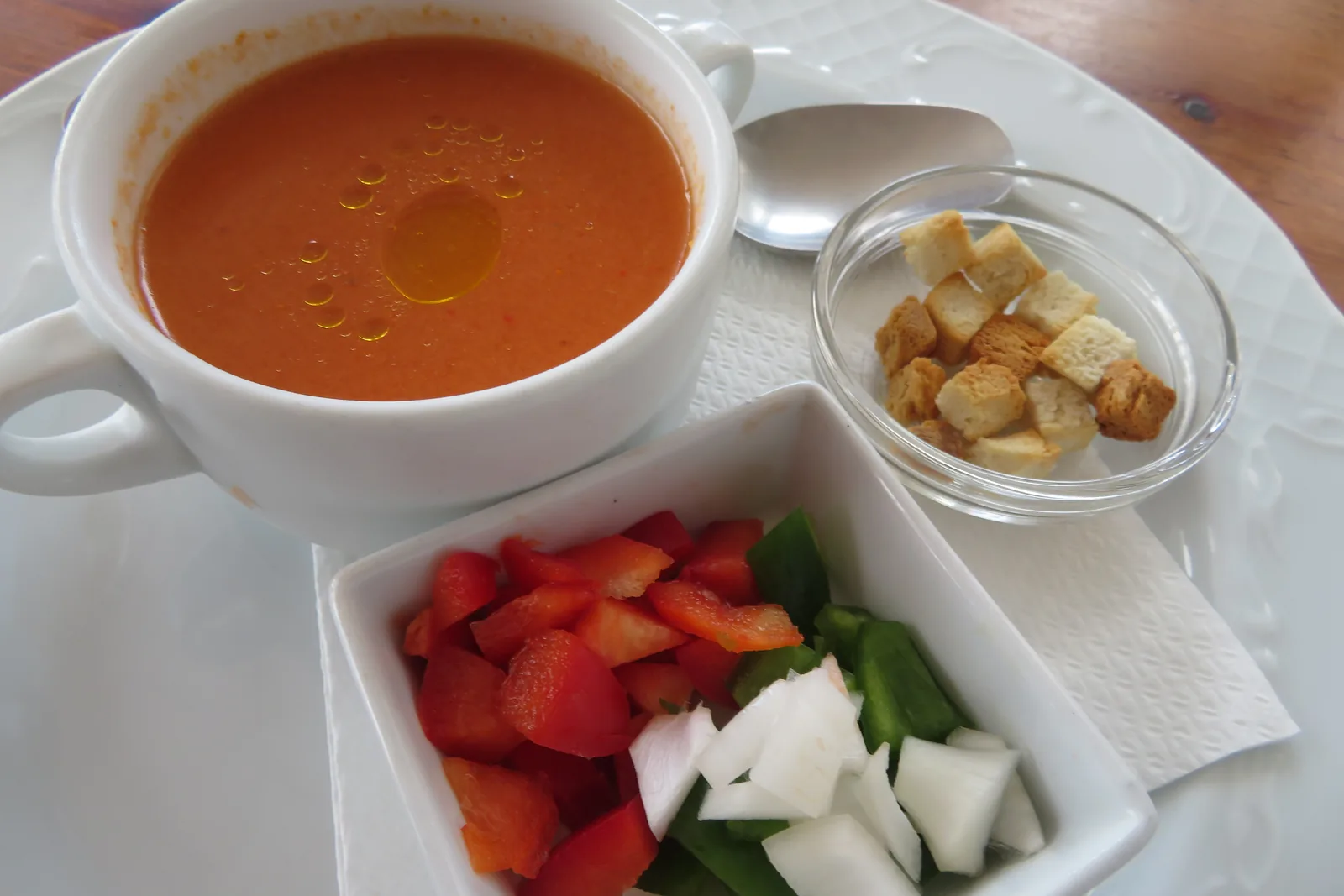
A cup of chilled orange-red gazpacho with olive oil, served with diced peppers and onion and a bowl of croutons Spain flag Spain 20m
Lunch •Andalusian Classic

Gazpacho

This gazpacho recipe is the Andalusian classic: ripe tomatoes, cucumber, green pepper, onion and garlic blended raw with bread, sherry vinegar and olive oil, then chilled until ice cold. One serving is about 395 g. It takes 20 minutes plus chilling, and there is no cooking at all.

Light & Refreshing

Chilled raw tomato soup blended with cucumber, pepper and olive oil, served cold with diced vegetables and croutons.

Pairs Well With
Croutons, diced vegetables & crusty bread
Soups & Broths • Quick Prep (<30m)

The Dinner Gazette

Never wonder what’s for dinner again

One email a week with easy dinner ideas from around the world — ingredients, steps and nutrition, tested in our kitchen first.

Delivered every Thursday morning. Unsubscribe anytime.