Curated recipes from 193 countries  •  New seasonal Mediterranean issue out now

Overview

Qatari Madrouba

Madrouba, Mathrooba, Beaten Rice

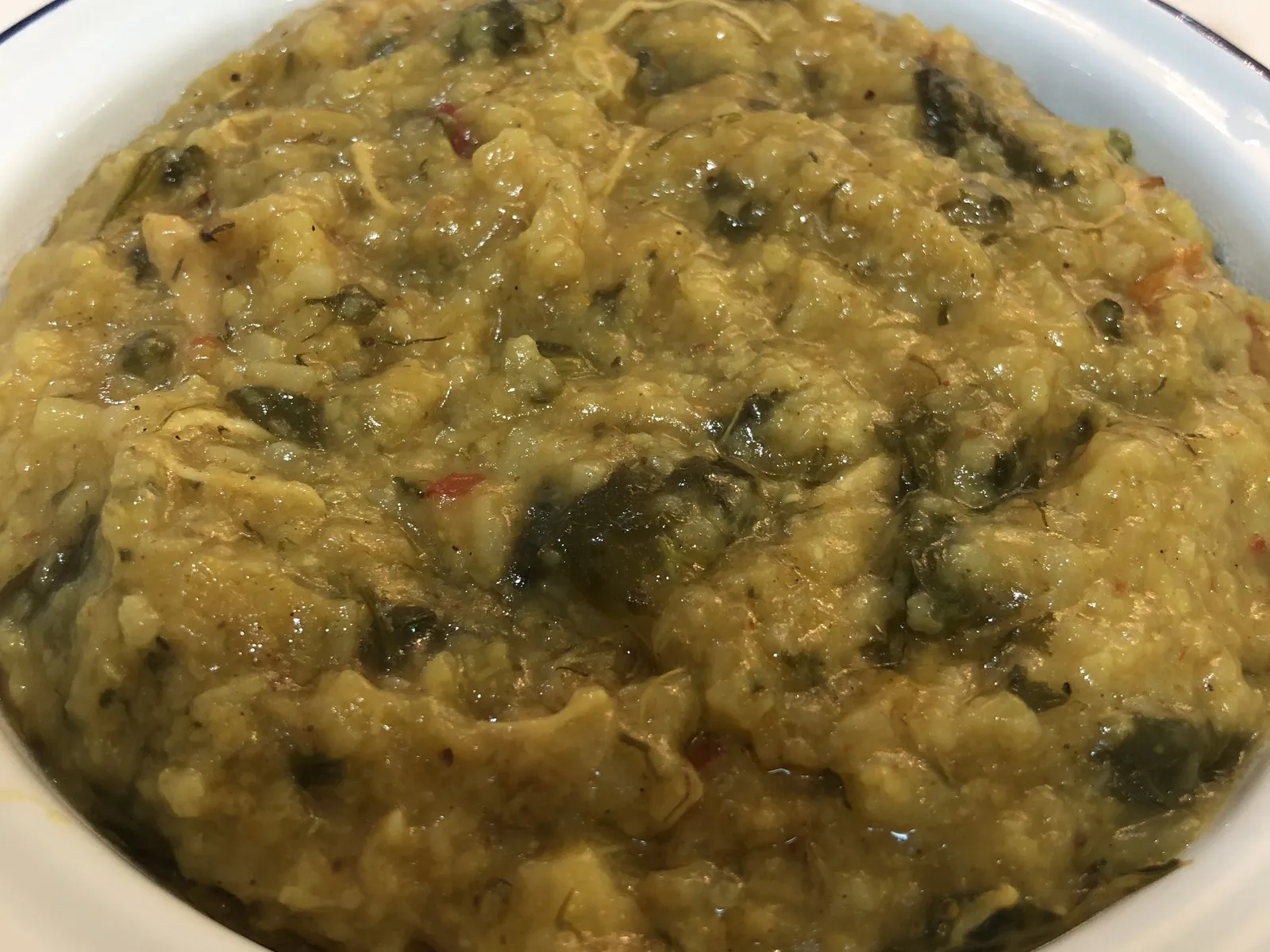
This qatari madrouba recipe is Qatar's answer to a cold evening or a Ramadan iftar: bone-in chicken is simmered with tomatoes, dried lime and warm spices, then long-grain rice goes in and cooks far past fluffy — until it breaks down completely. Spinach, coriander and parsley are stirred in at the end, and the whole pot is beaten with a wooden spoon until it turns into a thick, golden porridge with shredded chicken running through it. One serving is about 480 g.

Madrouba takes its name from the Arabic word darb, meaning to hit or beat — the rice is cooked long past fluffy, then beaten with a wooden spoon until it turns into porridge. It is a Ramadan classic of Qatar, Oman and Bahrain, where the long simmer makes it soft enough to be easy on a fasting stomach and filling enough to last the night. Qatari versions simmer whole chicken with dried lime, turmeric and cumin, and stir in spinach, coriander and parsley at the end, before the beating begins.

Pairs well with: Omani salad, khubz & hot black tea

Provenance

Qatar flag Qatar

Doha Heritage

Middle Eastern

Time Dedication

2h 15m

25m prep • 110m cook

Batch Yield

6 Servings

576 kcal per serving

1 serving ≈ 480 g

Technical Skill

Intermediate

Medium (One Pot, Low & Slow)

Meal Timing & Digestive Fit

Breakfast

Not Advised

Lunch

Hearty Midday Main

Dinner

Ideal Hearty Main

Snack & Tea

Inappropriate

Occasions: Ramadan iftar, Winter dinner, Family dinner, Comfort food Cost: Medium — about $3 per serving at home
A bowl of Qatari madrouba — golden beaten rice porridge with shredded chicken and green herbs

Doha Heritage

Photo: AmnaMF, CC BY-SA 4.0, via Wikimedia Commons

The Heritage Formulary

Measured Ingredients

Estimated cost: Medium — about $3 per serving at home (USD)

Made with real baharat, turmeric and dried lime, with the rice overcooked and beaten by hand into a true porridge.

Execution Methodology & Culinary Technique

Step-by-Step Cooking Guide

Active 2h 15m
P

Prep Stage: Soak the Rice, Chop the Greens & Grate the Tomatoes

25 Mins • Soaking & Chopping

Rinse the basmati until the water runs clear and leave it to soak. Grate the tomatoes and discard the skins, chop the onion, mince the garlic, grate the ginger, and wash and chop the spinach, coriander and parsley. Pierce the dried limes with a fork and pat the chicken legs dry.

Maestro Tip: Washing the rice until the water runs clear keeps the porridge from turning gluey — it should be creamy, not sticky.

  1. 1

    Brown the Chicken & Build the Broth

    15 Mins Medium-high heat, ~190°C (375°F)

    Heat the ghee in a wide, heavy pot over medium-high heat. Brown the chicken legs for 8 to 10 minutes, turning once, until golden. Stir in the onion and cook for 3 minutes, then add the garlic, ginger, turmeric, cumin and baharat and cook for 1 minute until fragrant. Add the grated tomatoes and tomato paste, cook for 2 minutes, then pour in the water and add the pierced dried limes, the green chilli and the salt.

    Frying the spices in the ghee for a full minute wakes up their flavour — raw spice tastes flat in the finished porridge.

    Done when: The broth smells warm and spiced, and the tomatoes have melted into the liquid.

  2. 2

    Simmer the Chicken Until Tender

    45 Mins Gentle simmer, ~95°C (200°F)

    Bring the broth to a gentle simmer, cover, and cook for 45 minutes until the chicken is tender and pulls easily from the bone. Lift the chicken out, pull the meat off the bones in shreds, and discard the bones and skin. The meat will be well past 74°C (165°F) throughout.

    Keep the simmer gentle — a hard boil toughens the chicken and clouds the broth.

    Done when: The chicken is tender and shreds easily with two forks.

  3. 3

    Add the Rice & Cook It to Pieces

    40 Mins Low heat, ~120°C (250°F)

    Return the shredded chicken to the pot, add the drained rice, and bring back to a gentle simmer. Cover and cook on low heat for 35 to 40 minutes, stirring every 10 minutes and adding splashes of hot water whenever the pot looks dry. The rice should overcook completely — the grains should be barely discernible and the pot should look like a thick porridge.

    Do not let the pot run dry: madrouba needs more water than ordinary rice, and a dry pot catches and burns on the bottom.

    Done when: The rice has broken down into a thick porridge and the spoon leaves a slow trail through it.

  4. 4

    Beat It, Add the Greens & Serve

    10 Mins Low heat, ~120°C (250°F)

    Stir in the spinach, coriander and parsley and cook for 3 minutes until the greens wilt. Take the pot off the heat and beat the mixture hard with a wooden spoon or a potato masher for 3 to 5 minutes, until the rice and chicken are mashed together into a smooth, spoonable porridge. Stir in the lemon juice, taste for salt, and ladle into deep bowls.

    Beating is the whole point of the name — keep going until no whole grains of rice are left, but stop while the porridge still holds its shape on the spoon.

    Done when: The madrouba is thick, creamy and golden, with flecks of green through it, and it holds a soft mound in the bowl.

Finishing Touches & Plating

Serve the madrouba hot in deep bowls, thick and golden with green herbs running through it, with lemon wedges and crisp fried onions on the side.
Nutritional Physiology & Benefits

Nutrition

Energy

576

kcal / serving

Protein

30g

Complete AA

Carbs

56g

Complex

Fats

25g

Healthy

Per serving (6 servings · 1 serving ≈ 480 g)
Energy576 kcal
Protein30 g
Carbohydrates56 g
Fat25 g
Fibre3.5 g
Sugar4.0 g
Sodium652 mg
Per 100g
Energy120 kcal
Protein6.2 g
Carbohydrates11.8 g
Fat5.2 g
Fibre0.7 g
Sugar0.8 g
Sodium136 mg

Nutrition values are estimated — calculated from USDA FoodData Central values for the listed ingredients.

Vitamins & minerals: Vitamin A and folate (spinach), vitamin C (tomatoes and lemon), iron and vitamin B12 (chicken), vitamin B6 (chicken). Nutrition values are estimated.

A Complete One-Pot Meal

Chicken, rice and spinach in one pot give protein, carbohydrate, iron and folate in every bowl.

Gentle, Easy to Digest

The long, slow simmer breaks the rice down completely, which is why madrouba is the dish Qatari families serve when someone needs something soft and filling.

Spices, Not Extra Salt

Turmeric, cumin, baharat and dried lime carry most of the flavour, so the porridge tastes big without relying on extra salt.

Food Pairings

What to Eat With

To optimize nutrient absorption and elevate the sensory depth, pair with these authentic accompaniments:

Vegetables

Omani Salad

A sharp salad of cucumber, tomato, red onion and mint is madrouba's essential partner: its cool acidity cuts the richness of the porridge and cleanses the palate.

Crisp Fried Onions

A spoon of golden fried onions scattered over the bowl adds crunch and sweetness against the soft, savoury porridge.

Sides

Khubz (Flatbread)

Warm flatbread is the traditional spoon for madrouba — tear off a piece and scoop, so every bite gets both the soft porridge and something to hold it with.

Drinks

Hot Black Tea

Unsweetened hot black tea after the meal is the traditional Gulf finish: it is light, warming, and a calm contrast to the rich, spiced porridge.

Complete menu

Serve madrouba with Omani salad and warm khubz, scatter crisp fried onions over each bowl, and finish with hot black tea.

Digestive Guardrails

What NOT to Combine

To prevent digestive distress, sluggishness, or palate clash, avoid pairing the dish with these elements:

A Second Heavy Rice Dish

Madrouba is already a full portion of rice, so serving another large rice or bread dish alongside doubles the carbohydrate load and leaves little room for the salad that balances the plate. This is general information, not medical advice.

Letting the Pot Run Dry

A porridge that catches and burns on the bottom picks up a bitter, scorched taste that cannot be fixed, so keep the heat low and add hot water whenever the pot looks dry. This is general information, not medical advice.

General information only, not medical advice — consult a doctor for personal dietary decisions.

Who Should Eat It

Who Should Eat

  • General adultsA generous, fragrant comfort bowl — tender chicken and rice beaten to a creamy porridge with spinach and warm spices.
  • ChildrenMild, soft and easy to eat; leave out the green chilli and serve the lemon on the side so they can choose.
  • ElderlySoft porridge and shredded chicken are very easy to chew and swallow; serve a smaller bowl, as the dish is filling.
  • Pregnant womenWell-cooked chicken and rice are a good choice; make sure the chicken is cooked through and the dish is served hot.
  • Breastfeeding womenA hearty, protein-rich family meal; drink water alongside, as with any large meal.
  • AthletesAbout 30 g of protein and 56 g of carbohydrate per serving make this a strong post-training meal.
  • Weight gainEnergy-dense and easy to eat in a large bowl, with protein from the chicken and iron from the spinach.
  • Weight lossFilling but energy-dense, so take a smaller bowl and fill the rest of the plate with salad.

Health Conditions — Adjust or Avoid

Conditions

  • DiabetesHigh in carbohydrate from the rice, so keep the portion modest and add extra salad; ask your clinician about portions.
  • High blood pressureSodium is about 652 mg per serving, mostly from the salt; do not add extra salt at the table and go easy on the pickles; ask your clinician if you follow a low-sodium diet.
  • Kidney diseaseHigh in protein and potassium from the chicken, spinach and tomato; portion control matters, so ask your clinician before eating a full serving.
  • GoutChicken contains purines, so a large portion may not suit a flare; keep portions modest and ask your clinician.
  • Stomach issuesSpices, chilli and dried lime can irritate a sensitive stomach; skip the chilli and the lemon if you are prone to heartburn.
  • Cardiovascular diseaseChicken skin and ghee add saturated fat, so remove the skin and use less ghee if this is a concern; ask your clinician.
  • Fatty liverRich and energy-dense, so keep the portion modest and choose the skinless-chicken version; ask your clinician.
  • Food allergiesContains no common allergen as written, apart from possible gluten traces in spice blends; check the baharat label. If you have any food allergy, check every ingredient and ask your clinician.
  • Special therapeutic dietsHalal by ingredients; not suitable for low-protein or low-potassium diets without adjustment, so ask your clinician.

If you have a medical condition, consult your doctor before changing your diet.

Storage & Use

Storage & Use

How to store
Cool quickly and store in an airtight container.
In the fridge
3 days.
In the freezer
Up to 2 months.
How to reheat
Reheat gently with a splash of water, stirring often, until steaming hot throughout, to 74°C (165°F); it thickens as it sits, so loosen it with water.
Freezing recommended
Yes, up to 2 months; freeze in single portions for easy reheating.
Signs it has spoiled
Sour or off smell, slimy surface, or mould.

More recipes to explore

Qatari thareed — lamb chunks, chickpeas and tomato in a spiced stew served over soaked flatbread, with a green chilli and a lime slice Qatar flag Qatar 2h 10m
Dinner •Doha Heritage

Qatari Thareed

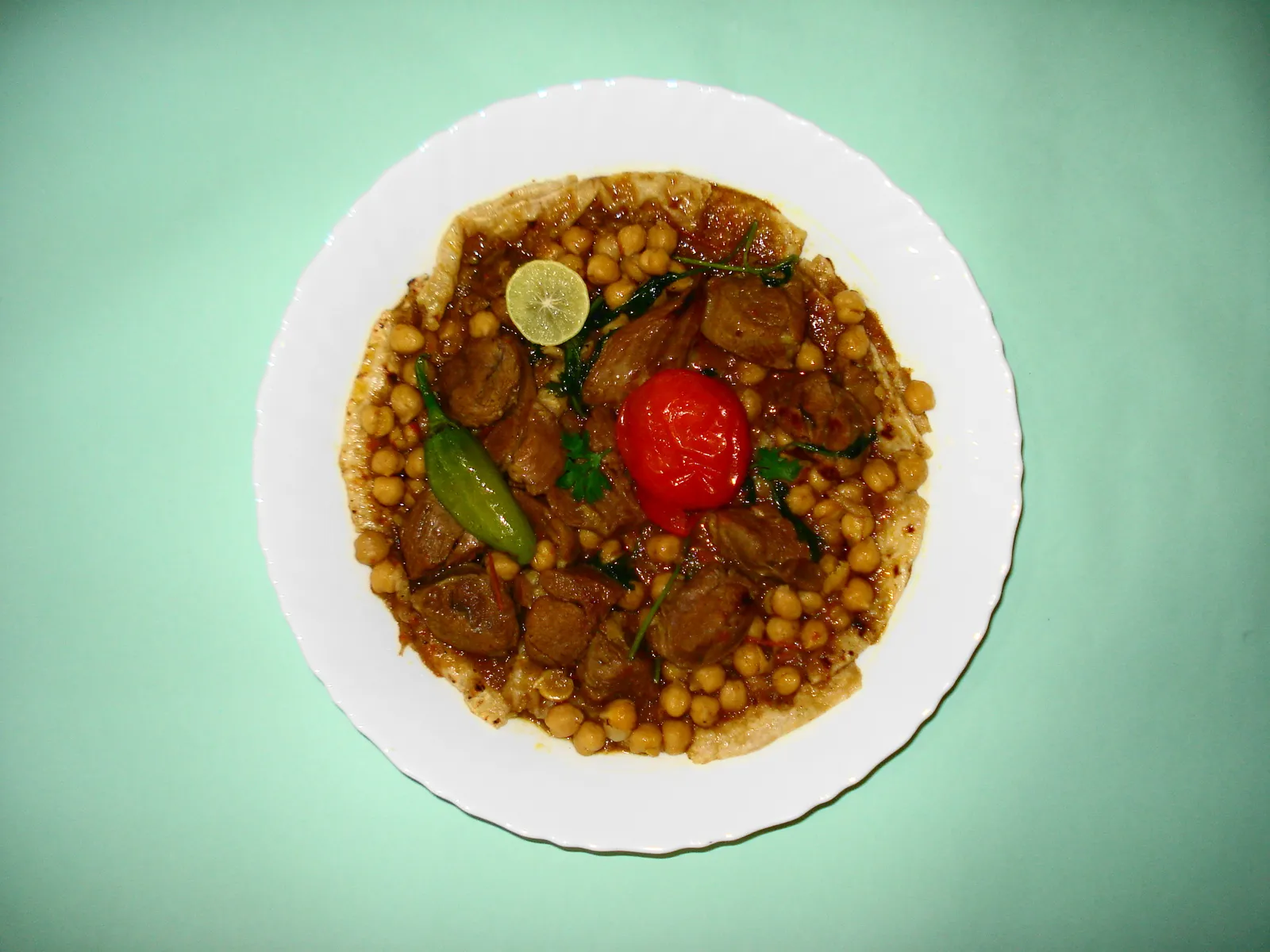
This thareed recipe is the dish Qatari families gather around at Ramadan iftar: bone-in lamb is simmered slowly with pumpkin, potato, carrot, zucchini and chickpeas in a warm, tomato-rich broth spiced with baharat and dried lime. At the table, torn pieces of flatbread are laid in a wide serving dish and the hot stew is ladled over them, so the bread soaks up the broth while the lamb and vegetables sit on top. One serving is about 600 g.

Ramadan Classic & Family Stew

Tender lamb and vegetables simmered in a spiced tomato broth, ladled over flatbread until it soaks up every drop.

Pairs Well With
Fresh salad, pickles & hot black tea
Soups & Broths
Small golden gers ogaily ring cakes, saffron-yellow sponge cakes baked in a sesame-lined tin Qatar flag Qatar 1h 5m
Snack & Tea •Doha Heritage

Qatari Gers Ogaily

This gers ogaily recipe is the Gulf's tea-time cake: eggs are beaten with sugar until pale and foamy, then flour, cardamom and saffron steeped in rose water are folded in, and the batter is poured into a ring tin lined with sesame seeds. It bakes into a light, golden sponge that smells of saffron and cardamom, with a nutty crunch of sesame on the outside. One slice is about 100 g.

Tea-Time Cake & Eid Sweet

A golden saffron and cardamom sponge baked in a sesame-lined ring tin.

Pairs Well With
Sweet milk tea & fresh fruit
Bœuf bourguignon — French beef braised in red wine France flag France 4h
Dinner •Burgundy Terroir

Bœuf Bourguignon

Beef braised gently in red wine until the connective tissue melts into a velvet, gelatin-rich sauce — the classic Burgundy Sunday dinner.

Cellular Repair

Beef braised in red wine until spoon-tender, with mushrooms and pearl onions.

Pairs Well With
Parsnip Purée & Steamed French Haricots Verts
High Protein
Vietnamese braised pork belly with golden eggs in caramel sauce Vietnam flag Vietnam 1h 45m
Dinner •One Pot

Vietnamese Braised Pork and Eggs

Pork belly slowly braised in coconut water and caramel until meltingly tender, with golden eggs that soak up the sweet-savoury sauce — the Vietnamese family dish that tastes better the next day.

Comfort & Sustained Energy

Slow-braised pork belly and eggs in coconut water and caramel.

Pairs Well With
Steamed rice & pickled mustard greens
High Protein

The Dinner Gazette

Never wonder what’s for dinner again

One email a week with easy dinner ideas from around the world — ingredients, steps and nutrition, tested in our kitchen first.

Delivered every Thursday morning. Unsubscribe anytime.