Curated recipes from 193 countries  •  New seasonal Mediterranean issue out now

Overview

Qurutob

Kurutob, Qurutov, Tajik Bread Salad

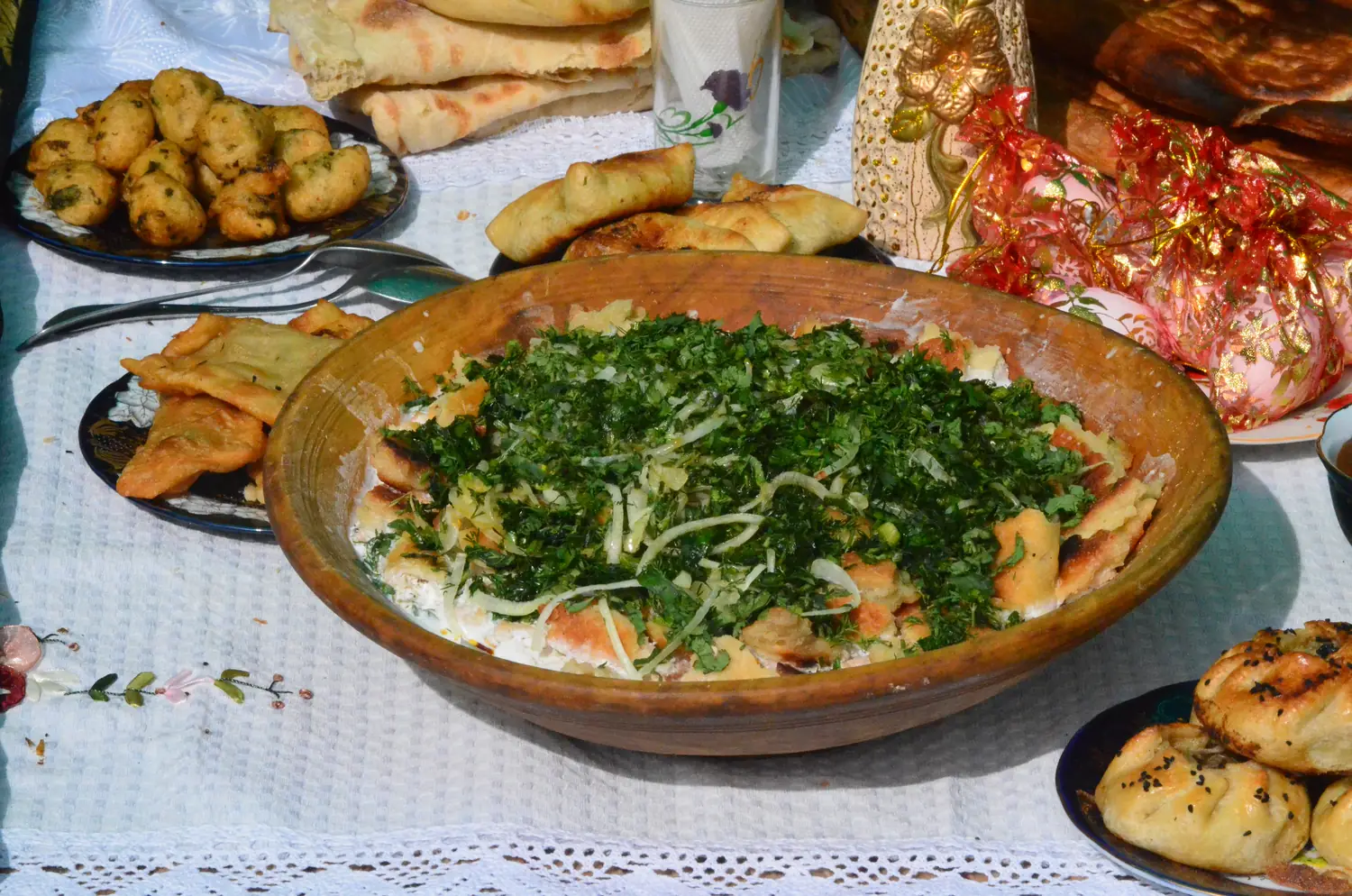
This qurutob recipe layers pieces of flaky fatir flatbread in a warm, tangy sauce made from qurut, the salty dried curd of Tajikistan, then finishes the bowl with golden fried onions, fresh tomato, cucumber and a shower of herbs. It is eaten straight from the shared wooden bowl, by hand or with a spoon. One serving is about 540 g.

Qurutob is one of Tajikistan's two national dishes, alongside plov, and it is the one that belongs only to Tajikistan. Its name tells the recipe: qurut, balls of salty dried curd made from fermented milk, dissolved in water (ob), poured over torn pieces of fatir, the flaky layered flatbread of the region. Traditionally it is served in a large carved wooden bowl called a tabaq, set in the middle of the table for everyone to eat from by hand, with fried onions, tomatoes and herbs on top.

Pairs well with: Hot green tea, a sharp tomato and onion salad, and fresh flatbread on the side

Provenance

Tajikistan flag Tajikistan

Tajik National Dish

East & South Asia

Time Dedication

1h 30m

30m prep • 60m cook

Batch Yield

4 Servings

749 kcal per serving

1 serving ≈ 540 g

Technical Skill

Intermediate

Medium (Homemade Flatbread)

Meal Timing & Digestive Fit

Breakfast

Not Advised

Lunch

Hearty Midday Main

Dinner

Ideal Hearty Main

Snack & Tea

Inappropriate

Occasions: Family dinners, shared meals, weekend cooking project, guest dinners Cost: Low — about $3–4 per serving at home
Qurutob in a large wooden bowl — torn fatir flatbread in white qurut sauce topped with chopped herbs and onions

Tajik National Dish

Photo: Ibrahim Rustamov, CC BY-SA 3.0, via Wikimedia Commons

The Heritage Formulary

Measured Ingredients

Estimated cost: Low — about $3–4 per serving at home (USD)

Good qurutob has bread that is soft and soaked but still holds its shape, a tangy sauce that coats every piece, and a bright, fresh topping.

Execution Methodology & Culinary Technique

Step-by-Step Cooking Guide

Active 1h 30m
P

Prep Stage: Dough, Sauce and Toppings

30 Mins • Mixing & Chopping

Sift the flour with 6g of the salt, then mix in 180ml warm water and knead into a soft dough. While it rests, whisk the yogurt with 120ml warm water and the remaining 4g salt, slice the onions thinly, and dice the tomatoes, cucumber, spring onions and herbs.

Maestro Tip: Get everything chopped before the fatir goes in the oven — once the bread is out, the dish comes together in minutes.

  1. 1

    Make and Rest the Fatir Dough

    20 Mins Room temperature, about 22°C (72°F)

    Mix the sifted flour, 6g salt and 180ml warm water in a large bowl, then knead for 6–8 minutes until the dough is smooth and soft. Cover with a clean cloth and rest for 15 minutes so the dough relaxes and rolls out easily.

    Do not over-knead: a soft, relaxed dough rolls thin without springing back.

    Done when: The dough is smooth, springs back slowly when pressed, and does not stick to your hands.

  2. 2

    Layer with Butter and Bake the Fatir

    35 Mins 180°C (350°F)

    Roll the rested dough into a large thin rectangle on a floured board. Brush all over with the softened 50g butter, sprinkle lightly with flour, then roll it up into a tight coil like a snail, flatten it into a round about 2 cm thick, and prick the top with a fork. Bake on a lined tray at 180°C (350°F) for 30–35 minutes until puffed and deep golden.

    The butter layers are what make fatir flaky — brush right to the edges so every layer separates.

    Done when: The flatbread is puffed, crisp and deep golden on top, and sounds hollow when tapped underneath.

  3. 3

    Warm the Qurut Sauce

    10 Mins Gentle heat, about 70°C (158°F)

    Pour the whisked yogurt, water and salt into a saucepan and warm over low heat for about 8 minutes, stirring constantly, until it is hot and pourable. Do not let it boil — boiling splits the yogurt and turns the sauce grainy. Taste and add a pinch more salt only if needed; real qurut is very salty.

    Keep the heat low and keep stirring. If the sauce starts to bubble at the edges, lift the pan off the heat for a few seconds.

    Done when: The sauce is hot, smooth and pourable, like thin custard, with no lumps.

  4. 4

    Fry the Onions Until Golden

    10 Mins Medium heat, about 175°C (347°F)

    Heat the sunflower oil and the remaining 10g butter in a wide pan over medium heat. Add the thinly sliced onions with a pinch of salt and fry for 8–10 minutes, stirring often, until soft, sweet and golden at the edges. Keep the hot oil — it is poured over the dish too.

    Thin slices cook evenly and turn sweet; thick slices stay raw in the middle and dominate the bowl.

    Done when: The onions are soft, translucent and golden, and the oil smells sweet and nutty.

  5. 5

    Tear the Bread and Layer the Bowl

    10 Mins Serving temperature, above 63°C (145°F)

    Tear the warm fatir into bite-size pieces about 3–4 cm across and spread them in a large, wide serving bowl. Pour the hot qurut sauce evenly over the bread, then spoon the fried onions and all their hot oil over the top. Leave for 1–2 minutes so the bread softens and drinks in the sauce without turning to mush.

    Pour the sauce slowly and evenly — dry patches stay crunchy while flooded patches collapse.

    Done when: The bread is soft and soaked through but still holds its shape when lifted with a spoon.

  6. 6

    Top with Vegetables and Herbs and Serve

    5 Mins Room temperature, about 22°C (72°F)

    Scatter the diced tomato, cucumber, spring onions, cilantro and dill over the top, grind the black pepper over everything, and carry the bowl to the table at once. Serve it in the middle of the table so everyone can eat from the shared bowl, by hand or with a spoon, while the bread is still warm.

    Add the fresh vegetables at the very last moment so they stay crisp and cool against the warm, soft bread.

    Done when: The bowl is hot underneath, cool and bright on top, and the herbs smell fresh and green.

Finishing Touches & Plating

Eat qurutob straight from the shared bowl while the fatir is still warm and soft — the contrast between the tangy hot sauce and the cool, crisp vegetables is the whole point of the dish.

Nutritional Physiology & Benefits

Nutrition

Energy

749

kcal / serving

Protein

27g

Complete AA

Carbs

96g

Complex

Fats

29g

Healthy

Per serving (4 servings · 1 serving ≈ 540 g)
Energy749 kcal
Protein27 g
Carbohydrates96 g
Fat29 g
Fibre6.0 g
Sugar12.3 g
Sodium1045 mg
Per 100g
Energy139 kcal
Protein5 g
Carbohydrates17.7 g
Fat5.3 g
Fibre1.1 g
Sugar2.3 g
Sodium194 mg

Nutrition values are estimated — calculated from USDA FoodData Central values for the listed ingredients.

Vitamins & minerals: Calcium and protein (yogurt and qurut), vitamin C (tomato and spring onion), vitamin K and folate (cilantro and dill), potassium (onion and cucumber). Nutrition is estimated.

Fermented Dairy Goodness

The yogurt-based sauce brings calcium and protein, and fermented dairy is a traditional source of live cultures in Central Asian cooking.

A Bowl Full of Fresh Vegetables

Tomato, cucumber, spring onion and a generous handful of herbs add crunch, colour, vitamin C and fibre to every serving.

Slow Energy from Flatbread

The fatir gives steady carbohydrate energy, which is why this dish has fuelled long days in the Tajik mountains for generations.

Food Pairings

What to Eat With

To optimize nutrient absorption and elevate the sensory depth, pair with these authentic accompaniments:

Drinks

Hot Green Tea

Green tea is the Tajik table drink, and its clean, slightly bitter edge cuts through the rich, salty yogurt sauce between bites.

Vegetables

Shakarob Tomato and Onion Salad

A sharp salad of sliced tomato, onion and a pinch of chilli adds acidity and crunch that lifts the soft, creamy bread.

Sides

Extra Warm Flatbread

A little extra fatir on the side is for scooping up the sauce left in the bowl — the sauce is too good to leave behind.

Full Menus

As the Centre of a Shared Meal

Qurutob is a communal dish, so serve it after a light soup or salad and let the one big bowl carry the whole table.

Complete menu

Serve the qurutob with shakarob tomato and onion salad, extra warm fatir, and hot green tea to finish.

Digestive Guardrails

What NOT to Combine

To prevent digestive distress, sluggishness, or palate clash, avoid pairing the dish with these elements:

A Second Heavy Dairy Sauce

The dish is already rich with yogurt sauce, so a creamy soup or a cheese-heavy side would sit heavily and bury the tangy flavour. Keep the rest of the meal light. This is general guidance, not medical advice.

Letting the Bread Soak Too Long

Bread left sitting in the sauce for more than a few minutes collapses into porridge. Assemble the bowl just before serving and eat it while the pieces still hold their shape. This is general guidance, not medical advice.

General information only, not medical advice — consult a doctor for personal dietary decisions.

Who Should Eat It

Who Should Eat

  • General adultsA complete, filling dinner — one generous serving is a whole meal, best eaten warm from the shared bowl.
  • ChildrenUsually popular with children because it is soft, mild and eaten by hand; go light on the black pepper and the raw onion.
  • ElderlySoft, easy to chew and easy to digest when the bread is well soaked; serve a moderate portion because it is salty.
  • Pregnant womenFine when made with pasteurised yogurt and served hot; keep the portion moderate because of the salt, and skip raw onion if it causes heartburn.
  • Breastfeeding womenA nourishing, calcium-rich meal; drink plenty of water or tea with it, as the dish is quite salty.
  • AthletesGood after training — plenty of carbohydrate from the flatbread plus protein and calcium from the yogurt sauce.
  • Weight gainAn easy way to add calories: the flatbread, butter and yogurt sauce make a single serving energy-dense.
  • Weight lossKeep the portion to about half a serving, take extra tomato, cucumber and herbs, and use less butter in the fatir.

Health Conditions — Adjust or Avoid

Conditions

  • DiabetesThe flatbread is the main carbohydrate — keep it to about a cup of torn pieces and fill the rest of the bowl with vegetables; ask your clinician about portion size.
  • High blood pressureThis dish is salty, as qurut is a salted curd — use less added salt, take a smaller portion, and ask your clinician if you are on a sodium limit.
  • Kidney diseaseHigh in sodium and moderately high in protein and potassium, so it is not a regular choice on a restricted diet — ask your clinician first.
  • GoutDairy-based and meat-free, so purines are low, but the salt load matters; eat it occasionally and in a moderate portion, and ask your clinician.
  • Stomach issuesThe soft bread and yogurt are usually gentle, but raw onion and the salty sauce can irritate a sensitive stomach — take the fried onion sparingly and ask your clinician.
  • Cardiovascular diseaseButter and salt are the concerns here; use less butter in the fatir and keep portions moderate — ask your clinician.
  • Fatty liverThe butter and refined flour add up, so keep it occasional and modest in size; ask your clinician about frequency.
  • Food allergiesContains wheat (gluten) and milk (yogurt, butter). No nuts, egg, soy or seafood.
  • Special therapeutic dietsNot suitable for low-sodium, gluten-free or dairy-free diets without major changes — ask your clinician or dietitian before adapting it.

If you have a medical condition, consult your doctor before changing your diet.

Storage & Use

Storage & Use

How to store
Cool quickly; store the sauce, bread and toppings in separate airtight containers.
In the fridge
Sauce 3 days; baked fatir 2 days; cut vegetables 1 day.
In the freezer
Baked fatir 2 months; the yogurt sauce does not freeze well.
How to reheat
Warm the sauce gently over low heat without boiling, and warm the bread in a hot oven; reheat to 74°C (165°F). Assemble fresh.
Freezing recommended
Yes — freeze the fatir only; make the sauce and toppings fresh when you serve it.
Signs it has spoiled
Sour or sharp smell in the sauce beyond its normal tang, slimy vegetables, or stale, dry bread.

More recipes to explore

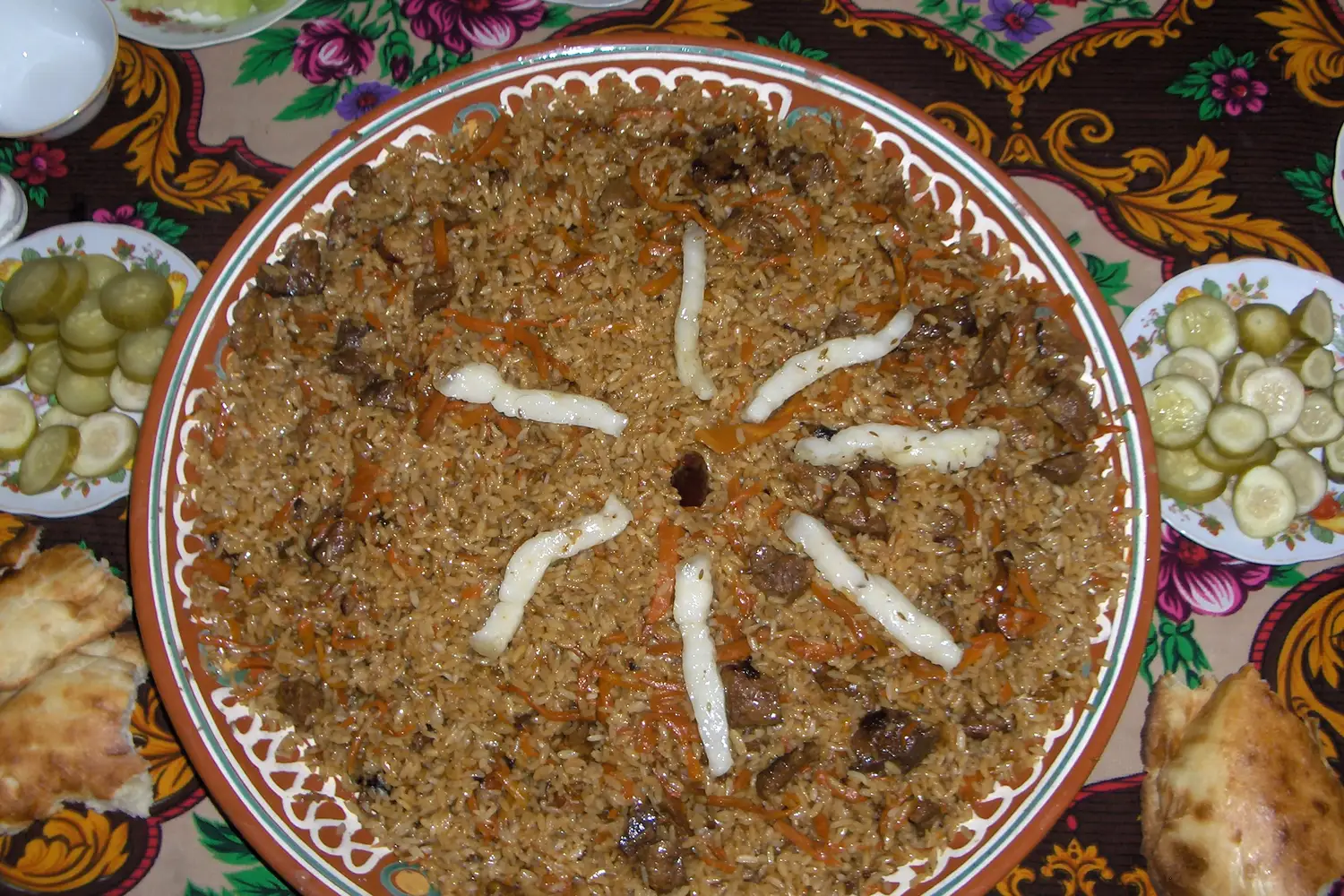
Tajik plov (oshi palav) — a mound of rice with lamb and carrot strips on a large patterned lagan platter, with pickles and bread at the sides Tajikistan flag Tajikistan 2h 15m
Dinner •Dushanbe Heritage

Tajik Plov

This tajik plov recipe is Tajikistan's oshi palav: lamb and thick-cut carrots simmered into a rich zirvak, then long-grain rice steamed on top with chickpeas, raisins, dried apricots and whole heads of garlic, and piled onto one big lagan platter with the meat on top. Unlike Uzbek plov, which prizes reddish devzira rice and fine-cut carrots, the Tajik version uses local long-grain rice, carrots cut into long thick batons, and a sweet-savoury touch of dried fruit. One serving is about 467 g.

Festive One-Pot Rice

Lamb, long-grain rice, thick-cut carrots, chickpeas and dried fruit steamed together in a kazan — Tajikistan's national dish, served from one big platter.

Pairs Well With
Achichuk salad, pickled cucumbers & green tea
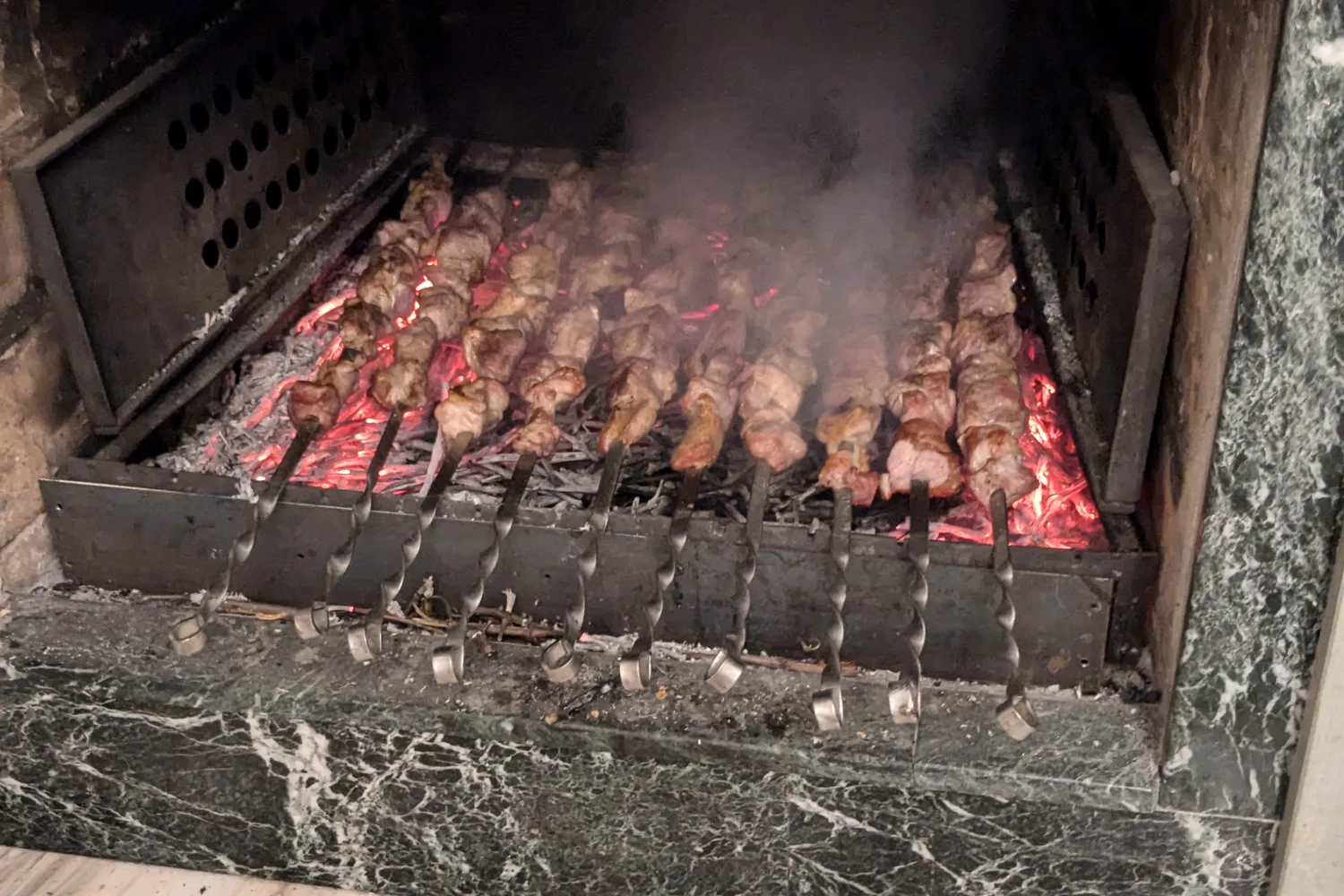
Tajik shashlik — metal skewers of cubed meat grilling over glowing red charcoal in a mangal, smoke rising Tajikistan flag Tajikistan 4h 50m
Dinner •Dushanbe Grill Heritage

Tajik Shashlik

This tajik shashlik recipe is the lamb skewer Tajikistan grills everywhere from Dushanbe courtyards to mountain roadside stands: boneless lamb cut into thick cubes, layered with sliced onion, red wine vinegar, lemon and black pepper, and left to marinate for hours before it meets glowing charcoal. The acid and onion soften the meat while the fat crisps at the edges, and the skewers come off the grill smoky, charred in spots and pink-juicy in the middle. One serving is about 240 g.

Charcoal-Grilled Lamb, Tajik Style

Cubes of lamb steeped in sliced onion, vinegar and lemon, then grilled over live charcoal until smoky outside and juicy inside — Tajikistan's roadside grill classic.

Pairs Well With
Hot non flatbread, sliced onion & grilled tomato
High Protein
Bœuf bourguignon — French beef braised in red wine France flag France 4h
Dinner •Burgundy Terroir

Bœuf Bourguignon

Beef braised gently in red wine until the connective tissue melts into a velvet, gelatin-rich sauce — the classic Burgundy Sunday dinner.

Cellular Repair

Beef braised in red wine until spoon-tender, with mushrooms and pearl onions.

Pairs Well With
Parsnip Purée & Steamed French Haricots Verts
High Protein
Vietnamese braised pork belly with golden eggs in caramel sauce Vietnam flag Vietnam 1h 45m
Dinner •One Pot

Vietnamese Braised Pork and Eggs

Pork belly slowly braised in coconut water and caramel until meltingly tender, with golden eggs that soak up the sweet-savoury sauce — the Vietnamese family dish that tastes better the next day.

Comfort & Sustained Energy

Slow-braised pork belly and eggs in coconut water and caramel.

Pairs Well With
Steamed rice & pickled mustard greens
High Protein

The Dinner Gazette

Never wonder what’s for dinner again

One email a week with easy dinner ideas from around the world — ingredients, steps and nutrition, tested in our kitchen first.

Delivered every Thursday morning. Unsubscribe anytime.