Curated recipes from 193 countries  •  New seasonal Mediterranean issue out now

Overview

Tajik Plov

Oshi Palav, Osh, Tajik Osh Palov

This tajik plov recipe is Tajikistan's oshi palav: lamb and thick-cut carrots simmered into a rich zirvak, then long-grain rice steamed on top with chickpeas, raisins, dried apricots and whole heads of garlic, and piled onto one big lagan platter with the meat on top. Unlike Uzbek plov, which prizes reddish devzira rice and fine-cut carrots, the Tajik version uses local long-grain rice, carrots cut into long thick batons, and a sweet-savoury touch of dried fruit. One serving is about 467 g.

Oshi palav is Tajikistan's national dish, and in 2016 UNESCO added 'Oshi Palav, a traditional meal and its social and cultural contexts in Tajikistan' to its Representative List of the Intangible Cultural Heritage of Humanity. Its most famous versions come from Panjakent and Khujand — Khujand plov is known for kenja rice, chickpeas and generous meat and fat — and the Dushanbe festive classic is cooked 'one to one' (yak ba yak), with roughly equal weights of rice, meat, onion and carrot. Tajik cooks are famously less bound by one fixed recipe than their Uzbek neighbours: festive oshi palav often leans sweet-and-savoury with quince, dried apricots, raisins and prunes, and the prized golden crust at the bottom of the pot is called zerab. At weddings the dish is served as oshi nahor, 'morning plov', with guests gathering between 6 and 9 a.m. to eat from one big communal platter.

Pairs well with: Achichuk salad, pickled cucumbers & green tea

Provenance

Tajikistan flag Tajikistan

Dushanbe Heritage

East & South Asia

Time Dedication

2h 15m

30m prep • 105m cook

Batch Yield

6 Servings

867 kcal per serving

1 serving ≈ 467 g

Technical Skill

Intermediate

Medium (One Pot, No Stirring)

Meal Timing & Digestive Fit

Breakfast

Not Advised

Lunch

Hearty Midday Main

Dinner

Ideal Hearty Main

Snack & Tea

Inappropriate

Occasions: Weddings, oshi nahor morning gatherings, Nowruz, family celebrations, Sunday dinner Cost: Moderate — about $4–5 per serving at home

Tajik plov (oshi palav) — a mound of rice with lamb and carrot strips on a large patterned lagan platter, with pickles and bread at the sides

Dushanbe Heritage

Photo: Ibrahimjon, CC BY-SA 3.0, via Wikimedia Commons

The Heritage Formulary

Measured Ingredients

Estimated cost: Moderate — about $4–5 per serving at home (USD)
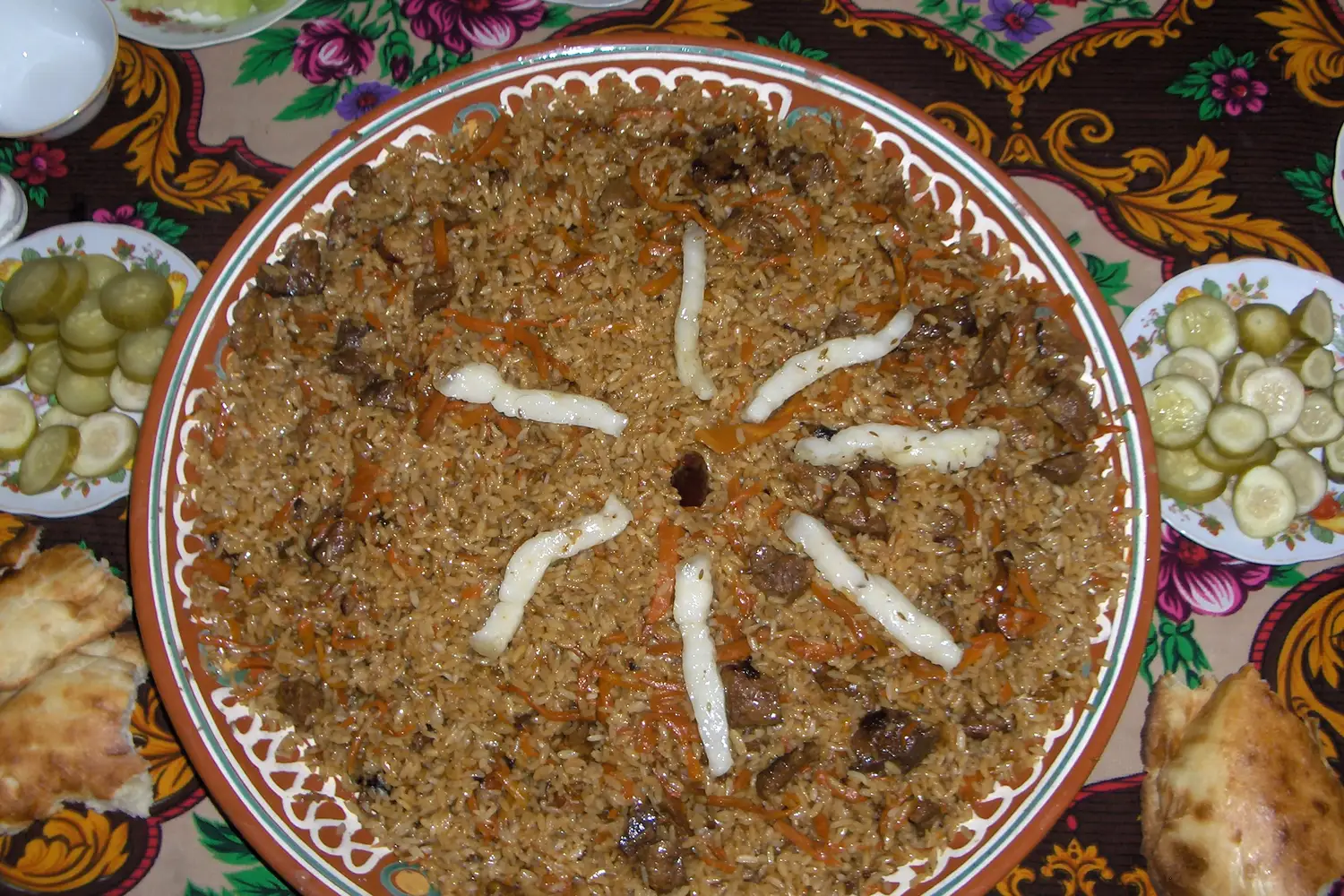
A true Tajik oshi palav is judged by its grains: separate, glossy and fragrant, with sweet carrots that hold their shape and tender lamb piled on top of the mound.

Execution Methodology & Culinary Technique

Step-by-Step Cooking Guide

Active 2h 15m
P

Prep Stage: Wash, Soak & Cut Thick

30 Mins • Soaking

Wash the rice in several changes of cold water until the water runs clear, then soak it in salted water for 30 minutes and drain. Meanwhile cut the lamb into large 4 cm chunks, slice the onions into half-moons, and cut the carrots into long thick batons about 1 cm wide — thick, not thin, is the Tajik cut. Dice the tail fat, rinse the chickpeas, raisins, apricots and barberries, and trim the tops off the two whole garlic heads.

Maestro Tip: Tajik cooks aim for roughly equal weights of rice, meat, onion and carrot — the Dushanbe classic is called 'one to one' (yak ba yak). Washing the rice until the water runs clear is what keeps the grains separate instead of sticky.

  1. 1

    Render the Fat & Brown the Lamb

    15 Mins Medium-high heat, ~190°C (375°F)

    Heat a wide heavy pot or kazan over medium-high heat. Add the diced lamb tail fat and cook for 3–4 minutes until it renders and the cracklings turn golden, then pour in the cottonseed oil. Brown the lamb chunks in a single layer for 8–10 minutes, turning once, until golden on the outside. Lift out the cracklings if you like them crisp, or leave them in.

    Do not crowd the pot — brown in two batches if needed, so the lamb sears instead of steaming.

    Done when: Lamb is browned on the outside; the fat is rendered and shimmering.

  2. 2

    Build the Zirvak

    40 Mins Gentle simmer, ~95°C (200°F)

    Add the sliced onions to the pot and cook for 5 minutes until soft and golden. Lay the thick carrot batons over the meat and onions without stirring, sprinkle over the cumin seeds, black pepper and half the salt, then pour in 500 ml boiling water. Cover and simmer gently for 30–35 minutes until the lamb is tender and the carrots are soft but still hold their shape — this rich meat-and-vegetable base is the zirvak.

    Lay the carrots on top and do not stir: they steam in the zirvak's liquid and keep their shape, which is how the thick Tajik cut survives the long cook.

    Done when: Lamb is fork-tender and reaches at least 63°C (145°F) inside; carrots are soft but not mushy.

  3. 3

    Layer the Rice, Fruit & Garlic

    10 Mins High heat, ~200°C (400°F)

    Turn the heat up and scatter the chickpeas, raisins, dried apricots and barberries over the zirvak. Drain the soaked rice and spread it in an even layer over everything — do not stir it in. Bury the two whole garlic heads in the rice, sprinkle over the remaining salt, and pour 300 ml boiling water gently over a spoon so the rice layer is just covered by about 1 cm of water.

    Pour the water over the back of a spoon so it does not wash holes in the rice layer; the rice must sit on top of the zirvak, never mixed into it.

    Done when: Rice forms an even layer on top of the zirvak; garlic heads are buried; water just covers the rice.

  4. 4

    Steam (Dam) Without Stirring

    30 Mins Lowest heat, ~120°C (250°F)

    Boil hard for 2–3 minutes until the water level drops to the rice, then use the handle of a wooden spoon to poke 3–4 holes through the rice down to the zirvak so steam can rise. Turn the heat to the lowest setting, wrap the lid in a clean tea towel, place it on tightly, and steam for 25–30 minutes. Do not lift the lid and do not stir — the trapped steam is what finishes the rice.

    The tea towel stops condensation dripping back onto the rice and making it soggy; the holes let the zirvak's steam reach the top layer.

    Done when: Rice is fluffy and separate, glossy with fat; the garlic heads are soft and sweet when squeezed.

  5. 5

    Rest & Pile onto the Lagan

    10 Mins Off the heat

    Rest the pot off the heat for 10 minutes. Gently lift the rice onto a large warmed round lagan platter and mound it high, then arrange the lamb chunks and carrots over the top with the soft garlic heads in the middle. Serve hot, straight from the platter, so everyone eats from the same mound — that is how oshi palav is served in Tajikistan.

    Letting the plov rest keeps the grains from breaking when you lift them out, and the mound shape is part of the dish — do not flatten it into a tray.

    Done when: Plov is served hot in a high mound, grains separate, with lamb and garlic on top.

Finishing Touches & Plating

Serve the plov hot from the lagan platter, with the lamb and soft whole garlic arranged over the mound of glossy rice. Eat it with achichuk salad and pickles on the side, tearing warm non to scoop up the rice — and save the sweet, soft garlic cloves for last.

Nutritional Physiology & Benefits

Nutrition

Energy

867

kcal / serving

Protein

33g

Complete AA

Carbs

109g

Complex

Fats

34g

Healthy

Per serving (6 servings · 1 serving ≈ 467 g)
Energy867 kcal
Protein33 g
Carbohydrates109 g
Fat34 g
Fibre8.6 g
Sugar22.4 g
Sodium675 mg
Per 100g
Energy186 kcal
Protein7 g
Carbohydrates23.4 g
Fat7.2 g
Fibre1.9 g
Sugar4.8 g
Sodium145 mg

Nutrition values are estimated — calculated from USDA FoodData Central values for the listed ingredients.

Vitamins & minerals: Iron and zinc (lamb), vitamin A and potassium (carrots), folate and fibre (chickpeas), vitamin C (onion and garlic). Nutrition values are estimated.

A Complete One-Pot Meal

Rice, lamb, chickpeas and carrots in one dish give carbohydrate, protein, fibre and iron in every serving.

Carrots & Chickpeas, Not Just Rice

The thick-cut carrots and chickpeas add fibre, vitamin A, folate and potassium to the plate.

Cumin & Whole Garlic

Whole cumin seeds and garlic steamed in the rice give the plov its warm, earthy flavour without any artificial seasoning.

Food Pairings

What to Eat With

To optimize nutrient absorption and elevate the sensory depth, pair with these authentic accompaniments:

Vegetables

Achichuk Salad (Tomato, Onion & Chilli)

This sharp salad of thinly sliced tomato, sweet onion and a little chilli is plov's classic partner: its acidity and crunch cut the richness of the lamb fat and refresh the palate between bites of rice.

Pickled Cucumbers

Cold, sour pickled cucumbers balance the sweet carrots, raisins and apricots in the plov, and their crunch contrasts with the soft steamed rice.

Sides

Non (Tajik Flatbread)

Warm, round non is torn and used to scoop up the rice and mop up the buttery juices left on the platter — in Tajikistan a meal without bread is barely a meal at all.

Drinks

Green Tea

Hot green tea is the everyday drink with plov in Tajikistan: it is light, unsweetened and cleansing, and it suits a rich, fatty rice dish far better than a sweet drink.

Complete menu

Pile the plov onto a large warmed lagan platter with the lamb and soft garlic on top, set out achichuk salad, pickled cucumbers and warm non for tearing, and finish with green tea.

Digestive Guardrails

What NOT to Combine

To prevent digestive distress, sluggishness, or palate clash, avoid pairing the dish with these elements:

Very Sweet Desserts Straight After

Plov already carries natural sugars from the raisins, apricots and carrots, so a sugary dessert on top of it adds a large dose of sugar to an already rich meal; fresh fruit or tea is the lighter finish. This is general information, not medical advice.

Stirring the Rice While It Steams

Lifting the lid and stirring during the steaming step breaks the grains and lets the steam escape, leaving soggy, broken rice instead of separate glossy grains. This is general cooking advice, not medical advice.

General information only, not medical advice — consult a doctor for personal dietary decisions.

Who Should Eat It

Who Should Eat

  • General adultsA rich, filling one-pot dish — lamb, rice, carrots and chickpeas in a generous serving.
  • ChildrenChildren usually love the sweet carrots, raisins and mild rice; cut the lamb small and remove the whole garlic heads and barberries from a child's portion.
  • ElderlySoft, well-cooked lamb and fluffy rice are easy to eat; serve a smaller portion, as it is rich and filling.
  • Pregnant womenLamb cooked to at least 63°C (145°F) and served hot is fine; keep portions moderate and ask your clinician about rich, high-fat meals if unsure.
  • Breastfeeding womenA filling, energy-rich meal that suits breastfeeding; the chickpeas and dried fruit add fibre and iron.
  • AthletesHigh in carbohydrate and protein, so it refuels well after training — but it is heavy, so eat it a few hours before, not right before, exercise.
  • Weight gainEnergy-dense with lamb, tail fat, oil and dried fruit, so it suits people who need extra calories.
  • Weight lossVery energy-dense and rich, so keep the rice portion modest and load the plate with achichuk salad and pickles.

Health Conditions — Adjust or Avoid

Conditions

  • DiabetesHigh in carbohydrate from the rice and natural sugars from the raisins and apricots, so keep the rice portion modest and add extra achichuk salad and pickles; ask your clinician about portions.
  • High blood pressureContains about 675 mg sodium per serving from added salt; use less salt if you need to limit sodium, and ask your clinician.
  • Kidney diseaseRich in protein and potassium from lamb, chickpeas and dried fruit; people with kidney disease should watch portion size and ask their clinician.
  • GoutLamb and chickpeas are moderate in purines; a large rich portion may not suit people prone to gout — ask your clinician.
  • Stomach issuesThe dish is mild and not spicy, but the rich lamb fat and oil can feel heavy; eat slowly and keep portions small if your stomach is sensitive.
  • Cardiovascular diseaseHigh in saturated fat from lamb and tail fat, so people with cardiovascular disease should eat a smaller portion with plenty of salad and pickles; ask your clinician.
  • Fatty liverRich and high in fat and natural sugars, so keep portions modest and balance the plate with achichuk salad and pickles; ask your clinician.
  • Food allergiesContains lamb and chickpeas (a legume); the rice itself is gluten-free, but check the flatbread served alongside if it contains wheat. If you have any food allergy, check every ingredient and ask your clinician.
  • Special therapeutic dietsNot suitable as a low-fat, low-sugar or low-sodium therapeutic diet without changes (less tail fat and oil, less dried fruit, less salt); discuss adaptations with your clinician or dietitian.

If you have a medical condition, consult your doctor before changing your diet.

Storage & Use

Storage & Use

How to store
Cool quickly and store rice and lamb together in airtight containers.
In the fridge
Plov 3 days.
In the freezer
Up to 2 months.
How to reheat
Reheat with a splash of water, covered, until steaming hot throughout, to 74°C (165°F).
Freezing recommended
Yes, up to 2 months; freeze in single portions for easy reheating.
Signs it has spoiled
Sour or off smell, slimy rice, or mould.

More recipes to explore

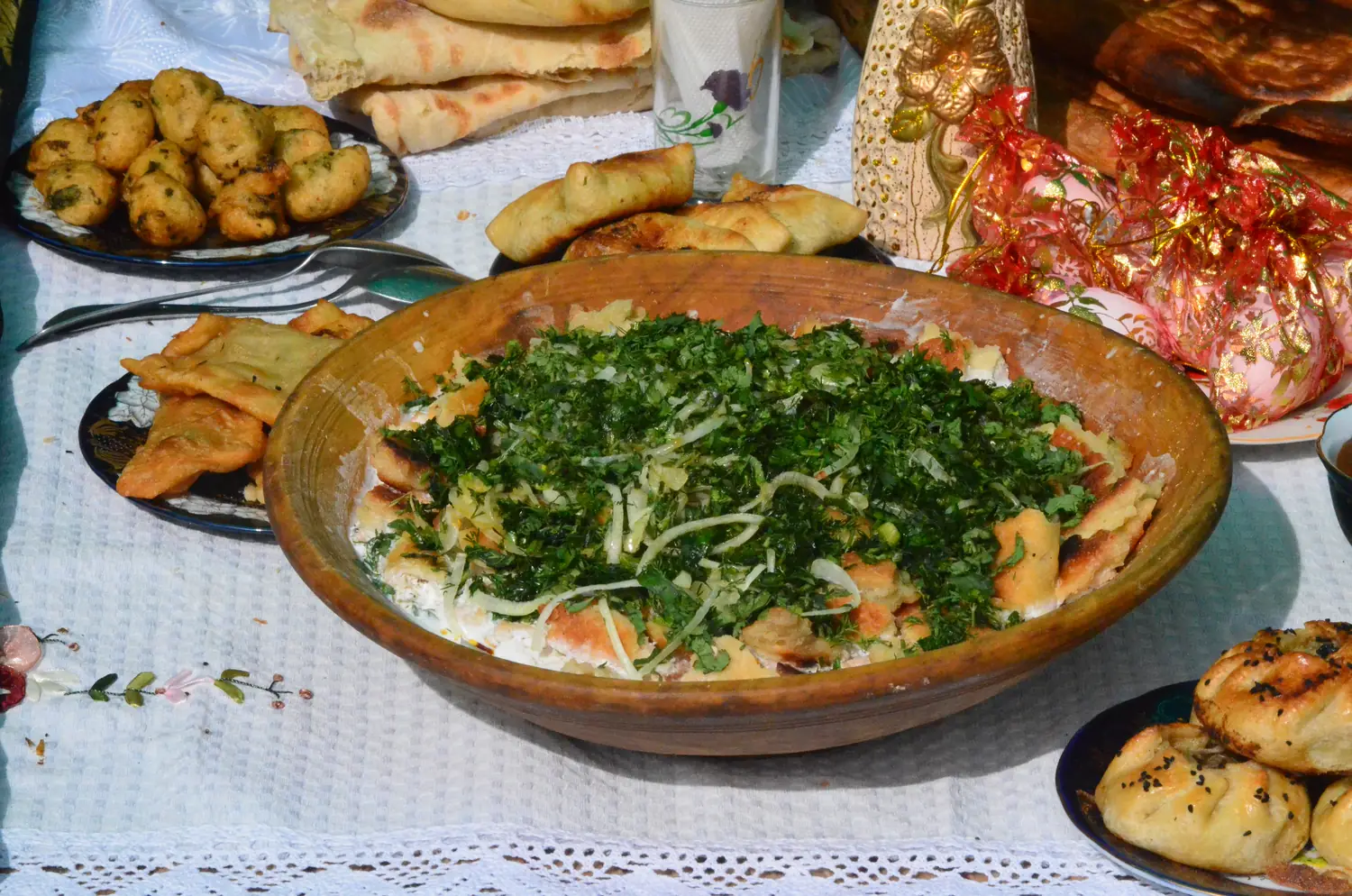
Qurutob in a large wooden bowl — torn fatir flatbread in white qurut sauce topped with chopped herbs and onions Tajikistan flag Tajikistan 1h 30m
Dinner •Tajik National Dish

Qurutob

This qurutob recipe layers pieces of flaky fatir flatbread in a warm, tangy sauce made from qurut, the salty dried curd of Tajikistan, then finishes the bowl with golden fried onions, fresh tomato, cucumber and a shower of herbs. It is eaten straight from the shared wooden bowl, by hand or with a spoon. One serving is about 540 g.

Comfort & Warmth

Torn flaky fatir flatbread softened in a tangy qurut yogurt sauce, topped with fried onions, tomato, cucumber and fresh herbs.

Pairs Well With
Hot green tea, a sharp tomato and onion salad, and fresh flatbread on the side
Tajik shashlik — metal skewers of cubed meat grilling over glowing red charcoal in a mangal, smoke rising Tajikistan flag Tajikistan 4h 50m
Dinner •Dushanbe Grill Heritage

Tajik Shashlik

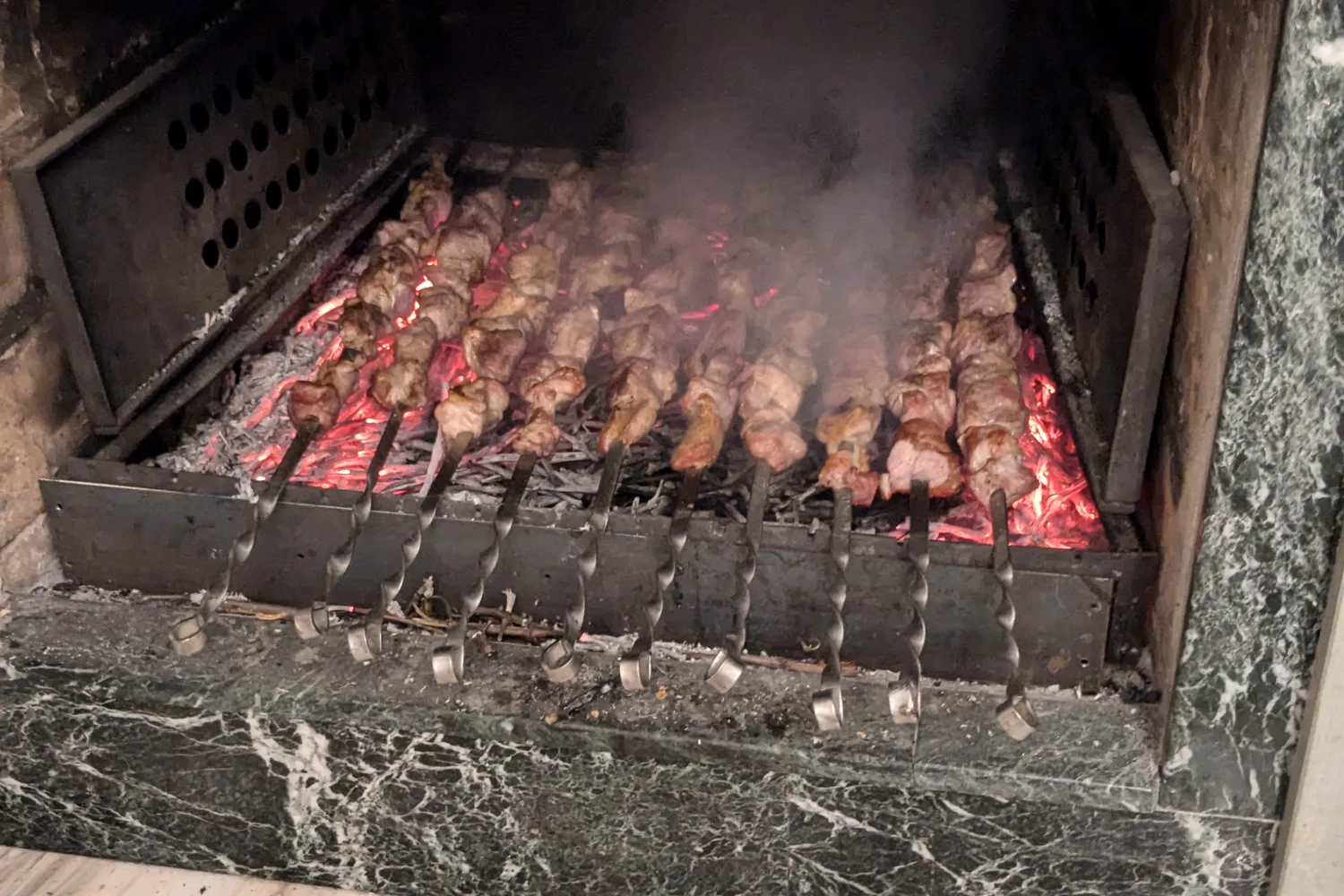
This tajik shashlik recipe is the lamb skewer Tajikistan grills everywhere from Dushanbe courtyards to mountain roadside stands: boneless lamb cut into thick cubes, layered with sliced onion, red wine vinegar, lemon and black pepper, and left to marinate for hours before it meets glowing charcoal. The acid and onion soften the meat while the fat crisps at the edges, and the skewers come off the grill smoky, charred in spots and pink-juicy in the middle. One serving is about 240 g.

Charcoal-Grilled Lamb, Tajik Style

Cubes of lamb steeped in sliced onion, vinegar and lemon, then grilled over live charcoal until smoky outside and juicy inside — Tajikistan's roadside grill classic.

Pairs Well With
Hot non flatbread, sliced onion & grilled tomato
High Protein
Bœuf bourguignon — French beef braised in red wine France flag France 4h
Dinner •Burgundy Terroir

Bœuf Bourguignon

Beef braised gently in red wine until the connective tissue melts into a velvet, gelatin-rich sauce — the classic Burgundy Sunday dinner.

Cellular Repair

Beef braised in red wine until spoon-tender, with mushrooms and pearl onions.

Pairs Well With
Parsnip Purée & Steamed French Haricots Verts
High Protein
Vietnamese braised pork belly with golden eggs in caramel sauce Vietnam flag Vietnam 1h 45m
Dinner •One Pot

Vietnamese Braised Pork and Eggs

Pork belly slowly braised in coconut water and caramel until meltingly tender, with golden eggs that soak up the sweet-savoury sauce — the Vietnamese family dish that tastes better the next day.

Comfort & Sustained Energy

Slow-braised pork belly and eggs in coconut water and caramel.

Pairs Well With
Steamed rice & pickled mustard greens
High Protein

The Dinner Gazette

Never wonder what’s for dinner again

One email a week with easy dinner ideas from around the world — ingredients, steps and nutrition, tested in our kitchen first.

Delivered every Thursday morning. Unsubscribe anytime.