Curated recipes from 193 countries  •  New seasonal Mediterranean issue out now

Overview

Ratatouille

Ratatouille Niçoise

This ratatouille recipe cooks eggplant, zucchini, peppers and tomatoes separately first, so each vegetable keeps its own texture, then brings them together for a slow, fragrant simmer. One serving is about 400 g.

Ratatouille comes from Nice, on the French Riviera, where it began as peasant food — a way to use up the summer glut of vegetables from the garden. The name comes from the Occitan word ratatolha and the French verb touiller, to stir. The word first appears in print in 1831, in a military journal that called it a wet dish of vegetables; a recognisable recipe was published in Henri Heyraud's La Cuisine à Nice in 1903, and Elizabeth David introduced it to English-speaking cooks in 1950.

Pairs well with: Crusty sourdough bread, grilled fish or a fried egg

Provenance

France flag France

Nice Provençal

Nordic & European

Time Dedication

1h 15m

25m prep • 50m cook

Batch Yield

4 Servings

201 kcal per serving

1 serving ≈ 400 g

Technical Skill

Intermediate

Intermediate (Slow Simmer)

Meal Timing & Digestive Fit

Breakfast

Not Advised

Lunch

Hearty Midday Main

Dinner

Ideal Hearty Main

Snack & Tea

Inappropriate

Occasions: Summer dinners, vegetarian mains, garden harvests, make-ahead lunches Cost: Low — about $2–3 per serving at home
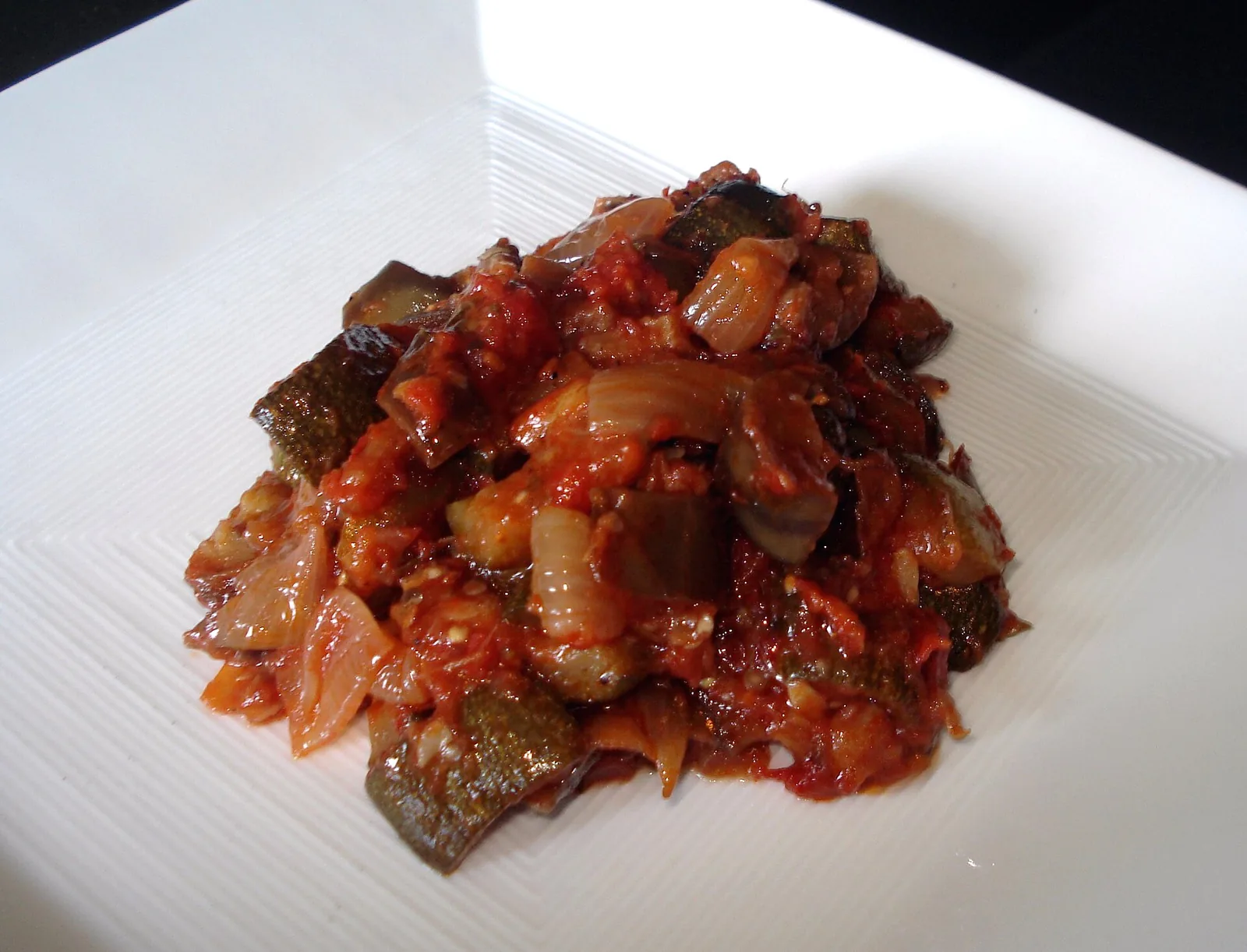
A mound of classic ratatouille with eggplant, zucchini, tomato and onion on a white plate

Nice Provençal

Photo: Benoit5656, Public domain, via Wikimedia Commons

The Heritage Formulary

Measured Ingredients

Estimated cost: Low — about $2–3 per serving at home (USD)

A true ratatouille niçoise cooks each vegetable separately first, so nothing turns to mush — the pieces should stay distinct in a thick tomato sauce.

Execution Methodology & Culinary Technique

Step-by-Step Cooking Guide

Active 1h 15m
P

Prep Stage: Salt the Eggplant

25 Mins • Knife Work

Cube the eggplant, salt it lightly and leave it in a colander for 20 minutes while you chop everything else — the salt draws out bitter juices and helps the cubes brown instead of soaking up oil. Pat the cubes very dry before they meet the pan.

Maestro Tip: Wet eggplant drinks oil like a sponge; dry eggplant fries golden.

  1. 1

    Brown the Eggplant

    10 Mins Medium-high heat, about 180°C (355°F)

    Heat 1 tablespoon of the oil in a wide, heavy pan. Fry the eggplant cubes in a single layer for 8 minutes, turning once, until golden at the edges. Lift them out and set aside; do not crowd the pan or the cubes will steam.

    One layer only — a crowded pan makes grey, soggy eggplant.

    Done when: Cubes are golden-brown outside and creamy inside.

  2. 2

    Soften Peppers and Zucchini

    10 Mins Medium heat, about 160°C (320°F)

    Add another tablespoon of oil and fry the peppers for 5 minutes until they soften and sweeten. Lift them out, then fry the zucchini for 5 minutes until lightly golden at the edges.

    Each vegetable gets its own turn in the pan, so none of them overcooks.

    Done when: Peppers are soft and sweet; zucchini is golden at the edges but still firm.

  3. 3

    Build the Tomato Base

    10 Mins Medium heat, about 160°C (320°F)

    Add the last tablespoon of oil, soften the onion for 5 minutes until translucent, then add the garlic and fry for 1 minute. Stir in the tomato paste and fry for 1 minute, then add the chopped tomatoes, thyme and bay leaf.

    Frying the tomato paste first takes away its raw, tinny taste.

    Done when: The tomatoes have collapsed into a thick, brick-red sauce.

  4. 4

    Simmer Everything Together

    20 Mins Gentle simmer, about 95°C (203°F)

    Return the eggplant, peppers and zucchini to the pan. Stir gently, cover, and simmer for 20 minutes, stirring once or twice, until the vegetables are tender and the flavours have married.

    Stir with a wooden spoon and a light hand — the vegetables should stay in pieces, not turn to mush.

    Done when: The vegetables are tender, the sauce is thick, and the oil glistens at the edges.

  5. 5

    Rest and Finish

    5 Mins Off the heat (about 70°C / 158°F)

    Take the pan off the heat, remove the bay leaf and fold in the torn basil. Rest for 5 minutes before serving so the flavours settle.

    Ratatouille always tastes better after a short rest — and better still the next day.

    Done when: The basil is bright green and the dish smells of summer.

Finishing Touches & Plating

Serve warm or at room temperature, with the basil folded through at the last moment. A drizzle of a good olive oil over each plate is all the garnish it needs.

Nutritional Physiology & Benefits

Nutrition

Energy

201

kcal / serving

Protein

5g

Complete AA

Carbs

25g

Complex

Fats

11g

Healthy

Per serving (4 servings · 1 serving ≈ 400 g)
Energy201 kcal
Protein5 g
Carbohydrates25 g
Fat11 g
Fibre8.3 g
Sugar15.0 g
Sodium414 mg
Per 100g
Energy50 kcal
Protein1.3 g
Carbohydrates6.2 g
Fat2.8 g
Fibre2.1 g
Sugar3.7 g
Sodium103 mg

Nutrition values are estimated — calculated from USDA FoodData Central values for the listed ingredients.

Vitamins & minerals: Vitamin C (peppers, tomatoes), vitamin A (tomatoes, peppers), vitamin K (eggplant, zucchini), potassium and folate (all vegetables).

Five Vegetables, One Dish

Eggplant, zucchini, peppers, tomatoes and onion bring fibre, potassium and a wide spread of vitamins to a single plate, for very few calories.

Light and Easy to Digest

Stewed gently in olive oil, the vegetables soften into something kind to the stomach — a meal that satisfies without sitting heavy.

Plant Compounds from the Garden

Tomatoes supply lycopene and peppers supply vitamin C; cooking the tomatoes in olive oil helps the body absorb the lycopene.

Food Pairings

What to Eat With

To optimize nutrient absorption and elevate the sensory depth, pair with these authentic accompaniments:

Sides

Crusty Sourdough Bread

Bread is made for this dish — it soaks up the tomato-olive oil sauce that would otherwise be left in the bowl.

Vegetables

A Fried Egg on Top

A runny yolk turns the ratatouille into a full meal, adding protein while its richness plays against the sharp tomato.

Drinks

A Glass of Dry Rosé

A cold Provençal rosé matches the dish's home region and its light, summery acidity keeps the olive oil from feeling heavy.

Full Menus

With Grilled Fish

Serve the ratatouille warm beside grilled sea bass or sardines — the soft, sweet vegetables are the classic Provençal partner for fish.

Complete menu

Serve the ratatouille warm with crusty sourdough and a fried egg, or beside grilled fish; finish with a glass of dry rosé.

Digestive Guardrails

What NOT to Combine

To prevent digestive distress, sluggishness, or palate clash, avoid pairing the dish with these elements:

A Heavy Cream Sauce

The dish is light and vegetable-led by design; pouring cream over it smothers the tomato and herb flavours and doubles the fat for no benefit. This is general guidance, not medical advice.

Undercooked Eggplant

Eggplant that is still firm and spongy tastes bitter and is hard to digest — give it the full frying time until it turns creamy inside.

General information only, not medical advice — consult a doctor for personal dietary decisions.

Who Should Eat It

Who Should Eat

  • General adultsA light, balanced dinner — vegetables, fibre and olive oil, with room for bread or an egg on the side.
  • ChildrenVery suitable from age 2+; the vegetables are soft and naturally sweet, and the dish can be mashed for toddlers. Skip the extra salt for small children.
  • ElderlyExcellent — soft, warm, easy to chew and easy to digest.
  • Pregnant womenGenerally suitable; a naturally light dish — keep the salt moderate and enjoy it with bread or an egg for protein.
  • Breastfeeding womenGenerally suitable; the vegetables and fibre support everyday nutrition — add an egg or some fish for protein.
  • AthletesA good light dinner after training, but add a protein source — an egg, fish or beans — since the dish alone is low in protein.
  • Weight gainA good base to build on — add bread, rice or a fried egg, and take a second helping.
  • Weight lossA good choice — about 200 kcal a serving for a generous plate; keep the bread modest if you are watching carbs.

Health Conditions — Adjust or Avoid

Conditions

  • DiabetesNaturally low in sugar and modest in carbs — a good choice; keep bread or rice portions modest and ask your clinician about portion size.
  • High blood pressureKeep the added salt light and go easy on very salty breads alongside. Ask your clinician about a suitable portion.
  • Kidney diseaseA gentle choice — mostly vegetables and olive oil; keep the salt moderate and ask your clinician about portion size.
  • GoutA good choice — vegetables and olive oil are low in purines; eat freely in normal portions.
  • Stomach issuesUsually gentle — soft, stewed vegetables are kind to the stomach; skip the black pepper if it bothers you.
  • Cardiovascular diseaseA good choice — low in saturated fat, rich in fibre and potassium.
  • Fatty liverA good choice — light and vegetable-led; keep the bread modest.
  • Food allergiesContains no major allergens. Naturally gluten-free and vegan — just check any bread served alongside if you have coeliac disease.
  • Special therapeutic dietsIf you follow a prescribed low-sodium diet, use less salt and check with your clinician.

If you have a medical condition, consult your doctor before changing your diet.

Storage & Use

Storage & Use

How to store
Cool quickly and store in an airtight container in the fridge.
In the fridge
4–5 days; the flavour improves after a day.
In the freezer
3 months.
How to reheat
Warm gently in a pan over low heat until steaming throughout; reheat to 74°C (165°F).
Freezing recommended
Yes — ratatouille freezes very well for up to 3 months.
Signs it has spoiled
Sour or yeasty smell, mould on the surface, or a slimy texture.

More recipes to explore

Golden butter croissants on a wooden board France flag France 20m
Breakfast •Parisian Boulangerie

Croissant au Beurre & Café

Laminated cultured butter pastry paired with washed Arabica, for a slow, pleasurable Parisian morning — best with a little protein alongside. One serving is about 390 g.

Sustained Focus

Flaky all-butter croissant with café au lait, Comté and green apple.

Pairs Well With
Comté cheese wedge & Green apple slices
Quick Prep (<30m)
Bœuf bourguignon — French beef braised in red wine France flag France 4h
Dinner •Burgundy Terroir

Bœuf Bourguignon

Beef braised gently in red wine until the connective tissue melts into a velvet, gelatin-rich sauce — the classic Burgundy Sunday dinner.

Cellular Repair

Beef braised in red wine until spoon-tender, with mushrooms and pearl onions.

Pairs Well With
Parsnip Purée & Steamed French Haricots Verts
High Protein
Vietnamese braised pork belly with golden eggs in caramel sauce Vietnam flag Vietnam 1h 45m
Dinner •One Pot

Vietnamese Braised Pork and Eggs

Pork belly slowly braised in coconut water and caramel until meltingly tender, with golden eggs that soak up the sweet-savoury sauce — the Vietnamese family dish that tastes better the next day.

Comfort & Sustained Energy

Slow-braised pork belly and eggs in coconut water and caramel.

Pairs Well With
Steamed rice & pickled mustard greens
High Protein
Chicken covered in dark mole poblano sauce with sesame seeds and onion rings on a patterned plate Mexico flag Mexico 2h 40m
Dinner •Puebla Celebration Dish

Mole Poblano

This mole poblano recipe builds the dark Puebla sauce the slow way — chillies toasted and soaked, nuts and seeds fried, chocolate melted in at the end — and serves it over tender chicken. One serving is about 300 g.

Rich & Festive

Dark, complex sauce of chillies, nuts, seeds and chocolate over tender chicken.

Pairs Well With
Mexican red rice, warm tortillas and a cold hibiscus agua fresca
High Protein

The Dinner Gazette

Never wonder what’s for dinner again

One email a week with easy dinner ideas from around the world — ingredients, steps and nutrition, tested in our kitchen first.

Delivered every Thursday morning. Unsubscribe anytime.