
Curated recipes from 193 countries  •  New seasonal Mediterranean issue out now

Overview

Roti Jala

Roti Kirai, Roti Renjis, Malaysian Net Pancakes, Lace Pancakes

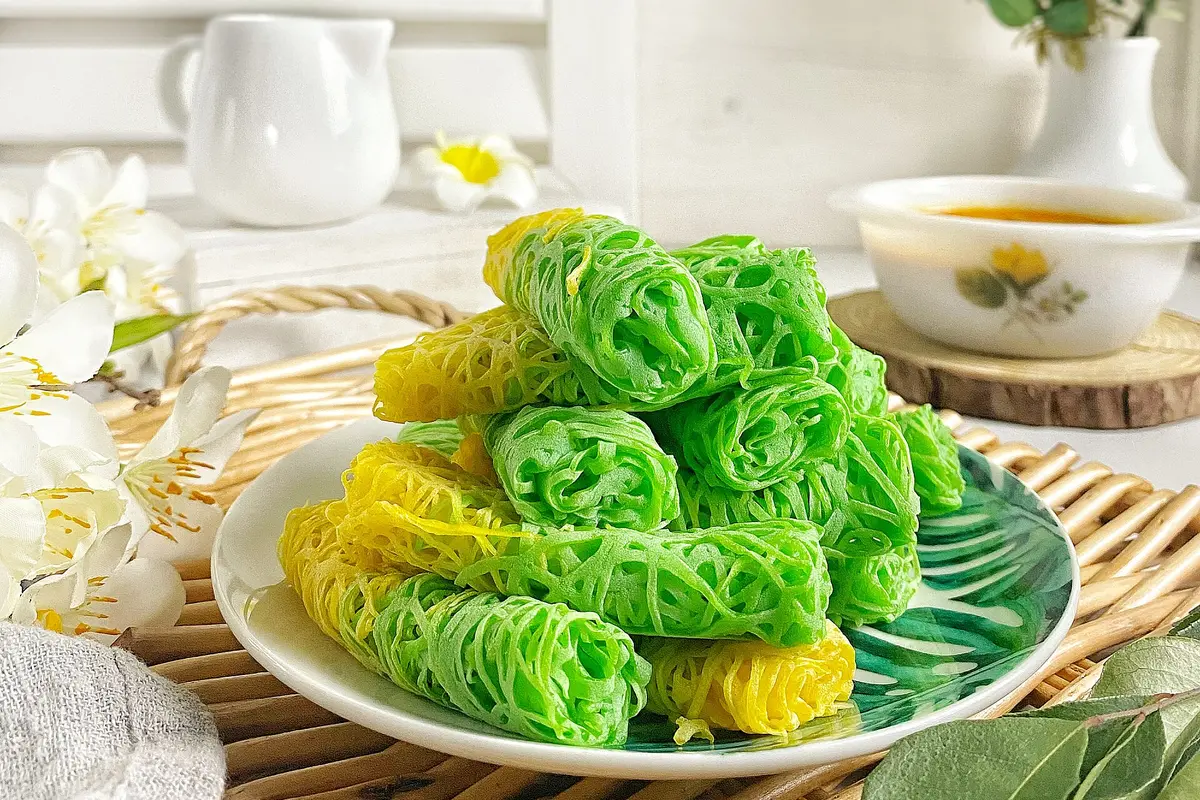
Roti jala, Malay for net bread, is a breakfast of lacy pancakes: a thin coconut-milk batter is drizzled through a special cup in looping circles onto a hot pan, setting into a delicate net that is rolled up like a spring roll. This festive version makes the nets in two colours — golden turmeric and green pandan — and serves them with a warm curry for dipping. One serving is about 158 g of pancakes, without the curry.

Roti jala means net bread in Malay, and the name describes exactly how it is made: a thin batter is drizzled through a special multi-nozzle cup in looping circles, setting into a lacy net on a hot pan. It is a traditional Malay food, also known as roti kirai or roti renjis, served at weddings, festivals and Hari Raya celebrations with curry for dipping. One much-told origin links the lacy pattern to the fishing nets of Malay coastal communities, and the bright yellow colour comes from turmeric, with green pandan versions made for festive tables.

Pairs well with: Chicken curry, beef rendang, or a vegetable curry for dipping

Provenance

Malaysia flag Malaysia

Malay Heritage

East & South Asia

Time Dedication

40m

15m prep • 25m cook

Batch Yield

6 Servings

376 kcal per serving

1 serving ≈ 158 g

Technical Skill

Intermediate

Medium (Net Technique)

Meal Timing & Digestive Fit

Breakfast

Prime Morning Fit

Lunch

Inappropriate

Dinner

Inappropriate

Snack & Tea

Inappropriate

Occasions: Hari Raya and festive breakfasts, Malay weddings, family breakfasts, tea time with curry Cost: Low — about $1 per serving at home
A plate of green and yellow roti jala net pancakes rolled up, with a bowl of curry behind them

Malay Heritage

Photo: Elly Suhailee, CC BY-SA 4.0, via Wikimedia Commons

The Heritage Formulary

Measured Ingredients

Estimated cost: Low — about $1 per serving at home (USD)

A good roti jala is a fine, even net: soft and pliable, golden or green, with holes you can see through and edges that roll without cracking.

Execution Methodology & Culinary Technique

Step-by-Step Cooking Guide

Active 40m
P

Prep Stage: Batter, Two Colours & Pan

15 Mins • Blending & Straining

Blend the flour, coconut milk, water, eggs and salt into a smooth, thin batter and strain it. Split it into two bowls: stir turmeric into one for gold and pandan extract into the other for green. Lightly grease a non-stick pan and have the roti jala cup or a squeeze bottle ready.

Maestro Tip: Strain the batter through a fine sieve: even one lump will block the small holes of the cup and break the net.

  1. 1

    Make and Colour the Batter

    10 Mins Room temperature

    Put the flour, coconut milk, water, eggs and salt in a blender and blend until completely smooth. Strain through a fine sieve into a jug, then divide between two bowls. Stir the turmeric into one bowl and the pandan extract into the other. Each batter should pour like thin cream.

    If the batter is thicker than thin cream, whisk in water a tablespoon at a time: thick batter makes fat ropes instead of a fine net.

    Done when: Two smooth batters, one golden and one green, pouring in a thin, steady stream.

  2. 2

    Pour the First Net

    5 Mins Medium-low heat

    Heat a non-stick pan over medium-low heat and brush it very lightly with oil. Fill the roti jala cup halfway with the yellow batter and, holding it about 10 cm (4 in) above the pan, drizzle in overlapping circles to make a lacy round about 20 cm (8 in) across. Cook for 1 to 2 minutes until set and dry on top.

    Keep the cup moving in steady circles and do not go back over the same lines: a single even layer sets into the prettiest net.

    Done when: A pale golden net, set and dry on top, with the edges just starting to lift.

  3. 3

    Roll and Repeat

    20 Mins Medium-low heat

    Slide the net onto a plate — there is no need to cook the other side — and roll it up like a spring roll, or fold it into quarters. Wipe the pan, brush with a little more oil, and repeat, alternating yellow and green batters, until you have about 24 nets. Stack them loosely under a clean cloth so they stay soft.

    Roll each net while it is still warm: cold nets crack when you roll them.

    Done when: A stack of about 24 soft, rolled nets in gold and green.

  4. 4

    Warm the Curry and Serve

    5 Mins Curry served hot, above 74°C (165°F)

    Warm your curry — chicken curry is the classic — and pour it into a bowl. Pile the roti jala on a plate and serve at once, so everyone can tear off pieces and dip them into the curry.

    Serve the curry in a separate bowl, not poured over the pancakes, or the nets go soggy before anyone eats them.

    Done when: Warm, soft rolls with a hot bowl of curry for dipping.

Finishing Touches & Plating

Serve the gold and green rolls in a neat stack with a hot bowl of chicken curry beside them — tear, dip, and let the lacy nets soak up the gravy.

Nutritional Physiology & Benefits

Nutrition

Energy

376

kcal / serving

Protein

9g

Complete AA

Carbs

43g

Complex

Fats

20g

Healthy

Per serving (6 servings · 1 serving ≈ 158 g)
Energy376 kcal
Protein9 g
Carbohydrates43 g
Fat20 g
Fibre3.0 g
Sugar2.4 g
Sodium290 mg
Per 100g
Energy238 kcal
Protein5.6 g
Carbohydrates26.8 g
Fat12.4 g
Fibre1.9 g
Sugar1.5 g
Sodium183 mg

Nutrition values are estimated — calculated from USDA FoodData Central values for the listed ingredients.

Vitamins & minerals: Eggs provide vitamin B12 and vitamin D; coconut milk adds manganese and iron, and turmeric adds iron. All nutrition values are estimated. Nutrition is for the pancakes alone, without curry.

Light and Lacy

Each pancake is thin and airy, so four rolls make a satisfying breakfast without feeling heavy.

Coconut Milk and Turmeric

Coconut milk gives the batter its soft richness, and turmeric adds its warm colour and gentle earthiness.

40 Minutes, No Oven

One bowl, one pan and 40 minutes from start to finish — and the nets can be made ahead and warmed in a covered pan.

Food Pairings

What to Eat With

To optimize nutrient absorption and elevate the sensory depth, pair with these authentic accompaniments:

Sauces

Chicken Curry

The classic partner: the lacy nets soak up chicken curry gravy better than plain bread, and the spices match the turmeric in the batter.

Sides

Beef Rendang

Rich, slow-cooked rendang with its thick, spiced gravy is made for tearing and dipping with soft net pancakes.

Drinks

Teh Tarik

Sweet, frothy pulled tea is the traditional Malaysian breakfast drink and balances the savoury curry.

Fresh Coconut Water

Cold coconut water is light and refreshing beside a spiced curry breakfast.

Full Menus

Full Menu: Roti Jala, Curry & Fruit

Roti jala with chicken curry to start the day, followed by sliced tropical fruit and teh tarik.

Complete menu

Roti jala in gold and green with chicken curry, followed by sliced tropical fruit and a glass of teh tarik.

Digestive Guardrails

What NOT to Combine

To prevent digestive distress, sluggishness, or palate clash, avoid pairing the dish with these elements:

Cooking the Second Side

Roti jala is cooked on one side only: flipping it makes the net stiff and dry instead of soft and pliable. Slide it out once the top is set and dry. This is general food information, not medical advice.

Using a Thick Batter

Thick batter pours in fat ropes that never form a net and cook into a heavy pancake. Thin it with water until it pours like thin cream. This is general food information, not medical advice.

Pouring Curry Over the Rolls

Curry poured over the stack soaks the nets into a soggy pile within minutes. Serve the curry in a bowl on the side for dipping. This is general food information, not medical advice.

General information only, not medical advice — consult a doctor for personal dietary decisions.

Who Should Eat It

Who Should Eat

  • General adultsA light, fun breakfast for most adults; four rolls with curry is a satisfying portion.
  • ChildrenChildren love the colours and the tearing-and-dipping; serve the curry mild and let them dip their own rolls.
  • ElderlySoft, easy to chew and easy to tear; serve with a mild curry and keep the portion as stated.
  • Pregnant womenThe eggs and coconut milk are cooked through; serve with a freshly made, mild curry. Ask your clinician if unsure.
  • Breastfeeding womenA filling breakfast with steady energy; the curry can be as mild or as spicy as you like.
  • AthletesAbout 43 g of carbohydrate per serving for morning energy, but only 9 g of protein — the chicken curry adds the protein.
  • Weight gainAt 377 calories a serving before the curry, with coconut milk and egg, this is an easy breakfast to build on.
  • Weight lossKeep to four rolls, choose a vegetable curry, and skip second helpings — the pancakes themselves are light.

Health Conditions — Adjust or Avoid

Conditions

  • DiabetesAbout 43 g of carbohydrate per serving from flour and coconut milk; keep the portion as stated and choose a curry without added sugar. Ask your clinician about portions.
  • High blood pressureSodium is about 290 mg per serving for the pancakes alone; the curry adds more, so keep the curry light on salt. Ask your clinician about portions.
  • Kidney diseaseCoconut milk is high in potassium, so keep the portion as stated and do not eat it every day. Ask your clinician.
  • GoutThe pancakes themselves are low in purines; the curry you serve with them matters more than the nets. Ask your clinician.
  • Stomach issuesA soft, mild pancake that is usually gentle on the stomach; a very spicy curry is the part to watch. Ask your clinician if unsure.
  • Cardiovascular diseaseCoconut milk is high in saturated fat, so this is a sometimes breakfast rather than an everyday one. Ask your clinician about portions.
  • Fatty liverLight coconut milk and a vegetable curry make a lighter version; the full-fat version is best kept occasional. Ask your clinician about portions.
  • Food allergiesContains wheat (flour), egg and coconut. Do not serve it to anyone with a wheat or egg allergy.
  • Special therapeutic dietsVegetarian as written. For gluten-free, use a gluten-free flour blend, though the nets will be more delicate; ask your clinician.

If you have a medical condition, consult your doctor before changing your diet.

Storage & Use

Storage & Use

How to store
Stack the cooled rolls in a sealed container, with baking paper between layers, in the fridge.
In the fridge
Up to 2 days at 4°C (40°F) or below; keep the curry in a separate container.
In the freezer
Up to 1 month in a sealed bag; thaw in the fridge overnight.
How to reheat
Warm in a covered pan over low heat for 1 to 2 minutes, or steam briefly, until soft and heated through to 74°C (165°F).
Freezing recommended
Yes — the nets freeze well and warm up soft.
Signs it has spoiled
Sour or off smell, slimy surface, or any mould — throw them away.

More recipes to explore

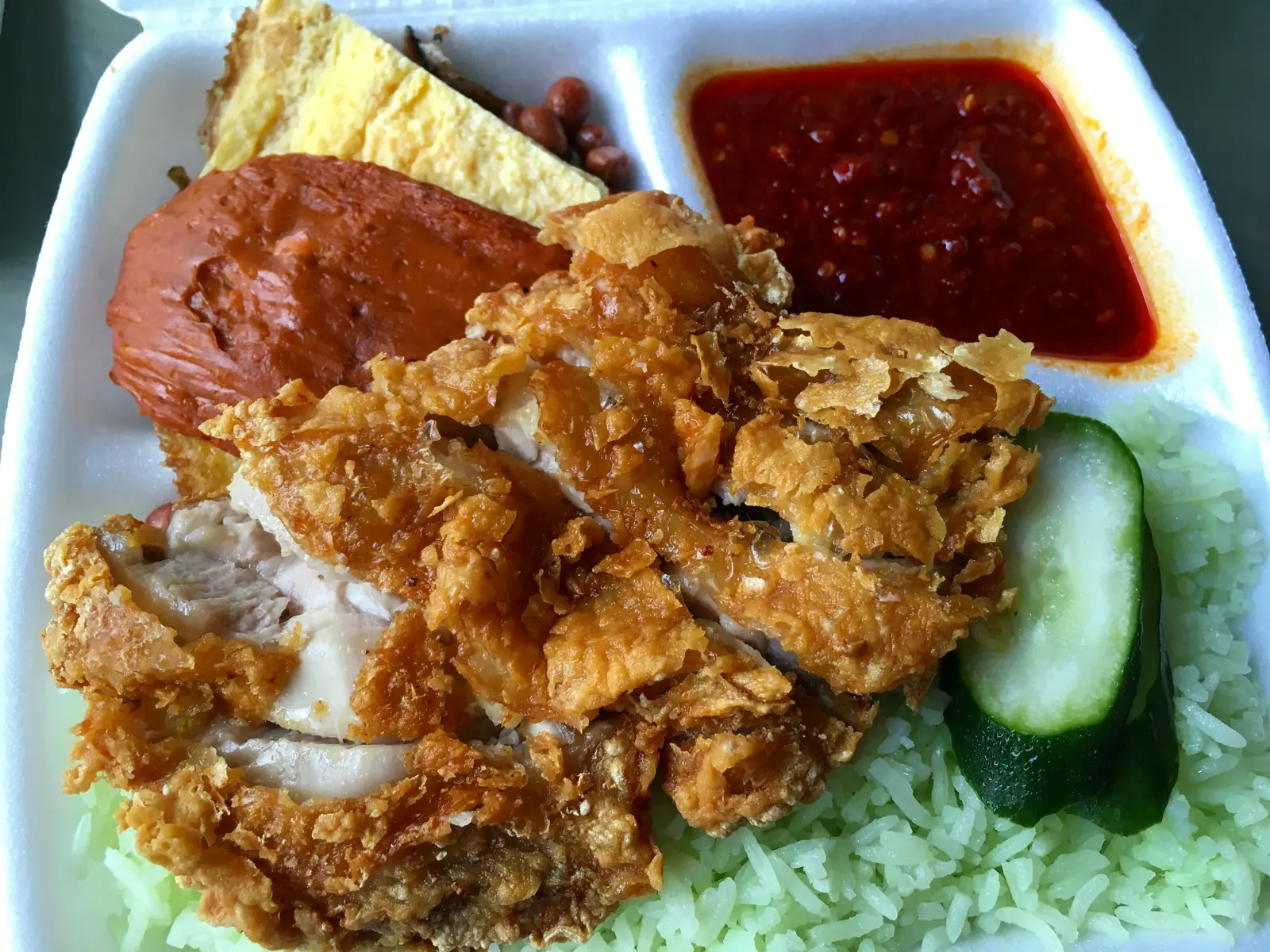
Nasi lemak — coconut rice with crispy fried chicken, red sambal, omelette, peanuts and cucumber in a takeaway box Malaysia flag Malaysia 1h 10m
Breakfast •Malaysian Heritage

Nasi Lemak

This nasi lemak recipe brings Malaysia's national breakfast to your own table: rice steamed in coconut milk with pandan, a dark, sweet-hot sambal, golden turmeric fried chicken, and the classic little pile of crispy anchovies, roasted peanuts, boiled egg and cool cucumber. One serving is about 465 g.

Hearty & Satisfying

A full Malaysian breakfast plate — fragrant coconut rice with sambal, crispy chicken, egg, anchovies, peanuts and cucumber.

Pairs Well With
A spoonful of hot sambal and cool cucumber slices, with teh tarik or iced lime tea.
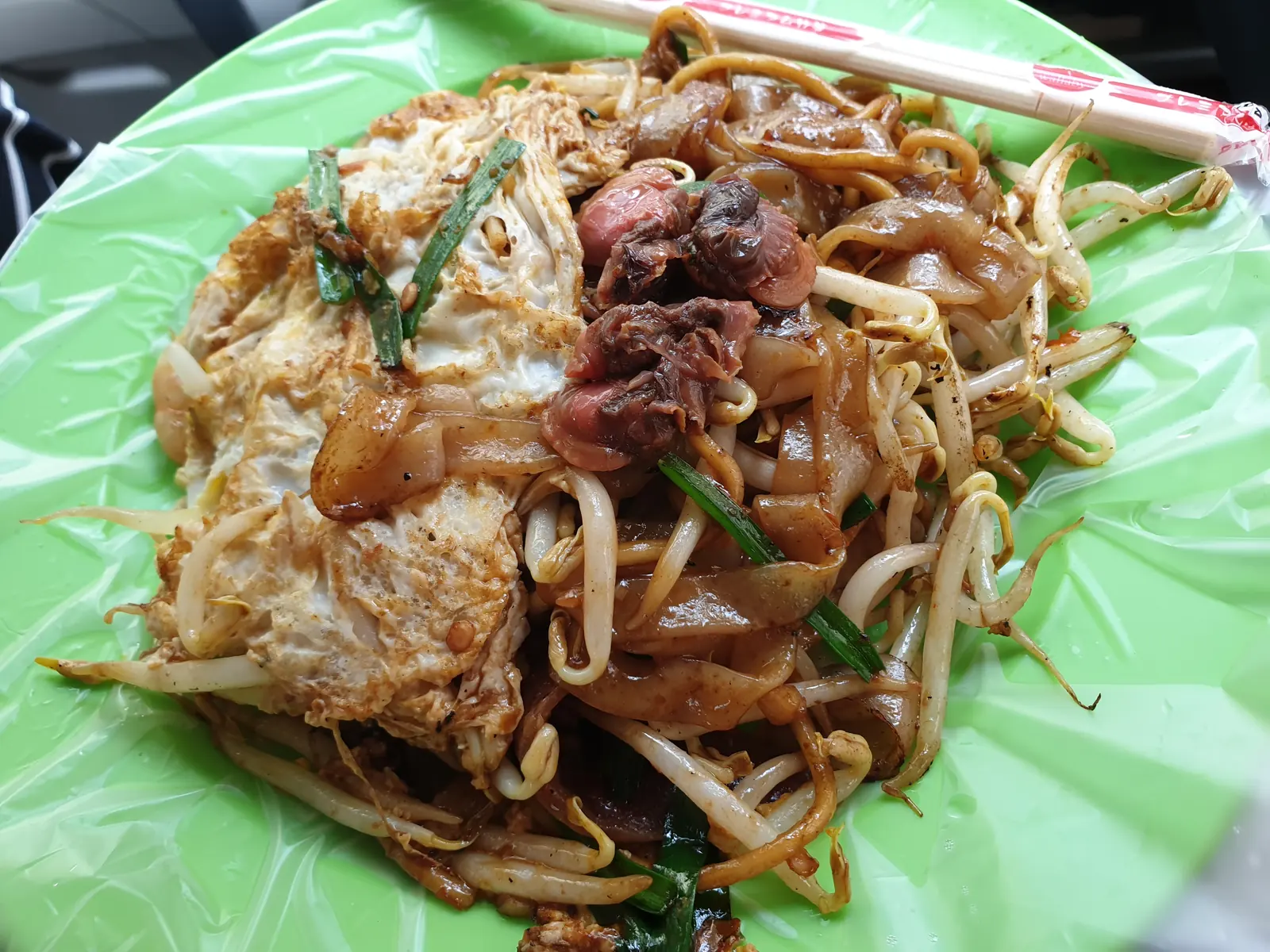
Char kway teow on a green plate — glossy flat rice noodles with fried egg, cockles, bean sprouts and garlic chives Malaysia flag Malaysia 25m
Dinner •Penang Street-Food Icon

Char Kway Teow

This char kway teow recipe tosses wide flat rice noodles in a blazing-hot wok with garlic, soy sauce, chilli paste, prawns, cockles, Chinese sausage, egg, bean sprouts and garlic chives, so the noodles pick up the smoky char called wok hei. Cook one plate at a time, exactly like a hawker stall, and eat it straight from the wok. One serving is about 475 g.

Smoky & Satisfying

Flat rice noodles seared over fierce heat with prawns, cockles, egg and bean sprouts — a fast, smoky Malaysian hawker dinner.

Pairs Well With
Pickled green chillies, cucumber slices, and iced lime tea or teh o ais
Pasta & Noodles • Quick Prep (<30m)
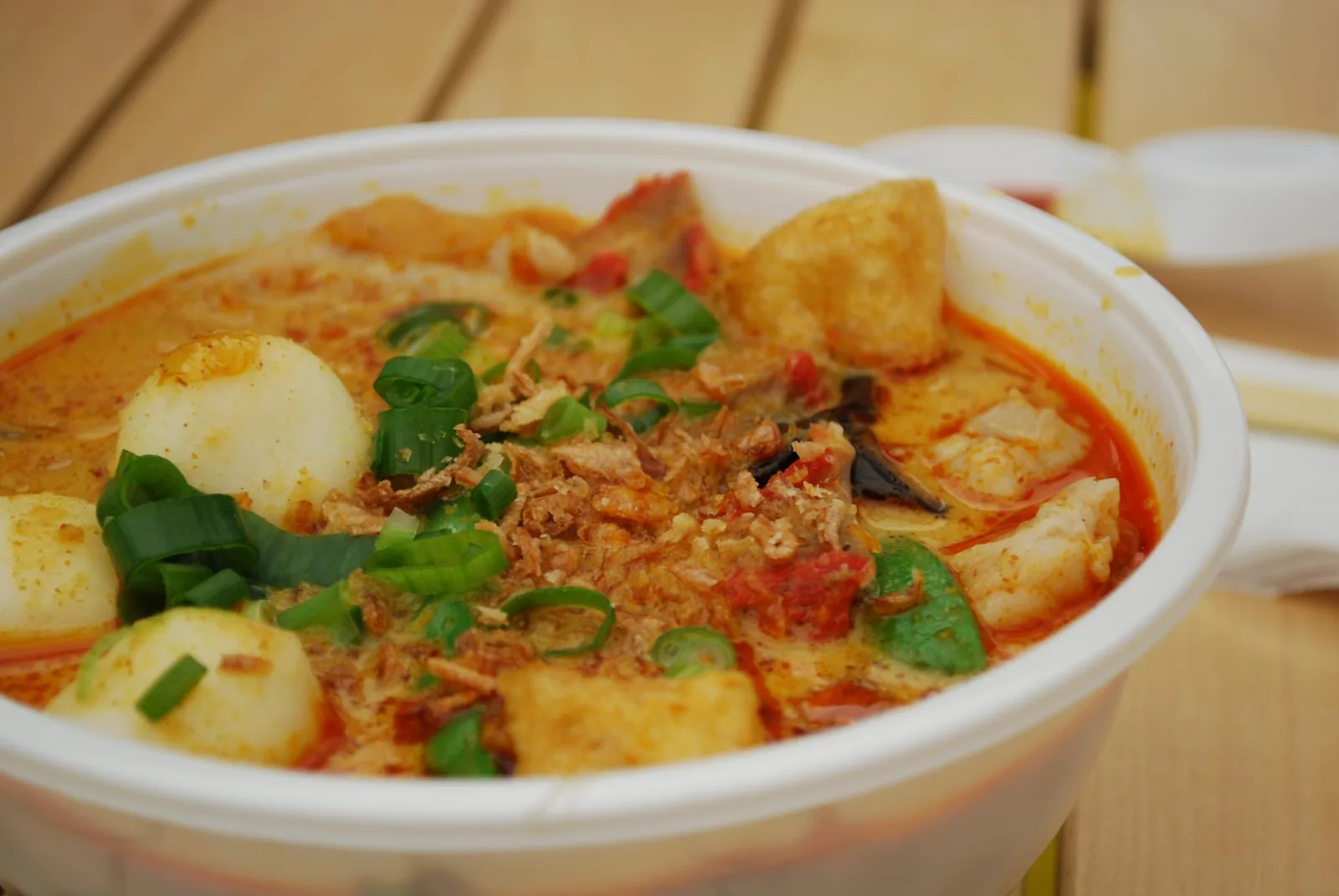
A white bowl of curry laksa in orange coconut curry broth with tofu puffs, fish balls, spring onions and fried shallots Malaysia flag Malaysia 50m
Lunch •Malaysian Hawker Classic

Curry Laksa

This curry laksa recipe simmers a spiced rempah paste with coconut milk and chicken stock into a rich orange broth, then pours it over rice vermicelli and egg noodles with shredded chicken, tofu puffs and crisp bean sprouts. One serving is about 703 g.

Comfort & Warmth

A rich, spiced coconut curry noodle soup with chicken, tofu puffs and bean sprouts.

Pairs Well With
Cool cucumber salad and a glass of iced lime tea
Soups & Broths • Pasta & Noodles
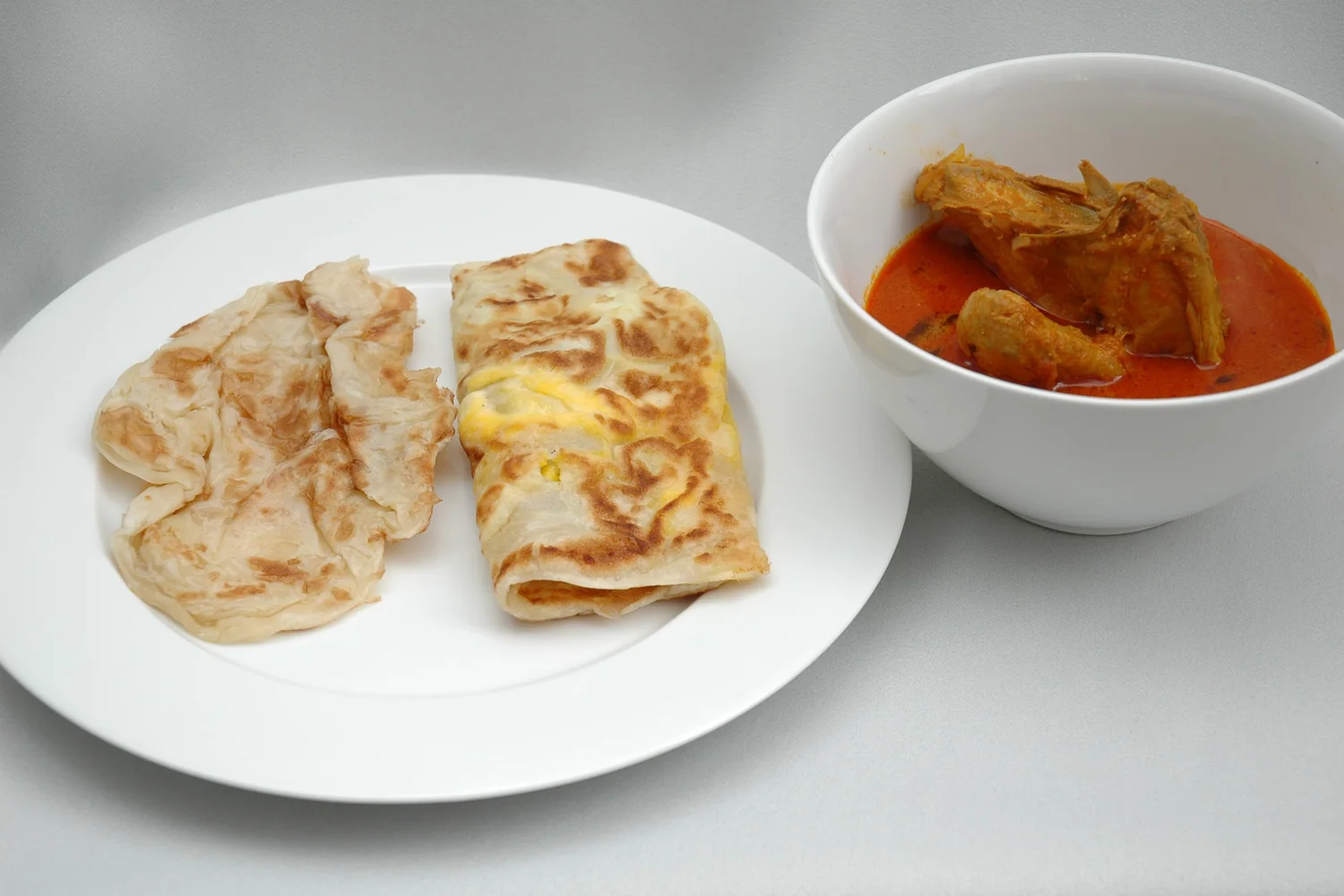
Roti prata and egg roti on a white plate with a bowl of chicken curry Malaysia flag Malaysia 1h 30m
Breakfast •Mamak Stall Heritage

Roti Canai

This roti canai recipe makes the flaky mamak flatbread the slow way: a soft dough rested until it stretches paper-thin, laminated with ghee, folded into squares and fried until the outside crisps and the inside stays soft and layered. It is served torn into pieces for dipping into a warm dhal curry with coconut milk, the way every mamak stall in Malaysia serves it for breakfast. One serving is about 374 g.

Comfort & Warmth

Flaky, laminated flatbread stretched paper-thin, folded and fried in ghee until crisp at the edges, torn and dipped into warm dhal curry.

Pairs Well With
Dhal curry & teh tarik

The Dinner Gazette

Never wonder what’s for dinner again

One email a week with easy dinner ideas from around the world — ingredients, steps and nutrition, tested in our kitchen first.

Delivered every Thursday morning. Unsubscribe anytime.