Curated recipes from 193 countries  •  New seasonal Mediterranean issue out now

Overview

Salade de Pissenlit

Walloon Dandelion Salad, Salade de Pissenlits au Lard

This salade de pissenlit recipe makes Wallonia's spring classic: young dandelion leaves tossed with crisp bacon lardons and a warm vinaigrette made in the bacon fat, then ringed with sliced hard-boiled eggs. The bitter leaves, the smoky salt pork, the sharp vinegar and the creamy yolk balance each other exactly — that is the whole point of the dish. One serving is about 175 g.

Salade de pissenlit is the spring salad of Wallonia, the French-speaking south of Belgium, and of the French Ardennes just across the border. Dandelion — pissenlit in French, a name that refers to the plant's reputation as a diuretic — is one of the first green things to appear in spring, and country cooks have gathered its young leaves for generations, before the flowers open and the leaves turn too bitter. The classic Walloon version tosses the leaves with lardons and a warm vinegar dressing made in the bacon fat, and rings the platter with hard-boiled eggs. It is a poor people's dish made generous: bitter leaves from the field, a little pork, an egg, and bread to mop the plate.

Pairs well with: Crusty bread, blonde beer & a fruit tart

Provenance

Belgium flag Belgium

Walloon Spring Classic

Nordic & European

Time Dedication

40m

15m prep • 25m cook

Batch Yield

4 Servings

304 kcal per serving

1 serving ≈ 175 g

Technical Skill

Easy

Easy (Warm Salad)

Meal Timing & Digestive Fit

Breakfast

Not Advised

Lunch

Prime Metabolic Fit

Dinner

Ideal Hearty Main

Snack & Tea

Inappropriate

Occasions: Spring lunches, Easter, foraging season, light lunches Cost: Low — about $2–3 per serving at home
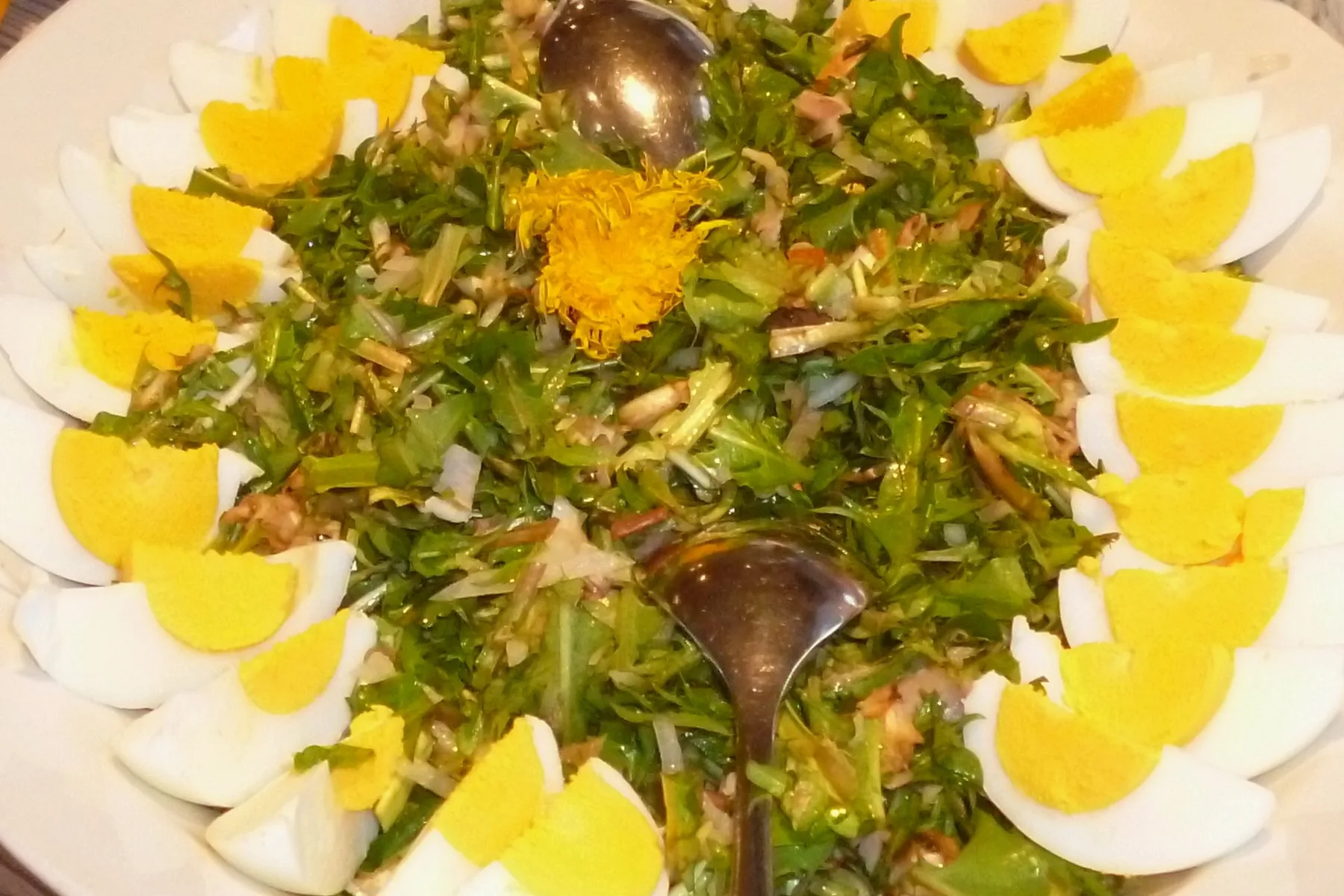
A platter of dandelion salad ringed with sliced hard-boiled eggs, with a dandelion flower in the centre and serving spoons

Walloon Spring Classic

Photo: Benreis, CC BY-SA 4.0, via Wikimedia Commons

The Heritage Formulary

Measured Ingredients

Estimated cost: Low — about $2–3 per serving at home (USD)

A good salade de pissenlit is served warm, the leaves just wilted, the bacon crisp, and the eggs sliced in a ring around the platter.

Execution Methodology & Culinary Technique

Step-by-Step Cooking Guide

Active 40m
P

Prep Stage: Greens, Eggs, Bacon

15 Mins • Washing and Boiling

Wash the dandelion three times — grit hides in the folds of the leaves — and dry it well, because wet leaves will not hold the dressing. Put the eggs on to boil first, then cut the bacon while they cook, so everything is ready at the same moment.

Maestro Tip: Dry the leaves in a salad spinner or a clean tea towel: a wet salad is a watery salad, and the warm dressing slides straight off.

  1. 1

    Wash the Dandelion

    10 Mins Cold water, about 10°C (50°F)

    Put the dandelion leaves in a large bowl of cold water and swish them around, then lift them out and change the water. Repeat twice more, until the water runs clear and no grit remains. Spin or pat the leaves dry, tear them into bite-size pieces, and put them in a wide serving bowl.

    Lift the leaves out of the water instead of pouring them into a colander — the grit stays at the bottom of the bowl that way.

    Done when: Clean, dry, bite-size leaves with no grit between your teeth.

  2. 2

    Boil the Eggs

    12 Mins Boiling water, 100°C (212°F)

    Lower the eggs into a pan of boiling water and cook for 10 minutes for fully hard-boiled eggs. Drain, run under cold water until cool enough to handle, then peel and cut each egg lengthways into quarters. Set aside on a plate.

    Start the eggs in boiling water and time them from the moment they go in — 10 minutes gives a firm yolk with no grey ring.

    Done when: Firm yolks, no grey ring, clean quarters.

  3. 3

    Crisp the Bacon

    8 Mins Medium heat, about 180°C (350°F)

    Put the bacon lardons in a cold frying pan and set it over medium heat. Cook, stirring now and then, for 6–8 minutes, until the lardons are crisp and golden and a good pool of fat has rendered out. Lift the bacon out with a slotted spoon and set it aside, leaving all the fat in the pan.

    Starting in a cold pan renders the fat slowly and crisps the bacon evenly instead of burning the edges.

    Done when: Crisp golden lardons and a pan full of clear rendered fat.

  4. 4

    Make the Warm Dressing

    5 Mins Low heat, about 120°C (250°F)

    Keep the pan over low heat and add the minced shallot to the bacon fat. Cook for 1 minute until soft, then take the pan off the heat and whisk in the red wine vinegar, Dijon mustard, olive oil and a pinch of black pepper. It will sizzle and steam — that is the dressing coming together. Taste and add salt only if it needs it; the bacon is already salty.

    Take the pan off the heat before the vinegar goes in, or it will spit and the dressing will separate.

    Done when: A hot, glossy dressing that smells smoky and sharp.

  5. 5

    Toss and Serve

    5 Mins No heat — serve warm, about 60°C (140°F)

    Pour the hot dressing over the dandelion leaves and toss immediately, so the warmth just begins to wilt them. Scatter the crisp bacon over the top, arrange the egg quarters in a ring around the edge, and tuck the dandelion flowers in the centre if you have them. Serve at once, with crusty bread.

    Dress at the table if you can — the salad is at its best in the first five minutes, before the leaves go limp.

    Done when: Glossy, just-wilted leaves, crisp bacon, eggs in a ring, served warm.

Finishing Touches & Plating

Serve the salad at once, while the dressing is still warm and the leaves are just beginning to wilt. Put crusty bread on the table — it is made for mopping up the warm bacon vinaigrette.

Nutritional Physiology & Benefits

Nutrition

Energy

304

kcal / serving

Protein

13g

Complete AA

Carbs

10g

Complex

Fats

24g

Healthy

Per serving (4 servings · 1 serving ≈ 175 g)
Energy304 kcal
Protein13 g
Carbohydrates10 g
Fat24 g
Fibre3.1 g
Sugar1.5 g
Sodium600 mg
Per 100g
Energy174 kcal
Protein7.7 g
Carbohydrates5.6 g
Fat13.6 g
Fibre1.8 g
Sugar0.9 g
Sodium343 mg

Nutrition values are estimated — calculated from USDA FoodData Central values for the listed ingredients.

Vitamins & minerals: Vitamin K and vitamin A (dandelion), vitamin B12 and choline (egg), iron and calcium (dandelion, egg).

Spring Greens, Real Nutrients

Dandelion leaves are rich in vitamin K, vitamin A and calcium, and they bring more fibre than most salad leaves.

Protein That Fills You Up

Egg and bacon give about 13 g of protein per serving, which makes this salad a meal rather than a side.

Warm Fat, Softened Bitter Leaves

The warm bacon dressing wilts the leaves just enough to soften their bitterness — no cream or sugar needed.

Food Pairings

What to Eat With

To optimize nutrient absorption and elevate the sensory depth, pair with these authentic accompaniments:

Sides

Crusty Bread

Crusty bread is essential: it mops up the warm bacon vinaigrette that pools at the bottom of the bowl.

Drinks

Belgian Blonde Beer

A cold Belgian blonde beer matches the smoky bacon and cuts the richness of the warm dressing.

Vegetables

Boiled New Potatoes

A few boiled new potatoes on the side turn the salad into a fuller meal without fighting the bitter leaves.

Full Menus

Fruit Tart

A simple fruit tart afterwards gives the sweet note the bitter salad deliberately leaves out.

Complete menu

Serve the salad as a light lunch with crusty bread and a glass of blonde beer, then finish with a simple fruit tart — the bitter greens open the appetite for something sweet.

Digestive Guardrails

What NOT to Combine

To prevent digestive distress, sluggishness, or palate clash, avoid pairing the dish with these elements:

Sprayed or Roadside Leaves

Picking dandelions from a lawn that has been sprayed, or from a roadside, can expose you to pesticides and exhaust dirt. Only use young leaves from clean, unsprayed ground, or buy cultivated dandelion from a market. This is general information, not medical advice.

Dressing Too Early

Pouring the dressing on too early turns the leaves limp and grey before the salad reaches the table. Dress the salad at the last moment and serve it at once. This is general information, not medical advice.

General information only, not medical advice — consult a doctor for personal dietary decisions.

Who Should Eat It

Who Should Eat

  • General adultsA proper spring lunch: bitter greens, smoky bacon and egg, with bread on the side. Hearty enough to stand alone.
  • ChildrenDandelion is very bitter, so most young children will not enjoy it; offer a small taste with plenty of egg, and serve them a milder green salad instead if they refuse it.
  • ElderlyGood choice in small portions: soft egg and wilted greens are easy to chew, but the bacon is salty, so keep the dressing light.
  • Pregnant womenFine when the eggs are hard-boiled right through and the bacon is cooked until crisp; wash the greens very thoroughly. Ask your clinician if unsure.
  • Breastfeeding womenGenerally suitable; the eggs and bacon give useful protein and energy. Keep the portion moderate because the dressing is rich.
  • AthletesAbout 13 g of protein per serving with iron-rich greens — a good light lunch after training, with bread for carbohydrate.
  • Weight gainAdd crusty bread and an extra egg, and use the full amount of bacon fat in the dressing.
  • Weight lossKeep to one serving, use half the bacon and drain the fat, and fill the plate with extra greens; the salad is filling for its calories.

Health Conditions — Adjust or Avoid

Conditions

  • DiabetesAbout 10 g of carbohydrate per serving, so it fits most meal plans; keep the bread portion measured and ask your clinician if unsure.
  • High blood pressureSodium is about 600 mg per serving, mainly from the bacon and salt; use half the bacon and skip the added salt if you follow a low-sodium diet, and ask your clinician about your target.
  • Kidney diseaseDandelion, bacon and egg are sources of potassium and phosphorus; keep to one serving if you follow a limit, and ask your clinician.
  • GoutBacon and egg contain purines; keep the bacon portion small and eat this salad occasionally rather than daily, and ask your clinician if unsure.
  • Stomach issuesRaw bitter greens and a vinegar dressing can irritate a sensitive stomach; eat a small portion, chew well, and skip the vinegar if it bothers you, and ask your clinician if unsure.
  • Cardiovascular diseaseBacon brings saturated fat and salt, so treat this as an occasional spring dish and balance the day with lighter meals, and ask your clinician about your overall diet.
  • Fatty liverUse half the bacon, drain the fat well and add extra greens; the bacon fat is the main concern, and ask your clinician if you follow a prescribed diet.
  • Food allergiesContains egg and pork (bacon), and mustard. Leave out the mustard if you are sensitive to it, and use smoked turkey rashers instead of bacon if you avoid pork.
  • Special therapeutic dietsNaturally gluten-free and low in carbohydrate; for a lower-sodium plan, halve the bacon and the salt, and check with your clinician.

If you have a medical condition, consult your doctor before changing your diet.

Storage & Use

Storage & Use

How to store
Store any leftovers in a sealed container in the fridge; keep the dressing separate if you have any left.
In the fridge
Leftovers keep 1 day in the fridge at 4°C (40°F) or below, but the leaves wilt and the dressing sets; eat the eggs and bacon, not the old leaves.
In the freezer
Do not freeze — the dressed salad turns to mush and the eggs go rubbery.
How to reheat
Do not reheat the salad. Warm the bacon and dressing gently in a pan if you want a second helping, and toss with fresh leaves.
Freezing recommended
No — this salad is made to be eaten at once.
Signs it has spoiled
Slimy or blackened leaves, sour smell from the dressing, or eggs that smell of sulphur.

More recipes to explore

Moules-frites — a black pot of steamed mussels with herbs, served with golden fries at a Brussels brasserie Belgium flag Belgium 1h
Dinner •Brussels Brasserie Classic

Moules-Frites

This moules frites recipe makes the plate Belgium is proudest of: a black pot of mussels steamed open in white wine, shallots and cream, served with a heap of crisp, twice-cooked fries and a pot of mayonnaise. The mussels are sweet and briny, the broth is made for dipping, and the fries stay crisp if you keep them out of the pot. One serving is about 350 g.

Seaside Comfort

Sweet mussels steamed in white wine and cream, piled next to golden twice-cooked fries.

Pairs Well With
Crisp Belgian lager & mayonnaise
High Protein
Belgian waffles — a golden Brussels waffle topped with whipped cream and icing sugar on a white plate Belgium flag Belgium 1h 35m
Breakfast •Brussels Bakery Classic

Belgian Waffles

This Belgian waffles recipe makes the light, yeasted kind: a risen batter cooked in a hot iron until the outside is crisp and golden and the inside stays soft and airy. The deep pockets hold butter, syrup or berries, and a dusting of icing sugar is all they really need. This recipe makes 8 waffles; one serving is 2 waffles, about 210 g. Nutrition is for the plain waffles, before toppings.

Weekend Breakfast Treat

Light, yeasted Brussels waffles with deep pockets, crisp outside and soft inside.

Pairs Well With
Strong coffee & fresh berries
Carbonade flamande — dark beer-braised beef stew with fries and a small salad on a white plate Belgium flag Belgium 2h 55m
Dinner •Flemish Farmhouse Classic

Carbonade Flamande

This carbonade flamande recipe is Flanders' answer to the French beef stew: chunks of beef braised for hours in dark Belgian ale with sweet caramelised onions, thyme and bay, thickened the old way with slices of bread spread with mustard. The sauce turns dark, glossy and sweet-sour, and the beef goes spoon-tender. One serving is about 250 g, not counting the fries or potatoes served alongside.

Slow Sunday Comfort

Beef braised low and slow in dark Belgian ale with onions and mustard bread.

Pairs Well With
Dark Belgian ale & fries
High Protein
A paper cone of golden Belgian fries topped with andalouse sauce and two small plastic forks. Belgium flag Belgium 55m
Snack & Tea •Brussels Friterie Classic

Belgian Fries

Belgian fries are the real thing: thick batons of floury potato, fried twice — once gently to cook them through, once hot to shatter the outside — and served in a paper cone with andalouse sauce. One serving is about 253 g.

Crisp & Golden

Thick-cut potatoes fried twice in vegetable oil — crisp outside, fluffy inside, with andalouse sauce.

Pairs Well With
Serve hot in a paper cone with andalouse sauce and a cold lager.
Quick Prep (<30m)

The Dinner Gazette

Never wonder what’s for dinner again

One email a week with easy dinner ideas from around the world — ingredients, steps and nutrition, tested in our kitchen first.

Delivered every Thursday morning. Unsubscribe anytime.