
Curated recipes from 193 countries  •  New seasonal Mediterranean issue out now

Overview

Salmorejo

Salmorejo Cordobés, Cordoban Tomato Soup

This salmorejo recipe blends ripe tomatoes, day-old bread, olive oil and garlic into a thick, velvety soup, then chills it and tops it with chopped hard-boiled egg and jamón serrano. Unlike gazpacho, salmorejo is thick, creamy and bread-based, with no cucumber or pepper — it is a spoon-standing cream, not a thin drink. One serving is about 371 g.

Salmorejo comes from Córdoba in Andalusia, where it grew out of a much older peasant dish of bread pounded with olive oil, garlic and salt. Tomatoes arrived from the Americas in the 16th century and turned the pale porridge into the orange cream it is today. It is often confused with gazpacho, but the two are different dishes: gazpacho is a thin, drinkable soup of raw vegetables, while salmorejo is thick, bread-bound and creamy, and it is always finished with chopped egg and cured ham.

Pairs well with: Crusty bread, a simple green salad and a glass of fino sherry

Provenance

Spain flag Spain

Cordoba Classic

Mediterranean & Italy

Time Dedication

30m

20m prep • 10m cook

Batch Yield

4 Servings

452 kcal per serving

1 serving ≈ 371 g

Technical Skill

Easy

Easy (Blend & Chill)

Meal Timing & Digestive Fit

Breakfast

Not Advised

Lunch

Prime Metabolic Fit

Dinner

Ideal Hearty Main

Snack & Tea

Inappropriate

Soups & Broths Occasions: Summer lunch, hot-day supper, tapas first course Cost: Low — about $2–3 per serving at home
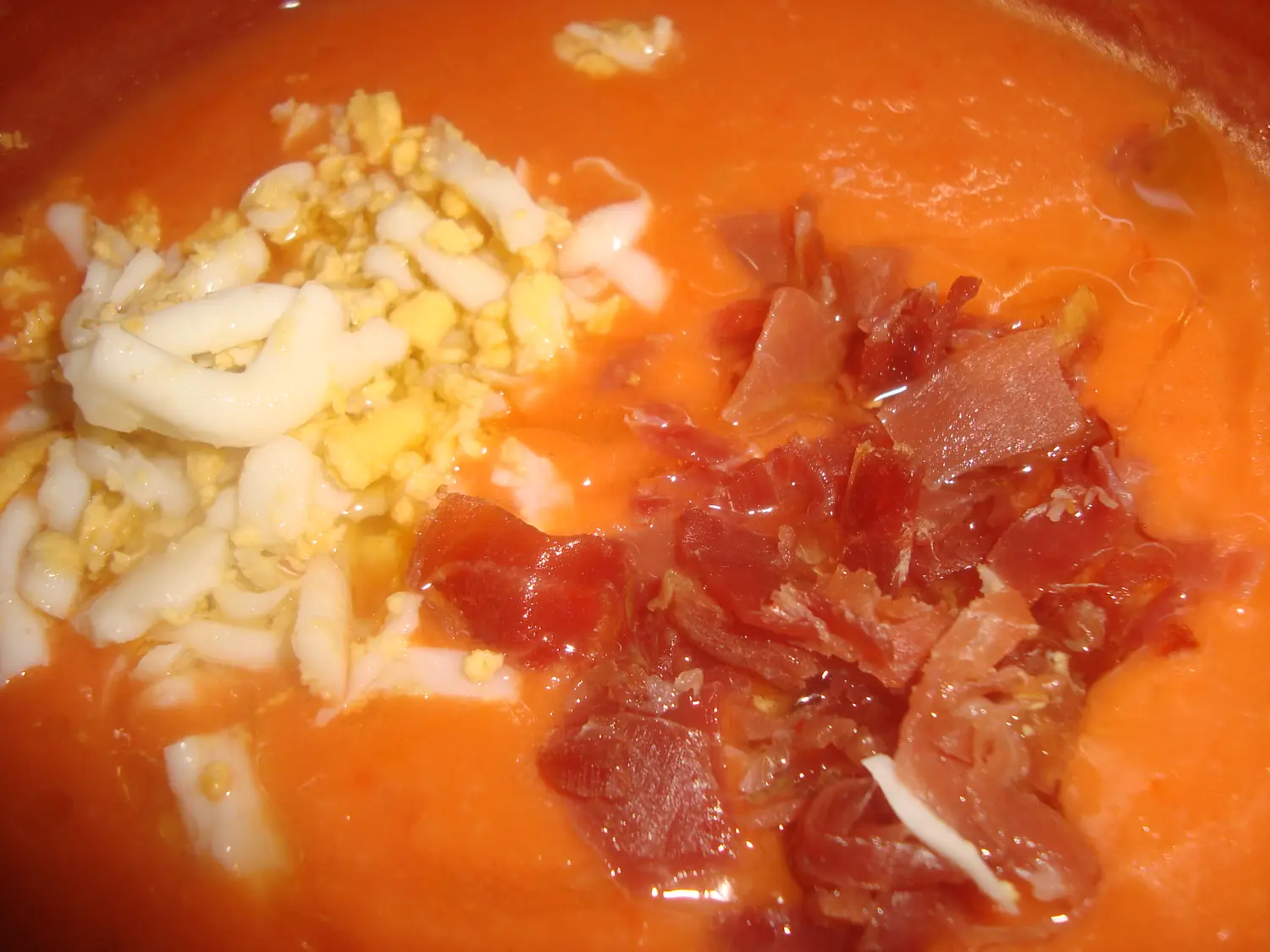
A bowl of thick orange salmorejo topped with chopped hard-boiled egg and diced jamón serrano

Cordoba Classic

Photo: Juan Emilio Prades Bel, CC BY-SA 4.0, via Wikimedia Commons

The Heritage Formulary

Measured Ingredients

Estimated cost: Low — about $2–3 per serving at home (USD)

Made the Cordoban way with ripe tomatoes, day-old bread, olive oil and garlic, topped with egg and jamón — never thin like gazpacho; nutrition is estimated from USDA values.

Execution Methodology & Culinary Technique

Step-by-Step Cooking Guide

Active 30m
P

Prep Stage: Chop the Tomatoes and Dice the Jamón

20 Mins • Chopping & Measuring

Put the eggs on to boil. Core and chop the tomatoes, tear the bread into chunks and remove the crusts, and dice the jamón. Measure out the oil, vinegar and salt, and have the blender ready.

Maestro Tip: Use the ripest tomatoes you can find — an underripe tomato makes a pale, sharp soup no amount of oil can rescue.

  1. 1

    Boil the Eggs

    10 Mins Boiling water, 100°C (212°F)

    Lower the eggs into boiling water and cook for 10 minutes. Lift out, cool under cold running water, peel and chop finely. Set aside for the topping.

    Start the eggs in boiling water and cool them fast: it keeps the yolks yellow and the shells easy to peel.

    Done when: The yolks are firm and pale yellow right through, with no green ring.

  2. 2

    Soak the Bread

    5 Mins Room temperature, about 20°C (68°F)

    Put the torn bread in a bowl with the chopped tomatoes and leave for 5 minutes. The bread drinks up the tomato juice and softens — this is what makes the soup thick instead of thin.

    Give the bread the full five minutes: dry bread that has not soaked leaves the soup gritty.

    Done when: The bread is soft and swollen with tomato juice, with no dry pieces left.

  3. 3

    Blend the Soup

    5 Mins Room temperature, about 20°C (68°F)

    Tip the tomatoes, bread and garlic into a blender with the vinegar and salt. Blend on high for 2–3 minutes until completely smooth, then, with the blender running, pour the olive oil in a thin, steady stream. Keep blending until the soup turns pale orange, thick and glossy.

    Pour the oil slowly: a thin stream lets it emulsify into the soup, while oil dumped in at once floats on top.

    Done when: The soup is completely smooth, thick enough to coat a spoon, and pale orange and glossy.

  4. 4

    Chill the Salmorejo

    5 Mins Chill at 4°C (39°F) for at least 1 hour

    Pour the soup into a jug, cover and chill in the fridge for at least 1 hour. Salmorejo is at its best properly cold, and the flavours settle as it rests.

    Taste after chilling and adjust the salt — cold food tastes less salty, and salmorejo almost always needs a final pinch.

    Done when: The soup is cold right through and has thickened slightly as it rested.

  5. 5

    Serve with Egg and Jamón

    5 Mins Serve chilled — soup about 4°C (39°F)

    Ladle the cold soup into bowls, scatter the chopped egg and diced jamón over the top, and finish with a thin drizzle of olive oil. Serve at once, with crusty bread on the side.

    Top each bowl at the table if you can: the egg and ham sink into the thick soup within minutes.

    Done when: The soup is thick, cold and glossy, with the egg and ham sitting proudly on top.

Finishing Touches & Plating

Ladle the cold, thick soup into bowls, scatter the chopped egg and diced jamón over the top, and finish with a thin drizzle of olive oil — the toppings are the dish's signature, not an afterthought.

Nutritional Physiology & Benefits

Nutrition

Energy

452

kcal / serving

Protein

14g

Complete AA

Carbs

35g

Complex

Fats

29g

Healthy

Per serving (4 servings · 1 serving ≈ 371 g)
Energy452 kcal
Protein14 g
Carbohydrates35 g
Fat29 g
Fibre4.4 g
Sugar9.0 g
Sodium1021 mg
Per 100g
Energy122 kcal
Protein3.8 g
Carbohydrates9.5 g
Fat7.8 g
Fibre1.2 g
Sugar2.4 g
Sodium275 mg

Nutrition values are estimated — calculated from USDA FoodData Central values for the listed ingredients.

Vitamins & minerals: Provides vitamin C and lycopene from the tomatoes, and vitamin B12 from the egg and jamón. Nutrition is estimated.

A Complete Lunch

About 452 kcal per serving with 14.1 g of protein — a complete lunch from one bowl.

Four Pantry Ingredients

Ripe tomatoes, bread, olive oil and garlic — four pantry ingredients, blended smooth, with no cooking beyond the eggs.

Vitamin C and Lycopene

Tomatoes bring vitamin C and lycopene, and the olive oil is the fat the Mediterranean diet is built on.

Food Pairings

What to Eat With

To optimize nutrient absorption and elevate the sensory depth, pair with these authentic accompaniments:

Sides

Crusty Bread

Crusty bread is made for the thick soup — it scoops and soaks where a spoon leaves off.

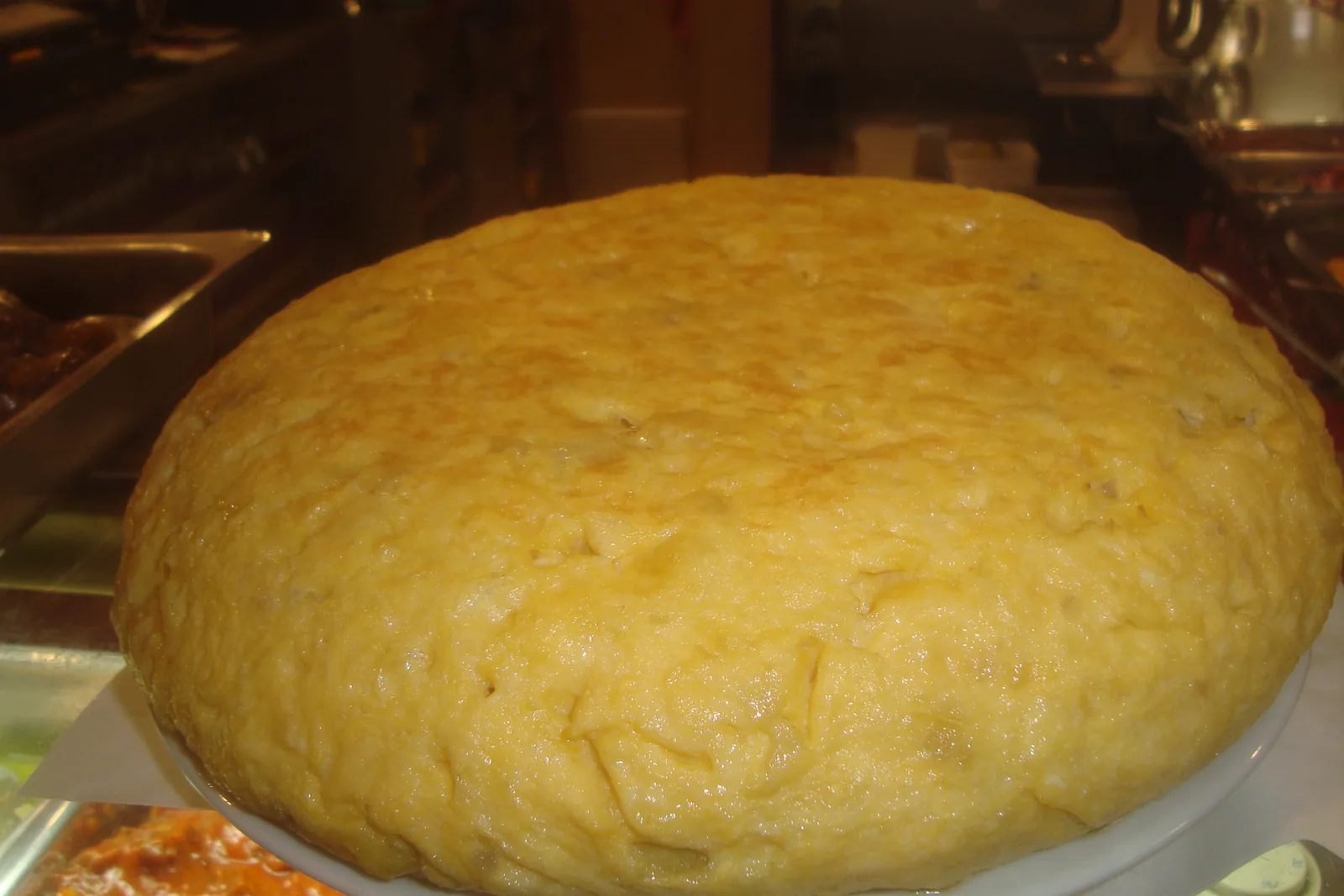
Tortilla Española

A slice of tortilla española after the soup turns a light lunch into a full Spanish meal.

Vegetables

Green Salad

A lightly dressed green salad brings a fresh, sharp edge that balances the rich, oily soup.

Drinks

Fino Sherry

A cold glass of fino sherry is the classic Cordoban pairing — dry, nutty and made for ham and tomato.

Complete menu

Serve the salmorejo as a first course with crusty bread, then a grilled fish or tortilla española as the main, and fresh fruit to finish.

Digestive Guardrails

What NOT to Combine

To prevent digestive distress, sluggishness, or palate clash, avoid pairing the dish with these elements:

Go Easy on the Garlic

Raw garlic and cold soup can be hard on a sensitive stomach, so eat a modest portion and leave the garlic out if it flares. This is general food information, not medical advice.

Keep It Cold

Salmorejo is served cold and must stay cold — do not leave the bowl out on a hot day for more than two hours, and never reheat and chill it again. This is general food information, not medical advice.

General information only, not medical advice — consult a doctor for personal dietary decisions.

Who Should Eat It

Who Should Eat

  • General adultsA cool, filling lunch — one bowl with bread is a complete meal on a hot day.
  • ChildrenMild and creamy, and children usually love the egg and ham topping — make a small bowl without the garlic for very young children.
  • ElderlySoft, easy to swallow and served cold — a good choice for most older eaters; watch the salt from the ham.
  • Pregnant womenFine when freshly made and kept chilled; the eggs are hard-boiled right through and the ham is cured. Ask your clinician if unsure.
  • Breastfeeding womenA refreshing, filling lunch; add a protein main if you are still hungry after one bowl.
  • AthletesAbout 452 kcal and 35.4 g of carbs per serving — a good light lunch, especially with extra bread on the side.
  • Weight gainEasy to eat in quantity — a second bowl or more bread adds calories without much bulk.
  • Weight lossThe olive oil is the main calorie source, so measure it and keep to one bowl with a salad.

Health Conditions — Adjust or Avoid

Conditions

  • DiabetesAbout 35.4 g of carbs per serving, mostly from the bread. Keep the bread portion modest and skip extra bread on the side. Ask your clinician about portion size.
  • High blood pressureAbout 1021 mg of sodium per serving, mostly from the salt and ham. Use less salt and a lighter hand with the ham. Ask your clinician about sodium limits.
  • Kidney diseaseModerate in protein and sodium from the ham. Keep the portion small. Ask your clinician before eating it regularly.
  • GoutLow in purines as written, but the ham adds some. Keep the ham topping light during a flare. Ask your clinician for guidance.
  • Stomach issuesRaw garlic and cold, acidic tomato can irritate a sensitive stomach. Eat a modest portion and leave out the garlic if it flares. Ask your clinician if symptoms persist.
  • Cardiovascular diseaseThe fat here is mostly olive oil, which is a better choice than butter, but the amount still counts. Measure the oil. Ask your clinician about fat intake.
  • Fatty liverThe bread and oil add up; keep the portion to one bowl and measure the oil. Ask your clinician about a suitable portion.
  • Food allergiesContains gluten (bread) and egg. Use gluten-free bread if needed and check the ham label. Ask your clinician if you have a food allergy.
  • Special therapeutic dietsNot suitable for low-carb or gluten-free diets as written; the bread is the body of the soup. Ask your clinician or dietitian for guidance.

If you have a medical condition, consult your doctor before changing your diet.

Storage & Use

Storage & Use

How to store
Cool quickly and store in a sealed jug or container, with the egg and ham toppings kept separate.
In the fridge
2 days, covered, in the coldest part of the fridge.
In the freezer
Not recommended; the emulsion splits on thawing.
How to reheat
Do not reheat — serve cold. If it has been out of the fridge, return it to the cold within 2 hours.
Freezing recommended
No — the blended emulsion does not survive freezing.
Signs it has spoiled
Sour smell, fizzy taste, or any mould.

More recipes to explore

Pan con tomate with jamón ibérico on toasted bread Spain flag Spain 15m
Snack & Tea •Catalan Aperitivo

Pan con Tomate & Jamón Ibérico

Country bread rubbed with ripe Ramallet tomato, drizzled with cold-pressed Arbequina olive oil and topped with jamón ibérico.

Vascular Health

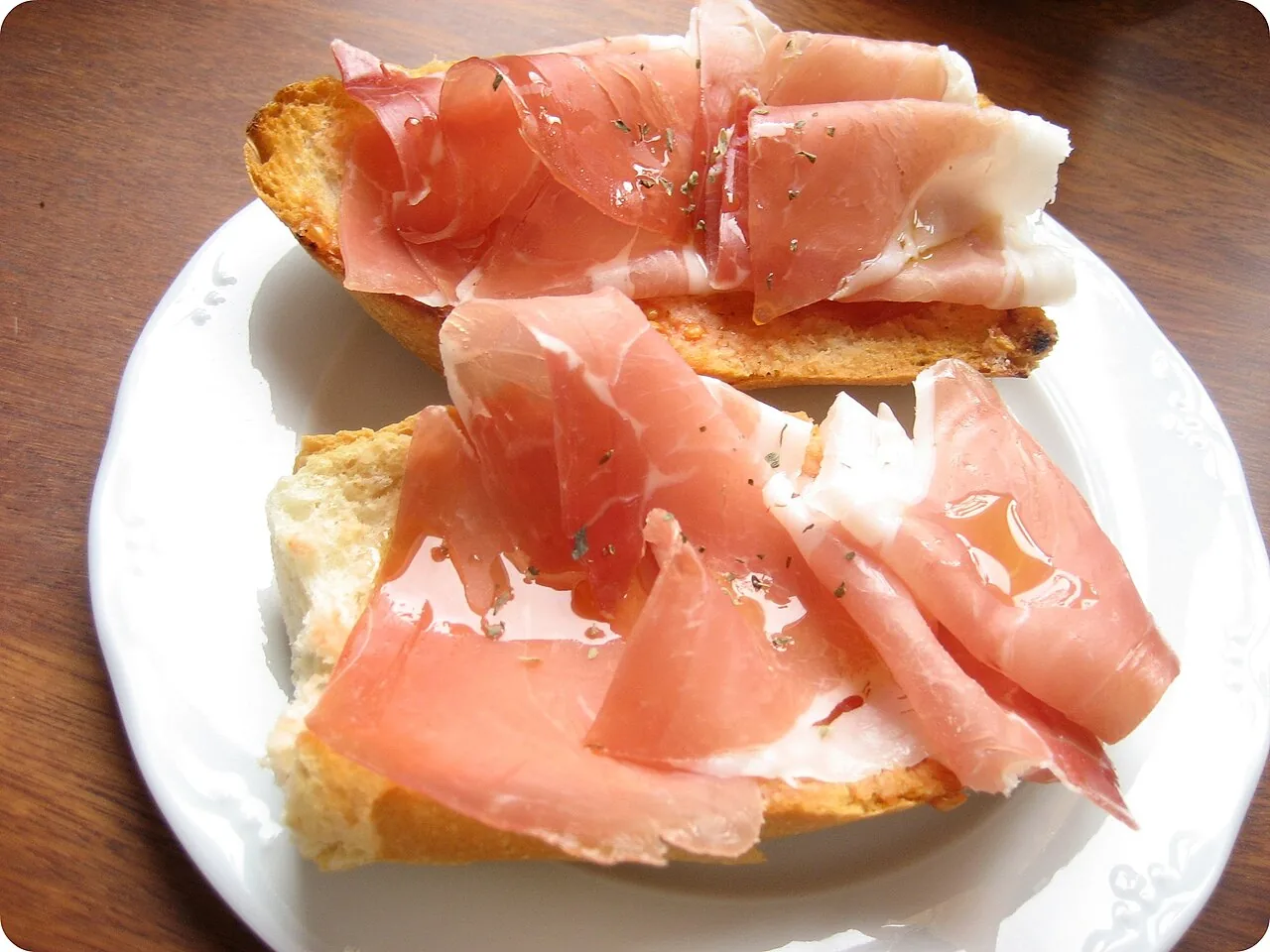
Toasted tomato bread with jamón ibérico, olive oil and olives.

Pairs Well With
Castelvetrano Olives & Sparkling Mineral Water
Quick Prep (<30m)
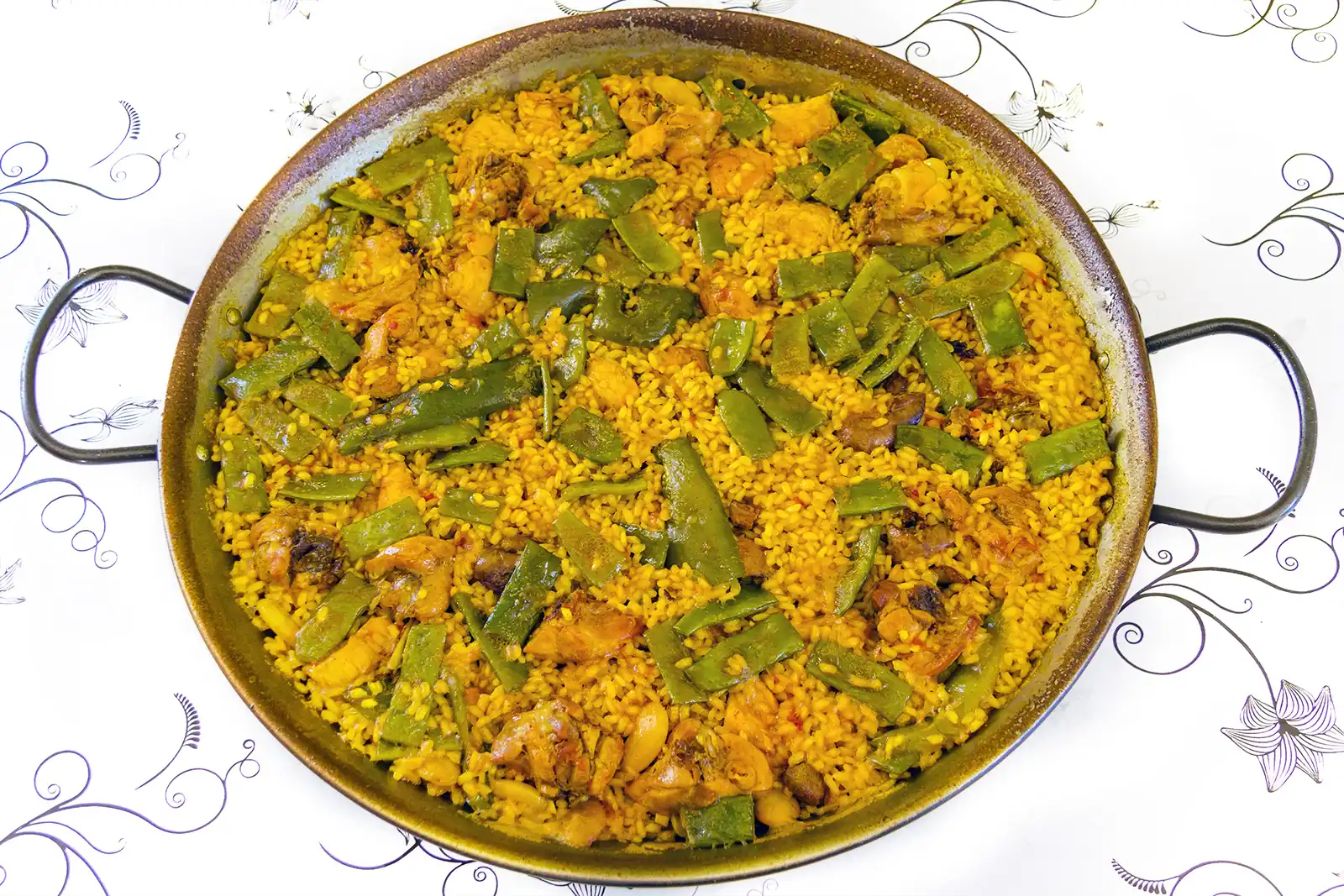
A wide paella pan of paella valenciana with saffron rice, green beans and chicken Spain flag Spain 1h 10m
Dinner •Valencia Rice Fields

Paella Valenciana

This paella valenciana recipe cooks Bomba rice in a wide, shallow pan with chicken, rabbit, green beans and garrofó beans, scented with saffron and rosemary. One serving is about 470 g.

Comfort & Warmth

Saffron rice cooked in a wide pan with chicken, rabbit and green beans.

Pairs Well With
A green salad and a glass of white wine
High Protein
A whole golden tortilla española, a thick Spanish potato omelette, on a plate Spain flag Spain 55m
Snack & Tea •Navarre Bar Classic

Tortilla Española

This spanish tortilla recipe slowly cooks potatoes and onion in olive oil, folds them into beaten eggs, and turns out a thick, golden cake that is soft in the middle. One serving is about 220 g.

Comfort & Warmth

A thick, golden omelette of slow-cooked potatoes, onion and egg.

Pairs Well With
Pan con tomate and a glass of red wine
A cup of chilled orange-red gazpacho with olive oil, served with diced peppers and onion and a bowl of croutons Spain flag Spain 20m
Lunch •Andalusian Classic

Gazpacho

This gazpacho recipe is the Andalusian classic: ripe tomatoes, cucumber, green pepper, onion and garlic blended raw with bread, sherry vinegar and olive oil, then chilled until ice cold. One serving is about 395 g. It takes 20 minutes plus chilling, and there is no cooking at all.

Light & Refreshing

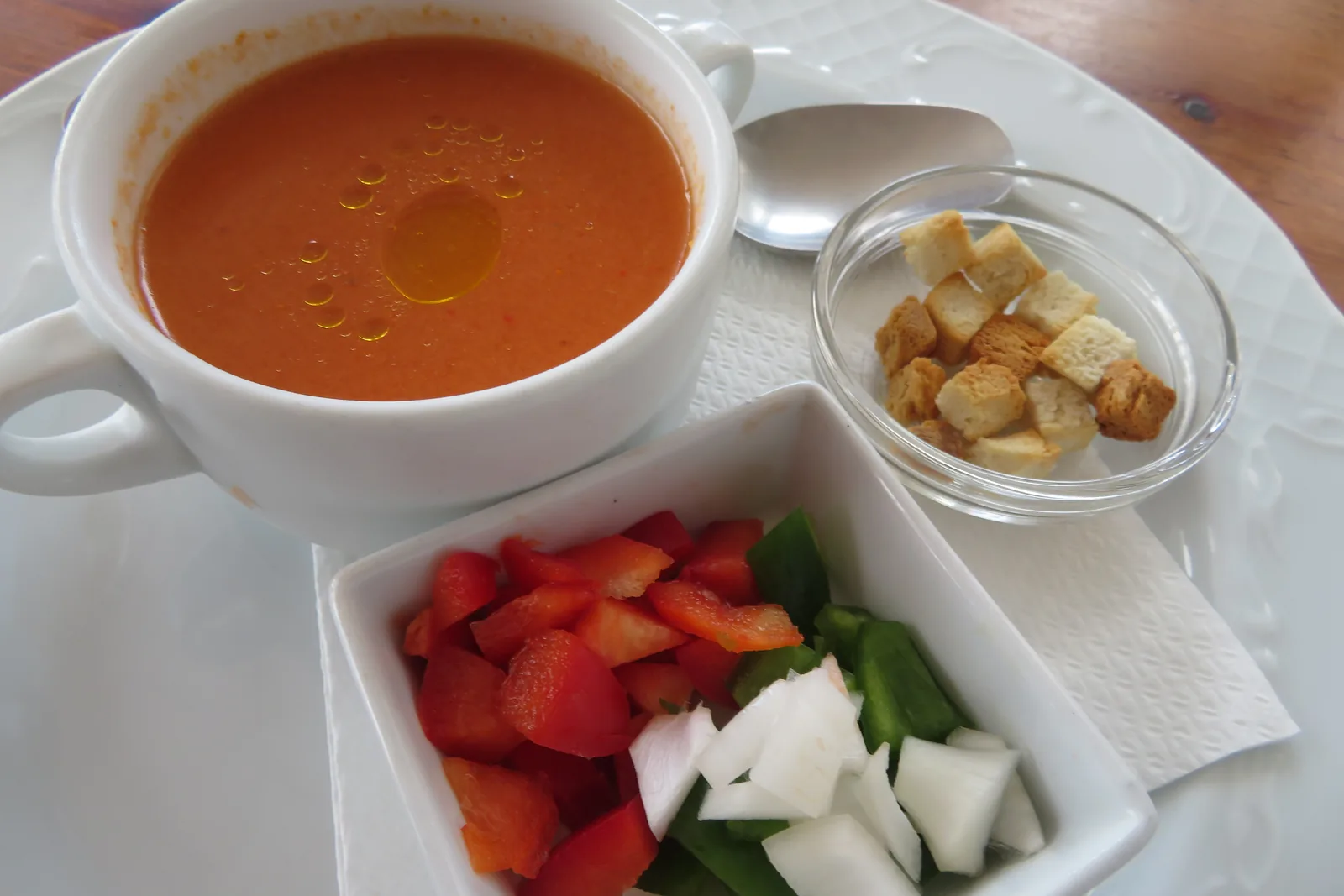
Chilled raw tomato soup blended with cucumber, pepper and olive oil, served cold with diced vegetables and croutons.

Pairs Well With
Croutons, diced vegetables & crusty bread
Soups & Broths • Quick Prep (<30m)

The Dinner Gazette

Never wonder what’s for dinner again

One email a week with easy dinner ideas from around the world — ingredients, steps and nutrition, tested in our kitchen first.

Delivered every Thursday morning. Unsubscribe anytime.