Curated recipes from 193 countries  •  New seasonal Mediterranean issue out now

Overview

Shorshe Ilish

Sorshe Ilish, Hilsa in Mustard Sauce

This shorshe ilish recipe is the Bengali classic: steaks of hilsa, the national fish of Bangladesh, gently simmered in a pungent sauce of ground yellow and black mustard seeds, mustard oil, turmeric and slit green chillies. The mustard is sharp and warm rather than simply hot, and it balances the rich, oily fish perfectly. One serving is about 200 g, not counting rice.

Hilsa, called ilish in Bengali, is the national fish of Bangladesh and the most prized fish in Bengal, where the rivers of the delta — the Padma, Meghna and Jamuna — bring the fish upstream from the Bay of Bengal to spawn. Shorshe ilish, hilsa in mustard, is the dish Bengalis reach for at weddings, Pohela Boishakh (the Bengali new year) and family feasts, and the mustard sauce is the point: ground mustard seeds and pungent mustard oil are the flavours of the Bengal delta, and they were made for the rich, oily hilsa. As of 2023, about 97% of the world's hilsa catch came from Bangladesh.

Pairs well with: Plain steamed rice & a squeeze of lime

Provenance

Bangladesh flag Bangladesh

Dhaka Heritage

East & South Asia

Time Dedication

45m

25m prep • 20m cook

Batch Yield

4 Servings

422 kcal per serving

1 serving ≈ 200 g

Technical Skill

Intermediate

Moderate (Mustard Paste)

Meal Timing & Digestive Fit

Breakfast

Not Advised

Lunch

Hearty Midday Main

Dinner

Ideal Hearty Main

Snack & Tea

Inappropriate

High Protein Occasions: Pohela Boishakh (Bengali New Year), weddings, family feasts, monsoon season Cost: Moderate — about $4–5 per serving at home (hilsa is a premium fish)
Tags: Fish Spicy Savory
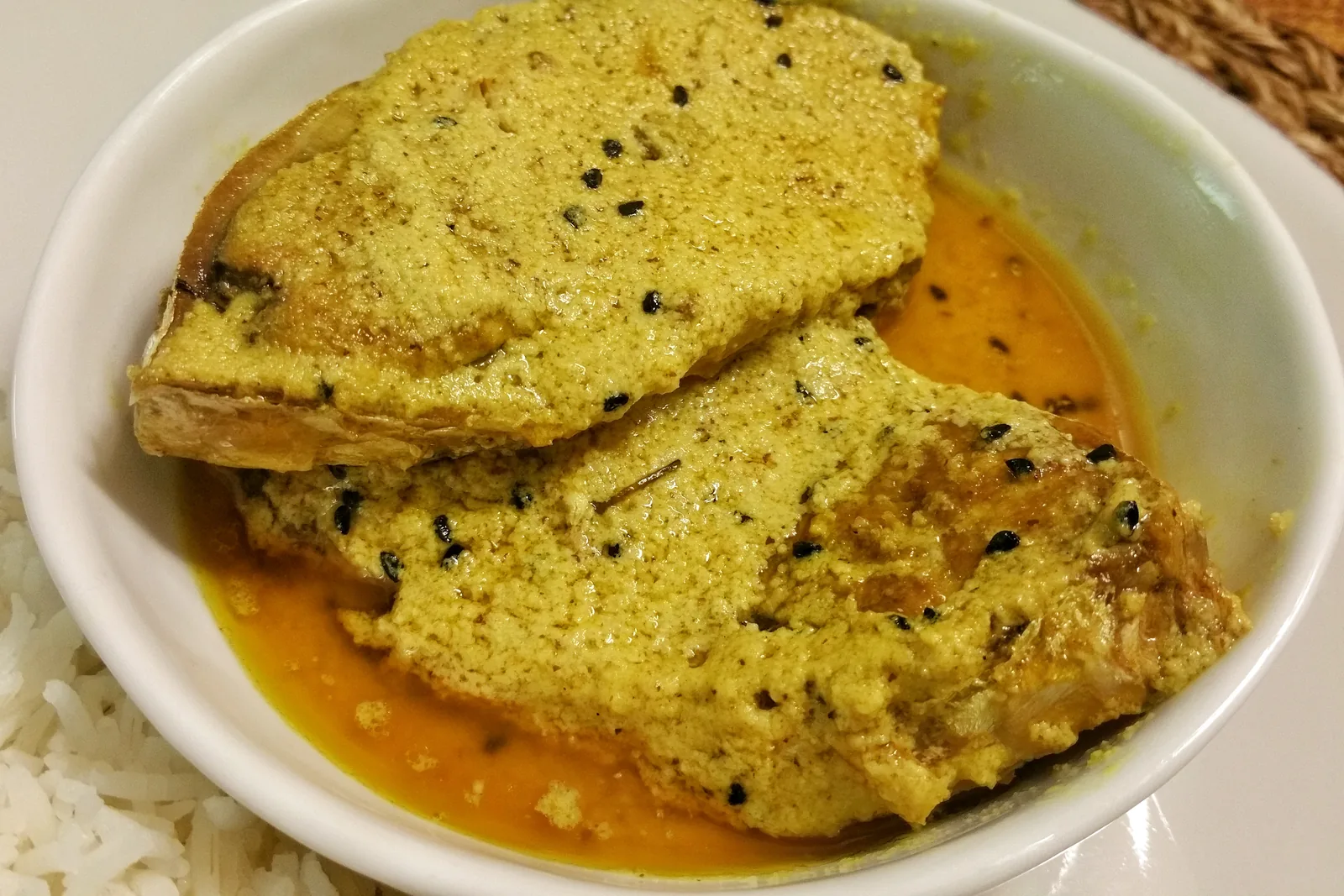
Shorshe ilish — hilsa fish steaks in a golden mustard sauce with green chillies, served in a bowl

Dhaka Heritage

Photo: Acoomar, CC BY-SA 4.0, via Wikimedia Commons

The Heritage Formulary

Measured Ingredients

Estimated cost: Moderate — about $4–5 per serving at home (hilsa is a premium fish) (USD)
A true shorshe ilish is judged by its sauce: sharp and golden, never bitter, coating the fish without drowning it.

Execution Methodology & Culinary Technique

Step-by-Step Cooking Guide

Active 45m
P

Prep Stage: Soak, Grind & Marinate

25 Mins • Soaking & Grinding

Soak the yellow and black mustard seeds in warm water for 15 minutes, then grind them with the 2 chopped green chillies, 1 tablespoon of mustard oil and a splash of water until you have a smooth, pale-yellow paste. Rub the hilsa steaks with half the turmeric and a pinch of salt and leave them for 10 minutes while the paste rests.

Maestro Tip: Grind the mustard seeds with a little water and do not over-grind them dry — a dry grind turns bitter, while a wet grind stays sharp and fragrant.

  1. 1

    Heat the Mustard Oil

    3 Mins Medium-high heat, ~190°C (375°F)

    Heat 2 tablespoons of mustard oil in a wide, shallow pan over medium-high heat until it just begins to smoke, then turn the heat down to medium and let it cool for 30 seconds. Add the nigella seeds and let them crackle for 20 seconds.

    Heating mustard oil to smoking point removes its raw, harsh edge — do not skip this step.

    Done when: Oil shimmers and the nigella seeds crackle.

  2. 2

    Bloom the Mustard Paste

    3 Mins Medium heat, ~175°C (350°F)

    Stir in the ground mustard paste, the remaining turmeric and the red chilli powder. Cook for 2–3 minutes, stirring constantly, until the raw smell fades and the oil begins to separate at the edges of the paste.

    Keep the paste moving — mustard paste scorches quickly and turns bitter if it catches.

    Done when: Paste smells fragrant and nutty; a little oil glistens at the edges.

  3. 3

    Add Water & Simmer the Sauce

    5 Mins Gentle simmer, ~95°C (200°F)

    Pour in 200 ml water and the salt, stir well and bring to a gentle simmer. Cook for 4–5 minutes until the sauce thickens slightly and turns a clear golden yellow.

    The sauce should coat a spoon thinly — it thickens a little more once the fish goes in.

    Done when: Sauce is golden, lightly thickened and simmering gently.

  4. 4

    Simmer the Hilsa

    10 Mins Gentle simmer, ~95°C (200°F)

    Lay the hilsa steaks into the sauce in a single layer and spoon sauce over them. Add the 2 slit green chillies, cover and simmer for 8–10 minutes, turning the steaks once halfway, until the fish is opaque and flakes easily. Do not boil hard or the fish will break up.

    Turn the steaks with a wide spoon, not tongs — hilsa is delicate and its fine bones make it fragile.

    Done when: Fish is opaque throughout, flakes with a fork and reaches at least 63°C (145°F) inside.

  5. 5

    Rest & Finish with Raw Mustard Oil

    5 Mins Off the heat

    Take the pan off the heat, drizzle over the remaining mustard oil if you kept any back, and rest for 5 minutes with the lid on so the flavours settle. Serve hot with plain steamed rice.

    A last drizzle of raw mustard oil is the Bengali finishing touch — it lifts the whole dish with a fresh, sharp note.

    Done when: Dish is rested, glossy and ready to serve with rice.

Finishing Touches & Plating

Serve the hilsa hot from the pan with the golden mustard sauce spooned over it and plain steamed rice on the side. Eat slowly and carefully — hilsa is famously full of fine bones, and part of the pleasure is picking the sweet flesh away from them.

Nutritional Physiology & Benefits

Nutrition

Energy

422

kcal / serving

Protein

31g

Complete AA

Carbs

5g

Complex

Fats

31g

Healthy

Per serving (4 servings · 1 serving ≈ 200 g)
Energy422 kcal
Protein31 g
Carbohydrates5 g
Fat31 g
Fibre2.0 g
Sugar1.1 g
Sodium690 mg
Per 100g
Energy211 kcal
Protein15.5 g
Carbohydrates2.6 g
Fat15.3 g
Fibre1 g
Sugar0.6 g
Sodium345 mg

Nutrition values are estimated — calculated from USDA FoodData Central values for the listed ingredients.

Vitamins & minerals: Vitamin B12 and vitamin D (hilsa), vitamin C (green chillies), iron and calcium (mustard seeds). Nutrition values are estimated.

Oily Fish, Rich in Omega-3

Hilsa is an oily fish, so a serving brings protein plus the long-chain omega-3 fats found in oily fish.

Mustard Seeds, Not Cream

The sauce gets its body from ground mustard seeds and mustard oil, with no cream or butter at all.

Gentle, Quick Cooking

The fish simmers for just 10 minutes, so it stays moist and tender instead of drying out.

Food Pairings

What to Eat With

To optimize nutrient absorption and elevate the sensory depth, pair with these authentic accompaniments:

Sides

Plain Steamed Rice

Steamed rice is the essential partner: it soaks up the sharp mustard sauce and lets the fish stay the star, and Bengalis would never serve shorshe ilish without it.

Lime Wedges

A squeeze of lime over the fish brightens the rich oil and the mustard at the same time, cutting through the fattiness of the hilsa.

Vegetables

Steamed Aubergine (Begun)

Soft steamed aubergine is the classic accompaniment in Bengal — its mild, buttery flesh tames the mustard's sharpness between bites of fish.

Drinks

Green Chilli & Rice Water (Panta Bhat Water)

In Bangladeshi homes this fish is often eaten with plain rice and a cold drink of water or a light tea; the cool drink balances the mustard heat.

Complete menu

Serve the hilsa hot with the mustard sauce spooned over plain steamed rice, steamed aubergine on the side and lime wedges to squeeze over the fish.

Digestive Guardrails

What NOT to Combine

To prevent digestive distress, sluggishness, or palate clash, avoid pairing the dish with these elements:

Milk-Based Dishes at the Same Meal

Bengali food custom avoids combining fish with milk or milky desserts in the same meal, and the mustard sauce clashes with creamy flavours anyway; keep the meal simple with rice. This is general information, not medical advice.

Eating Too Fast — Fine Bones

Hilsa is famous for its many fine, hair-like bones, so eat slowly and carefully, especially with children; rushing is how bones get swallowed. This is general information, not medical advice.

General information only, not medical advice — consult a doctor for personal dietary decisions.

Who Should Eat It

Who Should Eat

  • General adultsA rich, sharp, deeply flavoured fish dish — best eaten slowly, with rice, as the main event of the meal.
  • ChildrenChildren can eat it, but hilsa's many fine bones are a real choking hazard — pick the flesh off the bones for them and serve a mild portion with less chilli.
  • ElderlySoft, moist fish that is easy to chew, but the fine bones need care; serve boned flesh with rice and a mild sauce.
  • Pregnant womenCooked through to at least 63°C (145°F) and served hot, hilsa is fine; keep portions moderate and ask your clinician about oily fish intake if unsure.
  • Breastfeeding womenA protein- and omega-3-rich meal that suits breastfeeding; the mustard heat passes only mildly into milk, but keep the chillies modest if your baby is sensitive.
  • AthletesHigh in protein with healthy fats from the fish and mustard oil, and it pairs naturally with a big serving of rice for refuelling.
  • Weight gainEnergy-dense from the oily fish and mustard oil, so it suits people who need extra calories — especially with a generous serving of rice.
  • Weight lossRich and oily, so keep the fish to one steak and load the plate with rice and steamed vegetables rather than extra sauce and oil.

Health Conditions — Adjust or Avoid

Conditions

  • DiabetesVery low in carbohydrate, so the fish and sauce themselves are kind to blood sugar; watch the rice portion, which is where the carbohydrate sits, and ask your clinician about portions.
  • High blood pressureContains about 690 mg sodium per serving, mostly from the added salt; use less salt and no extra salty accompaniments if you need to limit sodium, and ask your clinician.
  • Kidney diseaseHigh in protein and potassium from the fish; people with kidney disease should watch portion size and ask their clinician.
  • GoutOily fish is moderate in purines; a large portion may not suit people prone to gout — ask your clinician.
  • Stomach issuesMustard and chillies can irritate a sensitive stomach; use fewer chillies and a milder mustard mix, and eat slowly if your stomach is sensitive.
  • Cardiovascular diseaseOily fish brings omega-3 fats, but the dish is also high in total fat from mustard oil; keep the oil modest and the portion moderate, and ask your clinician.
  • Fatty liverRich and oily, so keep portions modest and balance the plate with rice and vegetables rather than extra oil; ask your clinician.
  • Food allergiesContains fish (hilsa) and mustard — both are major allergens. People with a fish or mustard allergy must not eat this dish. If you have any food allergy, check every ingredient and ask your clinician.
  • Special therapeutic dietsNot suitable as a low-fat or low-sodium therapeutic diet without changes (less mustard oil, less salt); discuss adaptations with your clinician or dietitian.

If you have a medical condition, consult your doctor before changing your diet.

Storage & Use

Storage & Use

How to store
Cool quickly and store in a covered container in the fridge.
In the fridge
Cooked shorshe ilish 2 days.
In the freezer
Up to 1 month (the sauce may split on thawing).
How to reheat
Reheat gently in a covered pan over low heat until steaming hot throughout, to 74°C (165°F); do not boil or the fish will break up.
Freezing recommended
No — the delicate fish and mustard sauce are best eaten fresh.
Signs it has spoiled
Sour or fishy smell, slimy texture, or a grey, dull sauce.

More recipes to explore

Bangladeshi beef bhuna — dark, dry beef chunks in a thick clinging spice sauce, served in a clay bowl Bangladesh flag Bangladesh 2h 25m
Dinner •Chittagong Heritage

Bangladeshi Beef Bhuna

This bangladeshi beef bhuna recipe is a slow-cooked dry curry from Bengal: beef chuck fried hard with onions, ginger, garlic and whole spices, then braised low and slow until the sauce has almost disappeared and the meat is dark, glossy and coated in a thick, clinging masala. It is not a wet curry — the sauce is the point, and there is barely any of it. One serving is about 260 g, not counting rice or bread.

Slow, Dark & Deeply Spiced

Beef chuck slow-fried with onions and Bangladeshi spices until the sauce is thick, dark and clinging — a dry bhuna, not a wet curry.

Pairs Well With
Plain rice or paratha & cucumber salad
High Protein
Kacchi biryani — fragrant layered rice with tender mutton, potatoes, boiled egg and salad, served on a plate Bangladesh flag Bangladesh 2h 30m
Dinner •Old Dhaka Heritage

Kacchi Biryani

This kacchi biryani recipe is Dhaka's own biryani, and the one that makes it different is right there in the name: kacchi means raw. Yoghurt-marinated raw mutton is layered with parboiled basmati rice and potatoes in a heavy pot, the lid is sealed with dough, and the whole thing slow-cooks on its own steam — dum — until the meat is spoon-tender and the rice is fragrant with saffron, rose and kewra. One serving is about 435 g.

Dhaka's Wedding Feast

Raw yoghurt-marinated mutton layered with parboiled rice and potatoes, sealed with dough and slow-cooked on its own steam — Dhaka's kacchi biryani.

Pairs Well With
Borhani & cucumber-onion salad
Bœuf bourguignon — French beef braised in red wine France flag France 4h
Dinner •Burgundy Terroir

Bœuf Bourguignon

Beef braised gently in red wine until the connective tissue melts into a velvet, gelatin-rich sauce — the classic Burgundy Sunday dinner.

Cellular Repair

Beef braised in red wine until spoon-tender, with mushrooms and pearl onions.

Pairs Well With
Parsnip Purée & Steamed French Haricots Verts
High Protein
Vietnamese braised pork belly with golden eggs in caramel sauce Vietnam flag Vietnam 1h 45m
Dinner •One Pot

Vietnamese Braised Pork and Eggs

Pork belly slowly braised in coconut water and caramel until meltingly tender, with golden eggs that soak up the sweet-savoury sauce — the Vietnamese family dish that tastes better the next day.

Comfort & Sustained Energy

Slow-braised pork belly and eggs in coconut water and caramel.

Pairs Well With
Steamed rice & pickled mustard greens
High Protein

The Dinner Gazette

Never wonder what’s for dinner again

One email a week with easy dinner ideas from around the world — ingredients, steps and nutrition, tested in our kitchen first.

Delivered every Thursday morning. Unsubscribe anytime.