Curated recipes from 193 countries  •  New seasonal Mediterranean issue out now

Overview

Kacchi Biryani

Dhaka Kacchi Biryani, Kachchi Biryani, Raw Mutton Biryani

This kacchi biryani recipe is Dhaka's own biryani, and the one that makes it different is right there in the name: kacchi means raw. Yoghurt-marinated raw mutton is layered with parboiled basmati rice and potatoes in a heavy pot, the lid is sealed with dough, and the whole thing slow-cooks on its own steam — dum — until the meat is spoon-tender and the rice is fragrant with saffron, rose and kewra. One serving is about 435 g.

Kacchi means raw, and the name is the recipe: unlike pakki biryani, where the meat is cooked first, in a kacchi the raw meat is marinated in yogurt and spices, layered under parboiled rice and cooked only on its own steam. The dish came to Dhaka with the Mughal courts and became the city's own in the twentieth century, when Old Dhaka's famous shops — Haji Biryani, founded in 1939, and Fakhruddin's — made it the food of weddings and celebrations. Today kacchi is the first dish Dhaka names when it talks about itself, and food lovers still make pilgrimages to the old shops of Puran Dhaka to compare recipes that have barely changed in decades.

Pairs well with: Borhani & cucumber-onion salad

Provenance

Bangladesh flag Bangladesh

Old Dhaka Heritage

East & South Asia

Time Dedication

2h 30m

40m prep • 110m cook

Batch Yield

8 Servings

776 kcal per serving

1 serving ≈ 435 g

Technical Skill

Advanced

Advanced (Layered Dum)

Meal Timing & Digestive Fit

Breakfast

Not Advised

Lunch

Hearty Midday Main

Dinner

Ideal Hearty Main

Snack & Tea

Inappropriate

Occasions: Weddings, Eid, family celebrations, Friday lunch, Old Dhaka food tours Cost: Moderate — about $5–6 per serving at home
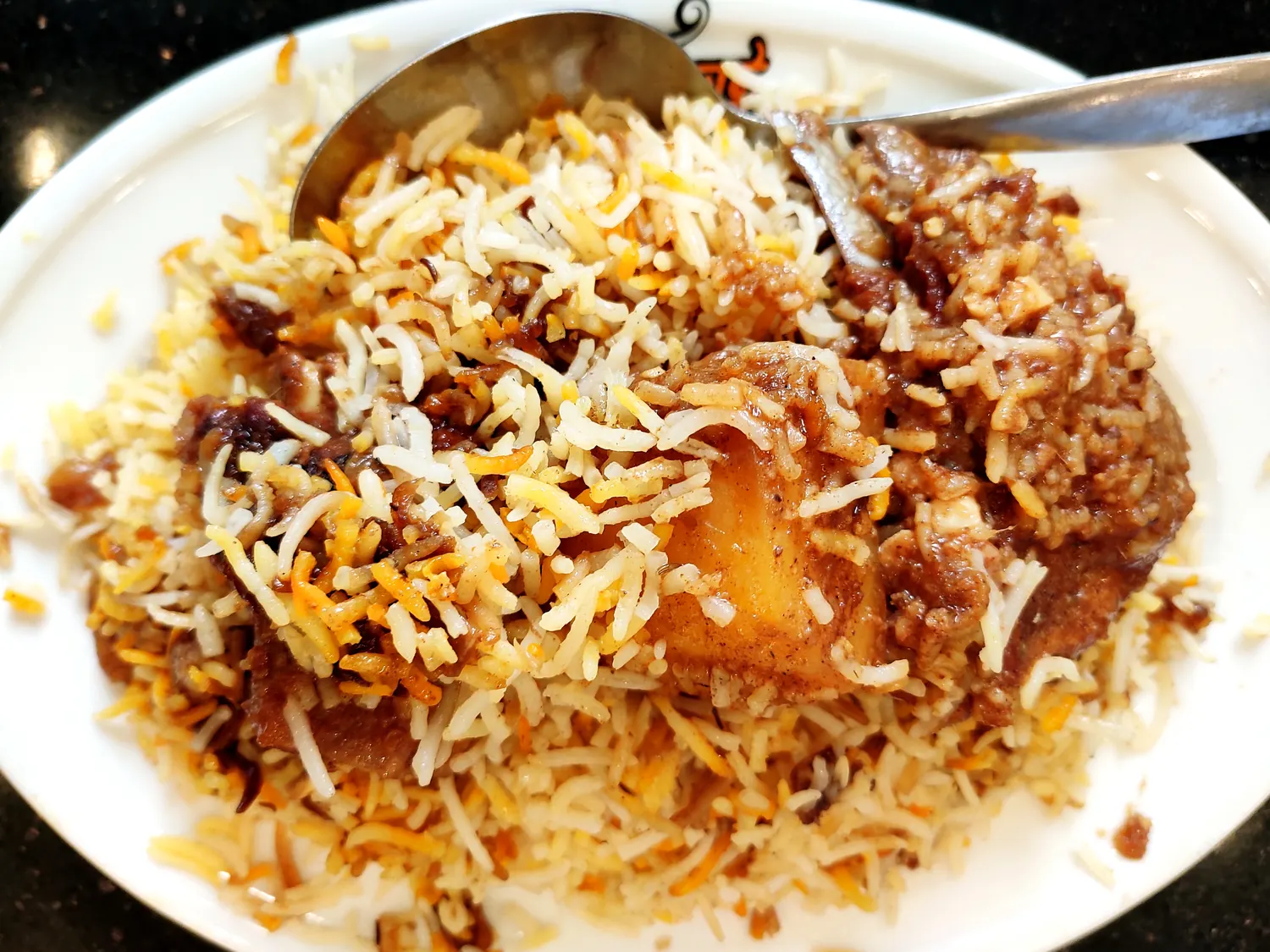
Kacchi biryani — fragrant layered rice with tender mutton, potatoes, boiled egg and salad, served on a plate

Old Dhaka Heritage

Photo: ANKAN, CC BY-SA 4.0, via Wikimedia Commons

The Heritage Formulary

Measured Ingredients

Estimated cost: Moderate — about $5–6 per serving at home (USD)

A true kacchi is judged by its layers: the meat at the bottom must be spoon-tender, the rice on top fluffy and separate, and the seal unbroken until serving.

Execution Methodology & Culinary Technique

Step-by-Step Cooking Guide

Active 2h 30m
P

Prep Stage: Marinate, Fry & Soak

40 Mins active • Plus 4 hours marinating

The night before, or at least 4 hours ahead, mix the mutton with the yogurt, mustard oil, ginger, garlic, ground and whole spices, almond paste, salt and the 2 chopped green chillies, and leave it covered in the fridge to marinate. On the day, wash and soak the rice for 30 minutes, fry the sliced onions in ghee until deep golden and crisp, fry the potato halves until pale golden, and steep the saffron in warm milk.

Maestro Tip: The marinade is not optional — the raw meat cooks only on steam, so a long marinade is what makes it tender and flavoured all the way through.

  1. 1

    Layer the Raw Mutton

    10 Mins Room temperature

    Take the marinated mutton out of the fridge 30 minutes before cooking so it is not fridge-cold. Spread it in an even layer at the bottom of a heavy, wide pot (a handi or Dutch oven), and arrange the fried potato halves around it. Scatter half the crisp fried onions, half the herbs and half the raisins over the meat.

    An even layer matters — a thick pile in the middle cooks unevenly on dum.

    Done when: Meat forms one even layer; potatoes, onions and herbs scattered over it.

  2. 2

    Parboil the Rice

    8 Mins Rolling boil, 100°C (212°F)

    Bring a large pot of salted water to a rolling boil. Add the drained rice and boil for 5–6 minutes until the grains are soft on the outside but still firm and chalky in the middle. Drain in a colander — do not rinse.

    Bite a grain: it should bend without snapping and still have a white, firm centre. Overcooked rice turns to mush in the pot.

    Done when: Rice is parboiled — tender outside, firm and white inside.

  3. 3

    Layer Rice, Saffron & Ghee

    10 Mins Low heat, ~120°C (250°F)

    Spoon half the parboiled rice over the meat and spread it gently. Scatter the rest of the fried onions, herbs and raisins, place the 2 whole green chillies on top, then spoon over the rest of the rice and mound it into a low dome. Drizzle over the saffron milk, the melted ghee, the kewra water and the rose water.

    Mound the rice high in the middle — the dome lets steam circulate and keeps the top layer from drying out.

    Done when: Layers are built with saffron milk and ghee drizzled over the dome.

  4. 4

    Seal the Pot & Cook on Dum

    90 Mins Lowest heat, ~120°C (250°F)

    Mix flour and water into a soft dough and press it around the rim of the pot, then press the lid down onto it so the pot is completely sealed. Cook on medium heat for 10 minutes to build up steam, then turn the heat to the lowest setting and cook for 70–80 minutes. Do not lift the lid.

    If you have no dough, wrap the lid tightly in foil and weigh it down — the seal is what makes dum work.

    Done when: Pot is sealed with dough; steam is trapped inside for the whole cook.

  5. 5

    Rest, Break the Seal & Serve

    10 Mins Off the heat

    Take the pot off the heat and rest it, still sealed, for 10 minutes. Break the dough seal, lift the lid and check that the meat is spoon-tender and reaches at least 71°C (160°F) inside. Gently lift the biryani out in layers onto a large platter so everyone gets rice, meat and potato, and top with the halved boiled eggs.

    Lift from the bottom in layers instead of stirring — stirring breaks the rice and mixes the layers into a mush.

    Done when: Meat is spoon-tender and hot through; rice is fluffy, separate and saffron-streaked.

Finishing Touches & Plating

Rest the sealed pot off the heat for 10 minutes, then break the dough seal and lift the biryani out in layers so everyone gets rice, meat and potato. Serve hot with the boiled eggs on top, salad and borhani on the side — and let the saffron steam do the talking.
Nutritional Physiology & Benefits

Nutrition

Energy

776

kcal / serving

Protein

41g

Complete AA

Carbs

79g

Complex

Fats

31g

Healthy

Per serving (8 servings · 1 serving ≈ 435 g)
Energy776 kcal
Protein41 g
Carbohydrates79 g
Fat31 g
Fibre4.7 g
Sugar6.7 g
Sodium748 mg
Per 100g
Energy179 kcal
Protein9.5 g
Carbohydrates18.1 g
Fat7.2 g
Fibre1.1 g
Sugar1.5 g
Sodium172 mg

Nutrition values are estimated — calculated from USDA FoodData Central values for the listed ingredients.

Vitamins & minerals: Iron and zinc (mutton), vitamin B12 (mutton), vitamin B6 (potatoes), vitamin C (green chillies). Nutrition values are estimated.

A Complete Feast in One Pot

Rice, mutton, potatoes and egg in one pot give carbohydrate, protein, iron and zinc in every serving.

Whole Spices & Saffron, Not Shortcuts

The flavour comes from whole spices, saffron, herbs and slow steam — not from stock cubes or artificial flavouring.

Yogurt Marinade, Slow Dum Cook

Yogurt in the marinade tenderises the raw mutton slowly, so the meat turns spoon-soft during the long dum cook.

Food Pairings

What to Eat With

To optimize nutrient absorption and elevate the sensory depth, pair with these authentic accompaniments:

Drinks

Borhani (Salted Mint Yogurt Drink)

Borhani — the salted mint yogurt drink of Dhaka — is the classic partner for kacchi: its cool tang cuts the ghee and spice, and every kacchi shop in Old Dhaka serves it.

Vegetables

Cucumber & Onion Salad

Crisp cucumber, onion and green chilli salad refreshes the palate between spoonfuls of rich rice and meat, and its crunch is the perfect contrast to the soft dum-cooked biryani.

Sides

Plain Raita

A simple raita is served alongside so each person can cool a mouthful of hot, spiced rice — the yogurt echoes the marinade and tames the heat.

Boiled Eggs

The boiled eggs served on top of a kacchi are part of the dish in Dhaka — a soft, mild bite that balances the spiced meat.

Complete menu

Serve the biryani hot from the pot with the boiled eggs on top, a cucumber and onion salad, and a glass of borhani — the salted mint yogurt drink that Dhaka serves with every kacchi.

Digestive Guardrails

What NOT to Combine

To prevent digestive distress, sluggishness, or palate clash, avoid pairing the dish with these elements:

Heavy Creamy Desserts Straight After

Kacchi biryani is already a complete, rich meal, so a heavy, creamy dessert straight after adds a large dose of fat and sugar on top of it; fresh fruit or plain tea is the lighter finish. This is general information, not medical advice.

Opening the Pot During Dum

Lifting the lid during the dum cook lets the steam — and the flavour — escape, and the rice on top dries out while the meat underneath stays undercooked. This is general cooking advice, not medical advice.

General information only, not medical advice — consult a doctor for personal dietary decisions.

Who Should Eat It

Who Should Eat

  • General adultsA rich, celebratory feast dish — best eaten slowly, in a generous portion, with salad and borhani on the side.
  • ChildrenChildren love the fragrant rice and potatoes; give them meat from the middle of the pot, use fewer chillies, and watch the whole cardamom pods and cloves.
  • ElderlyThe mutton is cooked until it falls off the bone, so it is easy to chew; serve a smaller portion, as it is rich and filling.
  • Pregnant womenMutton cooked to at least 71°C (160°F) and served hot is fine; keep portions moderate and ask your clinician about rich, high-fat meals if unsure.
  • Breastfeeding womenA filling, energy-rich meal that suits breastfeeding; the rice, meat and potatoes together make a complete meal.
  • AthletesVery high in carbohydrate and protein, so it refuels well after training — but it is heavy, so eat it a few hours before, not right before, exercise.
  • Weight gainEnergy-dense with rice, ghee, mutton and potatoes, so it suits people who need extra calories.
  • Weight lossVery energy-dense, so keep the rice portion modest, eat more of the salad and skip a second helping of the oily top layer.

Health Conditions — Adjust or Avoid

Conditions

  • DiabetesHigh in carbohydrate from the rice and potatoes, so keep the rice portion modest and add extra salad; ask your clinician about portions.
  • High blood pressureContains about 748 mg sodium per serving from added salt; use less salt if you need to limit sodium, and ask your clinician.
  • Kidney diseaseHigh in protein and potassium from the mutton and potatoes; people with kidney disease should watch portion size and ask their clinician.
  • GoutMutton is high in purines; a large rich portion may not suit people prone to gout — ask your clinician.
  • Stomach issuesThe dish is rich and spiced, and the whole spices and chillies can irritate a sensitive stomach; eat a small portion and pick out the whole spices if your stomach is sensitive.
  • Cardiovascular diseaseHigh in saturated fat from mutton and ghee, so people with cardiovascular disease should eat a smaller portion with plenty of salad; ask your clinician.
  • Fatty liverRich and high in fat and carbohydrate, so keep portions modest and balance the plate with salad; ask your clinician.
  • Food allergiesContains dairy (yogurt, ghee, milk), egg and tree nuts (almonds). If you have any food allergy, check every ingredient and ask your clinician.
  • Special therapeutic dietsNot suitable as a low-fat, low-sodium or low-carbohydrate therapeutic diet without changes (less ghee, leaner meat, less salt); discuss adaptations with your clinician or dietitian.

If you have a medical condition, consult your doctor before changing your diet.

Storage & Use

Storage & Use

How to store
Cool quickly and store in airtight containers in the fridge.
In the fridge
Cooked kacchi biryani 3 days.
In the freezer
Up to 2 months.
How to reheat
Reheat covered with a splash of water until steaming hot throughout, to 74°C (165°F); a low oven (160°C / 325°F) keeps the rice fluffiest.
Freezing recommended
Yes, up to 2 months; freeze in portions with the meat and rice together.
Signs it has spoiled
Sour smell, slimy rice, or mould.

More recipes to explore

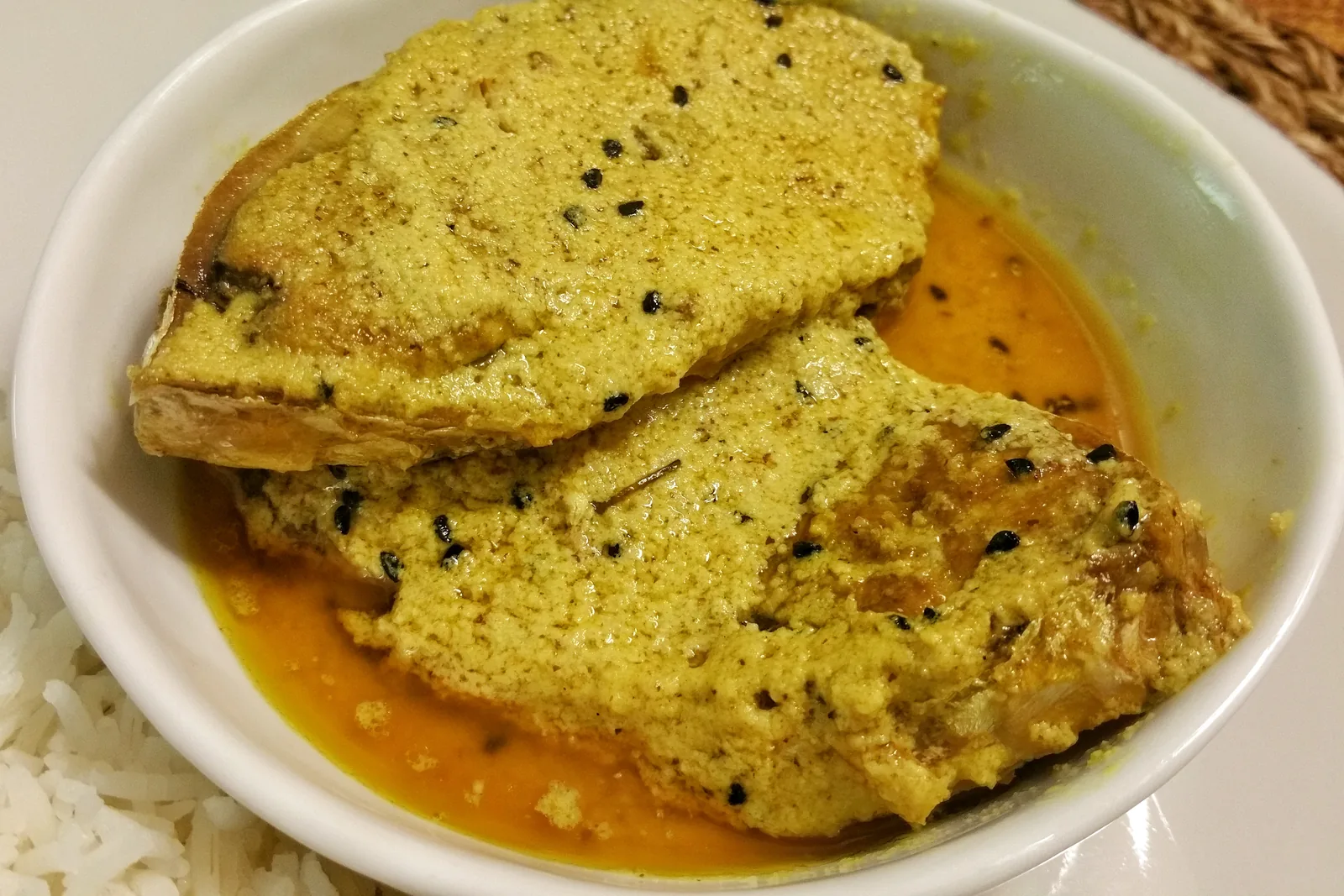
Shorshe ilish — hilsa fish steaks in a golden mustard sauce with green chillies, served in a bowl Bangladesh flag Bangladesh 45m
Dinner •Dhaka Heritage

Shorshe Ilish

This shorshe ilish recipe is the Bengali classic: steaks of hilsa, the national fish of Bangladesh, gently simmered in a pungent sauce of ground yellow and black mustard seeds, mustard oil, turmeric and slit green chillies. The mustard is sharp and warm rather than simply hot, and it balances the rich, oily fish perfectly. One serving is about 200 g, not counting rice.

National Fish, Bold Flavour

Hilsa, the national fish of Bangladesh, simmered in a sharp mustard-seed sauce with green chillies and mustard oil — the Bengali dish that defines a celebration meal.

Pairs Well With
Plain steamed rice & a squeeze of lime
High Protein
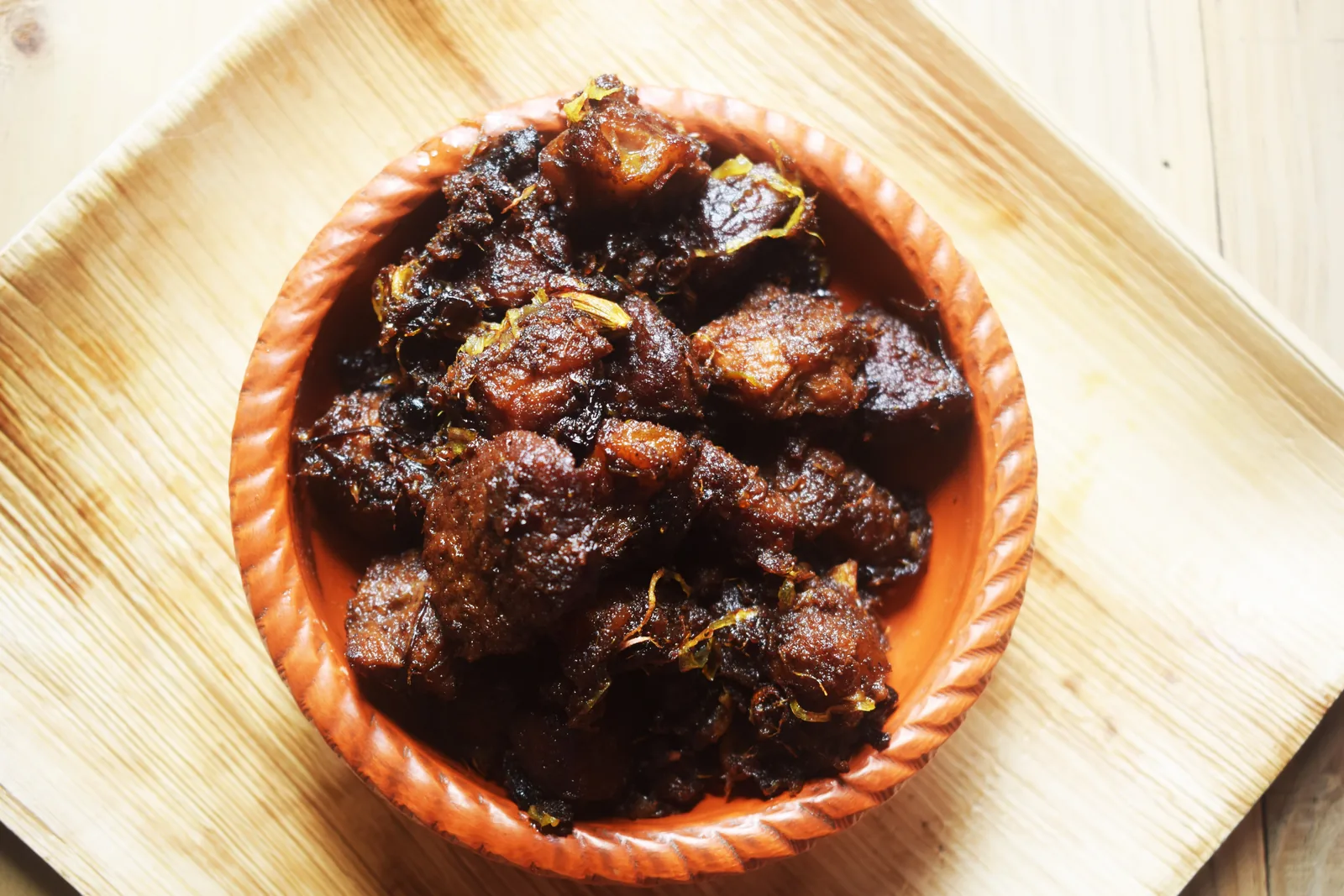
Bangladeshi beef bhuna — dark, dry beef chunks in a thick clinging spice sauce, served in a clay bowl Bangladesh flag Bangladesh 2h 25m
Dinner •Chittagong Heritage

Bangladeshi Beef Bhuna

This bangladeshi beef bhuna recipe is a slow-cooked dry curry from Bengal: beef chuck fried hard with onions, ginger, garlic and whole spices, then braised low and slow until the sauce has almost disappeared and the meat is dark, glossy and coated in a thick, clinging masala. It is not a wet curry — the sauce is the point, and there is barely any of it. One serving is about 260 g, not counting rice or bread.

Slow, Dark & Deeply Spiced

Beef chuck slow-fried with onions and Bangladeshi spices until the sauce is thick, dark and clinging — a dry bhuna, not a wet curry.

Pairs Well With
Plain rice or paratha & cucumber salad
High Protein
Bœuf bourguignon — French beef braised in red wine France flag France 4h
Dinner •Burgundy Terroir

Bœuf Bourguignon

Beef braised gently in red wine until the connective tissue melts into a velvet, gelatin-rich sauce — the classic Burgundy Sunday dinner.

Cellular Repair

Beef braised in red wine until spoon-tender, with mushrooms and pearl onions.

Pairs Well With
Parsnip Purée & Steamed French Haricots Verts
High Protein
Vietnamese braised pork belly with golden eggs in caramel sauce Vietnam flag Vietnam 1h 45m
Dinner •One Pot

Vietnamese Braised Pork and Eggs

Pork belly slowly braised in coconut water and caramel until meltingly tender, with golden eggs that soak up the sweet-savoury sauce — the Vietnamese family dish that tastes better the next day.

Comfort & Sustained Energy

Slow-braised pork belly and eggs in coconut water and caramel.

Pairs Well With
Steamed rice & pickled mustard greens
High Protein

The Dinner Gazette

Never wonder what’s for dinner again

One email a week with easy dinner ideas from around the world — ingredients, steps and nutrition, tested in our kitchen first.

Delivered every Thursday morning. Unsubscribe anytime.