Curated recipes from 193 countries  •  New seasonal Mediterranean issue out now

Overview

Spekkoek

Lapis Legit, Spekuk, Thousand Layer Cake

This spekkoek recipe makes the Dutch-Indonesian layer cake: 18 thin layers of plain and spiced butter batter, grilled one by one until the slice shows cream and brown stripes like bacon — the meaning of its Dutch name. It is rich with egg yolks and butter, scented with cinnamon, clove, mace and anise, and cut in thin slices with coffee. One slice is about 109 g.

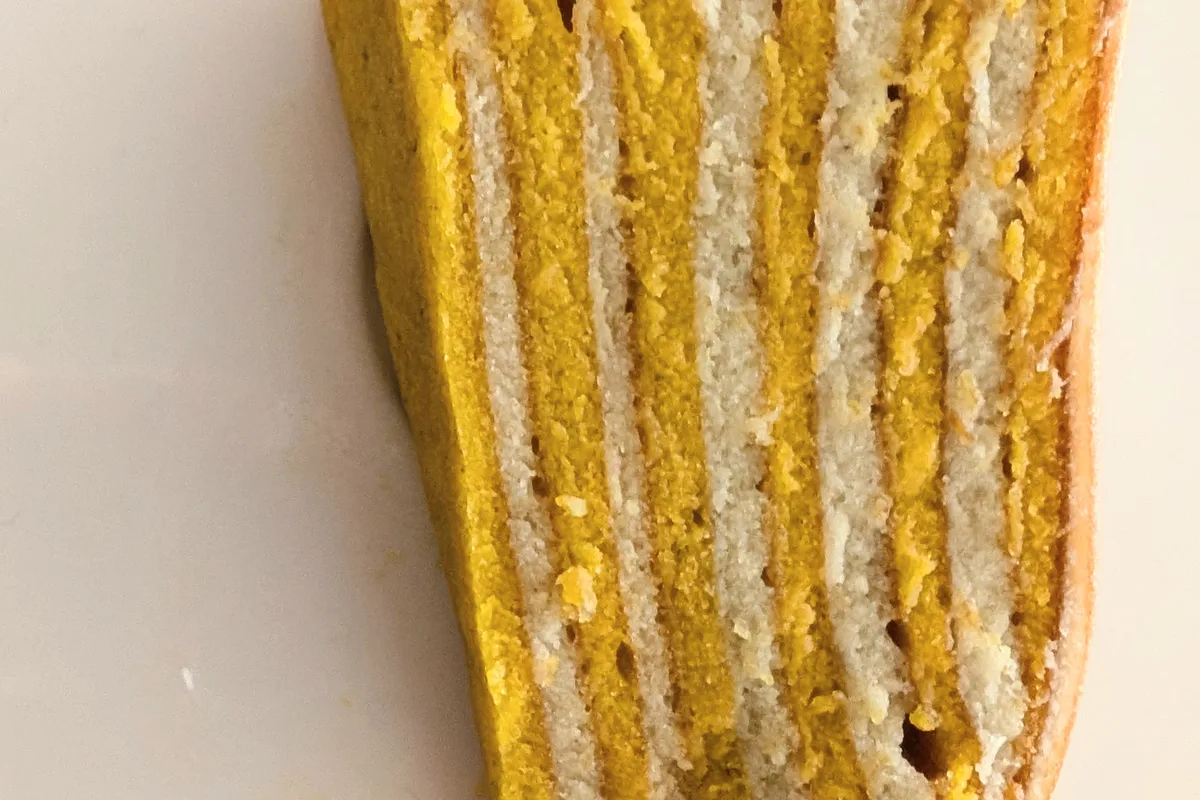
Spekkoek, also called lapis legit, was developed in the Dutch East Indies — modern-day Indonesia — during the colonial period, and is thought to have been made by the wives of Dutch administrators in Batavia, now Jakarta, for evening tea. Its Dutch name means 'bacon cake', after the dark and light stripes that look like bacon, while lapis legit means 'sweet layer cake' in Indonesian. A good spekkoek has more than 18 layers, each grilled one by one, and it is served as a holiday cake in Indonesia — for Christmas, Chinese New Year and Eid — and in the Netherlands as the dessert after a rijsttafel. The photo here shows the banana variant, with yellow and cream layers; the recipe above is the classic spiced version, whose layers are cream and brown.

Pairs well with: Serve a thin slice with black coffee or unsweetened tea.

Provenance

Netherlands flag Netherlands

Dutch-Indonesian Layer Cake

Nordic & European

Time Dedication

1h 40m

25m prep • 75m cook

Batch Yield

10 Servings

486 kcal per serving

1 serving ≈ 109 g

Technical Skill

Advanced

Advanced (18 Layers)

Meal Timing & Digestive Fit

Breakfast

Not Advised

Lunch

Inappropriate

Dinner

Inappropriate

Snack & Tea

Ideal Light Bite

Occasions: Christmas, Chinese New Year, Eid al-Fitr, birthdays, rijsttafel dessert, afternoon coffee Cost: Low — about $1–2 per slice at home
A slice of banana-variant spekkoek on a white plate, showing clear alternating yellow and cream layers; the recipe below is the classic cinnamon-spiced version.

Dutch-Indonesian Layer Cake

Photo: Mx Lucy, CC0, via Wikimedia Commons

The Heritage Formulary

Measured Ingredients

Estimated cost: Low — about $1–2 per slice at home (USD)

A good spekkoek has at least 18 thin, clearly separated layers — if the layers blend together, the next batter went on before the layer below was fully set.

Execution Methodology & Culinary Technique

Step-by-Step Cooking Guide

Active 1h 40m
P

Prep Stage: Two Batters, One Tin

25 Mins • Measuring & Mixing

Bring the butter and eggs to room temperature. Grease a 20 cm round tin, line the base with parchment and dust it lightly with flour. Measure every ingredient before you start — once the grilling begins, each layer takes only a few minutes and there is no time to weigh things.

Maestro Tip: Separate the eggs over a small bowl first: any yolk in the whites stops them whisking properly, and this cake needs all 10 yolks and 5 whites.

  1. 1

    Butter the Tin and Cream the Butter

    10 Mins • Hands On Room temperature, about 20°C (68°F)

    Grease a 20 cm round tin with the 10 g of butter, line the base with parchment and dust the sides lightly with the 5 g of flour. Beat the 300 g of softened butter in a large bowl until pale and fluffy, about 3 minutes.

    Butter that is too cold will not cream — it should dent easily with a finger but still hold its shape.

    Done when: Butter is pale, fluffy and doubled in volume.

  2. 2

    Whisk the Yolks, Whites and Sugar

    10 Mins • Hands On Room temperature, about 20°C (68°F)

    In a second large bowl, whisk the 10 egg yolks and 5 egg whites with the 300 g of sugar, the vanilla extract and the salt until pale, thick and doubled in volume, about 5 minutes. Fold the creamed butter into the egg mixture gently until just combined.

    Whisk until the mixture falls from the whisk in a thick ribbon that holds its shape for a second — that air is what keeps the thin layers from turning tough.

    Done when: Mixture is pale, thick and ribbon-like.

  3. 3

    Fold in the Flour and Split the Batter

    5 Mins • Hands On Room temperature, about 20°C (68°F)

    Sift the 200 g of flour over the batter in two batches, folding gently after each one until no dry flour shows. Divide the batter equally between two bowls. Stir the cinnamon, clove, mace and anise into one bowl — that is the spiced batter; the other stays plain.

    Fold, do not stir: cut down the middle of the bowl and lift the batter over itself, or the layers will bake flat and dense.

    Done when: Two smooth batters, one plain and one warm brown with spice.

  4. 4

    Grill the First Layer

    5 Mins • Hands On Grill (broiler) 220°C (425°F)

    Heat the grill to 220°C (425°F) with the rack about 10 cm below the element. Spoon 3–4 tablespoons of the plain batter into the tin and spread it in a thin, even layer with the back of the spoon. Grill for 3–4 minutes until golden and fully set, with no wet batter in the middle.

    Spread the batter right to the edges — a thin spot browns first and a thick spot stays raw.

    Done when: First layer is golden all over and firm to the touch.

  5. 5

    Build the Layers, One by One

    70 Mins • Hands On Grill (broiler) 220°C (425°F)

    Spoon 3–4 tablespoons of the spiced batter over the first layer, spread it thin and grill for 3–4 minutes until golden and set. Keep alternating plain and spiced batter — 9 layers of each, 18 in total — grilling each layer fully before adding the next. After every 4 layers, lay a sheet of parchment on the cake, press firmly with the back of a spoon, remove the paper and brush the surface lightly with melted butter. Each thin layer grills well past 74°C (165°F), so the eggs are cooked through.

    Patience is the whole technique: if the layer below is still soft when the next batter goes on, the two layers blend and the stripes disappear. Never rush a layer.

    Done when: 18 distinct layers, alternating cream and brown, each fully set before the next was added.

  6. 6

    Cool, Release and Slice

    20 Mins • Hands On + Cooling Cool to room temperature, about 20°C (68°F)

    Leave the cake in the tin for 20 minutes, then run a knife around the edge and turn it out onto a rack to cool completely. Cut thin slices with a sharp, dry knife, wiping the blade between cuts so the layers stay clean.

    The cake tastes best the next day, once the spice has settled into the butter — wrap it tightly and wait if you can.

    Done when: Cake is firm and cool, and each thin slice shows clean alternating layers.

Finishing Touches & Plating

Leave the cake in the tin until completely cool, then turn it out and cut thin slices with a sharp, dry knife. Serve at room temperature with black coffee — the cake tastes best the next day, once the spice has settled into the butter.

Nutritional Physiology & Benefits

Nutrition

Energy

486

kcal / serving

Protein

7g

Complete AA

Carbs

47g

Complex

Fats

30g

Healthy

Per serving (10 servings · 1 serving ≈ 109 g)
Energy486 kcal
Protein7 g
Carbohydrates47 g
Fat30 g
Fibre1.0 g
Sugar30.4 g
Sodium157 mg
Per 100g
Energy446 kcal
Protein6.5 g
Carbohydrates43.4 g
Fat27.8 g
Fibre0.9 g
Sugar27.9 g
Sodium144 mg

Nutrition values are estimated — calculated from USDA FoodData Central values for the listed ingredients.

Vitamins & minerals: Vitamin A, vitamin B2 and choline (egg yolks), calcium (butter), iron and manganese (cinnamon and clove).

Slow, Satisfying Energy

About 47 g of carbohydrate with 30 g of fat per slice makes this a dense, filling cake — which is why it is traditionally served in thin slices, not big wedges.

Real Spices, Not Just Sweetness

Cinnamon, clove, mace and anise give the cake its warm flavour and bring small amounts of fibre, iron and manganese along with them.

Thin Slices, Built-in Portion Control

Because the cake is so rich, the traditional thin slice is the whole point — a little goes a long way, and the layers make every bite interesting.

Food Pairings

What to Eat With

To optimize nutrient absorption and elevate the sensory depth, pair with these authentic accompaniments:

Drinks

Black Coffee

Black coffee is the classic partner — its bitterness cuts through the butter-rich layers and the warmth of the spices.

Unsweetened Tea

Plain tea cleanses the palate between bites and lets the cinnamon and clove come through.

Sides

Lightly Sweetened Whipped Cream

A spoonful of barely sweetened whipped cream softens the spice edge and adds a cool contrast to the dense cake.

Fresh Mango or Pineapple

Fresh tropical fruit adds acidity and juice that balance the rich butter layers — a natural fit for a cake born in the Dutch East Indies.

Complete menu

Serve a thin slice of spekkoek with black coffee as the dessert after a rijsttafel, or as an afternoon snack with unsweetened tea and fresh mango.

Digestive Guardrails

What NOT to Combine

To prevent digestive distress, sluggishness, or palate clash, avoid pairing the dish with these elements:

Egg, Milk and Wheat Allergies

The cake contains egg yolks and whites, butter (milk) and wheat flour — three major allergens. Anyone with an egg, milk or wheat allergy must avoid it entirely. This is general food information, not medical advice.

Very Sugary — Go Easy With Diabetes

One slice carries about 30 g of sugar and 47 g of carbohydrate, so it can raise blood sugar quickly. People managing diabetes should keep to a thin slice or skip it. This is general food information, not medical advice.

General information only, not medical advice — consult a doctor for personal dietary decisions.

Who Should Eat It

Who Should Eat

  • General adultsA rich celebration cake — one thin slice with coffee is the classic portion; it is very energy-dense at 486 kcal a slice.
  • ChildrenChildren can have a small slice as an occasional treat, but the cake is very sweet and rich, so keep portions small.
  • ElderlySoft and easy to eat, so a thin slice suits most older adults; the sugar and fat mean a small portion is wise.
  • Pregnant womenSafe when the cake is fully baked through — every thin layer is grilled until set. Keep to a small slice because of the sugar and fat.
  • Breastfeeding womenA small slice is fine; the cake contains no alcohol. The sugar and fat are the only reason to keep portions modest.
  • AthletesAbout 47 g of carbohydrate per slice gives quick energy, but the high fat and sugar make it a treat, not a recovery food.
  • Weight gainEnergy-dense from butter, sugar and egg yolks, so it suits a weight-gain goal as a tasty way to add calories.
  • Weight lossRich and calorie-dense with little fibre, so keep to a thin slice, skip a second helping, and balance the day with lighter meals.

Health Conditions — Adjust or Avoid

Conditions

  • DiabetesAbout 47 g of carbohydrate and 30 g of sugar per slice, so blood-sugar impact is high — a thin slice is the sensible choice. Ask your clinician.
  • High blood pressureSodium is modest, about 157 mg per slice; the main concern is the sugar and saturated fat. Ask your clinician about portion size.
  • Kidney diseaseProtein is moderate at 7 g per slice; people with kidney disease should ask their clinician about portion size.
  • GoutEgg and butter are low in purines, so a normal slice is usually fine, but keep it modest and ask your clinician.
  • Stomach issuesRich butter cake and warming spices can sit heavily on a sensitive stomach — eat a small slice and ask your clinician if symptoms persist.
  • Cardiovascular diseaseButter makes this high in saturated fat; an occasional thin slice is the sensible approach — ask your clinician.
  • Fatty liverRich in saturated fat and sugar, which can add to liver fat — keep it an occasional treat and ask your clinician.
  • Food allergiesContains egg, milk and wheat — major allergens. Anyone with an egg or wheat allergy must avoid it entirely.
  • Special therapeutic dietsThis is a general-information recipe, not a therapeutic diet. Anyone on a prescribed diet should ask their clinician or dietitian before making it a regular food.

If you have a medical condition, consult your doctor before changing your diet.

Storage & Use

Storage & Use

How to store
Wrap the cooled cake tightly in cling film, then foil, and keep in a cool place.
In the fridge
Keeps 7 days wrapped at cool room temperature, or up to 2 weeks refrigerated in a sealed container.
In the freezer
Freezes well for up to 3 months, wrapped tightly; thaw overnight in the fridge.
How to reheat
Do not reheat — serve at room temperature, taking it out of the fridge 30 minutes before serving.
Freezing recommended
Yes — wrapped tightly in cling film and foil.
Signs it has spoiled
Sour or rancid smell, sticky or weeping surface, or mould — discard if any of these appear.

More recipes to explore

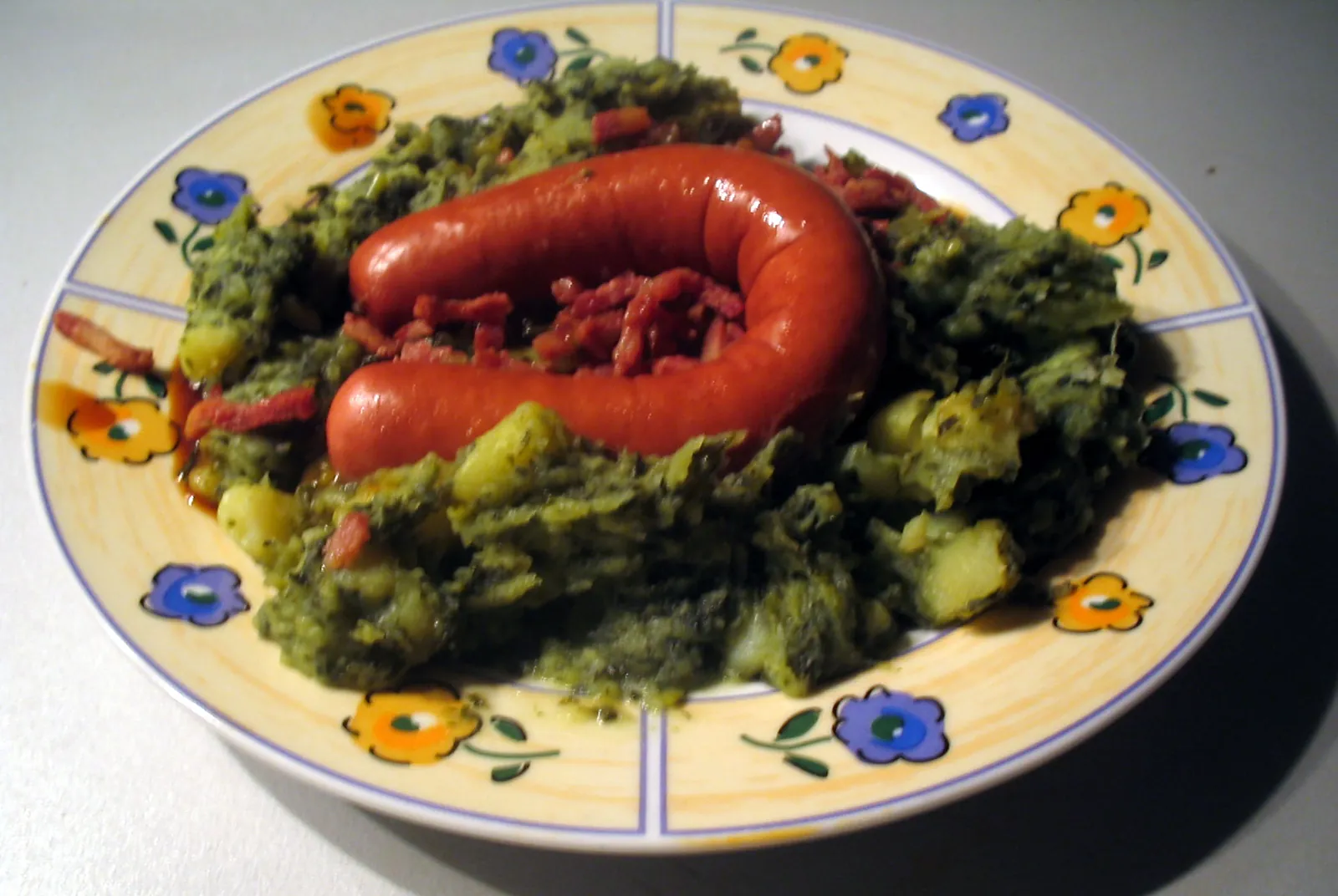
A plate of green boerenkool stamppot with a smoked sausage and bacon bits Netherlands flag Netherlands 45m
Dinner •Dutch Heritage

Stamppot

This stamppot recipe boils floury potatoes with curly kale, mashes them with butter and warm milk into a soft, green-flecked mash, and serves it with a smoked rookworst sausage, crisp bacon bits and mustard. One serving is about 480 g.

Comfort & Warmth

Floury potatoes mashed with kale, butter and milk, served with smoked sausage and bacon.

Pairs Well With
Smoked sausage, bacon bits & mustard
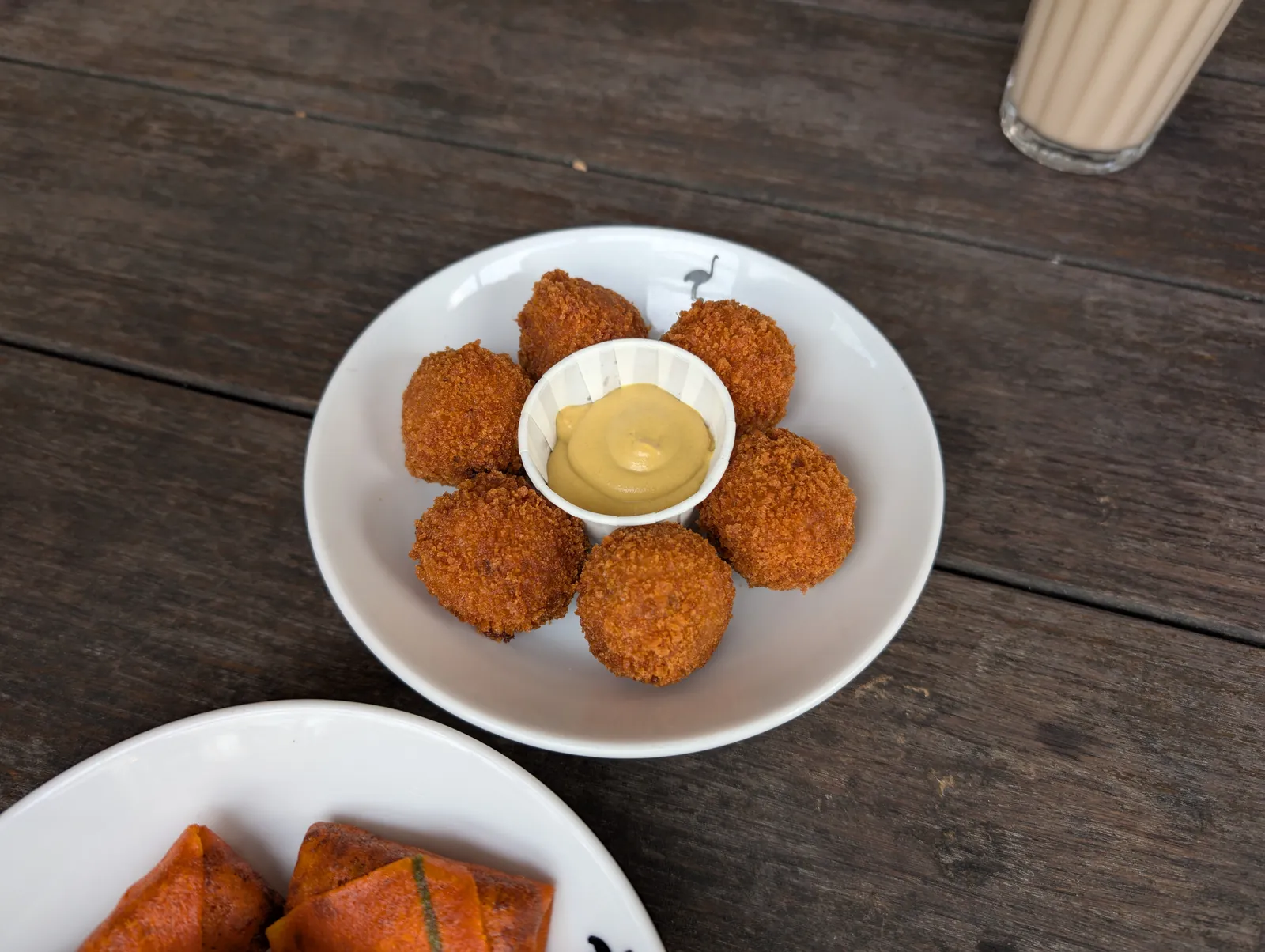
Six golden bitterballen with a small pot of mustard on a white plate Netherlands flag Netherlands 55m
Snack & Tea •Dutch Heritage

Bitterballen

This bitterballen recipe cooks beef slowly in stock until tender, binds it into a thick, creamy ragout with butter and flour, chills it firm, then rolls it into balls, crumbs them and fries them until the outside shatters and the inside turns molten. One serving is about 300 g, six bitterballen with mustard.

Comfort & Warmth

Crisp deep-fried balls of creamy beef ragout, served hot with mustard.

Pairs Well With
Dijon mustard & a cold beer
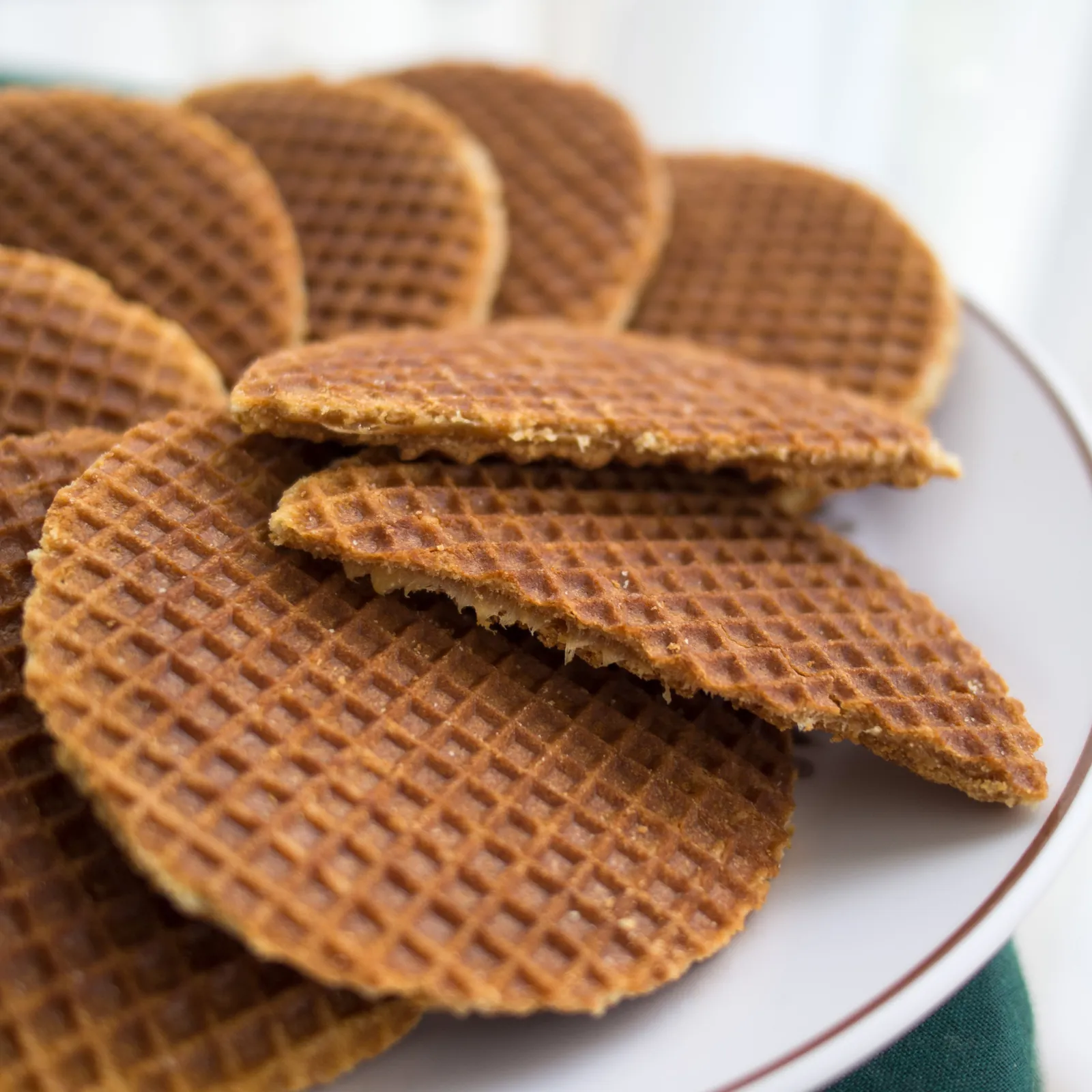
A plate of round golden stroopwafels showing their waffle pattern and syrup layer Netherlands flag Netherlands 1h
Snack & Tea •Dutch Heritage

Stroopwafels

This stroopwafels recipe bakes thin waffles in a hot iron, splits each one while it is still warm, and spreads it with a buttery caramel syrup spiced with cinnamon. The syrup softens the waffle just enough to make it chewy at the edges and crisp in the middle. One serving is about 155 g, three stroopwafels.

Comfort & Warmth

Thin, crisp waffle rounds split and filled with warm caramel syrup.

Pairs Well With
Coffee, tea & a glass of milk
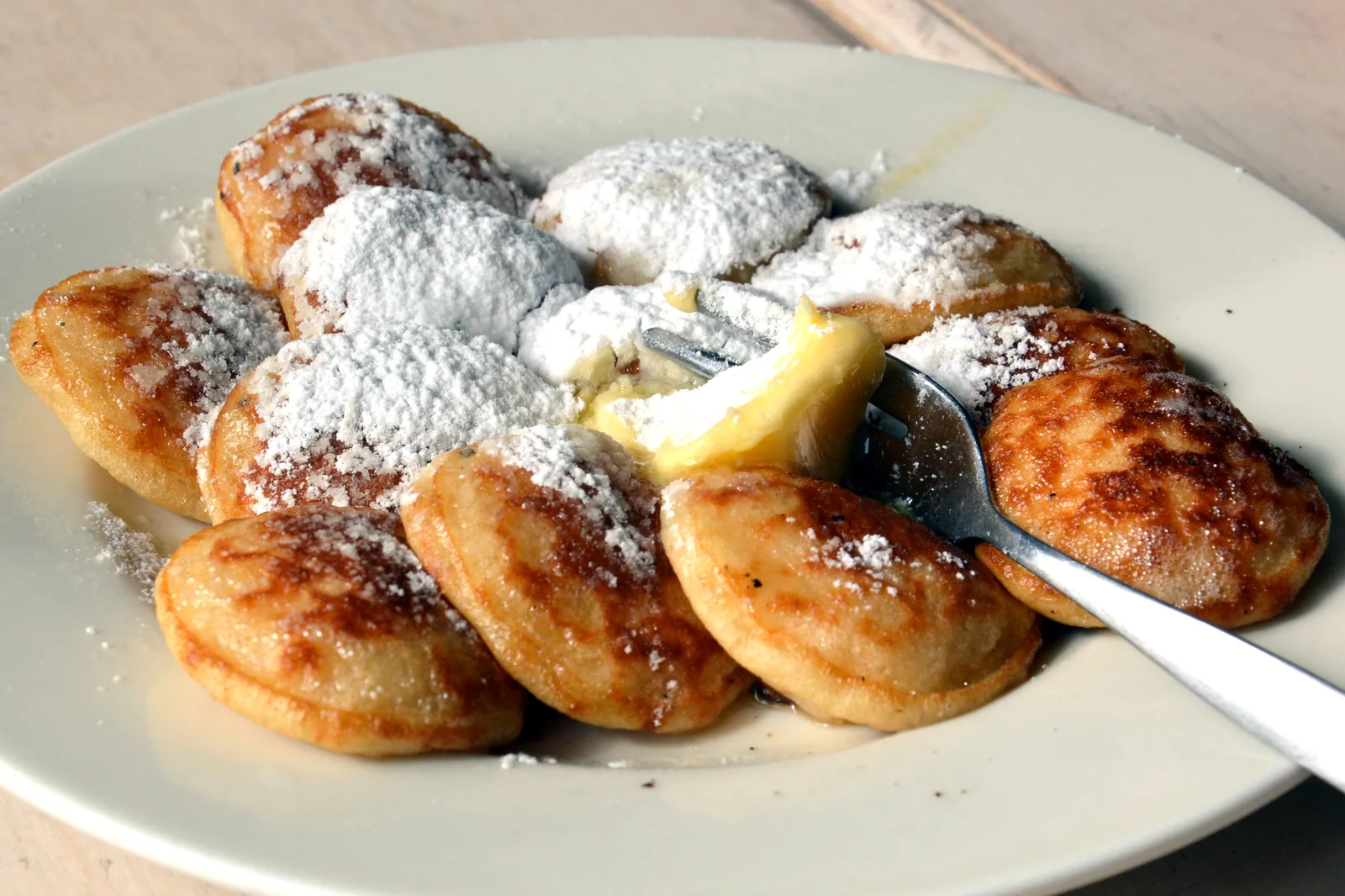
A plate of golden poffertjes dusted with powdered sugar, with melting butter and a fork. Netherlands flag Netherlands 1h 15m
Breakfast •Dutch Market Day Classic

Poffertjes

Poffertjes are the Netherlands' most beloved sweet snack: dozens of tiny, puffy yeast pancakes cooked in a dimpled pan, served hot with melting butter and a snowfall of powdered sugar. One serving is about 195 g, roughly 20 little pancakes.

Sweet Morning Treat

Tiny yeast-raised pancakes, golden outside and soft inside, served with butter and powdered sugar.

Pairs Well With
Serve hot with butter and powdered sugar, and a cup of coffee or hot chocolate.

The Dinner Gazette

Never wonder what’s for dinner again

One email a week with easy dinner ideas from around the world — ingredients, steps and nutrition, tested in our kitchen first.

Delivered every Thursday morning. Unsubscribe anytime.