
Curated recipes from 193 countries  •  New seasonal Mediterranean issue out now

Overview

Swiss Cheese Fondue

Fondue Neuchateloise — Gruyere and Emmental Fondue

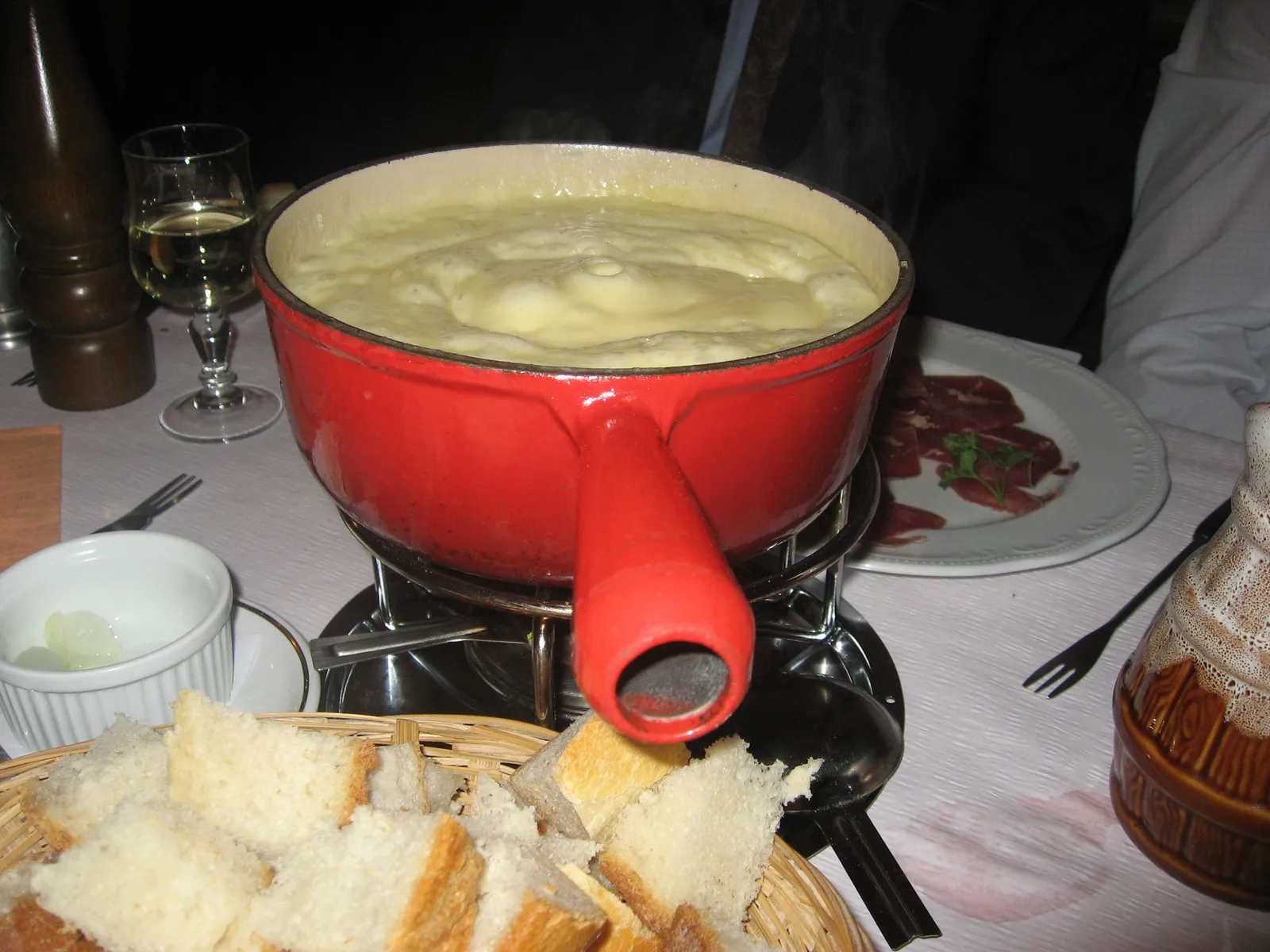
Swiss cheese fondue is the Alps in a pot: Gruyere and Emmental melted slowly into dry white wine with garlic and a splash of kirsch, kept warm at the table while everyone dips cubes of bread into the bubbling cheese. One serving is about 310 g.

Cheese fondue comes from the French-speaking cantons of Switzerland, where farm families stretched hard cheese through the winter by melting it with wine. It became a Swiss national dish in the 20th century, when the Swiss Cheese Union promoted it as a symbol of unity — one pot, one meal, everyone dipping together.

Pairs well with: Cubes of crusty bread, boiled potatoes and cornichons on the side

Provenance

Switzerland flag Switzerland

Swiss Alpine Classic

Nordic & European

Time Dedication

40m

15m prep • 25m cook

Batch Yield

4 Servings

944 kcal per serving

1 serving ≈ 310 g

Technical Skill

Intermediate

Intermediate (Melting)

Meal Timing & Digestive Fit

Breakfast

Not Advised

Lunch

Hearty Midday Main

Dinner

Ideal Hearty Main

Snack & Tea

Inappropriate

Occasions: Winter dinners, dinner parties, ski trips, festive gatherings Cost: Medium — about $6–7 per serving at home
A red fondue pot of melted cheese with bread cubes and a glass of white wine

Swiss Alpine Classic

Photo: Brücke-Osteuropa, CC0, via Wikimedia Commons

The Heritage Formulary

Measured Ingredients

Estimated cost: Medium — about $6–7 per serving at home (USD)

A good fondue is smooth and glossy, never stringy or split — low heat and patient stirring make it.

Execution Methodology & Culinary Technique

Step-by-Step Cooking Guide

Active 40m
P

Prep Stage: Grate and Cube

15 Mins • Knife Work

Grate both cheeses, cube the bread, and rub the cut garlic around the inside of the fondue pot — that garlic rub is what perfumes the whole pot. Stir the cornstarch into the kirsch so it is ready to go.

Maestro Tip: Grate the cheese yourself: pre-grated cheese is coated in starch and melts into a grainy fondue.

  1. 1

    Warm the Wine

    5 Mins Medium heat, about 80°C (175°F)

    Pour the wine into the fondue pot with the lemon juice and warm it until it steams and small bubbles rise — do not let it boil.

    Gentle heat is the whole secret of fondue; boiling wine makes the cheese seize.

    Done when: The wine steams and shimmers, with tiny bubbles at the edges.

  2. 2

    Melt the Cheese

    15 Mins Low heat, about 70°C (158°F)

    Add the grated cheese a handful at a time, stirring in a figure-of-eight with a wooden spoon until each handful melts before adding the next. Keep the heat low and steady.

    The figure-of-eight stir keeps the cheese moving and stops it clumping.

    Done when: The cheese is fully melted, smooth and glossy, with no lumps.

  3. 3

    Finish the Fondue

    5 Mins Low heat, about 70°C (158°F)

    Stir in the cornstarch and kirsch mixture, then season with nutmeg and black pepper. The fondue should coat the spoon and fall off in a slow ribbon.

    If the fondue feels too thick, add a splash of warm wine; too thin, a little more cheese.

    Done when: The fondue coats a spoon and drips off slowly in a ribbon.

  4. 4

    Serve at the Table

    5 Mins Keep warm over a low flame, about 60°C (140°F)

    Set the pot over its burner at the table, flame low, and serve with the bread cubes, boiled potatoes and cornichons. Each person spears a cube, stirs it through the cheese, and lifts it out slowly.

    Stir the fondue every few minutes so it stays smooth to the last dip.

    Done when: The cheese stays smooth and dippable from the first cube to the last.

Finishing Touches & Plating

Fondue is a shared meal, not just a recipe — keep the flame low, keep stirring, and let everyone dip at their own pace. A lost piece of bread in the pot is traditionally good luck for the table, not a disaster.

Nutritional Physiology & Benefits

Nutrition

Energy

944

kcal / serving

Protein

53g

Complete AA

Carbs

56g

Complex

Fats

50g

Healthy

Per serving (4 servings · 1 serving ≈ 310 g)
Energy944 kcal
Protein53 g
Carbohydrates56 g
Fat50 g
Fibre2.8 g
Sugar5.7 g
Sodium1469 mg
Per 100g
Energy307 kcal
Protein17.3 g
Carbohydrates18.1 g
Fat16.3 g
Fibre0.9 g
Sugar1.9 g
Sodium478 mg

Nutrition values are estimated — calculated from USDA FoodData Central values for the listed ingredients.

Vitamins & minerals: Calcium and phosphorus (cheese), vitamin A (cheese), vitamin B12 (cheese), folate (bread).

Calcium Rich

Hard cheeses like Gruyere are among the richest food sources of calcium, supporting normal bones and teeth.

High Protein

With about 53 g of protein per serving, fondue is a genuinely filling meal, not just a snack.

Shared and Slow

Eating from one pot slows the meal down and turns dinner into time together — which is part of why fondue endures.

Food Pairings

What to Eat With

To optimize nutrient absorption and elevate the sensory depth, pair with these authentic accompaniments:

Sides

Crusty Bread Cubes

Day-old bread holds its shape on a long fork and soaks up the cheese without falling apart.

Vegetables

Boiled Potatoes and Cornichons

Potatoes add substance while sharp cornichons cut through the richness of the melted cheese.

Drinks

Dry White Wine or Black Tea

The Swiss tradition is white wine or hot black tea with the meal — both help the rich cheese feel lighter.

Complete menu

Serve the fondue with crusty bread cubes, boiled potatoes and cornichons for dipping, and finish with dry white wine or black tea.

Digestive Guardrails

What NOT to Combine

To prevent digestive distress, sluggishness, or palate clash, avoid pairing the dish with these elements:

Ice-Cold Drinks With Fondue

Very cold drinks can make melted cheese feel heavy in the stomach, so the traditional pairing is room-temperature wine or hot tea. This is general food guidance, not medical advice.

Letting the Pot Boil

Boiling the fondue splits the cheese into oil and rubbery curds — keep the flame low and the cheese will stay smooth. This is general food guidance, not medical advice.

General information only, not medical advice — consult a doctor for personal dietary decisions.

Who Should Eat It

Who Should Eat

  • General adultsA rich, social dinner — one serving is filling, especially with potatoes on the side.
  • ChildrenChildren usually love dipping bread in cheese; keep the kirsch out of their portion or leave it out of the pot entirely.
  • ElderlySoft and easy to eat, but very rich and salty — a small portion with potatoes is best.
  • Pregnant womenThe cheeses are hard and pasteurised and the wine is cooked, but the kirsch adds alcohol — leave it out and check with your clinician.
  • Breastfeeding womenGenerally suitable in a moderate portion; the calcium is useful, but the meal is high in saturated fat and salt.
  • AthletesA high-protein, high-energy meal after a cold day outdoors — add potatoes for more carbs.
  • Weight gainAn excellent choice — generous portions of cheese and bread add energy easily.
  • Weight lossEnjoy a small portion with mostly potatoes and salad instead of bread, and skip seconds.

Health Conditions — Adjust or Avoid

Conditions

  • DiabetesBread is the main carb — keep the bread modest, dip more potatoes and vegetables, and check with your clinician.
  • High blood pressureHard cheese is salty — keep the portion small and skip extra salty sides.
  • Kidney diseaseHigh in sodium, calcium and protein; keep portions small and ask your clinician.
  • GoutCheese is low in purines, but the meal is rich — a moderate portion is usually fine; check with your clinician.
  • Stomach issuesMelted cheese and wine can be heavy; a small portion eaten slowly is gentlest.
  • Cardiovascular diseaseHigh in saturated fat — enjoy rarely, in a small portion, with salad and potatoes.
  • Fatty liverA very rich dish — save it for special occasions and keep the portion small.
  • Food allergiesContains milk (cheese), gluten (bread), sulphites (wine) and alcohol (wine, kirsch). Check every label if you have an allergy.
  • Special therapeutic dietsIf you follow a prescribed low-sodium or low-fat diet, use a smaller cheese portion with more potatoes, and check with your clinician.

If you have a medical condition, consult your doctor before changing your diet.

Storage & Use

Storage & Use

How to store
Cool the leftover fondue quickly and store it in a covered container in the fridge; keep leftover bread separate.
In the fridge
Leftover fondue keeps 2 days in the fridge at 4°C (40°F) or below.
In the freezer
Do not freeze — the cheese separates and turns grainy when thawed.
How to reheat
Reheat gently in a pan over low heat with a splash of white wine, stirring constantly, until smooth and steaming hot, to 74°C (165°F).
Freezing recommended
No — fondue is best made fresh and eaten at once.
Signs it has spoiled
Sour smell, mould on the surface, or a grainy, oily texture that will not come back together.

More recipes to explore

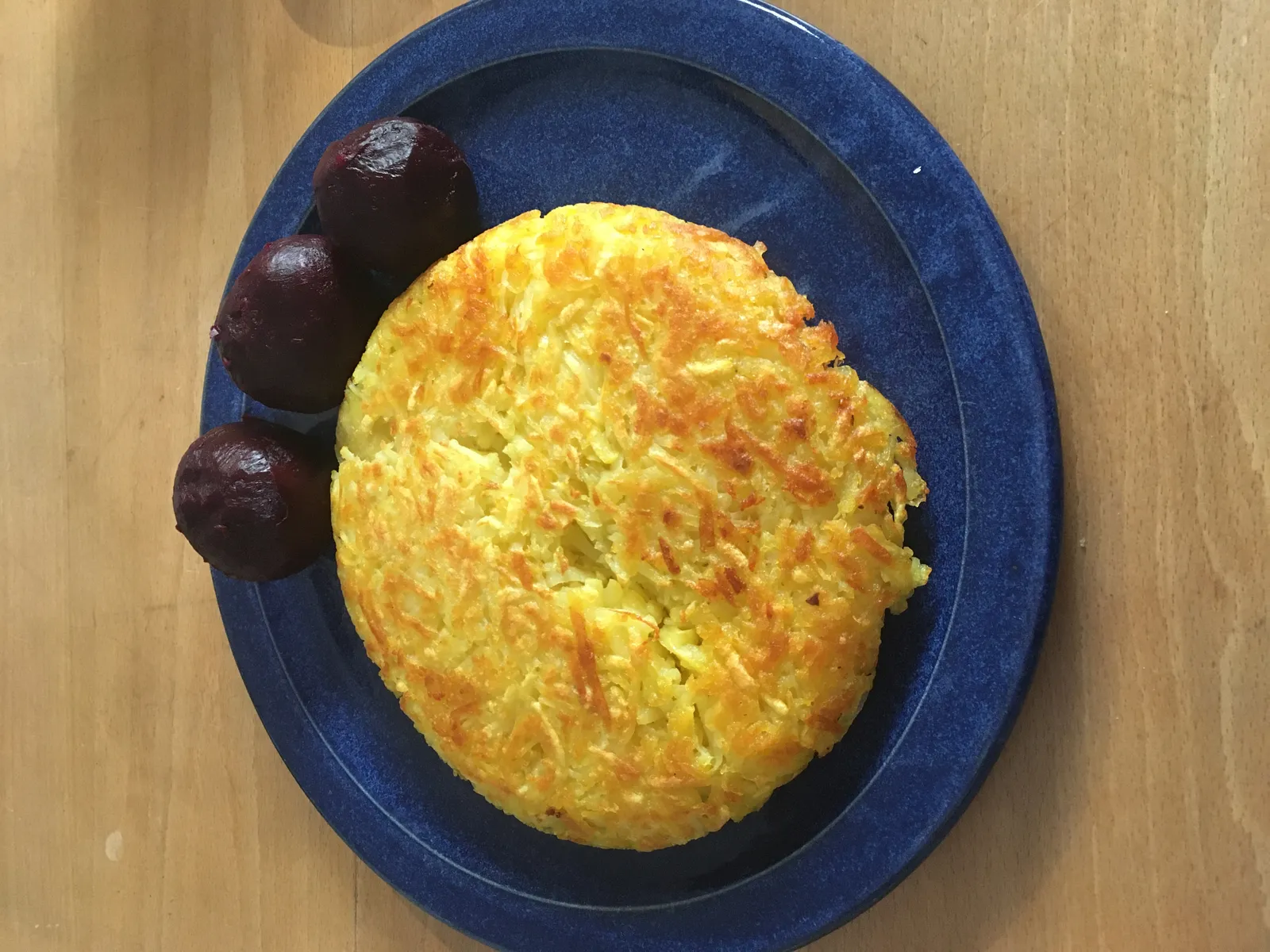
A large golden rosti potato cake on a blue plate Switzerland flag Switzerland 40m
Lunch •Bernese Farmhouse Classic

Rösti

Rösti is Switzerland's crisp potato cake: grated potato pressed into one large golden disc and fried in butter until the outside shatters and the inside stays soft, then topped with a fried egg. One serving is about 240 g.

Simple & Satisfying

One large crisp cake of grated potato, pan-fried in butter and topped with a fried egg.

Pairs Well With
A fried egg on top and a simple green salad with sharp vinaigrette
Quick Prep (<30m)
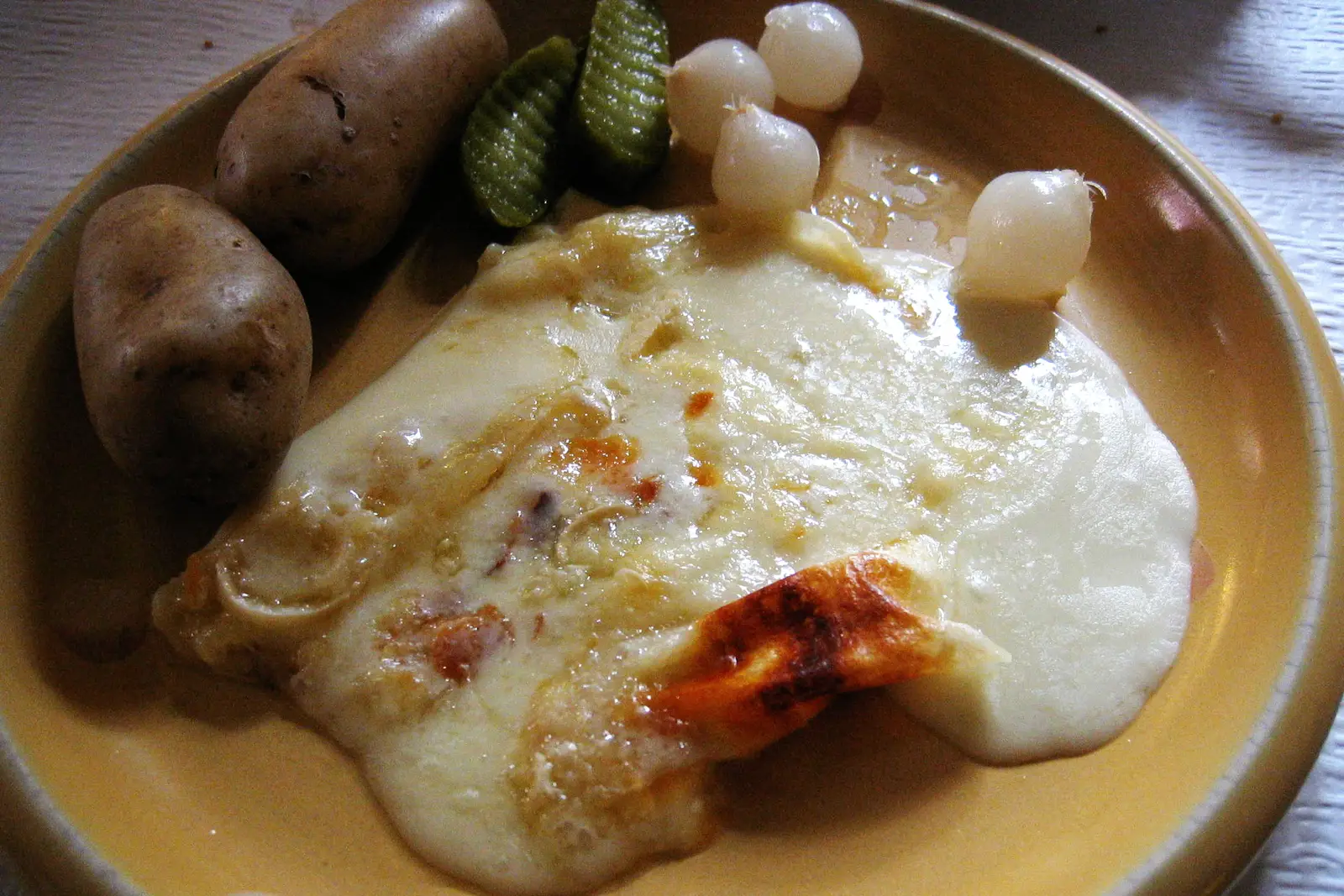
Melted raclette cheese scraped over a plate with boiled potatoes and pickles Switzerland flag Switzerland 40m
Dinner •Valais Alpine Classic

Raclette

Raclette is the Swiss Alps' other great melted-cheese meal: a half-wheel of raclette cheese is warmed until the cut face bubbles, then scraped in ribbons over boiled potatoes, with cornichons and pickled onions to cut the richness. One serving is about 365 g.

Comfort & Togetherness

Melted raclette cheese scraped over boiled potatoes with pickles.

Pairs Well With
Boiled potatoes, cornichons, pickled onions and a green salad
Bœuf bourguignon — French beef braised in red wine France flag France 4h
Dinner •Burgundy Terroir

Bœuf Bourguignon

Beef braised gently in red wine until the connective tissue melts into a velvet, gelatin-rich sauce — the classic Burgundy Sunday dinner.

Cellular Repair

Beef braised in red wine until spoon-tender, with mushrooms and pearl onions.

Pairs Well With
Parsnip Purée & Steamed French Haricots Verts
High Protein
Vietnamese braised pork belly with golden eggs in caramel sauce Vietnam flag Vietnam 1h 45m
Dinner •One Pot

Vietnamese Braised Pork and Eggs

Pork belly slowly braised in coconut water and caramel until meltingly tender, with golden eggs that soak up the sweet-savoury sauce — the Vietnamese family dish that tastes better the next day.

Comfort & Sustained Energy

Slow-braised pork belly and eggs in coconut water and caramel.

Pairs Well With
Steamed rice & pickled mustard greens
High Protein

The Dinner Gazette

Never wonder what’s for dinner again

One email a week with easy dinner ideas from around the world — ingredients, steps and nutrition, tested in our kitchen first.

Delivered every Thursday morning. Unsubscribe anytime.



