
Curated recipes from 193 countries  •  New seasonal Mediterranean issue out now

Overview

Rösti

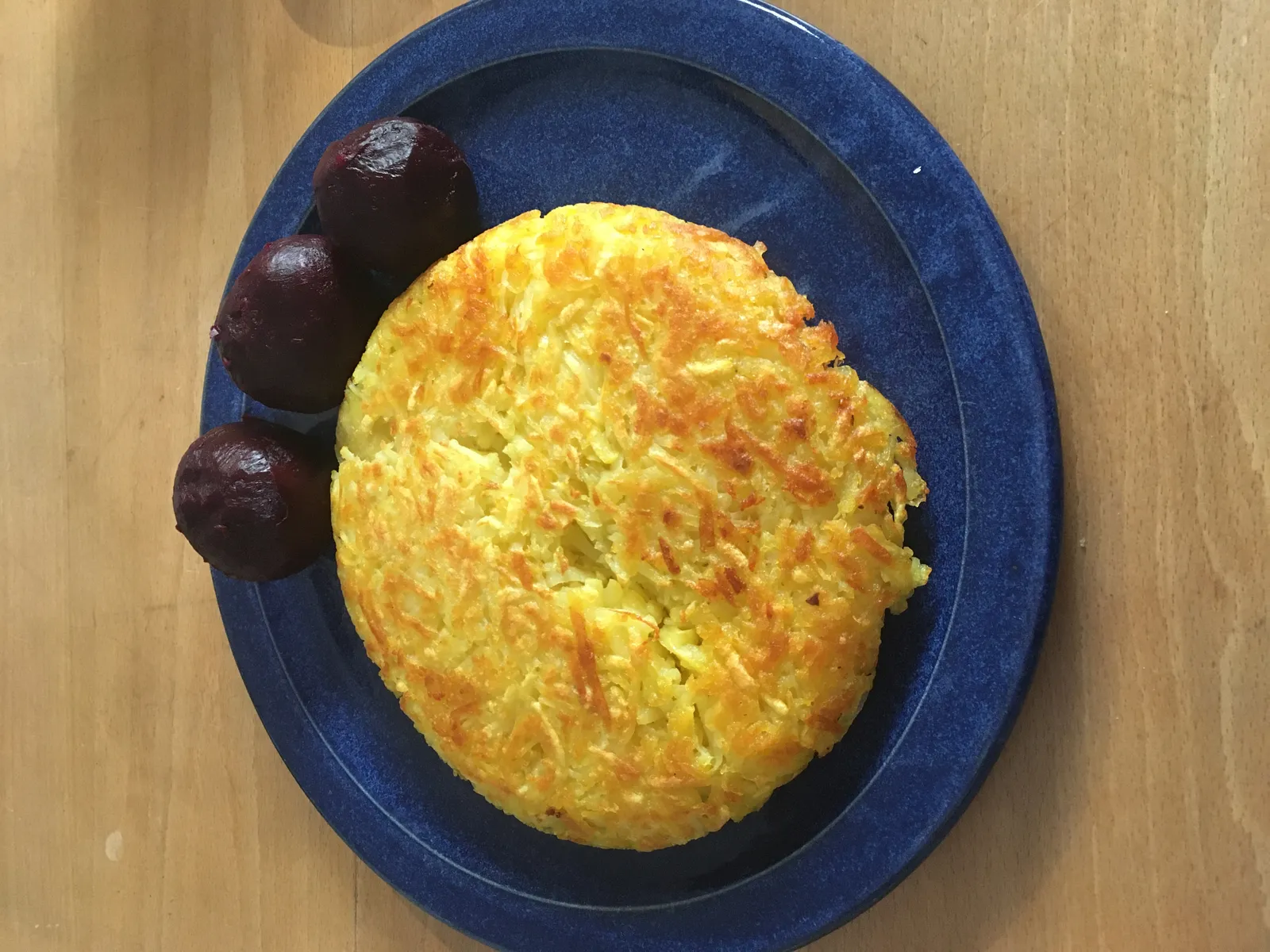
Swiss Potato Rosti with Fried Egg

Rösti is Switzerland's crisp potato cake: grated potato pressed into one large golden disc and fried in butter until the outside shatters and the inside stays soft, then topped with a fried egg. One serving is about 240 g.

Rösti began as a breakfast for farmers in the canton of Bern, who fried leftover boiled potatoes in the morning. It spread across Switzerland in the 20th century and became the country's best-known potato dish — so well known that the cultural border between German- and French-speaking Switzerland is jokingly called the Röstigraben, the rösti ditch.

Pairs well with: A fried egg on top and a simple green salad with sharp vinaigrette

Provenance

Switzerland flag Switzerland

Bernese Farmhouse Classic

Nordic & European

Time Dedication

40m

15m prep • 25m cook

Batch Yield

4 Servings

319 kcal per serving

1 serving ≈ 240 g

Technical Skill

Intermediate

Intermediate (One Big Cake)

Meal Timing & Digestive Fit

Breakfast

Not Advised

Lunch

Prime Metabolic Fit

Dinner

Ideal Hearty Main

Snack & Tea

Inappropriate

Quick Prep (<30m) Occasions: Lunches, brunch, farmhouse suppers, ski days Cost: Low — about $1–2 per serving at home
A large golden rosti potato cake on a blue plate

Bernese Farmhouse Classic

Photo: Poupou l'quourouce, CC BY 4.0, via Wikimedia Commons

The Heritage Formulary

Measured Ingredients

Estimated cost: Low — about $1–2 per serving at home (USD)

A true rösti is one large cake, crisp outside and soft inside — never small fritters.

Execution Methodology & Culinary Technique

Step-by-Step Cooking Guide

Active 40m
P

Prep Stage: Parboil and Grate

15 Mins • Knife Work

Boil the potatoes in their skins the day before until just tender, then chill them overnight — cold potato grates into long strands that hold together. Grate coarsely and season with salt.

Maestro Tip: Cold, day-old potatoes are the whole trick: warm potato turns to mash in the pan.

  1. 1

    Shape the Cake

    5 Mins No heat — room temperature, 20°C (68°F)

    Tip the grated potato into a bowl, season with salt, and press it into one large, even cake about 2 cm thick in a cold pan lined with butter. Do not pack it too hard.

    A loose cake fries crisp; a packed one steams in the middle.

    Done when: One even disc, about 2 cm thick, filling the pan.

  2. 2

    Fry the First Side

    12 Mins Medium heat, about 170°C (340°F)

    Melt the butter in the pan over medium heat and fry the cake undisturbed until the underside is deep golden and crisp, about 12 minutes. Shake the pan now and then so it does not stick.

    Do not poke or lift the cake — it needs stillness to form a crust.

    Done when: The edges look golden and the cake slides freely in the pan.

  3. 3

    Flip and Finish

    10 Mins Medium heat, about 170°C (340°F)

    Slide the cake onto a plate, invert the pan over it, and flip so the uncooked side lands in the pan. Add a little more butter and fry until the second side is equally golden and crisp.

    The plate flip is the safest way to turn a large cake in one piece.

    Done when: Both sides are deep golden and the cake sounds hollow when tapped.

  4. 4

    Fry the Eggs

    5 Mins Medium heat, about 160°C (320°F)

    Fry the eggs sunny-side up in a little oil until the whites are set and the yolks are still runny, about 3 minutes. Season lightly.

    A lid on the pan for the last minute sets the white over the yolk without overcooking it.

    Done when: Whites fully set, yolks bright and runny.

  5. 5

    Serve

    3 Mins Serve at once, above 60°C (140°F)

    Cut the rösti into wedges, top each with a fried egg, and serve immediately with a green salad.

    Cut with a sharp knife so the crisp crust does not shatter everywhere.

    Done when: Golden wedges topped with a glistening fried egg.

Finishing Touches & Plating

Rösti waits for no one — cut it the moment it leaves the pan, while the crust is still shattering and the egg yolk is ready to run over the potato.

Nutritional Physiology & Benefits

Nutrition

Energy

319

kcal / serving

Protein

10g

Complete AA

Carbs

34g

Complex

Fats

16g

Healthy

Per serving (4 servings · 1 serving ≈ 240 g)
Energy319 kcal
Protein10 g
Carbohydrates34 g
Fat16 g
Fibre4.2 g
Sugar1.8 g
Sodium341 mg
Per 100g
Energy134 kcal
Protein4.4 g
Carbohydrates14.5 g
Fat6.5 g
Fibre1.8 g
Sugar0.8 g
Sodium144 mg

Nutrition values are estimated — calculated from USDA FoodData Central values for the listed ingredients.

Vitamins & minerals: Vitamin C and B6 (potato), vitamin B12 and D (egg), potassium (potato), choline (egg).

Steady Energy

Potato starch digests slowly, giving steady energy that lasts through the afternoon.

Potassium and Vitamin C

Potatoes supply potassium and vitamin C, nutrients that support normal muscle function and immunity.

Simple Ingredients

Potato, butter, egg and salt — a complete lunch from four honest ingredients.

Food Pairings

What to Eat With

To optimize nutrient absorption and elevate the sensory depth, pair with these authentic accompaniments:

Sides

Fried Egg on Top

The runny yolk sauces the crisp potato and adds protein, turning a side dish into a full lunch.

Vegetables

Green Salad with Vinaigrette

Sharp vinaigrette cuts through the butter and refreshes the palate between bites.

Drinks

Apple Juice or Lager

A cold apple juice or light lager is the classic Bernese partner for a fried potato lunch.

Complete menu

Serve the rösti with a fried egg on top and a green salad with vinaigrette, and finish with apple juice or lager.

Digestive Guardrails

What NOT to Combine

To prevent digestive distress, sluggishness, or palate clash, avoid pairing the dish with these elements:

Floury Potatoes

Floury potatoes fall apart into mash when grated and fried — waxy potatoes are what hold the cake together. This is general food guidance, not medical advice.

Frying on High Heat

High heat burns the outside before the inside cooks — medium heat and patience give a crisp, evenly golden cake. This is general food guidance, not medical advice.

General information only, not medical advice — consult a doctor for personal dietary decisions.

Who Should Eat It

Who Should Eat

  • General adultsA simple, satisfying lunch — one wedge with an egg is plenty for most people.
  • ChildrenChildren love the crisp potato; cut the wedge small and cook the egg yolk through for younger children.
  • ElderlySoft inside and easy to eat; cut into small wedges and serve the egg well cooked if preferred.
  • Pregnant womenGenerally suitable — cook the fried egg until the white and yolk are fully set.
  • Breastfeeding womenGenerally suitable; the potato and egg give steady energy and protein.
  • AthletesA good carb-rich lunch after training — add a second egg and a larger wedge.
  • Weight gainAdd extra butter when frying and a second egg on top.
  • Weight lossUse less butter, fry in a non-stick pan, and fill half the plate with salad.

Health Conditions — Adjust or Avoid

Conditions

  • DiabetesPotato is starchy — keep the wedge modest, add salad, and check with your clinician.
  • High blood pressureKeep the added salt light and skip salty accompaniments.
  • Kidney diseasePotato is high in potassium; keep portions small and ask your clinician.
  • GoutLow in purines — a reasonable choice in a moderate portion.
  • Stomach issuesFried potato can be heavy; a small wedge with plain salad is gentlest.
  • Cardiovascular diseaseButter is high in saturated fat — use a light hand with it and fry the egg in oil instead.
  • Fatty liverKeep the portion small and the butter light; load the plate with salad.
  • Food allergiesContains egg and milk (butter). Naturally gluten-free — just check the butter is pure. Check every label if you have an allergy.
  • Special therapeutic dietsIf you follow a prescribed low-fat diet, fry in a non-stick pan with minimal butter, and check with your clinician.

If you have a medical condition, consult your doctor before changing your diet.

Storage & Use

Storage & Use

How to store
Cool quickly and store in a covered container in the fridge; keep the fried eggs separate.
In the fridge
Cooked rösti keeps 2 days in the fridge at 4°C (40°F) or below; fried eggs keep 1 day.
In the freezer
Cooked rösti freezes for up to 1 month; thaw overnight in the fridge.
How to reheat
Reheat in a hot pan with a little butter until crisp and steaming hot throughout, to 74°C (165°F).
Freezing recommended
Yes for the rösti cake, up to 1 month.
Signs it has spoiled
Sour smell, slimy surface, or grey discoloured potato.

More recipes to explore

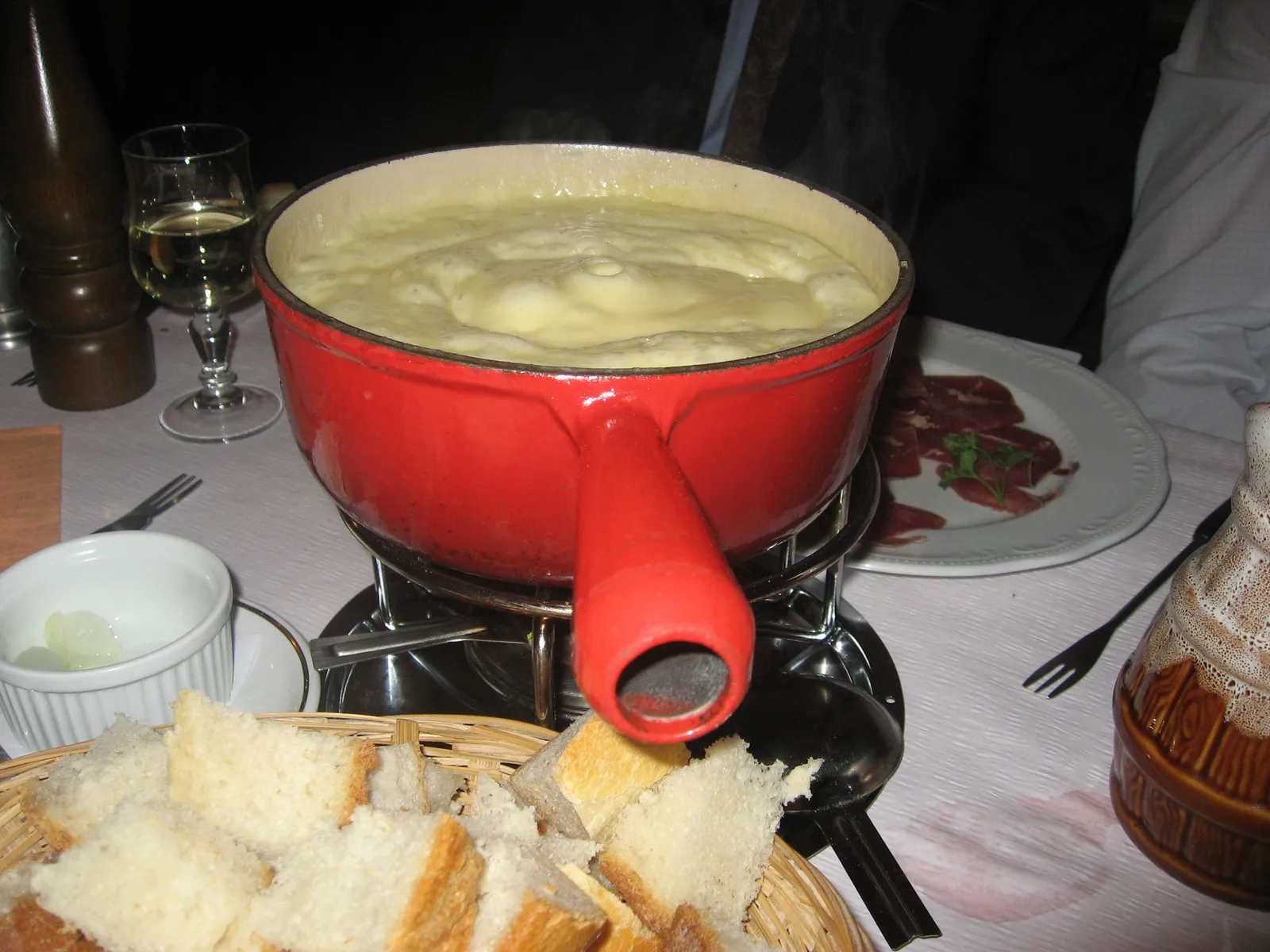
A red fondue pot of melted cheese with bread cubes and a glass of white wine Switzerland flag Switzerland 40m
Dinner •Swiss Alpine Classic

Swiss Cheese Fondue

Swiss cheese fondue is the Alps in a pot: Gruyere and Emmental melted slowly into dry white wine with garlic and a splash of kirsch, kept warm at the table while everyone dips cubes of bread into the bubbling cheese. One serving is about 310 g.

Comfort & Togetherness

Gruyere and Emmental melted in white wine, shared from one pot.

Pairs Well With
Cubes of crusty bread, boiled potatoes and cornichons on the side
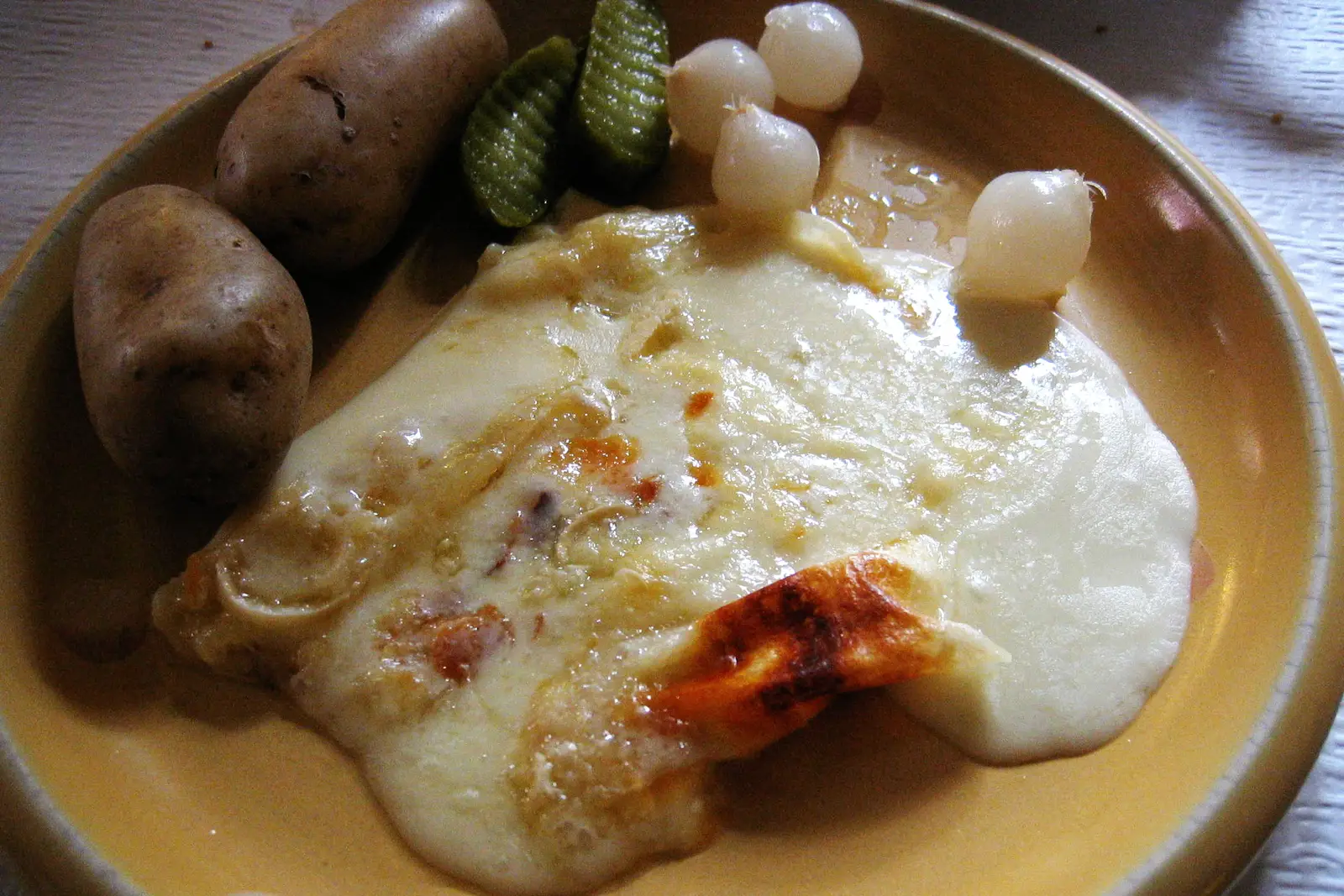
Melted raclette cheese scraped over a plate with boiled potatoes and pickles Switzerland flag Switzerland 40m
Dinner •Valais Alpine Classic

Raclette

Raclette is the Swiss Alps' other great melted-cheese meal: a half-wheel of raclette cheese is warmed until the cut face bubbles, then scraped in ribbons over boiled potatoes, with cornichons and pickled onions to cut the richness. One serving is about 365 g.

Comfort & Togetherness

Melted raclette cheese scraped over boiled potatoes with pickles.

Pairs Well With
Boiled potatoes, cornichons, pickled onions and a green salad
Tagliatelle al ragù Bolognese in a bowl with Parmigiano-Reggiano Italy flag Italy 4h 25m
Lunch •Emilia-Romagna

Tagliatelle al Ragù Bolognese

Slow-braised soffritto and coarse ground heritage meats layered over handmade egg yolk dough for mid-day stamina.

Lean Protein

Slow-simmered beef ragù tossed through fresh egg tagliatelle.

Pairs Well With
Bitter Radicchio & Aged Balsamico di Modena
Pasta & Noodles • High Protein
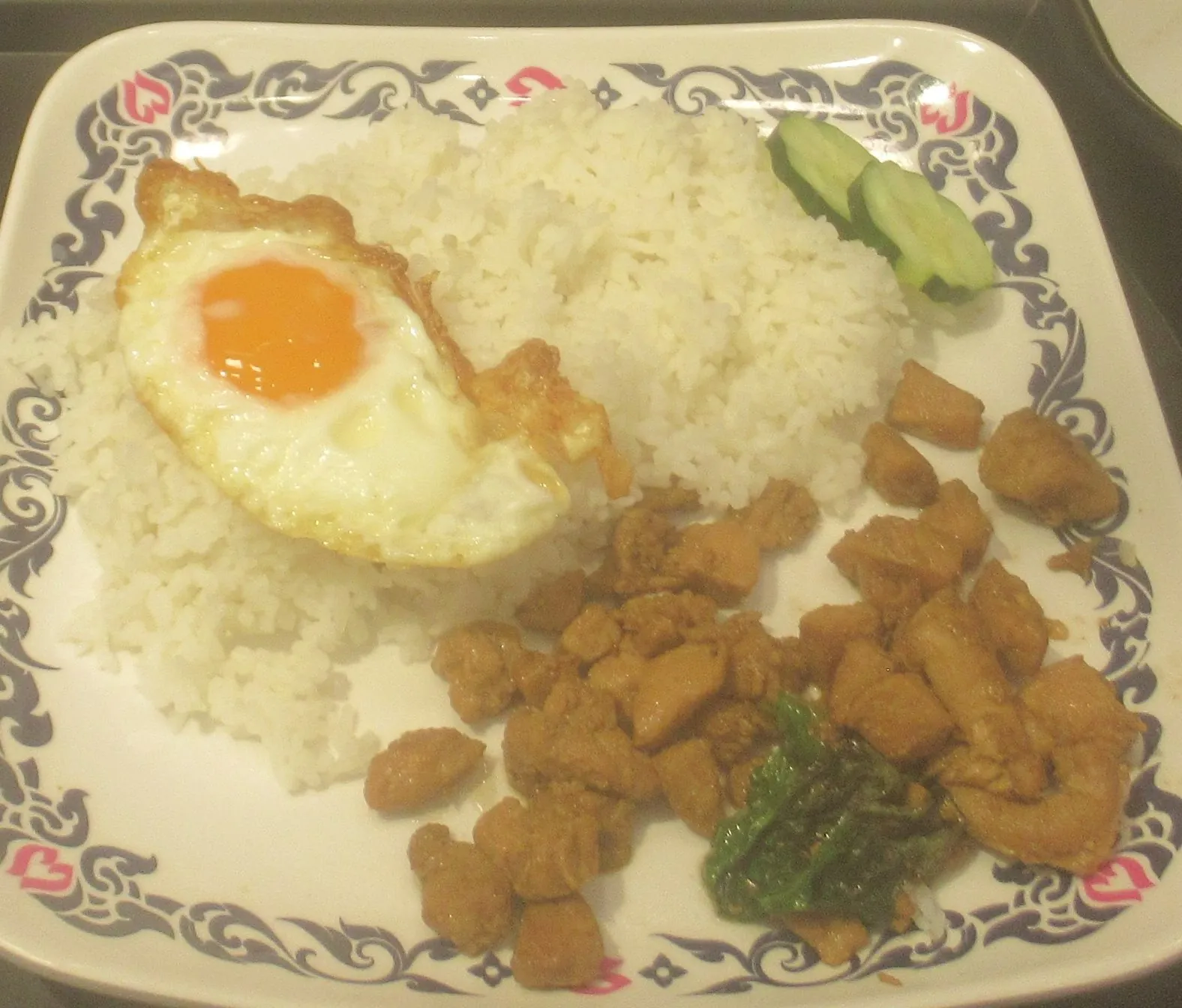
Pad kra pao gai — Thai holy basil chicken with fried egg and rice Thailand flag Thailand 30m
Lunch •Bangkok Street Flame

Pad Kra Pao Gai

High-heat wok flash of holy basil and crushed chillies over minced chicken, served over jasmine rice with a crispy-edged fried egg.

High Energy

Capsaicin brings the heat; holy basil adds a peppery, clove-like aroma.

Pairs Well With
Chilled Cucumber Salad & Fish Sauce Lime Dip
High Protein • Quick Prep (<30m)

The Dinner Gazette

Never wonder what’s for dinner again

One email a week with easy dinner ideas from around the world — ingredients, steps and nutrition, tested in our kitchen first.

Delivered every Thursday morning. Unsubscribe anytime.