-
1
Poach the Chicken & Save the Broth
40 Mins
Gentle simmer, ~95°C (203°F); chicken to 74°C (165°F)
Put the chicken thighs in a large pot with cold water to cover, half the onion and 2 garlic cloves. Bring to a gentle simmer and poach for 35 to 40 minutes until the chicken is cooked through to 74°C (165°F) and shreds easily. Lift the chicken out, strain and keep 650 ml of the hot broth for the masa, and shred the meat by hand once it is cool enough to handle.
Keep the pot at a lazy simmer, never a rolling boil — boiling makes the chicken tough and the broth cloudy.
Done when: Chicken shreds easily with two forks and shows no pink at the thickest part.
-
2
Make the Recaudo & Finish the Filling
15 Mins
Medium heat, ~170°C (340°F)
Heat the olive oil in a pan over medium heat and cook the diced onion, green pepper and garlic for 5 minutes until soft. Add the chopped tomato, cumin and oregano and cook for 8 to 10 minutes until the sauce thickens and turns deep red. Stir in the shredded chicken, diced potato, chickpeas, olives, capers and raisins, cook for 2 minutes more, then taste and season lightly — the broth, olives and capers already carry salt.
Cook the tomato down until the oil starts to separate at the edges — that is the sign the recaudo is ready and will not make the masa soggy.
Done when: A thick, deep-red sauce that coats the chicken and vegetables instead of pooling.
-
3
Cook the Masa Until It Holds
20 Mins
Medium heat, ~160°C (320°F)
Melt the lard in a large heavy pot over medium heat and stir in the achiote oil. Add the masa harina, salt and baking powder, then pour in the hot chicken broth a ladle at a time, stirring constantly with a wooden spoon. Cook for 15 to 20 minutes, stirring so the dough does not catch, until it thickens into a soft, smooth paste that holds its shape on the spoon and pulls away from the sides of the pot.
Add the broth slowly — a masa that is too wet makes tamales that fall apart, and one that is too dry turns crumbly after steaming.
Done when: The masa is smooth and glossy, holds a peak on the spoon and leaves the sides of the pot clean.
-
4
Soften the Banana Leaves
10 Mins
Low flame or hot water, ~80°C (175°F)
Wipe each banana leaf clean with a damp cloth and cut it into sheets about 30 x 25 cm. Pass each sheet briefly over a low gas flame or dip it in hot water until it turns a deeper green and bends without cracking. Lay the softened sheets out flat, smooth side up, ready for filling.
Do not skip softening — a stiff leaf cracks when folded and the tamal leaks in the steamer.
Done when: Leaves are pliable, glossy and bend in half without splitting.
-
5
Assemble the Tamales
25 Mins
Room temperature, ~20°C (68°F)
Spread about 105 g of warm masa (roughly 1/2 cup) in a rectangle on the centre of each leaf, leaving a border all round. Spoon about 125 g of filling down the middle, then fold the long sides of the leaf over the filling and fold the ends under to make a neat parcel. Tie each parcel with a thin strip of banana leaf or kitchen string if the leaves feel loose.
Keep the filling in the middle, not at the edges — filling that reaches the seam squeezes out during steaming.
Done when: Twelve firm, sealed parcels with the masa fully enclosed by the leaf.
-
6
Steam Until the Masa Sets
90 Mins
Boiling water, 100°C (212°F)
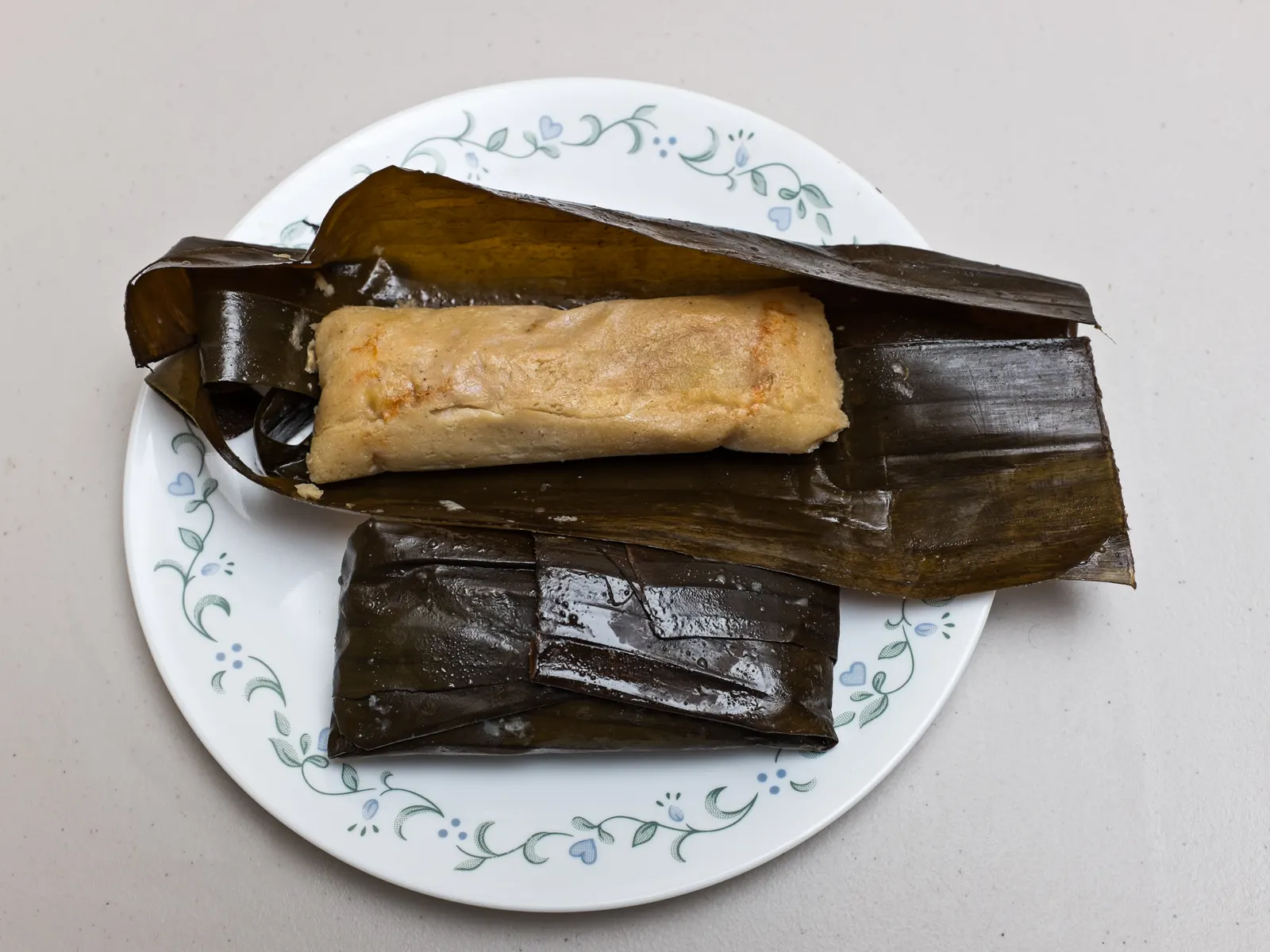
Line the bottom of a large steamer or pot with spare banana leaves or a folded cloth, add water to just below the rack, and pack the tamales in snugly seam-side down. Cover with more leaves and the lid, bring the water to a boil, then steam over medium heat for 90 minutes, topping up the water with boiling water if it runs low. The tamales are done when the masa pulls cleanly away from the leaf.
Keep the water at a steady boil and the lid on — lifting the lid lets the steam out and adds minutes to the cooking time.
Done when: Unwrap one tamal: the masa is firm, set and pulls cleanly off the banana leaf.
-
7
Rest, Unwrap & Serve
10 Mins
Serve warm, above 60°C (140°F)
Lift the tamales out and rest them for 10 minutes so the masa firms up and the flavours settle. Serve two tamales per person, still in their leaves, and let everyone unwrap their own at the table. Peel the leaf back completely before eating — the leaf is the wrapper, not part of the meal.
Resting matters: a tamal cut open straight from the steamer is soft and sticky, while a rested one slices cleanly.
Done when: Tamales hold their shape when unwrapped and cut, with a moist, tender crumb.

 El Salvador
1h 15m