
Curated recipes from 193 countries  •  New seasonal Mediterranean issue out now

Overview

Thai Boat Noodles

Kuay Teow Reua, Boat Noodle Soup, Thai Dark Broth Noodles

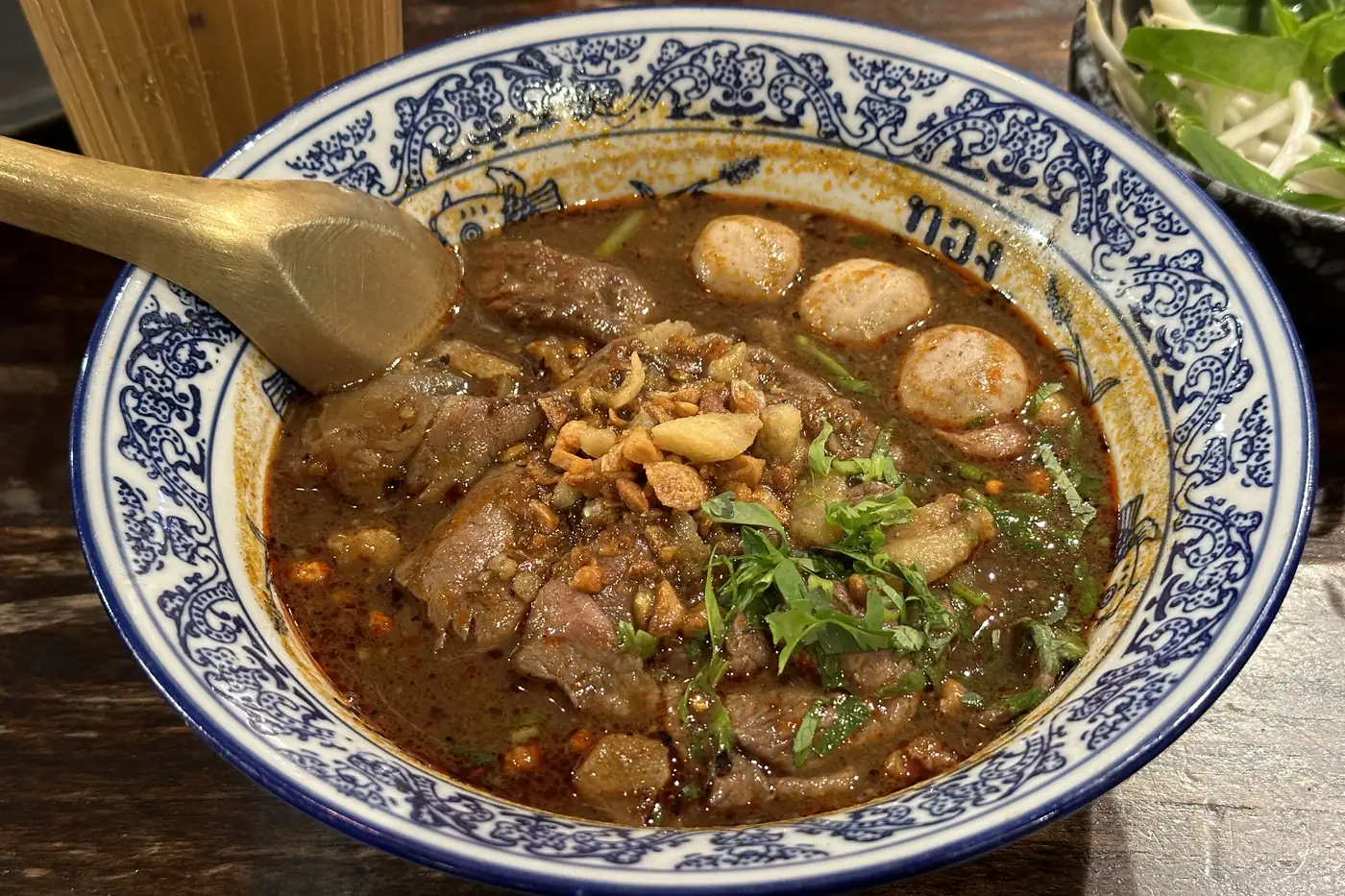
This Thai boat noodles recipe is kuay teow reua, the dark noodle soup once sold from boats on the canals of Ayutthaya and Bangkok: flat rice noodles in a deep-brown broth seasoned with dark soy, fish sauce and palm sugar, piled with sliced beef round, beef meatballs, braised shank and pork liver, then finished with bean sprouts, Thai basil and fried garlic. The broth is rich, salty-sweet and intensely beefy — a bowl that eats like a meal and a half. One serving is about 632 g.

Boat noodles were sold from wooden boats on the canals of Ayutthaya and Bangkok, where vendors cooked over a small stove on deck and served customers sitting on the canal bank. The bowls were small — easy to hold on a canal bank and quick to eat — a tradition that survives today in restaurants that still serve them in small bowls, so regulars order two or three. The broth is darkened with dark soy sauce and traditionally thickened with pork blood, which gives it its distinctive body and colour; this version keeps the dark, rich character with dark soy and a long-simmered beef stock.

Pairs well with: Bean sprouts, Thai basil & lime wedges

Provenance

Thailand flag Thailand

Thai Heritage

East & South Asia

Time Dedication

1h 15m

25m prep • 50m cook

Batch Yield

4 Servings

583 kcal per serving

1 serving ≈ 632 g

Technical Skill

Advanced

Hard (Slow Broth)

Meal Timing & Digestive Fit

Breakfast

Not Advised

Lunch

Prime Metabolic Fit

Dinner

Ideal Hearty Main

Snack & Tea

Inappropriate

Soups & BrothsPasta & Noodles Occasions: Weekend lunches, market-style meals, noodle nights with friends Cost: Medium — about $4–5 per serving at home
A bowl of Thai boat noodles in dark broth with sliced beef, meatballs, braised shank and fresh herbs

Thai Heritage

Photo: Zheng Zhou, CC BY-SA 4.0, via Wikimedia Commons

The Heritage Formulary

Measured Ingredients

Estimated cost: Medium — about $4–5 per serving at home (USD)

Real boat noodles are dark, rich and salty-sweet, with the beef cooked by the boiling broth in the bowl — and the herbs and sprouts always added at the table.

Execution Methodology & Culinary Technique

Step-by-Step Cooking Guide

Active 1h 15m
P

Prep Stage: Slice the Beef & Season the Broth

25 Mins • Slicing & Seasoning

Put the 300 g beef round in the freezer for 20 minutes so it slices paper-thin, then cut it against the grain. Halve the 200 g meatballs and slice the 100 g pork liver thinly. Stir the dark soy sauce, fish sauce, light soy sauce and palm sugar into the 1 litre beef stock in a large pot, and taste: the broth should be dark, salty and a little sweet before the beef goes in.

Maestro Tip: Freeze the round steak briefly before slicing — a firm piece cuts far thinner than a soft one, and thin beef cooks in seconds in the hot broth.

  1. 1

    Braise the Beef Shank

    45 Mins Gentle simmer, about 95°C (200°F)

    Put the 200 g beef shank in the seasoned stock and bring it to a gentle simmer — never a hard boil, which clouds the broth. Simmer for 45 minutes until the shank is tender enough to slice but still holds its shape. Lift it out, let it rest for 5 minutes, then slice thinly across the grain.

    Skim the surface as it simmers: a clear, dark broth is the goal, and foam left in clouds it.

    Done when: Shank slices cleanly and is tender, not stringy.

  2. 2

    Fry the Garlic

    5 Mins Medium heat, about 160°C (320°F)

    While the shank braises, fry the 15 g sliced garlic in the 15 ml oil over medium heat, stirring constantly, until golden and crisp — about 2 minutes. Lift out at once with a slotted spoon: garlic goes from gold to bitter in seconds. Drain on kitchen paper and keep the oil for another use.

    Pull the garlic off the heat while it is still pale gold — it keeps cooking in its own heat.

    Done when: Crisp, golden garlic chips.

  3. 3

    Cook the Noodles

    5 Mins Boiling water, 100°C (212°F)

    Bring a large pot of water to a rolling boil. Cook the soaked 200 g flat rice noodles for 2–3 minutes until just tender, then drain well. Do not cook the noodles in the broth — they would drink it and turn the broth cloudy and starchy.

    Drain the noodles thoroughly: water left on them dilutes the broth in the bowl.

    Done when: Noodles are tender but still springy.

  4. 4

    Finish the Broth

    5 Mins Boiling, 100°C (212°F)

    Bring the seasoned stock back to a rolling boil and check the seasoning: it should be dark, salty-sweet and intensely beefy. Drop in the 100 g sliced pork liver and the halved meatballs for 1 minute — the liver cooks almost instantly and must stay pink inside. Taste again and add a pinch of salt or a drop of fish sauce if it needs it.

    Do not overcook the liver: 1 minute in boiling broth is enough, and grey liver is tough liver.

    Done when: Broth is boiling and deeply flavoured; liver just cooked.

  5. 5

    Assemble and Serve

    5 Mins Serve hot, about 75°C (167°F)

    Divide the noodles between 4 bowls. Lay the thin-sliced raw beef round over the hot noodles — the broth will cook it in the bowl — then add the sliced shank, meatballs and liver. Ladle over the boiling broth, then scatter the fried garlic, spring onions, coriander and white pepper. Serve with the bean sprouts, Thai basil, chilli flakes and lime wedges on the side so each person seasons their own bowl.

    The raw beef goes in last and the broth must be boiling — that is what cooks it. If the broth has cooled, reboil it first.

    Done when: Beef turns from red to brown in the hot broth; bowl is steaming.

Finishing Touches & Plating

Eat boat noodles hot, with the bean sprouts and Thai basil stirred in at the table and lime squeezed over the top. The small-bowl tradition survives for a reason: the broth is so rich that one bowl is a meal, and a second is a feast.

Nutritional Physiology & Benefits

Nutrition

Energy

583

kcal / serving

Protein

50g

Complete AA

Carbs

55g

Complex

Fats

18g

Healthy

Per serving (4 servings · 1 serving ≈ 632 g)
Energy583 kcal
Protein50 g
Carbohydrates55 g
Fat18 g
Fibre2.9 g
Sugar7.0 g
Sodium1573 mg
Per 100g
Energy92 kcal
Protein7.9 g
Carbohydrates8.6 g
Fat2.8 g
Fibre0.5 g
Sugar1.1 g
Sodium249 mg

Nutrition values are estimated — calculated from USDA FoodData Central values for the listed ingredients.

Vitamins & minerals: Iron, zinc and B vitamins from the beef and pork liver, vitamin C from the lime and bean sprouts; the broth adds sodium, not vitamins. Nutrition is estimated.

Very High in Protein

About 49.7 g of protein a serving from the beef, meatballs, shank and liver — this Thai boat noodles recipe is one of the most protein-rich noodle soups you can make at home.

Fresh Herbs at the Table

The bean sprouts, Thai basil and coriander are added raw, so they keep their crunch, their vitamins and their bright flavour against the rich broth.

Iron from Beef and Liver

Beef and pork liver are among the richest food sources of iron, which the body needs to carry oxygen in the blood.

Food Pairings

What to Eat With

To optimize nutrient absorption and elevate the sensory depth, pair with these authentic accompaniments:

Drinks

Thai Iced Tea

Sweet, milky Thai tea is the classic counterpoint: its cold sweetness tames the chilli and the salt of the broth.

Vegetables

Bean Sprouts & Thai Basil

Served on the side and stirred in at the table, they add crunch and a cool, liquorice freshness that cuts the richness of the dark broth.

Sides

Pork Crackling

A handful of crisp pork crackling on top adds crunch and salt — the traditional street-stall finish for a bowl of boat noodles.

More Pairings

Mango Sticky Rice

After a salty, spicy bowl, sweet mango with coconut sticky rice is the classic Thai finish — cool, sweet and completely different.

Complete menu

Serve the boat noodles with bean sprouts, Thai basil, chilli flakes and lime on the side, a glass of Thai iced tea, and mango sticky rice to finish — a full Thai market lunch at home.

Digestive Guardrails

What NOT to Combine

To prevent digestive distress, sluggishness, or palate clash, avoid pairing the dish with these elements:

Cooking the Noodles in the Broth

Noodles cooked in the broth drink it dry and release starch that turns it cloudy and gluey. Always cook them separately in water and ladle the broth over. This is general food-safety information, not medical advice.

Reheating the Assembled Bowls

A finished bowl reheated whole overcooks the beef and liver and turns the noodles to mush. Store the broth, noodles and toppings separately and assemble fresh bowls. This is general food-safety information, not medical advice.

General information only, not medical advice — consult a doctor for personal dietary decisions.

Who Should Eat It

Who Should Eat

  • General adultsA rich, hearty lunch — deeply satisfying, but the broth is salty, so it is best as an occasional meal rather than a daily one.
  • ChildrenChildren may find the broth too salty and spicy — serve a small bowl with less chilli and plenty of bean sprouts.
  • ElderlyThe noodles are soft and easy to eat, but the broth is salty — a small portion is enough.
  • Pregnant womenGenerally suitable; the beef is cooked in boiling broth, but the dish is high in sodium — keep the portion modest; ask your clinician.
  • Breastfeeding womenGenerally suitable; the protein and iron are useful, but the sodium is high — a modest portion is wise.
  • AthletesAbout 49.7 g of protein a serving makes it a strong post-training lunch — just watch the 583 kcal if you are counting energy.
  • Weight gainA good choice — the protein is high and the noodles add easy energy.
  • Weight lossAt 583 kcal with 1573 mg of sodium, this is a treat lunch: take a smaller portion and load up on bean sprouts and basil.

Health Conditions — Adjust or Avoid

Conditions

  • DiabetesAbout 54.6 g of carbohydrate a serving, mostly from the rice noodles — a moderate amount; take fewer noodles and more broth and beef; ask your clinician.
  • High blood pressureAt about 1573 mg of sodium a serving, this is very salty — use low-sodium stock as written and do not add extra fish sauce; ask your clinician if you are on a sodium limit.
  • Kidney diseaseVery salty and rich — eat rarely and in small portions; ask your clinician.
  • GoutEat occasionally and in small portions — beef and liver are high in purines; ask your clinician.
  • Stomach issuesThe broth is spicy, salty and rich, so it can trigger reflux — eat a small portion and avoid eating late at night; ask your clinician if symptoms persist.
  • Cardiovascular diseaseHigh in sodium and saturated fat, so this is an occasional dish — balance it with raw bean sprouts and basil and no extra salt.
  • Fatty liverHigh in fat and sodium, which is the opposite of a liver-friendly pattern — keep it rare and the portion small; ask your clinician.
  • Food allergiesContains soy, fish and gluten only if the soy sauce contains wheat — check the label. Skip the liver if you are allergic to pork offal.
  • Special therapeutic dietsHigh in sodium and fat, so it fits very few therapeutic diets — ask your clinician or dietitian before eating it regularly.

If you have a medical condition, consult your doctor before changing your diet.

Storage & Use

Storage & Use

How to store
Cool the broth, noodles and toppings separately and store in airtight containers.
In the fridge
Broth 3 days; cooked noodles 2 days; sliced beef and liver 1 day.
In the freezer
Broth only, 1 month; do not freeze the noodles or the cooked beef.
How to reheat
Reheat the broth to a rolling boil, 100°C (212°F); cook fresh noodles and assemble new bowls — never reheat an assembled bowl.
Freezing recommended
Only the broth, for up to 1 month.
Signs it has spoiled
Sour or off smell in the broth, slimy noodles, or grey, dry beef.

More recipes to explore

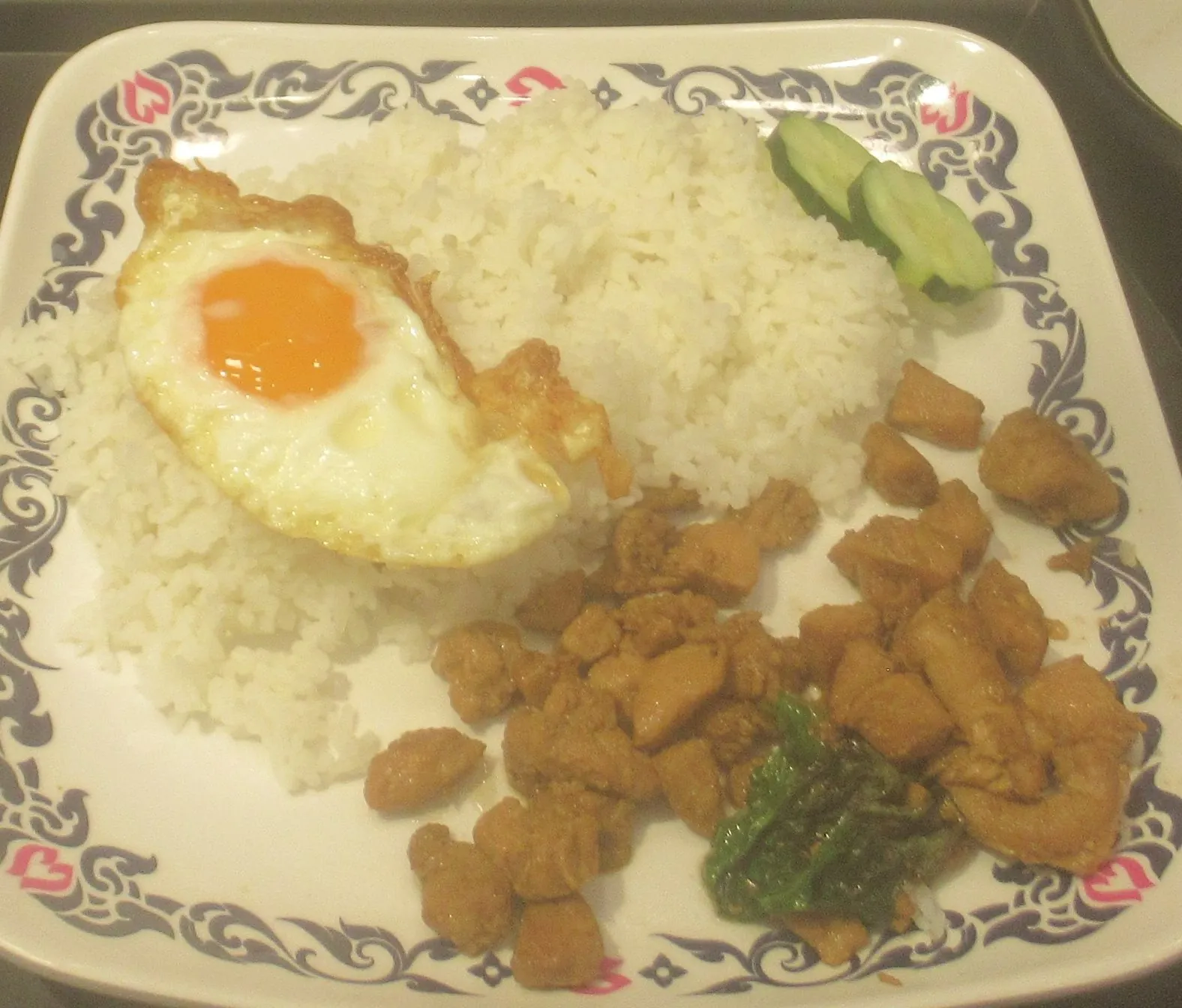
Pad kra pao gai — Thai holy basil chicken with fried egg and rice Thailand flag Thailand 30m
Lunch •Bangkok Street Flame

Pad Kra Pao Gai

High-heat wok flash of holy basil and crushed chillies over minced chicken, served over jasmine rice with a crispy-edged fried egg.

High Energy

Capsaicin brings the heat; holy basil adds a peppery, clove-like aroma.

Pairs Well With
Chilled Cucumber Salad & Fish Sauce Lime Dip
High Protein • Quick Prep (<30m)
A white bowl of clear tom yum goong with a pink prawn, mushrooms and fresh cilantro Thailand flag Thailand 35m
Lunch •Central Thai Rivers

Tom Yum Goong

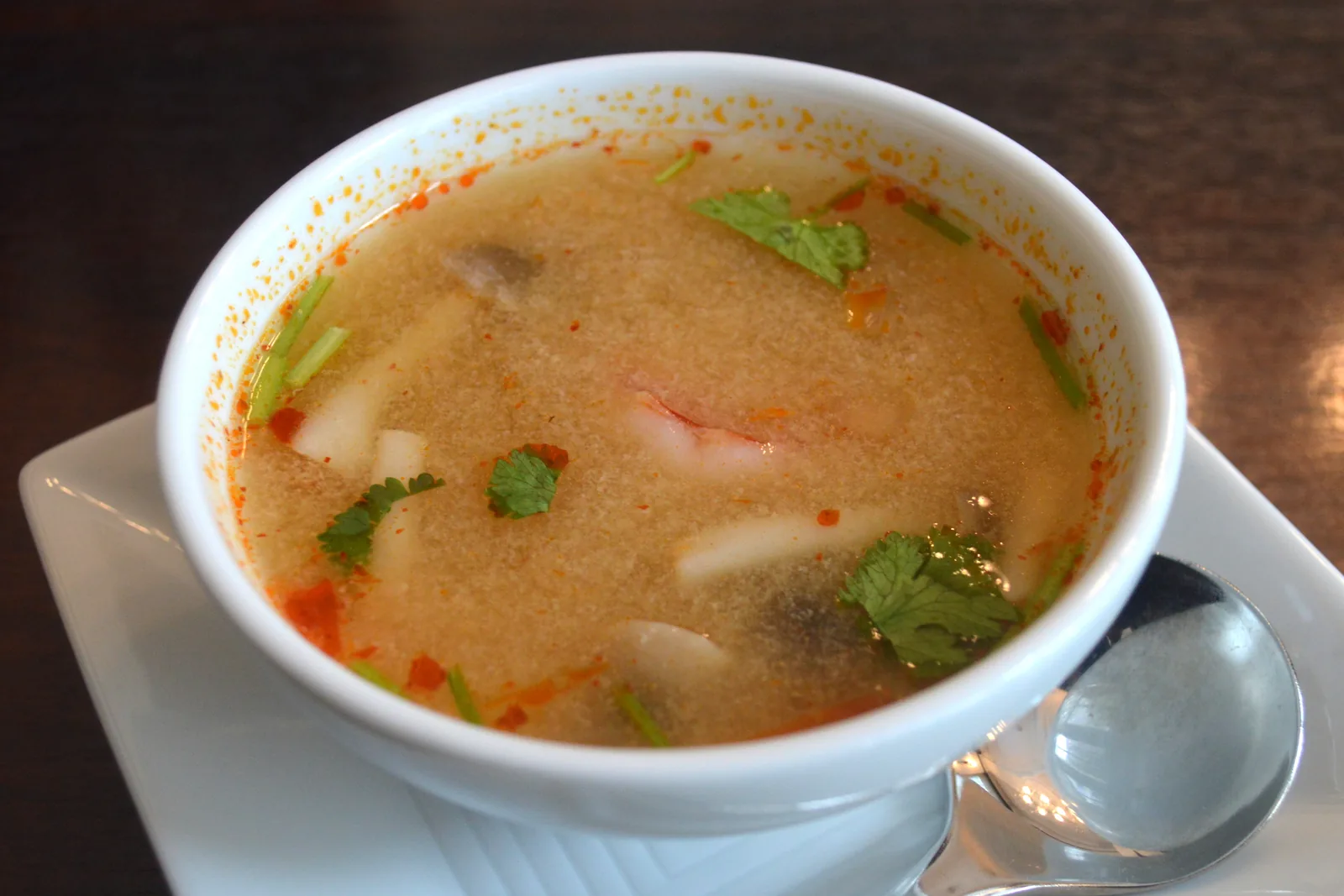
This tom yum goong recipe builds a clear, fiery-sour broth from lemongrass, galangal and makrut lime leaves, then finishes it with plump prawns, mushrooms and lime juice. One serving is about 460 g.

Comfort & Warmth

Hot, sour and fragrant prawn soup with lemongrass, galangal and lime.

Pairs Well With
Steamed jasmine rice and a cold Thai iced tea
Soups & Broths • High Protein
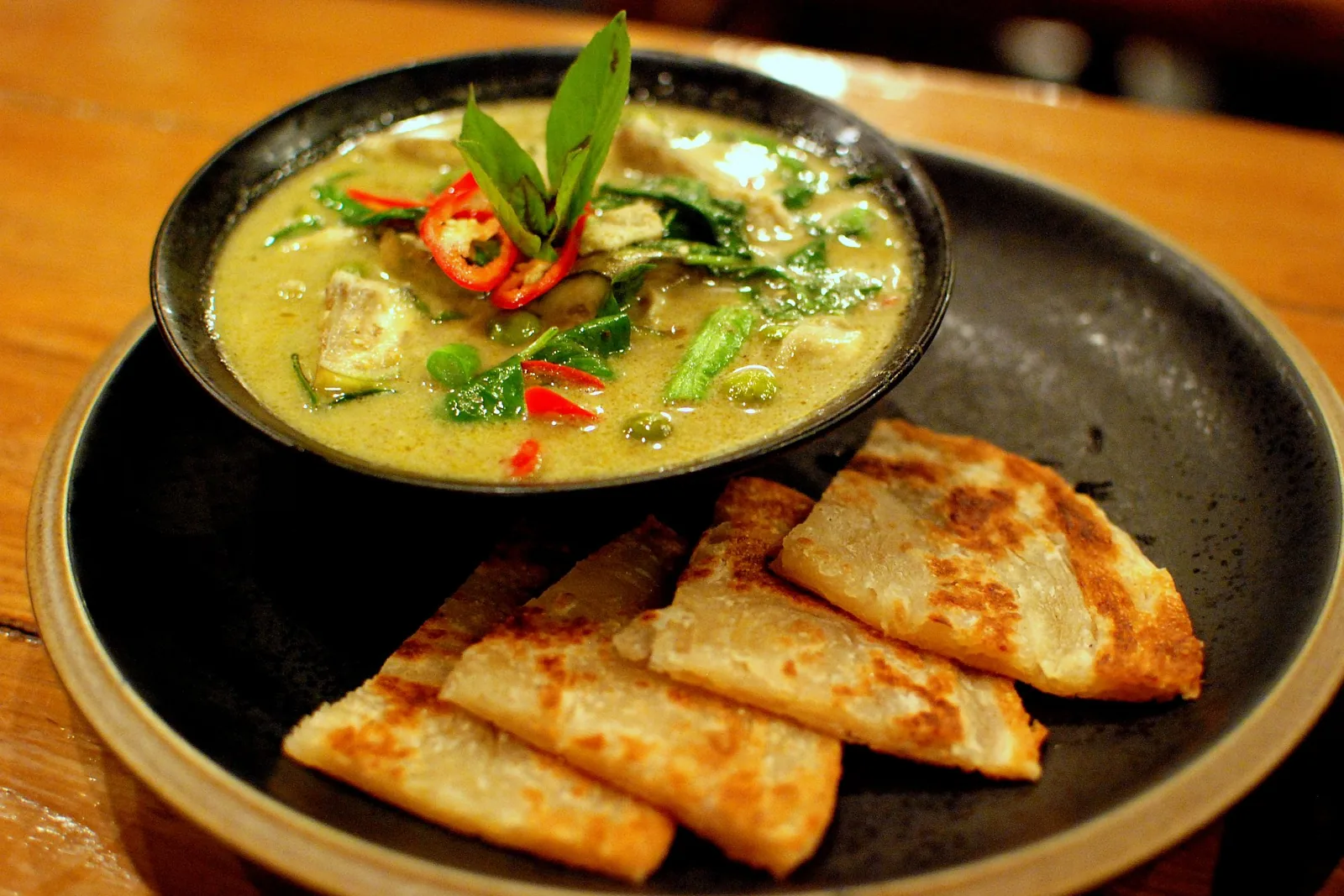
A black bowl of Thai green curry with chicken, Thai basil and red chilli, with roti on the side Thailand flag Thailand 40m
Dinner •Central Thai Classic

Thai Green Curry

This thai green curry recipe simmers chicken in coconut milk with green curry paste, Thai eggplant and bamboo shoots, finished with basil and a squeeze of lime. One serving is about 480 g, rice included.

Comfort & Warmth

Creamy coconut curry with green chillies, Thai basil and tender chicken.

Pairs Well With
Jasmine rice and a cucumber salad
High Protein
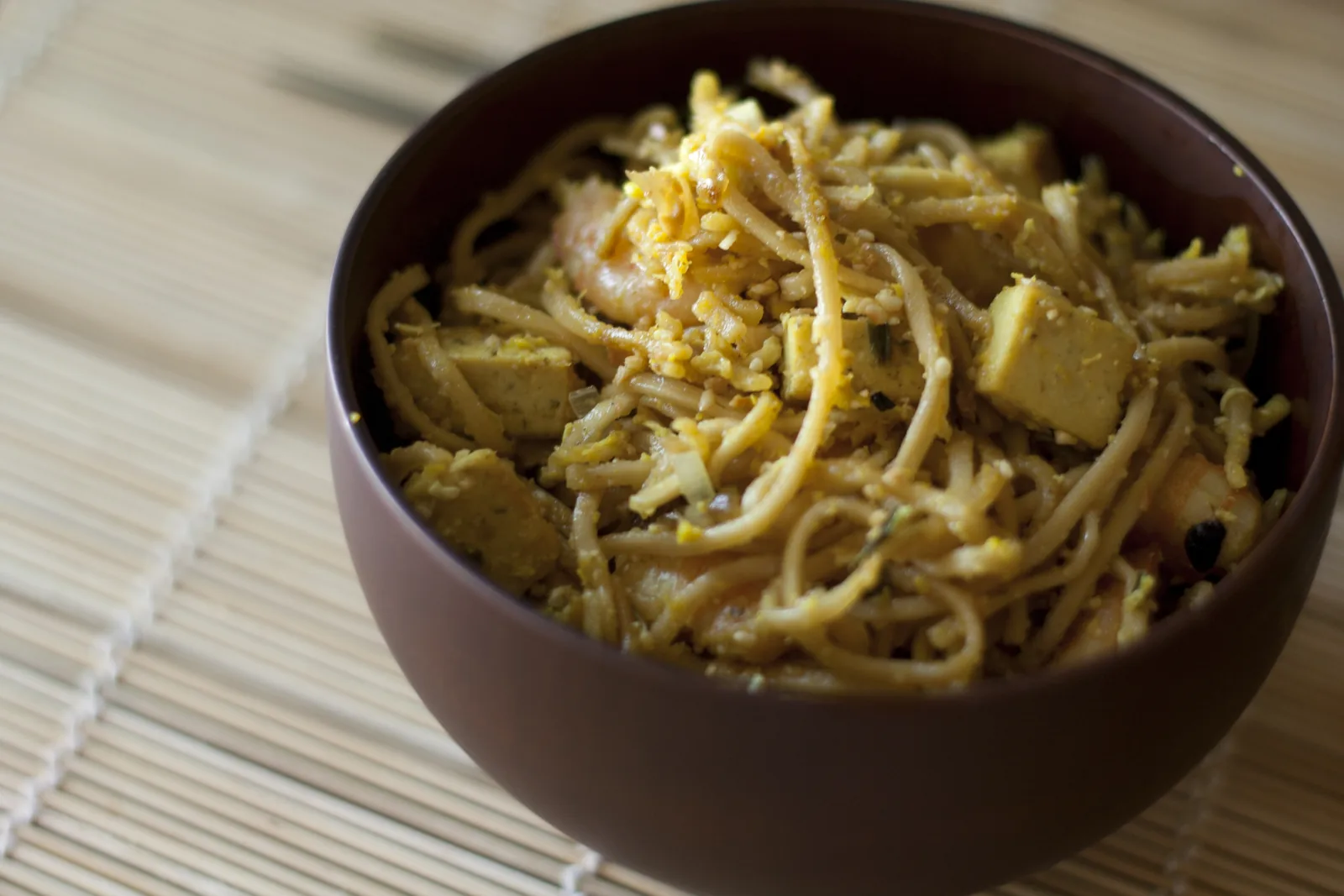
A dark bowl of pad thai with shrimp, tofu and egg, served on a bamboo mat Thailand flag Thailand 35m
Lunch •Thai Street-Food Classic

Pad Thai

This pad thai recipe stir-fries flat rice noodles with shrimp, egg and tofu in a tamarind, fish-sauce and palm-sugar glaze, finished with bean sprouts, peanuts and lime. One serving is about 350 g.

Street-Food Comfort

Stir-fried rice noodles in a sweet, sour and salty tamarind glaze, with shrimp, egg and tofu — the balance of flavours is the whole point.

Pairs Well With
Iced lime tea and a crisp cucumber salad
Pasta & Noodles

The Dinner Gazette

Never wonder what’s for dinner again

One email a week with easy dinner ideas from around the world — ingredients, steps and nutrition, tested in our kitchen first.

Delivered every Thursday morning. Unsubscribe anytime.