Curated recipes from 193 countries  •  New seasonal Mediterranean issue out now

Overview

Thieboudienne

Ceebu Jen, Ceebu Jën, Thiebou Dieune, Rice and Fish

This thieboudienne recipe is Senegal's national dish, ceebu jen — broken rice cooked in a rich tomato and fish broth with herb-stuffed grouper and whole vegetables, served in a wide bowl for sharing. One serving is about 733 g. The fish is poached in the broth first, then the vegetables, then the rice, so every grain carries the flavour of the sea and the tomato base.

Ceebu jen, 'rice and fish' in Wolof, began in the fishing communities of Saint-Louis, Senegal's former colonial capital, where cooks turned the day's catch and broken rice into a single shared pot. Senegalese tradition credits the dish to Penda Mbaye, a cook from Saint-Louis in the mid nineteenth century. In December 2021 UNESCO inscribed 'Ceebu jën, a culinary art of Senegal' on its Representative List of the Intangible Cultural Heritage of Humanity, noting that the recipe passes from mother to daughter. The red version cooked here, ceebu jën bu xonq, gets its colour from tomato paste fried into the broth.

Pairs well with: Serve with lime wedges, a whole scotch bonnet for heat, and a cold glass of bissap (hibiscus drink).

Provenance

Senegal flag Senegal

Saint-Louis Heritage

African Heritage

Time Dedication

1h 45m

30m prep • 75m cook

Batch Yield

6 Servings

802 kcal per serving

1 serving ≈ 733 g

Technical Skill

Advanced

Advanced (One Pot, Multi-Stage)

Meal Timing & Digestive Fit

Breakfast

Not Advised

Lunch

Hearty Midday Main

Dinner

Ideal Hearty Main

Snack & Tea

Inappropriate

High Protein Occasions: Family lunch, Friday gatherings, celebrations and sharing meals Cost: Moderate — about $4–5 per serving at home
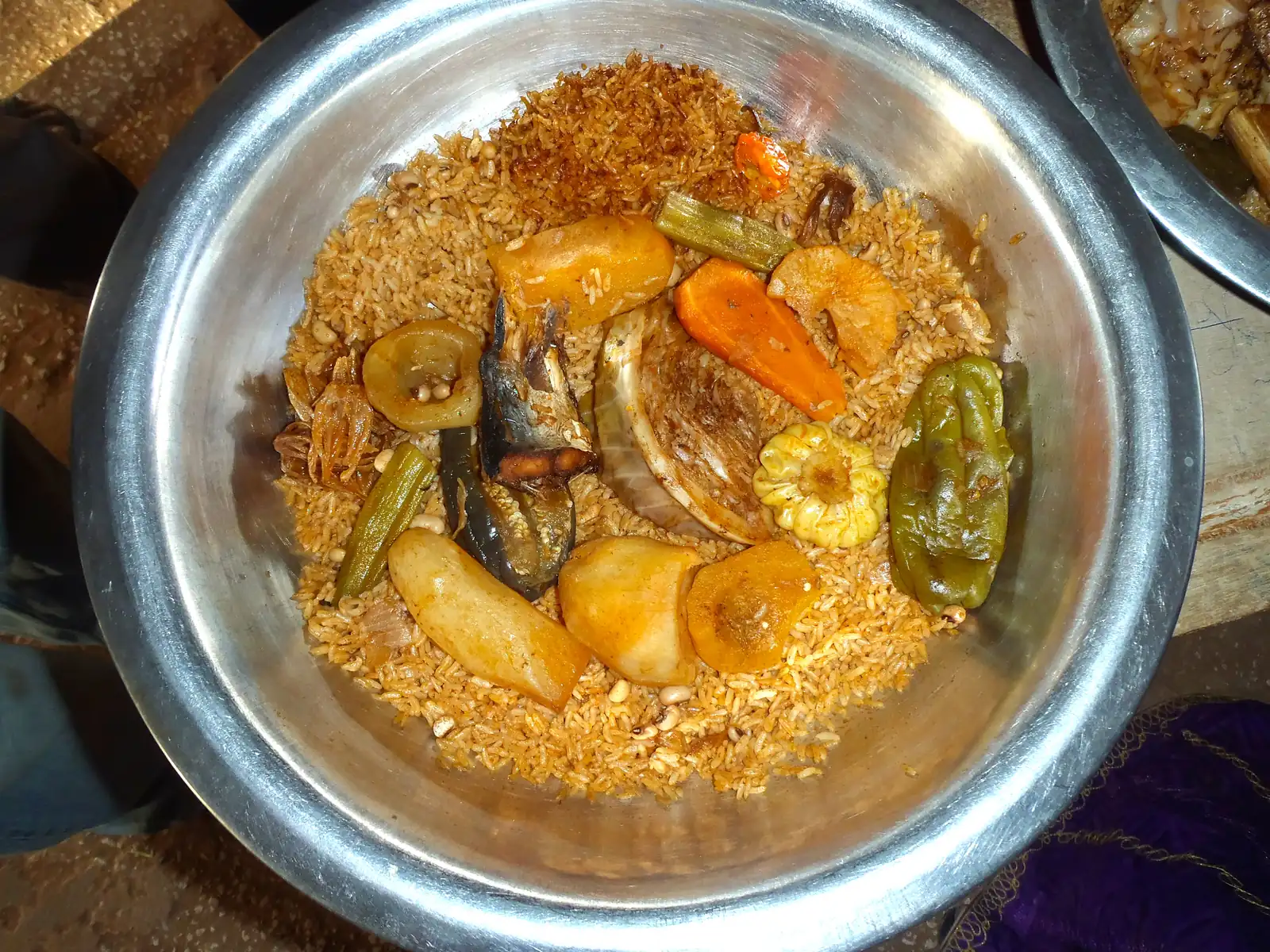
Thieboudienne in a wide metal bowl: red broken rice topped with a whole fish, cabbage, carrot, okra, eggplant and peppers

Saint-Louis Heritage

Photo: Mariel.cg, CC BY-SA 4.0, via Wikimedia Commons

The Heritage Formulary

Measured Ingredients

Estimated cost: Moderate — about $4–5 per serving at home (USD)

Cooked the traditional way: fish and vegetables poached in the tomato broth first, broken rice cooked last in the same broth.

Execution Methodology & Culinary Technique

Step-by-Step Cooking Guide

Active 1h 45m
P

Prep Stage: Rof, Rice and Vegetables

30 Mins • Knife Work

Pound the parsley, 4 garlic cloves, half a scotch bonnet, a pinch of salt and half a stock cube into a green paste (the rof) and pack it into the slits of the fish. Rinse and soak the broken rice. Chop the onions and tomatoes, and cut all the vegetables into large pieces. Soak the tamarind and the dried fish, and have 1.5 litres of hot water ready.

Maestro Tip: Cut the vegetables big — small pieces disappear into the rice after 25 minutes of simmering.

  1. 1

    Stuff the Fish with Rof

    15 Mins No heat — room temperature, about 20°C (68°F)

    Pound the parsley, crushed garlic, chopped scotch bonnet, black pepper and half a crumbled stock cube together in a mortar until you have a coarse green paste. Pack the paste deep into the slits of each fish steak and rub a little over the skin. Set the fish aside for 10 minutes so the herbs season the flesh.

    Pound, do not blend — a mortar keeps the paste coarse so it stays inside the slits instead of washing out.

    Done when: The slits are filled with green paste and the fish smells of garlic and parsley.

  2. 2

    Fry the Tomato Base

    15 Mins Medium-high heat, about 190°C (375°F)

    Heat the oil in a large heavy pot over medium-high heat. Fry the chopped onion and garlic for 3 minutes until soft, then add the tomato paste and fry, stirring constantly, for 5 minutes until it darkens to brick red and the oil separates at the edges. Stir in the blended tomatoes and the tamarind liquid and cook for 5 minutes more, then pour in 1.5 litres of hot water, add the bay leaves, the remaining stock cube and the dried fish, and bring to a boil.

    Frying the paste until it darkens is the whole secret — raw paste tastes sharp and acidic, fried paste tastes deep and sweet.

    Done when: The base is brick red, glossy, and the oil rims the edges of the pot.

  3. 3

    Poach the Fish in the Broth

    12 Mins Gentle simmer, about 95°C (200°F)

    Lower the heat to a gentle simmer and slide the stuffed fish steaks into the broth. Add the whole scotch bonnet. Cover and poach for 10–12 minutes, turning once, until the flesh is opaque and flakes at the thickest part. Lift the fish out carefully onto a plate and keep warm — it goes back on top at the end.

    Do not let the broth boil hard or the fish will break apart; a lazy simmer with small bubbles is right.

    Done when: The fish reaches 63°C (145°F) inside, flakes easily, and stays in whole steaks.

  4. 4

    Cook the Vegetables in the Broth

    25 Mins Steady simmer, about 95°C (200°F)

    Add the cassava, carrots and cabbage wedges to the broth first, since they take longest, and simmer for 10 minutes. Then add the eggplant, pumpkin and okra and simmer for 12–15 minutes more until every vegetable is tender but still holding its shape. Lift the vegetables out with a slotted spoon and set them beside the fish. Taste the broth and add salt if needed — it should be well seasoned, because the rice will absorb it.

    Fish the vegetables out in the order they went in, and test the cassava with a knife — it should slide in with no resistance.

    Done when: All vegetables are tender when pierced, none are falling apart, and the broth tastes bold and savoury.

  5. 5

    Cook the Broken Rice in the Broth

    25 Mins Low heat, about 120°C (250°F), then covered steaming

    Strain the broth if you like it smooth, then measure it — you want about 900 ml left in the pot; top up with hot water if it has reduced too far. Stir in the drained broken rice, spread it level, and bring it back to a simmer. Cover tightly, turn the heat to low, and cook for 20–25 minutes without lifting the lid, until the rice has absorbed the broth and turned orange-red. Rest off the heat for 5 minutes.

    Resist lifting the lid: the steam finishes the rice, and every peek lets it escape. A tight lid, or foil under the lid, makes a real difference.

    Done when: The rice is tender, separate and orange-red, with no liquid left in the pot and a lightly crisped bottom layer.

  6. 6

    Rest and Plate for Sharing

    10 Mins No heat — serving temperature, about 60°C (140°F)

    Tip the rice onto a wide platter or into a large metal bowl and spread it out. Lay the fish steaks in the centre and arrange the vegetables around them, with the whole scotch bonnet on top. Squeeze lime over the fish if you like, and serve at once, letting everyone take from the shared bowl.

    Serve it the Senegalese way, from one big bowl in the middle of the table — it tastes better shared.

    Done when: The platter shows red rice, whole fish in the centre and bright vegetables around the edge, steaming hot.
Finishing Touches & Plating

Squeeze lime over the fish just before serving and set the whole scotch bonnet on top — anyone who wants heat can press it into their portion. Eat it hot, from the shared bowl.

Nutritional Physiology & Benefits

Nutrition

Energy

802

kcal / serving

Protein

44g

Complete AA

Carbs

128g

Complex

Fats

13g

Healthy

Per serving (6 servings · 1 serving ≈ 733 g)
Energy802 kcal
Protein44 g
Carbohydrates128 g
Fat13 g
Fibre9.6 g
Sugar14.7 g
Sodium755 mg
Per 100g
Energy109 kcal
Protein6 g
Carbohydrates17.4 g
Fat1.8 g
Fibre1.3 g
Sugar2 g
Sodium103 mg

Nutrition values are estimated — calculated from USDA FoodData Central values for the listed ingredients.

Vitamins & minerals: Provides vitamin A from carrot and pumpkin, vitamin C from tomato, cabbage and peppers, vitamin B12 and selenium from the fish, and potassium from the vegetables. Nutrition is estimated.

High in Protein

Each serving carries about 44 g of protein from the grouper, which supports muscle maintenance and keeps you full for hours.

A Plate Full of Vegetables

Cabbage, carrot, eggplant, cassava, okra and pumpkin add fibre, vitamin A and vitamin C, so the dish is far more than rice and fish.

Fish, Not Fried Meat

The main protein is poached white fish, which is naturally low in saturated fat and provides vitamin B12 and selenium.

Food Pairings

What to Eat With

To optimize nutrient absorption and elevate the sensory depth, pair with these authentic accompaniments:

Sides

Lime Wedges

A squeeze of lime cuts through the rich tomato broth and brightens the fish, the way Senegalese cooks serve it.

Drinks

Bissap (Hibiscus Drink)

Cold, tart bissap balances the savoury, spicy rice and is the classic drink served with thieboudienne in Senegal.

Chilled Water with Mint

Plain cold water with mint leaves keeps the meal refreshing and lets the broth's flavour stay in focus.

Vegetables

Simple Green Salad

Lettuce, onion and a light vinaigrette add crunch and freshness against the soft rice and stewed vegetables.

Complete menu

Thieboudienne with lime wedges, a simple green salad and a cold glass of bissap, followed by fresh mango for dessert.

Digestive Guardrails

What NOT to Combine

To prevent digestive distress, sluggishness, or palate clash, avoid pairing the dish with these elements:

Very Spicy Food on an Empty Stomach

The whole scotch bonnet and the chilli in the rof can irritate a sensitive stomach, especially when eaten on an empty stomach. Leave the whole chilli out of your portion if you are sensitive. This is general information, not medical advice.

Alcohol with a Heavy Fish Meal

Large amounts of alcohol with a rich, salty meal can worsen dehydration and stomach discomfort for some people. Keep drinks light. This is general information, not medical advice.

General information only, not medical advice — consult a doctor for personal dietary decisions.

Who Should Eat It

Who Should Eat

  • General adultsAn excellent sharing meal: high in protein and vegetables, filling and balanced. One serving is generous, so serve a smaller portion if you are eating lightly.
  • ChildrenSuitable for children over 3 when the whole chilli is left out and the rof is made mild. Remove all fish bones carefully before serving, and cut the vegetables into small pieces.
  • ElderlySoft rice, tender fish and stewed vegetables are easy to chew. Serve a moderate portion and watch the salt, since the broth is seasoned with stock cubes.
  • Pregnant womenGrouper is a large fish that can carry more mercury than small fish, so keep portions moderate and do not eat it every day. Make sure the fish is cooked through to 63°C (145°F). Ask your clinician about fish choices during pregnancy.
  • Breastfeeding womenA nourishing, protein-rich meal that fits well into a breastfeeding diet. The same moderation on large fish applies as in pregnancy; ask your clinician if unsure.
  • AthletesAbout 44 g of protein and 128 g of carbohydrate per serving make it a strong post-training meal for recovery and glycogen replacement.
  • Weight gainAt about 800 kcal a serving with plenty of rice and fish, it is a practical way to add energy without eating a separate snack.
  • Weight lossTake a smaller portion of rice and fill the plate with the vegetables and fish instead; the protein and fibre help you feel full. Skip the extra oil when frying the base.

Health Conditions — Adjust or Avoid

Conditions

  • DiabetesOne serving carries about 128 g of carbohydrate, mostly from the rice, so portion size matters most. A smaller rice portion with extra vegetables and fish works better. Ask your clinician or dietitian for advice on portions.
  • High blood pressureThe stock cubes and salt give about 755 mg of sodium per serving. Use one stock cube instead of two and skip the added salt to lower it. Ask your clinician for advice.
  • Kidney diseaseThe dish is high in protein (about 44 g) and potassium from the vegetables, and the broth is salty, so it may not suit a kidney-friendly diet. Ask your clinician or dietitian before eating it.
  • GoutFish and the dried fish seasoning are sources of purines, so a large portion may not suit people prone to gout flares. Keep the portion moderate and drink water with the meal. Ask your clinician for advice.
  • Stomach issuesThe chilli, tomato and tamarind make the broth acidic and spicy, which can trigger heartburn or stomach pain. Leave the chilli out and eat a small portion if you are sensitive. Ask your clinician if symptoms persist.
  • Cardiovascular diseasePoached white fish is low in saturated fat, which is helpful, but the salt from the stock cubes is worth watching. Use less stock cube and more vegetables. Ask your clinician for advice.
  • Fatty liverThe dish is based on fish, vegetables and rice with only a little oil, which fits a lighter eating pattern. Keep the rice portion moderate and avoid adding extra oil. Ask your clinician for advice.
  • Food allergiesContains fish (grouper and dried fish). The groundnut oil sometimes used for the base is a peanut product — use plain vegetable oil if there is a peanut allergy. The stock cube may contain celery or gluten; check the label.
  • Special therapeutic dietsThe recipe is naturally gluten-free if the stock cube used is gluten-free, and it contains no dairy or egg. For a low-sodium or low-purine therapeutic diet, it needs adjustment — ask your clinician or dietitian.

If you have a medical condition, consult your doctor before changing your diet.

Storage & Use

Storage & Use

How to store
Cool within 2 hours and store the rice, fish and vegetables together in shallow airtight containers.
In the fridge
3–4 days.
In the freezer
2 months (the fish and vegetables freeze well; the rice softens a little on thawing).
How to reheat
Reheat in a covered pan with a splash of water until steaming and the centre reaches 74°C (165°F).
Freezing recommended
Yes, in single portions — best eaten fresh, but it freezes well for busy days.
Signs it has spoiled
Sour or musty smell, slimy rice or fish, or visible mould.

More recipes to explore

Senegalese ndambe — a split baguette filled with thick red-brown black-eyed pea stew Senegal flag Senegal 1h 30m
Breakfast •Dakar Street-Food Classic

Senegalese Ndambe

This ndambe recipe is Dakar's favourite breakfast: black-eyed peas and tender beef simmered in a spiced tomato and onion sauce with sweet potato, then ladled into a split baguette with boiled egg, mayonnaise and hot sauce. One serving is about 485 g.

Hearty & Filling

Black-eyed peas and beef simmered in a spiced tomato sauce with sweet potato, ladled into a crusty baguette.

Pairs Well With
Serve with a cold glass of bissap (hibiscus drink) or sweet mint tea, and extra hot sauce on the side.
High Protein
Senegalese grilled fish — whole scored fish and herb skewers grilling over charcoal with smoke rising Senegal flag Senegal 45m
Dinner •Dakar Beach Classic

Senegalese Grilled Fish with Rof

This senegalese grilled fish recipe is the Dakar beach classic: a whole sea bream stuffed with rof, a green parsley and garlic paste, grilled over charcoal until the skin crisps, then served with attiéké, green salad and grilled prawns. One serving is about 660 g.

Smoky & Fresh

A whole sea bream stuffed with green rof herb paste, grilled over charcoal and served with attiéké, salad and prawns.

Pairs Well With
Serve with attiéké, a green salad, grilled prawns and lemon wedges, plus a cold ginger juice or light beer.
High Protein
Bœuf bourguignon — French beef braised in red wine France flag France 4h
Dinner •Burgundy Terroir

Bœuf Bourguignon

Beef braised gently in red wine until the connective tissue melts into a velvet, gelatin-rich sauce — the classic Burgundy Sunday dinner.

Cellular Repair

Beef braised in red wine until spoon-tender, with mushrooms and pearl onions.

Pairs Well With
Parsnip Purée & Steamed French Haricots Verts
High Protein
Vietnamese braised pork belly with golden eggs in caramel sauce Vietnam flag Vietnam 1h 45m
Dinner •One Pot

Vietnamese Braised Pork and Eggs

Pork belly slowly braised in coconut water and caramel until meltingly tender, with golden eggs that soak up the sweet-savoury sauce — the Vietnamese family dish that tastes better the next day.

Comfort & Sustained Energy

Slow-braised pork belly and eggs in coconut water and caramel.

Pairs Well With
Steamed rice & pickled mustard greens
High Protein

The Dinner Gazette

Never wonder what’s for dinner again

One email a week with easy dinner ideas from around the world — ingredients, steps and nutrition, tested in our kitchen first.

Delivered every Thursday morning. Unsubscribe anytime.