-
1
Soak the Two Beans
8 Hours
Room temperature, about 20°C (68°F)
Pick over the red kidney beans and the cannellini beans and throw out any stones or broken ones. Rinse, cover with plenty of cold water, and leave to soak overnight, at least 8 hours. Drain and rinse well before cooking. The two-bean mix is what makes this pot Timorese: red kidney and white cannellini, never the black beans of the Brazilian and Santomense feijoadas.
Soak in a big bowl — the beans will more than double in size, and a small bowl will overflow.
Done when: The beans are plump and doubled in size, with no stones left.
-
2
Brown the Meats
15 Mins
Medium-high heat, about 180°C (350°F)
Heat the olive oil in a large heavy pot over medium-high heat. Brown the pork and beef chunks in batches for about 8 minutes, until coloured on all sides, then add the sliced chouriço and fry for 3 more minutes. Lift the meats out and set aside. There is no bacon in this pot — the chouriço alone carries the smoky note.
Brown in batches: a crowded pot steams the meat instead of browning it, and browned meat is where the flavour comes from.
Done when: The meats are browned on the outside, with a dark, sticky fond on the bottom of the pot.
-
3
Build the Pot and Simmer the Beans
1 Hour
Gentle simmer, about 95°C (200°F)
Add the onion to the same pot and fry for 5 minutes until soft, scraping up the browned bits. Add the garlic, ginger and chillies and cook for 1 minute, then stir in the cumin, smoked paprika and coriander for 30 seconds until fragrant. Return the meats to the pot with the drained beans, the tomato, the bay leaves and enough water to cover by 3 cm. Bring to a gentle simmer, cover, and cook for about 1 hour, topping up the water if the beans start to show.
Keep the pot at a gentle simmer, not a rolling boil — boiling splits the beans and clouds the broth.
Done when: The beans are almost tender and creamy inside, and the meats are starting to soften.
-
4
Add the Vegetables
30 Mins
Gentle simmer, about 95°C (200°F)
Stir in the carrots, sweet potato, potato and cabbage. Simmer, covered, for about 30 minutes, until the vegetables are tender and the sweet potato has started to melt into the broth and thicken it. The meats must be above 74°C (165°F) throughout. This is the second big difference from the Brazilian and Santomense pots, where the vegetables never go into the stew — here they cook in it and become part of the dish.
Cut the sweet potato a little smaller than the potato: it softens first and thickens the broth, while the potato holds its shape.
Done when: The vegetables are tender, the beans hold their shape, and the broth is pale and lightly thickened, not dark and heavy.
-
5
Season with Soy and Lime, Then Rest
10 Mins
Hot, about 80°C (176°F)
Fish out the bay leaves. Stir in the soy sauce and lime juice, then taste and add salt a little at a time — the chouriço and soy sauce are already salty — and the pepper. Rest the pot, covered, for 10 minutes before serving so the flavours settle. The soy sauce and lime finish is the Southeast Asian touch: salty, bright and fresh against the rich beans.
Salt at the end, never at the start: salted cooking water toughens bean skins and slows their cooking.
Done when: The stew tastes rich and warmly spiced, with a bright lime lift and the beans tender in a lightly thickened broth.
auto_awesome Finishing Touches & Plating
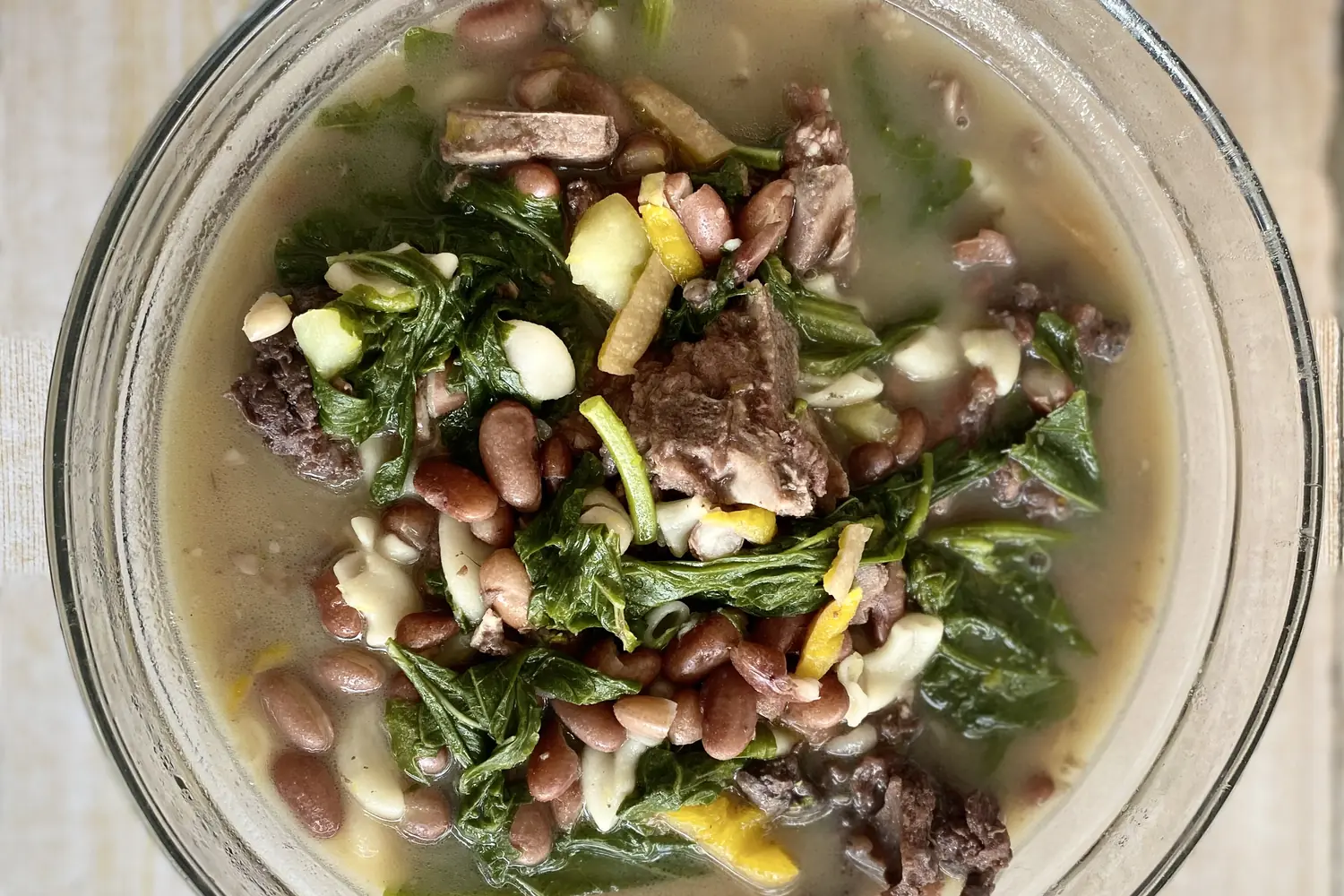
Serve this timorese feijoada hot in deep bowls over steamed rice, with lime wedges and a spoonful of chilli sauce on the side. Unlike the Brazilian and Santomense versions, there is no farofa, no fried plantain and no red palm oil here — the rice, the lime and the vegetables cooked in the pot are the whole accompaniment.

 Timor-Leste
1h 5m

 France

 Vietnam