Curated recipes from 193 countries  •  New seasonal Mediterranean issue out now

Overview

Tukir

Ikan Tukir (fish version)

This tukir recipe packs turmeric-marinated goat into green bamboo tubes and slow-cooks it over a wood fire until the meat is tender, smoky and steeped in ginger, lemongrass and basil. When the bamboo is split open at the table, the meat comes out juicy and fragrant with no sauce at all — the tube does all the work. One serving is about 240 g.

Tukir is a survival of pre-colonial cooking from the mountain regions of Timor-Leste, where hunters and buffalo herders in Viqueque cooked far from home without pots, packing meat into green bamboo and leaning it against a fire. The Embassy of Timor-Leste in Japan describes it as a traditional national dish, made with lamb, goat, buffalo or fish and seasoned with turmeric, ginger, lemongrass, lemon basil and chillies. It is still reserved for special occasions and community gatherings, and fishers in Adarai now cook fish this way too, often with black rice in bamboo alongside.

Pairs well with: Steamed rice and a spoonful of ai-manas chilli sauce, with the bamboo split open at the table.

Provenance

Timor-Leste flag Timor-Leste

Timorese Mountain Heritage

East & South Asia

Time Dedication

3h 25m

55m prep • 150m cook

Batch Yield

4 Servings

384 kcal per serving

1 serving ≈ 240 g

Technical Skill

Advanced

Hard (Wood Fire & Bamboo)

Meal Timing & Digestive Fit

Breakfast

Not Advised

Lunch

Hearty Midday Main

Dinner

Ideal Hearty Main

Snack & Tea

Inappropriate

High Protein Occasions: Feasts, ceremonies, Christmas gatherings, mountain festivals, special family occasions Cost: Low — about $4–5 per serving at home
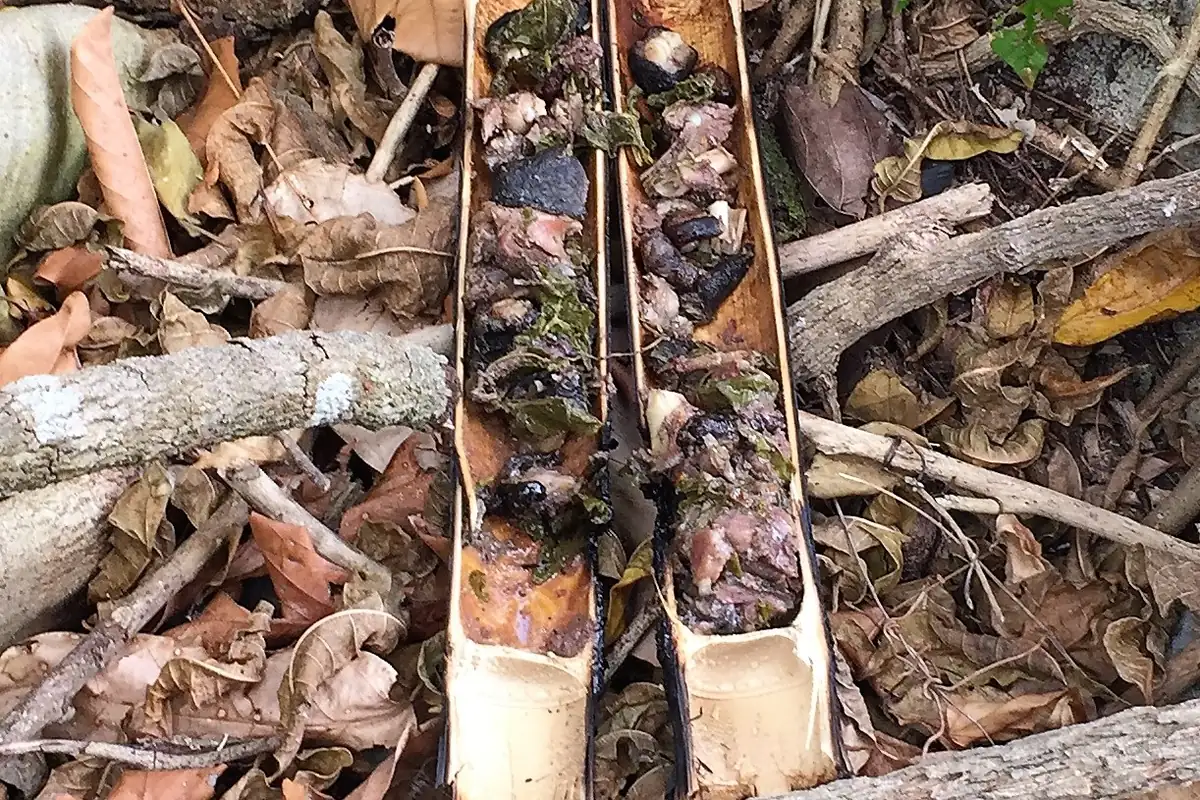
Two split bamboo tubes filled with tukir, cooked goat meat and herbs, resting on dry leaves on the forest floor

Timorese Mountain Heritage

Photo: Josh Trindade, CC BY-SA 4.0, via Wikimedia Commons

The Heritage Formulary

Measured Ingredients

Estimated cost: Low — about $4–5 per serving at home (USD)

Cooked the traditional way: marinated goat packed into green bamboo and slow-cooked over a wood fire, then split open to serve.

Execution Methodology & Culinary Technique

Step-by-Step Cooking Guide

Active 3h 25m
P

Prep Stage: Spice Paste, Marinade & Bamboo

55 Mins • Pounding, Marinating & Packing

Pound the turmeric, ginger, lemongrass, garlic, chillies, shallots and salt with the oil into a coarse paste, then rub it all over the goat chunks with the basil leaves and leave it to marinate for at least 30 minutes. While the meat rests, soften the banana leaves over a flame and line the bamboo tubes, ready for packing.

Maestro Tip: Marinate overnight in the fridge if you can — the long, slow flavour soak is what makes feast-day tukir taste different from a quick version.

  1. 1

    Pound the Spice Paste

    10 Mins Room temperature, ~20°C (68°F)

    Put the turmeric, ginger, lemongrass, garlic, chillies, shallots, salt and oil in a mortar and pound to a coarse, fragrant paste. It should look damp and golden, with the lemongrass broken down into fine shreds rather than long strings.

    Pound the fibrous lemongrass first, before the softer ingredients — it takes the longest to break down.

    Done when: A thick golden paste that smells of ginger, lemon and chilli, with no large pieces left.

  2. 2

    Marinate the Goat

    30 Mins Room temperature, ~20°C (68°F)

    Rub the spice paste over every piece of goat until the meat is coated all over, then fold in the basil leaves. Cover and leave to marinate for at least 30 minutes at room temperature, or overnight in the fridge at 4°C (40°F) for the deepest flavour.

    Work the paste into the meat with your hands — a spoon leaves the chunks half-coated and the flavour patchy.

    Done when: Every chunk stained golden, with basil leaves tucked between the pieces.

  3. 3

    Line and Pack the Bamboo

    15 Mins Room temperature, ~20°C (68°F)

    Line each bamboo tube with a strip of softened banana leaf, then pack the marinated goat in tightly, pressing it down so there are no air pockets. Leave about 5 cm empty at the open end and plug it with a folded piece of banana leaf so the juices stay inside.

    Pack firmly but do not crush the meat — tight packing keeps the steam in, loose packing lets the juices run out.

    Done when: Two tubes packed full to the same level, with the leaf plugs wedged in tight.

  4. 4

    Cook Over the Wood Fire

    150 Mins Medium wood fire, ~200°C (400°F)

    Build a medium wood fire and lean the bamboo tubes against it at an angle, open ends up, so the flames lick the outside without engulfing them. Turn each tube a quarter-turn every 20 minutes so it cooks evenly, and feed the fire steadily for about 2 hours 30 minutes. The bamboo will char and blacken on the outside — that is normal — while the meat steams in its own juices inside.

    Do not let the fire roar: a fierce fire chars the bamboo through before the meat is cooked. Steady, medium heat and regular turning are the whole skill.

    Done when: Bamboo blackened outside, steam hissing from the plug, and the meat inside tender enough to pull apart.

  5. 5

    Split the Bamboo and Serve

    5 Mins No heat — meat checked at 63°C (145°F)

    Lift the tubes off the fire with tongs and let them rest for 3 minutes. Check the thickest piece of meat reaches 63°C (145°F) inside, then split each tube lengthways with a heavy knife or machete and push the meat and its juices out onto a serving platter. Serve at once, while it is steaming.

    Split the bamboo on the platter, not over the fire — the juices that run out are the sauce, and you want every drop.

    Done when: Meat that is golden, juicy and pulls apart easily, with the herbs still bright green among it.

Finishing Touches & Plating

Push the meat out of the split bamboo onto a warm platter, spoon over every drop of the cooking juices, and serve at once with rice while the smoky, herby steam is still rising.

Nutritional Physiology & Benefits

Nutrition

Energy

384

kcal / serving

Protein

53g

Complete AA

Carbs

11g

Complex

Fats

13g

Healthy

Per serving (4 servings · 1 serving ≈ 240 g)
Energy384 kcal
Protein53 g
Carbohydrates11 g
Fat13 g
Fibre2.4 g
Sugar2.0 g
Sodium793 mg
Per 100g
Energy160 kcal
Protein22.2 g
Carbohydrates4.7 g
Fat5.5 g
Fibre1 g
Sugar0.8 g
Sodium330 mg

Nutrition values are estimated — calculated from USDA FoodData Central values for the listed ingredients.

Vitamins & minerals: Goat meat supplies vitamin B12, iron and zinc, while the turmeric, ginger, lemongrass and chillies add vitamin C and small amounts of B vitamins.

Very High in Protein

One serving carries about 53.2 g of protein from the goat meat, which makes tukir a genuinely filling feast dish.

Iron, Zinc & Vitamin B12

Goat meat is a natural source of iron, zinc and vitamin B12, nutrients that support normal energy and blood health as part of a varied diet.

Herbs and Spices, No Added Sugar

The flavour comes from turmeric, ginger, lemongrass, basil and chilli — no added sugar and no sauce — so the dish stays light on carbohydrate.

Food Pairings

What to Eat With

To optimize nutrient absorption and elevate the sensory depth, pair with these authentic accompaniments:

Sides

Steamed Rice

Plain steamed rice soaks up the golden juices that run out of the bamboo and balances the chilli heat.

Black Rice Cooked in Bamboo

In Adarai, black rice is cooked in bamboo alongside the tukir, so the two share the same smoky flavour and arrive at the table together.

Vegetables

Cucumber and Tomato Salad

Cool, crisp cucumber and tomato cut through the rich goat meat and the warmth of the chillies.

Sauces

Ai-Manas Chilli Sauce

Timor's hot ai-manas sauce is the traditional extra kick for anyone who wants more heat than the bamboo already gives.

Drinks

Timorese Coffee

Strong, dark Timorese coffee is the usual drink at a feast, and its bitterness stands up well to the rich, smoky meat.

Complete menu

Split the tukir open at the table and serve with steamed rice or black rice cooked in bamboo, cucumber and tomato salad, and ai-manas chilli sauce on the side; finish with strong Timorese coffee.

Digestive Guardrails

What NOT to Combine

To prevent digestive distress, sluggishness, or palate clash, avoid pairing the dish with these elements:

Eating the Bamboo or Banana Leaf

The bamboo tube and the banana leaf are cooking vessels, not food — eat only the meat and herbs pushed out of the tube. This is general food information, not medical advice.

Very Salty Side Dishes

One serving already carries about 793 mg of sodium, so salty cured meats, salty sauces or salty snacks in the same meal push the salt too far. This is general food information, not medical advice.

General information only, not medical advice — consult a doctor for personal dietary decisions.

Who Should Eat It

Who Should Eat

  • General adultsA hearty feast dish — about 53.2 g protein and 384 kcal per serving, best eaten hot and shared at the table.
  • ChildrenThe chilli heat can be too much for small children — serve them a milder portion with the chillies left out of their tube, and plenty of rice.
  • ElderlyThe meat is tender after its long steam, so it is easy to chew; a modest portion with rice and salad is the comfortable choice.
  • Pregnant womenFine as an occasional feast dish when the meat is cooked right through to 63°C (145°F) and rested; keep the chilli moderate. Ask your clinician about portions.
  • Breastfeeding womenA protein-rich, energy-dense meal that suits a hungry appetite, but one serving is enough because the dish is filling. Ask your clinician about portions.
  • AthletesExcellent recovery food, with about 53.2 g protein per serving — pair it with rice for the carbohydrate to go with it.
  • Weight gainEnergy-dense and easy to eat in a good amount, so it suits weight gain when served with rice and its usual accompaniments.
  • Weight lossFilling and high in protein at about 384 kcal per serving; keep to one serving with salad instead of a second helping of rice.

Health Conditions — Adjust or Avoid

Conditions

  • DiabetesThe dish itself is low in carbohydrate, so the rice portion is what matters — keep it to the amount stated and skip second helpings. Ask your clinician about portions.
  • High blood pressureOne serving carries about 793 mg of sodium, so keep other salty foods out of the same meal and do not add extra salt at the table. Ask your clinician about portions.
  • Kidney diseasePortions should stay modest, and the salt and protein content matter for some kidney diets. Ask your clinician about portions.
  • GoutMeat is the main purine source here, so keep to one modest serving and drink water with the meal. Ask your clinician about portions.
  • Stomach issuesChilli and ginger can be rough on a sensitive stomach; eat slowly, take a smaller portion, and skip the ai-manas sauce if it bothers you. Ask your clinician about portions.
  • Cardiovascular diseaseThe dish is lean for a meat feast, but one modest serving with a big plate of salad is a better balance than a second helping. Ask your clinician about portions.
  • Fatty liverThe dish is energy-dense, so keep portions modest and avoid eating it late at night. Ask your clinician about portions.
  • Food allergiesContains no common allergens as written, but check the ai-manas sauce and any bought spice paste for hidden ingredients. People with a known allergy to any ingredient should not eat it. Ask your clinician about safe alternatives.
  • Special therapeutic dietsNot suitable for a low-sodium therapeutic diet as written; any lighter version changes the dish and should be discussed with a clinician.

If you have a medical condition, consult your doctor before changing your diet.

Storage & Use

Storage & Use

How to store
Take the meat out of the bamboo and cool it quickly, then store in a covered container; never store it inside the bamboo tube.
In the fridge
The cooked meat keeps 3 days in the fridge at 4°C (40°F) or below.
In the freezer
Up to 2 months in a sealed container, with the cooking juices poured over the meat.
How to reheat
Reheat gently in a covered pan with a splash of water until steaming hot, to 74°C (165°F); do not boil or the meat dries out.
Freezing recommended
Yes — removed from the bamboo, with its juices.
Signs it has spoiled
Sour or off smell, slimy surface, or grey discolouration.

More recipes to explore

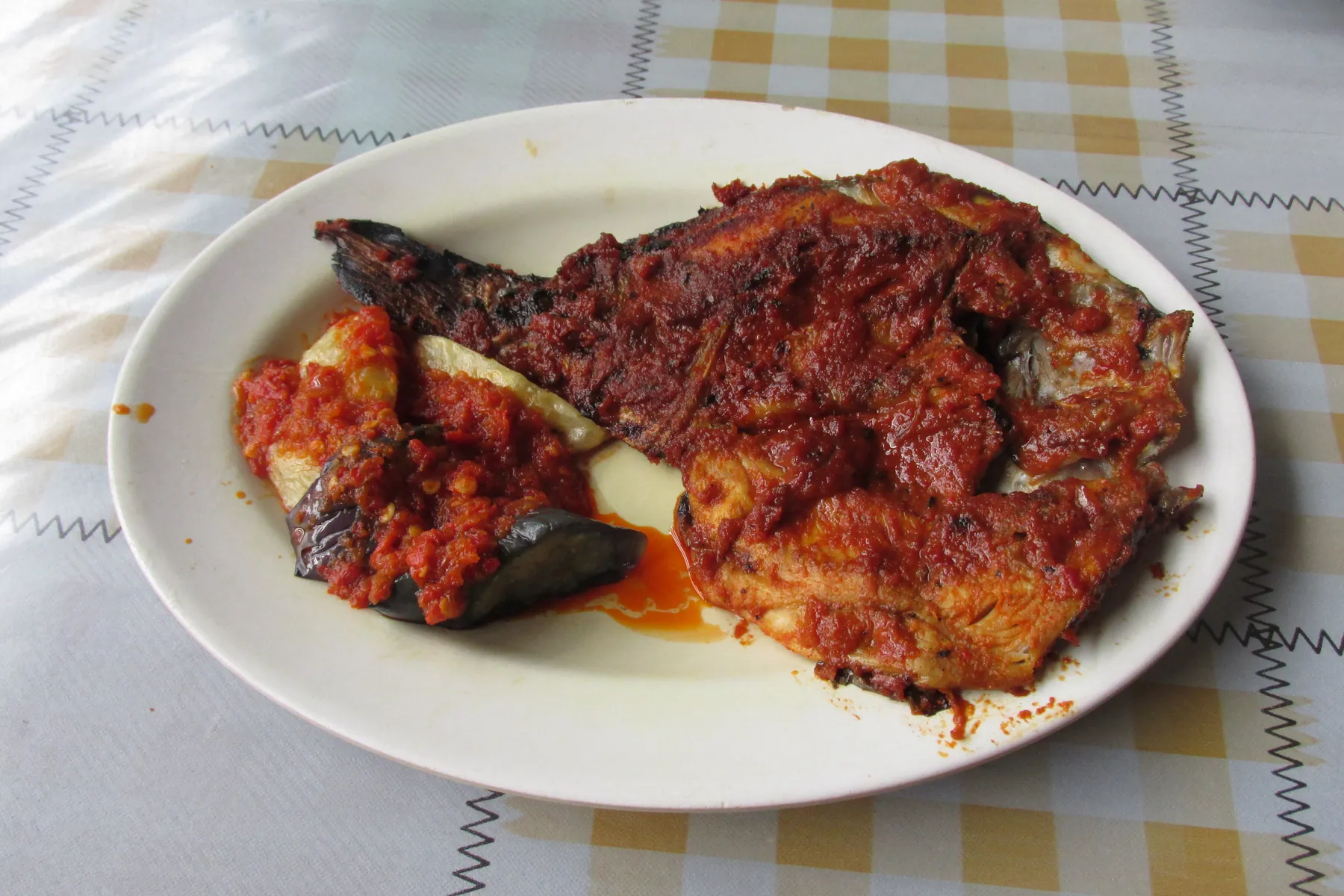
Grilled fish coated in red chilli paste, served on a white plate with eggplant in chilli sauce Timor-Leste flag Timor-Leste 1h 5m
Dinner •Coastal Timor-Leste Favourite

Ikan Sabuko

This ikan sabuko recipe is Timor-Leste's coastal favourite: Spanish mackerel fillets marinated in sour tamarind and calamansi, rubbed with a pounded paste of shallot, garlic, ginger and chilli, then wrapped with basil in foil parcels and grilled until the fish steams in its own fragrant juices. A spoonful of budu, the fermented anchovy dipping sauce, ties the sour, salty and hot flavours together. One serving is about 250 g.

Grilled Mackerel, Tamarind and Chilli

Spanish mackerel fillets marinated in tamarind and calamansi, rubbed with chilli, garlic and ginger, wrapped with basil and grilled in foil parcels.

Pairs Well With
Steamed rice, budu dipping sauce and cucumber
High Protein
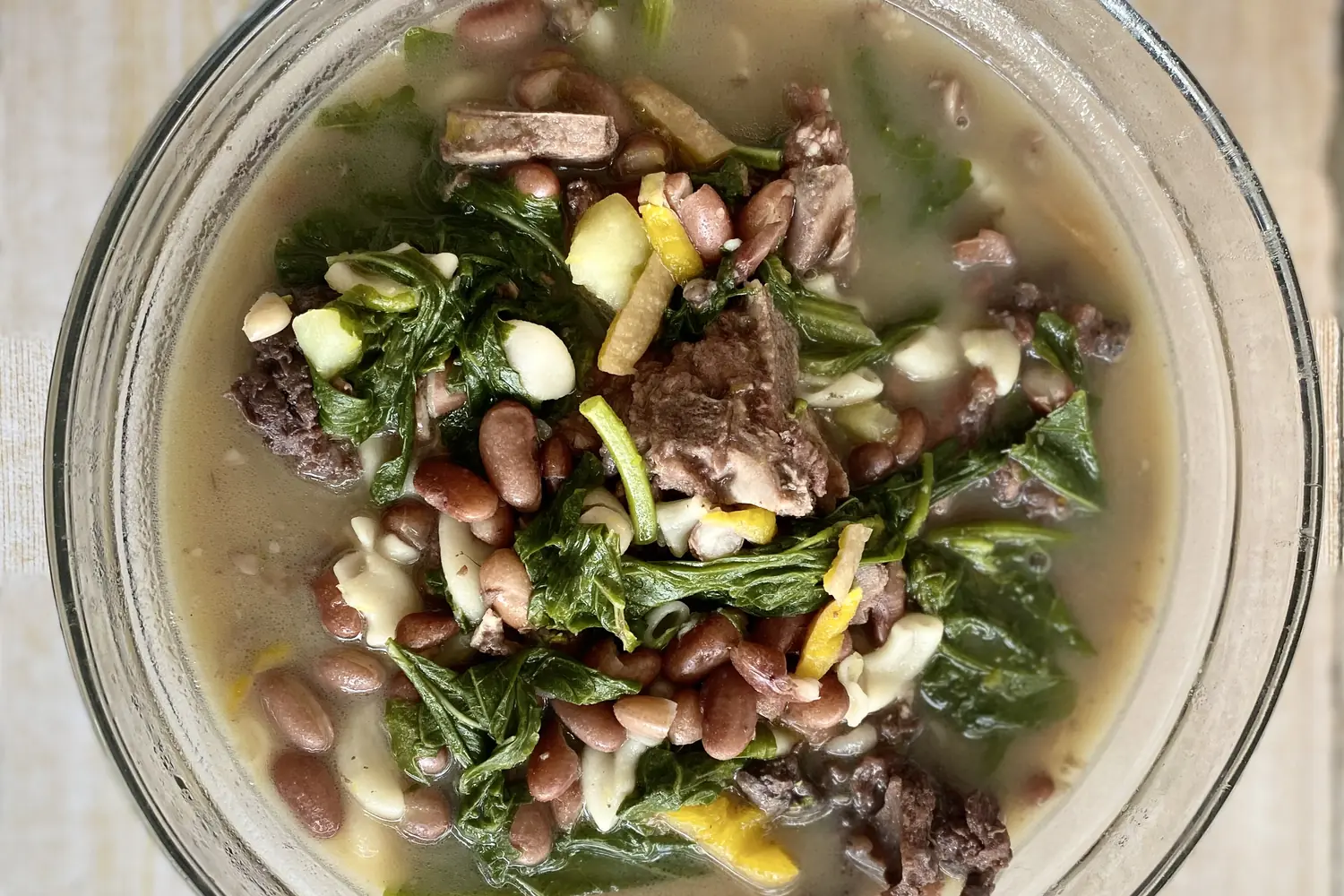
A glass bowl of Timorese feijoada seen from above, with red kidney beans, white cannellini beans, chunks of pork and wilted green leaves in a light broth Timor-Leste flag Timor-Leste 2h 5m
Dinner •Timorese Heritage

Timorese Feijoada

This timorese feijoada recipe is Timor-Leste's version of the Portuguese bean stew: red kidney beans and white cannellini beans — never black beans — slow-cooked with pork shoulder, beef and chouriço, then simmered with cabbage, carrots, sweet potato and potato until everything is tender. Fresh ginger, bird's eye chilli, cumin and a spoonful of soy sauce with lime give it a warm Southeast Asian lift that sets it apart from the dark, smoky black-bean feijoadas of Brazil and São Tomé. One serving is about 550 g.

Hearty & Slow-Cooked

Red kidney and cannellini beans simmered with pork, beef and chouriço, then finished with cabbage, sweet potato, ginger, chilli, soy sauce and lime — a lighter, vegetable-rich stew that is Timor-Leste's own take on the Portuguese bean pot.

Pairs Well With
Steamed rice, lime wedges and a spoonful of chilli sauce
High Protein
Bœuf bourguignon — French beef braised in red wine France flag France 4h
Dinner •Burgundy Terroir

Bœuf Bourguignon

Beef braised gently in red wine until the connective tissue melts into a velvet, gelatin-rich sauce — the classic Burgundy Sunday dinner.

Cellular Repair

Beef braised in red wine until spoon-tender, with mushrooms and pearl onions.

Pairs Well With
Parsnip Purée & Steamed French Haricots Verts
High Protein
Vietnamese braised pork belly with golden eggs in caramel sauce Vietnam flag Vietnam 1h 45m
Dinner •One Pot

Vietnamese Braised Pork and Eggs

Pork belly slowly braised in coconut water and caramel until meltingly tender, with golden eggs that soak up the sweet-savoury sauce — the Vietnamese family dish that tastes better the next day.

Comfort & Sustained Energy

Slow-braised pork belly and eggs in coconut water and caramel.

Pairs Well With
Steamed rice & pickled mustard greens
High Protein

The Dinner Gazette

Never wonder what’s for dinner again

One email a week with easy dinner ideas from around the world — ingredients, steps and nutrition, tested in our kitchen first.

Delivered every Thursday morning. Unsubscribe anytime.