Curated recipes from 193 countries  •  New seasonal Mediterranean issue out now

Overview

Trinidad Pastelles

Trini Pastelles, Cornmeal Pastelles, Trinidad Christmas Pastelles

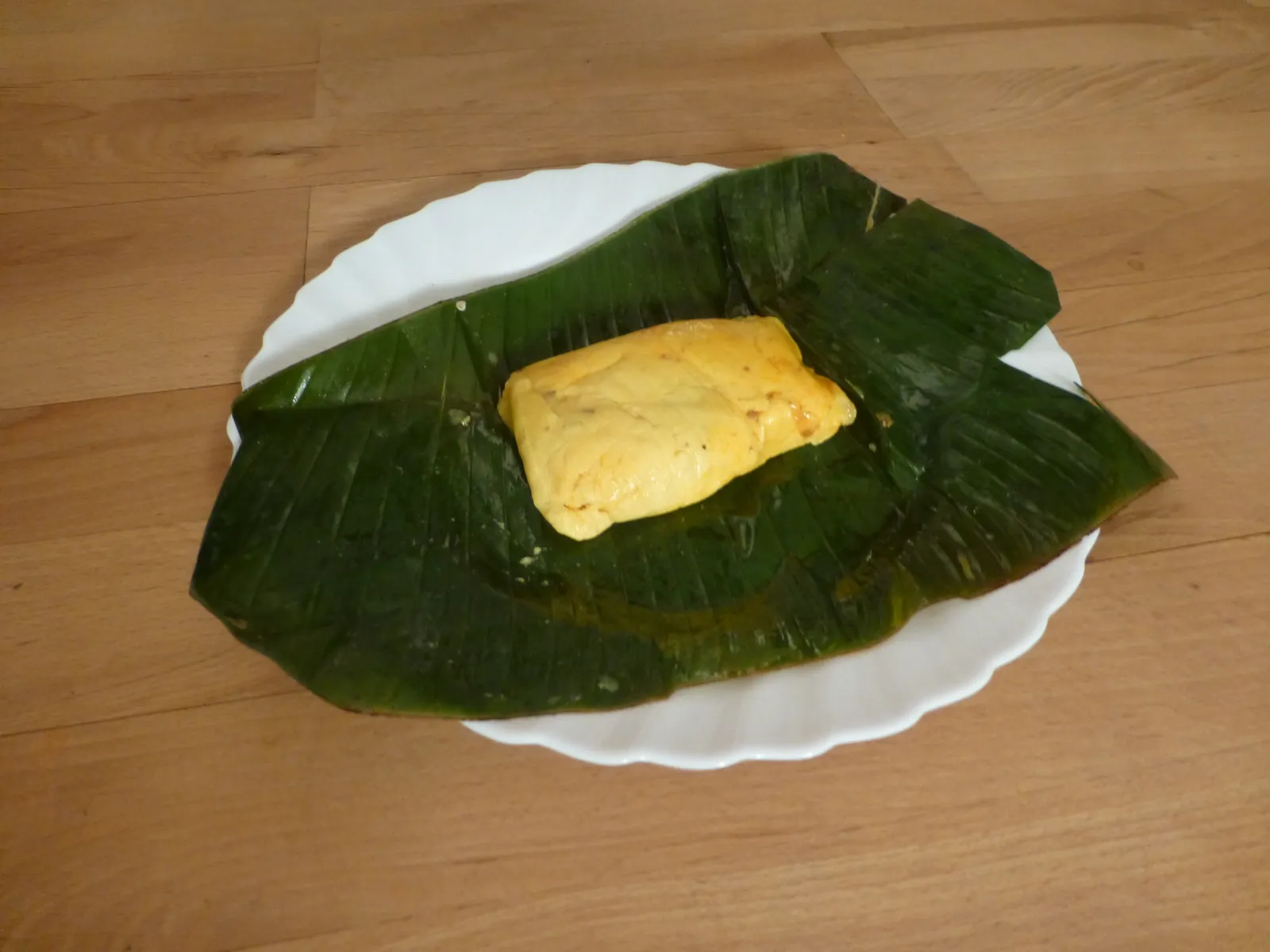
This trinidad pastelles recipe makes 12 golden parcels: a soft dough of fine yellow cornmeal, butter and warm water, spread on banana leaves and folded around seasoned minced beef with green olives, raisins and capers, then tied up and boiled until firm. Unlike a tamale's raw masa beaten with lard, or a Venezuelan hallaca's annatto-coloured dough and three-meat guiso, a pastelle uses plain yellow cornmeal dough and a single seasoned beef filling with Trinidad green seasoning and chadon beni. One serving is two pastelles, about 275 g, and they are unwrapped at the table so the banana-leaf steam escapes in front of everyone.

Pastelles came to Trinidad with Venezuelan immigrants, who brought their Christmas hallacas across the Gulf of Paria — but Trinidad made the dish its own. The Venezuelan hallaca uses annatto-coloured dough and a three-meat guiso with wine and panela; the Trinidad pastelle uses plain yellow cornmeal dough and a single filling of seasoned minced beef, flavoured with the island's green seasoning and chadon beni, with olives, raisins and capers stirred in. Making pastelles is a family Christmas event in Trinidad: relatives gather to mix the dough, cook the filling and wrap parcel after parcel in banana leaves, and the pastelles are served with baked ham, sorrel drink and sweet bread.

Pairs well with: Christmas baked ham and a glass of sorrel drink, with a crisp green salad on the side.

Provenance

Trinidad and Tobago flag Trinidad and Tobago

Trinidad's Christmas Classic

Latin America & Caribbean

Time Dedication

1h 55m

60m prep • 55m cook

Batch Yield

6 Servings

552 kcal per serving

1 serving ≈ 275 g

Technical Skill

Intermediate

Medium (Wrap & Boil)

Meal Timing & Digestive Fit

Breakfast

Not Advised

Lunch

Hearty Midday Main

Dinner

Ideal Hearty Main

Snack & Tea

Inappropriate

Occasions: Christmas dinner, holiday family gatherings, Christmas Eve cooking day, festive potlucks Cost: Low — about $3–4 per serving at home
A Trinidad pastelle unwrapped on its banana leaf — a golden cornmeal parcel on a white plate

Trinidad's Christmas Classic

Photo: Grueslayer, CC BY-SA 4.0, via Wikimedia Commons

The Heritage Formulary

Measured Ingredients

Estimated cost: Low — about $3–4 per serving at home (USD)

Made the Trinidad way: plain yellow cornmeal dough, a single seasoned minced-beef filling with olives, raisins and capers, wrapped in banana leaves and boiled.

Execution Methodology & Culinary Technique

Step-by-Step Cooking Guide

Active 1h 55m
P

Prep Stage: Leaves, Green Seasoning & Dough

60 Mins • Wrapping & Mixing

Cut the banana leaves into rectangles and strip out the thick centre rib, then pass each piece briefly over a low flame or dip it in boiling water until it turns glossy and bends without cracking. Chop the onion, garlic, chadon beni, scallions and thyme for the filling. Mix the cornmeal with the softened butter, sugar and 2 g of the salt, then add the warm water a little at a time until a soft, smooth dough forms that holds its shape when pressed.

Maestro Tip: If a leaf splits when you fold it, it was not softened enough — pass it over the flame again for a few seconds. The dough should feel like soft playdough, not sticky and not crumbly.

  1. 1

    Prepare the Banana Leaves

    15 Mins No heat — pass over a low flame

    Rinse the banana leaves and wipe them dry. Cut them into 12 rectangles about 25 x 30 cm and strip out the thick centre rib from each. Pass each piece briefly over a low gas flame, or dip it in a pot of boiling water for 10 seconds, until the leaf turns glossy dark green and bends easily without splitting. Cut 12 smaller squares of leaf or foil to cover the parcels, and cut kitchen twine into 12 lengths.

    Work over a low flame and keep the leaf moving — a few seconds is enough, and a scorched leaf will tear when you fold it.

    Done when: Leaves are glossy, dark green and fold without cracking.

  2. 2

    Cook the Beef Filling

    25 Mins Medium heat, ~175°C (350°F)

    Heat the oil in a wide pan and fry the onion for 3 minutes until soft. Add the garlic, chadon beni, scallions and thyme and cook for 1 minute. Add the ground beef and cook, breaking it up with a spoon, for about 10 minutes until it is browned all through and no pink remains — ground beef must reach 71°C (160°F). Stir in the tomato paste, Worcestershire sauce, soy sauce, paprika, cumin, pepper and 4 g of the salt, then the chopped olives, raisins and capers. Cook for 5 minutes more until the filling is moist but not wet, then take it off the heat and cool for 10 minutes.

    Cook the filling until it is almost dry — a wet filling leaks through the cornmeal dough and makes the pastelle fall apart when you boil it.

    Done when: Browned, crumbly beef, moist but not wet, with olives, raisins and capers visible through it.

  3. 3

    Make the Cornmeal Dough

    10 Mins Warm water, ~60°C (140°F)

    Put the fine yellow cornmeal in a large bowl with the softened butter, sugar and the remaining 2 g of salt. Pour in the warm water a little at a time, mixing with your hands, until a soft, smooth dough forms — about 500 ml in total. Knead for 2 minutes until it holds together, then divide it into 12 equal balls and cover them with a damp cloth so they do not dry out.

    Add the water slowly: too much and the dough turns to porridge, too little and it cracks when you press it flat. It should feel like soft playdough.

    Done when: A smooth, pliable dough that flattens without cracking at the edges.

  4. 4

    Fill & Wrap the Pastelles

    20 Mins No heat

    Oil your hands lightly. Lay a banana-leaf rectangle shiny side up, put one ball of dough in the centre, cover it with a small square of leaf or cling film, and press it flat into a rectangle about 15 x 10 cm and 5 mm thick. Spoon about 2 heaped tablespoons of the cooled beef filling down the centre of the dough. Fold the leaf over so the dough folds over the filling, then fold the two ends in and roll the parcel into a neat rectangle. Place a small leaf square over the seam, fold the leaf ends under, and tie the parcel firmly with twine. Repeat for all 12.

    Press the dough thinner at the edges than in the middle — the edges seal better, and the pastelle cooks evenly.

    Done when: Neat, firm rectangular parcels, tied snugly, with no filling poking out.

  5. 5

    Boil the Pastelles

    30 Mins Boiling water, 100°C (212°F)

    Bring a large pot of salted water to a rolling boil. Lower the pastelles in gently, a few at a time, and boil for 25 to 30 minutes until the cornmeal dough is firm and set. Lift them out with tongs and let them drain for 2 minutes.

    Do not crowd the pot — the parcels need room so the water stays at a boil and they cook evenly. If the water drops below a boil, add 5 minutes.

    Done when: The parcels feel firm when squeezed gently, and the dough holds its shape when unwrapped.

  6. 6

    Rest & Serve at the Table

    10 Mins No heat

    Set the pastelles on a platter and rest them for 10 minutes so the dough firms up and the filling settles. Put two pastelles on each plate, still wrapped, and let each person untie and unwrap their own at the table, so the banana-leaf steam escapes in front of them. Serve with Christmas ham, sorrel drink and a green salad.

    Unwrap over the plate — a little seasoned juice escapes with the leaf, and it is the best part.

    Done when: Warm, firm parcels that unwrap cleanly from the leaf.

Finishing Touches & Plating

Rest the boiled pastelles for 10 minutes, then serve two per person still wrapped in their banana leaves, with Christmas ham, sorrel and a green salad — each person unties their own at the table.

Nutritional Physiology & Benefits

Nutrition

Energy

552

kcal / serving

Protein

23g

Complete AA

Carbs

67g

Complex

Fats

21g

Healthy

Per serving (6 servings · 1 serving ≈ 275 g)
Energy552 kcal
Protein23 g
Carbohydrates67 g
Fat21 g
Fibre4.7 g
Sugar8.4 g
Sodium885 mg
Per 100g
Energy201 kcal
Protein8.4 g
Carbohydrates24.4 g
Fat7.8 g
Fibre1.7 g
Sugar3 g
Sodium322 mg

Nutrition values are estimated — calculated from USDA FoodData Central values for the listed ingredients.

Vitamins & minerals: The beef supplies iron, zinc and vitamin B12, the cornmeal adds B vitamins, and the onion, chadon beni and tomato paste add vitamin C and potassium. All nutrition values are estimated.

Protein from the Beef

Two pastelles carry about 23.1 g of protein from the seasoned beef, which makes this a proper main course rather than a snack.

Iron & Vitamin B12

The beef filling supplies iron and vitamin B12, and the cornmeal adds B vitamins — useful nutrients in a festive meal.

Fibre from Cornmeal & Raisins

The cornmeal dough and the raisins give each serving about 4.7 g of fibre, which helps a rich Christmas plate feel balanced.

Food Pairings

What to Eat With

To optimize nutrient absorption and elevate the sensory depth, pair with these authentic accompaniments:

Full Menus

Christmas Baked Ham

Pastelles are the centre of the Trinidad Christmas plate, and slices of baked ham next to them are the classic pairing — salty, sweet ham against the savoury cornmeal parcel.

Drinks

Sorrel Drink

The tart, spiced sorrel drink served at Christmas cuts through the rich beef and buttery cornmeal and refreshes the palate between bites.

Vegetables

Crisp Green Salad

A simple salad of lettuce, cucumber and tomato adds crunch and lightness next to the soft, steamed parcels.

Sauces

Pepper Sauce at the Table

A few drops of hot pepper sauce wake up the green seasoning in the filling without changing the pastelle itself — pass it round and let each person decide.

Complete menu

Serve two pastelles per person with slices of Christmas baked ham, a crisp green salad and a glass of sorrel drink, and finish with a slice of Trinidad sweet bread.

Digestive Guardrails

What NOT to Combine

To prevent digestive distress, sluggishness, or palate clash, avoid pairing the dish with these elements:

Very Salty Sides

The olives, capers and salt already make two pastelles carry about 885 mg of sodium, so salty cured meats, salty cheese or extra soy sauce in the same meal can push one plate too far. This is general food information, not medical advice — ask a clinician about your own sodium limits.

Heavy Fried Food on Top

Two pastelles are already rich and filling at about 552 calories, so piling large portions of fried food on the same plate makes the meal very heavy and hard to digest. A light salad balances the plate better. This is general food information, not medical advice.

General information only, not medical advice — consult a doctor for personal dietary decisions.

Who Should Eat It

Who Should Eat

  • General adultsA satisfying Christmas main — about 23.1 g protein and 4.7 g fibre per serving of two pastelles, best eaten hot and unwrapped at the table.
  • ChildrenSuitable from about age 3 in small portions — half a pastelle, unwrapped, with the filling cut up and cooled. Skip the pepper sauce and pick out the olives and capers for young children.
  • ElderlySoft and easy to eat once unwrapped, but the dish is rich and salty — one pastelle at a time, with salad, is the comfortable choice.
  • Pregnant womenSafe when the beef is cooked right through to 71°C (160°F) and the pastelles are served piping hot. The salt means one pastelle is wiser than two; ask your clinician if you have pregnancy-related blood pressure concerns.
  • Breastfeeding womenA nourishing, energy-dense meal that fits well during breastfeeding. Drink water alongside it and keep to one or two pastelles because of the salt and fat.
  • AthletesGood fuel for recovery, with about 23.1 g protein and 67.0 g carbohydrate per serving — pair it with salad rather than extra fried sides.
  • Weight gainEnergy-dense and easy to eat in a good amount, so it suits weight gain when served with its usual Christmas accompaniments.
  • Weight lossRich at about 552 calories for two pastelles. Take one pastelle instead of two, load the plate with salad, and skip the ham and fried sides if you are counting calories.

Health Conditions — Adjust or Avoid

Conditions

  • DiabetesThe cornmeal dough and raisins add about 67.0 g of carbohydrates per serving, so portion size matters and blood sugar should be monitored. One pastelle instead of two, with extra salad, helps; ask your clinician or dietitian for a portion that fits your plan.
  • High blood pressureAt about 885 mg of sodium per serving, this is a salty dish — the olives, capers and added salt all add up. Rinse the olives and capers, go easy on the salt, and keep to one pastelle if you watch sodium. Ask your clinician about your sodium limit.
  • Kidney diseasePortions should stay modest, and the salt and protein content matter for some kidney diets. Ask your clinician about portions.
  • GoutBeef is the main purine source here, so keep to one modest serving and drink water with the meal. Ask your clinician about portions.
  • Stomach issuesA rich, fatty dish can be heavy on a sensitive stomach; eat slowly, take a smaller portion, and skip the pepper sauce if it bothers you. Ask your clinician about portions.
  • Cardiovascular diseaseThe dish is rich in fat, so one modest serving with a big plate of salad is a better balance than a second helping. Ask your clinician about portions.
  • Fatty liverThe dish is energy-dense, so keep portions modest and avoid eating it late at night. Ask your clinician about portions.
  • Food allergiesContains beef, milk (butter) and sulphites (raisins, Worcestershire sauce); banana leaves are not eaten. People with beef, milk or sulphite sensitivity should not eat it unless a safe substitute is used. Ask your clinician about safe alternatives.
  • Special therapeutic dietsNot suitable for a low-salt or low-fat therapeutic diet as written; any lighter version changes the dish and should be discussed with a clinician.

If you have a medical condition, consult your doctor before changing your diet.

Storage & Use

Storage & Use

How to store
Cool the pastelles quickly, still wrapped in their leaves, and store in a covered container.
In the fridge
Cooked pastelles keep 3 days in the fridge at 4°C (40°F) or below.
In the freezer
Up to 3 months, wrapped in their leaves and sealed in a freezer bag.
How to reheat
Steam or boil for 10 minutes until steaming hot throughout, to 74°C (165°F); do not microwave unwrapped or the dough dries out.
Freezing recommended
Yes — pastelles freeze very well and are traditionally made in big batches for Christmas.
Signs it has spoiled
Sour smell, slimy leaf, or mould on the dough.

More recipes to explore

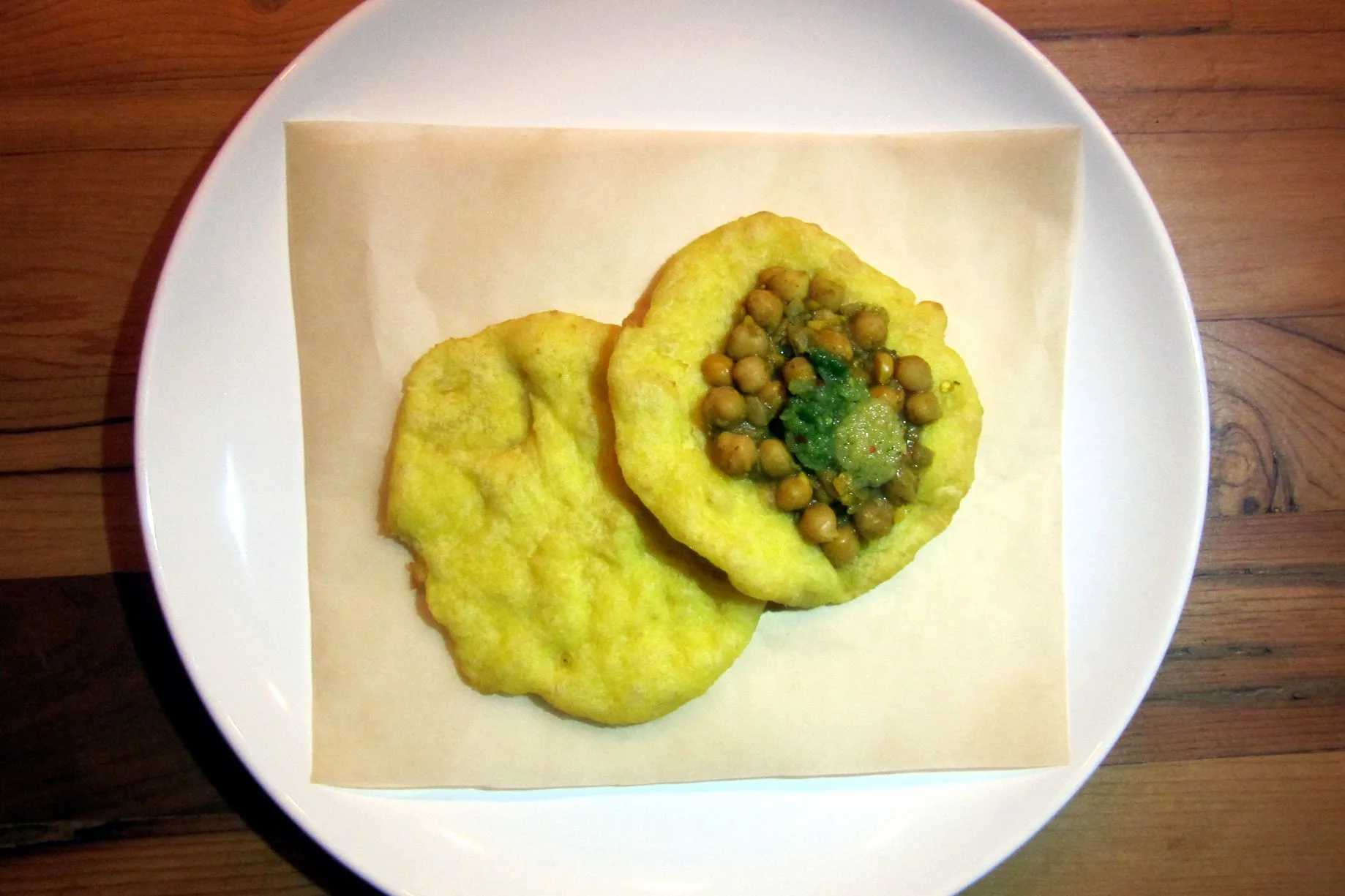
Two golden fried bara flatbreads on a white plate, one topped with curried chickpeas and green chutney Trinidad and Tobago flag Trinidad and Tobago 1h 35m
Breakfast •Princes Town Heritage

Doubles

This doubles recipe makes the Trinidad street-food classic at home: soft, golden bara flatbreads fried until puffed, filled with warm curried chickpeas (channa), then finished with tamarind chutney, cucumber and hot pepper sauce. The name comes from the two baras in every serving, and the contrast is the whole point — crisp, turmeric-yellow bread against soft, spicy chickpeas and sharp, sweet chutney. One serving is about 385 g (2 doubles).

Street Food & Breakfast

Two golden fried bara flatbreads filled with warm curried chickpeas and bright chutneys, the breakfast Trinidad lines up for at roadside stalls.

Pairs Well With
Tamarind chutney, cucumber chutney & a cold sorrel drink
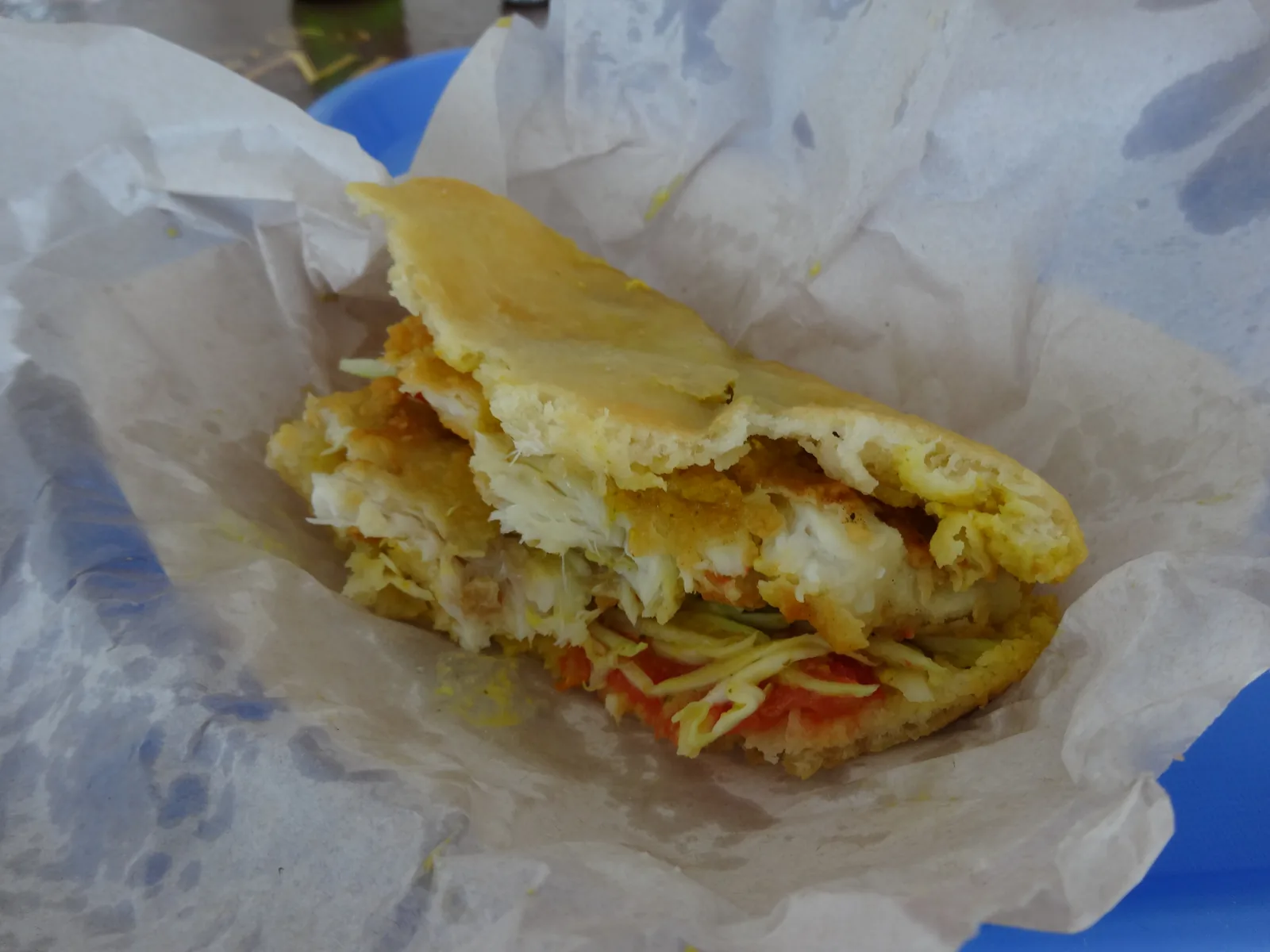
A golden fried bake split open and filled with fried shark, shredded cabbage and tomato at Maracas Bay, Trinidad Trinidad and Tobago flag Trinidad and Tobago 1h
Lunch •Maracas Beach Street Food

Bake and Shark

Bake and shark is Trinidad and Tobago's most famous beach sandwich: a puffy fried bake split open and filled with crisp, green-seasoned fried shark, shredded cabbage, lettuce, tomato, cucumber and pineapple, finished with garlic sauce, tamarind sauce and pepper sauce. One serving is about 400 g.

Comfort & Satisfaction

Golden fried bake stuffed with seasoned fried shark, fresh salad and tangy sauces.

Pairs Well With
Coleslaw, pineapple chunks and an ice-cold Carib beer or fresh coconut water
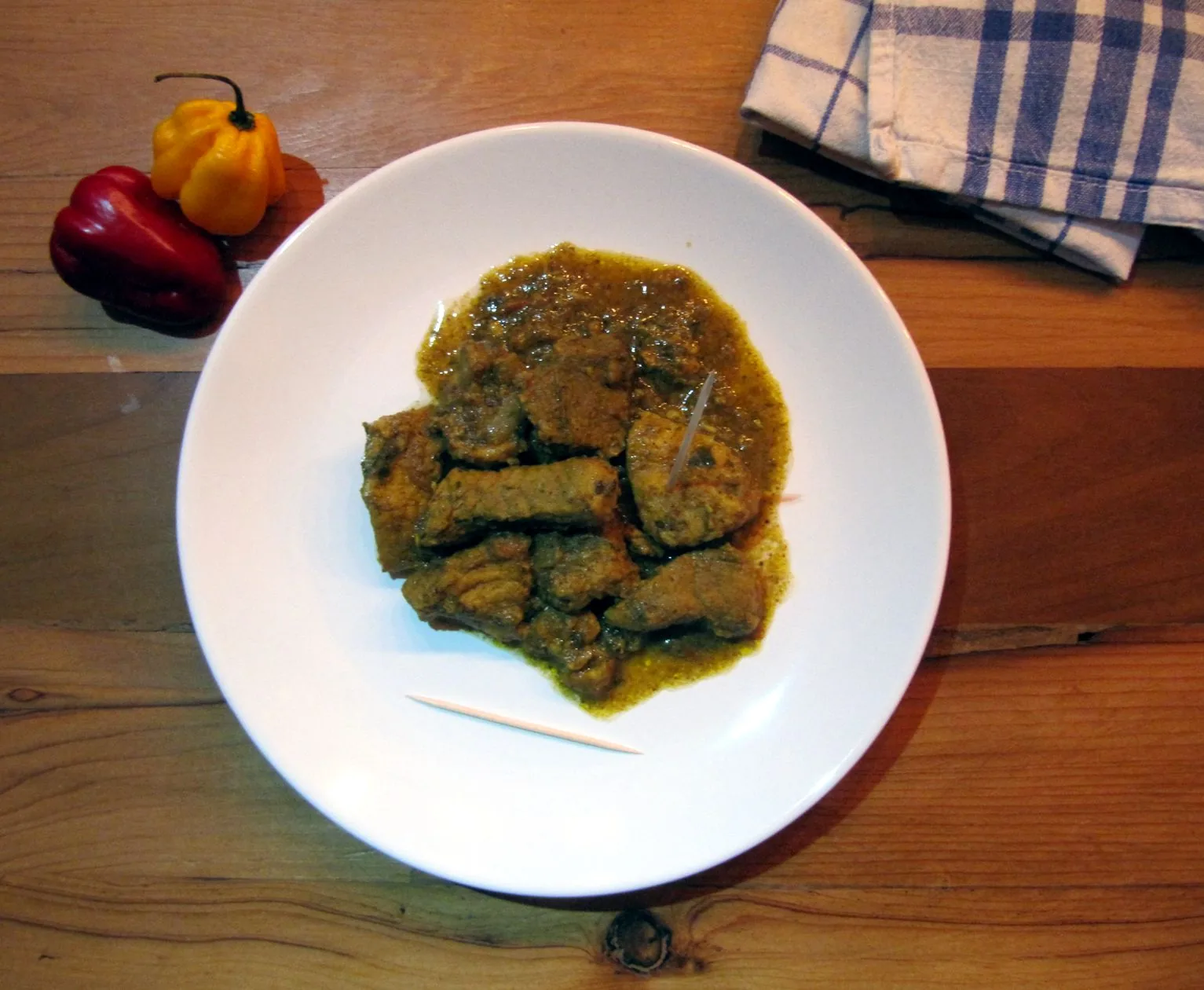
A white plate of browned cumin-coated geera pork pieces with a toothpick, with red and yellow Scotch bonnet peppers beside the plate on a wooden table Trinidad and Tobago flag Trinidad and Tobago 2h 25m
Dinner •Trinidad Heritage

Trinidad Geera Pork

This trinidad geera pork recipe turns boneless pork shoulder into Trinidad's favourite bar snack and weeknight main: small cubes washed in lime juice, rubbed with green seasoning, garlic and hot pepper, then simmered in their own juices and finished with a heavy dusting of roasted ground cumin. Geera is the Trinidadian name for cumin, from the Hindi jeera, and it is the whole point of the dish — warm, earthy and slightly smoky, it clings to every piece of pork. Unlike a wet curry, there is no sauce to spoon; the pork comes out dark, dry-ish and intensely spiced, made to be picked up with a toothpick or piled beside rice. One serving is about 255 g.

Bold & Spicy Comfort

Tender pork cubes coated in roasted cumin and green seasoning, simmered until the juices turn into a dark, fragrant glaze.

Pairs Well With
Steamed rice, dhal & a cold sorrel drink
High Protein
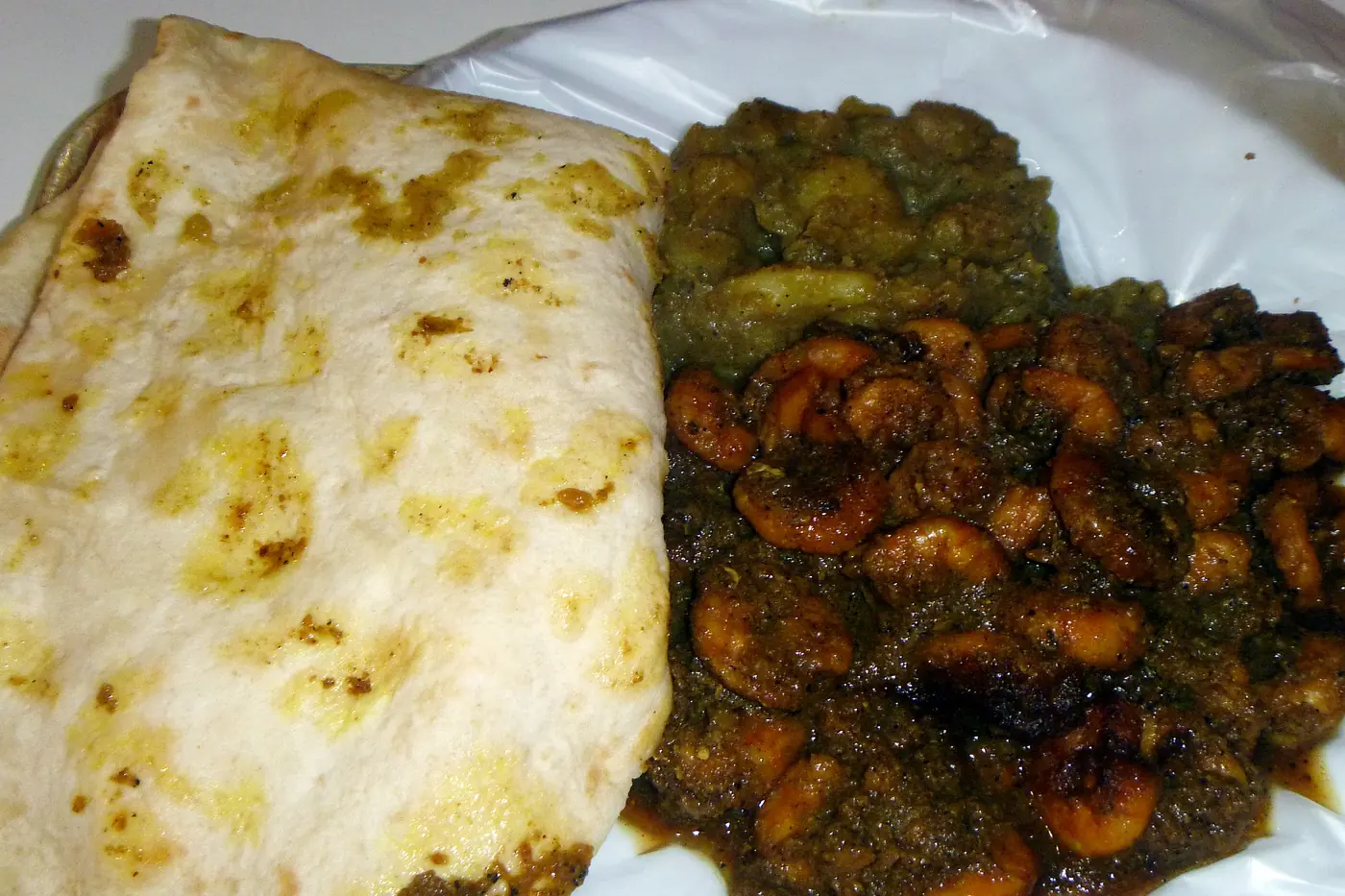
A folded Trinidad dhalpuri roti beside curry channa and potato and curry shrimp on a plate Trinidad and Tobago flag Trinidad and Tobago 1h 30m
Lunch •Trinidadian Heritage

Trinidad Dhalpuri Roti

This trinidad dhalpuri roti recipe makes four soft, golden flatbreads, each one stuffed with a savoury filling of ground yellow split peas seasoned with garlic, geera (cumin) and hot pepper. The filling is sealed inside the dough, the roti is rolled thin and cooked on a hot griddle until it puffs and freckles, then it is folded around curry and eaten warm. One serving is about 250 g.

Filling & Comforting

A soft flour roti stuffed with seasoned ground yellow split peas, rolled thin and griddle-cooked until golden.

Pairs Well With
Warm dhalpuri roti wrapped around curry channa and aloo, with pumpkin talkari and pepper sauce

The Dinner Gazette

Never wonder what’s for dinner again

One email a week with easy dinner ideas from around the world — ingredients, steps and nutrition, tested in our kitchen first.

Delivered every Thursday morning. Unsubscribe anytime.