-
1
Make and Rest the Noodle Dough
10 Mins + 20 Mins Rest • Kneading
Room temperature, about 20°C (68°F)
Sift the flour into a wide bowl, make a well in the middle and pour in the cold water a little at a time, mixing with your hands until a firm, slightly stiff dough forms. Knead on a lightly floured board for 8–10 minutes until smooth and elastic, then cover with a damp cloth or cling film and rest for 20 minutes. The rest relaxes the dough so it rolls out thin without springing back.
The dough should feel firm like a dumpling dough, not soft like bread dough — if it is sticky, add flour a tablespoon at a time.
Done when: Smooth, firm dough that holds its shape when pressed and rolls without tearing.
-
2
Roll, Oil, Stack and Cut the Noodles
15 Mins • Rolling & Cutting
Room temperature, about 20°C (68°F)
Divide the rested dough into 2 pieces and roll each into a round sheet about 2 mm (1/16 inch) thick. Brush the surface of one sheet lightly with oil, fold it over on itself a few times to spread the oil, then lay the second oiled sheet on top. Cut the stacked sheets in half, stack the halves, and keep halving until you have a neat stack about 7 cm by 25 cm (3 by 10 inches). Cut across the stack into strips about 4 mm (1/6 inch) wide, keeping the little stacks together — the oil between the layers is what stops the noodles sticking to each other in the pot.
Do not separate the cut strips yet. They go into the pot as little stacks and are pulled apart only after steaming.
Done when: Short, even flat strips in little oiled stacks, about 4 mm wide.
-
3
Stir-Fry the Beef and Vegetables
12 Mins • Frying
Medium-high heat, about 190°C (375°F); beef cooked through to at least 71°C (160°F)
Heat 30ml of the oil in a large, heavy pot with a tight-fitting lid over medium-high heat. Fry half the onion rings for 2 minutes until they soften, then add the carrot and fry for 3 minutes more. Add the beef and fry, stirring, for 4–5 minutes until browned on all sides, then stir in the garlic, soy sauce, salt and pepper and fry for 1 minute until fragrant. Add the cabbage, cover and cook for 2 minutes so it wilts down, then pour in the 250ml of hot water — it should come about two-thirds of the way up the vegetables — and bring it back to a simmer. Stir in the remaining onion rings.
Do not crowd the beef or it steams instead of browning — use a wide pot so the pieces sit in a single layer.
Done when: Beef browned, cabbage wilted, water simmering gently around the vegetables.
-
4
Steam the Noodles on Top
15 Mins • Steaming
Gentle simmer, about 95°C (200°F)
Lay the little stacks of noodles carefully over the top of the meat and vegetables in an even layer, keeping them in their stacks. Make a small hole in the centre of the noodle layer so the steam can escape evenly. Put the lid on tightly and do not lift it — the noodles cook in the steam from the water below. Cook on medium heat for 5 minutes, then on low heat for about 10 minutes more, until the water has almost completely evaporated. At the end the noodles look slightly reddish-brown and feel a little sticky on the outside.
Resist lifting the lid to check. Every lift lets the steam out and the noodles cook unevenly — trust the 15 minutes.
Done when: Noodles tender and slightly browned on top, water almost gone, steam still rising when the lid is lifted.
-
5
Fan, Toss and Dry the Noodles
5 Mins • Tossing
Low heat, about 120°C (250°F)
Take the lid off and fan fresh air into the pot with a cutting board or a plate for a minute — the noodles dry on the surface, lose their stickiness and turn a little more golden. Use a fork or chopsticks to pull the noodle stacks apart, then toss everything together well so the noodles, beef, carrot and cabbage are evenly mixed. Keep the pot on low heat for 2–3 minutes, tossing now and then, until the noodles are dry and glossy rather than wet.
If the noodles still stick together, they need a little more fanning and tossing — sticky noodles mean they have not finished drying, not that they need more water.
Done when: Noodles separate, dry and glossy, evenly mixed with meat and vegetables, no liquid left in the pot.
-
6
Serve on Plates with Spring Onion
5 Mins • Serving
Serving hot, above 60°C (140°F)
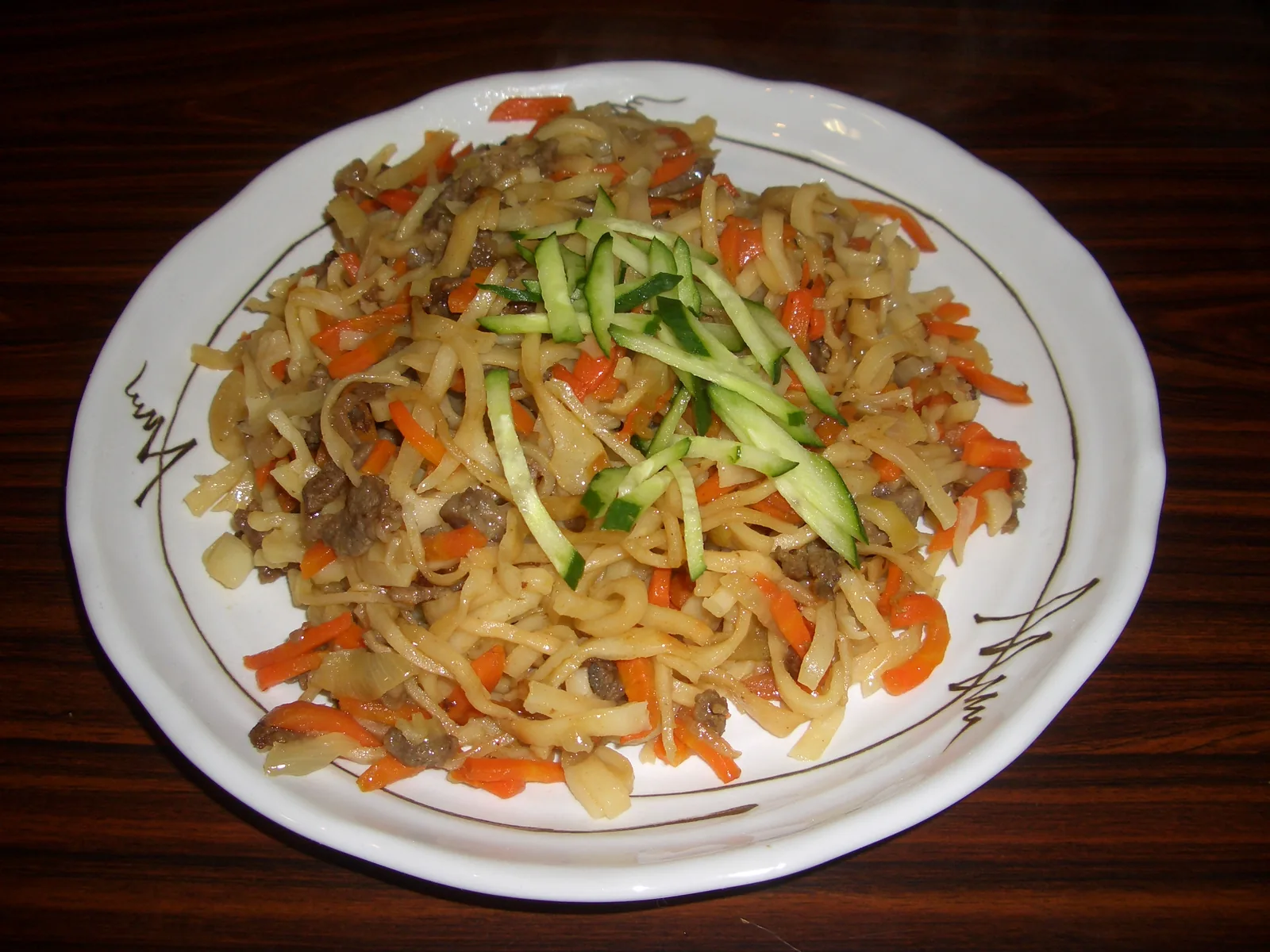
Divide the tsuivan between four warmed plates, piling the noodles up in the middle. Scatter the spring onion rings over each plate and serve at once, with chopsticks or a fork. Put ketchup or a little extra soy sauce on the table for anyone who wants it — many Mongolian families season their own plate at the table.
Serve on plates, not in bowls. Tsuivan is a dry dish, and a plate shows off the tossed noodles instead of letting them sit in liquid.
Done when: Plates steaming, noodles dry and glossy, spring onion bright on top.
auto_awesome Finishing Touches & Plating
Serve the tsuivan the moment it is tossed — the noodles are at their best dry, glossy and still steaming, and they go soft and claggy if they sit in the pot. A plate each, spring onion on top, and the condiments on the table.
 Mongolia
1h 20m

 France

 Vietnam