Curated recipes from 193 countries  •  New seasonal Mediterranean issue out now

Overview

Tufahije

Tufahija; Bosnian Poached Apples; Walnut-Stuffed Apples

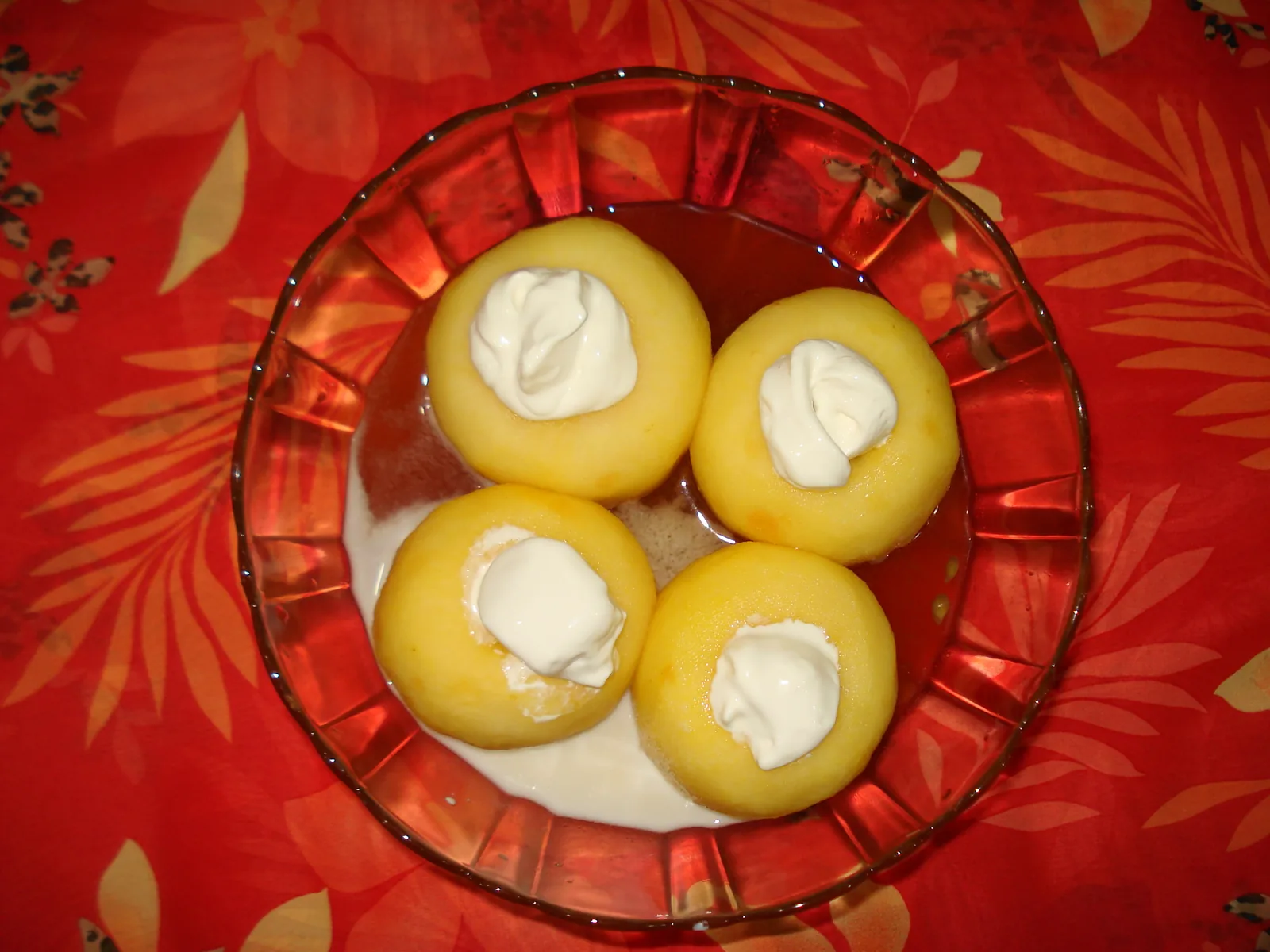
This tufahije recipe is Bosnia's most loved dessert: whole Golden Delicious apples, peeled and cored, poached gently in a lemon-scented sugar syrup until just tender, then filled with ground walnuts, sugar and egg white and served chilled in their syrup with a cloud of whipped cream. It is simple, old-fashioned and quietly elegant — the apples stay whole, the filling stays nutty, and the syrup does the sweetening. One serving is about 330 g.

Tufahije are said to have reached Bosnia with the Ottoman world, and the name itself tells the journey: it comes from the Arabic word tuffaha, meaning apple, travelling through Turkish before settling into Bosnian. Some food writers trace the idea further back to Persia, where cooked apples in syrup were already known. In Bosnia the dessert became a fixture of festive tables, above all at Eid and family gatherings, where a tray of cold, cream-topped apples is still the sweet that says celebration.

Pairs well with: Strong Bosnian coffee & a glass of cold water

Provenance

Bosnia and Herzegovina flag Bosnia and Herzegovina

Sarajevo Dessert Classic

Nordic & European

Time Dedication

45m

20m prep • 25m cook

Batch Yield

4 Servings

433 kcal per serving

1 serving ≈ 330 g

Technical Skill

Easy

Easy (One Pot)

Meal Timing & Digestive Fit

Breakfast

Not Advised

Lunch

Inappropriate

Dinner

Inappropriate

Snack & Tea

Ideal Light Bite

Occasions: Eid and family celebrations, Sunday lunch dessert, dinner parties, afternoon coffee Cost: Low — about $2–3 per serving at home
Tufahije — four whole poached apples in syrup, each topped with a dollop of whipped cream, in a glass dish

Sarajevo Dessert Classic

Photo: Miansari66, CC0, via Wikimedia Commons

The Heritage Formulary

Measured Ingredients

Estimated cost: Low — about $2–3 per serving at home (USD)

In Bosnia, tufahije are always whole poached apples filled with walnuts and served cold in syrup with cream — never baked, and never sliced.

Execution Methodology & Culinary Technique

Step-by-Step Cooking Guide

Active 45m
P

Prep Stage: Apples Peeled, Filling Mixed

20 Mins • Knife Work

Peel the apples and rub them with lemon juice so they stay pale. Core each one from the stem end, leaving the base whole like a little cup. Mix the ground walnuts with 30g sugar, the cinnamon and the beaten egg white until it clumps together when pressed.

Maestro Tip: Core carefully — if you pierce the base, the filling leaks into the syrup.

  1. 1

    Make the Syrup

    5 Mins • Hands On Medium heat, about 100°C (212°F) to dissolve

    Put 400 ml water, 120 g sugar, the lemon juice and the vanilla in a wide saucepan. Stir over medium heat until the sugar dissolves completely, then bring to a gentle simmer. The syrup should be clear and lightly lemony, not thick.

    Do not let the syrup boil hard — a rolling boil makes it reduce too fast and turns the apples mushy.

    Done when: Sugar fully dissolved, syrup clear and just simmering with small bubbles.

  2. 2

    Poach the Apples

    20 Mins • Hands On Gentle simmer, about 90°C (194°F)

    Lower the 4 cored apples into the simmering syrup in a single layer, spooning syrup over the tops. Cover and poach at a gentle simmer for 18–20 minutes, turning once halfway, until a knife slides into the flesh with slight resistance. The apples must stay whole and hold their shape.

    Keep the heat low — the syrup should shiver, not bubble hard. If an apple floats, weigh it down with a small plate.

    Done when: A thin knife enters easily but the apple still holds its round shape; it should not split or collapse.

  3. 3

    Mix and Spoon in the Filling

    5 Mins • Hands On Warm, about 60°C (140°F)

    Lift the apples out with a slotted spoon and set them on a plate. Mix the ground walnuts with 30 g sugar, the cinnamon and the beaten egg white. Spoon the filling into each apple's hollow, pressing it in gently and mounding it slightly above the top.

    Fill the apples while they are still warm — the filling settles in and the egg white sets lightly from the residual heat.

    Done when: Each hollow is full, the filling mounded just above the rim and holding together.

  4. 4

    Chill in the Syrup

    2 Hours • Hands Off Fridge, about 4°C (39°F)

    Return the filled apples to the syrup in a shallow dish, spooning syrup over each one. Cover and chill in the fridge for at least 2 hours, or overnight — the apples soak up the syrup and firm up, and the flavours settle. This is the step that makes tufahije taste like tufahije.

    Chill them in the syrup, not dry — dry apples go dull and the filling dries out.

    Done when: Apples cold all the way through, glossy with syrup, firm enough to lift with a spoon.

  5. 5

    Whip the Cream and Serve

    5 Mins • Hands On Cold, about 4°C (39°F)

    Whip the cold cream to soft peaks — it should hold a dollop, not stand in stiff points. Lift one chilled apple into each serving bowl, spoon over 2–3 tablespoons of syrup, and top with a generous dollop of whipped cream. Serve cold, with a spoon.

    Whip the cream at the last minute; cream whipped hours ahead weeps and goes flat.

    Done when: Cream in soft, glossy peaks; apple cold, glossy, and sitting in a little pool of syrup.

Finishing Touches & Plating

Serve the tufahije cold, one apple per bowl in its syrup with whipped cream on top — and put the pot of extra syrup on the table, because someone always wants more. Allow at least 2 hours of chilling beyond the 45 minutes of active cooking.
Nutritional Physiology & Benefits

Nutrition

Energy

433

kcal / serving

Protein

4g

Complete AA

Carbs

62g

Complex

Fats

21g

Healthy

Per serving (4 servings · 1 serving ≈ 330 g)
Energy433 kcal
Protein4 g
Carbohydrates62 g
Fat21 g
Fibre4.9 g
Sugar54.6 g
Sodium25 mg
Per 100g
Energy131 kcal
Protein1.3 g
Carbohydrates18.8 g
Fat6.3 g
Fibre1.5 g
Sugar16.5 g
Sodium8 mg

Nutrition values are estimated — calculated from USDA FoodData Central values for the listed ingredients.

Vitamins & minerals: Vitamin C and potassium (apples and lemon), vitamin E and magnesium (walnuts), calcium (cream).

Real Fruit at the Centre

Each serving is a whole apple, so you get about 4.9 g of fibre and the vitamin C and potassium of the fruit — a dessert built on fruit, not just sugar and fat.

Walnuts for Healthy Fats

The walnut filling adds plant-based fats, magnesium and vitamin E, and helps the dessert feel satisfying in a small portion.

Light and Gentle to Eat

Soft poached fruit, no pastry and no frying make tufahije an easy, gentle dessert — about 433 kcal per serving, served cold.

Food Pairings

What to Eat With

To optimize nutrient absorption and elevate the sensory depth, pair with these authentic accompaniments:

Drinks

Strong Bosnian Coffee

The classic pairing: bitter, strong coffee cuts the syrup's sweetness and the cream's richness, and the little ritual of coffee after dessert is part of the dish.

A Glass of Cold Water

Cold water between spoonfuls resets the palate — with a syrup this sweet, a plain drink works better than anything flavoured.

Vegetables

Fresh Mint Leaves

A few torn mint leaves on top add a cool, green note that lifts the sweet syrup and keeps the dessert from feeling heavy.

Sides

Thin Butter Biscuits

A crisp, plain biscuit on the side gives a crunch against the soft apple and is perfect for scooping up the last of the syrup.

Complete menu

Serve one chilled tufahija in its syrup with whipped cream after a light Bosnian lunch, with strong Bosnian coffee on the side.

Digestive Guardrails

What NOT to Combine

To prevent digestive distress, sluggishness, or palate clash, avoid pairing the dish with these elements:

Serving Warm with Hot Cream

Whipped cream melts and slides off a warm apple, and warm syrup makes the dessert taste much sweeter than it is. Serve tufahije properly chilled. This is a cooking note, not medical advice.

Overcooking the Apples

Apples poached past tender collapse into sauce and cannot be filled or served whole. Keep the simmer gentle and test with a knife early. This is a cooking note, not medical advice.

General information only, not medical advice — consult a doctor for personal dietary decisions.

Who Should Eat It

Who Should Eat

  • General adultsA light, classic dessert — one apple per serving is the right portion.
  • ChildrenChildren usually love the sweet apple and cream; serve a half apple to small children because of the sugar.
  • ElderlySoft, easy to chew and gentle on the stomach; serve chilled and in small portions.
  • Pregnant womenFine as an occasional dessert; the egg white in the filling is heated through in the warm apple, but keep portions modest because of the sugar.
  • Breastfeeding womenA reasonable occasional dessert; no ingredients here are a concern in normal portions.
  • AthletesGood quick energy after training from the fruit sugars, but low in protein — pair with a protein-rich meal, not as a meal itself.
  • Weight gainEnergy-dense for a fruit dessert at 433 kcal; a full serving with cream fits a weight-gain plan well.
  • Weight lossHigh in sugar at 54.6 g per serving — enjoy a half portion, skip the extra syrup, and use a smaller dollop of cream.

Health Conditions — Adjust or Avoid

Conditions

  • DiabetesAbout 62.0 g of carbohydrate and 54.6 g of sugar per serving, mostly from the syrup — a half portion with less syrup is a safer choice. Ask your clinician about portion size.
  • High blood pressureVery low in sodium at 25 mg per serving, so salt is not a concern here; the sugar is the thing to watch. Ask your clinician about portion size.
  • Kidney diseaseLow in sodium and modest in potassium from the apples; still, keep to one serving. Ask your clinician about portion size.
  • GoutNo purine-rich ingredients, but the sugary syrup is best kept modest, as high sugar intake is linked with higher uric acid. Ask your clinician about portion size.
  • Stomach issuesSoft, low-fat fruit is usually gentle, but the sweet syrup can bother reflux in some people — try a small portion first. Ask your clinician if unsure.
  • Cardiovascular diseaseWalnuts bring unsaturated fats and the dish is low in sodium, but the cream adds saturated fat — use a smaller dollop. Ask your clinician about portion size.
  • Fatty liverThe high sugar load (54.6 g per serving) is the main concern for fatty liver — a half portion with little syrup is wiser. Ask your clinician about portion size.
  • Food allergiesContains tree nuts (walnuts), egg white and milk (cream). The walnut filling cannot be removed without changing the dish — people with nut allergy should not eat it.
  • Special therapeutic dietsNot suitable for low-sugar or nut-free therapeutic diets as written; a clinician or dietitian can advise on a safe adaptation.

If you have a medical condition, consult your doctor before changing your diet.

Storage & Use

Storage & Use

How to store
Cool the apples in their syrup, then cover the dish and refrigerate. Whip cream fresh each time you serve.
In the fridge
3 days in the syrup, covered, at about 4°C (39°F).
In the freezer
Not recommended — freezing turns the poached apple mushy and the syrup crystallises.
How to reheat
Do not reheat — tufahije are served cold. If the syrup has thickened in the fridge, let the dish stand at room temperature for 15 minutes.
Freezing recommended
No — the texture does not survive freezing.
Signs it has spoiled
Sour or fermented smell in the syrup, cloudy syrup, or soft, slimy apple flesh.

More recipes to explore

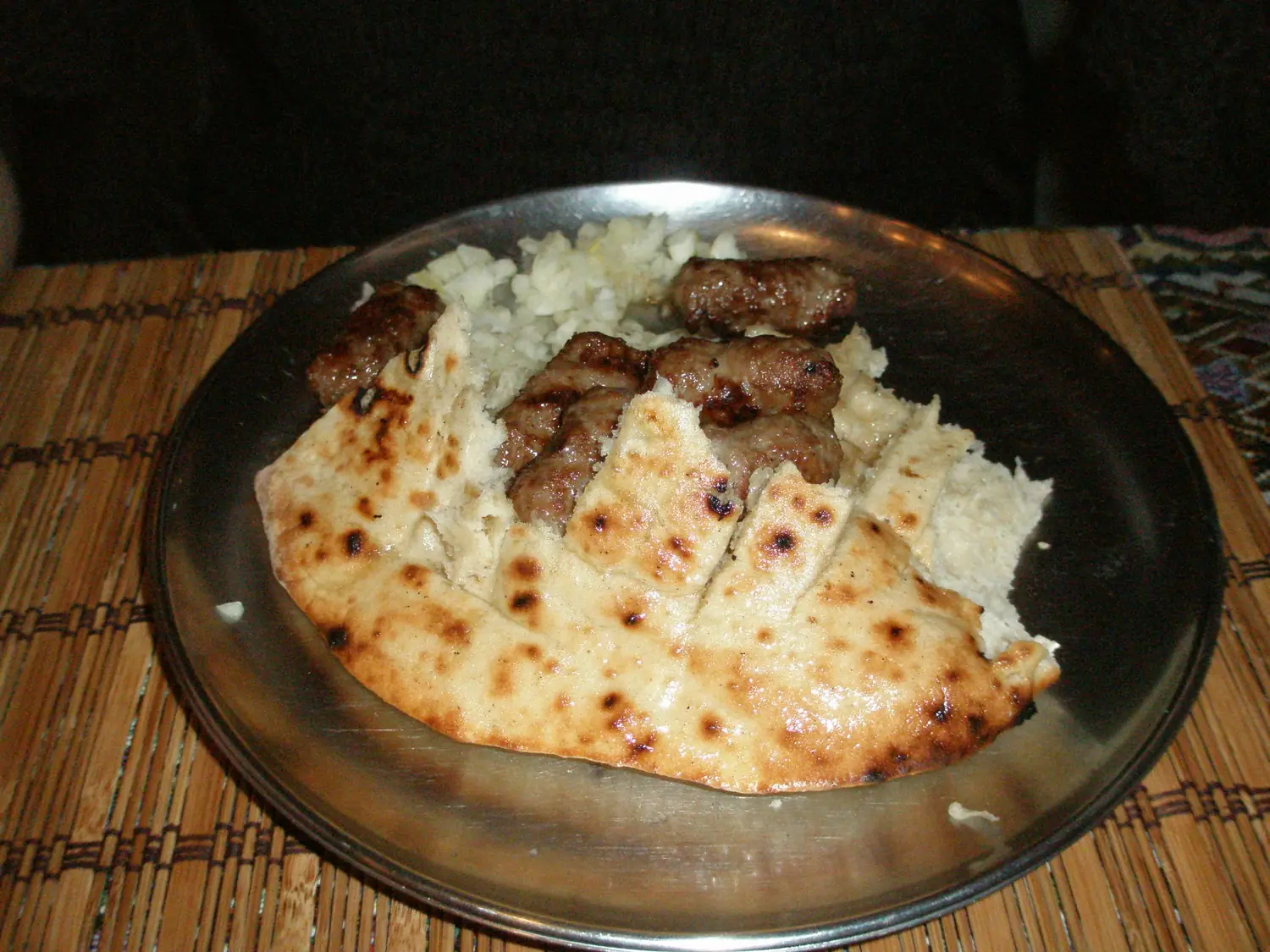
Ćevapi — grilled minced-meat fingers in lepinja flatbread with chopped raw onion, Sarajevo style Bosnia and Herzegovina flag Bosnia and Herzegovina 1h 40m
Dinner •Sarajevo Grill Classic

Ćevapi

This Bosnian cevapi recipe makes Bosnia's beloved grilled minced-meat fingers: beef, lamb and pork mixed with onion, garlic and a pinch of baking soda, kneaded until silky, shaped into small sausages and grilled until browned and juicy. They are served five or ten at a time in warm lepinja flatbread with raw onion and kajmak. One serving is about 360 g, including bread and toppings.

Grill-Night Favourite

Small grilled fingers of seasoned minced meat, tucked into warm lepinja with onion and kajmak.

Pairs Well With
Lepinja, raw onion & kajmak
High Protein
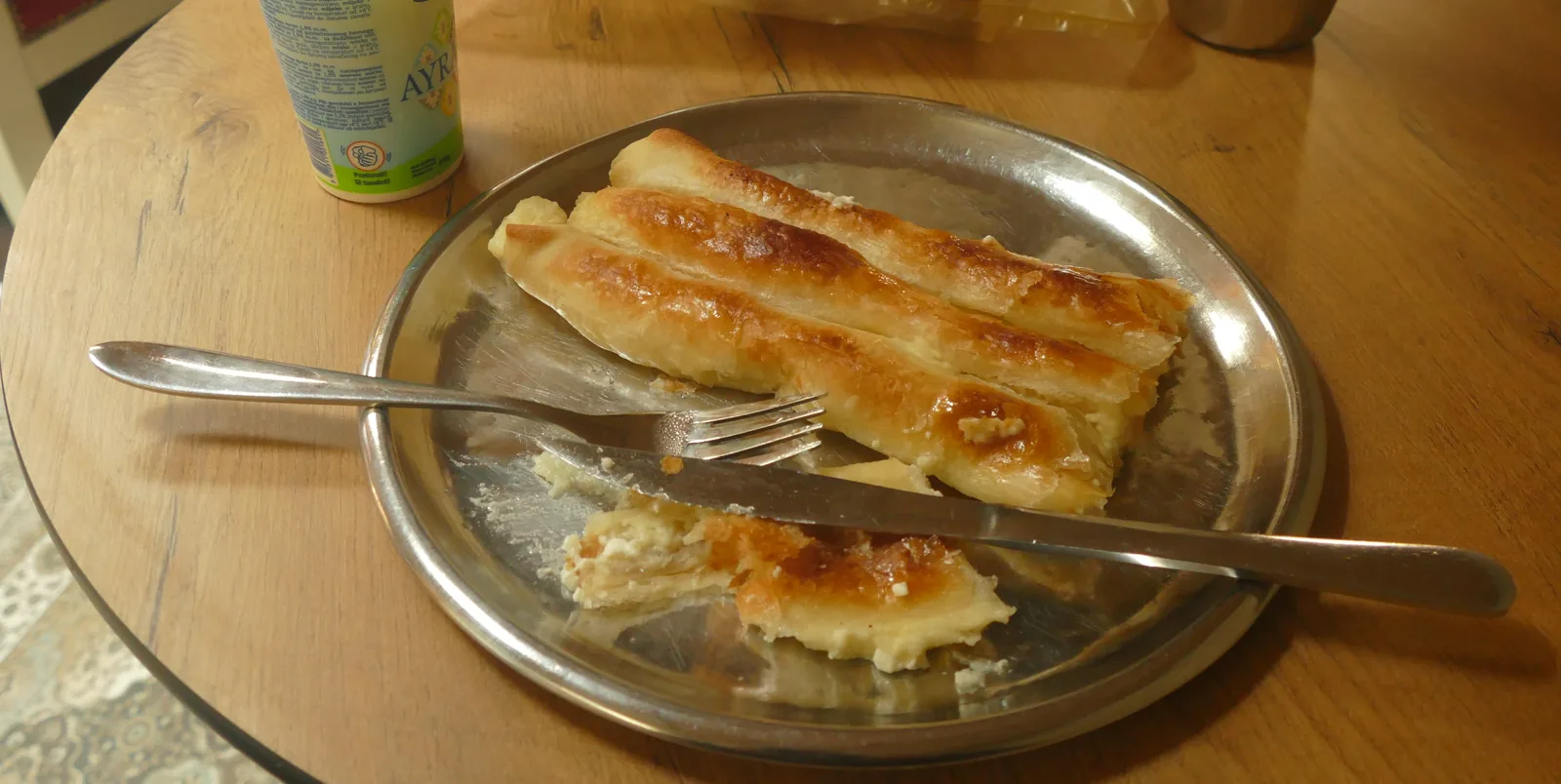
Bosnian burek — golden rolled meat filo pie on a metal plate with a cup of ayran, Sarajevo style Bosnia and Herzegovina flag Bosnia and Herzegovina 1h 20m
Lunch •Buregdžinica Classic

Bosnian Burek

This Bosnian burek recipe is the real thing: in Bosnia, burek always means meat. Thin filo is brushed with butter, spread with seasoned minced beef and onion, rolled into long ropes and coiled into a spiral, then baked until the pastry is golden and shattering and the filling is juicy. It is sold by weight in buregdžinice, cut into wedges and eaten with yoghurt. One serving is about 175 g.

Bakery Lunch

Golden filo rolled around spiced minced beef and coiled into a spiral.

Pairs Well With
Plain yoghurt & ayran
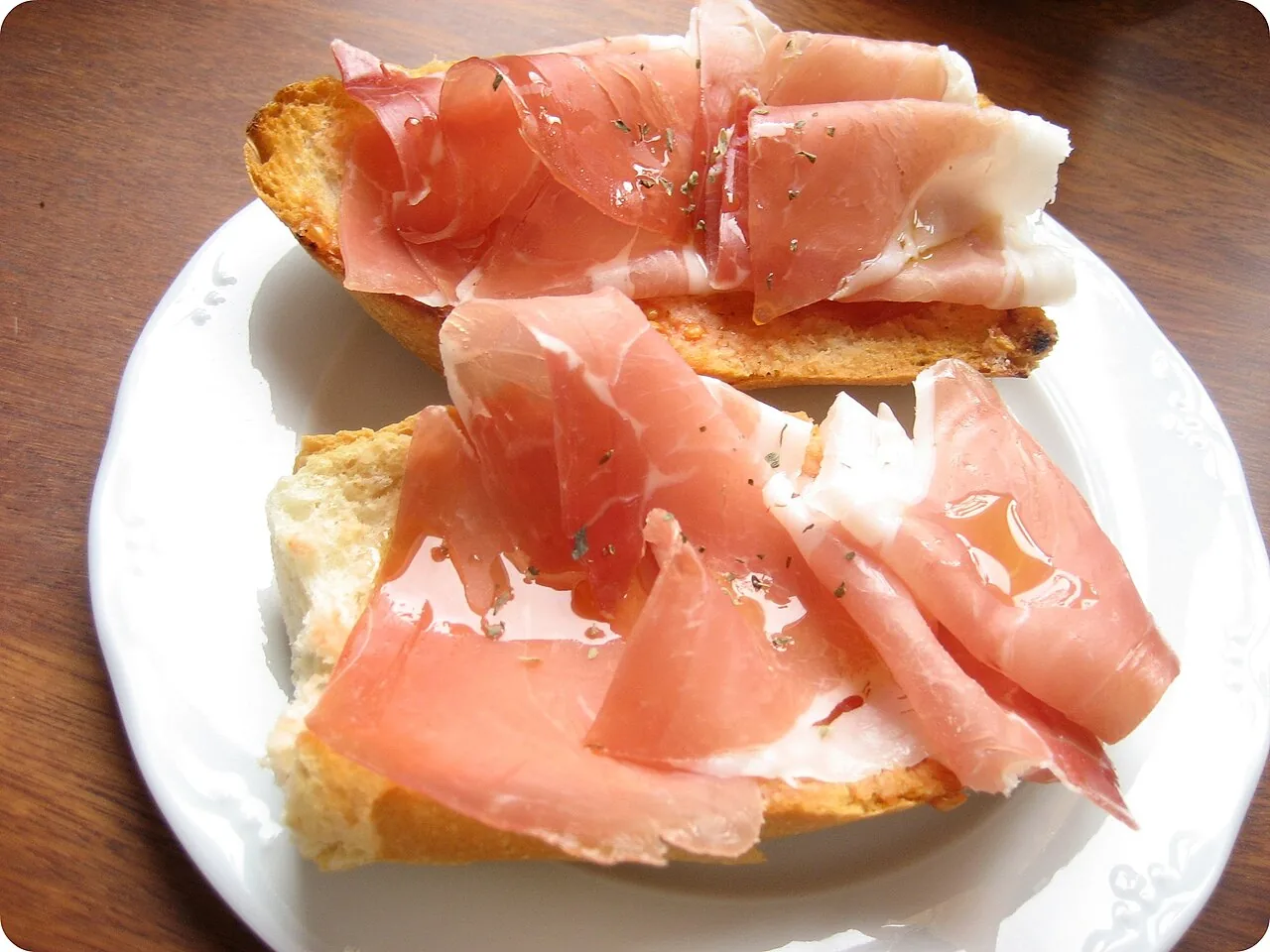
Pan con tomate with jamón ibérico on toasted bread Spain flag Spain 15m
Snack & Tea •Catalan Aperitivo

Pan con Tomate & Jamón Ibérico

Country bread rubbed with ripe Ramallet tomato, drizzled with cold-pressed Arbequina olive oil and topped with jamón ibérico.

Vascular Health

Toasted tomato bread with jamón ibérico, olive oil and olives.

Pairs Well With
Castelvetrano Olives & Sparkling Mineral Water
Quick Prep (<30m)
Gỏi cuốn — Vietnamese fresh spring rolls with prawn and pork Vietnam flag Vietnam 1h 5m
Snack & Tea •Saigon Refresh

Gỏi Cuốn Tôm Thịt

Fresh rice paper rolls filled with poached prawns, tender pork, rice vermicelli, lettuce, herbs and carrot, served with a peanut dipping sauce.

Light Digestion

Nothing is fried, so the rolls stay light and fresh — a cool, herb-filled snack for hot days.

Pairs Well With
Artisanal Peanut Dip & Fresh Lotus Root Water
High Protein

The Dinner Gazette

Never wonder what’s for dinner again

One email a week with easy dinner ideas from around the world — ingredients, steps and nutrition, tested in our kitchen first.

Delivered every Thursday morning. Unsubscribe anytime.