Curated recipes from 193 countries  •  New seasonal Mediterranean issue out now

Overview

Uruguayan Puchero

Puchero Uruguayo, Uruguayan Boiled Dinner

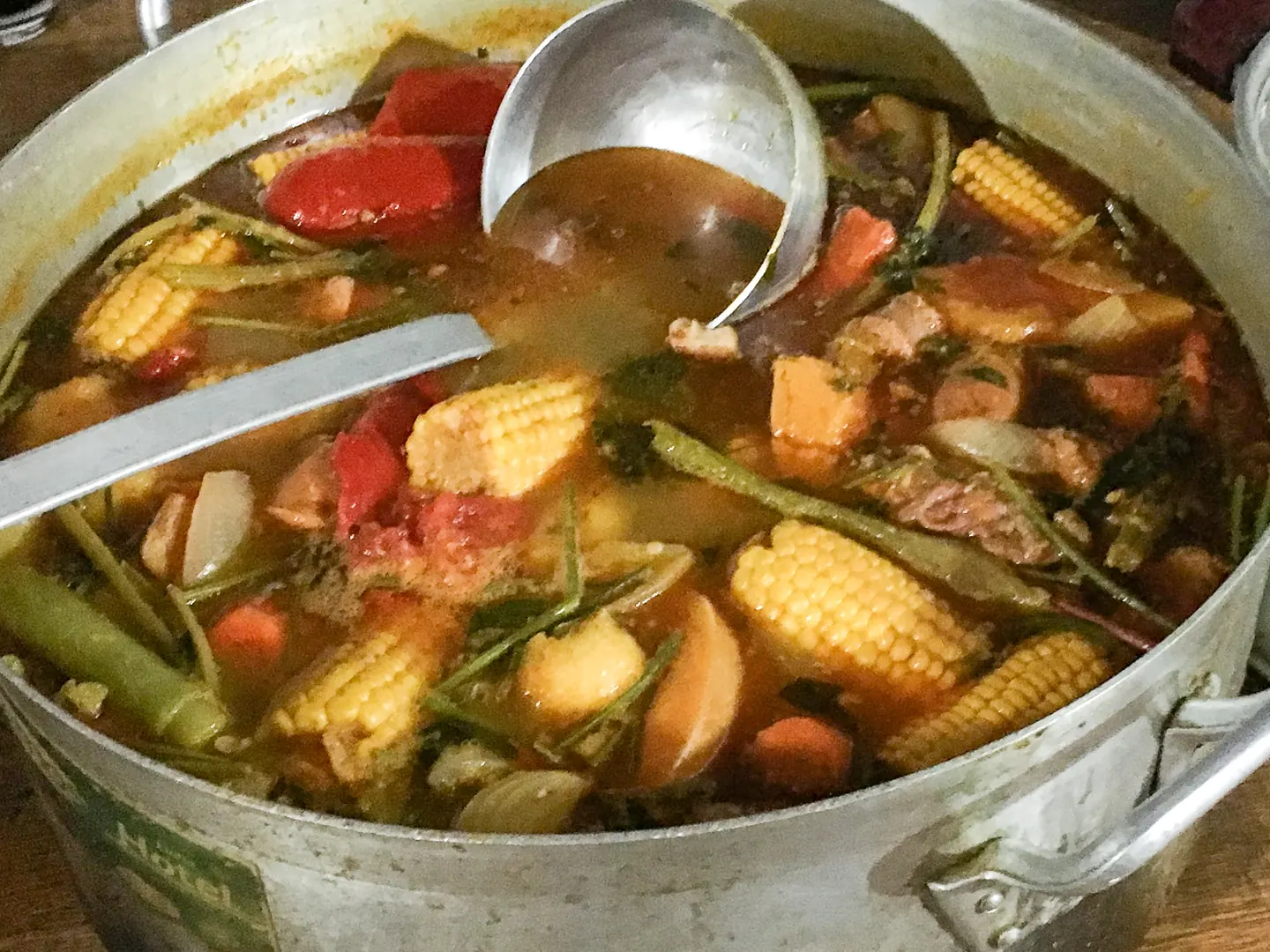
This uruguayan puchero recipe is the boiled dinner Uruguay cooks on Sundays: beef simmered slowly with potatoes, sweet potatoes, pumpkin, corn, carrots, leek and cabbage, then served in two parts — the hot broth first, and the tender meat and vegetables after. One serving is about 750 g. It is simple, generous and made for a long table of family.

Puchero came to the Rio de la Plata from Spain, where a pot of meat and vegetables simmering for hours was peasant food that fed a household. In Uruguay it settled into the Sunday rhythm: one big pot, beef and whatever the garden offered — potatoes, sweet potato, pumpkin, corn and cabbage — served as broth first and solids after. It differs from Spain's cocido in having no chickpeas and no cured pork; the Uruguayan pot is beef and vegetables, nothing more.

Pairs well with: Crusty bread, coarse salt and a glass of red wine

Provenance

Uruguay flag Uruguay

Uruguay Heritage

Latin America & Caribbean

Time Dedication

2h 55m

25m prep • 150m cook

Batch Yield

6 Servings

479 kcal per serving

1 serving ≈ 750 g

Technical Skill

Intermediate

Medium (One Pot)

Meal Timing & Digestive Fit

Breakfast

Not Advised

Lunch

Hearty Midday Main

Dinner

Ideal Hearty Main

Snack & Tea

Inappropriate

Soups & Broths Occasions: Sunday family dinners, winter evenings, long table gatherings Cost: Low — about $3–4 per serving at home
Tags: Beef Savory Soup
A large pot of Uruguayan puchero, beef and vegetables simmered in broth with corn, carrots and peppers, with a ladle resting in the pot

Uruguay Heritage

Photo: Mike Peel, CC BY-SA 4.0, via Wikimedia Commons

The Heritage Formulary

Measured Ingredients

Estimated cost: Low — about $3–4 per serving at home (USD)

The Uruguayan classic: beef and seven vegetables simmered in one pot, broth first, then meat and vegetables.

Execution Methodology & Culinary Technique

Step-by-Step Cooking Guide

Active 2h 55m
P

Prep Stage: Cut the Meat and Vegetables

25 Mins

Cut the beef into 2 large pieces. Peel and quarter the potatoes; peel and chunk the sweet potatoes and pumpkin; cut the corn into rounds; peel and chunk the carrots; wash and slice the leek; cut the cabbage into wedges; halve the onion and crush the garlic. Keep the vegetables in separate piles — they go into the pot at different times, hardest first.

Maestro Tip: Cut everything large: small pieces fall apart in a two-hour simmer, and puchero is meant to be served in generous chunks.

  1. 1

    Start the Beef in Cold Water

    15 Mins Bring to the boil at 100°C (212°F), then reduce

    Put the beef, onion, garlic, bay leaves and peppercorns in a very large pot and cover with the cold water. Bring to the boil over high heat, then skim off the grey foam that rises for the first 10 minutes — this keeps the broth clear and sweet. Add half the salt.

    Start in cold water, not hot: it draws the flavour out of the beef and into the broth.

    Done when: Broth clear, foam skimmed; beef covered by at least 5 cm of water.

  2. 2

    Simmer the Beef Until Tender

    75 Mins Simmer at 85–95°C (185–203°F)

    Turn the heat down so the pot barely bubbles, cover loosely and simmer for 75 minutes. The beef should be getting tender but not yet falling apart — it will finish cooking with the vegetables. A thermometer in the thickest piece should already read above 74°C (165°F).

    A lazy simmer, not a boil: boiling makes the beef stringy and the broth cloudy.

    Done when: Beef yielding when pressed with a spoon; broth golden and clear.

  3. 3

    Add the Root Vegetables

    40 Mins Simmer at 85–95°C (185–203°F)

    Lift the beef out briefly if the pot is crowded, then add the potatoes, sweet potatoes, pumpkin, carrots and leek. Return the beef, top up with a little hot water if anything is above the surface, and simmer 40 minutes until the roots are nearly tender.

    Add the hardest vegetables first so they all finish at the same time.

    Done when: Potatoes and pumpkin nearly tender when pierced; broth rich and golden.

  4. 4

    Add the Corn and Cabbage

    30 Mins Simmer at 85–95°C (185–203°F)

    Add the corn rounds and the cabbage wedges, tucking them into the broth. Simmer 30 minutes more, until the cabbage is soft, the corn is tender and the beef shreds easily. Taste the broth and add the remaining salt.

    Cabbage goes in last: it cooks quickly and turns grey and tired if it simmers too long.

    Done when: Cabbage soft, corn tender, beef shredding; broth well seasoned.

  5. 5

    Rest, Slice and Serve in Two Parts

    15 Mins Serve hot, about 70°C (158°F)

    Rest the pot 10 minutes off the heat. First ladle the hot broth into bowls and serve it as a soup. Then lift the beef onto a board, slice it thickly, and arrange it on a platter with the vegetables. Scatter parsley over everything and serve with crusty bread and coarse salt.

    Serving the broth first is the tradition — it is the cook's reward, and it stretches one pot into a two-course dinner.

    Done when: Broth served steaming; meat sliced and tender; vegetables in generous chunks.

Finishing Touches & Plating

Serve the broth first, then the sliced beef and vegetables on a shared platter — puchero is a slow Sunday dinner, not a rushed bowl, and the table should linger over it.

Nutritional Physiology & Benefits

Nutrition

Energy

479

kcal / serving

Protein

29g

Complete AA

Carbs

54g

Complex

Fats

18g

Healthy

Per serving (6 servings · 1 serving ≈ 750 g)
Energy479 kcal
Protein29 g
Carbohydrates54 g
Fat18 g
Fibre7.9 g
Sugar11.9 g
Sodium814 mg
Per 100g
Energy64 kcal
Protein3.8 g
Carbohydrates7.2 g
Fat2.3 g
Fibre1.1 g
Sugar1.6 g
Sodium109 mg

Nutrition values are estimated — calculated from USDA FoodData Central values for the listed ingredients.

Vitamins & minerals: Good source of iron and zinc from the beef, vitamin A from the pumpkin and carrots, and potassium and vitamin C from the potatoes and cabbage. All nutrition values are estimated.

A Substantial, Protein-Rich Dinner

About 29 g of protein per serving from the beef, with slow carbohydrate from the roots — a substantial dinner that keeps you full until morning.

Seven Vegetables in One Pot

Seven vegetables in one pot bring fibre, potassium, vitamin A and vitamin C, and simmering them in the broth keeps their nutrients in the dish.

Slow Food for a Slow Sunday

One pot, a long slow simmer and a table full of family — puchero is as much about the unhurried Sunday meal as it is about the food.

Food Pairings

What to Eat With

To optimize nutrient absorption and elevate the sensory depth, pair with these authentic accompaniments:

Sides

Crusty Bread

Bread is essential with puchero — for the broth course and for mopping the juices from the meat and vegetables.

Vegetables

Green Salad with Lemon

A sharp, simple salad cuts through the richness of the boiled beef and refreshes the palate between bites.

Drinks

Uruguayan Tannat Wine

Uruguay's bold red wine stands up to the beef and the sweet roots, and it is what the table in Montevideo would be drinking.

Full Menus

Full Uruguayan Sunday

Broth first, then puchero with bread and salad, and dulce de leche with cheese to finish — the classic Sunday sequence.

Complete menu

Serve the broth first, then puchero with bread and a green salad, and dulce de leche with cheese to finish.

Digestive Guardrails

What NOT to Combine

To prevent digestive distress, sluggishness, or palate clash, avoid pairing the dish with these elements:

Very Salty Condiments on Top

The broth is already salted, so piling on salty sauces or cured meats at the table can push the meal's sodium much higher than needed. This is general information, not medical advice.

Leaving the Pot Out Overnight

A big pot of meat and vegetables should be refrigerated within 2 hours of cooking; left out overnight it can grow bacteria. Reheat the broth and solids to 74°C (165°F). This is general information, not medical advice.

General information only, not medical advice — consult a doctor for personal dietary decisions.

Who Should Eat It

Who Should Eat

  • General adultsA complete, balanced dinner for most adults — broth plus meat and vegetables is a full meal.
  • ChildrenSoft, mild and easy to eat; cut the meat and vegetables small and skip the wine for the adults' glasses only.
  • ElderlyGentle, soft food that is easy to chew; serve the beef sliced thin and the broth warm.
  • Pregnant womenFine when the beef is fully cooked and the dish is served hot; ask your clinician about portion size.
  • Breastfeeding womenA nourishing, iron-rich dinner; the cabbage can cause gas in some babies, so watch for it. Ask your clinician if unsure.
  • AthletesAbout 29 g of protein and 54 g of carbohydrate per serving — a strong recovery dinner after a long day.
  • Weight gainEnergy-dense and easy to eat in large portions; add bread and a second helping of vegetables.
  • Weight lossVery filling, but the serving is large — take a smaller share of the roots and more cabbage and broth, and go easy on the bread.

Health Conditions — Adjust or Avoid

Conditions

  • DiabetesAbout 54 g of carbohydrate per serving, mostly from the potatoes and sweet potatoes — count it and keep the roots to one modest share. Ask your clinician about portion size.
  • High blood pressureAbout 810 mg of sodium per serving; use less salt in the broth and skip salty extras. Ask your clinician about portion size.
  • Kidney diseaseHigh in protein and potassium from the beef and roots; a smaller portion may be needed. Ask your clinician first.
  • GoutBeef is a purine source, so keep the meat portion modest and do not eat it daily. Ask your clinician about frequency.
  • Stomach issuesA gentle boiled dinner, but cabbage and leek can cause gas — take a smaller share of cabbage if you are sensitive. Ask your clinician if symptoms persist.
  • Cardiovascular diseaseUse lean chuck and skim the fat from the broth before serving to keep saturated fat down. Ask your clinician about portion size.
  • Fatty liverA balanced meal, but keep the serving to one plate and go easy on the bread. Ask your clinician about portion size.
  • Food allergiesContains no common allergen — just beef, vegetables and water. Ask your clinician if you have any rare allergy.
  • Special therapeutic dietsIf you follow a low-sodium or low-purine diet, this dish needs changes — ask your clinician before eating it regularly.

If you have a medical condition, consult your doctor before changing your diet.

Storage & Use

Storage & Use

How to store
Cool quickly; store the broth and the solids in separate sealed containers.
In the fridge
Up to 3 days in the fridge at 4°C (40°F) or below.
In the freezer
Up to 3 months frozen; the potatoes and cabbage soften on thawing.
How to reheat
Reheat the broth to a boil and the solids to 74°C (165°F); add a splash of water if the broth has reduced.
Freezing recommended
Yes — the broth and beef freeze very well; freeze the vegetables separately for the best texture.
Signs it has spoiled
Sour smell, slimy vegetables or mould — discard it.

More recipes to explore

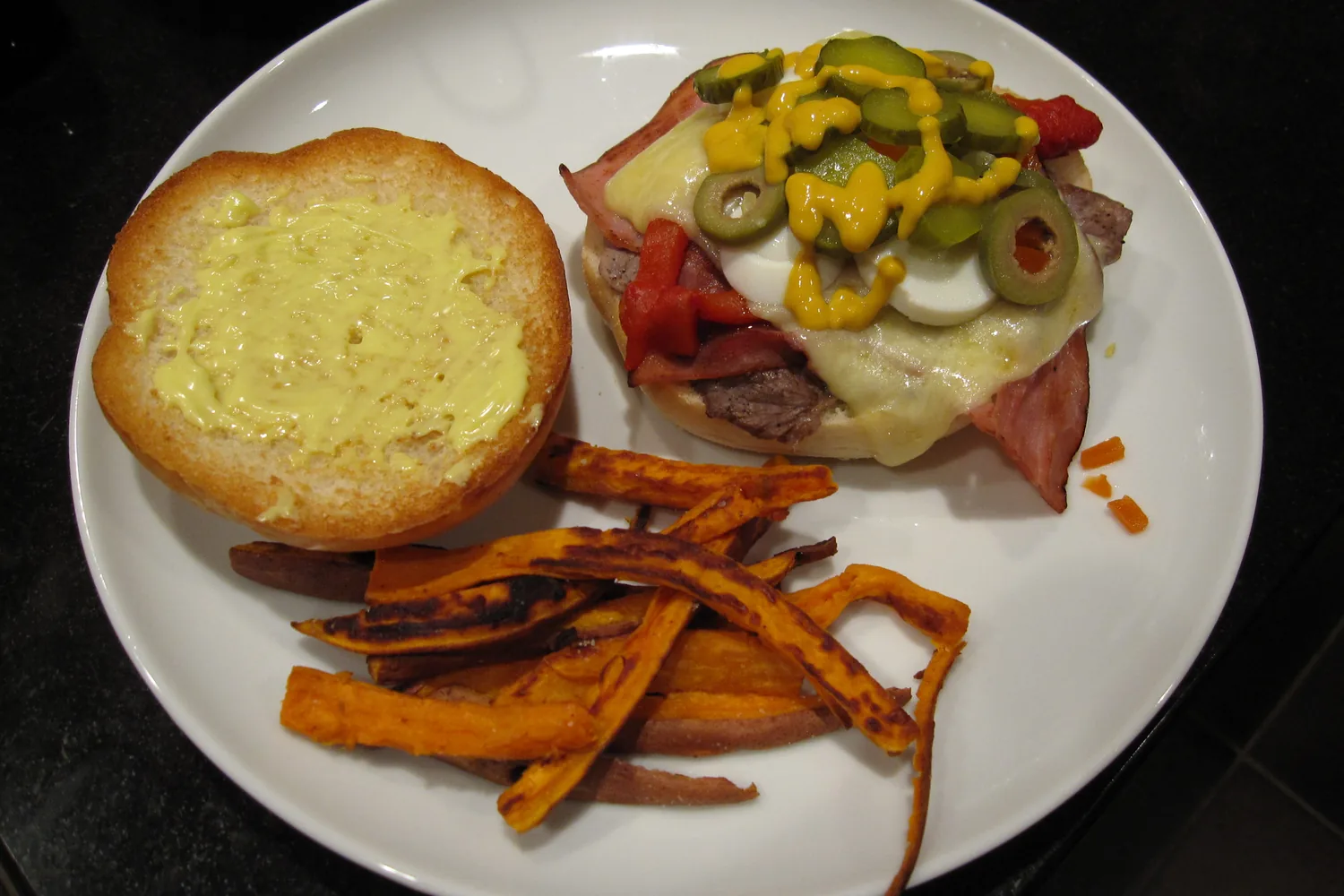
An open chivito sandwich on a white plate: a bun topped with grilled steak, ham, melted mozzarella, sliced hard-boiled egg, green olives, pickles and mustard, with sweet potato fries beside it Uruguay flag Uruguay 35m
Lunch •Punta del Este Classic

Chivito

This chivito recipe builds Uruguay's national sandwich: a thin grilled steak layered with ham, crisp bacon, melted mozzarella and a fried egg, finished with tomato, lettuce, green olives, mayonnaise and mustard in a soft toasted roll. One serving is about 445 g. It is a big, messy, deeply satisfying lunch that comes together in about 35 minutes.

Comfort & Warmth

A towering Uruguayan sandwich of grilled steak, ham, bacon, melted mozzarella and a fried egg in a soft roll.

Pairs Well With
French fries and a cold lager or a glass of Uruguayan tannat
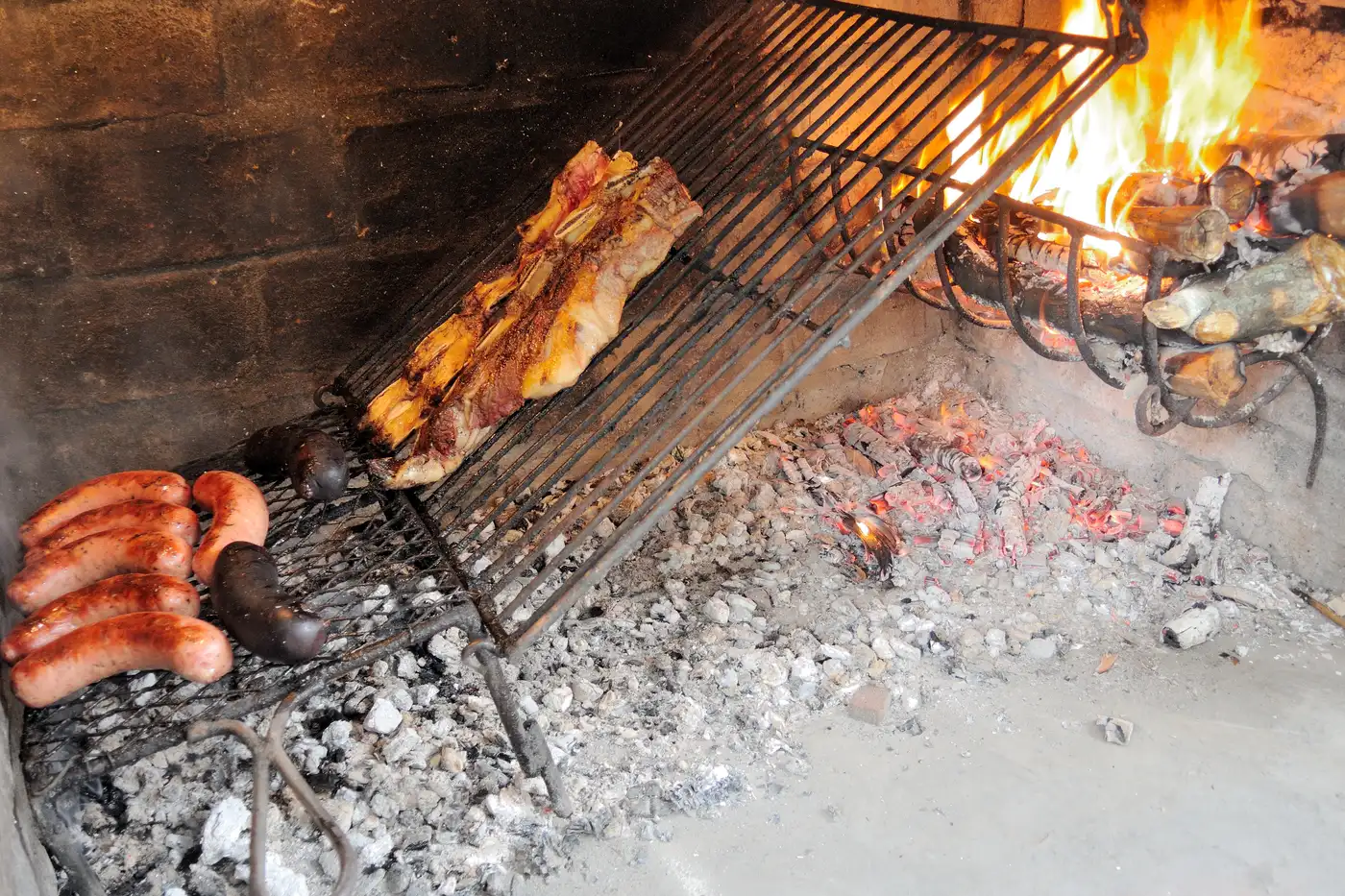
Beef short ribs, chorizo and morcilla grilling over wood embers on a Uruguayan parrilla Uruguay flag Uruguay 2h
Dinner •Montevideo Parrilla Heritage

Uruguayan Asado

Uruguayan asado is a mixed grill cooked slowly over wood embers on the parrilla, the iron grill that stands at the centre of Uruguayan family life. Beef short ribs, flank and skirt steak go on first, followed by chorizo and morcilla, all seasoned with nothing but coarse salt, and the meal is served piece by piece as each cut is ready, with chimichurri and salsa criolla on the table. One serving is about 425 g.

High-Protein & Satisfying

A slow mixed grill of beef cuts, chorizo and morcilla over wood embers, served with chimichurri and salsa criolla — the heart of the Uruguayan Sunday asado.

Pairs Well With
Salsa criolla & ensalada rusa
High Protein
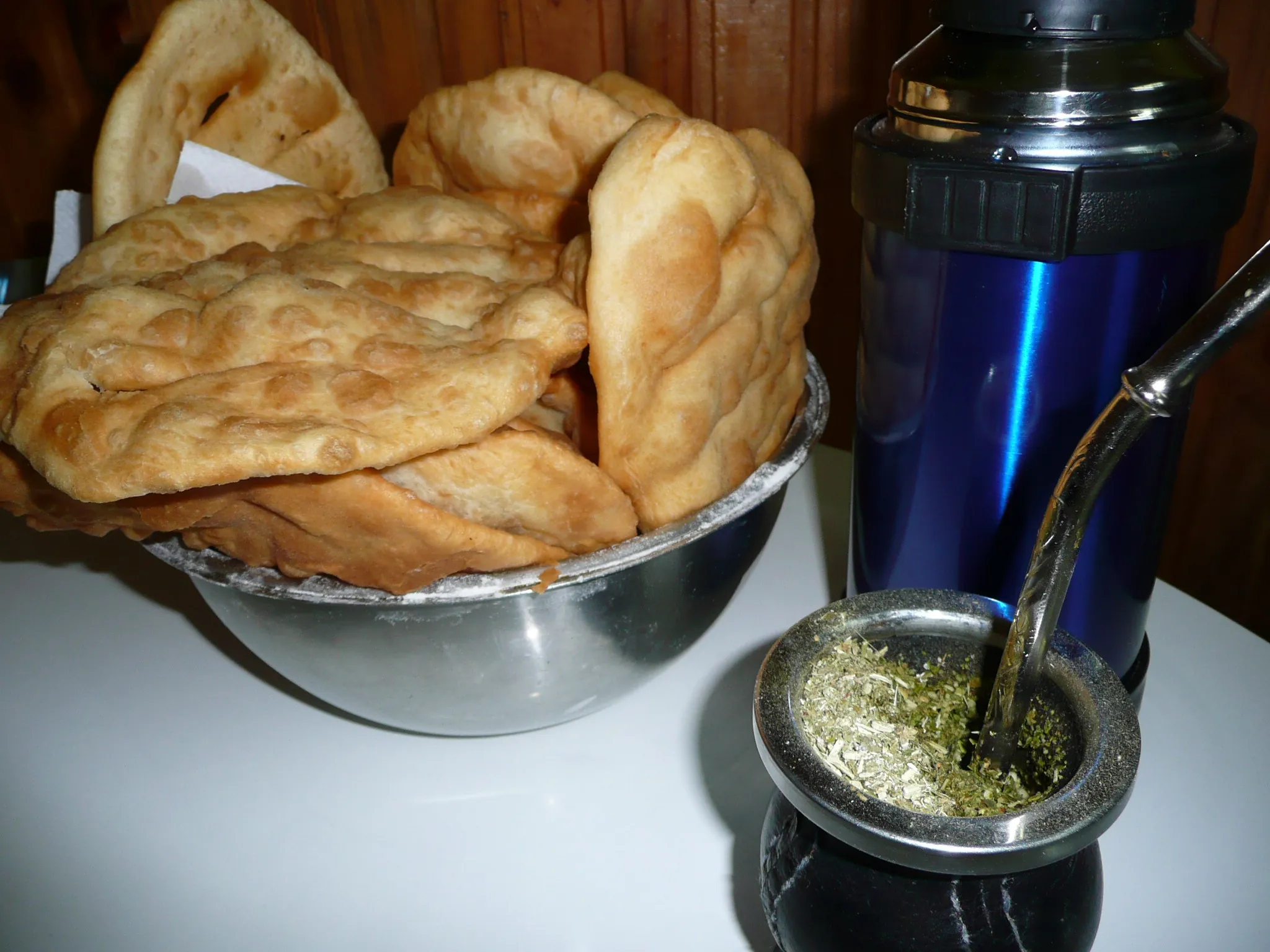
A bowl of golden torta fritas beside a mate gourd with a metal straw and a blue thermos Uruguay flag Uruguay 40m
Snack & Tea •Uruguay's Rainy-Day Snack

Torta Fritas

Torta fritas are Uruguay's beloved rainy-day snack: thin rounds of wheat-flour dough, fried until puffed and golden, then eaten plain, dusted with sugar or spread with dulce de leche. When the clouds roll in over Montevideo, home kitchens and street stalls start frying, and the smell of hot dough means it is time for mate. One serving is about 170 g.

Comfort & Warmth

Golden discs of fried wheat dough, crisp outside and soft inside, made for grey rainy afternoons with a hot mate.

Pairs Well With
Hot mate, dulce de leche and a dusting of sugar
A slice of chaja cake with sponge, whipped cream, dulce de leche and peach layers, with the whole meringue-topped cake behind it Uruguay flag Uruguay 2h 45m
Snack & Tea •Paysandú Heritage

Chaja

This chaja recipe builds Uruguay's most original dessert layer by layer: a soft sponge cake soaked in peach syrup, crisp meringue, sweet whipped cream, peaches in syrup and dulce de leche, finished with crushed meringue all over the outside. It was created in Paysandú in 1927 and named after the chaja bird, whose soft white plumage the cake is said to resemble. One serving is about 195 g.

Celebration & Sharing

A cloud-light Uruguayan layer cake of sponge, crisp meringue, whipped cream, peaches and dulce de leche — Paysandú's most original dessert.

Pairs Well With
A slice of chaja with coffee or mate, at a birthday or Sunday table

The Dinner Gazette

Never wonder what’s for dinner again

One email a week with easy dinner ideas from around the world — ingredients, steps and nutrition, tested in our kitchen first.

Delivered every Thursday morning. Unsubscribe anytime.