-
1
Make and Rest the Noodle Dough
15 Mins + 30 Mins Rest • Kneading
Room temperature, about 20°C (68°F)
Sift the flour into a wide bowl, add the two beaten eggs and a pinch of salt, then pour in the cold water a little at a time, mixing with your hands until a firm dough forms. Knead on a floured board for 10 minutes until smooth and elastic, then rub the surface with a little oil, cover with cling film and rest for 30 minutes. The rest is not optional — rested dough stretches without snapping, and the two-egg Uzbek dough needs the full rest to pull cleanly.
If the dough tears when you stretch it, it has not rested long enough — give it another 15 minutes under the film.
Done when: Smooth, elastic dough that stretches without tearing.
-
2
Pull the Noodles
15 Mins • Pulling
Room temperature, about 20°C (68°F)
Divide the rested dough into 4 pieces and roll each into a rope about as thick as your finger, brushing with oil as you go. Working with one rope at a time, hold the ends and gently stretch it, bouncing it lightly on the board, then fold, stretch again and repeat until you have long, even strands about 3–4 mm thick. Coil the strands loosely and brush them lightly with oil so they do not stick.
Keep your hands and the board lightly oiled — dry dough sticks to itself and snaps instead of stretching.
Done when: Long, even strands about 3–4 mm thick, coiled and lightly oiled.
-
3
Brown the Beef and Potato
10 Mins • Frying
High heat, about 200°C (400°F); beef cooked through to at least 74°C (165°F) later in the vaja
Heat 30 ml of the sunflower oil in a kazan, wok or heavy pot over high heat until it shimmers. Add the beef cubes in a single layer and leave them alone for 2 minutes so they brown properly, then stir-fry for 3–4 minutes more until browned on all sides. Add the potato cubes and fry for 2 minutes until their edges start to colour — the potato goes in early in the Uzbek version so it turns creamy inside the stew.
Do not crowd the pot — brown the beef in two batches if needed, or it steams instead of browning.
Done when: Beef browned on all sides, potato edges lightly coloured.
-
4
Build the Vaja
10 Mins • Frying
Medium-high heat, about 190°C (375°F)
Add the onion and garlic to the beef and fry for 3 minutes until the onion softens. Add the carrot, green radish and green beans and fry for 3 minutes more, then the red and green peppers for 2 minutes. Stir in the diced tomatoes and the tomato paste with the cumin, coriander and the whole green chilli, and cook for 3 minutes until the tomatoes soften and the pan smells warm and spiced. Drop in the star anise.
Fry the tomato paste for a full minute before adding liquid — raw paste tastes sour, fried paste tastes deep and sweet.
Done when: Vegetables glossy and just tender, tomatoes breaking down, spices fragrant.
-
5
Simmer the Vaja
25 Mins • Simmering
Gentle simmer, about 95°C (200°F); beef cooked through to at least 74°C (165°F)
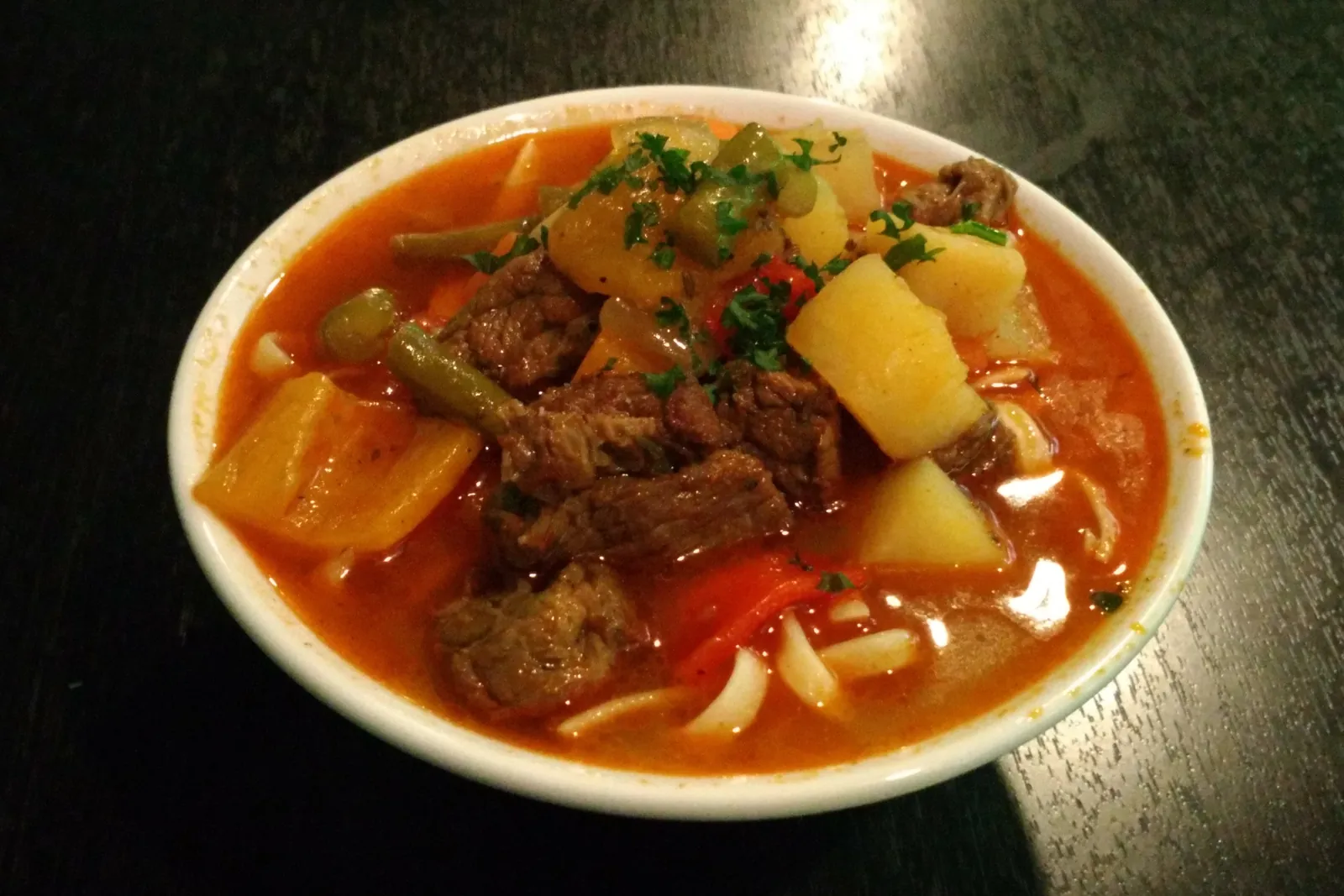
Pour in the hot beef broth, add the salt and bring to a gentle simmer. Cover and cook for 20–25 minutes, stirring now and then, until the beef is tender, the potato is creamy and the vaja has reduced to a thick stew that coats a spoon — this is the Uzbek mark of the dish, a vaja you ladle rather than a broth you pour. Fish out the star anise and the whole chilli, stir in the jusay and cook 2 minutes more.
If the vaja is still thin after 25 minutes, take the lid off for the last 5 minutes — the Uzbek vaja should sit on the noodles, not run off them.
Done when: Beef tender, potato creamy, vaja thick enough to coat a spoon, vegetables still holding their shape.
-
6
Boil the Noodles and Make the Laza-Chang
8 Mins • Boiling
Rolling boil, 100°C (212°F)
While the vaja simmers, bring a large pot of salted water to a rolling boil. Drop the pulled noodles in, a few strands at a time, stirring gently so they do not clump. Cook for 4–5 minutes until tender and chewy, then drain. While they boil, make the laza-chang: stir the remaining 5 g garlic, the chilli flakes and the vinegar into a small bowl, then pour over the remaining 15 ml oil, heated until just smoking — it will sizzle and smell fiercely of garlic and chilli.
Boil the noodles separately, never in the vaja — cooking them in the stew clouds it with starch and leaves the strands bloated.
Done when: Noodles tender and chewy, strands separate and glossy; laza-chang sizzling and fragrant.
-
7
Assemble the Bowls
5 Mins • Assembling
Serving hot, above 60°C (140°F)
Divide the hot noodles between four deep, warmed bowls, twirling them into nests with tongs. Ladle the beef and vegetable vaja generously over the top, making sure every bowl gets beef, potato, green beans and radish, then spoon over a little of the thick sauce. Scatter the chopped cilantro over each bowl and set the laza-chang on the table for everyone to add to taste.
Warm the bowls first with hot water — cold bowls steal the heat from the noodles in seconds.
Done when: Bowls steaming, noodles peeking through a generous ladle of thick vaja, herbs bright on top.

 Uzbekistan
2h 25m

 France

 Vietnam