

Curated recipes from 193 countries  •  New seasonal Mediterranean issue out now

Overview

Uzbek Plov

Palov, Osh

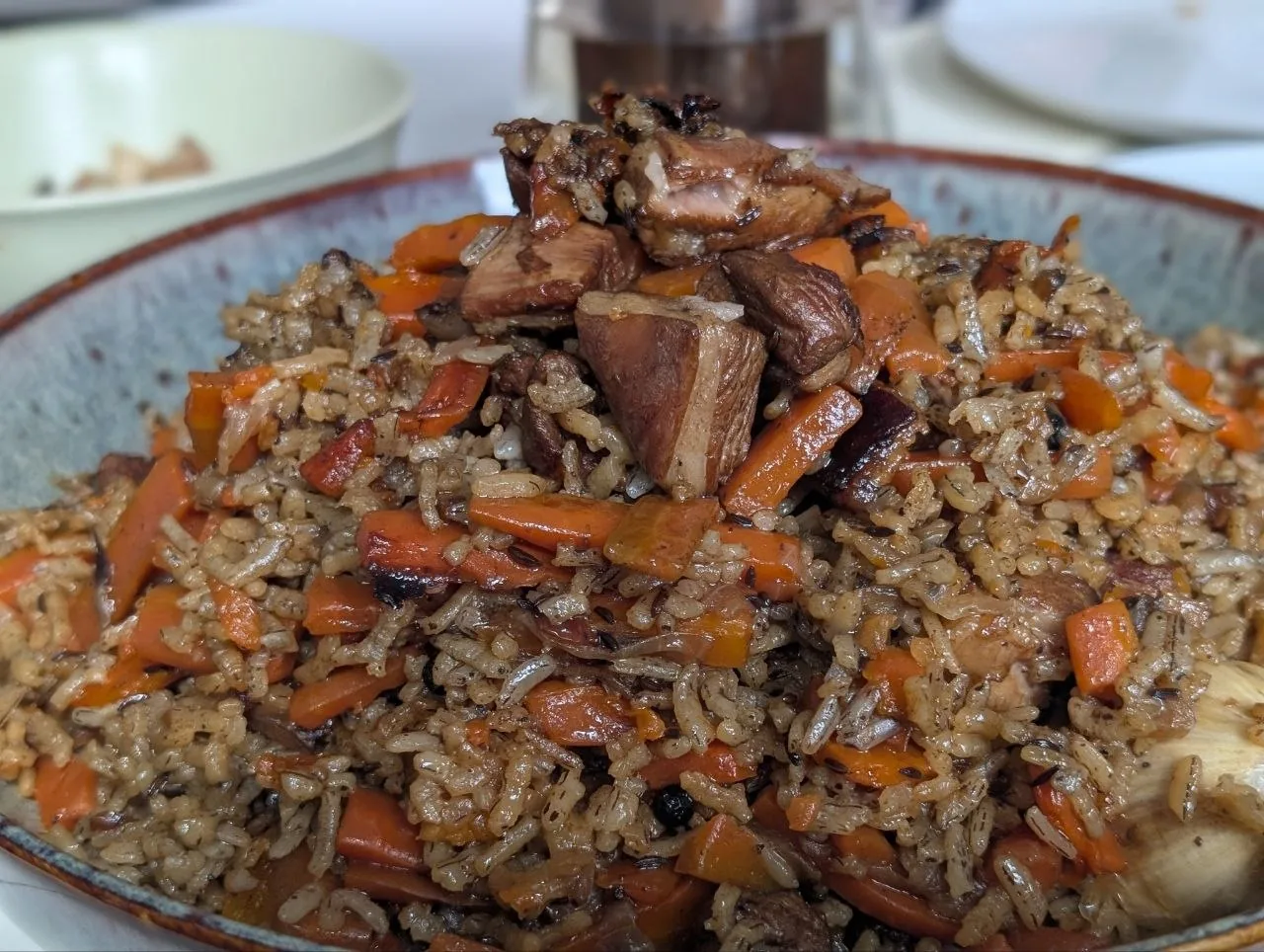
This uzbek plov recipe is Uzbekistan's national dish: devzira rice steamed over a rich zirvak of browned lamb, sweet yellow carrots, onions, cumin and whole heads of garlic, cooked in a wide kazan and never stirred once the rice goes in. The grains come out separate, glossy and stained golden-orange by the carrots, with tender chunks of lamb and soft, sweet garlic tucked through the pile. One serving is about 470 g.

Plov, called palov or osh in Uzbekistan, is the country's national dish and the centrepiece of weddings, holidays and family gatherings, cooked in huge kazans by professional masters known as oshpaz. In 2016 UNESCO added 'Palov culture and tradition' to its Representative List of the Intangible Cultural Heritage of Humanity, recognising not just the recipe but the whole social practice of cooking and sharing it. The regions disagree on the details: Fergana plov uses reddish devzira rice and plenty of oil for a deep orange-red colour, Tashkent wedding plov adds chickpeas and yellow carrots, and Samarkand plov is known for its yellow carrots and linseed oil.

Pairs well with: Serve family-style from one big platter with a crisp tomato, onion and cucumber salad and hot green tea.

Provenance

Uzbekistan flag Uzbekistan

Uzbek Heritage

East & South Asia

Time Dedication

2h 25m

45m prep • 100m cook

Batch Yield

6 Servings

816 kcal per serving

1 serving ≈ 470 g

Technical Skill

Intermediate

Moderate (One Pot)

Meal Timing & Digestive Fit

Breakfast

Not Advised

Lunch

Hearty Midday Main

Dinner

Ideal Hearty Main

Snack & Tea

Inappropriate

Occasions: Weddings, holidays, family celebrations, Nowruz, Sunday lunch Cost: Moderate — about $4–5 per serving at home
Uzbek plov piled in a ceramic bowl: golden rice with julienned carrots, chunks of lamb and a whole head of garlic

Uzbek Heritage

Photo: Postovalov, CC BY-SA 4.0, via Wikimedia Commons

The Heritage Formulary

Measured Ingredients

Estimated cost: Moderate — about $4–5 per serving at home (USD)

This recipe follows the classic Tashkent-style method with devzira rice, yellow carrots, lamb and cottonseed oil, steamed in one pot without stirring the rice.

Execution Methodology & Culinary Technique

Step-by-Step Cooking Guide

Active 2h 25m
P

Soak the rice, cut the carrots

45 minutes (plus 1-2 hours soaking)

Rinse the devzira rice until the water runs clear and leave it to soak in cold salted water while you cut the carrots into long matchsticks by hand, slice the onions into half-moons and cut the lamb into large chunks. Hand-cut carrots matter: grated carrot dissolves into mush, while matchsticks stay visible and sweet in the finished plov.

Maestro Tip: Start soaking the rice first, then do all the cutting; soaked rice cooks evenly and the grains stay separate.

  1. 1

    Heat the oil and brown the onions

    10 minutes 200°C (400°F)

    Heat the cottonseed oil in a wide, heavy kazan or Dutch oven over high heat until it shimmers and just begins to smoke. Add the sliced onions and fry, stirring, for 8-10 minutes until deep amber and sweet-smelling. Do not rush this: dark, well-browned onions give the plov its colour and depth.

    If the onions catch or blacken, lower the heat; bitter burnt onion cannot be fixed later.

    Done when: Onions are deep amber, soft and sweet-smelling, not pale or blackened.

  2. 2

    Sear the lamb

    10 minutes 200°C (400°F)

    Add the lamb chunks to the hot oil in a single layer and sear without moving them for 3-4 minutes per side until a deep golden-brown crust forms on all sides. The meat should reach 74°C (165°F) later in the simmer; this sear is about flavour and colour, not about cooking it through yet.

    Work in two batches if the pot is crowded; crowded meat steams instead of browning.

    Done when: Every chunk has a deep golden-brown crust.

  3. 3

    Build the zirvak with carrots and spices

    25 minutes 95°C (200°F)

    Add the carrot matchsticks, cumin, barberries, salt and pepper. Stir well, then pour in 500 ml of the boiling water, enough to just cover the meat and carrots. Lower the heat and simmer gently for 20-25 minutes until the carrots are tender and the liquid tastes rich and well seasoned. Nestle the two whole garlic heads into the zirvak, root-end down.

    Taste the zirvak now: it should taste slightly too salty and too rich on its own, because the unsalted rice will soak up a lot of that seasoning.

    Done when: Carrots are tender but still hold their shape; the broth is amber and flavourful.

  4. 4

    Layer the rice and steam without stirring

    35 minutes 95°C (200°F)

    Drain the soaked rice and spread it in an even layer over the zirvak, without stirring the layers together. Pour the remaining 400 ml of boiling water gently over a spoon so it stands about 1.5 cm above the rice. Cover with a tight lid, lower the heat to the gentlest simmer and steam for 30-35 minutes. Do not lift the lid and do not stir: stirring breaks the grains and turns plov into porridge.

    If steam escapes around the lid, lay a clean tea towel under it to seal the pot. Listen for a faint hiss, not a rolling boil.

    Done when: The rice is tender, separate and glossy, and no water pools at the bottom when you tilt the pot.

  5. 5

    Rest, then turn out and serve

    15 minutes 60°C (140°F)

    Take the pot off the heat and leave it covered for 15 minutes so the rice finishes steaming and the flavours settle. Lift out the garlic heads, then use a slotted spoon to gently lift the rice from the edges towards the centre, mixing it lightly with the carrots and meat as you go. Pile onto one large warmed platter, set the lamb on top and place the garlic heads beside it.

    Mixing from the edges in, rather than stirring in circles, keeps the grains whole while still blending the layers.

    Done when: Rice is fluffy and separate, lamb is tender enough to pull apart with a spoon, and the garlic cloves squeeze out soft and sweet.

Finishing Touches & Plating

Serve the plov piled high on one big platter, meat on top, with the soft garlic heads beside it and the salad and tea on the table. Eat it while it is hot, straight from the shared platter.

Nutritional Physiology & Benefits

Nutrition

Energy

816

kcal / serving

Protein

31g

Complete AA

Carbs

103g

Complex

Fats

30g

Healthy

Per serving (6 servings · 1 serving ≈ 470 g)
Energy816 kcal
Protein31 g
Carbohydrates103 g
Fat30 g
Fibre6.2 g
Sugar9.5 g
Sodium691 mg
Per 100g
Energy174 kcal
Protein6.7 g
Carbohydrates21.8 g
Fat6.5 g
Fibre1.3 g
Sugar2 g
Sodium147 mg

Nutrition values are estimated — calculated from USDA FoodData Central values for the listed ingredients.

Vitamins & minerals: A good source of vitamin A from the carrots, plus iron and zinc from the lamb, B vitamins from the rice and lamb, and vitamin C from the onions and garlic. Nutrition is estimated.

Steady energy

Rice and carrots provide carbohydrates that the body uses for energy, and the lamb adds protein that helps the meal keep you full for longer.

Vitamin A from carrots

Carrots are a rich source of vitamin A, which supports normal vision and skin health, and the oil in the dish helps the body absorb it.

Iron and zinc from lamb

Lamb is a source of iron and zinc, minerals involved in carrying oxygen in the blood and in normal immune function.

Food Pairings

What to Eat With

To optimize nutrient absorption and elevate the sensory depth, pair with these authentic accompaniments:

Vegetables

Achichuk salad

Thinly sliced tomato, onion and cucumber with a little salt: its sharp, juicy freshness cuts through the rich, oily rice, which is why it is the classic partner at every Uzbek table.

Drinks

Hot green tea

Unsweetened green tea is served with plov across Uzbekistan because its light bitterness cleanses the palate between rich, fatty spoonfuls.

Sides

Non (Uzbek flatbread)

Warm, chewy Uzbek flatbread is good for scooping up the last grains of rice and the soft garlic, and it turns the plov into a full shared meal.

Soups

Shurpa to start

A light lamb and vegetable soup before the plov warms the appetite without filling people up, and it uses the same flavours in a lighter form.

Complete menu

Start with a light shurpa, then serve the plov family-style with achichuk salad, warm non flatbread and plenty of hot green tea.

Digestive Guardrails

What NOT to Combine

To prevent digestive distress, sluggishness, or palate clash, avoid pairing the dish with these elements:

Very sweet drinks

Plov is already rich and energy-dense, so pairing it with sugary soft drinks adds a lot of sugar on top of a heavy meal. Water or unsweetened tea is a gentler choice. This is general information, not medical advice.

A second heavy, fried main

Serving plov alongside another rich fried dish makes the meal very high in fat and hard to digest for many people. Keep the rest of the table light: salad, bread and tea. This is general information, not medical advice.

General information only, not medical advice — consult a doctor for personal dietary decisions.

Who Should Eat It

Who Should Eat

  • General adultsA satisfying one-pot dinner; enjoy a moderate portion with plenty of salad, since it is rich and energy-dense.
  • ChildrenSuitable from around age 3 in small portions; the dish is mild and not spicy, but cut the lamb small and remove the whole garlic heads for younger children.
  • ElderlyFine in moderate portions; the lamb is slow-cooked until tender and the rice is soft, but keep portions modest because the dish is fatty.
  • Pregnant womenGenerally fine when the lamb is cooked through to 74°C (165°F) and the dish is served hot and fresh; keep portions moderate and ask your clinician if you have concerns.
  • Breastfeeding womenA nourishing, energy-rich meal; eat a balanced portion with salad and drink plenty of water.
  • AthletesGood after hard training: a large serving gives carbohydrates for glycogen plus protein for recovery, with salt to replace what sweat loses.
  • Weight gainHelpful for gaining weight: it is energy-dense and easy to eat in large portions, especially with bread.
  • Weight lossBest kept as an occasional small portion with extra salad and less oil; a full 470 g serving carries about 816 kcal, so measure your portion and ask a clinician or dietitian for personal advice.

Health Conditions — Adjust or Avoid

Conditions

  • DiabetesRice raises blood sugar, so keep the portion small, fill half the plate with salad, and check your blood sugar as usual. Ask your clinician for personal advice.
  • High blood pressureThe dish is salty, so eat a smaller portion and skip adding extra salt at the table. Ask your clinician for personal advice.
  • Kidney diseaseHigh in protein, potassium and sodium, so this is not a regular choice for most kidney diets. Ask your clinician or dietitian before eating it.
  • GoutLamb and a rich meat-based dish can raise uric acid, so eat it rarely and in small portions. Ask your clinician for personal advice.
  • Stomach issuesThe fat and oil can be hard on a sensitive stomach; a small portion with plain rice and salad may sit better. Ask your clinician for personal advice.
  • Cardiovascular diseaseHigh in saturated fat from lamb and oil, so keep it an occasional treat in a small portion with plenty of vegetables. Ask your clinician for personal advice.
  • Fatty liverEnergy-dense and fatty, so a small portion with extra salad is wiser than a full serving. Ask your clinician for personal advice.
  • Food allergiesContains no gluten, egg, dairy, nuts or seafood as written, but check the rice and barberries for cross-contact if you have a severe allergy, and tell your host about any allergy.
  • Special therapeutic dietsNot suitable for low-sodium, low-fat or low-protein therapeutic diets as written; a clinician or dietitian can advise on a modified version.

If you have a medical condition, consult your doctor before changing your diet.

Storage & Use

Storage & Use

How to store
Cool quickly, within 2 hours, and store in airtight containers in the fridge.
In the fridge
Up to 3 days.
In the freezer
Up to 2 months.
How to reheat
Reheat with a splash of water, covered, until steaming hot throughout, to 74°C (165°F).
Freezing recommended
Yes, up to 2 months; freeze in single portions for the best texture.
Signs it has spoiled
Sour or off smell, slimy rice, or mould.

More recipes to explore

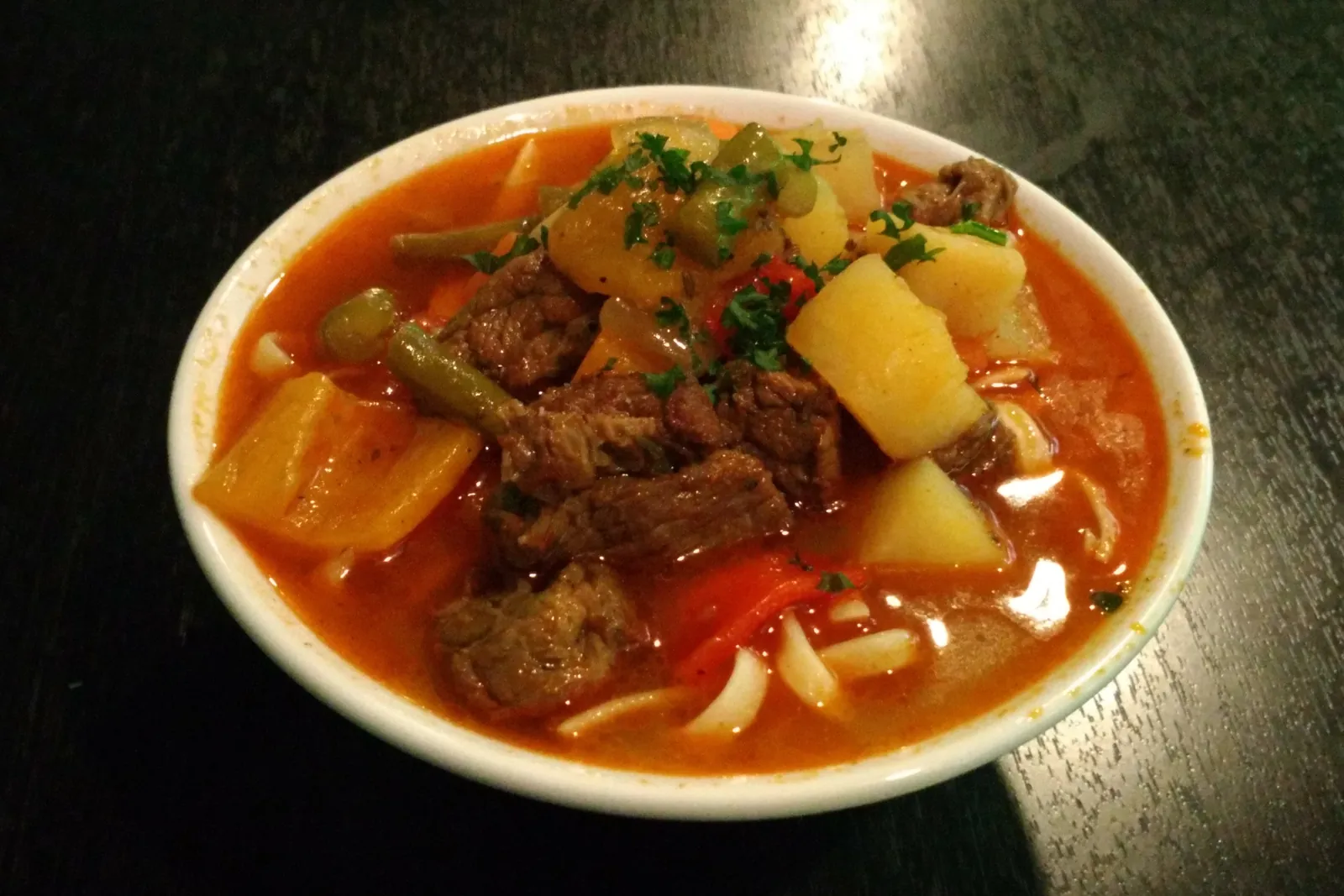
A bowl of Uzbek lagman: hand-pulled noodles in a red tomato broth with beef cubes, potato, green beans and chopped herbs Uzbekistan flag Uzbekistan 1h 55m
Dinner •Uzbek Silk Road Noodles

Uzbek Lagman

This uzbek lagman recipe is Uzbekistan's version of the great Silk Road noodle dish: hand-pulled noodles made with a rich two-egg dough, piled in deep bowls and covered with vaja — a thick, slow-simmered stew of beef cubes, potato, green Margilan radish, green beans, peppers and tomatoes, scented with star anise, cumin and garlic chives. A spoonful of fiery laza-chang on the side lets each person set their own heat. One serving is about 675 g.

Hearty & Warming

Chewy hand-pulled noodles under a thick beef, potato and green radish stew — Uzbekistan's warming Silk Road noodle dish.

Pairs Well With
Tomato and onion salad, non (flatbread) & green tea
Pasta & Noodles
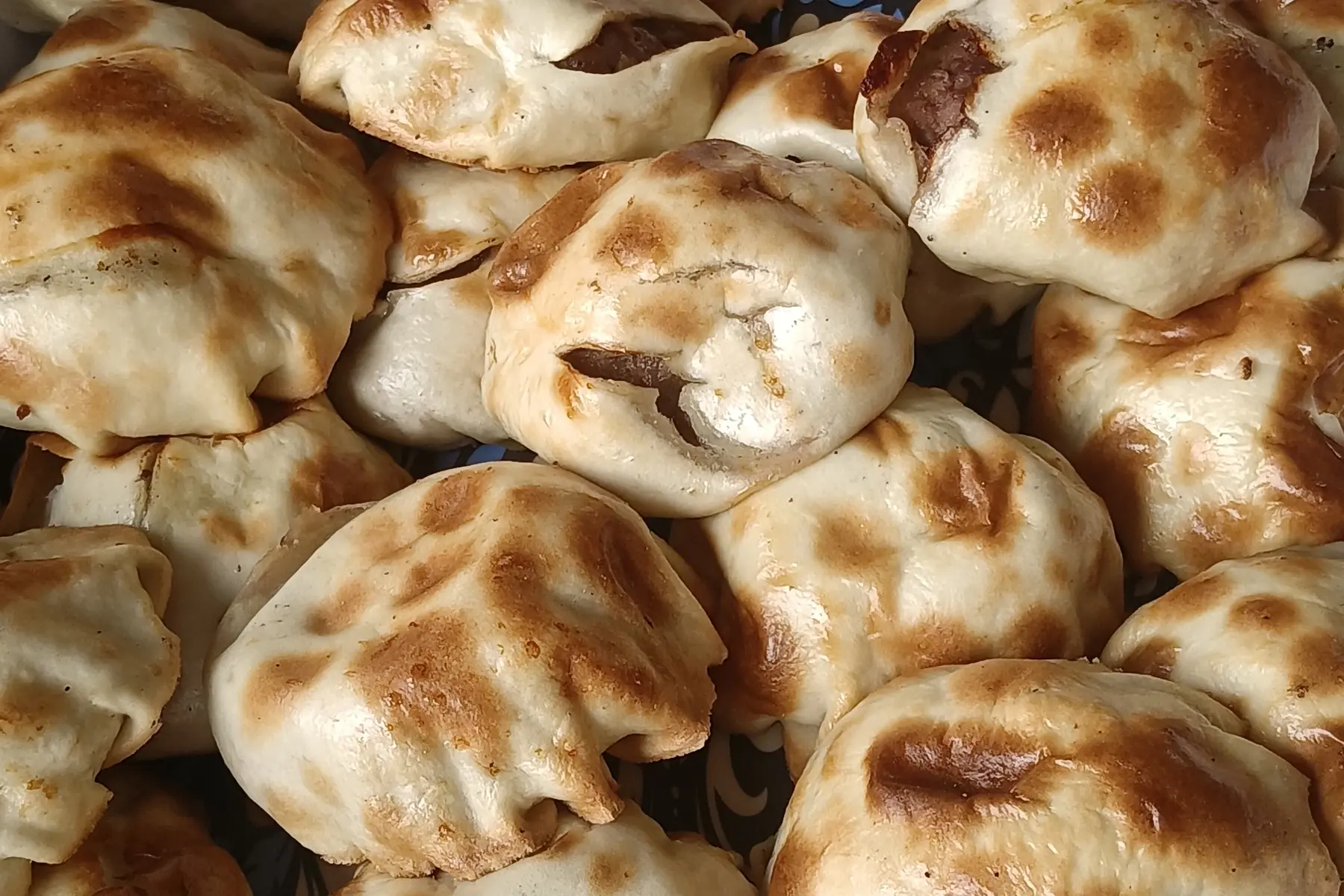
A pile of golden-brown baked Uzbek samsa with blistered flaky pastry, one split open to show the lamb filling Uzbekistan flag Uzbekistan 1h 30m
Snack & Tea •Tashkent Heritage

Samsa

This samsa recipe makes 12 golden, flaky Uzbek lamb pastries: hand-chopped lamb and sweet onion, seasoned with cumin and black pepper, folded into squares of layered pastry and baked until the crust blisters. In Uzbekistan the parcels are pressed onto the hot clay walls of a tandoor; at home a hot oven gives the same crisp, golden finish. One serving is about 225 g (2 samsa).

Hearty & Satisfying

Flaky baked pastry parcels filled with hand-chopped lamb, sweet onion and cumin — a filling, savoury snack from Uzbekistan's tandoor bakeries.

Pairs Well With
Achichuk — a sharp tomato and onion salad — and a pot of green tea.
Bœuf bourguignon — French beef braised in red wine France flag France 4h
Dinner •Burgundy Terroir

Bœuf Bourguignon

Beef braised gently in red wine until the connective tissue melts into a velvet, gelatin-rich sauce — the classic Burgundy Sunday dinner.

Cellular Repair

Beef braised in red wine until spoon-tender, with mushrooms and pearl onions.

Pairs Well With
Parsnip Purée & Steamed French Haricots Verts
High Protein
Vietnamese braised pork belly with golden eggs in caramel sauce Vietnam flag Vietnam 1h 45m
Dinner •One Pot

Vietnamese Braised Pork and Eggs

Pork belly slowly braised in coconut water and caramel until meltingly tender, with golden eggs that soak up the sweet-savoury sauce — the Vietnamese family dish that tastes better the next day.

Comfort & Sustained Energy

Slow-braised pork belly and eggs in coconut water and caramel.

Pairs Well With
Steamed rice & pickled mustard greens
High Protein

The Dinner Gazette

Never wonder what’s for dinner again

One email a week with easy dinner ideas from around the world — ingredients, steps and nutrition, tested in our kitchen first.

Delivered every Thursday morning. Unsubscribe anytime.



