Curated recipes from 193 countries  •  New seasonal Mediterranean issue out now

Overview

Varkenswangetjes in Bruin Bier

Flemish Pork Cheeks in Brown Beer, Belgian Pork Cheeks in Beer, Wangen in Bruin Bier

This varkenswangetjes in bruin bier recipe braises Flemish pork cheeks in Belgian brown beer — not red wine — with onion, bay, thyme and a spoonful of mustard, until the meat yields to a spoon. Unlike Spain's carrilleras, which are braised in red wine with carrot and tomato, this Belgian version gets its dark, malty sauce from beer alone. One serving is about 327 g, cheeks and sauce together.

Varkenswangetjes — pork cheeks — are a classic of Flemish home cooking and brasseries, a cut that was once cheap because it is full of connective tissue and needs hours of slow cooking. Brown beer is a Flemish staple, and the same slow-beer tradition gives Belgium its famous carbonade flamande, a beef stew braised in beer; pork cheeks in brown beer are that tradition applied to a cut that turns meltingly tender, finished with mustard, the condiment Flanders reaches for with beer dishes. In Flanders the cheeks are usually served with frites or stoemp. The hero photo shows the cheeks as served at restaurant Vltava in Helsinki, with sauerkraut and dumplings beside them — the restaurant's own sides, not the Belgian ones.

Pairs well with: Golden frites or creamy stoemp to soak up the malty beer sauce, with a glass of the same brown beer.

Provenance

Belgium flag Belgium

Flemish Heritage

Nordic & European

Time Dedication

3h 20m

25m prep • 175m cook

Batch Yield

4 Servings

609 kcal per serving

1 serving ≈ 327 g

Technical Skill

Intermediate

Medium (Slow Braise)

Meal Timing & Digestive Fit

Breakfast

Not Advised

Lunch

Hearty Midday Main

Dinner

Ideal Hearty Main

Snack & Tea

Inappropriate

Occasions: Sunday lunch, winter dinners, family gatherings, slow weekends Cost: Medium — about $5–6 per serving at home

Slow-braised pork cheeks in glossy brown beer sauce on a white plate, served with sauerkraut and dumplings

Flemish Heritage

Photo: JIP, CC BY-SA 4.0, via Wikimedia Commons

The Heritage Formulary

Measured Ingredients

Estimated cost: Medium — about $5–6 per serving at home (USD)
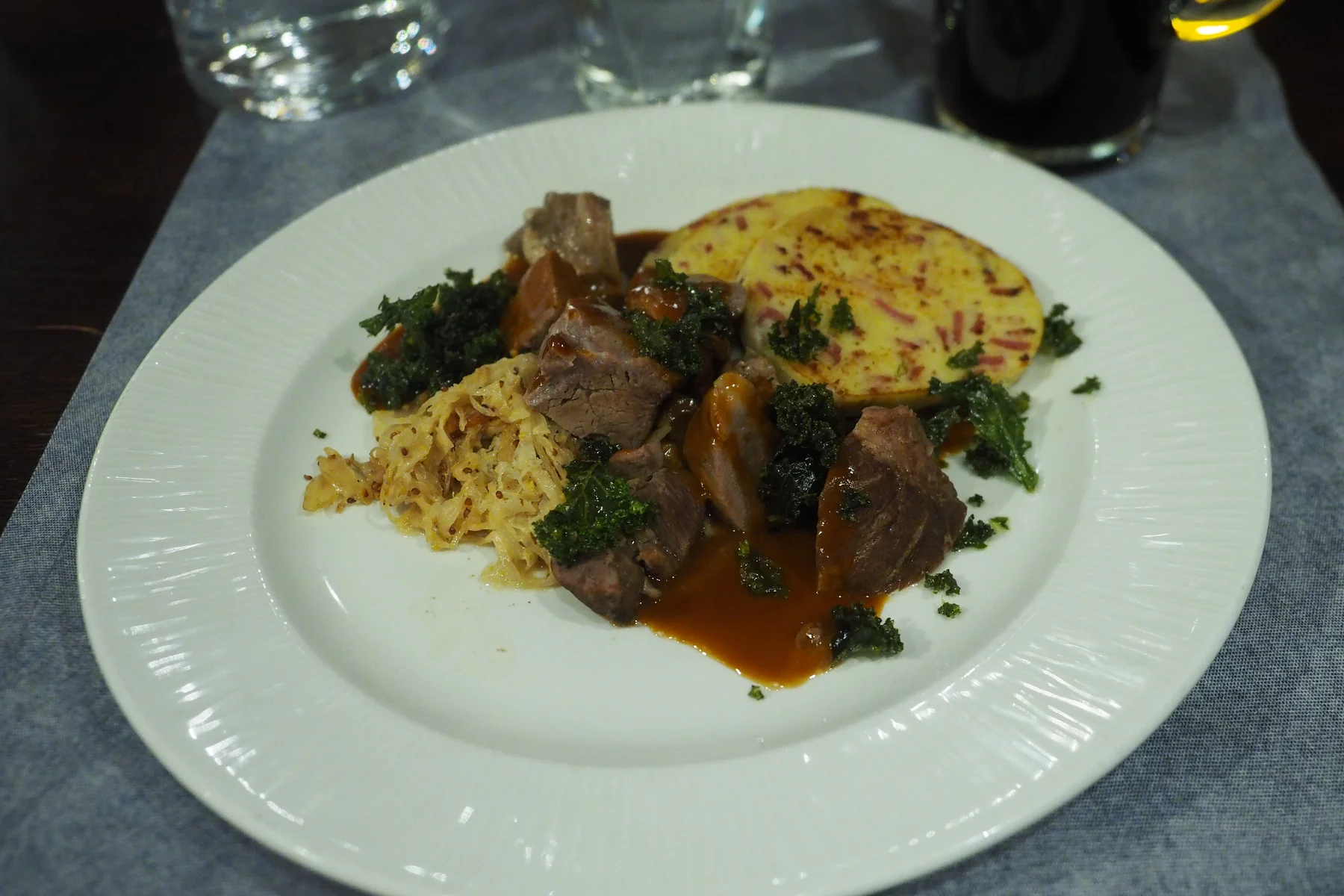
Made the Flemish way: cheeks browned, then braised low and slow in brown beer until spoon-tender, finished with mustard.

Execution Methodology & Culinary Technique

Step-by-Step Cooking Guide

Active 3h 20m
P

Prep Stage: Trim, Dice & Measure

25 Mins • Trimming & Chopping

Trim the sinew from the cheeks and pat them dry. Dice the onion, slice the garlic, strip the thyme leaves, and measure out the beer, stock, mustard, brown sugar and flour. Dust the cheeks lightly in the seasoned flour.

Maestro Tip: Dry cheeks brown; wet cheeks steam. Pat them really dry before the flour goes on.

  1. 1

    Brown the cheeks

    10 Mins Medium-high heat, ~190°C (375°F)

    Melt the butter in a heavy casserole until it foams. Brown the floured cheeks in batches, about 2 minutes a side, until deep golden. Lift them out and set aside.

    Do not crowd the pan — brown in two batches so the meat sears instead of steaming.

    Done when: Deep golden crusts on both sides, with browned bits stuck to the pot.

  2. 2

    Soften the onion

    8 Mins Medium heat, ~175°C (350°F)

    In the same pot, cook the onion for 6 minutes until soft and sweet, then add the garlic and cook for 2 minutes more until fragrant.

    Scrape the browned bits off the bottom as the onion cooks — that is where the flavour lives.

    Done when: Soft, pale-golden onion and fragrant garlic.

  3. 3

    Deglaze with brown beer

    5 Mins High heat, ~200°C (400°F)

    Pour in the brown beer and let it bubble hard for 3 minutes, scraping the pot, until it has reduced by about a third and smells malty rather than sharp.

    Letting the beer reduce now keeps the finished sauce from tasting raw and bitter.

    Done when: A syrupy beer that coats the spoon and smells rich and malty, not sharp.

  4. 4

    Braise low and slow

    2 Hours 20 Mins Low oven, 160°C (320°F)

    Return the cheeks to the pot, add the stock, bay leaves, thyme and brown sugar, and bring to a gentle simmer. Cover, put in the oven, and braise for 2 hours 20 minutes until the cheeks yield to a spoon and the sauce has thickened. Beef cheeks need 3 hours.

    Check after 90 minutes: the liquid should barely tremble, never boil hard. Top up with a splash of stock if it looks dry.

    Done when: Cheeks that fall apart with a spoon, in a glossy, dark-brown sauce.

  5. 5

    Finish with mustard

    12 Mins Medium heat, ~175°C (350°F)

    Lift the cheeks out and keep warm. Remove the bay leaves, stir in the Dijon mustard and the apple cider vinegar, and simmer the sauce for 5 minutes until it coats the back of a spoon. Taste for salt, return the cheeks to the sauce, and let them rest for 5 minutes before serving.

    The mustard and vinegar go in last — they lift the whole sauce, but boiling them for too long dulls them.

    Done when: A glossy sauce that coats a spoon, with tender cheeks warmed through.

Finishing Touches & Plating

Spoon the cheeks and their beer sauce over stoemp or beside a pile of frites, and put extra sauce on the table — this is a dish for mopping up.

Nutritional Physiology & Benefits

Nutrition

Energy

609

kcal / serving

Protein

38g

Complete AA

Carbs

18g

Complex

Fats

40g

Healthy

Per serving (4 servings · 1 serving ≈ 327 g)
Energy609 kcal
Protein38 g
Carbohydrates18 g
Fat40 g
Fibre1.6 g
Sugar6.7 g
Sodium1091 mg
Per 100g
Energy186 kcal
Protein11.5 g
Carbohydrates5.6 g
Fat12.2 g
Fibre0.5 g
Sugar2 g
Sodium334 mg

Nutrition values are estimated — calculated from USDA FoodData Central values for the listed ingredients.

Vitamins & minerals: The pork cheeks supply protein, iron, zinc and vitamin B12, the onion adds vitamin C, and the brown beer contributes small amounts of B vitamins from the malt and yeast.

High in Protein

One serving carries about 38 g of protein from the pork cheeks, which makes this a genuinely filling main course.

Iron & B12

Pork cheeks supply iron, zinc and vitamin B12, nutrients the body uses to make red blood cells and keep energy steady.

Onion & Thyme Goodness

The onion cooked in the sauce adds vitamin C, and the thyme adds small amounts of iron and vitamin K.

Food Pairings

What to Eat With

To optimize nutrient absorption and elevate the sensory depth, pair with these authentic accompaniments:

Sides

Frites

Crisp Belgian frites are the classic partner — their salt and crunch cut the richness of the beer sauce, and they are made for scooping it up.

Stoemp

Creamy mashed potato and vegetable stoemp is the Flemish home-style bed for this braise — it soaks up the sauce and turns the dish into a complete plate.

Vegetables

Braised Red Cabbage

Sweet-sour red cabbage adds colour, crunch and acidity next to the soft, rich meat, and its gentle sourness echoes the vinegar in the sauce.

Drinks

The Same Brown Beer

Serve the same brown beer you cooked with — the beer in the glass and the beer in the sauce match each other perfectly.

Complete menu

Serve the varkenswangetjes over stoemp or beside frites with braised red cabbage, and finish with a light fruit dessert such as poached pears.

Digestive Guardrails

What NOT to Combine

To prevent digestive distress, sluggishness, or palate clash, avoid pairing the dish with these elements:

Undercooked Cheeks

Pork cheeks are full of connective tissue and stay tough unless braised long enough — do not rush them or serve them pink in the middle. This is general food information, not medical advice.

Very Salty Sides

The stock, the mustard and the reduced beer sauce are already salty, so cured meats or salty cheese on the side push one meal too far. This is general food information, not medical advice.

General information only, not medical advice — consult a doctor for personal dietary decisions.

Who Should Eat It

Who Should Eat

  • General adultsA rich, slow-cooked dinner — about 38 g protein per serving, best with frites or stoemp.
  • ChildrenThe meat is spoon-tender and easy to eat, but the sauce tastes strongly of beer (the alcohol cooks off) — serve a small portion and check the flavour suits them.
  • ElderlySoft meat that needs almost no chewing; serve a modest portion with stoemp.
  • Pregnant womenFine when braised right through and served hot; the alcohol in the beer mostly evaporates during the long braise. Ask your clinician about portions.
  • Breastfeeding womenA filling, iron-rich meal; one serving with vegetables is a good dinner.
  • AthletesAbout 38 g protein with carbohydrate from the frites or stoemp makes this a strong recovery dinner.
  • Weight gainRich and easy to eat in a good amount, especially with frites, stoemp and extra sauce.
  • Weight lossFilling at about 609 kcal a serving; keep the portion as stated and load the plate with red cabbage instead of extra frites.

Health Conditions — Adjust or Avoid

Conditions

  • DiabetesVery little carbohydrate in the cheeks and sauce themselves; count the frites or stoemp served with it. Ask your clinician about portions.
  • High blood pressureOne serving carries a fairly high amount of sodium from the stock, the mustard and the reduced sauce — do not add extra salt at the table. Ask your clinician about portions.
  • Kidney diseaseThe dish is high in protein and the sauce contains potassium; portions should stay modest. Ask your clinician about portions.
  • GoutMeat is the main purine source here, so keep to one modest serving and drink water with the meal. Ask your clinician about portions.
  • Stomach issuesA rich, fatty braise can be heavy on a sensitive stomach; eat slowly, take a smaller portion, and skip the beer sauce if it bothers you. Ask your clinician about portions.
  • Cardiovascular diseaseThe dish is rich in fat, so one modest serving with a big plate of vegetables is a better balance than a second helping. Ask your clinician about portions.
  • Fatty liverThe dish is energy-dense, so keep portions modest and avoid eating it late at night. Ask your clinician about portions.
  • Food allergiesContains wheat (gluten) from the flour dusting and barley (gluten) in the beer, mustard, and milk (butter). People with wheat allergy should use rice flour and a gluten-free beer. Ask your clinician about safe alternatives.
  • Special therapeutic dietsNot suitable for a low-fat therapeutic diet as written; a lighter version changes the dish. Ask your clinician about safe alternatives.

If you have a medical condition, consult your doctor before changing your diet.

Storage & Use

Storage & Use

How to store
Cool quickly and store the cheeks in their sauce in a covered container.
In the fridge
Keeps 3 days in the fridge at 4°C (40°F) or below; the flavour improves overnight.
In the freezer
Up to 3 months in the sauce, in portions.
How to reheat
Reheat gently in a covered pan until steaming hot, to 74°C (165°F); add a splash of stock if the sauce is too thick.
Freezing recommended
Yes — in the sauce.
Signs it has spoiled
Sour smell, slimy surface, or mould.

More recipes to explore

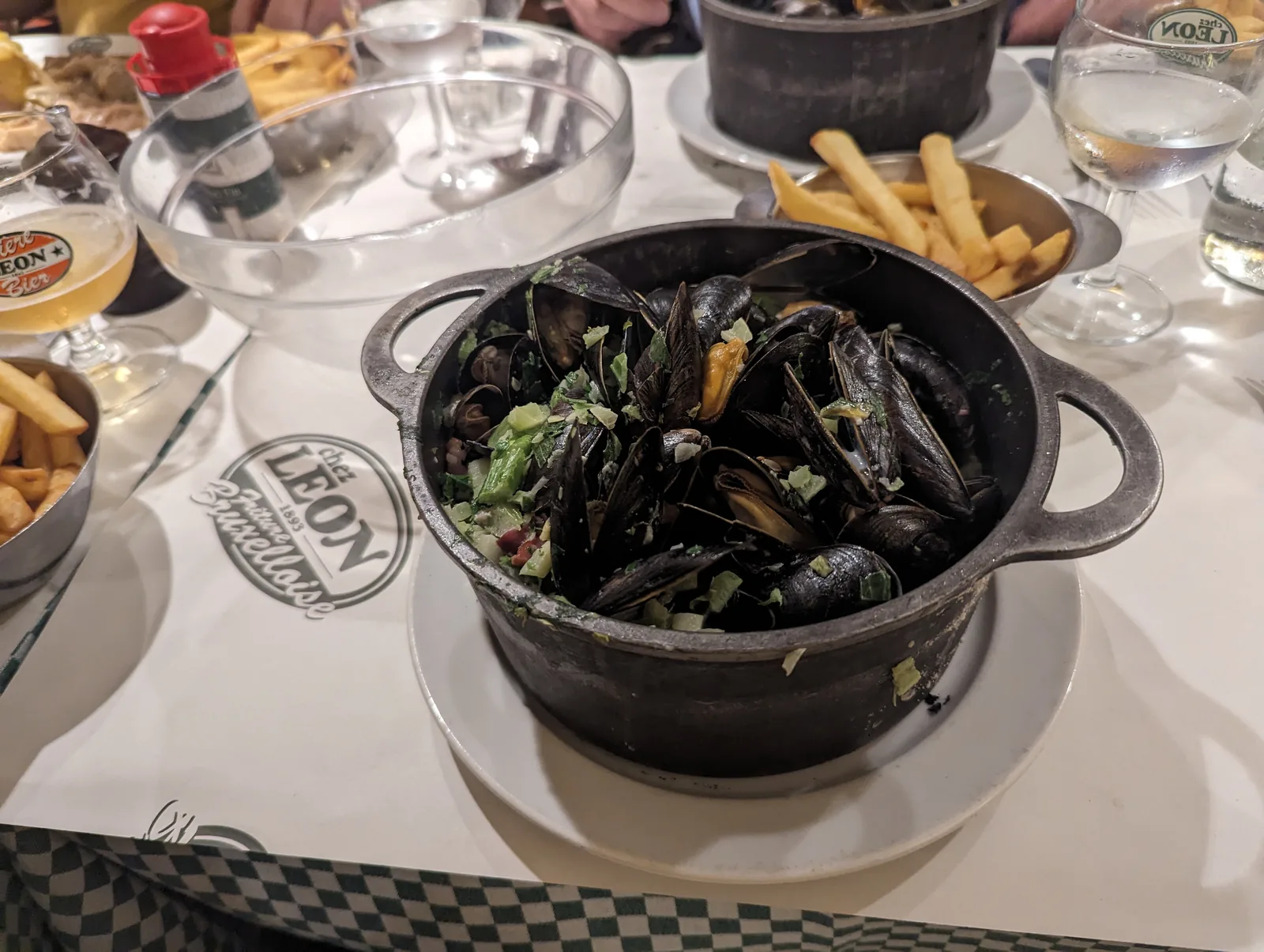
Moules-frites — a black pot of steamed mussels with herbs, served with golden fries at a Brussels brasserie Belgium flag Belgium 1h
Dinner •Brussels Brasserie Classic

Moules-Frites

This moules frites recipe makes the plate Belgium is proudest of: a black pot of mussels steamed open in white wine, shallots and cream, served with a heap of crisp, twice-cooked fries and a pot of mayonnaise. The mussels are sweet and briny, the broth is made for dipping, and the fries stay crisp if you keep them out of the pot. One serving is about 350 g.

Seaside Comfort

Sweet mussels steamed in white wine and cream, piled next to golden twice-cooked fries.

Pairs Well With
Crisp Belgian lager & mayonnaise
High Protein
Belgian waffles — a golden Brussels waffle topped with whipped cream and icing sugar on a white plate Belgium flag Belgium 1h 35m
Breakfast •Brussels Bakery Classic

Belgian Waffles

This Belgian waffles recipe makes the light, yeasted kind: a risen batter cooked in a hot iron until the outside is crisp and golden and the inside stays soft and airy. The deep pockets hold butter, syrup or berries, and a dusting of icing sugar is all they really need. This recipe makes 8 waffles; one serving is 2 waffles, about 210 g. Nutrition is for the plain waffles, before toppings.

Weekend Breakfast Treat

Light, yeasted Brussels waffles with deep pockets, crisp outside and soft inside.

Pairs Well With
Strong coffee & fresh berries
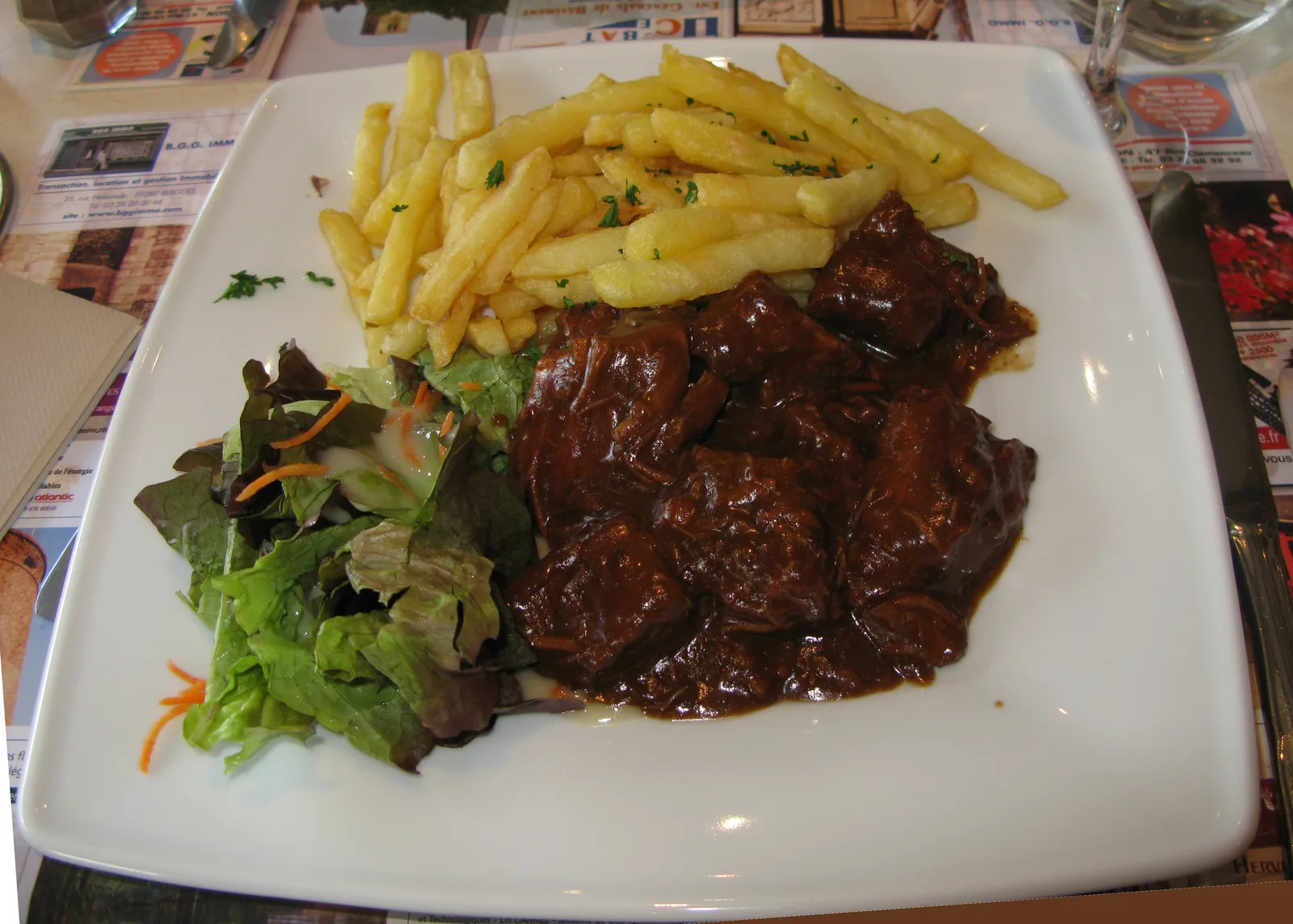
Carbonade flamande — dark beer-braised beef stew with fries and a small salad on a white plate Belgium flag Belgium 2h 55m
Dinner •Flemish Farmhouse Classic

Carbonade Flamande

This carbonade flamande recipe is Flanders' answer to the French beef stew: chunks of beef braised for hours in dark Belgian ale with sweet caramelised onions, thyme and bay, thickened the old way with slices of bread spread with mustard. The sauce turns dark, glossy and sweet-sour, and the beef goes spoon-tender. One serving is about 250 g, not counting the fries or potatoes served alongside.

Slow Sunday Comfort

Beef braised low and slow in dark Belgian ale with onions and mustard bread.

Pairs Well With
Dark Belgian ale & fries
High Protein
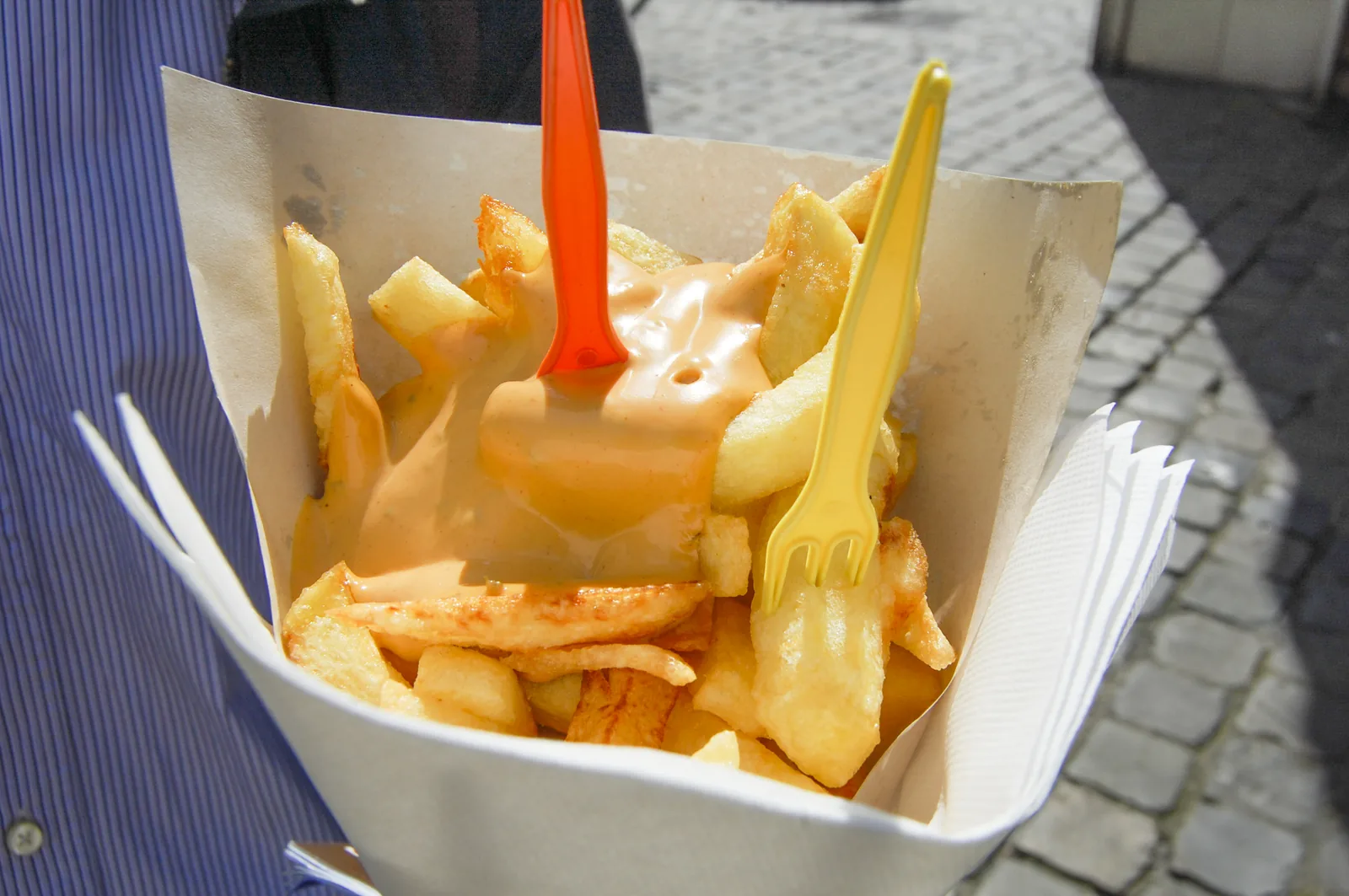
A paper cone of golden Belgian fries topped with andalouse sauce and two small plastic forks. Belgium flag Belgium 55m
Snack & Tea •Brussels Friterie Classic

Belgian Fries

Belgian fries are the real thing: thick batons of floury potato, fried twice — once gently to cook them through, once hot to shatter the outside — and served in a paper cone with andalouse sauce. One serving is about 253 g.

Crisp & Golden

Thick-cut potatoes fried twice in vegetable oil — crisp outside, fluffy inside, with andalouse sauce.

Pairs Well With
Serve hot in a paper cone with andalouse sauce and a cold lager.
Quick Prep (<30m)

The Dinner Gazette

Never wonder what’s for dinner again

One email a week with easy dinner ideas from around the world — ingredients, steps and nutrition, tested in our kitchen first.

Delivered every Thursday morning. Unsubscribe anytime.