Curated recipes from 193 countries  •  New seasonal Mediterranean issue out now

Overview

Waakye

Wakye, Shinkafa da Wake

This waakye recipe simmers black-eyed peas and rice together with dried sorghum leaves until the whole pot turns a deep reddish-brown, then serves it with a boiled egg, fried plantain, spaghetti and a spoonful of shito. It is Ghana's beloved street-food plate, sold from morning stalls across Accra. One serving is about 510 g.

Waakye comes from the Dagbani language of northern Ghana, where the Mole-Dagbon people first cooked rice and beans together with red dried sorghum leaves and kaun, a powdered limestone that softens the beans and deepens the colour. The dish spread south with Hausa settlers in the Zongo communities, and in Accra the stall of Auntie Muni (Imoro Muniratu) helped make waakye the city's favourite street food. It is sold from morning stalls, wrapped in leaves, with spaghetti, egg, plantain, shito and salad piled on top.

Pairs well with: Boiled egg, fried plantain, spaghetti & shito

Provenance

Ghana flag Ghana

Accra Street-Food Classic

African Heritage

Time Dedication

1h 40m

20m prep • 80m cook

Batch Yield

6 Servings

750 kcal per serving

1 serving ≈ 510 g

Technical Skill

Intermediate

Intermediate (Slow Simmer)

Meal Timing & Digestive Fit

Breakfast

Not Advised

Lunch

Prime Metabolic Fit

Dinner

Ideal Hearty Main

Snack & Tea

Inappropriate

Occasions: Street-food lunch, family lunch, Saturday morning, everyday staple Cost: Low — about $2–3 per serving at home
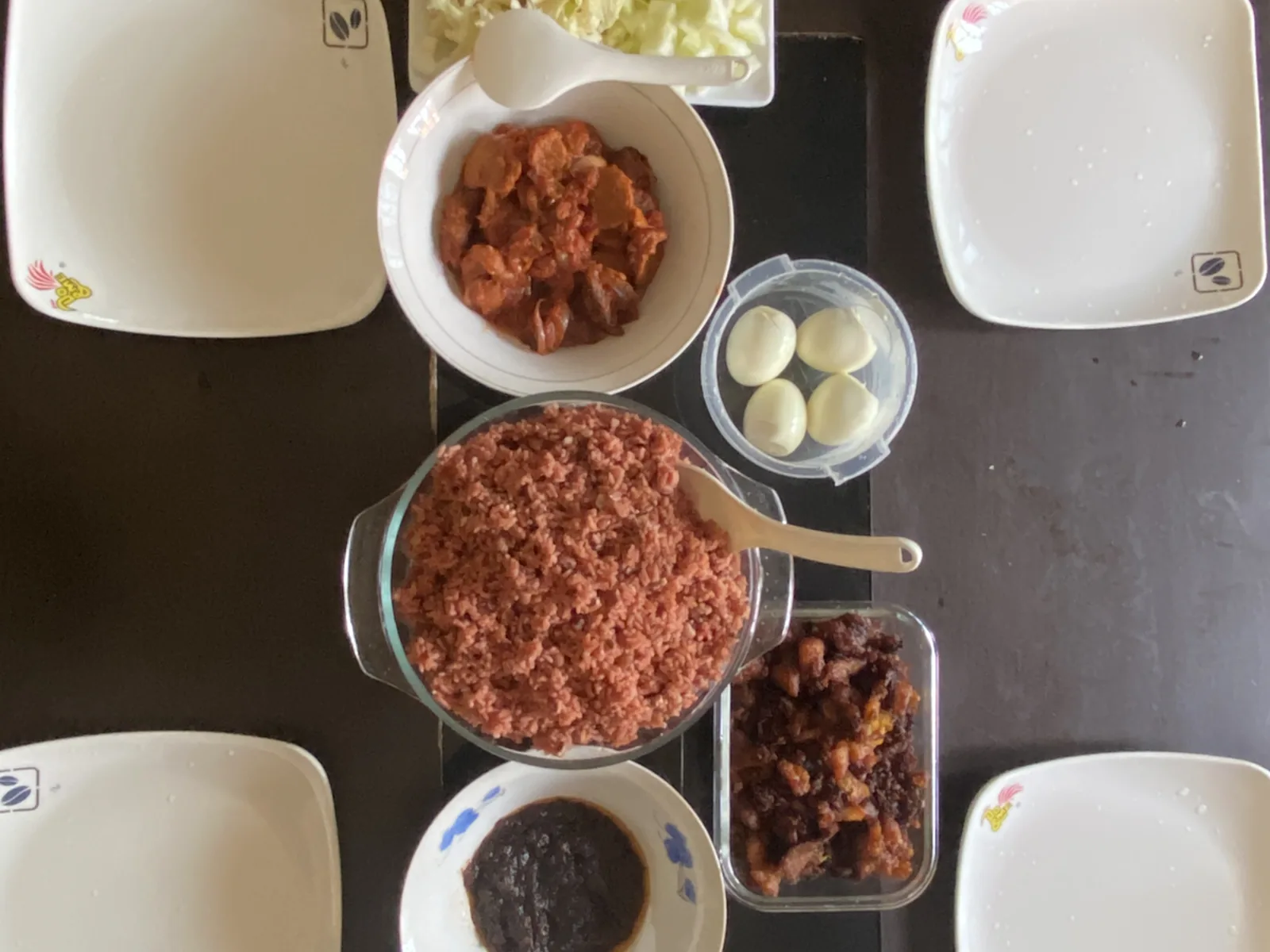
A table of waakye with salad, spaghetti, shito, stew, boiled eggs and fried plantain in Ghana

Accra Street-Food Classic

Photo: Maame1Yaa, CC BY-SA 4.0, via Wikimedia Commons

The Heritage Formulary

Measured Ingredients

Estimated cost: Low — about $2–3 per serving at home (USD)

Good waakye is evenly reddish-brown, each grain separate, with beans soft all the way through — never pale, hard or sticky.

Execution Methodology & Culinary Technique

Step-by-Step Cooking Guide

Active 1h 40m
P

Prep Stage: Soak the Peas, Ready the Sides

20 Mins • Soaking & Measuring

Soak the black-eyed peas overnight and drain them. Rinse the rice, tie the sorghum leaves into a bundle, and set out the eggs, plantains, spaghetti and shito so the whole plate comes together while the pot simmers.

Maestro Tip: Soaking the peas overnight is what makes them cook soft in the same time as the rice — skip it and the beans stay hard.

  1. 1

    Boil the Peas with the Sorghum Leaves

    30 Mins Rolling boil, 100°C (212°F)

    Put the drained peas in a large pot with the sorghum-leaf bundle, the dissolved kaun and 1200ml (5 cups) of water. Bring to a rolling boil, then lower the heat and simmer for 30 minutes, until the peas are almost soft and the water has turned a deep reddish-brown.

    Do not add salt yet — salt added too early keeps the beans firm.

    Done when: The peas are almost soft when pressed, and the water is deep red.

  2. 2

    Add the Rice and Simmer

    30 Mins Low heat, ~90°C (194°F)

    Lift out the sorghum leaves. Stir in the rinsed rice, the salt and the remaining 300ml (1 1/4 cups) of water. Cover tightly and cook on the lowest heat for 30 minutes, without lifting the lid or stirring, until the rice is tender and the water is absorbed.

    If the rice is still hard after 30 minutes, sprinkle in 60ml (1/4 cup) of hot water and steam 5 minutes more.

    Done when: The rice and beans are tender, evenly reddish-brown, and the pot is dry.

  3. 3

    Cook the Accompaniments

    10 Mins Boil 100°C (212°F); fry at medium heat, ~170°C (338°F)

    While the rice simmers, boil the eggs for 10 minutes, cool, peel and halve them. Fry the plantain slices in the oil until golden on both sides, about 4 minutes. Cook the spaghetti in salted water until tender, drain, and toss with a little oil so it does not stick.

    Fry the plantain last, so it is still hot when the plate is built.

    Done when: The eggs are firm, the plantain is golden, and the spaghetti is tender.

  4. 4

    Rest the Pot

    5 Mins Serve hot, ~70°C (158°F)

    Take the pot off the heat and rest it, still covered, for 5 minutes. Fluff the waakye gently with a fork so the beans and rice mix evenly.

    Fluff with a fork, not a spoon, so the beans do not crush.

    Done when: The waakye is fluffy, evenly red, and steams gently.

  5. 5

    Build the Plate

    5 Mins Serve hot, ~70°C (158°F)

    Scoop a mound of waakye onto a wide plate or a broad leaf. Lay the spaghetti over the top, add a spoonful of shito, then the halved egg and the fried plantain at the side. Serve immediately, while everything is hot.

    The classic order is rice first, then spaghetti, then shito, then the rest — the shito melts into the hot rice.

    Done when: The plate is piled high, red-brown rice under golden plantain and a halved egg.

Finishing Touches & Plating

Serve the waakye hot, piled on a wide plate or a leaf, with the egg, plantain, spaghetti and shito arranged around the mound — and let everyone add more shito to taste.
Nutritional Physiology & Benefits

Nutrition

Energy

750

kcal / serving

Protein

28g

Complete AA

Carbs

128g

Complex

Fats

15g

Healthy

Per serving (6 servings · 1 serving ≈ 510 g)
Energy750 kcal
Protein28 g
Carbohydrates128 g
Fat15 g
Fibre9.4 g
Sugar16.2 g
Sodium469 mg
Per 100g
Energy147 kcal
Protein5.4 g
Carbohydrates25.2 g
Fat2.8 g
Fibre1.8 g
Sugar3.2 g
Sodium92 mg

Nutrition values are estimated — calculated from USDA FoodData Central values for the listed ingredients.

Vitamins & minerals: B vitamins, iron, magnesium and potassium (black-eyed peas), vitamin C (plantain), vitamin B12 and vitamin D (egg).

Beans + Rice Energy

Black-eyed peas and rice together give slow-burning carbs and plant protein, so a waakye plate keeps you full through a long afternoon.

Colour from Real Leaves

The deep reddish-brown colour comes from dried sorghum leaves, not a dye — the same leaves give the dish its earthy flavour.

Iron and Fibre

Black-eyed peas are rich in iron and fibre, and the egg and plantain add protein and vitamin C to the plate.

Food Pairings

What to Eat With

To optimize nutrient absorption and elevate the sensory depth, pair with these authentic accompaniments:

Sides

Fried Plantain

Sweet, caramelised plantain balances the earthy beans and the fiery shito — sweetness against heat is what makes the plate work.

Vegetables

Cabbage & Tomato Salad

A crisp salad of shredded cabbage, onion and tomato adds crunch and acidity that cut through the starchy rice and beans.

Sauces

Shito

Shito, the dark Ghanaian sauce of chilli, dried fish and oil, is not optional — its smoky heat is the flavour the whole plate is built around.

Full Menus

As a Street-Food Lunch

Serve the waakye on a wide plate with everything on top, as the Accra stalls do, with a cold drink — waakye is eaten with a spoon, straight from the pile.

Complete menu

Serve a mound of waakye with spaghetti, shito, a halved boiled egg and fried plantain, plus a crisp cabbage and tomato salad.

Digestive Guardrails

What NOT to Combine

To prevent digestive distress, sluggishness, or palate clash, avoid pairing the dish with these elements:

Skipping the Soak

Unsoaked beans stay hard while the rice turns to mush, so the pot never comes together — soak the peas overnight. This is general guidance, not medical advice.

A Second Heavy Stew

Waakye is already a big, starchy plate, so a heavy, oily stew on top would double the fat. Keep the sides fresh — salad, egg and plantain are enough.

General information only, not medical advice — consult a doctor for personal dietary decisions.

Who Should Eat It

Who Should Eat

  • General adultsA filling, satisfying lunch — rice and beans with egg, plantain and shito in every bite.
  • ChildrenSuitable from age 2+ with the shito left out; the rice and beans are soft and easy to eat.
  • ElderlyVery suitable — soft rice and beans with no hard pieces; keep the shito mild.
  • Pregnant womenGenerally suitable; the beans add iron and the egg adds protein. Keep the shito moderate.
  • Breastfeeding womenGenerally suitable; a generous, energy-rich lunch — eat a full serving with the egg and plantain.
  • AthletesA good pre-training meal: rice and bean carbs for glycogen, eaten 2–3 hours before exercise, with the egg for protein.
  • Weight gainA good choice — take a generous plate with an extra egg and more plantain.
  • Weight lossKeep the rice and beans portion to about a cup and load the plate with the salad instead — the plate itself is energy-dense.

Health Conditions — Adjust or Avoid

Conditions

  • DiabetesThe rice and beans are the main source of carbs — keep the portion to about a cup and load the plate with salad. Ask your clinician about portion size.
  • High blood pressureMost of the sodium comes from the salt and the shito; use half the shito and season lightly. Ask your clinician about a suitable portion.
  • Kidney diseaseKeep the portion modest and use less shito; ask your clinician about frequency.
  • GoutWaakye itself is low in purines; the egg and shito matter more — keep the egg to one and the shito modest.
  • Stomach issuesUsually gentle, but shito and chilli can irritate a sensitive stomach — leave the shito out and keep the plate mild.
  • Cardiovascular diseaseA reasonable choice in a modest portion; the fried plantain adds fat, so balance the rest of the day with lighter food.
  • Fatty liverKeep the rice and beans portion modest and favour the salad and egg over extra plantain.
  • Food allergiesContains egg and wheat (spaghetti); shito usually contains dried fish and sometimes shrimp — check the label if you have fish or shellfish allergies.
  • Special therapeutic dietsIf you follow a prescribed low-sodium diet, use no added salt and skip the shito, and check with your clinician.

If you have a medical condition, consult your doctor before changing your diet.

Storage & Use

Storage & Use

How to store
Cool completely, then pack the rice and beans into airtight containers; store the sides separately.
In the fridge
Waakye 3 days, in the fridge; plantain and egg 1 day.
In the freezer
Waakye 2 months, in portions.
How to reheat
Reheat in a pan with a splash of water, or microwave, until heated through to 74°C (165°F) inside.
Freezing recommended
Yes — the rice and beans freeze well up to 2 months; thaw overnight in the fridge.
Signs it has spoiled
Sour smell, slimy beans, or mould on the surface.

More recipes to explore

Smooth balls of Ghana banku, pale fermented maize dough wrapped in plastic, in a bowl Ghana flag Ghana 55m
Lunch •Ghanaian Home Table

Ghana Banku

This ghana banku recipe turns fermented maize and cassava dough into smooth, tangy balls with a soft, stretchy bite. The dough is mixed, left to ferment for two to three days, then kneaded in the pot until it pulls away from the sides — that is when you know it is ready. One serving is about 275 g.

Comfort & Warmth

Soft, tangy fermented maize dough balls, shaped by hand and served hot with soup or stew.

Pairs Well With
Light soup or kontomire stew & grilled fish
Fermented / Gut Health
A plate of Ghana kontomire stew, dark green cocoyam leaves in a rich orange egusi and tomato sauce Ghana flag Ghana 1h 5m
Dinner •Akan Home Table

Ghana Kontomire Stew

This ghana kontomire stew recipe simmers cocoyam leaves with egusi, tomato and chilli into a rich palava sauce, the Akan classic also called palaver sauce. The leaves are boiled first until tender, the egusi is left to set in the tomato base, and everything comes together dark green and nutty. One serving is about 260 g.

Comfort & Warmth

Cocoyam-leaf stew with egusi, tomato and chilli — Ghana's palava sauce, made vegetarian.

Pairs Well With
Steamed white rice & boiled plantain
Tagliatelle al ragù Bolognese in a bowl with Parmigiano-Reggiano Italy flag Italy 4h 25m
Lunch •Emilia-Romagna

Tagliatelle al Ragù Bolognese

Slow-braised soffritto and coarse ground heritage meats layered over handmade egg yolk dough for mid-day stamina.

Lean Protein

Slow-simmered beef ragù tossed through fresh egg tagliatelle.

Pairs Well With
Bitter Radicchio & Aged Balsamico di Modena
Pasta & Noodles • High Protein
Pad kra pao gai — Thai holy basil chicken with fried egg and rice Thailand flag Thailand 30m
Lunch •Bangkok Street Flame

Pad Kra Pao Gai

High-heat wok flash of holy basil and crushed chillies over minced chicken, served over jasmine rice with a crispy-edged fried egg.

High Energy

Capsaicin brings the heat; holy basil adds a peppery, clove-like aroma.

Pairs Well With
Chilled Cucumber Salad & Fish Sauce Lime Dip
High Protein • Quick Prep (<30m)

The Dinner Gazette

Never wonder what’s for dinner again

One email a week with easy dinner ideas from around the world — ingredients, steps and nutrition, tested in our kitchen first.

Delivered every Thursday morning. Unsubscribe anytime.