Curated recipes from 193 countries  •  New seasonal Mediterranean issue out now

Overview

Aachener Printen

Aachen Printen, Printen, Aachen Gingerbread

This aachener printen recipe makes Aachen's famous hard spiced cake: a dark syrup dough scented with anise, cinnamon and cloves, rested overnight, then baked firm and finished with a lemon glaze. Unlike soft, nut-rich lebkuchen, real Printen snap when you bite them and soften slowly as they keep. One serving is about 90 g (two pieces).

Aachener Printen were first made in Aachen in 1820, when the city's bakers adapted the hard spiced biscuit of Dinant in Belgium. Honey was the original sweetener, but when Napoleon banned trade with the United States in 1809, Aachen's bakers switched to syrup made from local sugar beets — and that syrup is still the heart of the recipe. The name is now a protected geographical indication, so only Printen baked in or near Aachen may carry it.

Pairs well with: Black coffee, hot chocolate & a glass of milk

Provenance

Germany flag Germany

Aachen Christmas Classic

Nordic & European

Time Dedication

55m

30m prep • 25m cook

Batch Yield

12 Servings

264 kcal per serving

1 serving ≈ 90 g

Technical Skill

Intermediate

Medium (Rested Dough)

Meal Timing & Digestive Fit

Breakfast

Not Advised

Lunch

Inappropriate

Dinner

Inappropriate

Snack & Tea

Ideal Light Bite

Occasions: Christmas, Advent, afternoon coffee, Christmas markets Cost: Low — about $1–2 per serving at home
Three Aachener Printen on a white background — one with a white glaze, one coated in dark chocolate and one topped with an almond

Aachen Christmas Classic

Photo: Sascha Faber, CC BY-SA 4.0, via Wikimedia Commons

The Heritage Formulary

Measured Ingredients

Estimated cost: Low — about $1–2 per serving at home (USD)

Aachener Printen with syrup, rye flour, anise and candied peel, baked hard and finished with a lemon glaze.

Execution Methodology & Culinary Technique

Step-by-Step Cooking Guide

Active 55m
P

Prep Stage: Syrup, Spices and the Overnight Rest

30 Mins • Warming & Kneading

Warm the syrup with the brown sugar until it dissolves, then cool it to lukewarm. Sift the flours with the cocoa and spices, stir in the candied peel, then knead in the syrup and the dissolved baking soda until you have a stiff, dark dough. The dough must rest, covered, overnight — traditionally for days — so the spices deepen and the dough firms up enough to roll.

Maestro Tip: Do not skip the rest: a fresh dough is sticky and bakes soft, while a rested dough rolls cleanly and bakes hard, the way real Printen should.

  1. 1

    Warm the Syrup and Sugar

    10 Mins Warming, about 60°C (140°F)

    Put the sugar beet syrup and brown sugar in a saucepan over low heat and stir until the sugar has completely dissolved. Take it off the heat and leave it until it is just lukewarm — about 40°C (104°F) — so it will not cook the flour.

    Do not boil the syrup: a gentle warm is enough, and boiling makes the dough tough.

    Done when: A smooth, dark syrup with no sugar grains left.

  2. 2

    Mix and Knead the Dough

    15 Mins Room temperature, about 20°C (68°F)

    Sift the rye and plain flour with the cocoa, cinnamon, anise, cloves, coriander, cardamom, ginger and allspice into a large bowl. Stir in the candied orange and lemon peel, then pour in the lukewarm syrup and the baking soda dissolved in 1 tablespoon of warm water. Knead for 5 minutes until you have a stiff, dark, slightly sticky dough.

    If the dough sticks to your hands, dust them with flour rather than adding water — extra water makes Printen soft.

    Done when: A stiff, dark dough that holds its shape when pressed.

  3. 3

    Rest the Dough Overnight

    5 Mins + Overnight Room temperature, about 20°C (68°F)

    Press the dough into a flat disc, wrap it tightly in cling film and leave it at room temperature overnight, or for up to 3 days. This rest is what gives Printen their deep flavour and hard bite.

    Do not put the dough in the fridge — cold dough cracks when you roll it.

    Done when: A firm, fragrant dough that has darkened slightly.

  4. 4

    Roll, Cut and Top

    15 Mins Room temperature, about 20°C (68°F)

    Heat the oven to 180°C (350°F) and line two baking trays with baking paper. Roll the dough out to 5 mm thick on a floured surface and cut it into rectangles about 8 cm by 4 cm. Set the pieces on the trays and press a whole almond onto the top of half of them.

    Roll the dough evenly — thin spots burn while thick spots stay soft.

    Done when: Even 5 mm rectangles, half topped with an almond.

  5. 5

    Bake Until Firm

    25 Mins Oven at 180°C (350°F)

    Bake at 180°C (350°F) for 20–25 minutes, until the Printen are dark, firm to the touch and dry at the edges. They will feel almost too hard when they come out — that is correct, they are meant to be hard.

    Do not overbake past 25 minutes: the syrup can burn and turn bitter.

    Done when: Dark, firm biscuits that do not bend when lifted.

  6. 6

    Glaze and Store

    10 Mins Cooling, about 40°C (104°F)

    While the Printen are still warm, mix the icing sugar with the lemon juice to a thin glaze and brush it over the plain pieces. Leave the almond-topped ones unglazed if you like. Cool completely on a rack, then store in an airtight tin — they are best after 2–3 days, when the flavour has mellowed.

    Glaze while warm so the glaze sets in a thin, even coat instead of sitting white and thick.

    Done when: A thin, set glaze; Printen that snap cleanly when broken.

Finishing Touches & Plating

Serve the Aachener Printen with black coffee or hot chocolate — they are hard, so dunking is traditional, and they keep their snap for weeks in a tin.


Nutritional Physiology & Benefits

Nutrition

Energy

264

kcal / serving

Protein

4g

Complete AA

Carbs

59g

Complex

Fats

2g

Healthy

Per serving (12 servings · 1 serving ≈ 90 g)
Energy264 kcal
Protein4 g
Carbohydrates59 g
Fat2 g
Fibre3.5 g
Sugar34.3 g
Sodium118 mg
Per 100g
Energy288 kcal
Protein4.4 g
Carbohydrates64.1 g
Fat2.5 g
Fibre3.8 g
Sugar37.4 g
Sodium129 mg

Nutrition values are estimated — calculated from USDA FoodData Central values for the listed ingredients.

Vitamins & minerals: Iron and B vitamins (rye and wheat flour), vitamin E (almonds), small amounts of vitamin C (candied citrus peel).

Rye Brings Fibre

About 3.5 g of fibre per serving comes from the rye and wheat flour in the dough.

No Fat in the Dough

The traditional Printen dough has no butter, egg or milk — the sweetness comes from syrup and brown sugar, and the fat is only about 2.3 g per serving.

Slow-Release Energy

With about 58.7 g of carbohydrate per serving, two Printen with coffee are a classic energy-rich afternoon snack.

Food Pairings

What to Eat With

To optimize nutrient absorption and elevate the sensory depth, pair with these authentic accompaniments:

Drinks

Black Coffee

Black coffee is the classic partner — dunking softens the hard biscuit, and the bitterness balances the sweet syrup.

Hot Chocolate

Hot chocolate echoes the cocoa in the dough and is the favourite pairing at Aachen's Christmas market.

A Glass of Milk

Cold milk softens the hard bite for children and makes the spices taste rounder.

Sides

Dark Chocolate Dip

Dipping half of each Printen in melted dark chocolate is a traditional Aachen variation — the bitter chocolate cuts the syrup sweetness.

Complete menu

Aachener Printen with black coffee and hot chocolate.

Digestive Guardrails

What NOT to Combine

To prevent digestive distress, sluggishness, or palate clash, avoid pairing the dish with these elements:

Eating Them Fresh from the Oven

Printen are at their hardest straight from the oven and need 2–3 days in a tin for the flavour to mellow — eating them too soon can feel rock hard. This is general food information, not medical advice.

Storing Them Uncovered

Left open, Printen dry out and turn brittle; keep them sealed in a tin and they stay good for weeks. This is general food information, not medical advice.

General information only, not medical advice — consult a doctor for personal dietary decisions.

Who Should Eat It

Who Should Eat

  • General adultsA hard, sweet biscuit — two pieces with coffee is a classic afternoon snack for most adults.
  • ChildrenChildren love the sweet spices, but the biscuits are very hard — break them into pieces for younger children and serve with milk.
  • ElderlySoftens nicely when dunked in tea or coffee, which suits older teeth.
  • Pregnant womenFine in moderation; the biscuits are sweet, so one piece with a hot drink is the lighter choice — ask your clinician about sugar portions if you need to.
  • Breastfeeding womenA quick energy-rich snack; the syrup and sugar give fast energy.
  • AthletesGood portable energy for a hike or a long day, with carbohydrate from the syrup and flour.
  • Weight gainEnergy-dense and easy to carry, which suits a higher-energy day.
  • Weight lossSweet and energy-dense at about 264 kcal for two pieces; one piece with black coffee is the lighter choice.

Health Conditions — Adjust or Avoid

Conditions

  • DiabetesAbout 58.7 g of carbohydrate and 34.3 g of sugar per serving; one piece is the lighter choice, and ask your clinician about portion size.
  • High blood pressureAbout 118 mg of sodium per serving, mostly from the baking soda; ask your clinician if you are on a low-sodium plan.
  • Kidney diseaseLow in protein and potassium from flour; ask your clinician whether this portion suits your plan.
  • GoutLow in purines; a spiced biscuit is not a major concern for most people with gout — ask your clinician.
  • Stomach issuesA hard, spiced biscuit that can feel heavy and may irritate a sensitive stomach; dunk it in tea and keep to one piece, and ask your clinician if your stomach keeps bothering you.
  • Cardiovascular diseaseThe fat is low but the sugar is high; enjoy one piece occasionally, and ask your clinician about the right portion for you.
  • Fatty liverA sweet, energy-dense biscuit; one piece with black coffee is the lighter way to enjoy it — ask your clinician about the right portion for you.
  • Food allergiesContains wheat and rye (gluten) and tree nuts (almonds on the topped pieces) — the main allergens in this recipe; if you have a food allergy, ask your clinician whether it is safe for you.
  • Special therapeutic dietsFollow your clinician's guidance on sugar and carbohydrate portions; this is general information, not medical advice.

If you have a medical condition, consult your doctor before changing your diet.

Storage & Use

Storage & Use

How to store
Cool completely, then store in an airtight tin at room temperature.
In the fridge
Not needed — keep in a sealed tin at room temperature for up to 6 weeks.
In the freezer
Up to 3 months, unglazed, in a sealed bag; thaw at room temperature and glaze after thawing.
How to reheat
Not reheated — eat at room temperature, or warm briefly in a low oven at 120°C (250°F) for 5 minutes to soften slightly.
Freezing recommended
Yes, unglazed — the glaze goes sticky after freezing.
Signs it has spoiled
Stale, soft texture, mould spots, or a sour smell.

More recipes to explore

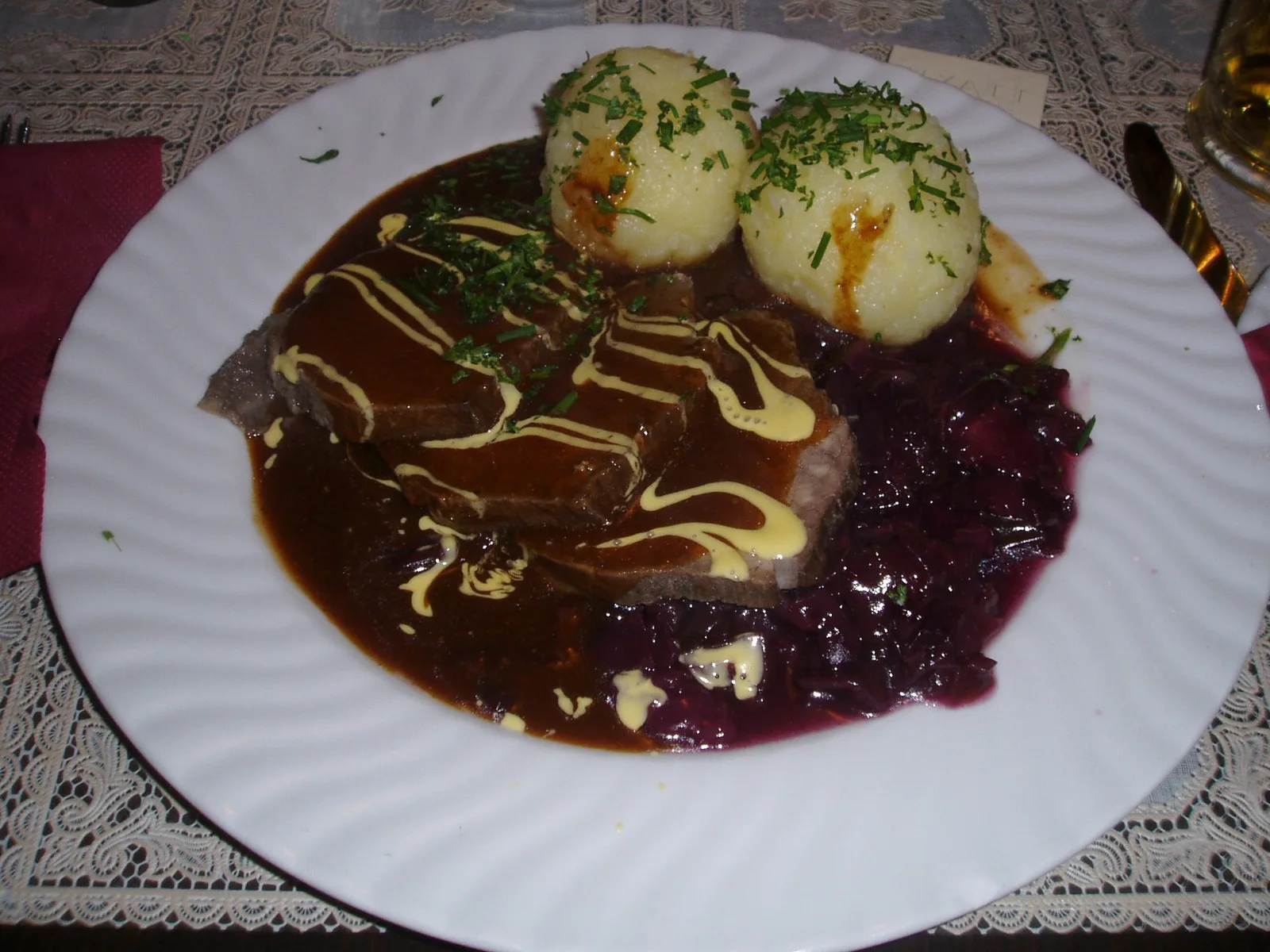
Sliced sauerbraten in dark sweet-sour gravy with potato dumplings and braised red cabbage on a white plate Germany flag Germany 3h 30m
Dinner •Rhineland Heritage

Sauerbraten

This sauerbraten recipe starts with a beef chuck roast steeped for three days in red wine vinegar, red wine and warm spices, then braised slowly until it slices like butter. The marinade becomes a dark, sweet-sour gravy thickened with crushed gingersnaps and studded with raisins, the Rhineland way. One serving is about 300 g, with gravy.

Comfort & Warmth

A slow-braised German pot roast in a sweet-sour vinegar gravy, sliced thick and served hot with potato dumplings and red cabbage.

Pairs Well With
Potato dumplings, braised red cabbage & a glass of Spätburgunder
High Protein
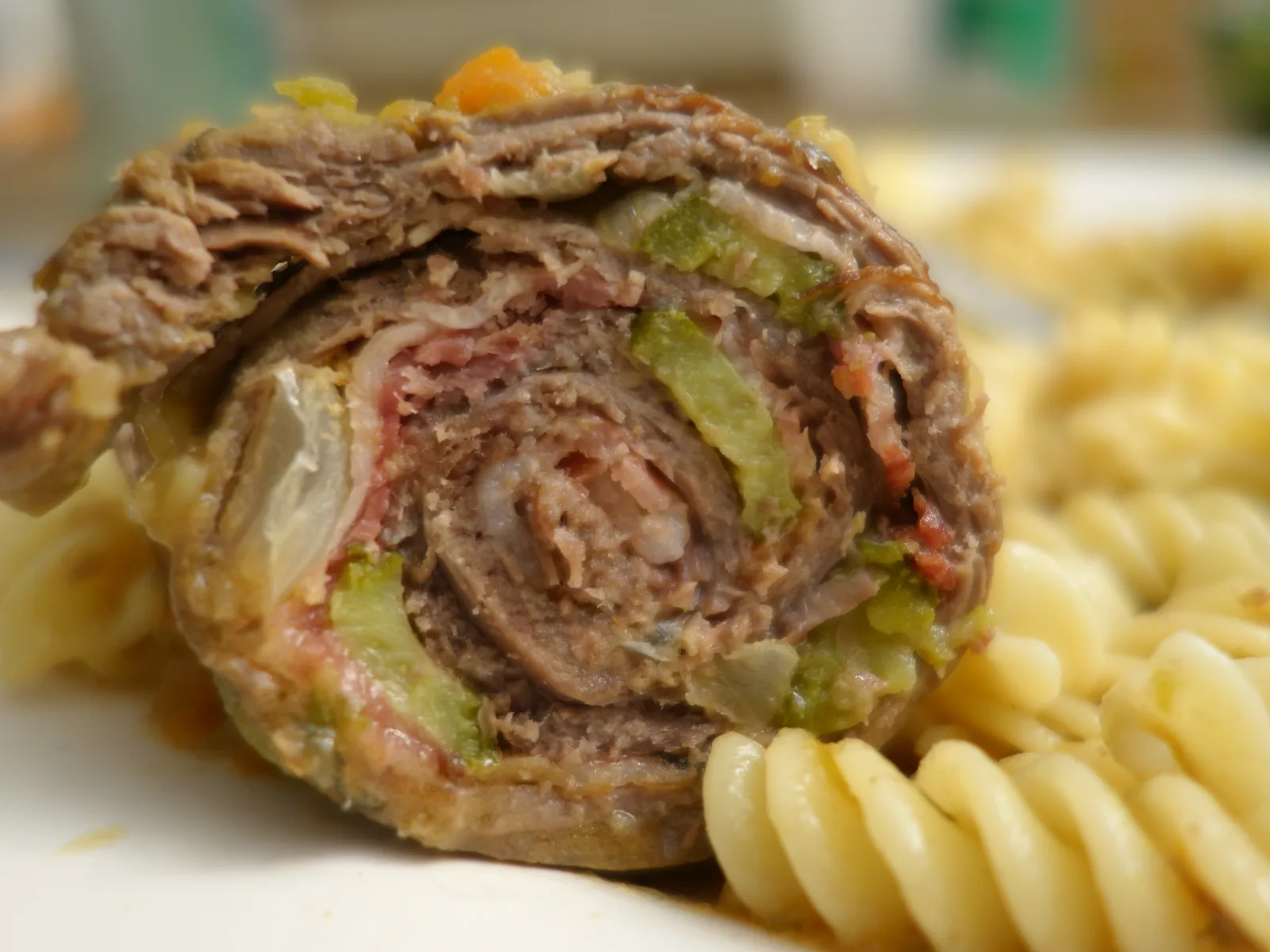
A sliced German beef roulade showing the spiral of beef, bacon and dill pickle, served with pasta Germany flag Germany 2h 10m
Dinner •German Sunday Heritage

Rouladen

This rouladen recipe spreads thin slices of top round with mustard, then rolls them around smoky bacon, dill pickles and onion into neat parcels. The rolls are browned, then braised slowly in red wine and beef stock until tender, and the braising liquid becomes a rich gravy. One serving is about 375 g — two rolls with gravy.

Comfort & Warmth

Thin beef rolls stuffed with bacon, dill pickle and onion, braised in red wine gravy and served hot with dumplings.

Pairs Well With
Potato dumplings, braised red cabbage & a German lager
High Protein
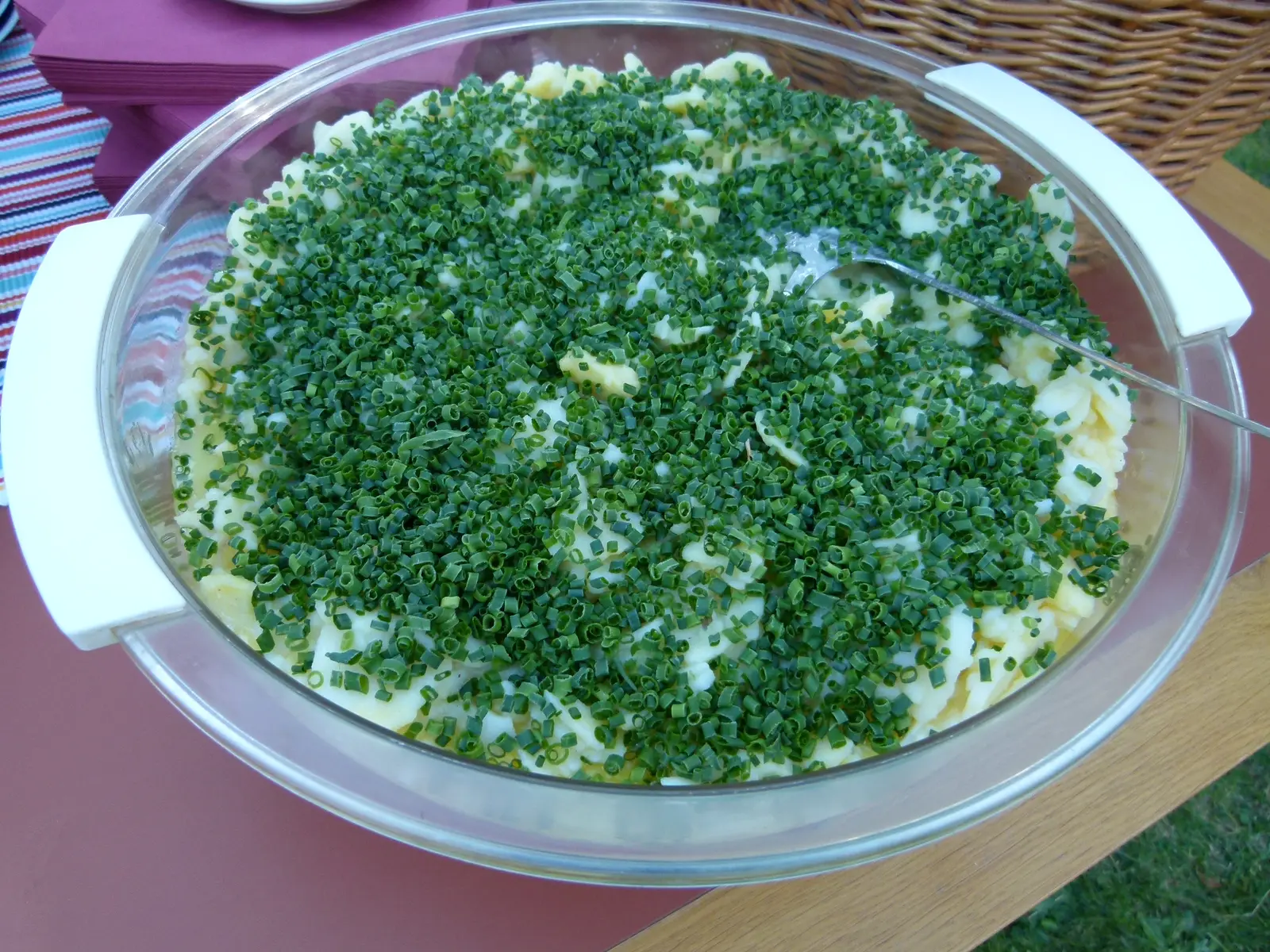
A glass bowl of warm Swabian potato salad topped with chopped chives Germany flag Germany 45m
Lunch •Swabian Heritage

German Potato Salad

This german potato salad recipe is the warm Swabian kind: waxy potatoes sliced while still hot, tossed with crisp bacon, soft onion and sliced egg, then dressed with hot beef stock, vinegar and mustard so every slice drinks up the tangy dressing. No mayonnaise anywhere — the potatoes stay light, glossy and warm. One serving is about 292 g.

Comfort & Warmth

Warm waxy potatoes in a bacon, mustard and vinegar dressing, served straight from the bowl while still steaming.

Pairs Well With
Grilled sausages, schnitzel & a cold German lager
Quick Prep (<30m)
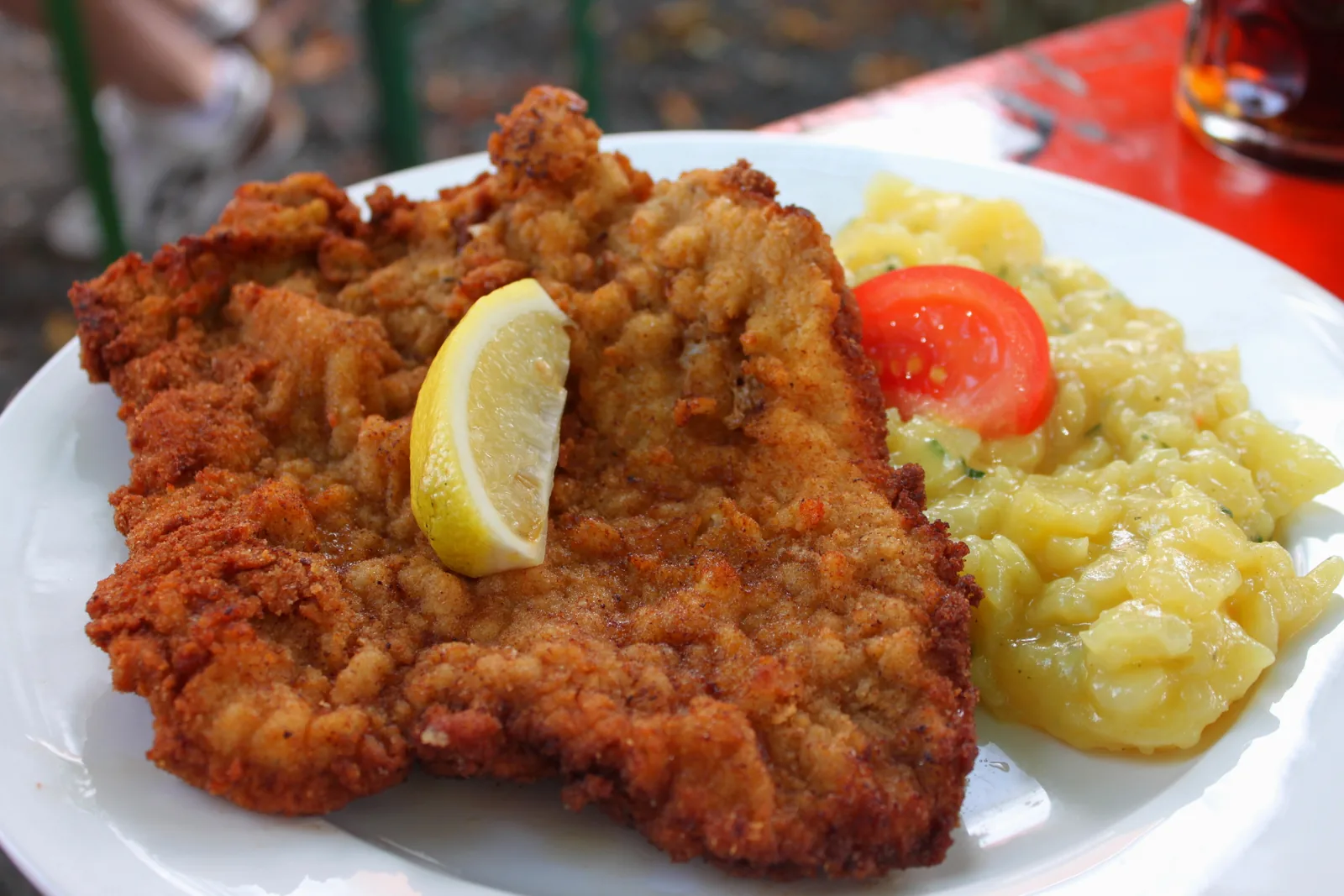
Golden breaded pork schnitzel with a lemon wedge and potato salad on a white plate Germany flag Germany 40m
Dinner •German Heritage

German Pork Schnitzel

German pork schnitzel is the everyday hero of German cooking: a pork cutlet pounded thin, coated in flour, egg and breadcrumbs, and fried in butter until it turns deep golden and crisp. This german schnitzel recipe follows the German way — real pork, a loose crumb, and a wedge of lemon on the side, with potato salad to mop up. One serving is about 200 g.

Classic Comfort

A golden, crisp pork cutlet with lemon and potato salad — a satisfying, protein-rich German dinner.

Pairs Well With
Warm potato salad, cucumber salad and a cold lager.
High Protein

The Dinner Gazette

Never wonder what’s for dinner again

One email a week with easy dinner ideas from around the world — ingredients, steps and nutrition, tested in our kitchen first.

Delivered every Thursday morning. Unsubscribe anytime.